Tag: London

  • The Duchess: Scandalous Ladies of London by Sophie Jordan

    The Duchess: Scandalous Ladies of London by Sophie Jordan

    “I liked my husband well enough . . . but I like him even better dead,” says Duchess Valencia Dedham.

    Now a Dowager Duchess following the death of her husband (no great loss there) and the discovery of the nearest male heir means Valencia Dedham must move out of the mansion that has been her home since she married at a young age and into a dower house far away in Yorkshire. It’s all part of primogeniture, the English way of assuring that property passes down through the male line.

    But for Valencia it means she loses not only the house but also access to London and the glittering Regency-era society to which she belongs. As she starts to pack for her journey to a home and location she has never known, she doesn’t even know what is hers to take. The beautiful writing desk she bought? The jewels she wore? Her beautiful gowns? Or are the all part of the estate that belongs to the new duke?

    And so, Valencia, in The Duchess: Scandalous Ladies of London (HarperCollins) by Sophie Jordan, is faced with a situation common to many wives back in those days.

    But the new duke, the brooding and handsome Rhain has six sisters he wants to marry off and he quickly realizes that their wild ways from growing up in Wales under less-than-strict guidance need a lot of polish before they can hope to land suitable husbands. After all, what gentleman would want to make a match with a woman such as Isolde, the duke’s sister who carries her stuffed dog with her even though it died years ago?

    Who better than Valencia with her knowledge of manners and social mores to whip the sisters into marriageable material with dance and singing lessons, the right coiffures and gowns, and entry into the best of homes? And besides, the duke has more than a passing interest in the beautiful young widow and she in him as well.

    Of course, this being a romance novel there are many issues to overcome. Rhain is sure he wants to return to Wales and doesn’t need the impediment of a wife, and Valencia was abused by her husband and also complicit in the way he died. She’s afraid of falling in love again as much as she wants a man’s touch.

    Sensual looks and sizzling attraction abound. Of course, we know it will all turn out well in the end but the fun of these books—if they’re well-written and this one certainly is—is how the author keeps our attention until all the plot lines are tied together into a happy ending.

    This is the second book in the Scandalous Ladies of London, a new series from New York Times bestselling author Sophie Jordan, a prolific writer with over 50 books to her credit. Each chronicles the machinations of women at the highest level of society making their way in the world where their best chance of getting ahead is marrying well.

    About the author.

    Sophie Jordan grew up in the Texas hill country, where she wove fantasies of dragons, warriors, and princesses. A former high school English teacher, she’s the New York TimesUSA Today, and international bestselling author of more than fifty novels. She now lives in Houston with her family. When she’s not writing, she spends her time overloading on caffeine (lattes preferred), talking plotlines with anyone who will listen (including her kids), and streaming anything that has a happily ever after.

    This review originally appeared in the New York Journal of Books.

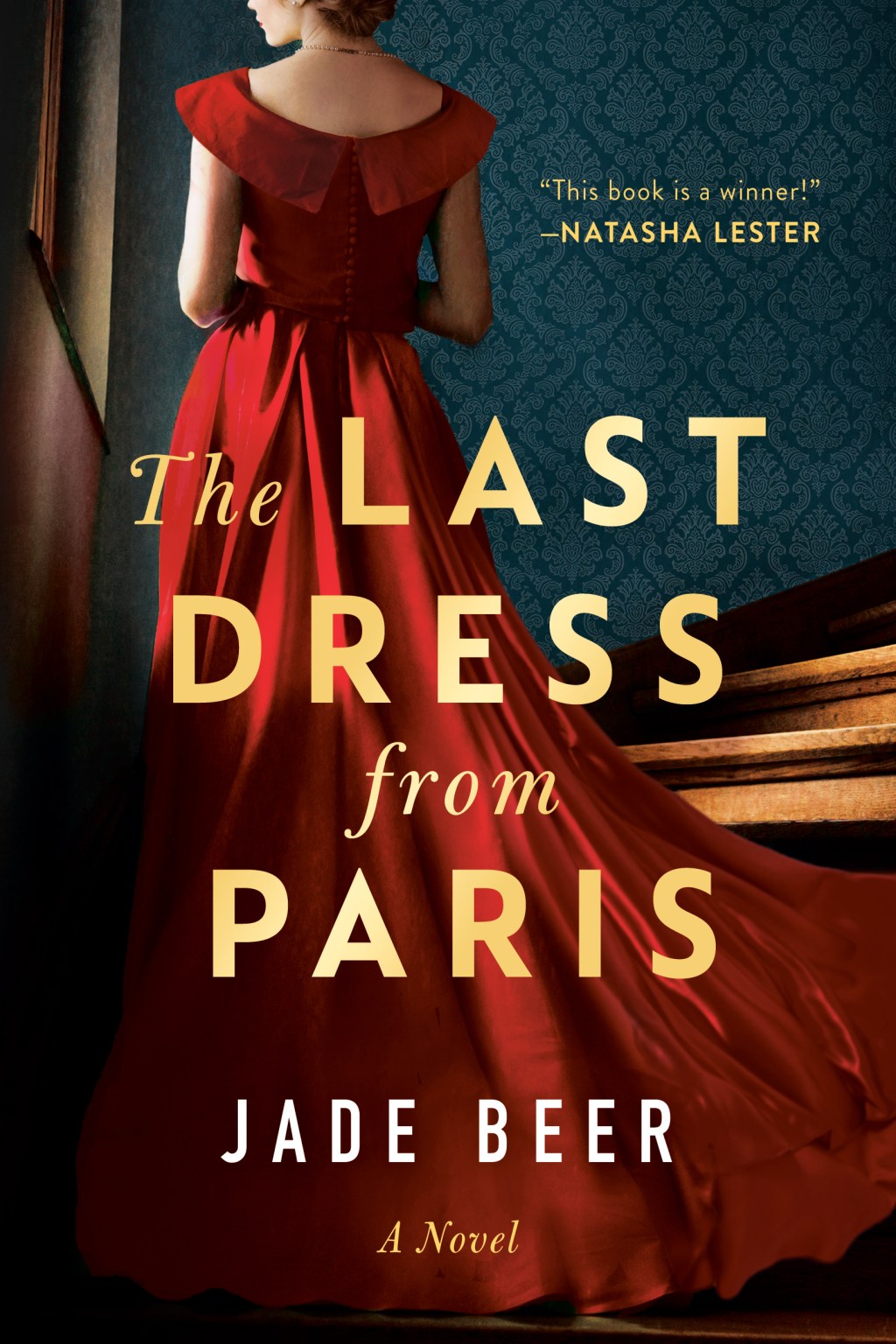
  • The Last Dress From Paris

    The Last Dress From Paris

    London, 2017. There’s no one Lucille adores more than her grandmother (not even her mother, she’s ashamed to say). So when her beloved Granny Sylvie asks Lucille to help secure the return of something precious to her, she’s happy to help. The next thing she knows, Lucille is on a train to Paris, tasked with retrieving a priceless Dior dress. But not everything is as it seems, and what Lucille finds in a small Parisian apartment will have her scouring the city for answers to a question that could change her entire life.

    Jade Beer. Holly Clark Photography.

    Paris, 1952. Postwar France is full of glamour and privilege, and Alice Ainsley is in the middle of it all. As the wife to the British ambassador to France, Alice’s job is to see and be seen—even if that wasn’t quite what she signed up for. Her husband showers her with jewels, banquets, and couture Dior dresses, but his affection has become distressingly illusive. As the strain on her marriage grows, Alice’s only comfort is her bond with her trusted lady’s maid, Marianne. But when a new face appears in her drawing room, Alice finds herself swept up in an epic love affair that has her yearning to follow her heart…no matter the consequences.

    In her novel The Last Dress From Paris, Jade Beer makes the City of Lights come alive as she weaves a lush, evocative story of three generations of women, love, and a fashion scavenger hunt. It is also an exploration of the ties that bind us together, the truths we hold that make us who we are, and the true meaning of what makes someone family.

    2022 actually marks the 75th anniversary of Dior, and the collection of dresses featured in the novel are inspired by an exhibit Beer saw at the V&A in London.

    ABOUT THE AUTHOR:

    Jade Beer is an award-winning editor, journalist, and novelist who has worked across the UK national press for more than twenty years. Most recently, she was the editor-in-chief of Condé Nast’s Brides. She also writes for other leading titles including The Sunday Times StyleThe Mail on Sunday‘s YOU magazine, The Telegraph, the Tatler Weddings Guide, Glamour, Stella magazine, and is one of The Mail on Sunday’s regular fiction and nonfiction book reviewers. Jade splits her time between London and the Cotswolds, where she lives with her husband and two daughters.

    This book is available in the following formats: Kindle, Audiobook, Hardcover and Paperback.

  • The Splendid and the Vile. A Saga of Churchill, Family, and Defiance During the Blitz

    The Splendid and the Vile. A Saga of Churchill, Family, and Defiance During the Blitz

              When New York Times bestselling author Erik Larson (Devil in the White City; Dead Wake: The Last Crossing of the Lusitania) moved to New York five years ago, he had what he describes as a revelation. He had watched, horrified, as 911 unfolded on CNN.

    Author Erik Larson

              “But I wondered what was it like for people living in New York to have their city invaded and all the fear they must have felt,” he says. “Then I started thinking about the bombing of London by the Germans during World War II. It was 57 nights of consecutive bombings. 911 shook us all but how did Londoners cope, knowing that every night their city would be bombed—that every night, hundreds of German bombers were flying over with high-explosive bombs?”

              At first Larson thought he’d tell his story about an ordinary family living in London at the time.

              “Then I thought why not a quintessential London family—the Churchills,” he says. “So much as been written about him, but this gave me the lens through which to tell the story.”

              The result is The Splendid and the Vile. A Saga of Churchill, Family, and Defiance During the Blitz (Crown Publishing), Larson’s saga about how Churchill, as prime minister, kept the country strong and together through his wit, his ability to speak to everyday people and by his own determination during the time of the Blitz from May of 1940 through May of 1941.

              ” I think the things that surprised me the most was the fact that Churchill was a lot of fun,” says Larson.  “Even though his staff was really overworked, even though they knew Churchill was inconsiderate, but he worked just as hard or harder than anyone. They loved working with him, he was able to do that.”

              He also had some intriguing habits—his drinking and his long soaks in the bathtub, smoking cigars and having his secretary take dictation, getting out, naked and wet to answer the phone and then getting back into the tub.

              Churchill was also fearless and without vanity says Larson.

              It drove the Nazis crazy.

              Joseph Goebbels, the Reich Minister of Propaganda, cursed him, writing in his diary, “When will that creature Churchill finally surrender? England cannot hold out forever!”

              His speeches were so effective with the British that Goebbels was alarmed when he learned that Germans were listening to them as well and ordered them to stop, saying it was treachery.

              “Churchill would visit a city that had been bombed, and people would flock to him,” says Larson. “I have no question that these visits were absolutely important to helping Britain get through this period. He was often filmed doing so for newsreels, and it was reported by newspapers and radio. This was leadership by demonstration, by showing the world that he cared, and he was fearless.”

  • A Vanishing Man: Charles Finch’s Latest Victorian Mystery
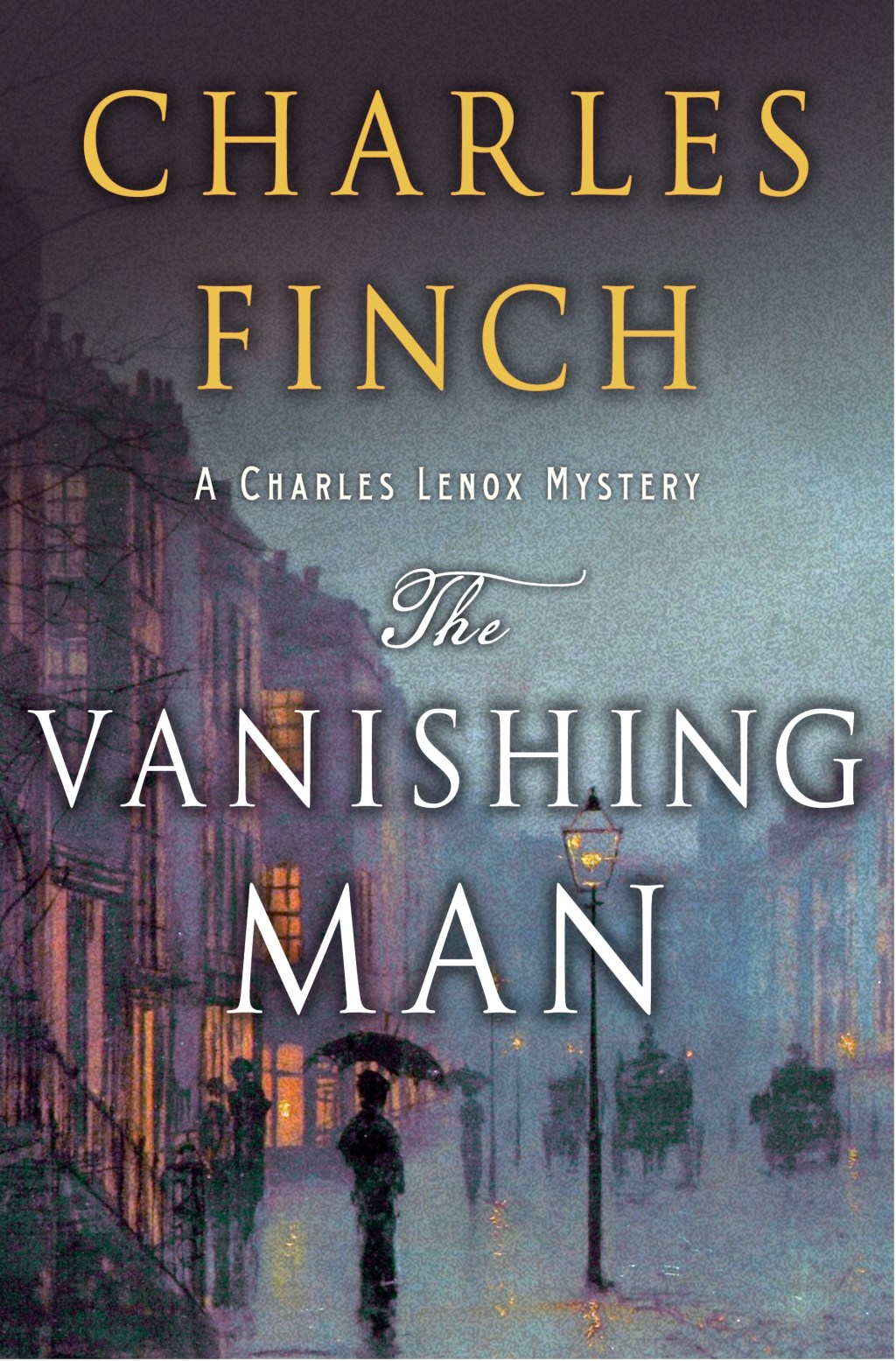
    A Vanishing Man: Charles Finch’s Latest Victorian Mystery

                  Charles Lenox is a well-educated, well-connected young man, but even he, when called to the Duke of Dorset’s home after a painting is found to have been stolen, knows his place. After all, even among the aristocracy, a Duke is way above Lenox, particularly now that he has taken to detecting (after all, what well-bred man works?). But status doesn’t deter Lenox from carrying out his investigation—even when it involves standing up to the Duke and pursuing the revelation of a long-held family secret that leads to murder.Finch, Charles_CREDIT Timothy Greenfield-Sanders

                  Lenox is the hero of a series of Victorian era mysteries involving Charles Lenox written by bestselling author Charles Finch who though he calls Chicago his home, seems mainly to live in London during the mid-to-late 1800s. His newest Lenox novel, The Vanishing Man (Minotaur 2019; $26.99) is the second in his three-series prequel showing the detective when he was young and just starting off. The prequels take place before the 11 other Lenox mysteries Finch has written.

                  Interestingly, Finch has been writing his novels for so long, he says he’s never had a real job. He also has a philosophy of writing that goes against what’s commonly recommended.

                  “I think you should write what you love,” he says. “Not what you know or see. And I love that period of history.”

                  He must as he spends a lot of time in a different country and different century. Though Finch says he’s a hypochondriac and would be afraid to really be a part of a time when even a simple infection could kill–penicillin after all is still over half a century from being discovered.

                  “But I would love to walk down the streets and get a feeling for what it was like at that time,” he says. “I’d like to really immerse myself.”

                  Instead Finch delves deep into research and history.

                  “This book was especially difficult to peel myself away from,” he says.

                   He’s also an avid reader of Victorian novels (Finch lists Anthony Trollope, Sherlock Holmes and George Elliott as among his favorites), Finch lived in England for almost four years so though he can’t go back to Victorian times, he at least is very familiar with the country. He says he chose his latest plot because he wanted to wade into Shakespeare and examine some of the mysteries and myths surrounding the great playwright.

                  “Writing about Shakespeare gave me a chance to look into every old apocryphal story about him and his times, and in the end– without giving too much away–I discovered one of the most plausible—and unproven–theories about his life,” he says. “It’s one which is directly connected to the crime Lenox is solving in 1851.”