Tag: Jewish cooking

  • Koshersoul: The Faith and Food Journey of an African American Jew by Michael W. Twitty
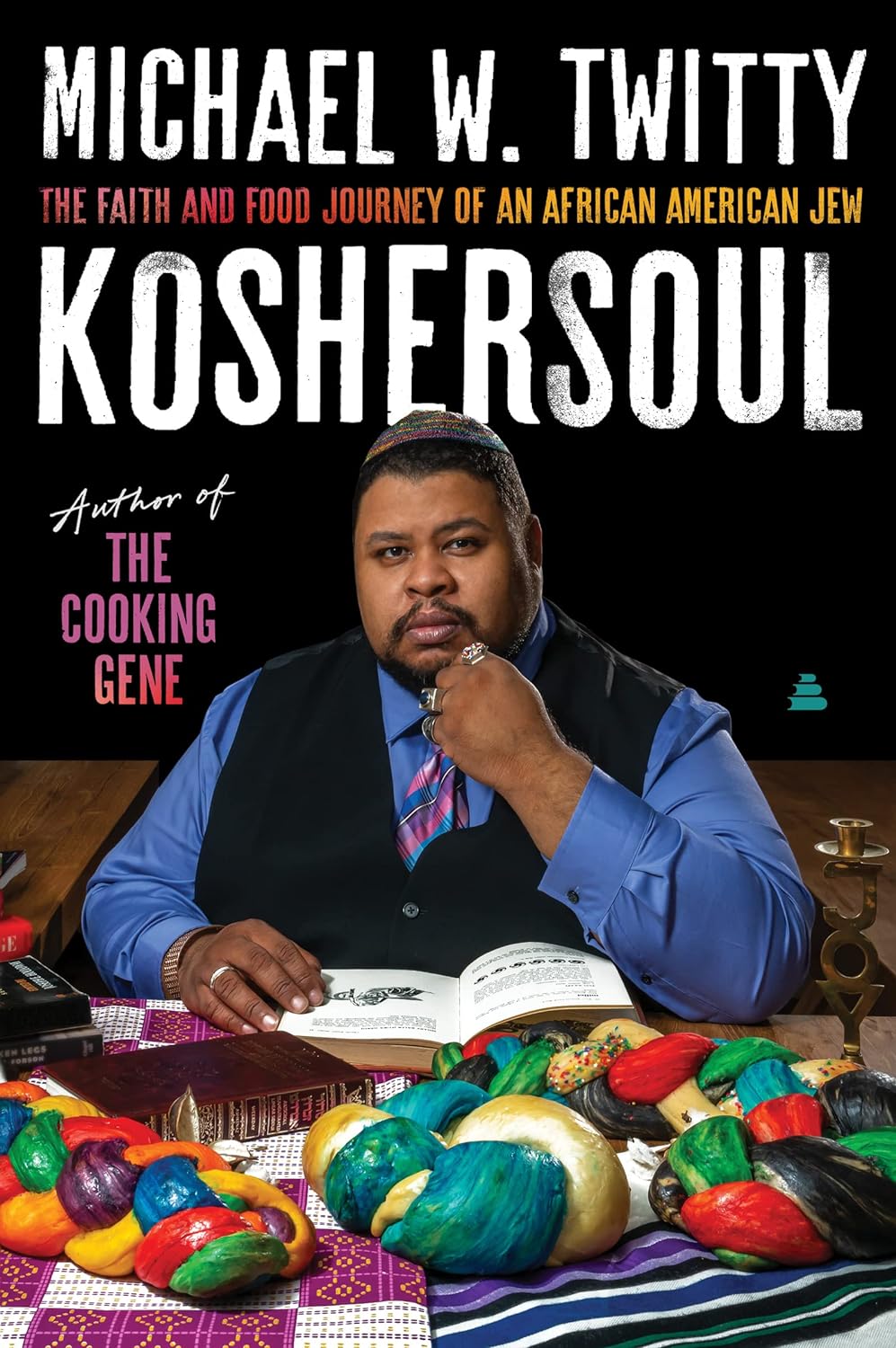
    Koshersoul: The Faith and Food Journey of an African American Jew by Michael W. Twitty

    “most importantly, Twitty reminds us that you don’t have to be Black or Jewish to love koshersoul.”

    Both a cookbook and a memoir, Koshersoul (Amistad) explores the food traditions of both Black and Jewish cultures and how for Black Jewish people, the two combine, becoming a distinctive foodway of its own.

    “When I first started talking about developing this book, a fellow African American food writer asked what it was about, saying ‘So you’re not writing about Black [food]; you’re writing about Jewish [food)],” writes Michael W. Twitty, a culinary historian, living history interpreter, and Judiacs teacher in the introduction to his book.  “My response was reflective: no this is a book about a part of Black food that’s also Jewish food; This is a book about Jewish food that’s also Black food because it’s a book about Black people who are Jewish and Jewish people who are Black.”

    Twitty, creator of Afroculinaria, the first blog devoted to African American history, foodways, and their legacy, won both the 2018 James Beard Foundation Book of the Year Award and Best Writing Award for The Cooking Gene. His writing is thoughtful, deep, and involved, taking a deep dive into his personal history and combining it with his conversations with other Black Jews. He seeks to put this in a historical and cultural perspective, showing us how food and identity converge.

    “Black and Jews in their Venn diagram have seen considerable turmoil and pain,” he writes “and this too is a fundamental ingredient.”

    But no matter what is going on in the world or what has happened in the past, we all have an urge and need to eat, writes Twitty, plus an enjoyment of what we consume. This is reflected not only in his writing but also in the recipes he shares at the back of the book.

    Twitty describes this section as a koshersoul community cookbook of sorts. He encourages readers when in the kitchen to feel free to adapt them to meet their own dietary practices and preferences.

    The recipes presented here are categorized under holidays and religious observations: Juneteenth, Pesach/Passover, Rosh Hashanah-Yom Kippur-Sukkot, and Shabbat, among others.

    The names of some of the recipes represent the different lands and regions where people came from such as Ghanian Pepper Sauce, Senegalese-Inspired Chicken Soup, Jamaican Jerk Chicken Spaghetti, West Africa Wet Seasoning, and Gullah-Geechee-Inspired Stew.

    Others like Yam Latkes, Kosher Spring Rolls, Collard Green Kreplach Filling, Black Eyed-Peas with Tomatoes, Sephardic Style, and Matzoh Meal Fried Chicken define the merging of two different cultures that meld into a distinct foodway.

    But most importantly, Twitty reminds us that you don’t have to be Black or Jewish to love koshersoul.

    Black-Eyed Pea Hummus

    Serves 4 to 6

    Black-eyed peas are a strong link between the two Diaspora cuisines, probably meeting in the Nile River Valley and the Fertile Crescent. Originally from ancient West Africa, black-eyed peas are a significant part of the cuisine of the Levant to this day, moving with African people throughout the region. Hummus, emblematic and beloved by many cultures in the Levant—is a dish that relies on the staple legume of the Arab farmer and ancient biblical standby, the chickpea. Here the black-eyed pea, loaded with mystical symbolism and its own honored place in West and Central Africa, replaces the chickpea. — Michael Twitty

    • 1 15-ounce can black-eyed peas, rinsed and drained
    • 1⁄4 cup extra virgin olive oil
    • 1⁄3 cup tahini
    • 1⁄2 cup fresh lemon juice
    • 1 ½ teaspoons kosher salt
    • 4 garlic cloves, chopped
    • 1 teaspoon sweet or smoked paprika
    • 1⁄2 teaspoon ground cumin
    • 1⁄2 teaspoon ground coriander
    • 1⁄2 teaspoon chili powder
    • 1 teaspoon brown or turbinado sugar
    • 1 teaspoon hot sauce
    • 2 teaspoons minced parsley, for garnish

    Throw everything but the parsley into a food processor and blend until smooth. Taste and add more spice, hot sauce, or whatever you think it needs. To serve, sprinkle parsley and drizzle olive oil on the top.

    This article originally appeared in the New York Journal of Books.

  • King Solomon’s Table: A Culinary Exploration of Jewish Cooking from Around the World

    For her new book King Solomon’s Table: A Culinary Exploration of Jewish Cooking from Around the World (Alfred A. Knopf 2017; $35), Joan Nathan, the multiple James Beard award winner, followed in the footsteps of Jewish traders as they circumvented the globe centuries and even millenniums ago. As they traveled, they brought the food cultures from the lands they’d visited before and adapted new ones but keeping close to their dietary laws, traditions and homelands.

    Nathan, who has written almost a dozen cookbooks, recounts the culinary history and geography of these early travelers in her sumptuous new book featuring over 170 recipes.

    It begins at the Paradesi Synagogue in Kochi, Kerala where Nathan spies an inscription indicating Jewish traders might have crossed the Indian Ocean from Judea to India during the reign of King Solomon. Already a world traveler, Nathan next made her way to Chendamangalam, a hamlet 20 miles north of Kochi surrounded by a lush landscape of mango, coconut and cinnamon trees and pepper and cardamom vines.

    “As I walked toward the bank of the nearby Periyar River, which flows into the Arabian Sea, I imagined ancient Hebrew adventurers and traders arriving on the shores and marveling at the lushness of the terrain,” writes Nathan in the introduction of her book.

    And so we too are seduced by her journey into exotic lands, looking at how foods and ingredients have crisscrossed the globe originating far from where we first might have thought.

    We chat about Malai, a Romanian cornmeal ricotta breakfast pudding that she features in her book and I tell her how I learned to make a polenta-like dish from my Romanian grandmother.

    “Oh mamaliga,” she says, like everyone knows about mamaliga.  But then what would you expect from a woman whose book contains five recipes for haroset, a thick sauce or paste typically made of chopped fruits and nuts. It, like so many recipes, has morphed, bouncing back and forth between countries and continents, each time being tweaked just a little and Nathan includes a version from Brazil, Persia, Ferrara and, of all places, Maine.

    Asked what recipes she’d recommend for those just starting using her cookbook, Nathan suggests Yemenite Chicken Soup with Dill, Cilantro and Parsley (“a really old recipe,” she says noting that historic records dating back to 12th century the healing power of chicken broth). She also suggests Malai, the Romania dish and Roman Ricotta Cheese Crostata with Cherries or Chocolate, a cheesecake recipe dating back to Imperial Rome in the 1st century. She also included a recipe from her friend, her friend Injy Farat-Lew, an Egyptian-Jew who grew up in Cairo and Paris, for a flourless chocolate cake and one for hard boiled eggs traditionally served ruing Passover on the Seder plate but can be used as a side for any meal.

    “This recipe for long-cooked eggs with spinach came from the island of Corfu, Greece to Ancona, Italy, a seaport on the Adriatic coast,” writes Nathan, who first taste the dish in Rome, in the introduction to this recipe which also exemplifies the convoluted origins of food.

    As she traveled (Nathan says her quest took her to approximately 30 countries over a six-year time span), the scope of her book changed. But it was all part of her culinary journey and one she continues to take.

    Ifyougo:

    What: Joan Nathan has two book signings

    When & Where: Monday, May 1 at 6:00 pm, Bookends & Beginnings, 1712 Sherman Avenue, Alley #, Evanston, IL. 224-999-7722.

    Tuesday, May 2 at 11:30 am-2pm, Standard Club Chicago luncheon, 320 S. Plymouth Ct, Chicago IL.

    2:00pm.