Tag: historic

  • The Duchess: Scandalous Ladies of London by Sophie Jordan

    The Duchess: Scandalous Ladies of London by Sophie Jordan

    “I liked my husband well enough . . . but I like him even better dead,” says Duchess Valencia Dedham.

    Now a Dowager Duchess following the death of her husband (no great loss there) and the discovery of the nearest male heir means Valencia Dedham must move out of the mansion that has been her home since she married at a young age and into a dower house far away in Yorkshire. It’s all part of primogeniture, the English way of assuring that property passes down through the male line.

    But for Valencia it means she loses not only the house but also access to London and the glittering Regency-era society to which she belongs. As she starts to pack for her journey to a home and location she has never known, she doesn’t even know what is hers to take. The beautiful writing desk she bought? The jewels she wore? Her beautiful gowns? Or are the all part of the estate that belongs to the new duke?

    And so, Valencia, in The Duchess: Scandalous Ladies of London (HarperCollins) by Sophie Jordan, is faced with a situation common to many wives back in those days.

    But the new duke, the brooding and handsome Rhain has six sisters he wants to marry off and he quickly realizes that their wild ways from growing up in Wales under less-than-strict guidance need a lot of polish before they can hope to land suitable husbands. After all, what gentleman would want to make a match with a woman such as Isolde, the duke’s sister who carries her stuffed dog with her even though it died years ago?

    Who better than Valencia with her knowledge of manners and social mores to whip the sisters into marriageable material with dance and singing lessons, the right coiffures and gowns, and entry into the best of homes? And besides, the duke has more than a passing interest in the beautiful young widow and she in him as well.

    Of course, this being a romance novel there are many issues to overcome. Rhain is sure he wants to return to Wales and doesn’t need the impediment of a wife, and Valencia was abused by her husband and also complicit in the way he died. She’s afraid of falling in love again as much as she wants a man’s touch.

    Sensual looks and sizzling attraction abound. Of course, we know it will all turn out well in the end but the fun of these books—if they’re well-written and this one certainly is—is how the author keeps our attention until all the plot lines are tied together into a happy ending.

    This is the second book in the Scandalous Ladies of London, a new series from New York Times bestselling author Sophie Jordan, a prolific writer with over 50 books to her credit. Each chronicles the machinations of women at the highest level of society making their way in the world where their best chance of getting ahead is marrying well.

    About the author.

    Sophie Jordan grew up in the Texas hill country, where she wove fantasies of dragons, warriors, and princesses. A former high school English teacher, she’s the New York TimesUSA Today, and international bestselling author of more than fifty novels. She now lives in Houston with her family. When she’s not writing, she spends her time overloading on caffeine (lattes preferred), talking plotlines with anyone who will listen (including her kids), and streaming anything that has a happily ever after.

    This review originally appeared in the New York Journal of Books.

  • Pullman: The Man, the Company, the Historic Park by Kenneth Schoon
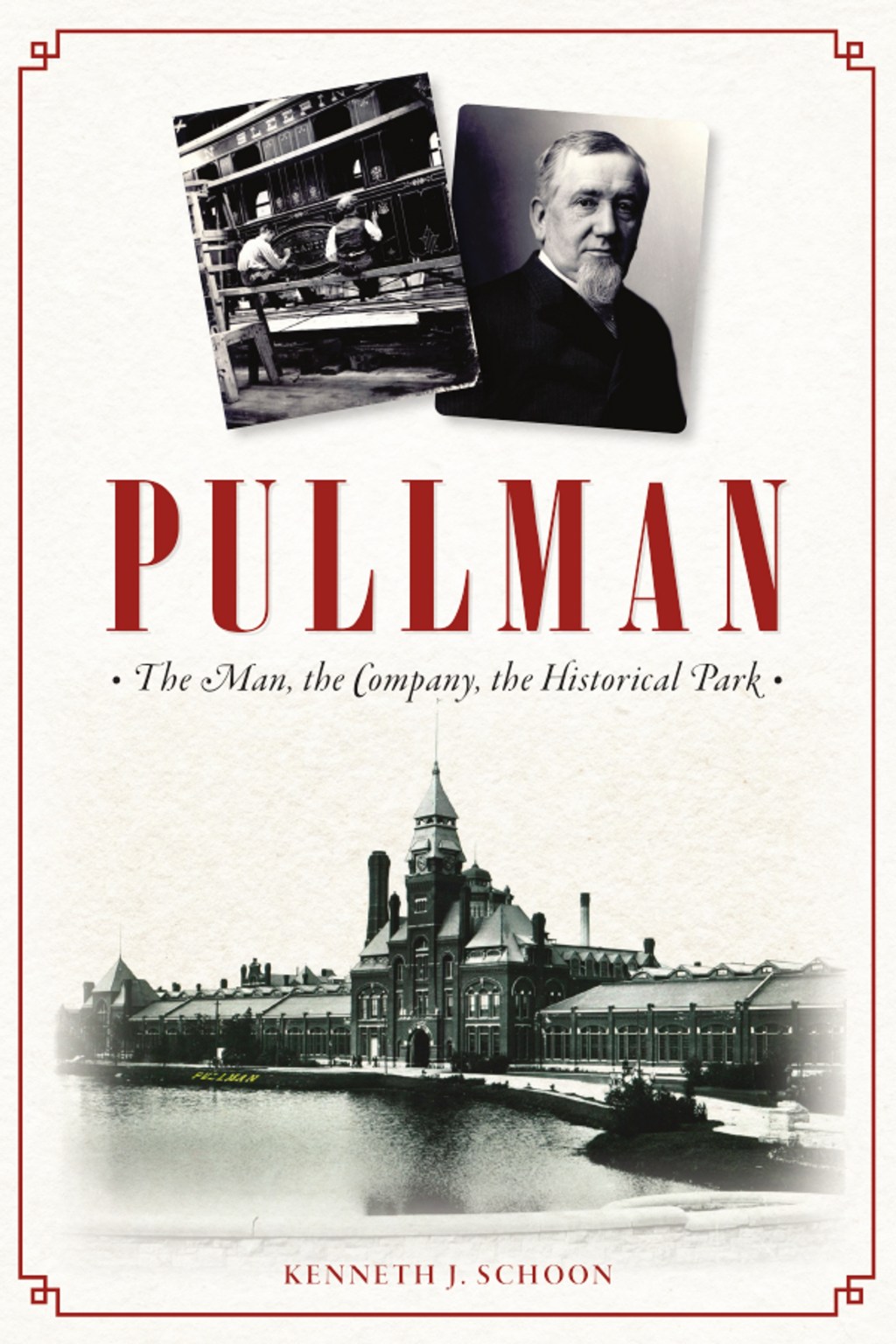
    Pullman: The Man, the Company, the Historic Park by Kenneth Schoon

                   Kenneth Schoon, professor emeritus at Indiana University Northwest, has immersed himself in the history of the Greater Chicago/Northwest Indiana area for decades, writing books starting from the area’s earliest beginnings such as “Calumet Beginnings: Ancient Shorelines and Settlements at the South End of Lake Michigan” and “Swedish Settlements on the South Shore of Lake Michigan.”

                   In his latest book, “Pullman: The Man, the Company, the Historical Park” (History Press 2021; $21.99), he showcases what once was among  the ultimate company town and is now a Chicago neighborhood. George Pullman, whose last name became synonymous with plush railroad sleeper cars, believed that happy workers were productive workers and so developed his town along the western shore of Lake Calumet in the late 1800s.

                   I thought I knew company towns having grown up in East Chicago, Indiana my friends whose parents worked at Inland Steel lived in Sunnyside in Indiana  Harbor. On the East Chicago side there was Marktown built in 1917 by Clayton Mark, for those employed at the company he owned, Mark Manufacturing.

                   But they’re different Schoon tells me. Both Marktown and Sunnyside were residential neighborhoods. But Pullman was an actual town with its own schools, library, churches, Masonic Hall, businesses, and even a band. Garbage and maintenance was paid for by the company.

    In 2015, then President Barack Obama proclaimed Chicago’s Pullman District as a National Monument, encompassing many of its surviving buildings such as the former Pullman Palace Car Works, the Greenstone Church, formerly the Greenstone United Methodist Church, the A. Philip Randolph Pullman Porter Museum, workers’ homes, the Pullman Administration Clock Tower Building, Arcade Park, and the Florence Hotel, named after Pullman’s oldest daughter.

                   Though I vaguely knew about the town of Pullman, it had never been on my radar as a place to visit even though it was less than eleven miles from where I lived.

                   “The same with me,” says Schoon who remembered going to the Florence Hotel, one of the fanciest structures in town, to eat when young never to return until hired by the Historic Pullman Foundation to write about the history of the town for their brochure.

                   Today we talk about experiences, but that’s what Pullman was all about back then. His sleeper cars were luxurious, but the brand also meant great service. After the Civil War, he hired recently emancipated African American men, to work as porters becoming the largest employer of Blacks in the U.S. Their jobs were to attend to passengers needs by serving food and drink, shining shoes, tidying up the train, making sure the temperature was just right and that lighting fixtures worked.  Black women were hired as maids to take care of women guests on the most expensive cars—babysitting children, helping with their baths, giving manicures, and fixing their hair.

                   Pullman was no dinky little town. The Arcade Theatre could accommodate 1000 people and Schoon says it was, for a time, the finest theater west of the Hudson River.

                   With the advent of automobiles and highways, the need for sleeper cars lessened. But luckily many of Pullman’s historic buildings remain including the Florence Hotel which is currently closed for renovations but expected to open within a few years.

                   “The old stable is now a store,” says Schoon. “The old fire station is still there and of the 600 residential buildings all but three are still standing.”

                   In an interesting tidbit, Schoon notes that Pullman was originally dry because George Pullman was a Prohibitionist. Luckily for those who  wanted to imbibe, Kensington, the town next door had 23 taverns at the time.

                   Kenneth Schoon will be signing copies of his book during the Labor Day Weekend at the Grand Opening of Pullman National Monument Visitor Center and Pullman State Historic Site Factory. For more information about times and other events, visit www.pullmanil.org

  • King Solomon’s Table: A Culinary Exploration of Jewish Cooking from Around the World

    For her new book King Solomon’s Table: A Culinary Exploration of Jewish Cooking from Around the World (Alfred A. Knopf 2017; $35), Joan Nathan, the multiple James Beard award winner, followed in the footsteps of Jewish traders as they circumvented the globe centuries and even millenniums ago. As they traveled, they brought the food cultures from the lands they’d visited before and adapted new ones but keeping close to their dietary laws, traditions and homelands.

    Nathan, who has written almost a dozen cookbooks, recounts the culinary history and geography of these early travelers in her sumptuous new book featuring over 170 recipes.

    It begins at the Paradesi Synagogue in Kochi, Kerala where Nathan spies an inscription indicating Jewish traders might have crossed the Indian Ocean from Judea to India during the reign of King Solomon. Already a world traveler, Nathan next made her way to Chendamangalam, a hamlet 20 miles north of Kochi surrounded by a lush landscape of mango, coconut and cinnamon trees and pepper and cardamom vines.

    “As I walked toward the bank of the nearby Periyar River, which flows into the Arabian Sea, I imagined ancient Hebrew adventurers and traders arriving on the shores and marveling at the lushness of the terrain,” writes Nathan in the introduction of her book.

    And so we too are seduced by her journey into exotic lands, looking at how foods and ingredients have crisscrossed the globe originating far from where we first might have thought.

    We chat about Malai, a Romanian cornmeal ricotta breakfast pudding that she features in her book and I tell her how I learned to make a polenta-like dish from my Romanian grandmother.

    “Oh mamaliga,” she says, like everyone knows about mamaliga.  But then what would you expect from a woman whose book contains five recipes for haroset, a thick sauce or paste typically made of chopped fruits and nuts. It, like so many recipes, has morphed, bouncing back and forth between countries and continents, each time being tweaked just a little and Nathan includes a version from Brazil, Persia, Ferrara and, of all places, Maine.

    Asked what recipes she’d recommend for those just starting using her cookbook, Nathan suggests Yemenite Chicken Soup with Dill, Cilantro and Parsley (“a really old recipe,” she says noting that historic records dating back to 12th century the healing power of chicken broth). She also suggests Malai, the Romania dish and Roman Ricotta Cheese Crostata with Cherries or Chocolate, a cheesecake recipe dating back to Imperial Rome in the 1st century. She also included a recipe from her friend, her friend Injy Farat-Lew, an Egyptian-Jew who grew up in Cairo and Paris, for a flourless chocolate cake and one for hard boiled eggs traditionally served ruing Passover on the Seder plate but can be used as a side for any meal.

    “This recipe for long-cooked eggs with spinach came from the island of Corfu, Greece to Ancona, Italy, a seaport on the Adriatic coast,” writes Nathan, who first taste the dish in Rome, in the introduction to this recipe which also exemplifies the convoluted origins of food.

    As she traveled (Nathan says her quest took her to approximately 30 countries over a six-year time span), the scope of her book changed. But it was all part of her culinary journey and one she continues to take.

    Ifyougo:

    What: Joan Nathan has two book signings

    When & Where: Monday, May 1 at 6:00 pm, Bookends & Beginnings, 1712 Sherman Avenue, Alley #, Evanston, IL. 224-999-7722.

    Tuesday, May 2 at 11:30 am-2pm, Standard Club Chicago luncheon, 320 S. Plymouth Ct, Chicago IL.

    2:00pm.