Tag: Fantasy

  • Princess of Blood

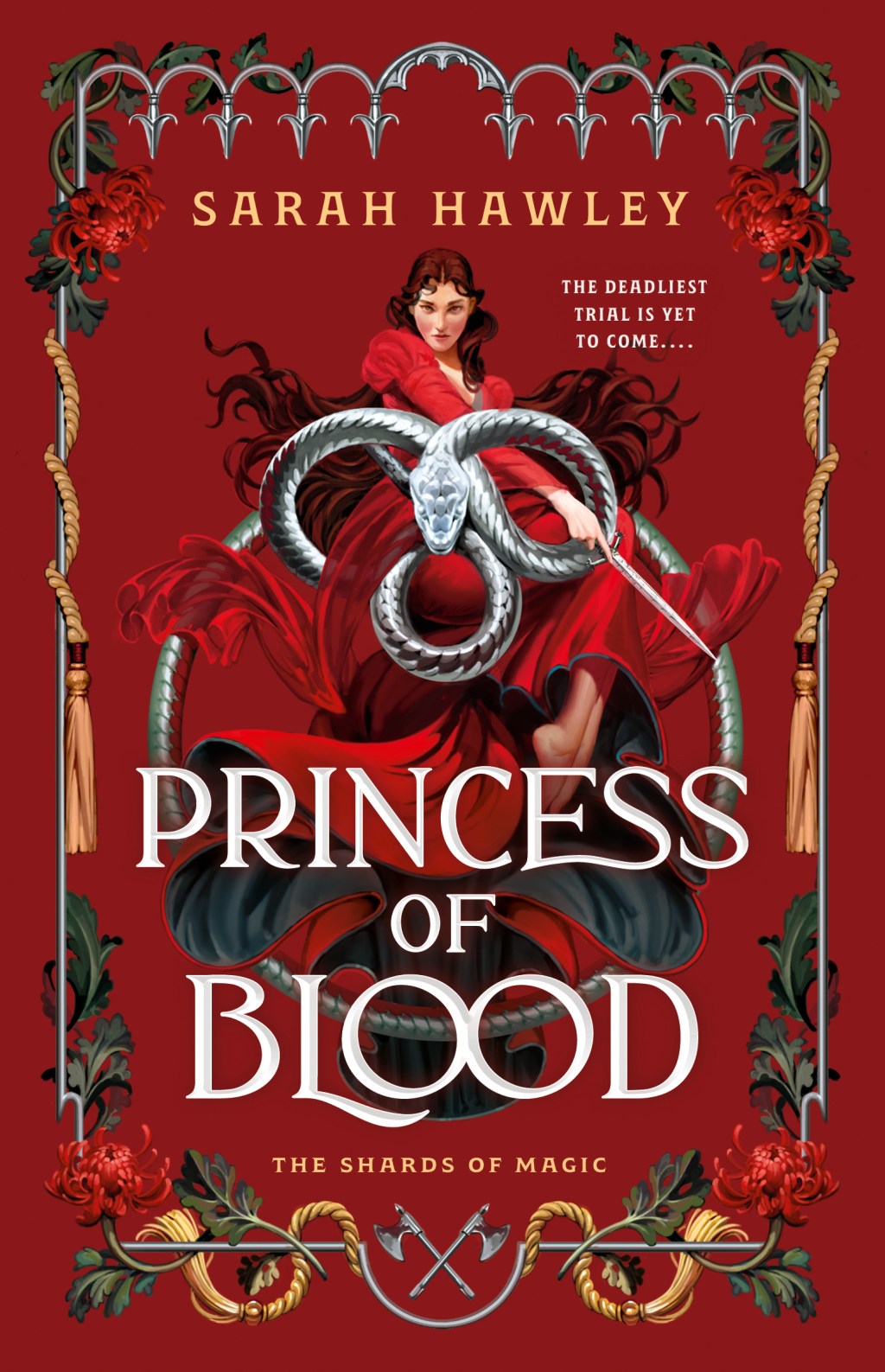
    Princess of Blood

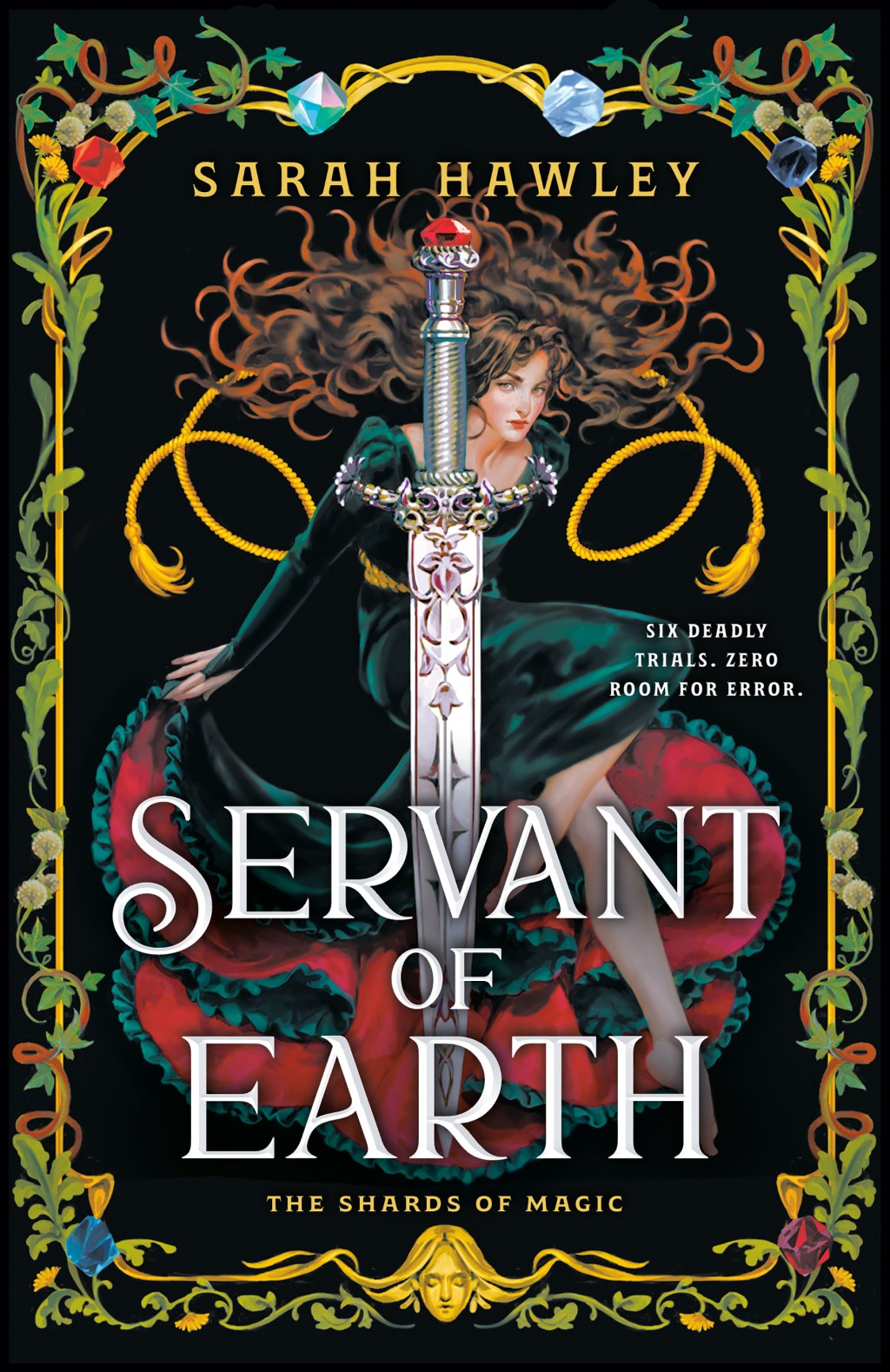
    I devoured Sarah Hawley’s Servant of Earth, the first in her Shards of Magic triology, a romantasy that centers around Kenna, a young woodland girl, held in contempt in her village, who, trying to save her only friend, finds herself a slave in the opulent world of the Fae. These beautiful and magical creatures over-indulge in the pleasures and sins of life–sumptuous food and drink, complicated love affairs, glamorous surroundings, and evil machinations.

    The world of the Fae is one of danger, false friendships, and death. To survive, Kenna must outwit and out manuever the most powerful of the Fae. You can read my review here.

    I eagerly awaited Hawley’s second book, Princess of Blood, and was not disappointed when it came out earlier this fall. It’s darker as Kenna becomes enmeshed in a power struggle over who will rule the Fae, a battle that imperils her life and those of her friends and followers. Now, I’m hoping that Hawley is working hard on the third and final book in the trilogy as I’m eager to see how it all turns out.

    I again had the chance to interview Hawley and thought I’d include the Q & A here.

    Were there specific myths, legends, your previous work as an archaeologist or personal experiences that influenced the book’s political intrigue, power struggles, or Fae society?

    I’ve always loved reading about the Fae in folklore and fantasy novels! They’re a fascinating combination of whimsical, deadly, beautiful, mercurial, and mysterious, and there are so many ways a writer can pay homage to that lore and take it in new directions.

    Many Fae stories include underground elements because the folklore is tied to burial mounds and the remains of ancient structures. Those archaeological sites developed a reputation for being gateways to a mysterious Fae underworld, which served as the inspiration for the subterranean kingdom of Mistei. Combining that dramatic setting and the tricky nature of the Fae in fairy tales led to the complicated politics and power struggles explored in SERVANT OF EARTH and PRINCESS OF BLOOD.

    Princess of the Blood explores such heavy themes as trauma, healing, betrayal, murder, and forging new alliances. How did you approach exploring such difficult and emotionally compelling but difficult subjects in your writing? And how did you react emotionally when writing about such things?

    Fantasy novels are a great way to explore dark themes that are relevant to our lives. The fantastical setting adds an element of distance while also allowing for very high stakes. It can be difficult to write such heavy content (I feel bad for my characters sometimes!) and I definitely cried while writing certain passages, but I also think it’s a wonderful way to explore themes of healing and growth. I spend a lot of time thinking about how my characters’ emotions and traumas would impact their actions and how they might change over the course of the story.

    How did your background in archaeology shape the historical textures and power dynamics in your fantasy world? After all there were a lot of complex, traumatic and emotional plot lines in ancient times as well as diverse architecture.

    My background in archaeology definitely impacts my worldbuilding. I’m always thinking about how a society is laid out, from its geography to its social hierarchy, as well as how the characters move through that space. How do they dress and act to signify their status as an insider or outsider? What are the rituals of everyday life? I also like to consider how my characters relate to their own world’s past—their history and myths and the combination of fact, fiction, and propaganda that impacts their beliefs. Their politics and actions are shaped by the stories they tell themselves, just as ours are. I always want the reader to have a sense of an expansive world where countless stories are happening just off the page.

    Is there a particular scene or line in “Princess of the Blood” that holds special meaning for you either personally or as an author?

    There are a lot of scenes and lines that hold meaning for me, but one passage sums up the central theme of this book and series, which is the cyclical nature of history and the importance of trying to break destructive cycles even if the fight seems hopeless:

    History ate itself like a snake swallowing its own tail as the Fae continued their unending battle for power . . . but that didn’t mean we should give up. Even if our victories had a steep price. Even if we lost.

    Is there anything else you’d like readers to know?

    I’m so excited that readers are discovering SERVANT OF EARTH and PRINCESS OF BLOOD! It’s been thrilling and fulfilling to see Kenna’s story resonating with so many people. Thank you to everyone who has picked these books up.

    When can we expect the third and final book?

    I don’t have an exact publication date yet, but it will be coming in 2026!

    My article about Princess of the Blood appeared in the Northwest Indiana Times.

  • Archaeologist creates fantasy world filled with intrigue, romance and adventure
    Archaeologist creates fantasy world filled with intrigue, romance and adventure

    An archaeologist who has excavated a Bronze Age palace in Turkey, a medieval Abbey in England, and an Inca site in Chile, Sarah Hawley has created an extensive underground world where fairies abide.

    But if you’re thinking Tinkerbell, who sweetly waves her magic wand, think again. The fairies in Hawley’s novel “Servant of Earth,” the first in a trilogy titled “The Shards of Magic,” are amazingly beautiful and as decadent as any French court in the 17th or 18th centuries. Given numerous love affairs, intrigues and pettiness, they’re ruled by a tyrant king who has a penchant for mayhem and murder.

    Into this world stumbles Kenna, a human from a nearby village who lives with her single mother, keeps mostly to herself to avoid the jeers of others with one exception– Anya, a pretty villager who has befriended her. When Anya is chosen as one of the women who will travel to the land of the Fae, a perilous trip through bogs and deep dark woods, she accompanies her. But Anya disappears as they make their way, and it is Kenna who arrives at the fairy court, helped by the mysterious dagger she discovered in one of her forays in the forest.

    The King orders her dead, but one of his underlings suggests a different fate. Why not make her a handmaiden to Lara, the daughter of Princess Oriana, head of the Earth House in the fairy kingdom?

    It is clearly an insult to Princess and her daughter. A human as a handmaiden. But it is impossible to say no. And Kenna, who is very curious and kind, soon learns her way among the many houses and those that rule them. In doing so, she is able to help Lara, who, to become an immortal fairy, must undergo six rigorous and often deadly tasks along with others who are vying for the honor.

    Hawley, who also taught archaeology, takes us into a fascinating subterranean world, one where the fairies live in luxurious surroundings, dine on the best food, and busy themselves with endless affairs, alliances and games as their lives unwind in front of them for eternity.

    Kenna embarks upon a romantic liaison with one of the fairy princes, but she also befriends the serving women who have been cast out of the brothel where the king likes to spend much of his time. Each of the worlds she connects with pulls her deeper into the dangers of being discovered as a spy, someone who is siding with a brewing rebellion.

    But she has a moral compass compelling her to go forward in aiding the revolt against the current regime. At the same time, she is helping Lara accomplish her tasks, though it’s forbidden to do so.

    There is danger on all sides and Kenna becomes more and more unsure of who she can trust, including her fairy prince. Spoiler alert: He is no Prince Charming.

    “Working as an archaeologist made me think about the details of this world and of the past, and that extends into fantasy worlds where you think about how people are dressing and what it looks like and the political structure and all of that,” said Hawley, explaining how she created the fairy kingdom and all the factions and their interactions. “But it’s also thinking about these characters, their identities, and the stories they tell themselves about their past, because as much as I’m telling the mythology of this world, the characters see the mythology of their own world in a slightly different way.”

    Hawley, who is the author of several other books, including “A Witch’s Guide to Fake Dating a Demon” and “A Demon’s Guide to Wooing a Witch,” brings a historic perspective to her tales of a fairy kingdom as well.

    “There’s actually very dark stuff about how fairies behave,” she said, recounting a Celtic story about people who play fiddle music for the fairies for a single night, are rewarded with gold, and sent home. “Upon returning to their villages, they find that the gold has turned into leaves. And they realize that hundreds of years have passed since they’d been gone and everyone they love is dead, and then they immediately die.”

    Luckily, if you like happy endings, “Servant of Earth” ends on a positive note, though one where we realize that Kenna has many more challenges ahead.

    But she’s a tough, wily hero. And so, it’s just a matter of waiting for the next book in the trilogy to come out next year.

    This article originally appeared in the Northwest Indiana Times.

  • Castle Gormenghast: Revisiting Gothic Fantasy

    Castle Gormenghast: Revisiting Gothic Fantasy

    A crumbling castle, an eccentric and slightly mad family, and intricate plotting in a Medival fantasy series about a remote earldom is the perfect antidote to stressful holidays.

    Need to escape into a different world after talking politics over the Thanksgiving table–or even harder, avoiding talking politics across the Thanksgiving table? Then it’s time to visit Gormenghast, the ancestral home of the ancient Groan family who lived in a wild and isolated landscape. Written by author and artist Mervyn Peake, the books in the series are Titus Groan, published in 1947, Gormenghast (1950), and Titus Alone (1959). Peake died while writing Titus Awakes, the fourth book. His widow, artist Maeve Gilmore, completed the book sometime in the 1970s but the manuscript wasn’t discovered and published until 2011.

    According to its Wikipedia citation, “The series has been included in Fantasy: The 100 Best BooksModern Fantasy: The 100 Best Novels and 100 Must Read Fantasy Novels as one of the greatest fantasy works of the twentieth century. Literary critic Harold Bloom has praised the series as the best fantasy novels of the 20th century and one of the greatest sequences in modern world literature.”

    Available on Amazon, find a cozy corner to escape contemporary 21st post-election American angst and whisk yourself away to Castle Gormenghast.

    The books are also available on Kindle and Audible.

  • The most popular #BookTok books in every state

    The most popular #BookTok books in every state

    TikTok’s book community “#BookTok” was recently referred to by The New York Times as a “best seller machine.” In this community, creators post literary content to the app, ranging from book recommendations to their emotional reactions during pivotal plot points. 

    This content has catapulted sales for a select few books, and major book retailers such as Barnes & Noble are recognizing the community’s power.

    These days, it takes one viral TikTok for a book to become a bestseller. #BookTok reaches readers across the world, and a nation’s most popular books can tell us a lot about its language and culture. So which books are actually selling, and what do they have in common? 

    Using Barnes & Noble, Goodreads, and Google search interest data, we conducted an analysis of the titles rising in popularity due to TikTok. Our report ranks the most popular books and authors, determines which are favored in each state, and even highlights the older books making a comeback due to TikTok. 

    Key findings

    The most popular #BookTok books and authors

    For BookTok community members, reading is all about finding stories that captivate their audience’s emotions – particularly their sense of romance. The top-five best-selling books due to TikTok are nearly all romances, and two of them share the same author.

    The five most popular #BookTok books are:

    • It Ends with Us by Colleen Hoover (romance)
    • The Summer I Turned Pretty by Jenny Han (romance)
    • Ugly Love by Colleen Hoover (romance)
    • The Wedding Date by Jasmine Guillory (romance)
    • The Hunger Games by Suzanne Collins (young adult)

    #BookTok has popularized the romance genre with Gen Z readers. Romance tropes such as “enemies to lovers” and “fake dating” allow readers to enjoy fun, lighthearted stories with satisfying emotional endings across many different books with unique characters. 

    In fact, of the top 55 books analyzed, 24 were in the romance genre, according to Goodreads classifications. Fantasy books took up 12 slots, with young adult (8), thriller (6), and historical fiction (4) genres following.

    With two books in the top three slots, Colleen Hoover is the standout author on #BookTok. Her titles Verity and It Starts With Us are also in the top 25 #BookTok books. A romance author with one thriller title (Verity), Hoover is active on TikTok and Instagram, engaging with the community with her humorous personality. She clearly has a strong sense of what’s popular in online reading communities. 

    Jennifer L. Armentrout also has four titles gaining significant traction on TikTok. A prolific fantasy and romance writer, books from her Blood and Ash, Harbinger and Dark Elements series have each been heavily promoted by the #BookTok community. 

    Other popular #BookTok authors include Alice Oseman, Casey McQuiston, Elle Kennedy and Emily Henry, each with three books on the top #BookTok book list.

    The most popular #BookTok books by state

    A nation’s most popular books can tell us a lot about its culture, and the same is true for individual states. We analyzed the list of over 170 popular #BookTok books using local search data to determine the most popular #BookTok bestseller in every state and created a map to display each state’s favorite title.

    With 41 books represented, there are a wide variety of popular books in the U.S. right now, thanks to TikTok. The books most popular on a state-by-state level include:

    • Ugly Love (4 states)
    • Book of Night (3 states)
    • A Good Girl’s Guide to Murder (2 states)
    • One Last Stop (2 states)
    • The Spanish Love Deception (2 states)
    • The Summer I Turned Pretty (2 states)
    • Written in the Stars (2 states)

    The books making a comeback thanks to #BookTok

    Finally, some books published well over a decade ago are seeing a resurgence in popularity thanks to TikTok. We removed books that have movie adaptations or are part of popular franchises such as Twilight or The Hunger Games

    Here are the lesser-known titles that #BookTok is giving a comeback:

    • I Am Number Four (published 2009)
    • Anna and the French Kiss (published 2010)
    • The Song of Achilles (published 2011)
    • Throne of Glass (published 2012)
    • Aristotle and Dante Discover the Secrets of the Universe (published 2012)

    Conclusion

    Books open up our worlds and minds. Simple stories that follow traditional narrative arcs can also be effective language learning tools. Whether your recommendation comes from #BookTok or The New York Times, discover a new title and learn about a different culture, place, or time. 

    Methodology: Using a list of 170+ popular #BookTok titles compiled by Barnes & Noble, we used Google search data to conduct this analysis. Genre data compiled using Goodreads.

  • Muse of Nightmares: Second in the Epic Fantasy Series Strange the Dreamer
    Muse of Nightmares: Second in the Epic Fantasy Series Strange the Dreamer

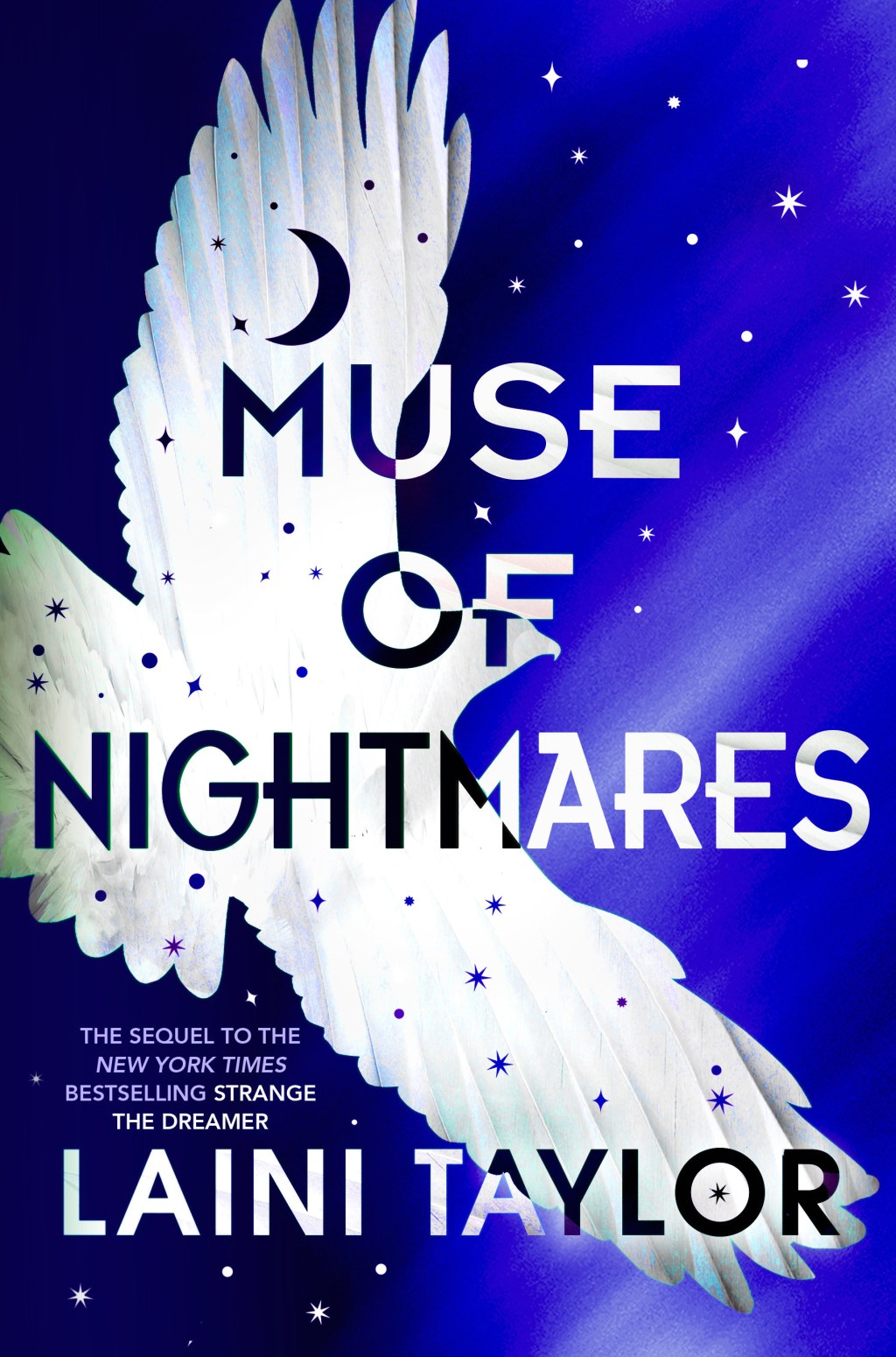
    Strange the Dreamer, the epic fantasy series written by Laini Taylor, began as a dream. Now Taylor, a National Book Award finalist, has just released Muse of Nightmares  (Little, Brown 2018; $19.99), the second book in the series.Laini Taylor_Author Photo_AliSmith credit

    “The story has been in my mind for 20 years or more,” says Taylor, whose author photo shows her with a shock of long seriously pink hair.  “I think I dreamed Sairi, the character that came to me, who lived high above the city and I thought of her as the Muse of Nightmares. I started writing about her for my first book but then that became Lazio’s book.  But this is about Sairi, the way trauma changes us and if it is possible for a person to overcome this. Sarai doesn’t know what she’s capable of and she feels helpless, but is she?”

    The journey of Sairi and Lazio is one of intrigue and mysteries (what was done with thousands of children born in the citadel nursery? where did the gods come from, and why? and  how do they defeat a new foe?) and it’s interesting to note that as we follow Taylor’s story-telling, we often are only a few steps behind her as the story plot evolves. That’s because as much as she wants to shape her story, it often, as she builds her characters and scenes in her mind, takes on a will of its own.

    Taylor says she always hopes to get to the ending she has in mind.

    “But it doesn’t always work that way,” she says.

    Immersed and—dare we say—co-dependent–with her characters, Taylor is sad when they make a bad choice though she can understand why they did so.

    “It just give me so much empathy for them,” Taylor says.  “I ask what causes people to do that. When my characters don’t survive, I really wish I could save them, but I can’t.”

    But though she doesn’t often know how her books will end or save a character, she did know that she wanted to eschew the typical epic ending of a massive battle between good and evil and instead resolve it by asking and answering a powerful question “must heroes always slay monsters or is it possible to save them?”

    Ifyougo:

    What:

    When: Thursday, October 11 at 7 p.m.

    Where: Anderson’s Bookshop, 123 West Jefferson Avenue Naperville, IL

    Cost: Free and open to the public. To join the signing line, please purchase the author’s latest book, Muse of Nightmares, from Anderson’s Bookshop. To purchase please stop into or call Anderson’s Bookshop Naperville (630) 355-2665.

    FYI: (630) 355-2665; andersonsbookshop.com