It’s an archaeological dig so finding human remains shouldn’t be a surprise, but Dr. Molly Moore immediately recognizes that the skeleton they’ve unearthed is much more recent than what you’d find on a site dating back 12,000 years. Indeed, the body is that of a young Black reporter who disappeared just decades ago when covering the racial unrest in Cairo, Illinois.
The loss of his mother has left a large void in the life of Chicago Police Detective Randal Jenkins, and he travels back to Cairo, where he lived as a young boy, to learn more about the case. But it soon becomes clear that this is more than just the murder of an investigative reporter during a tumultuous time. Moore finds herself pressured by her long-time mentor and supporter, retired military general and contractor William Alexander to complete the dig and minimize her discovery. As Moore and Jenkins, each with their own family issues to deal with, work at discovering answers they realize that the General is trying to disrupt the process of a disarmament agreement being developed at a global peace summit taking place in Chicago. The stakes are so high that not only are their lives in jeopardy, but the world may be hurling towards a nuclear disaster.
Disturbing the Bones (Melville House 2024) is the first joint effort by director and screenwriter Andrew Davis, a native of Chicago’s southside and Jeff Biggers, an American Book Award-winning historian, journalist, playwright, and monologist.
In writing the book, Biggers, whose work has appeared in American and foreign newspapers and magazines as well as numerous anthologies, relied upon his knowledge of archaeology, the environment, culture, and history as well as his abilities as a researcher. He is the author of such books as Reckoning at Eagle Creek: The Secret Legacy of Coal in the Heartlandand The United States of Appalachia: How Southern Mountaineers Brought Independence, Culture, and Enlightenment to America.
“I’ve been around a lot of archaeological digs,” he said in a joint conversation with Davis and this writer.
It’s also a timely story in that there’s a presidential election going on as Jenkins and Moore race to solve the mystery.
“It’s the only novel with a woman running for the presidency but in the book she’s from Chicago,” says Davis, noting that, as in the book, he sees this election as a turning point in our history. “The story is a blending of art and action, and it asks provocative questions which I think any good book should do.”
Any enjoyable book should, as it tells a story, also open another world for us. The authors do that here as we learn about archaeology, what happens on a dig, and the social upheaval the country went through during the Civil Rights movement. It also explores the psychology of Jenkins and Moore whose personal lives affect their profession and the decisions they make.
This was the first collaboration between Biggers and Davis, but it won’t be their last. The two are also working on a screenplay for the book. Davis has an extensive background in this area, having worked on a myriad of films such as “Holes”, “Under Siege”, “Code of Silence”, “A Perfect Murder”, and “The Guardian.” Known for directing intellectual thrillers, his film “The Fugitive,” was nominated for seven Academy Awards including Best Picture.
Biggers, who served as the Climate Narrative Playwright-in-Residence at Indiana University Northwest several times and lived in Miller Beach during his time there, enjoyed the collaborative process.
“I’ve written a lot of books on my own,” he says, “but this was, in ways, the best of both worlds as we went back and forth and exchanged ideas and shared thoughts.”
The Book Stall (811 Elm Street in Winnetka) will be welcoming authors Nancy Chadwick, Michelle Cox and Patti Eddington on Thursday, July 11that 6:30 PM. In a discussion moderated by Michelle Cox, each author will talk about her writing process, and the origins of her book. Our guest authors work with similar themes, and they will be exploring these connections in their new works of historical fiction, connections with the natural world, and memoir. Whether you are a fan of writing by and about women or a writer looking for guidance on completing and publishing a book, this is the program for you! We’ll leave plenty of time for audience Q&A.
This event is free with registration! Visit their website or CLICK HERE.
Nancy Chadwickis the author of Under the Birch Tree: A Memoir of Discovering Connections and Finding Home. Her essays have appeared in The Magic of Memoir: Inspiration for the Writing Journey, Adelaide Literary Magazine, and Turning Points – The Art of Friction, as well as in blogs by Off Campus Writers’ Workshop, the Chicago Writers Association Write City, and Brevity. Her debut novel, The Wisdom of The Willow, has been included in the “Most Anticipated Books of 2024” by the Chicago Review of Books. She finds writing inspiration from her many meanderings through any forest.
Michelle Coxis the award-winning author of the Henrietta and Inspector Howard series, a mystery/romance saga set in 1930s Chicago. She also pens the wildly popular, “Novel Notes of Local Lore,” a weekly blog chronicling the lives of Chicago’s forgotten residents. Her debut novel, The Fallen Woman’s Daughter, is her first foray into women’s historical fiction and is based on a story she heard working in a nursing home. She has spent years crafting it into a novel and is delighted to finally share it with the world.
Patti Eddingtonis a newspaper and magazine journalist whose favorite job ever was interviewing the famous authors who came through town on book tours. She never dreamed of writing about her life because she was too busy helping build her husband’s veterinary practice, caring for her animal obsessed daughter—whose favorite childhood toy was an inflatable tick—and learning to tap dance. Then fate, (and a DNA test) led her to a story she felt compelled to tell. Today, the mid-century modern design enthusiast and former dance teacher enjoys being dragged on walks by her ridiculous three-legged dog, David, and watching egrets and bald eagles from her deck on a beautiful bayou in Spring Lake, Michigan.
The Book Stall is an independent bookstore and cultural institution on Chicago’s North Shore. We are known for our great selection of books, cards, and gifts, as well as our long-running author event series. Learn more at www.thebookstall.com.
This award recognizes books with recipes focused on the art and craft of baking, pastries, and desserts, both sweet and savory items, including ingredients, techniques, equipment, and traditions.
This year, submissions to the Bread category were included for consideration within the Baking and Desserts category.
This award recognizes books without recipes that focus on beverages, such as cocktails, beer, wine, spirits, coffee, tea, or juices; or books that cover these subject areas where recipes are not the focus of cooking, not just a single topic, technique, or region.
Henry Jeffreys (Atlantic) Food Issues and Advocacy:
This award recognizes books that focus on investigative journalism, food policy, food advocacy, deep dives, and critical analysis of the changing social landscape around food.
José Andrés and Sam Chapple-Sokol (Clarkson Potter)
Literary Writing:
This award recognizes narrative nonfiction books, including memoirs, culinary travel, culinary tourism, biography, reflections on food in a cultural context, and personal essays.
This award recognizes books written by a culinary professional or restaurant chef with recipes that may include advanced cooking techniques, the use of specialty ingredients and professional equipment, including culinary arts textbooks.
Jessica Battilana and Sylvan Mishima Brackett (Hardie Grant North America)
Single Subject:
This award recognizes books with recipes focused on a single ingredient, dish, or method of cooking. Examples include seafood, grains, pasta, burgers, or canning. Exceptions are baking and desserts books, vegetable-focused books, restaurant and professional books, and beverage books— which would be entered in their respective categories.
Kelly Marshall and Sarah Madden (HarperCollins) Thank You Please Come Again: How Gas Stations Feed & Fuel the American South
Kate Medley with Dave Whitling (BS Publishing)
Cookbook Hall of Fame:
This award is given to either a cookbook that has significantly influenced the way we think about food, honoring authors who possess an exceptional ability to communicate their gastronomic vision via the printed page, or an author whose cookbooks and other culinary books and work, taken together, make a difference in the world of food and cooking.
The Book Awards Subcommittee selects the winner for this category. The Cookbook Hall of Fame winner will be announced at the Media Awards ceremony on June 8.
On Saturday, April 27 at 3:30 pm, join the folks at The Book Stall for an afternoon of Romance and Brews to celebrate Independent Bookstore Day! Author Stephanie Jayne joins us atThe Book Stall (811 Elm Street in Winnetka) with three fellow Romance authors for a meet & greet with some frosty refreshments! Stop by for a brew and say hello to romance author Kelly Farmer, romance and mystery author Sharon Michalove, and historical romance and mystery author Felix Alexander. Copies of their titles will be available to be signed! Ms. Jayne will be signing her new book, I’ve Got My Mind Set on Brew. A down-on-her-luck craft beer brewer and her privileged new boss clash as they work together to save a quirky brewpub in this enemies-to-lovers workplace rom-com.
More About the Book: Kat Malone is left cash-strapped after a job loss and a bad breakup when she discovers a surprising new career path: craft beer brewer. When the brewpub is sold, the new owner places his light-on-experience son in charge of the pub. Ryan is as basic as a pale lager and aims to turn quirky Resistance into a run-of-the-mill sports bar. Despite clashes between Kat and Ryan, he confides that Resistance is in financial trouble and that drastic changes will be needed if the pub has any hope of survival. Forced to collaborate, Kat realizes Ryan isn’t as bland as she assumed—he might even be exactly what she’s been craving.
More About the Authors:Stephanie Jayne loves to write relatable characters striving to make their mark on the world as they fall in love in the process. When not crafting quirky love stories, she’s often found playing video games or fangirling over romance books with a book club. She lives in the greater Chicago area with her multi-talented creative husband and two persistent cats.
Kelly Farmer, author ofIt’s a Fabulous Life, has been writing romance novels since junior high. The stories have changed, but one theme remains the same: everyone deserves to have a happy ending. She loves telling tales with a touch of snark and a lot of heart. Kelly lives in the Chicago area, where she swears every winter is her last one here.
Felix Alexander is a Mexican-born, American-raised novelist and poet of Mexican and Puerto Rican descent. Being third-generation military, after a grandfather and three uncles who served in the Korean and Vietnam Wars, respectively, Alexander is proud of his service in the U.S. Army and grateful for his experience. He lives in the Chicagoland area and volunteers to promote literacy among youth. His books include the Aiden Leonardo mystery series and the Labyrinth of Love Letters historical romance series.
Sharon Michalove writes romance, suspense, and traditional mystery, as well as being a published historian. After growing up in suburban Chicago, she spent most of her life in a medium-sized university town, working as an academic professional. Sharon moved back to Chicago in 2017 and started writing fiction, publishing her first book in 2021. She is a member of Mystery Writers of America and Chicago-North Romance Writers. Currently, she is president of the Sisters in Crime Chicagoland Chapter and an at-large board member of MWA Midwest. Her Global Security Unlimited series is a finalist for the Chanticleer International Book Award for Genre Series.
Independent Book Store Day is a national effort to recognize the importance of independent bookstores. This national one-day party held on the last Saturday in April celebrates independent bookstores across the country online and in-store. It’s a party you don’t want to miss!
“The Vibrant Years” by Sonali Dev, the bestselling Indian American novelist, was the first book chosen by actress Mindy Kaling when she started her publishing imprint, Mindy’s Book Studio with the goal of bringing diversity to readers.
“Sonali Dev’s ‘The Vibrant Years’ captures the spirit of Mindy’s Book Studio,” Kaling said in the press release announcement. “It’s a joyful and empowering read following a group of unconventional women trying to find themselves.”
Dev, who lives in the Chicago area, found inspiration when she first began writing from all the Jane Austen novels she read while growing up. Though centuries and a continent separated the two, Dev liked the way Austen dissected British society with wit and flair.
“You both have a snarky well, I don’t mean snarky but…” I say fumbling with words. I obviously hadn’t had enough coffee that morning.
“I like that description because there’s so much in the world to be snarky about,” says Dev, who is always polite. “If we don’t laugh at the world around us, we’re just going to constantly believe all the lies they tell us, right? So I think snark is very healthy.”
Okay, so we’ll call it snark. I like that.
In “The Vibrant Life,” Dev writes about three generations of women. There’s 65-year-old Bindu Desai who has come into a fortune left to her by a man from her past—a past that she doesn’t want anyone to know about including her daughter-in-law who recently was divorced from her son and her granddaughter, Cullie. The latter is a technology whiz who created an app for coping with anxiety and she now has plenty of it, partly because she’s been betrayed by her boyfriend over the app’s future.
“I think of it as everything I’ve ever wanted to say about being a woman and the essentially feminine journey has been a central theme of all my books,” says Dev whose other books include “Pride, Prejudice, and Other Flavors” and “Incense and Sensibility,” both of which were bestsellers. “This book about three generations of Indian American women is a culmination of that.”
Working together, the three help Cullie in her attempts to regain control of her anxiety app while working on their own issues. Aly, the daughter-in-law, is struggling for recognition and advancement at the local news station where she works and where opportunities for Indian American women are limited. Bindu has used her legacy in part to purchase a condo in a posh Florida retirement community. But the members of her HOA board don’t like her attractiveness and vivaciousness. It’s like a replay of high school.
Dev says she was inspired in part to switch from her more romance-oriented novels to what she describes as women’s humorous fiction because of all the grandmother jokes she saw in fiction.
“Many older women characters in books are like cardboard, stereotypes,” she says. “They are either vinegary and outspoken or benevolent, wise and a font of affection kind of grandmother. But none of the women I know in their 60s and 70s are like that. I wanted to write characters that are like the older women in my life and the woman who I want to be when I am that age.”
AIA Chicago, the second largest chapter of the American Institute of Architects and the collective voice of 4,000 licensed architects, emerging professionals, architecture students, and allied professionals, today announced the publication of the new, updated definitive guide to the city’s architecture, the AIA Guide to Chicago, Fourth Edition.
Chicago’s architecture attracts visitors from around the globe. The fourth edition of the AIA Guide to Chicago is the best portable resource for exploring this most breathtaking and dynamic of cityscapes and neighborhoods. The editors offer entries on new destinations like the Riverwalk and The 606, chronicling the city’s construction boom since the previous guide was published in 2014, as well as updated descriptions of refreshed landmarks. Thirty-four maps and more than 500 photos make it easy to find each of the almost 2,000 featured sites.
A special insert, new to this edition, showcases the variety of Chicago architecture with over 80 full-color images. A comprehensive index organizes entries by name and architect.
Sumptuously detailed and user friendly, the AIA Guide to Chicago encourages travelers and residents alike to explore the many diverse neighborhoods of one of the world’s great architectural cities.
“AIA Chicago has refreshed the ultimate handbook of Chicago architecture with new buildings and old buildings redesigned for new uses,” said AIA Chicago’s Executive Director Jen Masengarb. “We’ve added overlooked iconic designs from Chicago’s architecturally and culturally distinct neighborhoods—many designed by female architects and architects of color.”
In addition to prominent buildings known to millions because of their perches in the downtown skyline or their places along the river—Studio Gang’s St. Regis Chicago, SOM’s Willis Tower, Edward Durell Stone’s Aon Center, Adler & Sullivan’s Auditorium Building, Goettsch Partners’ 150 North Riverside, Graham, Anderson, Probst & White’s The Old Post Office converted to offices by Gensler—this new edition includes striking architectural designs from the past and present waiting to be discovered.
Imaginative Rehabs for Reuse:
The heroic rehab of historic Beaux-Arts hospital that once served Chicago immigrants and was scheduled for demolition but now reinvented with offices, a food hall and two hotels (Old Cook County Hospital, 1835 W. Harrison St., Paul Gerhardt, 1914; SOM and KOO conversion, 2020)
An extraordinary arts center in a former bank designed by urban planner, artist and activist Theaster Gates who created performance spaces and galleries—including a stunning double-height room lined with bookshelves that house the Johnson Publishing Company archives-—in a deliberate state of semi-restoration, revealing layers of the building’s history (Stony Island Arts Bank—Stony Island Trust & Savings Bank—6760 S. Stony Island Ave., William Gibbons Uffendell, 1923; Fitzgerald Assocs. Architects, conversion, 2015)
Rediscovered Designs and Architects:
Eleven condos developed, built and designed by Chicago legend Gertrude Lempp Kerbiswho designed the Rotunda Building at O’Hare which housed her Seven Continents restaurant (Greenhouse Condominiums, 2131 N. Clark St.; Gertrude Lempp Kerbis, 1976)
A sleek rectilinear church of light brick and stone designed by Nelson Harris, a founding member of the National Organization of Minority Architects, featuring a three-story bell tower clad in smooth stone panels and topped with stained glass and crenellations (Berean Baptist Church, 5147 S. Dearborn St., Harris & Isensee, 1962)
Civic Spaces and Public Art:
A yellow brick sidewalk and mosaic tile mural by Hector Duarte commemorates L. Frank Baum’s writing of The Wonderful Wizard of Oz when he lived here in 1900 (There’s No Place Like Home, Southeast corner of Humboldt Blvd. and Wabansia St., Hector Duarte, Artists, 2020)
A striking, new pedestrian bridge over Lake Shore Drive at 35th Street joined others in moving toward rectifying the disinvestment and scarcity of access to the lake on Chicago’s South Side (35th St. Pedestrian Bridge, 35th Str. Over S. Lake Shore Dr., EXP, 2016)
Carson Pirie Scott (Sullivan, 1898)
The reimagined Garfield Blvd. CTA Stations including a restoration and creative reuse of the 1892 building originally built to bring passengers to the World’s Columbian Exposition, and a renovation of its 2001 replacement station to include vibrant artwork by Nick Cave and Bob Faust in a variety of media and surfaces. (CTA—Garfield Blvd. Station, 320 E. Garfield Blvd., 2019 renovation, exp; Original station house, restoration, Antunovich Assocs.)
1635 W Washington Bv (1891), one of very few survivors in this area of a stately past.
Art Deco outside the Loop:
An exuberant Art Deco factory in the West Loop that produced sausages, smoked and boiled meats (Richter’s Food Products, 1034 W. Randolph St., H. Peter Henschien, 1933)
The Art Deco exterior dating from a 1928 remodeling of an Austin bank building is slated to have its celery, mustard and off-white terra cotta facades restored as part of a redevelopment project included in Chicago’s Invest South/West initiative (Laramie State Bank Building, 4200 West Chicago Ave., Meyer & Cook, 1928 remodeling of 1909 building).
“Working on the fourth edition of this indispensable handbook has been a special delight as we continue to deepen the book’s tradition of including an expansive canon of work,” said editor of the AIA Guide to Chicago, Laurie Petersen. “The opportunity to have a section of color photos allowed us to increase the book’s educational value even further by grouping them to illustrate building styles and types.”
A new 32-page section of color photos directs readers to entries across the city that have capsule descriptions of particular styles, materials or building types. Styles are organized chronologically, from 1870s Italianate through 1990s Postmodernism. Interspersed are two double-page spreads: Unexpected Delights, including a water pumping station and a storage facility, and Quintessential Chicago Housing Types, including the Chicago bungalow.
Even at 648 pages, the AIA Guide to Chicago is illustrative rather than encyclopedic, presenting a representative selection of buildings in addition to the essential landmarks. The neighborhoods chosen display a range of types, styles and eras. The criteria for selecting buildings, landscape and park features, bridges, public art and cemetery monuments included not only the quality of their design but also the degree to which they either exemplified a style, trend or functional type or stood out as unusual. Other important factors included visibility, historical significance, and the “what the heck is that” curiosity factor. A team of advisers helped evaluate the various buildings selected for inclusion in this edition: Geoffrey Baer; Lee Bey; Lisa DiChiera; T. Gunny Harboe, FAIA; Blair Kamin; and Mary Woolever.
Praise for the Third Edition
“A many-voiced celebration of the rich flavors of Chicago architecture, the delights on the side streets as well as the landmarks that make the history books.”–Chicago Sun-Times
“If you’ve ever needed a good excuse to take a walk around a Chicago neighborhood or study a particularly noteworthy building, this should provide the perfect push out the door.”–Chicago Tribune
About the AIA Guide to Chicago 4th Edition
Author:American Institute of Architects Chicago, Edited by Laurie McGovern Petersen. Paper – $42.95; 978-0-252-08673-1; eBook – $14.95. 648 pages. Illustrations: 82 color photographs, 498 black & white photographs, 1 chart, 1 table.
About AIA Chicago
The American Institute of Architects Chicago (AIA Chicago) serves nearly 4,000 licensed architects, emerging professionals, architecture students, and allied professional members in Chicago and is the second largest AIA chapter in the country. AIA Chicago’s mission builds on the city’s architectural legacy by advocating for the profession, sharing knowledge among members, and partnering with communities. It fosters a culture of design excellence for equitable, sustainable places and spaces.
AIA Chicago offers lectures and continuing education courses; specialized, issue-specific Knowledge Communities; advocacy for architects; and help for consumers looking for an architect.
AIA Chicago is the local Chicago chapter of The American Institute of Architects. Based in Washington, D.C., the AIA has been the leading professional membership association for licensed architects, emerging professionals, and allied partners since 1857. Learn more by visiting www.aiachicago.org.
FULL PROGRAM SCHEDULE ANNOUNCED FOR PRINTERS ROW LIT FEST, THE MIDWEST’S LARGEST LITERARY CELEBRATION, SEPTEMBER 10 & 11
Pulitzer Prize winner and Poet Laureate Natasha Trethewey joins over 100 authors including national bestsellers Jamie Ford, Marie Myung-OK Lee, and Danyel Smith in a jam-packed weekend of free programming
This year’s festival highlights Chicago stories and offers fun for all ages, with a poetry tent organized by The Poetry Foundation; a rare presentation from satire writers at The Onion; interactive programs for youth and families; and more
The 37th annual Printers Row Lit Fest, presented by the Near South Planning Board, is pleased to announce the full schedule ofparticipating authors and programs. Printers Row Lit Fest is one of the three largest and oldest literary festivals in the U.S. and stretches across five blocks, along South Dearborn Street from Ida B. Wells Drive to Polk Street and on Polk Street from State to Clark, in Chicago’s historic Printers Row neighborhood. The outdoor event is accessible via public transportation and takes place rain or shine from Saturday – Sunday, September 10 – 11, from 10:00 a.m. – 6:00 p.m.
Printers Row Lit Fest’s dynamic lineup offers fun for book lovers of all kinds, from poetry and romance to satire and spoken word. Highlights of this year’s festival include a conversation with Danyel Smith, the first Black editor of Billboard magazine, on her recent book Shine Bright: A Very Personal History of Black Women in Pop; Jamie Ford discussing his current New York Times bestseller The Many Daughters of Afong May; and celebrated author of The Evening Hero,Marie Myung-OK Lee.
Poetry Tent
New to this year’s festival is a dedicated poetry tent curated by The Poetry Foundation with a lineup of award-winning and emerging poets. Also new to the festival is the laugh-out-loud Literary Death Match, whichpits four local authors against each other in front of a panel of all-star judges, and the Chicago-based, national satirical news site The Onion will present a rare, behind-the-scenes look at the article production process of “America’s Finest News Source” with a post-apocalyptic twist. Visitors can participate in a spoken word workshop and open mic led by EmceeSkool, and The Moth will showcase recent winners from their popular StorySLAM live storytelling competition.
The Printers Row Lit Fest will present powerful voices in social and environmental justice and activism with a series of panels hosted by reporters from Chicago Sun-Times and personalities from WBEZ. The fest includes a timely discussion reflecting on two years of the COVID-19 pandemic with a conversation between Dr. David Ansell, author of The Death Gap: How Inequality Kills, and Dr. Thomas Fisher, author of The Emergency: A Year of Healing and Heartbreak in a Chicago E.R. In addition, the Chicago Public Library will host Voices for Justice: Natalie Moore’s “The Billboard” including a staged reading of excerpts from the award-winning play.
This year marks the return of children and family-focused programming at Printers Row Lit Fest. Programs include Theatre on the Hill’s Choose Your Own Once Upon a Time, an opportunity for children to decide the fates of their favorite fairy tale characters in a live, interactive theatrical event, and Carlos Theatre Productions which will present a Latin American puppet show for children in Spanish and English. Parents can hear Dr. Dana Suskind in conversation with former Chicago Tribune columnist Heidi Stevens about her recent book Parent Nation: Unlocking Every Child’s Potential, Fulfilling Society’s Promise.
Programs are organized by Printers Row Lit Fest Program Director Amy Danzer, assistant director of graduate programs at Northwestern University School of Professional Studies and Board President of the Chicago Literary Hall of Fame.
IncludingSandmeyer’s Booksand The Book Cellar, Printers Row Lit Fest hosts over 100 booksellers in airy outdoor tents, inviting visitors to peacefully peruse everything from the rare to ‘hot off the press,’ newly published works. All programming, includingfeature presentations by myriad authors, spoken word artists, journalists, comedians, and poets,is100% free of charge.
Printers Row Lit Fest 2022 Schedule
SATURDAY, SEPTEMBER 10
10:00 a.m.
Center Stage – Children’s Programming – Theatre on the Hill Presents Choose Your Own Once Upon A Time
Poetry Foundation – Children’s Programming – A bilingual reading of Pablo Neruda’s Book of Questions, Selections/Libro de Preguntas, Selecciones (Enchanted Lion Books, 2022) by translator, Sara Lissa Paulson.
Main Stage – Welcome by Near South Planning Board Chairman Steven Smutny, Chicago Public Library Commissioner Chris Brown, and First Lady Amy Eshleman. Program to follow featuring Natasha Trethewey, Harold Washington Literary Award Winner in conversation with Donna Seaman, Booklist. Program introduced by Natalie Moore, Harold Washington Literary Award Selection Committee Chair.
731 S. Plymouth Ct. – The Deep Creativity of Translation: A Reading and Discussion with Izidora Angel, Mary Hawley, and Alta L. Price. Moderated by Irina Ruvinsky. Presented by Another Chicago Magazine and the Third Coast Translators Collective.
Grace Place (2nd Floor) – Big Shoulders Press Presents Virus City: Chicago 2020-2021. Reading and Discussion featuring Amy Do, Robin Hoecker, Emily Richards, Oscar Sanchez, and Frank Tempone. Moderated by Rebecca Johns Trissler.
Grace Place (1st Floor) – Children’s Programming -10:15am – Doors. 10:30am – Miss Friendship Ambassador 2022 Susan Liu to tell the story of the Moon Festival Presented by the Chicago Chinatown Chamber of Commerce. 10:45am – Moon Festival Parade to depart Grace Place.
11:00 a.m.
Center Stage – Welcome by Alderman King One Book One Chicago – Thomas Dyja, The Third Coast and Eric Charles May, Bedrock Faith with Judy Rivera-Van Schage
Poetry Foundation – Children’s Programming – Reading by Julian Randall, Pilar Ramirez and the Escape from Zafa. Emceed by Stefania Gomez.
Main Stage – (11:30 a.m.) WBEZ Presents Adriana Herrera, A Caribbean Heiress in Paris, and Sarah MacLean, Heartbreaker: A Hell’s Belles Novel in conversation with WBEZ’s Greta Johnsen, host of Nerdette
731 S. Plymouth Ct. – Ray Long, The House That Madigan Built: The Record Run of Illinois’ Velvet Hammer in conversation with Joan Esposito
Grace Place (2nd Floor) – Unlocking Memories and Uncovering Stories: Bindy Bitterman, Skiddly Diddly Skat (children’s book) and Sharon Kramer, Time for Bubbe (children’s book) in conversation with Chicago author Beth Finke
Grace Place (1st Floor) – Patricia Carlos Dominguez Presents Yo Luchadora (bilingual children’s book) followed by a workshop
Saturday Afternoon
12:00 p.m.
Center Stage – Erika L. Sanchez, Crying in the Bathroom: A Memoir in conversation with Juan Martinez
Poetry Foundation – – The Chicago Poetry Center – Readings by Mayda del Valle, Aricka Foreman, Tim Stafford, Natasha Mijares, C. Russell Price, and Viola Lee. Emceed by Marty McConnell.
Main Stage – (12:30 p.m) WBEZ Presents Danyel Smith, Shine Bright: A Very Personal History of Black Women in Pop in Conversation with WBEZ’s Natalie Moore
731 S. Plymouth Ct. – Deborah Cohen, Last Call at the Hotel Imperial: The Reporters Who Took On a World at War in conversation with Peter Slevin
Grace Place (2nd Floor) – Crises: The All Ages Show – Dan Chaon, Sleepwalk and Jean Thompson, The Poet’s House in conversation with Eileen Favorite
Grace Place (1st Floor) – Writing Overwhelming Realities – Readings by Julia Fine, Dionne Irving, Ananda Lima, Jami Nakamura Lin, and Jeffrey Wolf. Emceed by Ananda Lima.
1:00 p.m.
Center Stage – Debut Fiction: Jessamine Chan, The School for Good Mothers and Shelby Van Pelt, Remarkably Bright Creatures in conversation with Rebecca Makkai
Main Stage – (1:30 p.m.) Chicago Sun-Times Presents The Environmental Justice Exchange: A tribute to Hazel Johnson, the Mother of Environmental Justice. Host: Brett Chase. Guests: Cheryl Johnson, Hazel’s daughter and executive director of People for Community Recovery; Tarnynon Onumonu, poet and author of “Greetings from the Moon, the Sacrificial Side”; Luis Carranza, poet and author of “Viva la Resistencia”.
731 S. Plymouth Ct. – M. Chris Fabricant, Junk Science and the American Criminal Justice System in conversation with Rob Warden
Grace Place (2nd Floor) – Sourcebooks Presents – How Books Are Made: Authors Discuss the Publishing Process. Julie Clark, The Last Flight and The Lies I Tell; Ann Dávila Cardinal, The Storyteller’s Death; Iman Hariri-Kia, A Hundred Other Girls. Moderated by Kate Roddy, Associate Editor at Sourcebooks.
2:00 p.m.
Center Stage – Title IX, 50 years later: Women writers, women’s sports – Corin Adams, Tiny Setbacks, Major Comebacks, Julie DiCaro, Sidelined: Sports, Culture, and Being a Woman in America, and Melissa Isaacson, State: A Team, a Triumph, a Transformation in conversation with Jeanie Chung
Poetry Foundation – Chicago Literary Hall of Fame, Wherever I’m At: An Anthology of Chicago Poetry – Readings by Daniel Bortzutzky, Ugochi Nwaogwugwu, Elise Paschen, and Sara Salgado. Emceed by Carlo Rotella.
Main Stage – Chicago Sun-Times Presents Social Justice in Chicago: The Mexican community’s fight to stay in the city. Host: Elvia Malagon. Guest: Mike Amezcua, author of Making Mexican Chicago: From Postwar Settlement to the Age of Gentrification
731 S. Plymouth Ct. – Dr. David Ansell, The Death Gap: How Inequality Kills and Dr. Thomas Fisher, The Emergency: A Year of Healing and Heartbreak in a Chicago ER with Katherine Davis, Crain’s
Grace Place (2nd Floor) – Elizabeth Crane, This Story Will Change: After the Happily Ever After with Kim Brooks
Grace Place (1st Floor) – The Onion: America’s Finest News Source In The Post-Apocalypse featuring Skyler Higley and Sammi Skolmosk
3:00 p.m.
Center Stage – PHENOM & EmceeSkool (Open Mic)
Main Stage – (3:30 p.m. ) Joe Meno, Book of Extraordinary Tragedies with Gint Aras
731 S. Plymouth Ct. – Beth Macy, Raising Lazarus: Hope, Justice, and the Future of America’s Overdose Crisis with Alex McLevy
Grace Place (2nd Floor) – Leslie Bow, Racist Love: Asian Abstraction and the Pleasures of Fantasy with Michelle Huang.
Grace Place (1st Floor) – Rebuilding a Life – Ann McGlinn, Ride On, See You; Alex Poppe, Jinwar and Other Stories; Lynn Sloan, Midstream with Rachel Swearingen
4:00 p.m.
Center Stage – The Chicago Public Library and16th Street Theatre Present The Billboard by Natalie Moore – Staged Reading featuring Ti Nicole Danridge and Felisha McNeal followed by conversation between Natalie Moore, The BillBoard and Kathy Hey, Third Coast Review
Poetry Foundation – RHINO Poetry – Readings by April Gibson, Kathleen Rooney, Jessica Walsh, E. Hughes, Faisal Mohyuddin, Kenyatta Rogers, Jacob Saenz, Maja Teref & Steven Teref. Emceed by Naoko Fujimoto and Elizabeth O-Connell Thompson.
Main Stage – (4:30 p.m.) – Literary Death Match – Presented by StoryStudio Chicago and Near South Planning Board. All-star judges: David Cerda, Julia Morales, and Luis Urrea. Readers: Shannon Cason, Elizabeth Gomez, Mikki Kendall, and Diana Slickman. Emceed by Adrian Todd Zuniga.
731 S. Plymouth Ct. – Resistance, Resilience and Surviving the Sex Trade: – Brenda Myers-Powell, Leaving Breezy Street: A Memoir and Hannah Sward, Strip in conversation with Anne Ream, The Voices and Faces Project
5:00 p.m.
Center Stage – The Guild Complex Presents Exhibit B – Reading by CM Burroughs, Ruth Margraff, and Nami Mun. Emceed by James Stewart III
731 S. Plymouth Ct. – Ramzi Fawaz, Queer Forms in conersation with Chicago LGBT Hall of Famer Owen Keehnen
SUNDAY, SEPTEMBER 11
10:00 a.m.
Center Stage – Representation in Children’s Books: Reading and Conversation featuring Sam Kirk, The Meaning of Pride; Mrs. Yuka Layme, Co-Producer of Drag Queen Story Hour; Katie Schenkel, Cardboard Kingdom with Barbara Egel
Poetry Foundation – A Poetry Reading featuring Jennifer Steele, 826 Chiand Chris Aldana, Luya Poetry
Main Stage – Pirates, Ghosts, and Loss – Sara Connell, Ghost House and Michael Zapata, The Lost Book of Adana Moreau with Paula Carter
731 S. Plymouth Ct. – Kori Rumore and Marianne Mather (authors of), and Rick Kogan (prelude to) He Had It Coming: Four Murderous Women and the Reporter Who Immortalized Their Stories with Mary Wisniewski
11:00 a.m.
Center Stage – Chicago Graphic Novelists – Markisan Naso, By the Horns and Michael Moreci, Wasted Space in conversation with Terry Gant, Third Coast Comics
Poetry Foundation – Chris Abani, Smoking the Bible – Reading followed by conversation with Parneshia Jones
Main Stage – Jamie Ford, The Many Daughters of Afong Moy in conversation with Carey Cranston, President of the American Writers Museum
731 S. Plymouth Ct. – Victor Ray, On Critical Race Theory: Why It Matters & Why You Should Care with Cassandra West, Crain’s
Grace Place (2nd Floor) – – Rev. Amity Carrubba in conversation with Tom Montgomery Fate, The Long Way Home: Detours and Discoveries
Sunday Afternoon
12:00 p.m.
Center Stage – NU Press Reading, Growing Up Chicago – Second to None: Chicago Stories – Readings by Anne Calcagno, Shelley Conner, and Jessie Ann Foley. Emceed by David Schaafsma
Poetry Foundation – Roger Reeves, Best Barbarian – Reading followed by conversation with Simone Muench. Musical accompaniment, Mai Sugimoto.
Main Stage – Girlhood in Chicago – Illinois Poet Laureate Angela Jackson, More Than Meat and Raiment and Debut Novelist Toya Wolfe, Last Summer on State Street in conversation with Amina Gautier
731 S. Plymouth Ct. – Dana Suskind, Parent Nation: Unlocking Every Child’s Potential, Fulfilling Society’s Promise in conversation with Heidi Stevens
1:00 p.m.
Center Stage – City in a Garden of Books: Literary Fellowship Among Independent Publishers and Booksellers – Parneshia Jones, NU Press; Dr. Haki Madhubuti, Third World Press Foundation; Doug Seibold, Agate Publishing with Jeff Deutsch, In Praise of Good Bookstore
Main Stage – Secrets – Bradeigh Godfrey, Imposter and Marie Myung-Ok Lee, The Evening Hero with Kate Wisel
731 S. Plymouth Ct. – Kevin Boyle, The Shattering: America in the 1960s in conversation with Elizabeth Taylor
2:00 p.m.
Center Stage – Adam Levin, Mount Chicago in conversation with Jarrett Neal
Poetry Foundation – Young Chicago Authors – Reading featuring The Roots Crew, hosted by E’mon Lauren
Main Stage – The Moth: 25 Years of Live Storytelling featuring Grace Topinka, Melissa Earley, Archy Jamjun, and Jacoby Cochran
731 S. Plymouth Ct. – Neil Steinberg, Every Goddamn Day: A Highly Selective, Definitely Opinionated, and Alternatingly Humorous and Heartbreaking Historical Tour of Chicago in conversation with Shermann Dilla Thomas (“6figga_dilla”)
3:00 p.m.
Center Stage – Reading and Conversation featuring Ana Castillo, My Book of the Dead: New Poems with Yolanda Nieves
Main Stage – Romance Panel: Legacy and Love – Ali Brady, The Beach Trap and Natalie Caña, A Proposal They Can’t Refuse with Tanya Lane
731 S. Plymouth Ct. – The Insidiousness of Hatred – Adam Langer, Cyclorama and Jerry Stahl, Nein, Nein, Nein!: One Man’s Tale of Depression, Psychic Torment, and a Bus Tour of the Holocaust in conversation with Ben Tanzer
4:00 p.m.
Center Stage – The Crisis in American Democracy – Dick Simpson, Democracy’s Rebirth: The View from Chicago and Michael Dorf, Clear It with Sid!: Sidney R. Yates and Fifty Years of Presidents, Pragmatism, and Public Service with Gerry Plecki, President of The Society of Midland Authors
Poetry Foundation – Reading and Conversation featuring Tara Betts, Refuse to Disappear and Keli Stewart, Small Altars. Moderated by Rachel Jamison Webster
Main Stage – Chloé Cooper Jones, Easy Beauty: A Memoir with Gina Frangello
731 S. Plymouth Ct. – Sarah Kendzior, They Knew: How a Culture of Conspiracy Keeps America Complacent – with Rick Perlstein, Crain’s
5:00 p.m.
Center Stage – Blue Heron Press, Open Heart Chicago: An Anthology of Chicago Writing – Readings by Dorothy Frey, Lorena Ornelas, Joe Peterson, and Sandi Wisenberg. Emceed by Editor Vincent Francone.
Main Stage – Debut YA Fiction – Giano Cromley, The Prince of Infinite Space and Skyler Schrempp, Three Strike Summer with Michelle Falkof
731 S. Plymouth Ct. – A Visual Read of the City – Lee Bey, Chicago Sun-Times architecture critic; Blair Kamin, former Chicago Tribune architect critic; Dennis Rodkin, Crain’s with Gerald Butters\
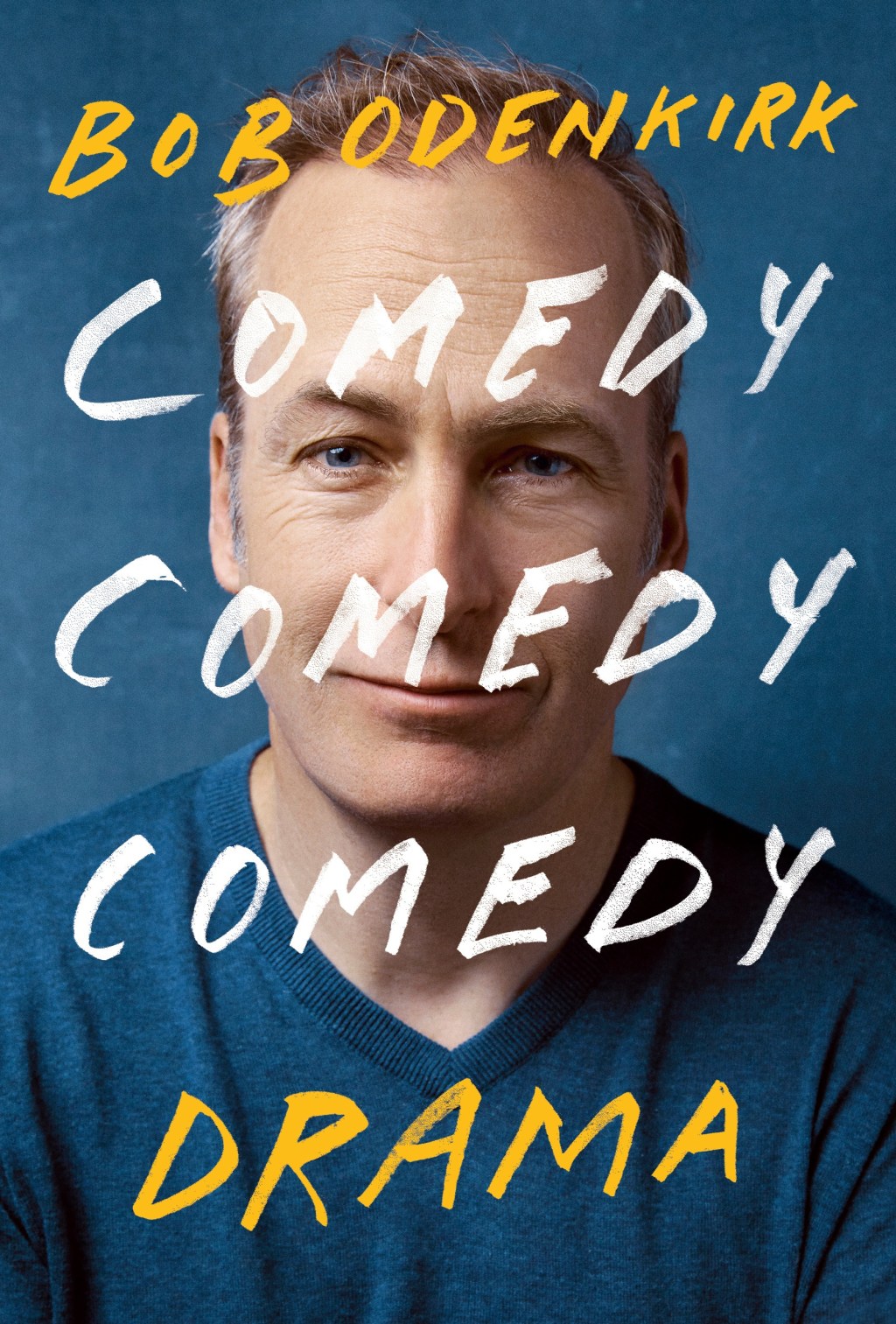
“Bob Odenkirk’s career is inexplicable,” writes Danielle Dresser of Anderson’s Bookshop where Oldenkirk will be signing copies of his new book. “And yet he will try like hell to explicate it for you. Charting a “Homeric” decades-long “odyssey” from his origins in the seedy comedy clubs of Chicago to a dramatic career full of award nominations—with a side-trip into the action-man world that is baffling to all who know him—it’s almost like there are many Bob Odenkirks. But there is just one and one is plenty.
Dresser goes on to say that Bob embraced a life in comedy after a chance meeting with Second City’s legendary Del Close. He somehow made his way to a job as a writer at Saturday Night Live. While surviving that legendary gauntlet by the skin of his gnashing teeth, he stashed away the secrets of comedy writing—eventually employing them in the immortal “Motivational Speaker” sketch for Chris Farley, honing them on The Ben Stiller Show, and perfecting them on Mr. Show with Bob and David.
In Hollywood, Bob demonstrated a bullheadedness that would shame Sisyphus himself, and when all hope was lost for the umpteenth time, the phone rang with an offer to appear on Breaking Bad—a show about how boring it is to be a high school chemistry teacher. His embrace of this strange new world of dramatic acting led him to working with Steven Spielberg, Alexander Payne, and Greta Gerwig, and then, in a twist that will confound you, he re-re-invented himself as a bona fide action star. Why? Read this and do your own psychoanalysis—it’s fun!
Featuring humorous tangents, never-before-seen photos, wild characters, and Bob’s trademark unflinching drive, Comedy Comedy Comedy Dramais a classic showbiz tale told by a determined idiot.
From Comedy to Drama with Bob Odenkirk
Actor, comedian, writer, director, producer and Naperville native, Bob Odenkirk will be at the Yellow Box Theater at the Community Christian Church (1635 Emerson Lane, Naperville, IL) on Thursday, March 3rd at 7pm CT, in conversation with Kim “Howard” Johnson, to discuss his new memoir, Comedy Comedy Comedy Drama. In this “essential” (Entertainment Weekly), “hilarious” (AV Club) memoir, the star of Mr. Show, Breaking Bad, and Better Call Saul opens up about the highs and lows of showbiz, his cult status as a comedy writer, and what it’s like to reinvent himself as an action film ass-kicker at fifty.
Tickets are now available, with limited quantities available! For more information, please visit https://OdenkirkAndersons.eventcombo.com. Book details are listed below.
In her fun very readable Windy City Blues (Berkley 2017; $16), Chicago author Renee Rosen again takes another slice of the city’s history and turns it into a compelling read.
Rosen, who plumbs Chicago’s history to write such books as Dollface, her novel about flappers and gangers like Al Capone, and What the Lady Wants which recounts the affair between department store magnate Marshall Field and his socialite neighbor, says she and her publisher were racking their brains for her next book which encompassed Chicago history.
“She suggested the blues,” says Rosen, who didn’t have much interest in the subject.
But Rosen was game and started her typical uber-intensive research.
“When I discovered the Chess brothers, who founded Chess Records, I fell in love,” she says, noting that when researching she was surprised about how much she didn’t know about the subject despite her immersion in Chicago history for her previous books. “I thought this is a story.”
“As part of my research, I drove the Blues Highway from New Orleans to Chicago,” she says. “I also met with Willie Dixon’s grandson and with Chess family members.”
Combining fact and fiction, Rosen’s story follows heroine Leeba Groski, who struggling to fit in, has always found consolation in music. When her neighbor Leonard Chess offers her a job at his new Chicago Blues label, she sees this as an opportunity to finally fit in. Leeba starts by answering phones and filing but it soon becomes much more than that as she discovers her own talents as a song writer and also begins not only to fall in love with the music industry but also with Red Dupree, a black blues guitarist.
Windy City Blues was recently selected for Chicago’s One Book project, a program designed to engage diverse groups of Chicagoans around common themes. Rosen says she is very honored to be a recipient.
“I put my heart and soul into this book,” she says. “I think it’s a story with an important message. In it are lessons of the Civil Rights movement, what it was like for Jews and people of color along with the history of the blues and the role of Jews in bringing the blues to the world. After all, as the saying goes: Blacks + Jews = Blues.”
Chicago author Alex Kotlowitz has always been willing to tackle the big issues that impact our society and in his book An American Summer: Love and Death in Chicago, he looks at one summer in Chicago to tell the story about violence throughout the United States. Kotlowitz discussed his book with Northwest Indiana Times correspondent Jane Ammeson.
What was the inspiration for writing An American Summer? And can you give us a synopsis of the book in your own words?
I feel like I’ve been working my way to this book for a long while. When some thirty years ago I was reporting There Are No Children Here, it was the violence that unmoored me. The numbers are staggering. In the twenty years between 1990 and 2010, in Chicago 14,033 people have been killed, another 60,000 wounded by gunfire. I’ve long felt we’ve completely underestimated the effect of that violence on the spirit of individuals and the spirit of community. And so I set out to tell the stories of those emerging from the violence and trying to reckon with it, people who are standing tall in a world slumping around them. The book is set in one summer, 2013, and it’s a collection of 14 stories, intimate tales that speak to the capacity of the human heart, stories that I hope will upend what you think you know.
How did you choose who to talk to? How did you find them? And how did you go about choosing which stories to use?
I spent that summer speaking with as many people as I could. I’ve been reporting on many of these neighborhoods for thirty years, so I visited with many of the people I knew. I embedded with a homicide unit. I spent time at a trauma center. I hung out at the criminal courthouse. I spent time on the streets, in churches, at taverns, halfway houses. I was looking for stories that surprised me, that knocked me off balance, hoping they might do the same for readers. And as is often the case, I wrote about people who on some level I admired. For who they are. For how they persevered. For their character. I wrote about people who I came to deeply care about. I wrote about stories that made me smile and that left me anger. I wrote about stories that left me with a sense of hope.
You’ve been writing about violence for 30 years? Do you ever get worn out by it?
It’s by no means all that I’ve written about, but, yes, a lot of my work has dealt with the profound poverty of our cities. I write out of a fundamental belief that life ought to be fair, and so much of the time I land in corners of the country where life isn’t fair at all. Do I get worn out by it? Sometimes. But I come away each time inspired by the people I meet along the way.
I know the number of murders has gone down but so has the number of murders and shootings that are solved. Any thoughts on why that is? And does that have an impact on the continuing violence?
Murders have gone down from the early 1990s, though we saw an unsettling spike in 2016 which approached those numbers of 30 years ago. And, yes, you’re right the clearance rate on homicides and shootings are remarkably low. You have a three in four chance of getting away with murder in Chicago, and a nine in ten chance of getting away with shooting someone and wounding them. Those numbers aren’t a misprint. That inability to solve violent crimes only erodes even further the distrust between communities of color and the police. It erodes even further that there will be justice. And as a result when there’s a sense that there’s no justice, people take matters into their own hands.
What would you like readers to take away from your book?
The humanity of the people I write about. I’m a storyteller. My ambitions are reasonably modest. I guess my hope in the end is after reading these stories, readers will think of themselves and the world around just a little bit differently. And maybe it will nudge along politicians and policy makers to act, to recognize the urgency.
Is there anything else you’d like readers to know?
One final thought. This book takes place in Chicago, but Chicago, despite its reputation, isn’t even among the top ten most violent cities in the country. I could’ve written this book about so many other cities. What’s more, these stories speak to who we are as a nation. In the wake of the tragedies at Newtown and Parkland, we asked all the right questions. How could this happen? What would bring a young man to commit such an atrocity? How do the families and the community continue on while carrying the full weight of this tragedy? In Chicago, in Baltimore, in New Orleans, in the cities across the nation, no one’s asking those questions. What does that say about us?
An American Summer is available in hard cover, digital, and as an audiobook.