Tag: #books

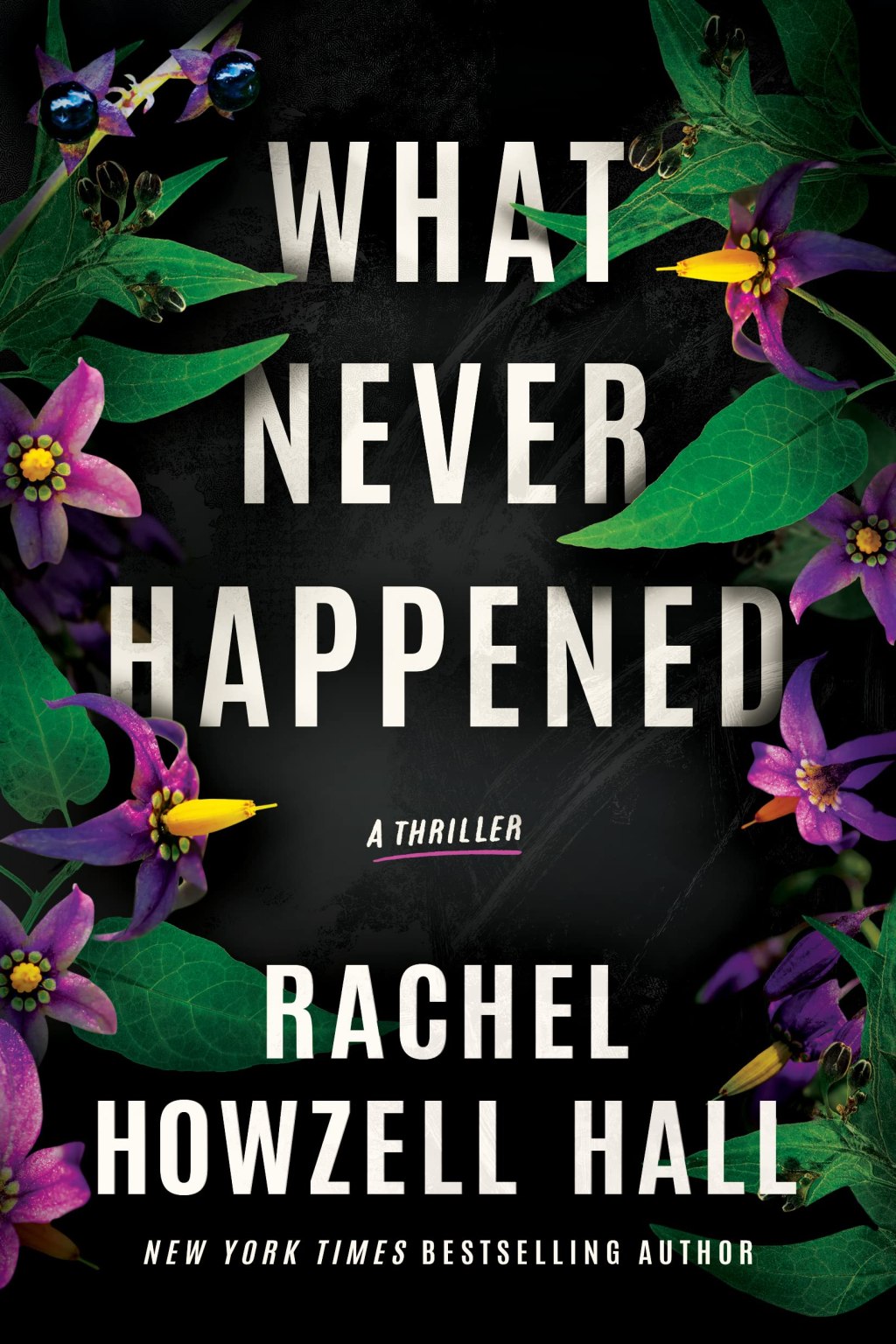
  • Girls and Their Horses by Eliza Jane Brazier

    Girls and Their Horses by Eliza Jane Brazier

    “Horses are healing,” says Eliza Jane Brazier, author of “Girls and Their Horses” (Penguin-Random House), as she walks her horse around the arena while we talk on the phone. Brazier, who first started riding when she was five and has worked as a horse trainer, riding instructor and a head wrangler at a dude ranch, reconnected with her sport and those feelings helped her cope with the death of her husband.

    “I have a horse in my backyard,” she says with a laugh about Tennessee, the draft horse she owns.

    But the love of horses and the pursuit of championships along with the status of the horse owners in the rarefied air of Rancho Santa Fe Equestrian in exclusive Rancho Santa Fe, California can be much more toxic than healthy. This isn’t a jeans and cowboy boots sort of group hanging out in a drafty old barn with straw-covered dirt floors. The equestrian center is all stone and wood beams and the “barn moms” who gather there like it’s a social club can sum the cost of clothes that a new arrival like Heather Parker is wearing just by one quick glance (lucky for Heather she’s wearing an $800 blouse) and how much she’s worth by learning her address.

    And Heather is worth a lot. Her husband stopped telling her how much he was making when it topped $150 million. But money doesn’t make Heather secure, it frightens her. She has other reasons to worry as well. She’s unable to stop her marriage from slipping away, her younger daughter Maple was brutally bullied when they lived in Texas and her older daughter Piper hates the move.

    Their new home is so large that it’s easy to get lost and Heather also carries the scars of her impoverished upbringing and the abandonment by her father.

    She’s determined to make life perfect for her children and she believes that joining the Rancho Santa Fe Equestrian will do just that, creating a bonding experience and also helping her relive and recreate her past. She still feels the pain of losing her barn family when her father left and they no longer had money. She lost friends and overnights and all the things that had made her happy. Now she has the money to give her kids what she missed and is still pining for after all these years.

    Oh, if only it were that easy.

    Her first day at the barn, Heather meets Pamela who takes her in hand. But Pamela has a hidden agenda. Her bank account is filled with nothing but fumes and she sees the rich Parkers as a way to help keep her in good graces with the barn’s owner so she can remain a member. And like Heather, she has a complicated back story as well.

    Add to that, Maple doesn’t like horses. And Piper is jealous because Maple gets a horse the costs seven figures. It’s all so complicated.

    And it becomes even more so when a mysterious death occurs in the barn.

    Brazier’s opening chapter sums up the atmosphere of the rich barn culture perfectly.

    “Oh, I can tell you exactly what happened,” replied the tiny young girl in an expensive riding habit told the police who had been waiting for her to finish her competition at an international horse show when asked if she knew of the murder and what had occurred in the first chapter of the book. “Do you have a mother?” Indeed, this is a wickedly fun murder mystery where the mothers are often more driven for their daughters to succeed than the girls are themselves. “Horses are like mirrors.

    They reflect all the good parts and the bad parts of ourselves back at us,” is a quote from the book.

    “It’s a mean girl kind of place,” says Brazier who is training in show jumping when she’s not writing mystery novels. “And things go deeper and deeper as time goes on.”

    This article originally appeared in the Northwest Indiana Times.

  • Dinner’s in the Oven: Simple One-Pan Meals

    Dinner’s in the Oven: Simple One-Pan Meals

    I’m a huge fan of Rukmini Iyer and am revisiting an old favorite Dinner’s in the Oven: Simple One-Pan Meals (Chronicle Books 2018; $19.95), featuring wonderfully easy sheet-pan recipes that always wow people when you bring them to the table. Hah! Little do they know how quick they are to assemble and cook. But we’ll let that be a secret between us.

    First of all, the cookbook is beautiful as would be expected as Iyer, who is based in London, is a food stylist and has worked for such businesses as Fortnum & Mason, The Guardian, The Sunday Times, Macmillan Coffee Mornings, The British Heart Foundation, Phaidon, Quadrille Books and Kyle Books, the latter three are three publishing companies known for their cookbooks. Her other cookbooks include Vegetarian Dinners in the Oven: One-Pan Vegetarian and Vegan Recipes, the Roasting Tin series which have sold over 1.75 million copies to date, an India Express: Fresh and Flavorful Recipes for Everyday.

    The great thing about her recipes is that once made they look sophisticated but are extremely easy. But to make it even better, Iyer has composed the book so that it starts off with the easiest recipes first so you learn as you move more forward plus she shows how we can make adaptations and provides charts on how to do so.

    “The nicest thing about oven-made meals is that they are versatile and forgiving,” Iyer writes in the introduction to her book, adding that the recipes require the barest minimum in terms of effort—a little light chopping to start, then tasting and adjusting the salt or lemon juice at the end. “Most importantly, they leave you free to do something else while dinner looks after itself—have a bath, help the children with their homework, or, my preferred option, flop on the sofa with a glass of wine.”

    Iyer describes the French Tomato and Mustard Tart with Tarragon as one of the easiest and most satisfying dishes in the book in her book.

    “The paprika gives it a wonderful smokiness,” she says, “but you could easily use a combination

    of honey and mustard as an alternative. It’s that simple.”

    Spicy Chipotle Chicken Wings with Sweet Potato Wedges, Cilantro & Lime Yogurt

    Serves: 4

    Prep: 10 minutes; Cook: 1 hour

    • 1 3/4 pounds chicken wings, separated into wingettes and drumettes
    • 1 3/4 pounds sweet potatoes, peeled and cut into 1-inch [2½cm] wedges
    • 2 teaspoons chile powder
    • 1 teaspoon smoked paprika
    • 1 tablespoon dark brown sugar
    • 3 tablespoons olive oil
    • Sea salt
    • Zest and juice of 1 lime, plus lime wedges, to serve
    • 4 to 5 tablespoons Greek yogurt
    • A handful of fresh cilantro leaves, chopped, plus more to serve

    Preheat the oven to 350°F. Place the chicken wings and sweet potato wedges in a large roasting pan or rimmed baking sheet.

    Mix together the chile powder, smoked paprika, brown sugar, olive oil, 2 teaspoons sea salt, and half of

    the lime zest and juice. Pour the mixture over the chicken and sweet potatoes and mix well with your

    hands to coat evenly. Transfer to the oven and roast for 40 minutes.

    Turn the heat up to 400°F and roast for a further 20 minutes, to crisp the chicken skin.

    Meanwhile, mix together the yogurt, chopped cilantro, remaining lime zest and juice, and a pinch of seasalt. Set aside.

    Sprinkle the chicken wings and sweet potatoes with cilantro leaves and serve with lime wedges and the yogurt dip alongside.

    Smoky Sausage, Sweet Potatoes and Red Onions

    Serves: 4

    Prep: 10 minutes

    Cook: 50 minutes

    • 8 to 12 good-quality fresh pork sausages (approx. 13/4 pounds [800g] total) links
    • 3 sweet potatoes, peeled and cut into chunky wedges
    • 2 red onions, cut into eighths
    • 6 cloves garlic
    • 4 teaspoons smoked paprika
    • A good splash of olive oil
    • Sea salt and freshly ground black pepper

    Preheat oven to 350°F.

    In a roasting pan, toss the sausages, sweet potato wedges, red onions, garlic, and smoked paprika with

    the olive oil. Season well with sea salt and freshly ground black pepper.

    Transfer to the oven and roast for 45 to 50 minutes, until the sweet potatoes are cooked through and

    the sausages are sticky and slightly charred. Serve immediately.

    French Tomato and Mustard Tart with Tarragon

    Serves: 4

    Prep: 10 minutes; Cook: 30 minutes

    • One 10-by-15-inch sheet frozen puff pastry, thawed
    • 2½tablespoons Dijon mustard
    • 3/4 pound vine-ripened tomatoes, thinly sliced
    • 4 teaspoons finely chopped fresh tarragon
    • 1 teaspoon sea salt
    • Freshly ground black pepper
    • 1 tablespoon extra-virgin olive oil

    Preheat the oven to 425°F. Place the puff pastry on a parchment paper–lined rimmed baking sheet.

    Spread the mustard all over, leaving a 3/4-inch border around the edges. Arrange the sliced tomatoes on

    the mustard. Sprinkle on the tarragon, sea salt, and freshly ground black pepper and drizzle with the olive oil.

    Transfer to the oven and bake for 25 to 30 minutes, until the edges of the tart are golden brown and crisp. Serve immediately.

    The above recipes are reprinted from Dinner’s in the Oven by Rukmini Iyer with permission by ChronicleBooks.

  • Night Shift by Robin Cook

    Night Shift by Robin Cook

    His mother-in-law has moved in with him, his young daughter has been diagnosed as being on the autism spectrum, his son’s school wants an ADD diagnosis, and his wife’s promotion to Chief Medical Examiner has turned her into a nemesis in some ways as she now expects her husband to no longer go rogue when investigating a potential homicide.

    What’s a seasoned medical examiner to do?

    For Jack Stapleton, whose irreverent style and sarcastic humor often get him into trouble, the answer is to find a very compelling case to dive into. And fate intervenes when the body of Dr. Sue Passero, his wife’s best friend, lands on Jack’s autopsy table. But even after the autopsy is completed, Jack is still at a loss as to how the seemingly healthy doctor died. Was it a drug overdose? A heart attack? None of the toxicology tests show that’s the answer. So Jack, trying to avoid the tension at home, starts investigating. He talks to Cherine Gardener, a colleague of Passero’s, who tells him that Sue believed there was serial killer roaming Manhattan Memorial Hospital, where the two worked together.

    Gardener promises to meet Jack the next day to tell him more. And she does, but not in the way expected. Just as Sue showed up unexpectedly on his autopsy table the day before, now it’s Cherlne who is dead. Did she really die of a drug overdose? What about the witness who heard her scream, the sounds of fight, and a stranger fleeing down the stairs and out the door? Could she have been murdered to keep from revealing more about the death rate at the hospital? Jack’s good buddy, police detective Lou Saldano, suspects it was a homicide and warns Jack to leave the investigation to the police.

    But Jack’s not good at following rules. And now the killer wants him dead, too.

    Author Robin Cook, a medical doctor whose second book Coma, released in 1977, was a bestseller and made into a blockbuster movie, is considered to have created the medical mystery genre.

    In Coma and his other novels, Cook adds another layer to his plots as he has his protagonists grapple with modern medical issues and the role of private equity ownership putting profits over patients in the hospitals they run. Because of that, the killer in Night Shift easily gets away with his crimes and adds to the obstacles Jack encounters when trying to determine not only how the two women died and why but to stop future deaths including his own.

    In Night Shift, Cook’s 37th novel, he shows that he hasn’t lost his touch.

    This review originally ran in the New York Journal of Books.

  • Jacques Pépin Cooking My Way: Recipes and Techniques for Economical Cooking

    Jacques Pépin Cooking My Way: Recipes and Techniques for Economical Cooking

    This is a pleasure of a cookbook full of great recipes . . .”

    Jacques Pépin, winner of 16 James Beard Awards and author of over 30 cookbooks, has taken his considerable skills and created Cooking My Way, a charming cookbook of easy-to-make recipes designed not only to save money but also time and effort. To add to its delight are his wonderful pastel drawings. It is a cookbook full of good sense, with Pépin, who has starred in 12 PBS cooking shows, sharing how he saves money without impacting the quality of the food he prepares.

    “Buying seasonally is another way to approach economy in the kitchen,” he writes in the book’s introduction. “More often than not, I create my menus at the supermarket, looking for the best, but also the least expensive, and striking a balance between the two.”

    Pépin buys fruits and vegetables in season when they are most flavorful, nutritious, and less costly. The same goes with other ingredients. When whole turkeys are on sale (or in Pepin’s words “attractively priced”) in autumn and winter, he buys them. Lamb and ham grace his menu in the springs when stores are more likely to have them on special. As for pricey seafood, summer is the best time to purchase fish and shellfish as it is most abundant during warm weather.

    It’s also important, he says, to know that first impressions can be misleading when it comes to buying ingredients.

    “For example,” Pépin continues, “the outside leaves of a head of escarole may be wilted or damaged and therefore sold at a discounted price, I will still buy it because the center, the part I want to use, is white, firm, sweet, and tender.”

    Pépin, who founded the Jacques Pépin Foundation, which is dedicated to culinary education, has lessons to impart in this book. Among these are versatility and using not only what is in season and attractively priced but also whatever you have on hand. Because Pépin doesn’t let leftover bread go to waste, there’s a recipe for Cauliflower and Crumbs in which he recommends making your own breadcrumbs using either stale or fresh bread. And there’s his unique Bread Flapjacks. It’s a savory recipe with leftover bread, egg, chopped onions, and herbs. But Pépin shows how you can turn it into a sweet flapjack dish by adding sugar and leftover fruit such as an apple or banana.

    This is a pleasure of a cookbook full of great recipes such as Flan of Green Herbs, Grits and Cheese Souffle, Sweet and Spicy Curried Chicken, and Braised Pork and Cabbage which are intriguing but simple to make is made even better by the full-color photos by Tom Hopkins, and the effort that Pépin has put into it to ensure that we cook wisely and well.

    This review originally ran in the New York Journal of Books.

  • Dead Mountain by Douglas Preston & Lincoln Child

    Dead Mountain by Douglas Preston & Lincoln Child

    Two fraternity brothers taking a drunken joyride after too much Captain Morgan Spiced Rum crash their Jeep in the mountains of New Mexico on a freezing winter night. With no cell service available, they manage to find a cave to spend the night. Unfortunately for them they discover several other things as well. Besides ancient petroglyphs and a body resting in a prehistoric burial site which needs to be returned to ancestral lands, there’s also the remains of two students who went missing 15 years ago in a case code named “Dead Mountain.”

    The students were among a group of eight experienced mountaineers who for some reason became so afraid that they fled their tent half naked into a raging blizzard. The bodies of some had been found but now one remains missing.

    What happened that night so long ago and where is the missing student? With the case reopened, the services of archaeologist Nora Kelly and FBI Agent Corrie Swanson are called into action in this fourth book (though it works as a standalone) series about Nora Kelly written by Douglas Preston and Lincoln Child, the New York Times bestselling authors. Solving a cold case from so long ago is never easy, but the investigation is confounded by other issues as well. The parents of the deceased students believe there’s a cover-up going on and are actively protesting and Nora’s brother, Skip, has gotten into a tussle with a bombastic and media-seeking sheriff who is up for re-election, and now Skip is charged with attempted murder. 

    As Nora and Corrie continue investigating, they realize there are many long-buried secrets tied to the disappearance of the students and outside forces working against them to keep those secrets well hidden and now that the case is reopened, their own lives may be in jeopardy as well. 

    “As Corrie moved farther and farther down the passage, she began to feel like a character from some dreadful Twilight Zone episode: trapped in an endless tunnel of concrete, destined to walk down it forever and ever. . . .“

    “Why are we whispering?” Nora answered with a short laugh. “There’s no one here.”

    Corrie snorted. “You’re right. Only the dead…” 

    Soon after they discover the body of the last missing student. 

    “It took a moment for Corrie to pull herself together and examine the scene. A man lay on the bed, hands folded across his breast, looking more like a corpse laid out for viewing.” 

    But the two women were wrong about only the dead being nearby. Isolated in the frigid landscape of the mountains where the tragic deaths had occurred all those years ago, their investigation has led Swanson and Kelly to the truth and directly into the path of a group of men desperate to keep them from revealing it. 

    This review originally appeared in the New York Journal of Books.

    For ebook and audiobook versions of “Dead Mountain” click here.

  • Three Charming Villages on the shores of Lake Chapala

    Three Charming Villages on the shores of Lake Chapala

    Born in the United Kingdom, Tony Burton, a Cambridge University-educated geographer with a teaching certificate from University of London, first traveled to Mexico after spending three years as a VSO [Voluntary Service Overseas] volunteer teaching geography, and writing a local geography text, on the Caribbean island of St. Kitts. From there his travels took him to Mérida in summer 1977, where he spent several weeks backpacking around southern and central Mexico, returning two years later to teach at Greengates School in Mexico City.

    Over the next seven years, Tony traveled extensively throughout Mexico, visiting every state at least once, and organizing numerous four-day earth science fieldwork courses for his students. He co-led the school’s extensive aid efforts following the massive 1985 earthquake.

    From Mexico City, he moved to Guadalajara, where he continued to organize short, residential fieldwork courses for a number of different schools and colleges and began organizing and leading specialist eco-tours for adult groups to destinations such as Paricutín Volcano, the monarch butterfly sanctuaries, and Copper Canyon.

    An award winning author, he’s written numerous books about Mexico including his latest Lake Chapala: A Postcard History (Sombrero Publishing). It’s part of a series he’s written on this region which is located about an hour south of Guadalajara. The 417-square-mile lake, Mexico’s largest, located in the states of Jalisco and Michoacán is situated at an elevation of  5,000ft in the middle of the Volcanic Axis of Mexico and is known for its wonderful climate, laid-back ambience, and is a popular destination for both travelers and ex-pats looking for a charming, low-key place to relocate. The three main towns along the lake are Chapala, Ajijic and Jocotepec. In an intriguing aside, Tony met his wife Gwen Chan Burton when she was working as at the director of the pioneering Lakeside School for the Deaf in Jocotepec. Gwen writes about the school and all that it has accomplished in her book, New Worlds for the Deaf, also published by Sombrero Books.

    Tony’s other books about this region include Western Mexico A Traveler’s Treasury, illustrated by Mark Eager, now in its fourth edition; Mexican Kaleidoscope: Myths, Mysteries and Mystique, illustrated by Enrique Veláquez, and Foreign Footprints in Ajijic: Decades of Change in a Mexican Village. I’ll be covering them in upcoming posts.

    Because I’m always interested in foodways, Tony was kind enough to share a copy of an undated Spanish language project put together by students from the Instituto Politécnico Nacional School of Tourism titled “Gastronomy of Jalisco.”  It includes numerous recipes from the region including one for the famous Caldo Michi of Chapala (the recipe is below).

    I had the chance to ask Tony, who currently is the editor of MexConnect, Mexico’s leading independent on-line magazine, about Lake Chapala: A Postcard History as well as the time he spent in this beautiful region of Mexico.


    How did you first become familiar with Lake Chapala?

    I first visited Lake Chapala in early 1980, on my way back to Mexico City from the Copper Canyon and Baja California Sur. Little did I imagine then that it would be where I would later fall in love, get married, and have two children!

    What inspired you to write Lake Chapala: A Postcard History?

    There is no single overwhelming inspiration. I realized, while living at Lake Chapala and writing my first books about Mexico, that a lot of what had been previously written was superficial and left many unanswered questions. In the hopes of finding answers, I decided to trawl through all the published works (any language) I could find, which resulted in Lake Chapala Through the Ages (2008), my attempt to document and provide context to the accounts of the area written between 1530 and 1910.

    My next two books about Lake Chapala—If Walls Could Talk: Chapala’s Historic Buildings and Their Former Occupants, and Foreign Footprints in Ajijic: Decades of a Change in a Mexican Village—focused on the twentieth century history of the two main centers for the very numerous foreign community now living on ‘Lakeside.’ Part of my motivation was to dispel some of the myths that endlessly recirculate about the local history, as well as to bring back to life some of the many extraordinary pioneering individuals indirectly responsible for the area becoming such an important destination for visitors.

    Lake Chapala: APostcard History is my attempt to widen the discussion and summarize the twentieth century history of the entire lake area. Its reliance on vintage postcards makes this a very visual story, one which I hope will appeal to a wide readership, including armchair travelers.


    What were some of the challenges you encountered in writing this book? Was it difficulty finding the numerous postcards you included? And doing the extensive research that went into the book? Are there any intriguing stories about hunting down certain postcards and any “aha” moments of discovery when writing your book?

    The main challenge was in deciding how best to structure the material. Because of the originality of what I’m doing, it is impractical to follow the advice that writers should start with a detailed plan and then write to that plan! In my case, after collecting the information and ideas that exist, the challenge is to select what can be teased and massaged into a coherent and interesting narrative.

    Because the postcard book is the product of decades of research, I had ample time to build my personal collection of vintage postcards, through gifts, auctions and online purchases.

    There were many significant “aha” moments in the process: some concerned the photographers and publishers responsible for the postcards and some the precise buildings or events depicted. While I’m saving some of these “aha” moments–because they are central to a future book–one was when it suddenly dawned on me that wealthy businessman Dwight Furness was the photographer of an entire series of cards (Figs 6.3, 6.4, 6.5, etc.) that relate to my next response.


    If you could go back in time to visit one of the resorts that is no longer there that you featured in your book, is there one that stands out and why is that?

    Ooohhh; I’d love to go back to about 1908 and stay at the Ribera Castellanos resort (Chapter 6) during its heyday. While staying there, perhaps I could interview owner Dwight Furness, his wife and a few guests? Apart from a few ruined walls, Furness’ postcards of the resort are pretty much the only remaining evidence of the hotel. And perhaps one night I could invite local resident and prolific professional photographer Winfield Scott and his wife to dinner to hear their stories?

    How long did it take to write Lake Chapala?

    The writing took less than a year; but only because of the many prior years of research.

    Since I often talk about food and travel, are there any culinary specialties in the Lake Chapala region?

    Long standing culinary specialties of the area include (a) Lake Chapala whitefish (b) charales (c) caldo michi. And, when it comes to drinks, there is a very specific link to postcards. The wife of photographer José Edmundo Sánchez, who sold postcards ( Figs 7.5, 7.6 and 7.7) in the 1920s from his lakefront bar in Chapala, is credited with inventing sangrita, still marketed today as a very popular chaser or co-sip for tequila. (Chapter 7, page 74).

    Is there anything else you’d like readers to know about your book?

    I hope readers find the book as fun and interesting to read as it was to write!

    MICHI BROTH

    Ingredients:

    • 2 tablespoons corn oil
    • ¾ kg of tomato seeded and in pieces
    • ¼ onion in pieces
    • ½ kg carrot, peeled and cut into diagonal slices
    • ½ kg of sliced ​​zucchini
    • 4 or 6 chiles güeros
    • 100 gr. chopped coriander
    • 2 sprigs of fresh oregano
    • Salt to taste
    • 2 ½ liters of water
    • 1kg well washed catfish, yellow carp or red snapper

    PREPARATION: Heat the oil and stew the vegetables in it, add water and salt to taste, let it simmer over low heat until the vegetables are well cooked, then add the fish and leave it for a few minutes more until it is soft.

    Sangrita

    I had the opportunity to stay at Tres Rios Nature Park, a 326-acre eco-resort north of Playa del Carmen and was first introduced to sangrita during my stay. I took several cooking lessons and learned to make a dish with crickets, but that is a different story. Chef Oscar also talked to us about the history of sangrita. The Spanish name is the less-than-appetizing “little blood” but hey, when you’re learning to grill crickets, you can deal with a name like that. The drink, as Tony writes in his postcards book, originated in Chapala in the 1920s.

    Here is the excerpt:

    ”In the same year the Railroad Station opened, Guillermo de Alba had become a partner in Pavilion Monterrey, a lakefront bar in a prime location, only meters from the beach, between the Hotel Arzapalo and Casa Braniff,” he writes. “The co-owner of the bar was José Edmundo Sánchez. Regulars at the bar included American poet Witter Bynner, who first visited Chapala in 1923 in the company of D H Lawrence and his wife, Frieda. Bynner subsequently bought a house near the church. When de Alba left Chapala for Mexico City in 1926, Sánchez and his wife—María Guadalupe Nuño, credited with inventing sangrita as a chaser for tequila—ran the bar on their own. After her husband died in 1933, María continued to manage the bar, which then became known as the Cantina de la Viuda Sánchez (Widow Sánchez’s bar).”

    Sangrita is typically used as accompaniment to tequila, highlighting its crisp acidity and helping to cleanse the palate between each peppery sip. According to Chef Oscar, the red-colored drink serves to compliment the flavor of 100% agave tequila. The two drinks, each poured into separate shot glasses, are alternately sipped, never chased and never mixed together.

    Here is Chef Oscar’s recipe and below is one from Cholula hot sauce which originated in Chapala. Tony has a great story about that as well. More in my next post on his books.

    For one liter of Sangrita:

    • 400 ml. orange juice
    • 400 ml. tomato juice
    • 50 ml. lemon juice
    • 30 ml. Grenadine syrup
    • 20 ml. Worcestershire sauce
    • Maggi and Tabasco hot sauce (mixed up) to taste
    • Salt and pepper to taste

    Mix together all the ingredients and serve cold. Suggested duration of chilling : 3 to 4 days.

    Cholula’s Sangrita

    • 1/4 cup (2 ounces) fresh orange juice
    • 1/4 cup (2 ounces) fresh grapefruit juice
    • 2 tablespoons fresh lime juice
    • 20 pomegranate seeds
    • 3 fresh sprigs of cilantro or to taste
    • 1/2 stalk celery
    • 3 teaspoons smoked coarse sea salt or sal de gusano, divided
    • 1 tablespoon Cholula® Original Hot Sauce

    Place all ingredients except salt in blender container, with about 1 cup ice cubes. Puree until smooth.Strain twice though a fine mesh sieve, discarding any solids.

    Rim shot glasses with sea salt. Serve sangrita cold in rimmed shot glasses alongside your favorite tequila.

  • C-SPAN’s Book TV is again partnering with the Library of Congress to bring the 2023 National Book Festival to a national television audience, live and on-site.

    C-SPAN’s Book TV is again partnering with the Library of Congress to bring the 2023 National Book Festival to a national television audience, live and on-site.


    As an original supporter of the National Book Festival, C-SPAN’s Book TV is contributing the following for this year’s event – held on Saturday, August 12, at the Walter E. Washington Convention Center:

    • live coverage of author interviews and panel discussions.
    • lengthy live call-in interviews with nonfiction authors on location from the grand lobby.
    • 20,000 totes promoting both the Library of Congress and C-SPAN’s Book TV available to Festivalgoers.
    • public access to its video coverage via C-SPAN’s online archives at C-SPAN.org.


    C-SPAN’s Book TV has been providing live, in-depth, uninterrupted coverage of the National Book Festival – and partnering with the Library of Coverage on promotion – since the event began on September 8, 2001.

    Book TV’s LIVE coverage has taken C-SPAN’s audience to the Festival’s various venues – U.S. Capitol grounds (2001), a vast tent city on the National Mall (2002-2013), an expo-style event in the Washington Convention Center (2014-2019), a virtual event during the pandemic (2020-2021), and back to the Walter E. Washington Convention Center (2022).

    Book TV’s extensive coverage of nonfiction authors appearing at the National Book Festival kicks off the network’s coverage of book fairs held throughout the country in the fall. And the celebration of C-SPAN’s 25 years of Book TV will launch from this year’s festival.


    About Book TV:
    Book TV – Sundays on C-SPAN2 – is the only television service dedicated to nonfiction books. Book TV features programming on a rich variety of topics, such as history, biography, politics, current events, the media and more. Watch author interviews, book readings and coverage of the nation’s largest book fairs. Every Sunday on C-SPAN2 starting 8 am ET or online anytime at booktv.org. Use that website as well to connect with Book TV via social media and the email newsletter.

    About C-SPAN:
    C-SPAN, the public affairs network providing Americans with unfiltered access to congressional proceedings, was created in 1979 as a public service by the cable television industry and is now funded through fees paid by cable and satellite companies that provide C-SPAN programming. C-SPAN connects with millions of Americans through its three commercial-free TV networks, C-SPAN Radio, C-SPAN Podcasts, the C-SPAN Now app, C-SPAN.org and various social media platforms.

    The network’s video-rich website contains over 270,000 hours of searchable and shareable content. Engage with C-SPAN on Twitter, Facebook, Instagram and YouTube, and stay connected through weekly and daily newsletters. 


    Full 2023 National Book Festival Book TV
    Coverage Schedule, Saturday Aug. 12

    9amET Interview Librarian of Congress Carla Hayden

    9:30am Authors Panel: Accidental Spies
    Authors: John Lisle “The Dirty Tricks Department”;
    Janet Wallach “Flirting with Danger”
    Moderator: CBS’s Jeff Pegues

    10:30am Interview Author R.K. Russell, “The Yards Between Us”

    10:45am Authors Panel: Environmental Awakening vs. Climate Change
    Authors: Douglas Brinkley “Silent Spring Revolution”;
    David Lipsky “The Parrot and the Igloo”
    Moderator: Jenn White of NPR

    11:45 Interview: Charles “Cully” Stimson, senior legal fellow at The Heritage Foundation
    “Rogue Prosecutors: How Radical Soros Lawyers Are Destroying America’s Communities.”

    12pm Author Talk: Sports and Culture
    Author: R.K. Russell, “Yards Between Us”
    Moderator: LZ Granderson of the LA Times

    12:45pm Interview, David Rubenstein

    1pm Author Panel: Escaping Genocide and Human Trafficking
    Authors: Tahir Hamut Izgil, “Waiting to Be Arrested at Night”;
    Saket Soni, “The Great Escape”
    Moderator: Washington Post’s Jason Rezaian

    2:20pm Interview Librarian of Congress Carla Hayden

    3:15pm Interview with Chasten Buttigieg, “I Have Something to Tell You”

    3:30pm Author Panel – Behind the Scenes with Black Writers
    Authors Camille Dungy and Tiphanie Yanique
    Moderator: Author Jericho Brown

    4:30pm Joan Biskupic, “Nine Black Robes”

    4:45pm Author Panel – Dig In: What Food Says About Us
    Authors Cheuk Kwan and Anya von Bremzen
    Moderator: Wash. Post Food Writer Daniela Galarza

    For more information c-span.org/booktv

  • Henry VIII’s Children: Legitimate & Illegitimate Sons & Daughters of the Tudor King

    Henry VIII’s Children: Legitimate & Illegitimate Sons & Daughters of the Tudor King

    “This book is a compelling read as Angus is a clear, concise, and talented writer who makes even small facets of long ago lives fascinating.”

    The irony of Henry VIII is acute. The once dashing heroic young man who succumbed to gluttony, cruelty, and, though it was done in a state-sanctioned manner, the murder of unwanted wives in hopes he could finally sire an heir, had at least one and most likely more illegitimate sons. But Edward, born of his third wife, Jane Seymour, who gained the throne with the beheading of his second wife, Anne Boleyn, was sickly and would die after a short stint as king.

    And thus, first Henry’s legitimate daughter Mary, to be soon known as Bloody Mary because of her religious fanaticism, and then Elizabeth would come to rule. There is more irony here as well. Mary was the daughter of Henry and his first wife, Katharine of Aragon, who was cast aside so that he could marry Anne. Elizabeth 1 was born of that short-lived union. Both Mary and Elizabeth’s early childhoods were filled with rejections and loss of status. Things grew more precarious after her mother’s death. Her father was off with his next wife—there would be six all together and Mary, after Edward’s death, saw her half-sister, a Protestant to boot, as a rival for the throne. It was as dysfunctional of a family as any on a Jerry Springer show.

    But what went on between these two siblings isn’t the only story regarding Henry’s children. And Caroline Angus, author of Henry VIII’s Children has written an immensely readable history of Henry’s other children, their mothers, and how they fit into Tudor society.

    “The tales of King Henry VIII’s illegitimate children are stories made form precious few recorded clues, plus memory, slander, gossip, and conjecture,” writes Angus. “But within the dramatic lives of the Tudor dynasty, almost anything is possible.”

    It was while Henry was married to his first wife, Katharine of Aragon, the widow of his brother Arthur, who was pregnant with his child, that he impregnated Bessie Blount. Still in her teens, Blount was in the third tier of Katharine’s ladies-in-waiting, not noble or wealthy enough to be in the first or second ranks but better than the fourth tier. Her job was to fetch and hold items for the queen and deliver messages. For that, she received her own room and servant and was granted permission to keep pets in the royal household.

    Bessie wouldn’t be the first of the Queen’s ladies that Henry bedded. He had already had an affair with at least one and would embark relations with several others. Katharine’s lost her child, much to the chagrin of the kin who was tired of his wife’s inability to give him a son. Bessie did much better and Henry was delighted with their son who was called Henry Fitzroy. The term Fitzroy is French word meaning “son of a king” and was used by the English to denote an illegitimate child. Henry bestowed upon titles and lands upon little Henry while Katherine just had to smile and bear it. That’s what women had to put up with in those days.

    Angus’ research is so extensive that readers even learn what Fitzroy ate for his afternoon meal. The first course was pottage, boiled beef, mutton, geese, capons, veal, and custard. If that sounds like a lot consider the second course consisted of lamb or kid, rabbits, pigeons, wildfowl, a tart or baked meat, fruits, and four gallons of ale and two pitchers of wine. Now, of course, some of that was probably for those who were dining with him. Fitzroy’s dinner meal was equally heavy and included 12 sweet desserts.

    In another touch of irony, after Henry divorced Katharine, he could have made Fitzroy legitimate by marrying Bessie Blount whose husband had just died. But he was so entranced by Anne Boleyn that he married her instead, believing she would give him a son. She didn’t and lost her head.

    There were other illegitimate children scattered around, probably more than history reveals. Anne’s sister Mary oldest son and daughter, Catherine and Henry Carey, were said to be Henry’s children. So was Ethelreda Malte, whose mother was a laundress. John Perrot claimed he was the son of Henry. And there were rumors Henry was the father of Thomas Stuckley, Richard Edwardes, and Henry Lee.

    This book is a compelling read as Angus is a clear, concise, and talented writer who makes even small facets of long ago lives fascinating.

    This article orignally appeared in the New York Journal of Books.