Tag: Book Review

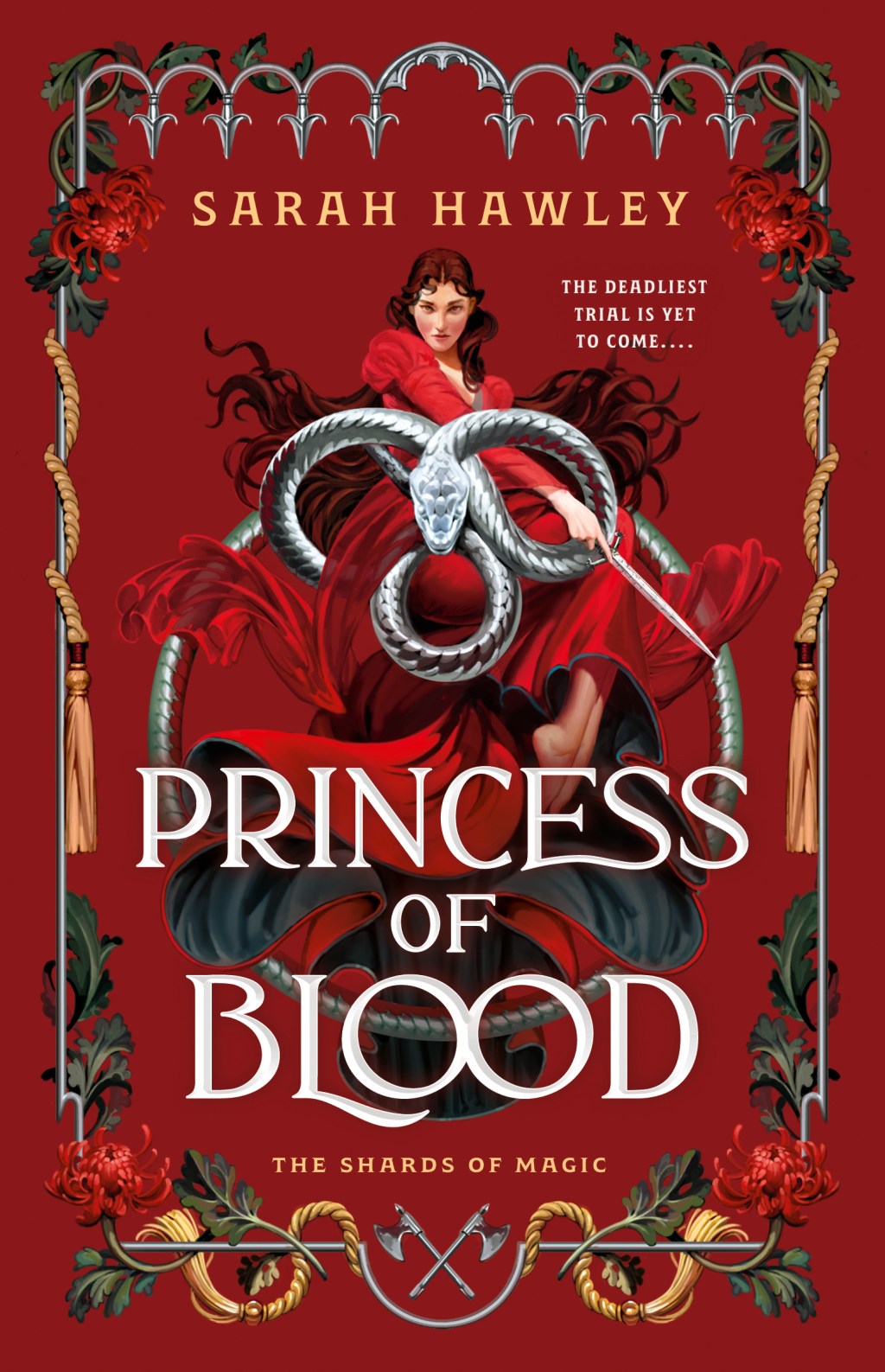
  • Princess of Blood

    Princess of Blood

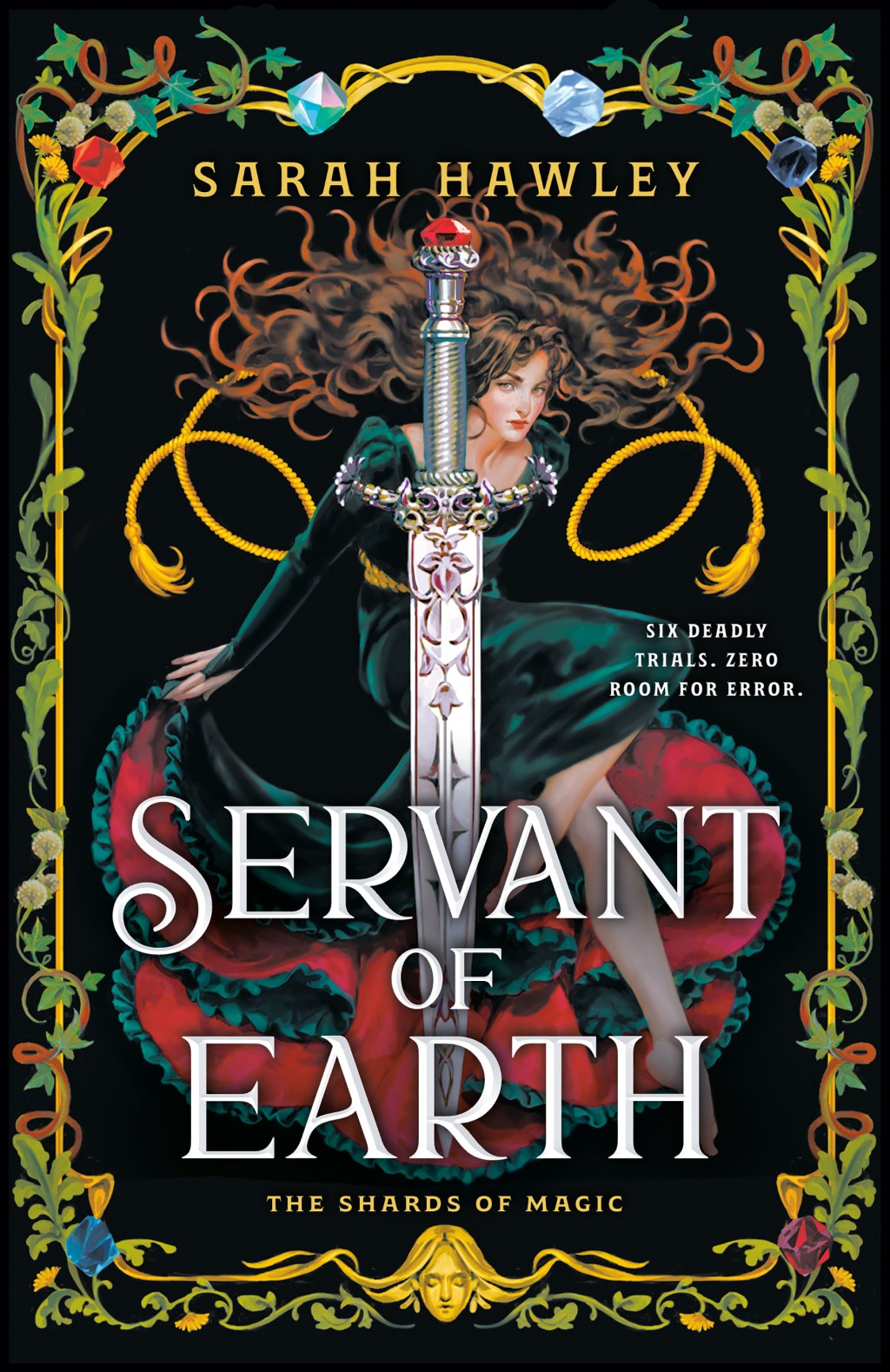
    I devoured Sarah Hawley’s Servant of Earth, the first in her Shards of Magic triology, a romantasy that centers around Kenna, a young woodland girl, held in contempt in her village, who, trying to save her only friend, finds herself a slave in the opulent world of the Fae. These beautiful and magical creatures over-indulge in the pleasures and sins of life–sumptuous food and drink, complicated love affairs, glamorous surroundings, and evil machinations.

    The world of the Fae is one of danger, false friendships, and death. To survive, Kenna must outwit and out manuever the most powerful of the Fae. You can read my review here.

    I eagerly awaited Hawley’s second book, Princess of Blood, and was not disappointed when it came out earlier this fall. It’s darker as Kenna becomes enmeshed in a power struggle over who will rule the Fae, a battle that imperils her life and those of her friends and followers. Now, I’m hoping that Hawley is working hard on the third and final book in the trilogy as I’m eager to see how it all turns out.

    I again had the chance to interview Hawley and thought I’d include the Q & A here.

    Were there specific myths, legends, your previous work as an archaeologist or personal experiences that influenced the book’s political intrigue, power struggles, or Fae society?

    I’ve always loved reading about the Fae in folklore and fantasy novels! They’re a fascinating combination of whimsical, deadly, beautiful, mercurial, and mysterious, and there are so many ways a writer can pay homage to that lore and take it in new directions.

    Many Fae stories include underground elements because the folklore is tied to burial mounds and the remains of ancient structures. Those archaeological sites developed a reputation for being gateways to a mysterious Fae underworld, which served as the inspiration for the subterranean kingdom of Mistei. Combining that dramatic setting and the tricky nature of the Fae in fairy tales led to the complicated politics and power struggles explored in SERVANT OF EARTH and PRINCESS OF BLOOD.

    Princess of the Blood explores such heavy themes as trauma, healing, betrayal, murder, and forging new alliances. How did you approach exploring such difficult and emotionally compelling but difficult subjects in your writing? And how did you react emotionally when writing about such things?

    Fantasy novels are a great way to explore dark themes that are relevant to our lives. The fantastical setting adds an element of distance while also allowing for very high stakes. It can be difficult to write such heavy content (I feel bad for my characters sometimes!) and I definitely cried while writing certain passages, but I also think it’s a wonderful way to explore themes of healing and growth. I spend a lot of time thinking about how my characters’ emotions and traumas would impact their actions and how they might change over the course of the story.

    How did your background in archaeology shape the historical textures and power dynamics in your fantasy world? After all there were a lot of complex, traumatic and emotional plot lines in ancient times as well as diverse architecture.

    My background in archaeology definitely impacts my worldbuilding. I’m always thinking about how a society is laid out, from its geography to its social hierarchy, as well as how the characters move through that space. How do they dress and act to signify their status as an insider or outsider? What are the rituals of everyday life? I also like to consider how my characters relate to their own world’s past—their history and myths and the combination of fact, fiction, and propaganda that impacts their beliefs. Their politics and actions are shaped by the stories they tell themselves, just as ours are. I always want the reader to have a sense of an expansive world where countless stories are happening just off the page.

    Is there a particular scene or line in “Princess of the Blood” that holds special meaning for you either personally or as an author?

    There are a lot of scenes and lines that hold meaning for me, but one passage sums up the central theme of this book and series, which is the cyclical nature of history and the importance of trying to break destructive cycles even if the fight seems hopeless:

    History ate itself like a snake swallowing its own tail as the Fae continued their unending battle for power . . . but that didn’t mean we should give up. Even if our victories had a steep price. Even if we lost.

    Is there anything else you’d like readers to know?

    I’m so excited that readers are discovering SERVANT OF EARTH and PRINCESS OF BLOOD! It’s been thrilling and fulfilling to see Kenna’s story resonating with so many people. Thank you to everyone who has picked these books up.

    When can we expect the third and final book?

    I don’t have an exact publication date yet, but it will be coming in 2026!

    My article about Princess of the Blood appeared in the Northwest Indiana Times.
  • All the Other Mothers Hate Me

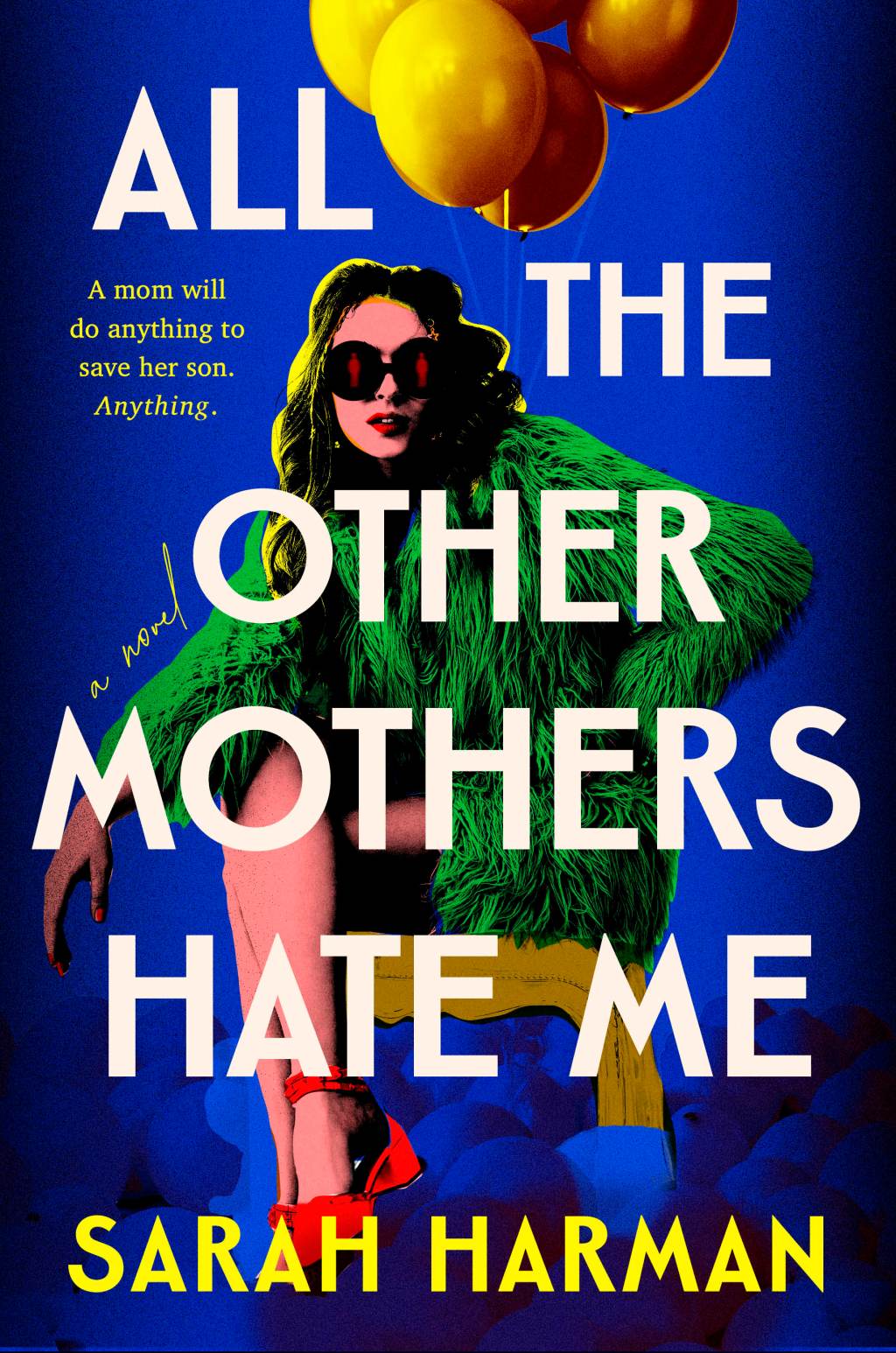
    All the Other Mothers Hate Me

    Florence Grimes is a mess. Once part of a popular girl rock band, after a brief interlude with the manager who is really in love with another of the women in the group, she’s cast out and left with a baby to raise courtesy of the man who fired her. Sure, he pays for their son to go to a posh private school, and she adores her child, but her royalty checks are dwindling and let’s face it—she shouldn’t be spending what little money she has left on fancy nail art and other unnecessary items.

    But then Flo isn’t someone who knows how to manage her life, She just doesn’t fit in with the other mothers, but then she doesn’t try that hard—her clothing and attitude impairing her ability to be accepted.

    Finally, there’s hope. She gets a call about meeting an old colleague and she dreams of returning to the stage, but, as always with Flo, bad stuff happens and this time it’s really bad. Her son’s class bully mysteriously vanishes on a field trip, and Florence’s quirky, misunderstood 10-year-old son becomes a suspect.

    “To save her son, Florence has to figure out what actually happened to the missing boy,” says Sarah Harman, author of All the Other Mother’s Hate Me (G. P. Putnam’ & Sons 2025). “But the more she uncovers, the more she realizes her son might not be as innocent as she’d like to believe,”

    Books about missing children and women on the rocks aren’t typically funny but Harman, who describes the subject as a “fine line to walk” uses humor in recounting Flo and her attempts not only to resuscitate her career—and her life—but find out what really happened. And Flo, despite all her faults and mishaps, is someone to root for.

    “Personally, as a parent, I have zero interest in fiction about bad things happening to children,” says Harman. “There’s enough of that in the real world; I do not want to consume that darkness in my limited free time. So, it was important to me to telegraph to the reader from the outset, that while this is a twisty mystery about a missing boy, this is not a book where children are going to suffer.”

    Harman was never in a girl band (that’s what they called them back then) but she was inspired to write the novel by thinking back to the early aughts and the way that female celebrities were treated by the media and society in general. She references Britney Spears as one example.

    “Or remember how the paparazzi took a horrible upskirt photo of Anne Hathaway and then Matt Lauer asked her on national television ‘what lesson she learned from the experience?’” she says. “That was in 2012. It really wasn’t very long ago. When I was writing Florence, I was thinking about how coming of age creatively in that sort of environment might shape a person’s worldview —and the rest of her life.”

    The book, which came out in March of this year, is so compelling that even before publication, foreign rights to it were sold at auction in 14 markets  and the TV rights bought by FX and The Bear creator Chris Storer, Not bad at all for any novel, but this is Harman’s first which makes it even more impressive.

    Like Flo, Harman is an American living in the West End of London, and she notes that navigating the class system is much different than here. But there are some things that are common worldwide and one of them, she says, the redemptive power of female friendship.

    “When we meet Florence, all the other mothers hate her—and for a good reason,” she says. “She’s kind of awful. Over the course of the novel, as Florence forges an unlikely alliance with another mom, Jenny, she discovers that she actually is capable of caring about something other than herself. It’s only by learning to be a friend that Florence is able to move on from her past and forgive herself for her failures. Ultimately, my hope is that this book makes readers feel it’s never too late for a comeback.”

    This article originally appeared in the Northwest Indiana Times.

  • Bearer of Bad News

    Bearer of Bad News

    Lucy Rey is having a very bad week. Besides finding out Julian, her fiancé—the one who convinced her to move to Las Vegas and rent, in her name, an expensive apartment and then decamped to Hollywood in order to find work as an actor—is cheating on her, her hairdressing business is in a slump, and she hates Vegas. Oh, and the diamond engagement ring Julian gave her is really cubic zirconia.

    And so when she sees an advertisement for an expense paid job with a $25,000 success fee just to find a missing sister and deliver unspecified bad news, what does she have to lose? Her flight to Europe is all paid, there’s a generous per diem, and Ortisei, the village in the Italian Dolomites where she is sent, is totally charming.

    But being a Bearer of Bad News (Gallery Books), which is the title of Lucy’s new job and this first novel by Elisabeth Dini, is not a slam dunk. First of all, Taffy, the woman who hired her, is totally flaky, the assignment murky, and, Lucy soon discovers, the village, though quaint and pretty has an unsavory past including Nazis and stolen jewels.

    Soon, the assignment gets even stranger as it becomes apparent that Taffy (real name Countess Tabitha Georgiana Wellington Ernst) crafted the ad to attract and hire Lucy, who is the estranged granddaughter of a once very famous movie actress.

    Taffy isn’t the only one searching for stolen jewels. There’s the Department of Lost Things, a quasi-government agency working to return valuables people lost during the war.

    “The Department of Lost Things was inspired by stories about the numerous ongoing lawsuits over art and other valuables that were stolen or sold during World War II,” says Dini. “I was shocked by how long the legal process takes–many cases are still ongoing even decades later, with some of those suing for the return of family heirlooms dying before the case could reach a resolution.”

    Dini always found stories about clandestine secret organizations fascinating and so inventing the Department of Lost Things, an organization working to return the diamonds to their rightful owner, was a natural solution.

     “As for the idea of a Bearer of Bad News, I was reading an article about a man who had outsourced various life tasks to a virtual personal assistant, from writing an apology email to his wife to calling companies to complain on his behalf, and I thought that if people would pay for that, then why not outsource delivering bad news?” she says.

    But being a bad news bearer doesn’t go smoothly for Lucy. Chased by an influencer whose photo shoot she accidentally interrupted, Lucy is hidden by a charming hotel clerk in rooms above the oldest tavern in town, which is also where much of the action happened in the past. For being hidden away, Lucy’s lodgings get a lot of action—including a handsome man she met on the tram and Coco, the missing sister, a human rights attorney who might have been fired under suspicious circumstances. In other words, who do you trust?

    Dini drew upon her work as a trial lawyer at the International Criminal Court when writing the book.

    “I knew from working with legal case files what types of things might end up there after years of investigating, and my background interviewing witnesses informed the interview files as well,” she says, noting that no matter how different the conflict or the country where it happens, certain things are always true: among the ugliness, there are always acts of extraordinary kindness and bravery. “As heavy as it felt at times, my time prosecuting war crimes left me hopeful about the ultimate nature of human beings, and I wanted to leave readers with this same feeling of hope, especially in a time when world events can feel very heavy.”

  • Gothictown

    Gothictown

    In 1832, at the height of the Georgia gold rush, gold had been discovered on the banks of the Etowah River on land owned by Alfred Minette. As men flocked to work in the mine and others to supply their needs, a small town arose and Minette named it after his firstborn, a beautiful but frail girl named Juliana who had died years ago in South Carolina.

    But now the Civil War was waging and while the men and boys of Juliana were off fighting, Minette forced their wives and children to work in the mines.

    Union General Philip Sheridan and his troops were laying waste to all he passed through on his march to the sea and Juliana lay in his path. Destroying the town meant destroying the wealth that helped fuel the Confederate war effort and so three of the town elders, including Minette, formed a plan to save it.

    And it worked. Sheridan did stop in Juliana and he and his men decimated the town’s food and livestock supplies but they didn’t discover the mine, nor the women and children trapped in the bottom of the mine when the town’s elders had the entrance dynamited with explosives. Sheridan and his troops tarried and by the time the mine was unsealed, all those insides were dead. When the surviving men returned home from the war, they were told their families had been sent away and they could now work in the lumber mill Minette was building, accept it as God’s will that their families were gone, and start anew.

    It was a small sacrifice for the good of all, Minette argued, and that his daughter, Julianna, was pleased with their offering.

    More than 160 years later, Billie Hope receives an offer. A former restaurateur, Billie lives in a cramped apartment with her husband and daughter in New York City when she receives an offer to purchase a dream home in historic Juliana for just $100. The offer describes the town as idyllic, and the accompanying photo shows a quaint town square straight out of a storybook as does the link to the professionally done town website. Billie sees it as part of a trend to lure people to help grow stagnant towns with new citizens. Feeling at a dead end in her life and lured by the thought of a pretty house in a lovely small town, she replies.

    It’s an offer too good to be true, but desperation often clouds people’s judgment, so it is with Billie and her family who make the move to Juliana.

    “A small town,” she thinks. “Our own house. A perfect childhood for Mere and…another restaurant for me.”

    Of course, it doesn’t work out that way.

    Bestselling author Emily Carpenter, whose other suspense novels include Burying the Honeysuckle Girls and The Weight of Lies, weaves a frightening and compelling tale as we follow Billie and her family move from elation at what they see as a chance for a new and better life and the dawning realization that they may have embarked upon a dangerous and frightening adventure.

  • Archaeologist creates fantasy world filled with intrigue, romance and adventure

    Archaeologist creates fantasy world filled with intrigue, romance and adventure

    An archaeologist who has excavated a Bronze Age palace in Turkey, a medieval Abbey in England, and an Inca site in Chile, Sarah Hawley has created an extensive underground world where fairies abide.

    But if you’re thinking Tinkerbell, who sweetly waves her magic wand, think again. The fairies in Hawley’s novel “Servant of Earth,” the first in a trilogy titled “The Shards of Magic,” are amazingly beautiful and as decadent as any French court in the 17th or 18th centuries. Given numerous love affairs, intrigues and pettiness, they’re ruled by a tyrant king who has a penchant for mayhem and murder.

    Into this world stumbles Kenna, a human from a nearby village who lives with her single mother, keeps mostly to herself to avoid the jeers of others with one exception– Anya, a pretty villager who has befriended her. When Anya is chosen as one of the women who will travel to the land of the Fae, a perilous trip through bogs and deep dark woods, she accompanies her. But Anya disappears as they make their way, and it is Kenna who arrives at the fairy court, helped by the mysterious dagger she discovered in one of her forays in the forest.

    The King orders her dead, but one of his underlings suggests a different fate. Why not make her a handmaiden to Lara, the daughter of Princess Oriana, head of the Earth House in the fairy kingdom?

    It is clearly an insult to Princess and her daughter. A human as a handmaiden. But it is impossible to say no. And Kenna, who is very curious and kind, soon learns her way among the many houses and those that rule them. In doing so, she is able to help Lara, who, to become an immortal fairy, must undergo six rigorous and often deadly tasks along with others who are vying for the honor.

    Hawley, who also taught archaeology, takes us into a fascinating subterranean world, one where the fairies live in luxurious surroundings, dine on the best food, and busy themselves with endless affairs, alliances and games as their lives unwind in front of them for eternity.

    Kenna embarks upon a romantic liaison with one of the fairy princes, but she also befriends the serving women who have been cast out of the brothel where the king likes to spend much of his time. Each of the worlds she connects with pulls her deeper into the dangers of being discovered as a spy, someone who is siding with a brewing rebellion.

    But she has a moral compass compelling her to go forward in aiding the revolt against the current regime. At the same time, she is helping Lara accomplish her tasks, though it’s forbidden to do so.

    There is danger on all sides and Kenna becomes more and more unsure of who she can trust, including her fairy prince. Spoiler alert: He is no Prince Charming.

    “Working as an archaeologist made me think about the details of this world and of the past, and that extends into fantasy worlds where you think about how people are dressing and what it looks like and the political structure and all of that,” said Hawley, explaining how she created the fairy kingdom and all the factions and their interactions. “But it’s also thinking about these characters, their identities, and the stories they tell themselves about their past, because as much as I’m telling the mythology of this world, the characters see the mythology of their own world in a slightly different way.”

    Hawley, who is the author of several other books, including “A Witch’s Guide to Fake Dating a Demon” and “A Demon’s Guide to Wooing a Witch,” brings a historic perspective to her tales of a fairy kingdom as well.

    “There’s actually very dark stuff about how fairies behave,” she said, recounting a Celtic story about people who play fiddle music for the fairies for a single night, are rewarded with gold, and sent home. “Upon returning to their villages, they find that the gold has turned into leaves. And they realize that hundreds of years have passed since they’d been gone and everyone they love is dead, and then they immediately die.”

    Luckily, if you like happy endings, “Servant of Earth” ends on a positive note, though one where we realize that Kenna has many more challenges ahead.

    But she’s a tough, wily hero. And so, it’s just a matter of waiting for the next book in the trilogy to come out next year.

    This article originally appeared in the Northwest Indiana Times.
  • Trust Issues: A Mystery That Asks Who You Going to Trust?

    Trust Issues: A Mystery That Asks Who You Going to Trust?

    “a tense, well-plotted mystery with enough twists and turns to keep the reader engaged . . .”

    “Something strange happened when Hazel and Kagan showed up. Ava had begun hearing her father’s voice so clearly that it sounds like he’s crawled inside her head. This isn’t the first time in her life she’s been haunted by his negative commentary. It followed her on the bus when she first escaped and lingered for a few weeks after she settled into life with Sam again. When she was in prison she’d hear her father’s voice late into the night, chastising her for thinking she could outrun her destiny and for being stupid enough to get caught.”

    Spoiled and entitled, Hazel Bailey and her brother Kagan Bailey have gone through the millions their mother, Janice, gave them after the death of their abusive father and, resentful that she won’t give them more, have cut off all contact with her. Still, despite their treatment of her, they’re outraged when they learn of their mother’s death and that Perry, their smarmy stepfather has inherited all of Janice’s considerable fortune,

    When they learn that Janice was murdered, they’re sure that Perry is the culprit despite his unassailable alibi—he was on a plane at the time of her death. And so, the two, who don’t typically get along, team up together to discover all they can about Perry to prove he’s somehow responsible for her death. Surprisingly, Perry has no internet presence, except for a hazy half photo at a charity event he attended with Janice.

    Though the siblings are self-centered, combative, and often compete for the same romantic interest, they also are resourceful and before long discover that Perry is a conman who seduces rich, older women who then disappear or die. Taking it one step further, they trace his daughter, Ava, who long ago separated herself from her father and ask her to join them in their search and revenge mission.

    Like Kagan and Hazel, the seductive Ava has her own baggage. Trained from an early age by her father to con people, she’s spent time in prison and has been offered a straight-and-narrow lifestyle. But the idea of helping them regain their fortune and punish her father who murdered her mother and uncle is impossible to resist. And besides, as the siblings neglect to keep in mind, when you’re trained to be a conman or woman, old habits die hard— particularly when there’s a fortune to be had.

    As the three chase Perry down the Eastern seaboard, coming up with an elaborate plan to fleece Perry out of the money he conned their mother out of and to keep him from marrying—and killing another wealthy woman—they fail to keep in mind that Perry mayhave a fatal plan to stop them as well.

    Elizabeth Keenan and Greg Wands, authors of Trust Issues (Dutton 2025), have previously written three novels under the pen name E.G. Scott including The Woman Inside and The Rule of Three. Besides their books, which have been translated into a dozen languages, they created and co-host the podcast “Imposter House with Liz & Greg,” where they chat with authors and artists about creativity, self-doubt, and about featuring imposter characters in their stories.

    In Trust Issues, they’ve written a tense, well-plotted mystery with enough twists and turns to keep the reader engaged as well as hopeful that Perry finally is outsmarted and has to pay for his sins.

    This article originally appeared in the New York Journal of Books.

  • Disturbing the Bones

    Disturbing the Bones

    It’s an archaeological dig so finding human remains shouldn’t be a surprise, but Dr. Molly Moore immediately recognizes that the skeleton they’ve unearthed is much more recent than what you’d find on a site dating back 12,000 years. Indeed, the body is that of a young Black reporter who disappeared just decades ago when covering the racial unrest in Cairo, Illinois.

    The loss of his mother has left a large void in the life of Chicago Police Detective Randal Jenkins, and he travels back to Cairo, where he lived as a young boy, to learn more about the case. But it soon becomes clear that this is more than just the murder of an investigative reporter during a tumultuous time. Moore finds herself pressured by her long-time mentor and supporter, retired military general and contractor William Alexander to complete the dig and minimize her discovery. As Moore and Jenkins, each with their own family issues to deal with, work at discovering answers they realize that the General is trying to disrupt the process of a disarmament agreement being developed at a global peace summit taking place in Chicago. The stakes are so high that not only are their lives in jeopardy, but the world may be hurling towards a nuclear disaster.

    Disturbing the Bones (Melville House 2024) is the first joint effort by director and screenwriter Andrew Davis, a native of Chicago’s southside and Jeff Biggers, an American Book Award-winning historian, journalist, playwright, and monologist.

    In writing the book, Biggers, whose work has appeared in American and foreign newspapers and magazines as well as numerous anthologies, relied upon his knowledge of archaeology, the environment, culture, and history as well as his abilities as a researcher. He is the author of such books as Reckoning at Eagle Creek: The Secret Legacy of Coal in the Heartland and The United States of Appalachia: How Southern Mountaineers Brought Independence, Culture, and Enlightenment to America.

    “I’ve been around a lot of archaeological digs,” he said in a joint conversation with Davis and this writer.

    It’s also a timely story in that there’s a presidential election going on as Jenkins and Moore race to solve the mystery.

    “It’s the only novel with a woman running for the presidency but in the book she’s from Chicago,” says Davis, noting that, as in the book, he sees this election as a turning point in our history. “The story is a blending of art and action, and it asks provocative questions which I think any good book should do.”

    Any enjoyable book should, as it tells a story, also open another world for us. The authors do that here as we learn about archaeology, what happens on a dig, and the social upheaval the country went through during the Civil Rights movement. It also explores the psychology of Jenkins and Moore whose personal lives affect their profession and the decisions they make.

    This was the first collaboration between Biggers and Davis, but it won’t be their last. The two are also working on a screenplay for the book. Davis has an extensive background in this area, having worked on a myriad of films such as “Holes”, “Under Siege”, “Code of Silence”, “A Perfect Murder”, and “The Guardian.” Known for directing intellectual thrillers, his film “The Fugitive,” was nominated for seven Academy Awards including Best Picture.

    Biggers, who served as the Climate Narrative Playwright-in-Residence at Indiana University Northwest several times and lived in Miller Beach during his time there, enjoyed the collaborative process.

    “I’ve written a lot of books on my own,” he says, “but this was, in ways, the best of both worlds as we went back and forth and exchanged ideas and shared thoughts.”

  • Castle Gormenghast: Revisiting Gothic Fantasy

    Castle Gormenghast: Revisiting Gothic Fantasy

    A crumbling castle, an eccentric and slightly mad family, and intricate plotting in a Medival fantasy series about a remote earldom is the perfect antidote to stressful holidays.

    Need to escape into a different world after talking politics over the Thanksgiving table–or even harder, avoiding talking politics across the Thanksgiving table? Then it’s time to visit Gormenghast, the ancestral home of the ancient Groan family who lived in a wild and isolated landscape. Written by author and artist Mervyn Peake, the books in the series are Titus Groan, published in 1947, Gormenghast (1950), and Titus Alone (1959). Peake died while writing Titus Awakes, the fourth book. His widow, artist Maeve Gilmore, completed the book sometime in the 1970s but the manuscript wasn’t discovered and published until 2011.

    According to its Wikipedia citation, “The series has been included in Fantasy: The 100 Best BooksModern Fantasy: The 100 Best Novels and 100 Must Read Fantasy Novels as one of the greatest fantasy works of the twentieth century. Literary critic Harold Bloom has praised the series as the best fantasy novels of the 20th century and one of the greatest sequences in modern world literature.”

    Available on Amazon, find a cozy corner to escape contemporary 21st post-election American angst and whisk yourself away to Castle Gormenghast.

    The books are also available on Kindle and Audible.

  • Nancy Chadwick-Burke, Michelle Cox, and Patti Eddington: Three Authors Discuss Their New Work at The Book Stall

    Nancy Chadwick-Burke, Michelle Cox, and Patti Eddington: Three Authors Discuss Their New Work at The Book Stall

    The Book Stall (811 Elm Street in Winnetka) will be welcoming authors Nancy Chadwick, Michelle Cox and Patti Eddington on Thursday, July 11th at 6:30 PM. In a discussion moderated by Michelle Cox, each author will talk about her writing process, and the origins of her book. Our guest authors work with similar themes, and they will be exploring these connections in their new works of historical fiction, connections with the natural world, and memoir. Whether you are a fan of writing by and about women or a writer looking for guidance on completing and publishing a book, this is the program for you!  We’ll leave plenty of time for audience Q&A. 

    This event is free with registration! Visit their website or CLICK HERE.

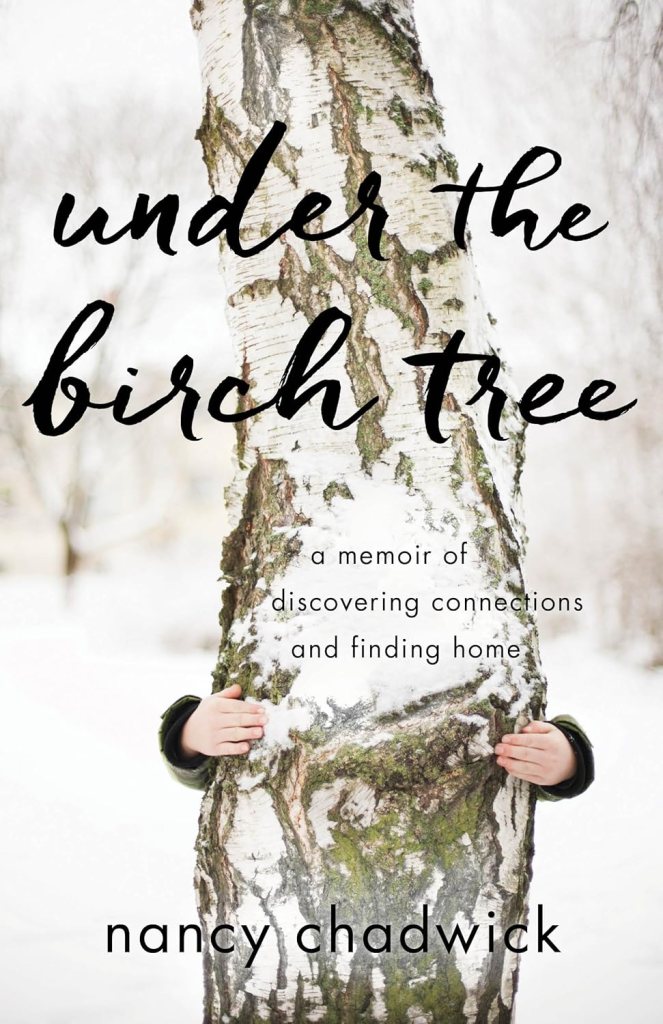
    Nancy Chadwick is the author of Under the Birch Tree: A Memoir of Discovering Connections and Finding Home. Her essays have appeared in The Magic of Memoir: Inspiration for the Writing JourneyAdelaide Literary Magazine, and Turning Points – The Art of Friction, as well as in blogs by Off Campus Writers’ Workshop, the Chicago Writers Association Write City, and Brevity. Her debut novel, The Wisdom of The Willow, has been included in the “Most Anticipated Books of 2024” by the Chicago Review of Books. She finds writing inspiration from her many meanderings through any forest.

    Michelle Cox is the award-winning author of the Henrietta and Inspector Howard series, a mystery/romance saga set in 1930s Chicago. She also pens the wildly popular, “Novel Notes of Local Lore,” a weekly blog chronicling the lives of Chicago’s forgotten residents. Her debut novel, The Fallen Woman’s Daughter, is her first foray into women’s historical fiction and is based on a story she heard working in a nursing home. She has spent years crafting it into a novel and is delighted to finally share it with the world.  

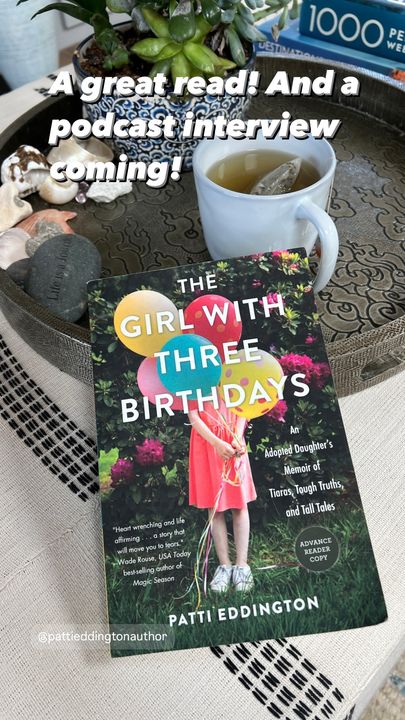
    Patti Eddington is a newspaper and magazine journalist whose favorite job ever was interviewing the famous authors who came through town on book tours. She never dreamed of writing about her life because she was too busy helping build her husband’s veterinary practice, caring for her animal obsessed daughter—whose favorite childhood toy was an inflatable tick—and learning to tap dance. Then fate, (and a DNA test) led her to a story she felt compelled to tell. Today, the mid-century modern design enthusiast and former dance teacher enjoys being dragged on walks by her ridiculous three-legged dog, David, and watching egrets and bald eagles from her deck on a beautiful bayou in Spring Lake, Michigan.

    The Book Stall is an independent bookstore and cultural institution on Chicago’s North Shore. We are known for our great selection of books, cards, and gifts, as well as our long-running author event series. Learn more at www.thebookstall.com.

  • Women Who Murder by Mitzi Szereto

    Women Who Murder by Mitzi Szereto

    “For the female of the species is more deadly than the male.”

    —Rudyard Kipling, from the poem “The Female of the Species.”

    “Why is that we’re always so shocked when women commit violent crimes, in particular, the crime of murder? Perhaps we’re more accustomed to seeing men as the aggressors when it comes to murder, not women. Yet some of history’s most notorious killers have been women. From Countess Erzsebet Bathory, Delphine LaLaurie, Amelia Dyer, Lizzie Borden, and Belle Gunness . . . it often seems impossible to keep up.”

    True crime writer Mitzi Szereto is the editor of Women Who Murder: An International Collection of Deadly True Tales (Mango Publishing), a compendium of murderous women written by internationally famous writers such as horror writer Anthony Ferguson, who lives in Australia; Tom Larson, an American mystery writer; and Cathy Pickens, an attorney who writes both true crime and the Blue Ridge Mountain Cozy Mysteries.

    The tales they tell, some well-known such as “Ruth Snyder: The Original Femme Fatale” by Claran Conliffe and “On the Courtroom Steps: The Trial of Susan Smith” by Picken and others much more obscure but no less fascinating like “Mona Fandey: The Malaysian Murderer” by Chang Shih Yen and “Anno Biesto, Anno Funesto” by Alish Holland about the brutal slaying of John Charles on Leap Year Day in 2000 in New South Wales, give lie to the saying that women are the gentler sex. Indeed, these women can kill just as violently and wantonly as any man.

    In her introduction, Szereto points out that men and women do kill differently and often for different reasons. Poison, at least in the past, often was the murder weapon of choice of women—easier to administer than creeping up and stabbing someone and so much tidier—no blood to clean up. They also kill less frequently and are typically not in it for the thrill of the kill like many male serial killers. Szereto says that many women, particularly those labeled as Black Widows, do so for the money, though that’s not the only reason. Sometimes it’s the only way to get rid of a threatening boyfriend or spouse or because of jealousy, love, and hate.

    But kill they do. And in this fascinating read, we learn about 14 women who did.

    This review originally appeared in the New York Journal of Books.

    .