The Most Popular Book Genre In Each State https://flip.it/wuMdQt
Tag: Biography
-

Henry VIII’s Children: Legitimate & Illegitimate Sons & Daughters of the Tudor King
“This book is a compelling read as Angus is a clear, concise, and talented writer who makes even small facets of long ago lives fascinating.”
The irony of Henry VIII is acute. The once dashing heroic young man who succumbed to gluttony, cruelty, and, though it was done in a state-sanctioned manner, the murder of unwanted wives in hopes he could finally sire an heir, had at least one and most likely more illegitimate sons. But Edward, born of his third wife, Jane Seymour, who gained the throne with the beheading of his second wife, Anne Boleyn, was sickly and would die after a short stint as king.
And thus, first Henry’s legitimate daughter Mary, to be soon known as Bloody Mary because of her religious fanaticism, and then Elizabeth would come to rule. There is more irony here as well. Mary was the daughter of Henry and his first wife, Katharine of Aragon, who was cast aside so that he could marry Anne. Elizabeth 1 was born of that short-lived union. Both Mary and Elizabeth’s early childhoods were filled with rejections and loss of status. Things grew more precarious after her mother’s death. Her father was off with his next wife—there would be six all together and Mary, after Edward’s death, saw her half-sister, a Protestant to boot, as a rival for the throne. It was as dysfunctional of a family as any on a Jerry Springer show.

But what went on between these two siblings isn’t the only story regarding Henry’s children. And Caroline Angus, author of Henry VIII’s Children has written an immensely readable history of Henry’s other children, their mothers, and how they fit into Tudor society.
“The tales of King Henry VIII’s illegitimate children are stories made form precious few recorded clues, plus memory, slander, gossip, and conjecture,” writes Angus. “But within the dramatic lives of the Tudor dynasty, almost anything is possible.”
It was while Henry was married to his first wife, Katharine of Aragon, the widow of his brother Arthur, who was pregnant with his child, that he impregnated Bessie Blount. Still in her teens, Blount was in the third tier of Katharine’s ladies-in-waiting, not noble or wealthy enough to be in the first or second ranks but better than the fourth tier. Her job was to fetch and hold items for the queen and deliver messages. For that, she received her own room and servant and was granted permission to keep pets in the royal household.
Bessie wouldn’t be the first of the Queen’s ladies that Henry bedded. He had already had an affair with at least one and would embark relations with several others. Katharine’s lost her child, much to the chagrin of the kin who was tired of his wife’s inability to give him a son. Bessie did much better and Henry was delighted with their son who was called Henry Fitzroy. The term Fitzroy is French word meaning “son of a king” and was used by the English to denote an illegitimate child. Henry bestowed upon titles and lands upon little Henry while Katherine just had to smile and bear it. That’s what women had to put up with in those days.
Angus’ research is so extensive that readers even learn what Fitzroy ate for his afternoon meal. The first course was pottage, boiled beef, mutton, geese, capons, veal, and custard. If that sounds like a lot consider the second course consisted of lamb or kid, rabbits, pigeons, wildfowl, a tart or baked meat, fruits, and four gallons of ale and two pitchers of wine. Now, of course, some of that was probably for those who were dining with him. Fitzroy’s dinner meal was equally heavy and included 12 sweet desserts.
In another touch of irony, after Henry divorced Katharine, he could have made Fitzroy legitimate by marrying Bessie Blount whose husband had just died. But he was so entranced by Anne Boleyn that he married her instead, believing she would give him a son. She didn’t and lost her head.
There were other illegitimate children scattered around, probably more than history reveals. Anne’s sister Mary oldest son and daughter, Catherine and Henry Carey, were said to be Henry’s children. So was Ethelreda Malte, whose mother was a laundress. John Perrot claimed he was the son of Henry. And there were rumors Henry was the father of Thomas Stuckley, Richard Edwardes, and Henry Lee.
This book is a compelling read as Angus is a clear, concise, and talented writer who makes even small facets of long ago lives fascinating.
This article orignally appeared in the New York Journal of Books.
-

2022 Pulitzer Prize Winners: Books and Drama
It’s the 106th year honoring excellence in journalism and the arts. http://Pulitzer.org. #Pulitzer
A mordant, linguistically deft historical novel about the ambiguities of the Jewish-American experience, presenting ideas and disputes as volatile as its tightly-wound plot.
Finalists
Monkey Boy, by Francisco Goldman (Grove Press)
Palmares, by Gayl Jones (Beacon Press)
Drama
A funny, poignant play that deftly transposes “Hamlet” to a family barbecue in the American South to grapple with questions of identity, kinship, responsibility, and honesty.
Finalists
Kristina Wong, Sweatshop Overlord, by Kristina Wong
Selling Kabul, by Sylvia Khoury
History

Covered with Night, by Nicole Eustace (Liveright/Norton)
A gripping account of Indigenous justice in early America, and how the aftermath of a settler’s murder of a Native American man led to the oldest continuously recognized treaty in the United States.
Cuba: An American History, by Ada Ferrer (Scribner)
An original and compelling history, spanning five centuries, of the island that became an obsession for many presidents and policy makers, transforming how we think about the U.S. in Latin America, and Cuba in American society.
Finalists:
Biography

A searing first-person illustrated account of an artist’s life during the 1950s and 1960s in an unreconstructed corner of the deep South–an account of abuse, endurance, imagination, and aesthetic transformation.
Finalists
Pessoa: A Biography, by Richard Zenith (Liveright/Norton)
Poetry

frank: sonnets, by Diane Seuss (Graywolf Press)
A virtuosic collection that inventively expands the sonnet form to confront the messy contradictions of contemporary America, including the beauty and the difficulty of working-class life in the Rust Belt.
Finalists
Refractive Africa: Ballet of the Forgotten, by Will Alexander (New Directions)
Yellow Rain, by Mai Der Vang (Graywolf Press)
General Nonfiction

Invisible Child: Poverty, Survival & Hope in an American City, by Andrea Elliott (Random House)
An affecting, deeply reported account of a girl who comes of age during New York City’s homeless crisis–a portrait of resilience amid institutional failure that successfully merges literary narrative with policy analysis.
Finalists
The Family Roe: An American Story, by Joshua Prager (W. W. Norton & Company)
-

Dreaming in French: The Paris Years of Jacqueline Bouvier Kennedy, Susan Sontag, and Angela Davis
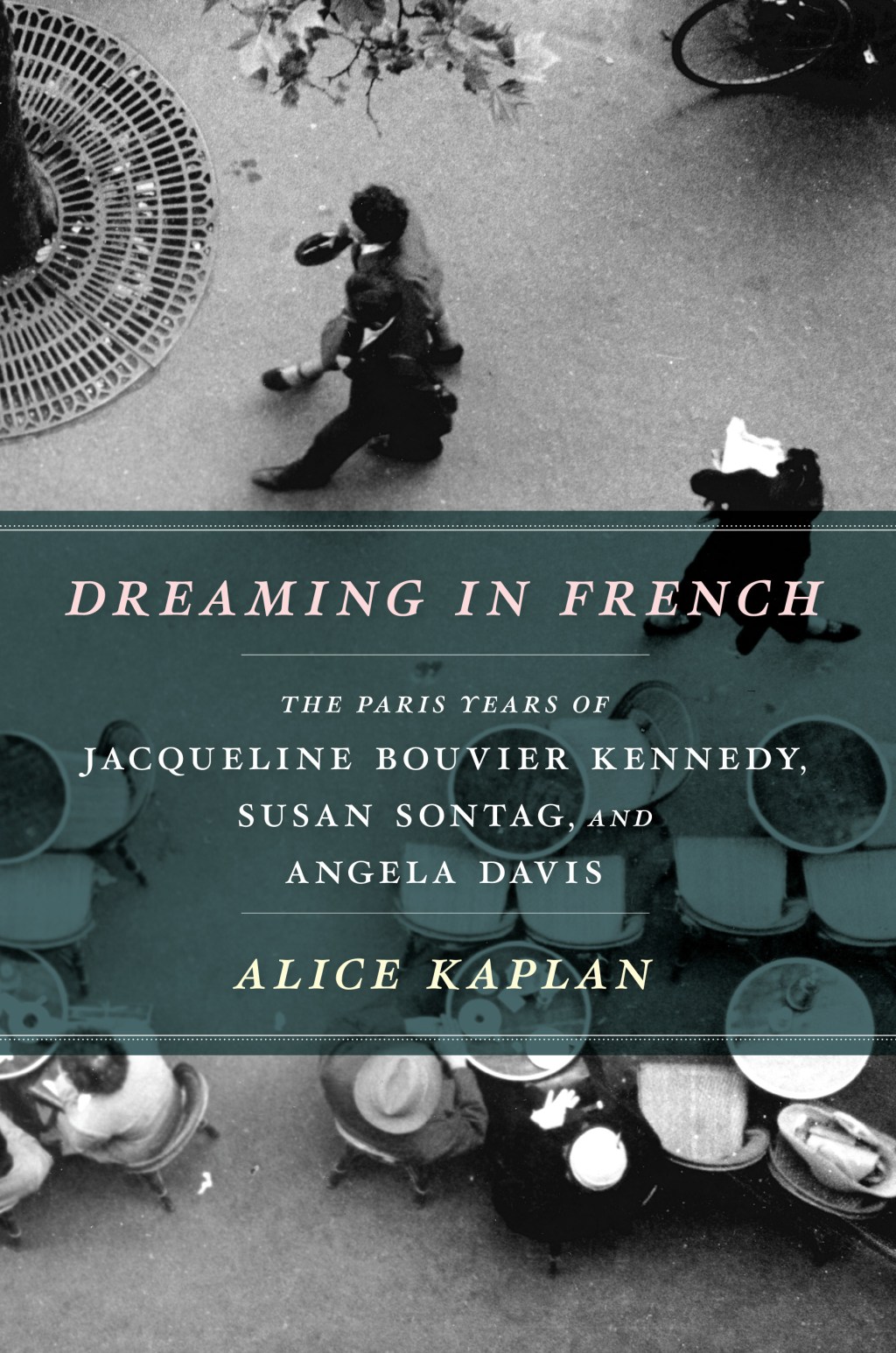
It reads like the plot of a novel – three women from different backgrounds spend time in the early 20s in Paris, returning to the U.S. transformed. One, raised in an upper crust East Coast society family and named “Deb of the Year,” would become the very polished and popular wife of a handsome president doomed to be assassinated. The middle class girl from a North Hollywood family became, after her Paris sojourn, a well-respected writer. The third, though she was raised as an African American in the segregated south, came from an upper middle class family and spent time in Manhattan studying at a private school. She eventually would be acquitted of murder as a member of a radical fringe group.
“If you reduce them to identity labels, they are the soul of diversity: a Catholic debutante, a Jewish intellectual, an African-American revolutionary, from the East Coast, the West Coast, and the South,” writes Alice Kaplan, a Sterling Professor of French and Director of the Whitney Humanities Center at Yale University in her book, “Dreaming in French: The Paris Years of Jacqueline Bouvier Kennedy, Susan Sontag, and Angela Davis” (University of Chicago Press 2013; $26). “They have often been reduced to their images: a sheath dress and a double strand of pearls, a mane of black hair with a white streak, an afro and a raised fist.”
Kaplan explores the time each spent in Paris and how those experiences shaped them, making all three cultural icons and bringing all both fame – for Kennedy and Sontag and controversy – for Davis.
Kaplan, the author of such books as French Lessons, and Looking for “The Stranger,” earned a Ph.D. from Yale University with a major in French and a minor in philosophy and is a recipient of the French Légion d’Honneur as well the Los Angeles Times Book Prize in History (for The Collaborator) and the Henry Adams Prize (for The Interpreter).
“I wanted to find that existential threshold where you start to see what you can do with what you’ve been given,” Kaplan of this examination of a period in each woman’s life. And, Kaplan points out, while the men who spent time in France and came back in some ways different – think Ernest Hemingway and Norman Mailer, women like Kennedy, Sontag and Davis “have not had a place in the great American tradition of expatriate literature.”
Until now.
-

Ben Hecht: Fighting Words, Moving Pictures
When we think of Ben Hecht—and really, how many of us do? it’s because the college drop-out, turned Chicago Daily News reporter and then screenwriter personifies the early part of the 19th century. He was a war and crime journalist who went beyond writing and instead helped solve murder cases, along with the help of fellow newsman, Charlie MacArthur of the Chicago Examiner.

Adina Hoffman Indeed many people, including author Adina Hoffman know and love Hecht’s movies including such classics as Scarface, Twentieth Century, The Front Page and Notorious without even knowing his name.
“I worked as a film critic throughout the 90s, and it was only when I started to really involve myself in film history that I read Hecht’s memoir, A Child of the Century,” says Hoffman, author of the just released Ben Hecht: Fighting Words, Moving Pictures (Yale University Press 2018; Amazon price $17.61), noting there is so much of Hecht’s DNA in the movies made during the Golden Age of Hollywood.
But as Hoffman read more and more about Hecht, she realized there was more to him than a Jazz Age writer who overindulged in a variety of vices.
“I realized that his screenwriting was in some ways just the start of it,” says Hoffman, whose biography of Taha Muhammad Ali, My Happiness was named one of the best twenty books of 2009 by the Barnes & Noble Review and won the UK’s 2010 Jewish Quarterly-Wingate Prize. “Maybe for him, it was the least of it. Hecht had multiple occupations—really preoccupations—and threw himself with gusto into being a journalist, novelist, playwright, a film director, producer, a memoirist, and Jewish activist, someone passionately engaged with the future of Palestine/Israel. I was fascinated by that multiplicity of his, by all the hats he managed to wear at once and with such incredible panache—even genius.”
Hoffman also deeply identified with Hecht’s desire to be involved in a serious if playful way with several realms at once and his having multiple job descriptions much as she does.
“At the same time, there are certain things that set Hecht apart from me in a very basic way: his political positions in terms of Israel/Palestine are approximately the opposite of my own, and I thought it would be an interesting challenge to write about someone with whom I strongly disagree on this front,” she says.
Though she’s spent much of her adult life living in Jerusalem, Hoffman did the majority of her research at The Newberry in Chicago which holds Hecht’s papers.
“He seems to have been friend or colleague or rhetorical sparring partner to or with almost anybody who was anybody in twentieth century culture,” says Hoffman. “I’d find myself in the course of a day reading these incredibly lively, funny letters and telegrams to and from everyone from David O. Selznick to Carl Sandburg, Menachem Begin, Katharine Hepburn, George Grosz, Sherwood Anderson, the gangster Mickey Cohen, Groucho Marx, and on and on. There are also marvelous photographs, drafts of his work, scrapbooks, objects—passports, pipes, letter openers, and even his first Oscar.”
Hoffman says one of the purposes of her book is for Hecht to be much better remembered than he is today.
“He was someone who played a central role in creating American popular culture as we know it, but he’s been almost completely forgotten,” she says. “I think people around Chicago and in the Midwest know more about him than most others. I got an awful lot of blank or confused looks when people would ask me what I was working on and I’d say a book about Ben Hecht. The full range of his accomplishment or accomplishments is something I’d like people to realize—and also the complex way that his Jewishness figured into the rest of it. Hecht claimed he ‘became a Jew in 1939’—which is to say, he became a Jew because of the Holocaust—but I totally disagree. Being Jewish was always a part of him, as was being American. And there was absolutely no contradiction in his being both things at once and in the most vital way.”
Ifyougo:
What: Author talk and book signing
When: Tuesday, February 19 at 6 pm
Where: Ruggles Hall, The Newberry, 60 West Walton St., Chicago, IL
Cost: Free and open to the public. Registration required.
FYI: (312) 943-9090; newberry.org
-

Al Capone: His Life, Legacy, and Legend
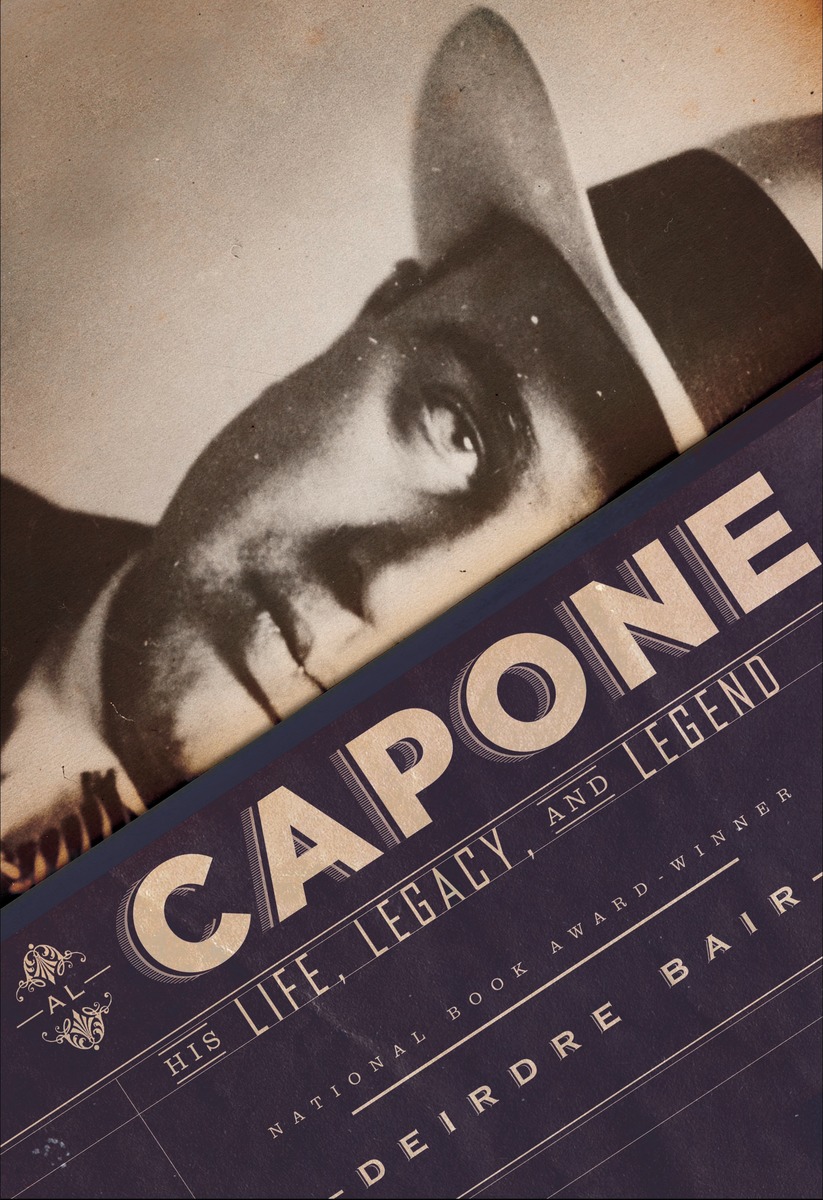
Deirdre Bair wasn’t that familiar with Al Capone. Beyond the St. Valentine’s Day Massacre, she’d been more focused on literary biographies, racking up numerous awards including the National Book Award. But when she was contacted by a friend who had a friend who knew someone (yes, it went like that) who wanted help in solving some family mysteries about Al Capone she was intrigued.
“I asked what does he want, a private investigator or a ghost writer?”
The man was a relative of the infamous gangster and after they talked, Bair received phone calls from other Capone relatives.
“They called me and said we’re getting old, we want our story to be told,” recalls Bair.
And so began years of interviews, extensive research and writing as Blair learned from Capone’s surviving family members about the Capone they knew—a devoted father, a loved husband, a kindly caretaker of his relatives.
“There are so many legends about him,” says Blair, noting more than 100 books have been written about Capone. Her book, “Al Capone: His Life, Legacy, and Legend” (Nan A. Talese 2016; $30) is the first to have the cooperation of his family who provided her with exclusive access to personal testimony and archival documents.
Of course there’s the Jazz Age, bootlegging Capone. But in his brief arc of fame and success—Bair points out that he took control of his gang at 25 and by 31 was ill, broke and in prison, he became a role model for, of all things, business management.
“The Harvard Business School did a case study of how he ran his business,” says Bair. “Today the Bulgarian Mafia say they study Capone. So many people tell me a generation or two later, he could have been a CEO.”
His family saw him as loving. His wife May, says Bair, said she knew every bad thing he’d done (and we know he did a whole lot of bad stuff) but she still loved him. His son remembered him as a great dad.
“Every day was a revelation,” says Bair. “But I don’t think anyone will ever have the final answer as to who he really was. He’s a riddle, a conundrum and an enigma.”