In the beginning, perfume in the form of oils belonged to the divine, and rare scents typically sourced from resins were reserved for dedication to the gods. Used in funeral rituals and in cremation with the burning of resinous woods such as cedar, early references trace the use of scents back at least to the Bronze Age.
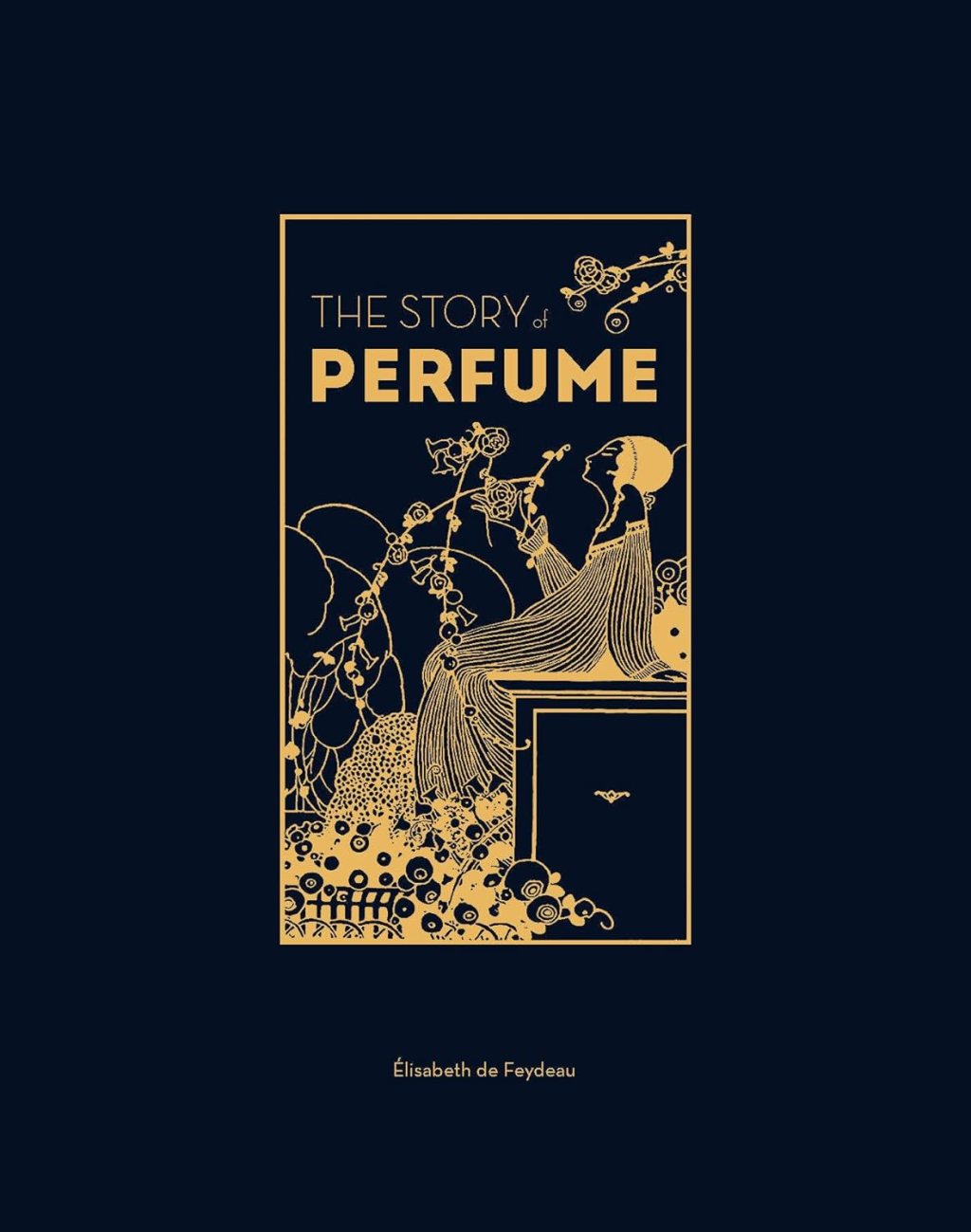
But their legacy may go even further into the past, writes Élisabeth de Feydeau in her latest book, The Story of Perfume: A Lavishly Illustrated Guide (Laurence King Publishing). Shards of pottery and stone containers dating back to the fourth millennium BCE indicate that the beginnings of perfume most likely originated in Mesopotamia, a land now part of Iran, and traveled east.
From the sacred to the secular, demand for fragrances grew. Alexander the Great, having seen the perfumed rooms and scented baths in Persia in 331 BCE as he conquered Central Asia, the Middle East and India, established a perfume route, sourcing aromatic plants throughout his empire. Later, the Romans joined in, establishing more routes, and aromatics became part of the lives of the very rich in Ancient Rome.

“Upper-class men and women bathed frequently in baths fragrant with lavender, rose, jasmine and other perfumes,” writes de Feydeau about their use in Rome. “A lady of the ruling classes would begin her toilet by removing her makeup and applying a beauty balm. She would then gargle with saffron or rose and chew flavored gum as she slid into her jasmine, lavender or rose bath. A slave would then give her an aromatic massage and spray her body with the same perfumed water she had first used as a mouthwash.”
“At banquets, diners ate under mist of extremely rare essences as they ate asparagus dipped in perfumed oils, served in fragrant wooden dishes and drank rose–or myrrh—flavored wines. Between courses, they were sprayed with floral water.”

Indeed, it was the Romans who gave us the word perfume, coming from the Latin expression per furmum, meaning “through the smoke.”
The author, whose other books on the subject include “The Herbarium of Marie Antoinette” and the novel “A Scented Palace: The Secret History of Marie Antoinette’s Perfumer,” earned a Ph.D. in the history of perfume from the University of Paris-Sorbonne. She is currently a cultural adviser to such luxury perfume brands as Dior, Chanel, Lancaster and Guerlain, and her skillset beyond being extremely knowledgeable about the subject is her ability to tell this complicated odyssey of scents understandably and engagingly.

Lavishly illustrated, de Feydeau’s book is a fascinating history of what we take for granted as we go about our own rituals, spraying wisps of aroma as we start our day, lighting scented candles or dipping diffuser sticks in oil to aromatize our homes. She deftly ties this enjoyable if mundane act back to ancient times, interwoven with culture, tradition and science, taking the story to the famed perfumes of our day, such as Shalimar and Samara by Guerlain, Opium by Yves Saint Laurent and Ambre Sultan by Serge Lutens.
Easy to read, you can flip through the pages, reading pull-out boxes with titles like “Hollywood Icons,” where we learn that Fracas by Piguet (1948) was a favorite of Marlene Dietrich, Madonna, Kim Basinger, Naomi Campbell and Princess Caroline of Monaco. de Feydeau describes Youth Dew, launched in 1953, as the signature scent of such 1950s femme fatales as Joan Crawford, who said she couldn’t live without it.
Reading this book, whether in chunks or page by page, provides a fascinating take on how we’ve arrived at the scents in the bottles on our bathroom shelves.
This article first appeared in the Northwest Indiana Times.
Images courtesy of Facebook.

