Tag: Basketball

  • Becoming Caitlin Clarke

    Becoming Caitlin Clarke

    “There is no Caitlin Clark without Iowa,” writes Howard Megdal in his recently released biography “Becoming Caitlin Clarke: The Unknown Origin Story of a Modern Basketball Superstar” (Triumph Books 2025).

    And while that may be somewhat puzzling, it isn’t when Megdal explains the history of the sport. The game of basketball was invented in 1891 and within a year young women were being taught to play the game at Smith College in Northampton, Massachusetts. The love of the game quickly spread and soon women were shooting hoops at the YWCA in Dubuque, Iowa as well as throughout the country.

    But as with so many steps forward, a countermovement began to spread, and schools began banning women’s sports in both high school and college, the premise being that it might be bad for their physical health as well as their reproductive capabilities. And besides, people posited, shouldn’t the monies, time, and effort of sports be more wisely direct towards men instead of women? Do I need to say more about that? I don’t think so.

    And so, in the second decade of the 20th century, there was a drive to ban women’s sports in Iowa. Fortunately, it didn’t happen and, as Megdal digs deep into the history of the game he shows the connections between women playing 6-on-6 basketball in Iowa in the 1920s and Clark becoming a star in the 2020s.

    “Caitlin’s playing college ball are direct consequence of an effort and interest in Iowa in women’s basketball that Vivian Stringer made as University of Iowa’s head coach,” he says about Stringer who during her 40 plus year career at Iowa and other schools amassed 1,055 wins, four NCAA Final Four appearances, 28 berths in the NCAA Tournament, and was inducted into the Women’s Basketball Hall of Fame in 2001. He also notes that Lisa Bluder, a three-year starter at the University of Northern Iowa who coached Clark at Iowa, is part of the state’s legacy.

    Other women weren’t as lucky as other states ended their programs a century ago and didn’t restart them again until the 1960s and 1970s with the advent of Title IX and the founding of the Women’s National Basketball Association.

    “That movement unfortunately was very successful,” says Megdal. “I mourn on a regular basis how many stories were stopped before they even started.”

    It was Clark, says Megdal in a phone interview that broke basketball women’s basketball in the best way possible. She was a phenomenal success and a phenomenal player who captured the attention of the country. Indeed, she was so popular that the singing phenom Taylor Swift invited her to attend a Kansas City Chiefs game to watch her boyfriend, tight end Travis Kelce, play.

    Megdal, founder and editor in chief of The IX newsletter, a daily newsletter covering 5 different women’s sports, and the nest, a 24/7 woman’s basketball outlet, has written several other books including “Rare Gems,” “The Baseball Talmud” and “The Cardinals Way.” During his 20 years writing about sports, he has pushed to ensure that women’s sports get as much attention as men’s.

    “When you’re in this space you quickly become aware of the fact that there’s a yawning chasm between how men’s sports are covered and how women’s sports are covered and so I’ve gone about trying to change that over the course of my career,” he says, noting he has had the opportunity do so at such publications as The New York Times, Washington Post and Sports Illustrated.”

    And Clark seems like the person to up the score for women in sports.

    “There are a lot one dimensional narratives around Caitlin Clark and that just reinforced for me how important it would be to tell this story in a way for people to understand where this comes from,” says Megdal who wanted to counter such narratives as Clark just happened to be in the lucky one. “The reality is that this is a century in the making.”

    Of course, it is also important to note, says Megdal, that Clark has blown away any and everything you could have ever expected of her on the court and off the court. It’s the perfect melding of the right person converging with the right moment in history.

    “Caitlin Clark went out and became this transcendent player,” he says, “one who is changing the fundamentals of everything from the audience for women’s basketball to the economics around it.”

  • By the Grace of the Game: The Holocaust, a Basketball Legacy, and an Unprecedented American Dream
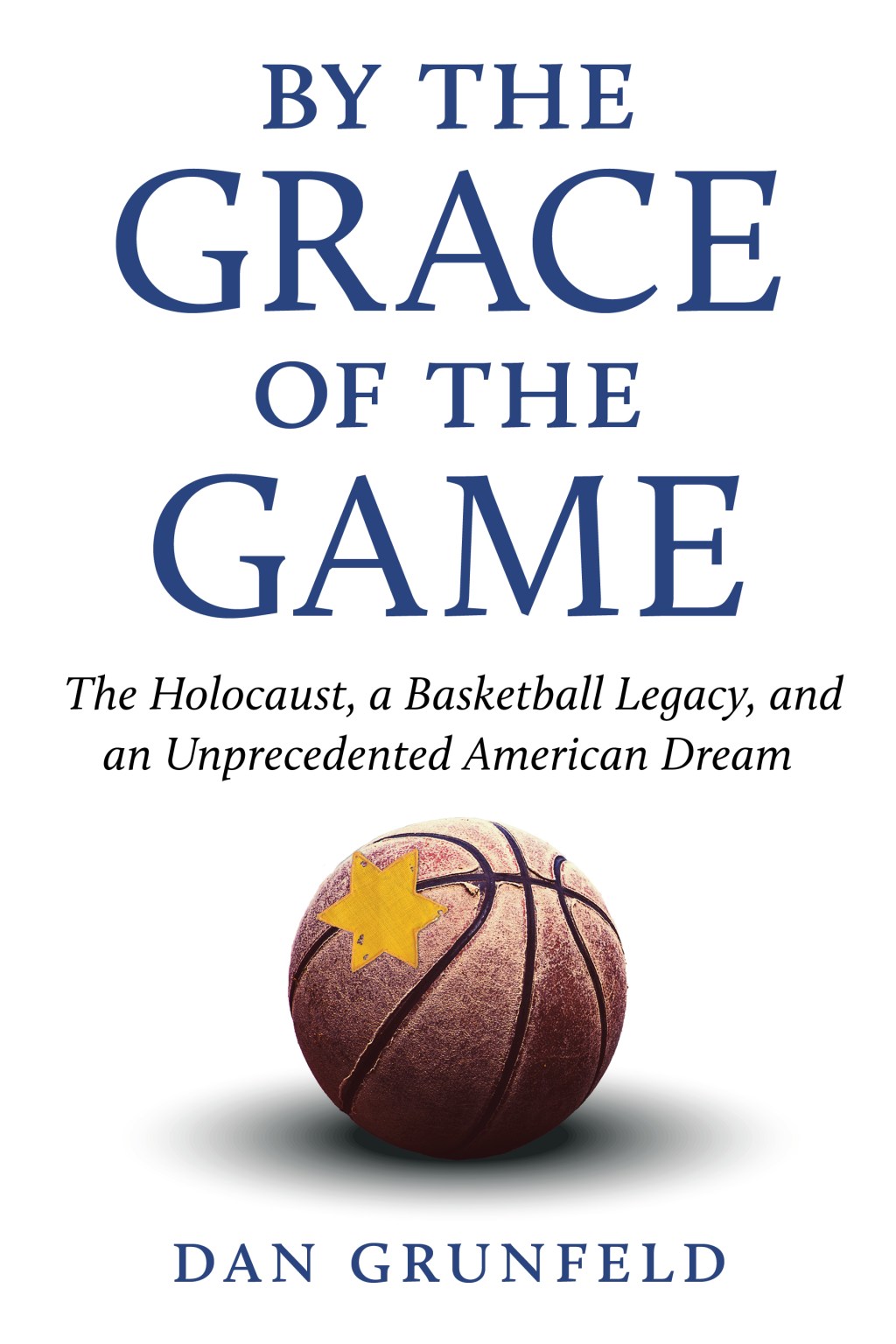
    By the Grace of the Game: The Holocaust, a Basketball Legacy, and an Unprecedented American Dream

                17-year-old Lily Grunfeld survived the Holocaust by hiding in a crowded attic room in a burned-out building in Budapest. She was twice saved by Swedish diplomat Raoul Wallenberg. Once when he issued false citizenship documents to Hungarian Jews in Hungary and, then again at the end of the war, when he convinced Nazi guards not to gun down the remaining 80,000 Jews still alive in the Budapest Ghetto.

                After the war when Anyu returned to the home she had shared with her parents and siblings in a small Transylvanian village in Romania near the Hungarian border, it had been looted and almost everything was gone. Her parents and five siblings had died at Auschwitz. She had also lost aunts and cousins.

                All that was left, tucked away out of sight in a drawer, was a spoon.

                Grunfeld is turning 98 later this year. She doesn’t harbor bitterness and hatred—though who could blame her if she did? Even though after moving to the U.S. with her husband, she lost her oldest son who died of leukemia.

                “My grandmother certainly has an incredible attitude and approach to life,” says Dan Grunfeld, author of “By the Grace of the Game: The Holocaust, a Basketball Legacy, and an Unprecedented American Dream” (Triumph Books 2022; $28) about the woman he calls Anyu (Hungarian for mother). “She believes it’s not what happens to you in life, it’s how you respond. She believes it’s important to be true to your values and who you are and to stay positive.”

                Arriving in New York in 1964, the family including their surviving son Ernie and daughter Rebecca, didn’t know the language or customs of their new country. Eight-year-old Ernie also didn’t know anything about the game of basketball but he gravitated to the playgrounds of New York City where kids were shooting baskets. It was an opportunity, he thought, to learn English and to make friends.

                It turned out to be more than that. Ernie Grunfeld was really, really good at this American game. So good in fact that within ten years of moving to the U.S. he had won two gold medals—one for playing basketball with Team USA at the 1975 Pan American Games and the other in the 1976 in the Summer Olympics in Montreal. Drafted into the NBA to play for Milwaukee Bucks, he went on to play for the Kansas City Kings and then the New York Knicks. Once his playing days were done, he worked in administration rising through the ranks to become president and general manager of the Knicks and then the general manager of the Bucks. He followed that up with 16 years as president of basketball operations for the Washington Wizards.

                It was indeed a basketball family.

                “My birth was planned around Judaism and basketball,” writes Dan Grunfeld in the opening paragraph of his book. “It’s an appropriate testament to what I was inheriting. When I was born in 1984, my dad was an NBA player for the New York Knicks. My parents scheduled my C-section delivery to take place between two long road trips so he could be present for both my birth and my bris, the Jewish ritual of circumcision on the eighth day of life. I’m sure thousands of Jews in New York City during the 1980s planned their sons’ bris ceremonies around Knicks games. My dad was almost certainly the only Jew actually playing in the Knicks game.”

                Indeed, Ernie Grunfeld was the only child of Holocaust survivors to ever play in the NBA.

                It’s Dan Grunfeld’s ability to move between the dark and light of life, a reflection surely of his grandmother’s philosophy, that makes this book so immensely readable. Dan Grunfeld also played basketball, both at Stanford University and then for nine years overseas professionally in Germany, Israel, and Spain. He even became a Romanian citizen to play in his grandmother’s native country.

                “My first professional game was in Germany, I was probably the only player who called his grandmother and asked her if it was okay to play there,” says Grunfeld. Anyu, being Anyu, of course said yes, telling him that you can’t blame the sons for what the fathers did.

                Growing up, Grunfeld was fascinated not only with his grandmother’s Eastern European cooking (“I eat so much sometimes that I get sick,” he says),  but also, when he was old enough, her tales of those early days. Stanford was just 25 minutes from where she lived and he would take notes when they talked or at least when he wasn’t eating.

                In that respect, he is unlike most of us who when young who don’t write things down and so lose the important stories of our elders. Indeed, I had a Romanian grandmother who loved to cook but I just ate and never recorded her times in her homeland and her journey to East Chicago and so all that is lost. Bravo to Grunfeld who felt that these stories were important enough to turn into a book. He did it for Anyu who doesn’t want people to forget the Holocaust and what happened to her family and so many families like hers. He did it to enshrine her story into written words. And he did it so that her courage could help all of us when things seem very dark.

                “My grandmother certainly has an incredible attitude and approach to life,” he says. “She’s such a remarkable person. I say if my grandmother can survive and be like this than there is hope for all of us.”

                When I ask Grunfeld if he misses basketball, he tells me that he misses what it was like playing the game when you’re playing at a high level and having success.  

                “I also understand that part of my life is over,” says Grunfeld who is married and is expecting the birth of his second son in a matter of weeks. “I’m at a point in my life where I realize I’m not coming back. But there are so many other ways you can integrate it into your life. You can watch it, read about it, and write about it.”

                Which, of course, is what he did.

                As for that spoon Anyu found. 75 years later she gave it to Dan who keeps it in the drawer next to his bed.  Sometime in the future, it most likely will be passed on to Dan’s son Solomon, named after his grandfather who died at Auschwitz.

    For Dan Grunfeld’s events, click here.