Tag: Adventure

  • Archaeologist creates fantasy world filled with intrigue, romance and adventure
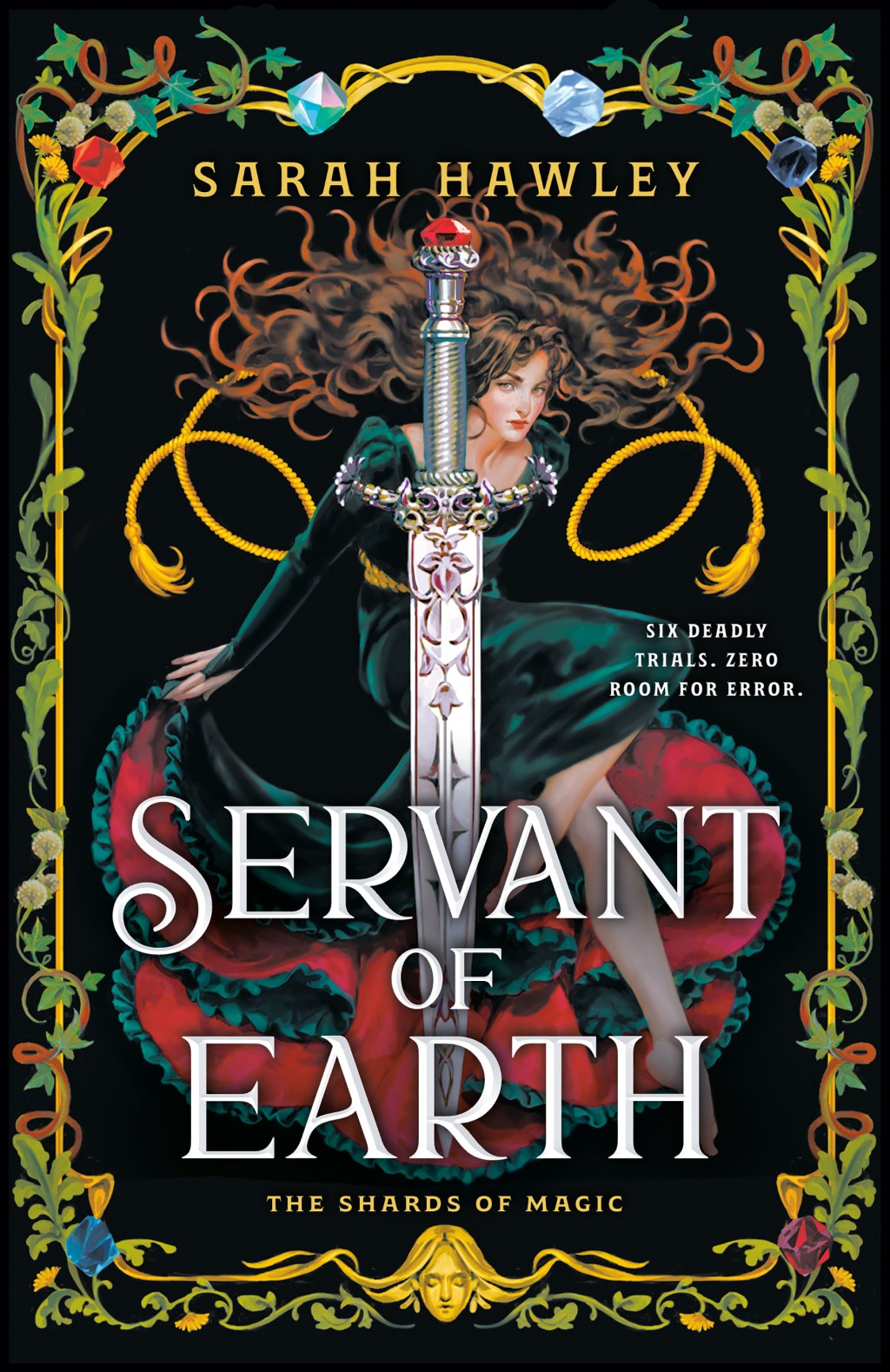
    Archaeologist creates fantasy world filled with intrigue, romance and adventure

    An archaeologist who has excavated a Bronze Age palace in Turkey, a medieval Abbey in England, and an Inca site in Chile, Sarah Hawley has created an extensive underground world where fairies abide.

    But if you’re thinking Tinkerbell, who sweetly waves her magic wand, think again. The fairies in Hawley’s novel “Servant of Earth,” the first in a trilogy titled “The Shards of Magic,” are amazingly beautiful and as decadent as any French court in the 17th or 18th centuries. Given numerous love affairs, intrigues and pettiness, they’re ruled by a tyrant king who has a penchant for mayhem and murder.

    Into this world stumbles Kenna, a human from a nearby village who lives with her single mother, keeps mostly to herself to avoid the jeers of others with one exception– Anya, a pretty villager who has befriended her. When Anya is chosen as one of the women who will travel to the land of the Fae, a perilous trip through bogs and deep dark woods, she accompanies her. But Anya disappears as they make their way, and it is Kenna who arrives at the fairy court, helped by the mysterious dagger she discovered in one of her forays in the forest.

    The King orders her dead, but one of his underlings suggests a different fate. Why not make her a handmaiden to Lara, the daughter of Princess Oriana, head of the Earth House in the fairy kingdom?

    It is clearly an insult to Princess and her daughter. A human as a handmaiden. But it is impossible to say no. And Kenna, who is very curious and kind, soon learns her way among the many houses and those that rule them. In doing so, she is able to help Lara, who, to become an immortal fairy, must undergo six rigorous and often deadly tasks along with others who are vying for the honor.

    Hawley, who also taught archaeology, takes us into a fascinating subterranean world, one where the fairies live in luxurious surroundings, dine on the best food, and busy themselves with endless affairs, alliances and games as their lives unwind in front of them for eternity.

    Kenna embarks upon a romantic liaison with one of the fairy princes, but she also befriends the serving women who have been cast out of the brothel where the king likes to spend much of his time. Each of the worlds she connects with pulls her deeper into the dangers of being discovered as a spy, someone who is siding with a brewing rebellion.

    But she has a moral compass compelling her to go forward in aiding the revolt against the current regime. At the same time, she is helping Lara accomplish her tasks, though it’s forbidden to do so.

    There is danger on all sides and Kenna becomes more and more unsure of who she can trust, including her fairy prince. Spoiler alert: He is no Prince Charming.

    “Working as an archaeologist made me think about the details of this world and of the past, and that extends into fantasy worlds where you think about how people are dressing and what it looks like and the political structure and all of that,” said Hawley, explaining how she created the fairy kingdom and all the factions and their interactions. “But it’s also thinking about these characters, their identities, and the stories they tell themselves about their past, because as much as I’m telling the mythology of this world, the characters see the mythology of their own world in a slightly different way.”

    Hawley, who is the author of several other books, including “A Witch’s Guide to Fake Dating a Demon” and “A Demon’s Guide to Wooing a Witch,” brings a historic perspective to her tales of a fairy kingdom as well.

    “There’s actually very dark stuff about how fairies behave,” she said, recounting a Celtic story about people who play fiddle music for the fairies for a single night, are rewarded with gold, and sent home. “Upon returning to their villages, they find that the gold has turned into leaves. And they realize that hundreds of years have passed since they’d been gone and everyone they love is dead, and then they immediately die.”

    Luckily, if you like happy endings, “Servant of Earth” ends on a positive note, though one where we realize that Kenna has many more challenges ahead.

    But she’s a tough, wily hero. And so, it’s just a matter of waiting for the next book in the trilogy to come out next year.

    This article originally appeared in the Northwest Indiana Times.

  • Dead Mountain by Douglas Preston & Lincoln Child

    Dead Mountain by Douglas Preston & Lincoln Child

    Two fraternity brothers taking a drunken joyride after too much Captain Morgan Spiced Rum crash their Jeep in the mountains of New Mexico on a freezing winter night. With no cell service available, they manage to find a cave to spend the night. Unfortunately for them they discover several other things as well. Besides ancient petroglyphs and a body resting in a prehistoric burial site which needs to be returned to ancestral lands, there’s also the remains of two students who went missing 15 years ago in a case code named “Dead Mountain.”

    The students were among a group of eight experienced mountaineers who for some reason became so afraid that they fled their tent half naked into a raging blizzard. The bodies of some had been found but now one remains missing.

    What happened that night so long ago and where is the missing student? With the case reopened, the services of archaeologist Nora Kelly and FBI Agent Corrie Swanson are called into action in this fourth book (though it works as a standalone) series about Nora Kelly written by Douglas Preston and Lincoln Child, the New York Times bestselling authors. Solving a cold case from so long ago is never easy, but the investigation is confounded by other issues as well. The parents of the deceased students believe there’s a cover-up going on and are actively protesting and Nora’s brother, Skip, has gotten into a tussle with a bombastic and media-seeking sheriff who is up for re-election, and now Skip is charged with attempted murder. 

    As Nora and Corrie continue investigating, they realize there are many long-buried secrets tied to the disappearance of the students and outside forces working against them to keep those secrets well hidden and now that the case is reopened, their own lives may be in jeopardy as well. 

    “As Corrie moved farther and farther down the passage, she began to feel like a character from some dreadful Twilight Zone episode: trapped in an endless tunnel of concrete, destined to walk down it forever and ever. . . .“

    “Why are we whispering?” Nora answered with a short laugh. “There’s no one here.”

    Corrie snorted. “You’re right. Only the dead…” 

    Soon after they discover the body of the last missing student. 

    “It took a moment for Corrie to pull herself together and examine the scene. A man lay on the bed, hands folded across his breast, looking more like a corpse laid out for viewing.” 

    But the two women were wrong about only the dead being nearby. Isolated in the frigid landscape of the mountains where the tragic deaths had occurred all those years ago, their investigation has led Swanson and Kelly to the truth and directly into the path of a group of men desperate to keep them from revealing it. 

    This review originally appeared in the New York Journal of Books.

    For ebook and audiobook versions of “Dead Mountain” click here.

  • The Last Voyageurs: Retracing La Salle’s Journey Across America: Sixteen Teenagers on an Adventure of a Lifetime

    The Last Voyageurs: Retracing La Salle’s Journey Across America: Sixteen Teenagers on an Adventure of a Lifetime

    In her last year of college, Lorraine Boissoneault, an avowed Francophile and writer who lives in Chicago, became interested in the French history of North America and the journey undertaken by René Robert Cavelier, Sieur de La Salle, the first European to travel from Montreal to the mouth of the Mississippi River.

    Her fascination with the great explorer led to a conversation with an underwater diver and thus to the story of La Salle’s Le Griffon (The Griffin), the first full-sized sailing ship on the upper Great Lakes which disappeared in 1679 with six crew members and a load of furs—also making it the first shipwreck in the Great Lakes. Luckily La Salle had disembarked before the ship made its final voyage. She also learned about a Reid Lewis, a French teacher who decided to re-enact La Salle’s trip, an eight-month, 3,300-mile expedition he undertook with 16 students and six teachers dressed in the period clothing from that time to celebrate the country’s Bicentennial.

    Interviewing the voyageurs as well as visiting places where La Salle had landed during the journey and reading original documents written in French (“nothing is ever quite the same in translation,” says Boissoneault), who wrote The Last Voyageurs: Retracing La Salle’s Journey Across America: Sixteen Teenagers on an Adventure of a Lifetime (Pegasus 2016; $27.95).

    “It’s amazing when you think of how much they could withstand,” she says, meaning both La Salle and Lewis’ crews.

    Indeed, Lewis and his group of students and educators had to trudge over 500 miles of Midwestern landscape during one of the coldest winters on record in the 20th century, paddle in Voyageur canoes across the storm tossed and freezing Great Lakes and, in keeping with their pledge to emulate La Salle, start their campfires with flint and wood.

    Of all the thousands of miles they retraced, Lewis’ voyageurs felt that Canada’s Georgian Bay on Lake Huron was most unchanged and therefore the closest they came to what La Salle would have experienced in terms of the water and landscape.     

    “We’re fascinated by history but you can’t go back no matter how hard you want to,” says Boissoneault noting she can’t imagine seeing Chicago without civilization as La Salle would have done. “The past is unobtainable. Most poignant for me is their walk across the Midwest. They were doing the same thing La Salle did and wearing the same clothes but nothing was like how it would have been in La Salle’s day.”