Category: Wine

  • Mexico Kaleidoscope: Myths, Mysteries and Mystique

    Oenophiles might be surprised to learn that the oldest winery anywhere in the Americas is Casa Madero, formally established as long ago as 1597, located in Parras de la Fuente, a small town in the northern state of Coahuila.

    “In 1549 the Spanish priests and soldiers who explored this region discovered native vines growing wild in a valley and chose the spot to found the Mission of Santa María de Las Parras (“Holy Mary of the Vines”),”writes Tony Burton, the editor of MexConnect, Mexico’s top English-language online magazine, in his book Mexico Kaleidoscope: Myths, Mysteries and Mystique. “The early Mission of Santa María soon began to make wine from the local grapes, and a few years later the wines and brandies of the Valley of Parras were being shipped to the rest of the Americas.”

    But Mexico’s sophisticated approach to agriculture goes even further back than that.

    “The Mexica/Aztecs solved the dilemma of how to supply food to their island capital by developing a sophisticated wetland farming system involving raised beds, or chinampas, built in the lake,” writes Burton about when the city of Tenochtitlan was built, fortress-like, on an island. Though good for defense, it made providing a food source more difficult but there was a solution to that. “Originally these chinampas were free-floating, but over time they became rooted to the lake floor. The chinampas were separated by narrow canals, barely wide enough for small boats or canoes. From an ecological perspective, chinampas represented an extraordinary achievement: a food production system which proved to be one of the most environmentally sustainable and high-yielding farming systems anywhere on the planet! Constructing and maintaining chinampas required a significant input of labor, but the yields per unit area could be very high indeed, especially since up to four harvests a year were possible.”

    Burton covers 10,000 years of Mexican culture and history. It’s a compilation of “Did You Know?” columns for MexConnect, which ranks in the top 3% of all Internet sites in the world, registering over half a million sessions a year.

    It was his way of presenting and preserving relatively little-known but fascinating information about Mexico to a large number of readers.

    “One of my main motivations was that—to the best of my knowledge—no similar book for the general reader had been published in the past forty years,” says Burton. “An incredible amount of interesting academic research had been done on Mexico over that time, leading to reevaluations and reinterpretations of many former ideas and beliefs. I wanted to make readers aware of some of these extraordinary developments, which continually refuel my passionate interest in Mexico.”

    This very readable and fascinating book can be read cover to cover, says Burton, noting that it is also designed to allow readers to ‘dip into’ and read in whatever order appeals to them. 

    “When writing the book, I was trying to engage readers by expanding on, or challenging, some commonly held or overly simplistic ideas, in the hope of offering some ‘food for thought’ about many things Mexican,” he says.“Each chapter has a list of sources and suggestions for those readers who want to explore more.”

    The title Mexican Kaleidoscope is a nod to Norman Pelham Wright, a British writer whose own collection of essays, with the same title, was published in 1948.

    “That book was an eye-opener for me when I first began to get intimately acquainted with Mexico more than forty years ago,” says Burton. “The subtitle Myths, Mysteries and Mystique came from a suggestion by one of my regular golfing partners—who had read an early draft of the book—as we played the 11th hole at Cottonwood Golf Course on Vancouver Island.”

    The book is illustrated by Mexican artist Enrique Velázquez, a long-time friend of Burton’s.

    “Enrique has a keen interest in the subject matter and an uncanny ability to portray ideas in just a few lines,” says Burton. “I originally envisioned using small, inline drawings to break up the text, much in the manner of old-time illustrators, but his final drawings were far too good for that, so we changed track and gave them the prominence and space they merit.”

    “Every chapter has come to mean far more to me than is expressed by mere words on a page,” says Burton about the 30 chapters. “I really hope some of my enthusiasm comes through to readers. At the very least I’d like the book to cause readers to stop and think, to be occasionally surprised, and perhaps question things that they may have previously thought or heard about Mexico. As I’ve written elsewhere, Mexico is not always an easy country to understand but any effort to do so always seems to bring rich reward!”

    About the Author

    Burton, a Fellow of the Royal Geographical Society who was born and educated in the United Kingdom, first visited Mexico in 1977. Returning, he lived for almost two decades in the country where he worked as a writer, educator, and ecotourism specialist. An award-winning author, his other books include If Walls Could Talk: Chapala’s Historic Buildings and Their Former Occupants; Foreign Footprints in Ajijic: Decades of Change in a Mexican Village; Western Mexico: A Traveler’s Treasury; and Lake Chapala Through The Ages: An Anthology of Travelers’ Tales.

     Mexico Kaleidoscope can be found in print and on Kindle through Amazon.


  • A Blissful Feast: Celebrations of Family, Food, and History
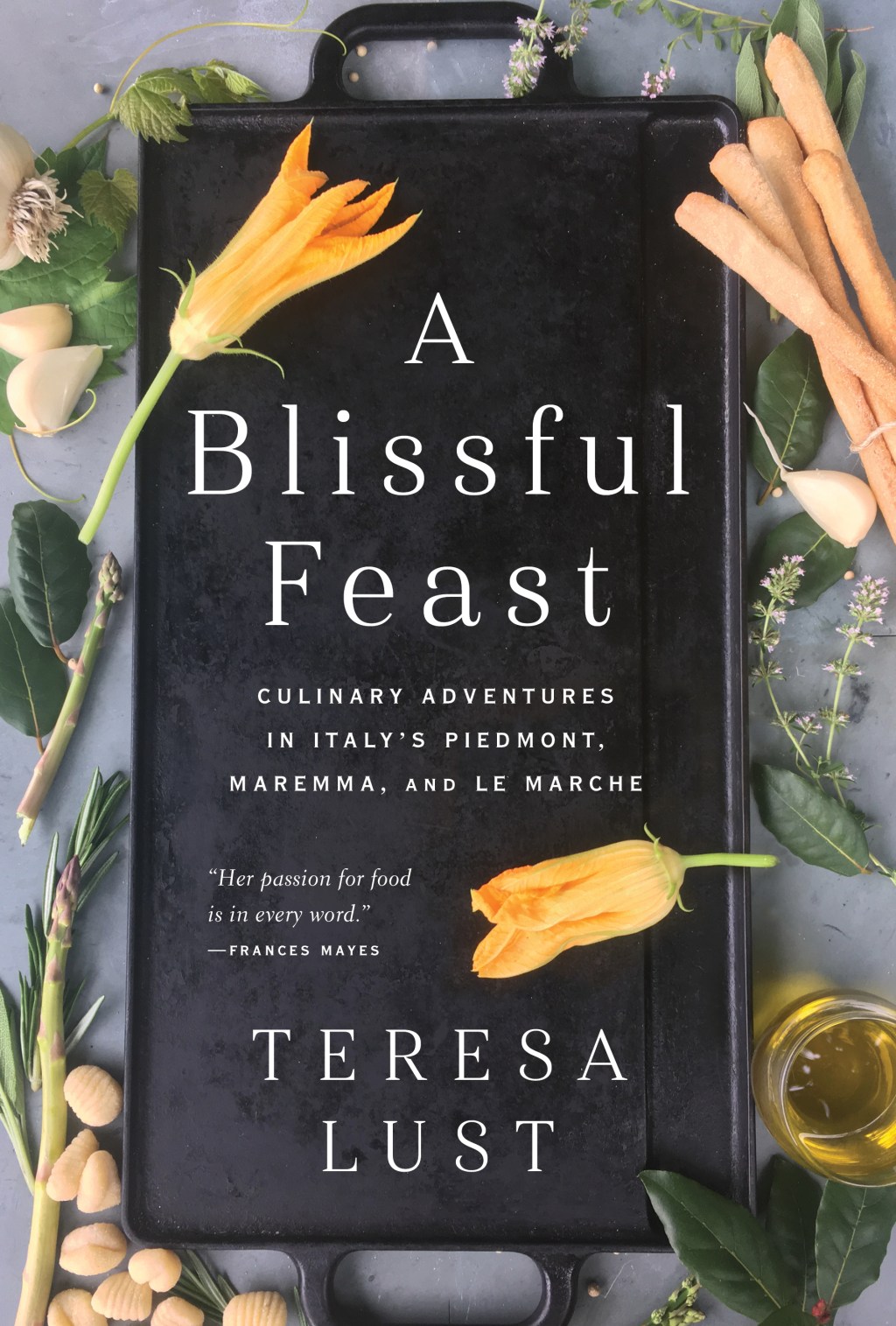
    A Blissful Feast: Celebrations of Family, Food, and History

    “In our culture we have lost our connection to cooking,” says Teresa Lust, author of  A Blissful Feast, Culinary Adventures in Italy’s Piedmont, Maremma, and Le Marche ( Pegasus Books 2020; $19.19 Amazon hardcover price), The Readable Feast’s 2020 winner for Best Food Memoir.

    Teresa Lust

    Lust, who teaches Italian at Dartmouth University in New Hampshire and also cooking classes, grew up in an Italian-American family, learning to cook from her mother and grandmother whose recipes were written by hand on little notecards. Wanting to discover and delve into Italian cuisine because of its meaning to her, she learned to speak Italian and traveled through the country of her ancestors.

    “I wanted to see and feel the connections to the traditions and geography of the regions,” says Lust, whose previous book,  Pass the Polenta: and Other Writings from the Kitchen, was praised by Frances Mayes, author of Under the Tuscan Sun and Julia Child.

    Going deep, she visits relatives and meets the people of the regions’ small towns, going into their kitchens to watch as they prepare food. It’s a constant learning process about the intricacies not only of the broad regional cookery of Italy that many of us are familiar with—that of Florence, Naples, or Sicily but of such places as Maremma, an area in western central Italy bordering the Tyrrhenian Sea and Le Marche, a region sandwiched between the Adriatic Sea and the Apennine Mountains.

    “Italian food is very regional, and even in the regions its broken down by cities, and then gets smaller and smaller until each dish is an expression of oneself and it can be an affront and violation if others add ingredients or make changes,” she says. “There’s an integrity to the dish.”

    It’s not the way we think of food here. Indeed, to me a recipe is to be altered by ingredients I have on hand so the idea of not changing is a thoughtful concept, one that I will think about. But then again, I’m not making family recipes dating back centuries and besides, old habits die hard. 

    In Camerano, a town in Le Marche, an 80-year-old woman shows Lust how to hand-roll pasta with a three-foot rolling pin. In Manciano, she masters making Schiacciata  All’Uva, a grape flatbread with honey and rosemary that back home in New Hampshire takes her two days to complete.

    But, Lust says, you only spend a few minutes in active work as if it were as easy as popping a frozen dinner into a microwave.

    Intrigued by the food philosophy of the people she cooks with, she goes beyond recipe and its ingredients to their history and what they represent.

    Acquacotta—such a beautiful word and beautiful dish–but then you find  out what it really means–cooked water and that it was born out of poverty made by people who had nothing,” Lust tells me when we chat on the phone.

    In her description, acquacotta is a rustic soup that nourished generations of the area’s shepherds and cowhands. It’s her way of adding poetry to food and to people who take such pride in what they cook.

    Lust includes recipes in her book, but this is not a glossy cookbook, but rather a lovely and thoughtful journey of rediscovering roots and meaning.

    The two of us discuss growing up with ethnic relatives and how important the culture of the table was for us when young.  It does seem to be something that is missing from our daily lives and Lust is hoping to reconnect people to food and help them see the importance of  taking the time to bring friends and family to the table to enjoy a meal.

    In the cooking classes she teaches she demonstrates how to make Italian food  and encourages participants to talk to her in Italian. She feels that she is helping forge an important connection that way.

    “I have people contact me through the website who said they tried the gnocchi and though they never thought they could make it, they found it was easy for them,” she says with a touch of pride.

    For more, visit www.teresalust.com

  • Wine Country Table

    Wine Country Table

    Taking us on a road trip that meanders from northern to southern California, James Beard award winner Janet Fletcher shows us how diverse the state’s growers and growing regions are in her latest book, The Wine Country Table: With Recipes that Celebrate California’s Sustainable Harvest. Accompanied by lush photographs by Robert Holmes and Sara Remington, the book was commissioned by the Wine Institute — a California wine advocacy group that received a grant to promote California’s specialty crops.

                  “What really came home to me was that there are so many different climates here in California,” says Fletcher who not only visited a plethora of wineries but also cherry orchards and avocado farms. She also learned about the sustainable practices that growers are incorporating in a state previously hit with a long-running drought.

                  Her recipes include suggested pairings with different wines and shows you how to recreate this type of casual but delicious dining at home.

    Golden Beet, Pomegranate, and Feta Salad

    SERVES 4

    WINE SUGGESTION: California Gewurztraminer or Pinot Gris/Grigio

    4 golden beets, about 1 1⁄2 pounds (750 g) total, greens removed

    2 tablespoons white wine vinegar 6 fresh thyme sprigs

    3 allspice berries

    1 whole clove

    1 clove garlic, halved

    DRESSING:

    11⁄2 tablespoons white wine vinegar

    1 tablespoon finely minced shallot

    3 tablespoons extra virgin olive oil Kosher or sea salt

    1⁄4 head radicchio, 3 ounces, thinly sliced 1⁄2 cup chopped toasted walnuts

    12 fresh mint leaves, torn into smaller pieces

    2 to 3 ounces Greek or French feta

    1⁄3 cup pomegranate arils (seeds)

    Preheat the oven to 375°F.

    Put the beets in a small baking dish and add water to a depth of 1∕4 inch. Add the vinegar, thyme, allspice, clove, and garlic. Cover and bake until the beets are tender when pierced, about 1 hour, depending on size. Remove from the oven and peel when cool enough to handle. Let cool completely, then slice thinly   with a sharp knife.

    Make the dressing: In a small bowl, combine the wine vinegar and shallot. Whisk in the olive oil. Season with salt and let stand for 15 minutes to allow the shallot flavor to mellow.

    In a bowl, toss the beets and radicchio gently with enough of the dressing to coat lightly; you may not need it all. Taste for salt and vinegar and adjust as needed. Add the walnuts and half the mint leaves and toss gently. Transfer to a wide serving platter. Crumble the feta on top, then scatter the pomegranate arils and remaining mint leaves overall. Serve immediately.

    Little Gem Lettuces with Olive Oil–Poached Tuna

    This dish requires a lot of olive oil for poaching, but you won’t waste a drop. Use some of the flavorful poaching oil in the salad dressing; strain and refrigerate the remainder for cooking greens or for dressing future salads. The strained oil will keep for a month.

    WINE SUGGESTION: California rose or Sauvignon Blanc

    1 albacore tuna steak, about 10 ounces) and 3⁄4 to 1 inch thick

    3⁄4 teaspoon ground fennel seed

    3⁄4 teaspoon kosher or sea salt

    1 large fresh thyme sprig

    1 bay leaf

    1 clove garlic, halved

    6 black peppercorns

    1 3⁄4 to 2 cups extra virgin olive oil

    DRESSING:

    6 tablespoons extra virgin olive oil (from the tuna baking dish)

    3 tablespoons red wine vinegar

    1 tablespoon salt-packed capers, rinsed and finely minced 1 teaspoon dried oregano

    1 small clove garlic, finely minced

    Kosher or sea salt and freshly ground black pepper

    11⁄2 cups cooked chickpeas (drain and rinse if canned)

    1⁄2 pound Little Gem lettuce or romaine hearts 1⁄4 pound radicchio

    1⁄2 red onion, shaved or very thinly sliced

    3⁄4 cup halved cherry tomatoes

    1⁄4 cup chopped fresh flat-leaf parsley

    Preheat the oven to 200°F. Remove the tuna from the refrigerator 30 minutes before baking.

    Season the tuna on both sides with the fennel seed and salt. Put the tuna in a deep ovenproof baking dish just large enough to hold it. Add the thyme, bay leaf, garlic, and peppercorns. Pour in enough olive oil just to cover the tuna.

    Bake until a few white dots (coagulated protein) appear on the surface of the fish and the flesh just begins to flake when probed with a fork, 30 to 40 minutes. The tuna should still be slightly rosy inside. Remove from the oven and let cool to room temperature in the oil.

    Make the dressing: In a bowl, whisk together the olive oil, vinegar, capers, oregano, garlic, and salt and pepper to taste. Add the chickpeas and let them marinate for 30 minutes.

    With a slotted spatula, lift the tuna out of the olive oil and onto a plate.

    Put the lettuce in a large salad bowl. Tear the larger outer leaves in half, if desired, but leave the pretty inner leaves whole. Tear the radicchio into bite-size pieces and add to the bowl along with the onion, tomatoes, and parsley.

    Using a slotted spoon, add the chickpeas, then add enough of the dressing from the chickpea bowl to coat the salad lightly. By hand, flake the tuna into the bowl. Toss, taste for salt and vinegar, and serve.

    Seared Duck Breasts with Port and Cherry Sauce

    SERVES 4

    Cooking duck breasts slowly, skin side down, helps eliminate almost every speck of fat. After about 20 minutes, the skin will be crisp and the flesh as rosy and tender as a fine steak. Serve with wild rice.

    Duck breasts vary tremendously in size; scale up the spice rub if the breasts you buy are considerably larger.

    WINE SUGGESTION: California Cabernet Sauvignon or Merlot

    SEASONING RUB:

    8 juniper berries

    2 teaspoons minced fresh thyme 2 teaspoons kosher or sea salt

    1 teaspoon black peppercorns

    4 boneless duck breasts, about 1⁄2 pound each

    SAUCE:

    1 cup Zinfandel Port or ruby port

    1 shallot, minced

    3 fresh thyme sprigs

    1 strip orange zest, removed with a vegetable peeler 1 tablespoon balsamic vinegar

    24 cherries, pitted and halved

    1⁄2 cup strong chicken broth, reduced from 1 cup 

    1⁄2 teaspoon sugar

    Kosher or sea salt and freshly ground black pepper 1 tablespoon unsalted butter

    Make the seasoning rub: Put the juniper berries, thyme, salt, and peppercorns in a mortar or spice grinder and grind to a powder.

    Slash the skin of each breast in a crosshatch pattern, stopping short of the flesh. (The slashes help render the fat.) Sprinkle the seasoning rub evenly onto both sides of each breast. Put the breasts on a flat rack and set the rack inside a tray. Refrigerate uncovered for 24 to 36 hours. Bring to room temperature before cooking.

    Choose a heavy frying pan large enough to accommodate all the duck breasts comfortably. (If necessary, to avoid crowding, use two frying pans.) Put the breasts, skin side down, in the unheated frying pan and set over medium- low heat. Cook until the skin is well browned and crisp, about 15 minutes, frequently pouring off the fat until the skin no longer renders much. (Reserve the fat for frying potatoes, if you like.)

    Turn the duck breasts and continue cooking flesh side down, turning the breasts with tongs to sear all the exposed flesh, until the internal temperature registers 125°F on an instant-read thermometer, about

    3 minutes longer. Transfer the breasts to a cutting board and let rest for 5 minutes before slicing.

    While the duck cooks, make the sauce: In a small sauce- pan, combine the port, shallot, thyme, orange zest, vinegar, and half of the cherries. Bring to a simmer over medium heat and simmer until reduced to 3∕4 cup. Add the broth and sugar and simmer until the liquid has again reduced to 3∕4 cup Remove from the heat and, with tongs, lift out the thyme sprigs and orange zest and discard.

    Puree the sauce in a blender. Set a very fine-mesh sieve over the saucepan and pass the sauce through the sieve, pressing on the solids with a rubber spatula. Return to medium heat, season with salt and pepper, and simmer until reduced to 1∕2 cup. Stir in the remaining cherries and remove from the heat. Add the butter and swirl the saucepan until the butter melts.

    Slice the duck on the diagonal. Spoon some of the sauce on each of four dinner plates, dividing it evenly. Top with the sliced duck. Serve immediately.

    The above recipes are Wine Country Table: With Recipes that Celebrate California’s Sustainable Harvest by Janet Fletcher in cooperation with the Wine Institute, Rizzoli, 2019.

    Jane Ammeson can be contacted via email at janeammeson@gmail.com or by writing to Focus, The Herald Palladium, P.O. Box 128, St. Joseph, MI 49085.

  • 50 Ways to Love Wine More: Adventures in Wine Appreciation!

    50 Ways to Love Wine More: Adventures in Wine Appreciation!

    Jim Laughren wants to keep it real when talking about wine. No pretentions, no superciliousness.

    It’s about what you like, not what the big time wine critics say you should like says Laughren, author of 50 Ways to Love Wine More: Adventures in Wine Appreciation! (Crosstown Publishing 2018; $26.95), an NYC Big Book Award winner and finalist in the American Book Fest Best Book Awards.

    “I wrote the book with the intention of starting a conversation about wine,” says Laughren, a Certified Wine Educator and former president of a wine import and distribution company. ““I wanted my book to be for people who really like wine but are put off by wine snobs. All of my writing and teaching is about letting people know that what other people think doesn’t matter, that there are no secrets to wine though many wine critics would have you believe otherwise and that only they hold the secrets. Historically, there’s never been a wine or gate keeper.”

    Indeed, says Laughren, wine was, for centuries both seasonal and also for everyone.

    “In Rome, they even gave their slaves wine though it was the dregs, of course,” he says. “Wine’s greatest gift is to give pleasure and we’re all entitled to that.”

    Determining your own palate means trusting your own preferences. And though wine can be complex, it becomes easier to appreciate when a person understands how memory and emotion are inextricably tied to taste and are determining factors in all of our personal wine journeys.

    “At the top of the nasal passage is the olfactory epithelium that connects directly to the area of the brain where memories are stored,” explains Laughren. “You know how some wines have tastes of tobacco. If as a child you had a kindly grandfather who smoked a pipe, contrasted with a child whose parents chain smokers and a house that reeked of cigarettes, those memories would impact how the two would feel about the taste or aromas of tobacco in wine.”

    Laughren, founder of WineHead Consulting, encourages people to explore new wines while still enjoying your favorites.

    “There are 10,000 different grape varietals,” he says. “Look at Italy, there are probably 800 varieties in that country alone.”

                         Like most of us, Laughren drank some funky wines in college.

                         “Most wines made in the 1970s were very sweet,” he says. “Group think changes. Now those in the know pooh-pooh sweet table wines as the drinks of the unwashed masses. But if that’s what you like, don’t spend too much time thinking about it, just enjoy them. Instead think about exposing yourself to other wines and widening your experience.”

              Ifyougo:

              What: Reading, signing, and wine tasting with renowned wine expert Jim Laughren who be discussing his new book, 50 Ways to Love Wine More.

              Where: The Book Cellar, 4736-38 N Lincoln Ave., Chicago, IL

              When: Friday, March 29 at 7 p.m.

              Cost: Free

              FYI: Please call (773) 293-2665 to confirm