Category: Uncategorized

  • Princess of Blood

    Princess of Blood

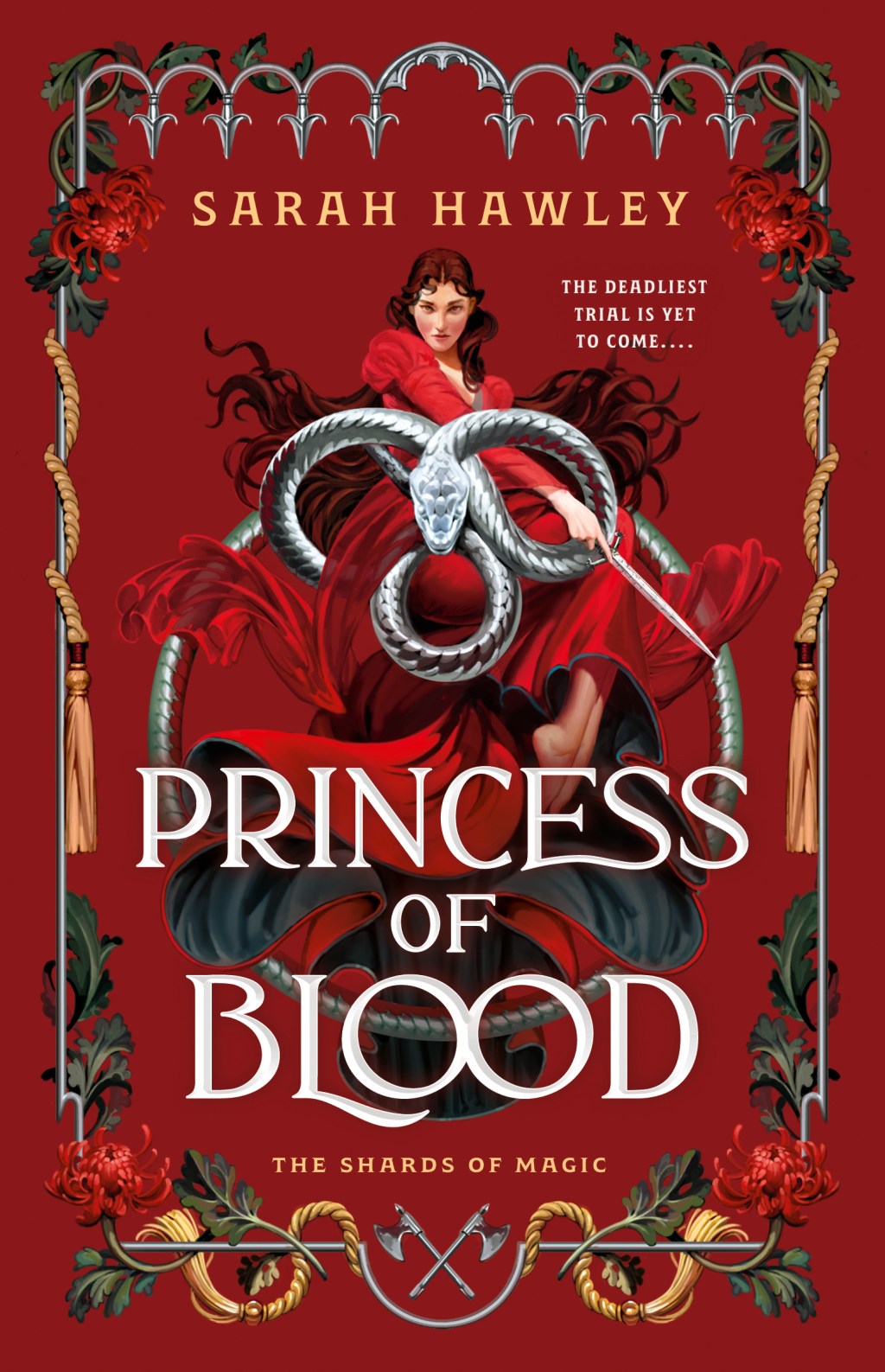
    I devoured Sarah Hawley’s Servant of Earth, the first in her Shards of Magic triology, a romantasy that centers around Kenna, a young woodland girl, held in contempt in her village, who, trying to save her only friend, finds herself a slave in the opulent world of the Fae. These beautiful and magical creatures over-indulge in the pleasures and sins of life–sumptuous food and drink, complicated love affairs, glamorous surroundings, and evil machinations.

    The world of the Fae is one of danger, false friendships, and death. To survive, Kenna must outwit and out manuever the most powerful of the Fae. You can read my review here.

    I eagerly awaited Hawley’s second book, Princess of Blood, and was not disappointed when it came out earlier this fall. It’s darker as Kenna becomes enmeshed in a power struggle over who will rule the Fae, a battle that imperils her life and those of her friends and followers. Now, I’m hoping that Hawley is working hard on the third and final book in the trilogy as I’m eager to see how it all turns out.

    I again had the chance to interview Hawley and thought I’d include the Q & A here.

    Were there specific myths, legends, your previous work as an archaeologist or personal experiences that influenced the book’s political intrigue, power struggles, or Fae society?

    I’ve always loved reading about the Fae in folklore and fantasy novels! They’re a fascinating combination of whimsical, deadly, beautiful, mercurial, and mysterious, and there are so many ways a writer can pay homage to that lore and take it in new directions.

    Many Fae stories include underground elements because the folklore is tied to burial mounds and the remains of ancient structures. Those archaeological sites developed a reputation for being gateways to a mysterious Fae underworld, which served as the inspiration for the subterranean kingdom of Mistei. Combining that dramatic setting and the tricky nature of the Fae in fairy tales led to the complicated politics and power struggles explored in SERVANT OF EARTH and PRINCESS OF BLOOD.

    Princess of the Blood explores such heavy themes as trauma, healing, betrayal, murder, and forging new alliances. How did you approach exploring such difficult and emotionally compelling but difficult subjects in your writing? And how did you react emotionally when writing about such things?

    Fantasy novels are a great way to explore dark themes that are relevant to our lives. The fantastical setting adds an element of distance while also allowing for very high stakes. It can be difficult to write such heavy content (I feel bad for my characters sometimes!) and I definitely cried while writing certain passages, but I also think it’s a wonderful way to explore themes of healing and growth. I spend a lot of time thinking about how my characters’ emotions and traumas would impact their actions and how they might change over the course of the story.

    How did your background in archaeology shape the historical textures and power dynamics in your fantasy world? After all there were a lot of complex, traumatic and emotional plot lines in ancient times as well as diverse architecture.

    My background in archaeology definitely impacts my worldbuilding. I’m always thinking about how a society is laid out, from its geography to its social hierarchy, as well as how the characters move through that space. How do they dress and act to signify their status as an insider or outsider? What are the rituals of everyday life? I also like to consider how my characters relate to their own world’s past—their history and myths and the combination of fact, fiction, and propaganda that impacts their beliefs. Their politics and actions are shaped by the stories they tell themselves, just as ours are. I always want the reader to have a sense of an expansive world where countless stories are happening just off the page.

    Is there a particular scene or line in “Princess of the Blood” that holds special meaning for you either personally or as an author?

    There are a lot of scenes and lines that hold meaning for me, but one passage sums up the central theme of this book and series, which is the cyclical nature of history and the importance of trying to break destructive cycles even if the fight seems hopeless:

    History ate itself like a snake swallowing its own tail as the Fae continued their unending battle for power . . . but that didn’t mean we should give up. Even if our victories had a steep price. Even if we lost.

    Is there anything else you’d like readers to know?

    I’m so excited that readers are discovering SERVANT OF EARTH and PRINCESS OF BLOOD! It’s been thrilling and fulfilling to see Kenna’s story resonating with so many people. Thank you to everyone who has picked these books up.

    When can we expect the third and final book?

    I don’t have an exact publication date yet, but it will be coming in 2026!

    My article about Princess of the Blood appeared in the Northwest Indiana Times.

  • Sidney Karger: Best Men

    Sidney Karger: Best Men

    The youngest of five children with a father who was jokester and a mother who did impressions, Sidney Karger learned early that being funny garnered attention from his parents.

    It also instilled in him a sense of comedic timing coupled with an obsession with both “Comedy Central” and “Saturday Night Live” as well as director John Hughes who directed several movies in Karger’s hometown of Highland Park, Illinois including “Ferris Bueller’s Day Off,” “Risky Business” and “Sixteen Candles.”

    “He was my god,” says Karger, who knowing that Hughes had been a copywriter for an advertising firm studied advertising at Michigan State University. He was successful as a copywriter but didn’t find the work fulfilling.

    “It didn’t fill my comedy writing needs,” says Karger, who around that time was offered a job writing for “Comedy Central ” and was unsure of what to do. “I remember standing on a street corner, talking to family, asking do I want to go with an advertising job or “Comedy Central.” It’s pretty amazing when you think of it.”

    Karger chose “Comedy Central” and also was a contributing writer to “Saturday Night Live.

    Working for “Comedy Central” was amazing, says Karger, describing the job as “great fun and like working with family.”

    With his success,Karger, an award-winning screenwriter for film and television, has now branched out with a romantic comedy (or rom-com as they’re known) titled “Best Men” (Penguin-Random House). The story is about Max, a gay guy struggling with his failing romance, and Paige, his best friend since childhood. Now engaged, Paige is having her usual second and third thoughts and Max, who is Paige’s man of honor and her soon-to-be husband’s younger brother and best man work together to keep the marriage on track. And, of course, fall in love.

    The novel, a New York-centric look at love, friendships, finding yourself and realizing your potential, is full of witty conversations and observations. It’s warm, inviting and laugh-out loud funny at times as well. It’s received lot of glowing reviews and was featured as “most anticipated” and made suggested reading lists from Goodreads, BuzzFeedBookRiot, and LGBTQ Reads.

    “Max and Paige’s friendship is ultimately the star of the show, and readers will find their banter reminiscent of fan favorites like Amy Poehler and Tina Fey or Dan Levy and Annie Murphy. A charming debut filled with cocktails, chocolate and comedy,” wrote Kirkus Review, while Anderson Cooper, New York Times bestselling author and journalist, describes the book as “Bursting with laughs and so much love, Sidney Karger’s debut novel delivers a truly refreshing spin on the romantic comedy. It’s full of funny, flawed and poignant characters, set in the dreamy, sharply-observed New York City that we love. ‘Best Men’ is a big-hearted, feel-good summer escape.”

    And though Karger recenlty released his second novel, “The Bump, ” he still is writing screenplays as well as doing rewrites of scripts. It’s a good balance.

    “I always wanted to be a screenwriter and comedian when I was in college,” says Karger about his career path. “So I decided to write smaller like about Highland Park.”

    His script made the coveted Black List, Hollywood’s shortlist of the most liked screenplays, and he started getting numerous writing assignments.

    Now, he’s able to write across several mediums and have fun doing it.

    This article originally appeared in the Northwest Indiana Times.

  • “Let’s Call Her Barbie” by Renee Rosen

    “Let’s Call Her Barbie” by Renee Rosen

    In 1956, there were baby dolls for little girls to play with but the idea of an eleven-and-a-half-inch tall grown women with feet permanently arched to wear high heels was a totally alien concept to the men at Mattel when Ruth Handler presented the idea for Barbie.

    Because the times were more “Mad Men” than they are now, there were derogatory comments about the doll’s hourglass figure along with dismayed looks that Handler, a take-no prisoners type when she had an idea, would even suggest Mattel should consider making this doll.

    “She looks like a hooker,” one of the men said.

    Well, we know how this turned out. According to recent statistics, three Barbie dolls are sold every second, totaling about  one billion dolls  having sold since Barbie was introduced in 1959.

    How this all came to be is the delightful tale told by bestselling Chicago author Renee Rosen in her latest novel, titled simply “Let’s Call Her Barbie” (Berkley January 2025), reinforcing Mattel’s estimation that Barbie has 99% worldwide brand reorganization.

    “I’ve never had more fun writing a novel,” Rosen told me recently in a phone interview. “I wanted to do this long before the “Barbie” movie came out.”

    Learning the story behind the creation of Barbie while participating on a panel of feminism in 2019, Rosen knew this was the perfect novel and subject for her. She specializes in writing novels about important figures such as Helen Gurley Brown who changed the magazine world as editor of Cosmopolitan magazine in “Park Avenue Summer,”  the long term love affair of the founder of Marshal Field’s in “What the Lady Wants,” and the feud between two super rich women, Mrs. Astor and Mrs. Vanderbilt, vying for social status supremacy in “The Social Graces.”

    Writing about Barbie would have to wait. Rosen already had two books in the pipeline that she needed to complete. But once she had the time—and the book contract—in her typical way she hit the ground running. A deep dive into the world of Barbie led her to meet Barbie influences (yes, there are Barbie influences including one who has over half-a-million followers) and took her to a Barbie collectors convention in Chicago.

    “I was lucky to get in, admission was almost sold out,” she says.

    There she met 90-year-old Carol Spencer, one of the original Barbie designers.

    “She’s Mattel royalty,” says Rosen who wishes she could have been a fly on the wall when Handler was taking on Mattel in trying to persuade them to spend the big bucks it would take to develop Barbie.

    As for Barbie’s figure, Rosen tells me her shape, which was somewhat scandalous in the late 1950s, was necessary so her clothes would fit.

    “Barbie is a 1/6th scale of a real woman but there’s no such thing as 1/6th scale fabric so in order to make waistbands with zippers, hooks and eyes– all that detail adds bulk,” explains Rosen. “So, if Barbie didn’t have an abnormally slender waist, which is the equivalent of an 18-inch waist on  a woman, her waist would have been bigger than her hips when she was dressed.”

    I told you; she dives deep.

    It got to the point where she unearthed her own collection of Barbies and displayed them in the home she shares with her partner, John, who though he’s a finance guy, was willing to put on a pink shirt for the Barbie convention. It should be pointed out though that John might not be totally cool about the display of Barbies.

    I did a quick check on how in sync Rosen and I are when to comes to Barbies by asking her what her favorite Barbie outfit is. She replies “probably  “Solo in the Spotlight.”  That’s Barbie as a chanteuse dressed in a black skintight floor length gown with a flared ruffled bottom and a microphone.

    “Mine too,” I say. “I wanted that one so badly.”

    And then I mention my sad story of woe. My mother, the librarian, insisted on making outfits for my Barbie so my doll never got to wear that sparkly sleepless dress. I don’t know what they cost at the time, but there’s one for sale on eBay for $500.

    “Barbie is the most collected toy after baseball cards,” Rosen tells me which explains the cost.

    And, of course, there was the movie which so far has earned $1.446 billion globally.

    There was a time when the name Barbie was used as pejorative and dismissed as a shallow and anti-feminist throwback. Poor Ken was frowned upon too when people would dismiss a couple by saying “they look like Barbie and Ken.”

    But really this is a woman’s story. Handler worked in a mostly male world at a time when there were plenty of toys for boys to play with and baby dolls that needed burping and diaper changes for girls. She transformed all that, making it a Barbie world.

    Rosen’s book takes us back to that time and shows us how it happened.

    For more events, visit reneerosen.com.

  • The Story of Perfume: A Lavishly Illustrated Guide
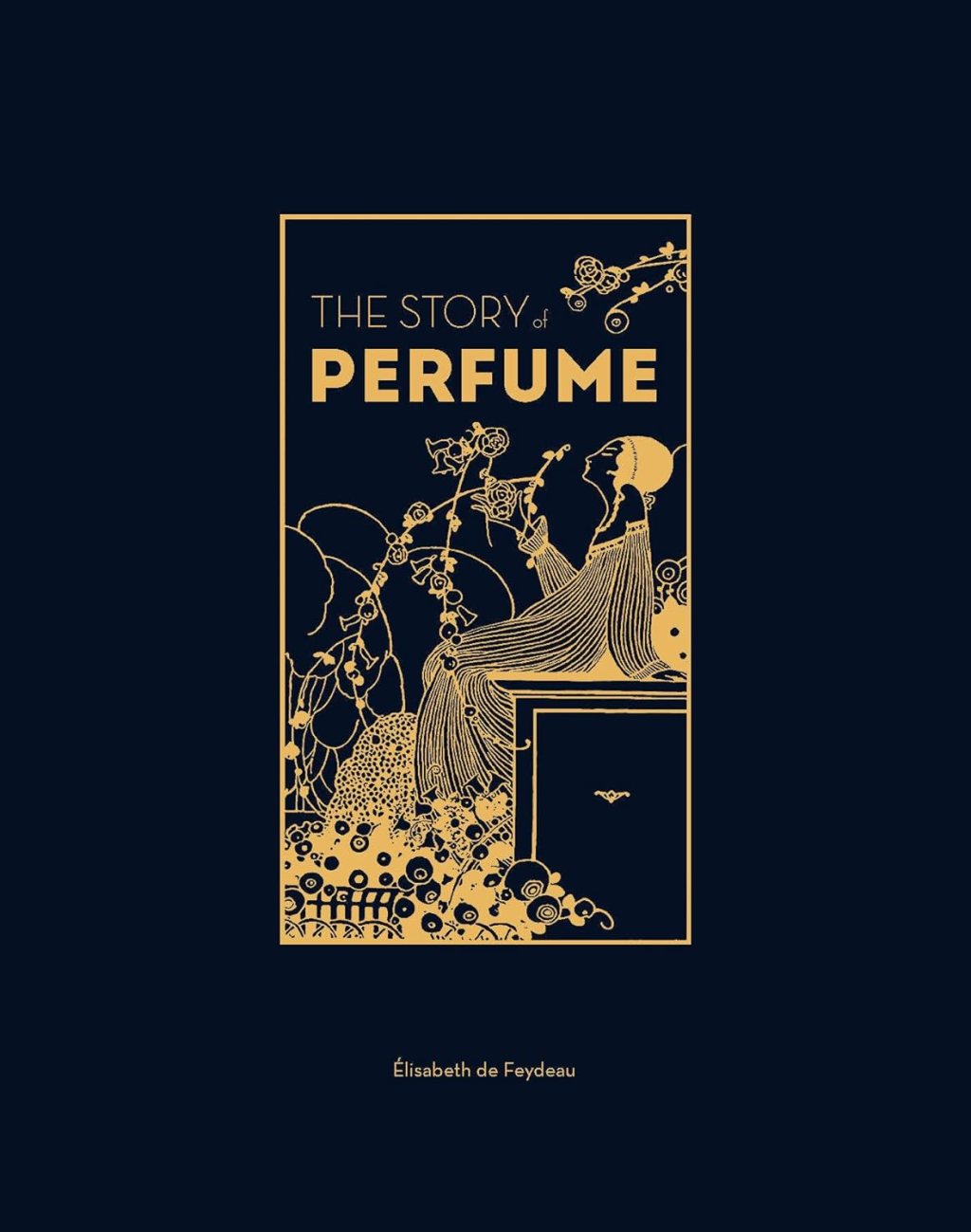
    The Story of Perfume: A Lavishly Illustrated Guide

    In the beginning, perfume in the form of oils belonged to the divine, and rare scents typically sourced from resins were reserved for dedication to the gods. Used in funeral rituals and in cremation with the burning of resinous woods such as cedar, early references trace the use of scents back at least to the Bronze Age.

    But their legacy may go even further into the past, writes Élisabeth de Feydeau in her latest book, The Story of Perfume: A Lavishly Illustrated Guide (Laurence King Publishing). Shards of pottery and stone containers dating back to the fourth millennium BCE indicate that the beginnings of perfume most likely originated in Mesopotamia, a land now part of Iran, and traveled east.

    Version 1.0.0

    From the sacred to the secular, demand for fragrances grew. Alexander the Great, having seen the perfumed rooms and scented baths in Persia in 331 BCE as he conquered Central Asia, the Middle East and India, established a perfume route, sourcing aromatic plants throughout his empire. Later, the Romans joined in, establishing more routes, and aromatics became part of the lives of the very rich in Ancient Rome.

    Version 1.0.0

    “Upper-class men and women bathed frequently in baths fragrant with lavender, rose, jasmine and other perfumes,” writes de Feydeau about their use in Rome. “A lady of the ruling classes would begin her toilet by removing her makeup and applying a beauty balm. She would then gargle with saffron or rose and chew flavored gum as she slid into her jasmine, lavender or rose bath. A slave would then give her an aromatic massage and spray her body with the same perfumed water she had first used as a mouthwash.”

    “At banquets, diners ate under mist of extremely rare essences as they ate asparagus dipped in perfumed oils, served in fragrant wooden dishes and drank rose–or myrrh—flavored wines. Between courses, they were sprayed with floral water.”

    Indeed, it was the Romans who gave us the word perfume, coming from the Latin expression per furmum, meaning “through the smoke.”

    The author, whose other books on the subject include “The Herbarium of Marie Antoinette” and the novel “A Scented Palace: The Secret History of Marie Antoinette’s Perfumer,” earned a Ph.D. in the history of perfume from the University of Paris-Sorbonne. She is currently a cultural adviser to such luxury perfume brands as Dior, Chanel, Lancaster and Guerlain, and her skillset beyond being extremely knowledgeable about the subject is her ability to tell this complicated odyssey of scents understandably and engagingly.

    Version 1.0.0

    Lavishly illustrated, de Feydeau’s book is a fascinating history of what we take for granted as we go about our own rituals, spraying wisps of aroma as we start our day, lighting scented candles or dipping diffuser sticks in oil to aromatize our homes. She deftly ties this enjoyable if mundane act back to ancient times, interwoven with culture, tradition and science, taking the story to the famed perfumes of our day, such as Shalimar and Samara by Guerlain, Opium by Yves Saint Laurent and Ambre Sultan by Serge Lutens.

    Easy to read, you can flip through the pages, reading pull-out boxes with titles like “Hollywood Icons,” where we learn that Fracas by Piguet (1948) was a favorite of Marlene Dietrich, Madonna, Kim Basinger, Naomi Campbell and Princess Caroline of Monaco. de Feydeau describes Youth Dew, launched in 1953, as the signature scent of such 1950s femme fatales as Joan Crawford, who said she couldn’t live without it.

    Reading this book, whether in chunks or page by page, provides a fascinating take on how we’ve arrived at the scents in the bottles on our bathroom shelves.

    This article first appeared in the Northwest Indiana Times.

    Images courtesy of Facebook.

  • Gothictown

    Gothictown

    In 1832, at the height of the Georgia gold rush, gold had been discovered on the banks of the Etowah River on land owned by Alfred Minette. As men flocked to work in the mine and others to supply their needs, a small town arose and Minette named it after his firstborn, a beautiful but frail girl named Juliana who had died years ago in South Carolina.

    But now the Civil War was waging and while the men and boys of Juliana were off fighting, Minette forced their wives and children to work in the mines.

    Union General Philip Sheridan and his troops were laying waste to all he passed through on his march to the sea and Juliana lay in his path. Destroying the town meant destroying the wealth that helped fuel the Confederate war effort and so three of the town elders, including Minette, formed a plan to save it.

    And it worked. Sheridan did stop in Juliana and he and his men decimated the town’s food and livestock supplies but they didn’t discover the mine, nor the women and children trapped in the bottom of the mine when the town’s elders had the entrance dynamited with explosives. Sheridan and his troops tarried and by the time the mine was unsealed, all those insides were dead. When the surviving men returned home from the war, they were told their families had been sent away and they could now work in the lumber mill Minette was building, accept it as God’s will that their families were gone, and start anew.

    It was a small sacrifice for the good of all, Minette argued, and that his daughter, Julianna, was pleased with their offering.

    More than 160 years later, Billie Hope receives an offer. A former restaurateur, Billie lives in a cramped apartment with her husband and daughter in New York City when she receives an offer to purchase a dream home in historic Juliana for just $100. The offer describes the town as idyllic, and the accompanying photo shows a quaint town square straight out of a storybook as does the link to the professionally done town website. Billie sees it as part of a trend to lure people to help grow stagnant towns with new citizens. Feeling at a dead end in her life and lured by the thought of a pretty house in a lovely small town, she replies.

    It’s an offer too good to be true, but desperation often clouds people’s judgment, so it is with Billie and her family who make the move to Juliana.

    “A small town,” she thinks. “Our own house. A perfect childhood for Mere and…another restaurant for me.”

    Of course, it doesn’t work out that way.

    Bestselling author Emily Carpenter, whose other suspense novels include Burying the Honeysuckle Girls and The Weight of Lies, weaves a frightening and compelling tale as we follow Billie and her family move from elation at what they see as a chance for a new and better life and the dawning realization that they may have embarked upon a dangerous and frightening adventure.

  • Trust Issues: A Mystery That Asks Who You Going to Trust?

    Trust Issues: A Mystery That Asks Who You Going to Trust?

    “a tense, well-plotted mystery with enough twists and turns to keep the reader engaged . . .”

    “Something strange happened when Hazel and Kagan showed up. Ava had begun hearing her father’s voice so clearly that it sounds like he’s crawled inside her head. This isn’t the first time in her life she’s been haunted by his negative commentary. It followed her on the bus when she first escaped and lingered for a few weeks after she settled into life with Sam again. When she was in prison she’d hear her father’s voice late into the night, chastising her for thinking she could outrun her destiny and for being stupid enough to get caught.”

    Spoiled and entitled, Hazel Bailey and her brother Kagan Bailey have gone through the millions their mother, Janice, gave them after the death of their abusive father and, resentful that she won’t give them more, have cut off all contact with her. Still, despite their treatment of her, they’re outraged when they learn of their mother’s death and that Perry, their smarmy stepfather has inherited all of Janice’s considerable fortune,

    When they learn that Janice was murdered, they’re sure that Perry is the culprit despite his unassailable alibi—he was on a plane at the time of her death. And so, the two, who don’t typically get along, team up together to discover all they can about Perry to prove he’s somehow responsible for her death. Surprisingly, Perry has no internet presence, except for a hazy half photo at a charity event he attended with Janice.

    Though the siblings are self-centered, combative, and often compete for the same romantic interest, they also are resourceful and before long discover that Perry is a conman who seduces rich, older women who then disappear or die. Taking it one step further, they trace his daughter, Ava, who long ago separated herself from her father and ask her to join them in their search and revenge mission.

    Like Kagan and Hazel, the seductive Ava has her own baggage. Trained from an early age by her father to con people, she’s spent time in prison and has been offered a straight-and-narrow lifestyle. But the idea of helping them regain their fortune and punish her father who murdered her mother and uncle is impossible to resist. And besides, as the siblings neglect to keep in mind, when you’re trained to be a conman or woman, old habits die hard— particularly when there’s a fortune to be had.

    As the three chase Perry down the Eastern seaboard, coming up with an elaborate plan to fleece Perry out of the money he conned their mother out of and to keep him from marrying—and killing another wealthy woman—they fail to keep in mind that Perry mayhave a fatal plan to stop them as well.

    Elizabeth Keenan and Greg Wands, authors of Trust Issues (Dutton 2025), have previously written three novels under the pen name E.G. Scott including The Woman Inside and The Rule of Three. Besides their books, which have been translated into a dozen languages, they created and co-host the podcast “Imposter House with Liz & Greg,” where they chat with authors and artists about creativity, self-doubt, and about featuring imposter characters in their stories.

    In Trust Issues, they’ve written a tense, well-plotted mystery with enough twists and turns to keep the reader engaged as well as hopeful that Perry finally is outsmarted and has to pay for his sins.

    This article originally appeared in the New York Journal of Books.

  • Japan: The Vegetarian Cookbook

    Japan: The Vegetarian Cookbook

    Nancy Singleton Hachisu dives deep into the Japanese food scene, having married a Japanese farmer and learning the intricacies of cooking various vegetables and other ingredients that most of us aren’t familiar with.

    The author of several cookbooks including Japanese Farm Food, winner of the Gourmand World Cookbook Awards 2012: USA Winner for the Best Japanese Cuisine Book, Preserving the Japanese Way: Traditions of Salting, Fermenting, and Pickling for the Modern Kitchen, and Food Artisans of Japan, Hachisu is meticulous in her receipt development and helping us understand the intricacies of Japanese gastronomy. Her latest is Japan: The Vegetarian Cookbook (Phaidon 2023).

    For those who want to learn, Hachisu’s recipes require attention to detail and buying foods we may have trouble sourcing. But the results, for those who like a kitchen challenge, are well worth it and as someone who has been following Hachisu and using her cookbooks for years, I can assure you it gets much easier.

    It’s a fascinating take on Japanese cuisine from Hachisu, a native Californian who moved to Japan to stay there just for a year and immersed herself in Japanese food culture. Love intervened and after meeting an organic farmer, she married and moved to the rural Saitama Prefecture.

    That was more than 30 years ago, time enough for Hachisu to raise a family in an 85-year-old traditional Japanese farmhouse and become proficient in both culture and cooking.

    The book is so very niche that it’s almost like being in her kitchen and on her farm, giving us an amazing insight into a tiny slice of Japanese farm culture.

    CHILLED UME-TOFU SQUARES IN DASHI

    • Preparation time: 30 minutes, plus 2-3 hours pressing and chilling
    • Cooking times: 10-15 minutes
    • Serves: 4 squares
    • Vegan, Dairy-free, Nut-free

    Junsai, harvested from ponds from May to September, are baby water lily buds called “water shield” in English. They have a natural gelatinous covering so add a cool, slippery element to summer dishes. They might be available at Japanese markets, otherwise, just omit or substitute with blanched julienned green beans or cooked edamame. Salted sour “plums” have been prepared in Japan for a millennium, since the Heian period (794–1185), and are purported to have many health-improving qualities, including aiding digestion and combatting summer fatigue during the rainy season. The combination here makes a subtle, but lovely little bite.

    INGREDIENTS

    • 101⁄2 oz (300 g) cotton tofu or Japanese-style soft block tofu • 1 tablespoon hon kuzu
    • 2 medium umeboshi
    • Canola (rapeseed) oil, for greasing the pan
    • Generous 3/4 cup (63/4 fl oz/200 ml) Konbu Dashi
    • 1⁄2 tablespoon shoyu
    • A pinch of flaky sea salt
    • Scant 1⁄2 cup (31⁄2 fl oz/100 ml) baby water lily buds
    • Boiling water

    DIRECTIONS

    Place the tofu on a dinner plate and weight with a small cutting board for 1 hour.

    Smash the kuzu to a fine powder in a Japanese grinding bowl (suribachi, see page 354). Squeeze the tofu by handfuls to express excess moisture  and drop into the suribachi. Mash into the kuzu until well incorporated.

    Cut out the umeboshi pits (stones) and discard. Finely chop the umeboshi and fold into the smashed tofu.

    Dampen a folded-up piece of paper towel with the oil and grease the bottom and sides of
    a 5 1⁄2 × 4 1⁄2 × 2-inch (14 × 11 × 4.5 cm) nagashikan mold (see page 353) or a 4 3⁄8 × 8 1⁄2-inch (11.5 × 21 cm) loaf pan (bottom lined with parchment paper). Scrape the ume-tofu mixture into the pan and rap smartly on the counter to eliminate air pockets and make sure the tofu is evenly distributed into the pan.

    Set a bamboo steamer over a large wok filled one-third of the way with water and bring to a boil. Place the pan in the steamer, cover, and steam over high heat for about 10 minutes until set. Remove from the steamer, blot off accumulated moisture, and lay a piece of plastic wrap (cling film) on the surface. Refrigerate for at least 2 hours to chill.

    In a small saucepan, stir the dashi, shoyu, and salt together over medium heat to dissolve the salt. Transfer to a small bowl and refrigerate for 1 hour to chill.

    Place the junsai in a wire-mesh sieve and pour boiling water over for 10 seconds. Refresh
    by running the sieve under cold water. Shake off excess water and set the sieve over a bowl to drain. Store in the fridge for 1 hour to chill.

    Unmold the umedofu, cut into 4 squares, and place each on a small shallow individual dish. Stir the junsai into the cold dashi and spoon around the umedofu. Serve immediately as a light, palate-cleansing bite.

    Extracted from JAPAN: The Vegetarian Cookbook © 2023 by Nancy Singleton Hachisu. Photography © 2023 by Aya Brackett. Reproduced by permission of Phaidon. All rights reserved.

  • Author Erik Larson offers compelling acount of the start of the Civil War

    Author Erik Larson offers compelling acount of the start of the Civil War

    Only a master storyteller like Erik Larson could turn the five tumultuous months leading up to the Civil War into “The Demon of Unrest: A Saga of Hubris, Heartbreak, and Heroes at the Dawn of the Civil War” (Crown), a compelling, page-turning read, chock full of anecdotes, psychological profiles and obscure but compelling tidbits of history all set against a relentless march towards a conflict that would kill over 620,000 soldiers and devastate a nation.

    Larson, the author of six New York Times bestsellers whose previous works include “The Devil in the White City: Murder, Magic, and Madness at the Fair That Changed America,” about a mass murderer and the 1893 Chicago’s World Fair, writes in a novelistic style that makes history come alive. He does so through his ability to weave together the familiar facts of history with information that can only be gleaned through relentless and extensive research.

    Yes, most of us know that the Civil War began with the firing on Fort Sumter, which was located in Charleston Harbor and under the command of U.S. Army Major Robert Anderson. But did you know that Anderson had owned enslaved people and was a defender of slavery? That Lincoln often misspelled Sumter as Sumpter? Or, more importantly, South Carolina did not have to succeed because of Lincoln’s election, as he had no intention of outlawing slavery in the Southern states?

    “When I started out doing this, one concern I had was that the Civil War has not exactly been underwritten,” Larson told me during a phone conversation earlier this week, noting that a quick Google indicated around 65,000. “I had vowed over the years never ever to write about the Civil War.”

    That changed when, as he was looking for the topic of his next book and watching the events of the Jan. 6, 2021 assault on the U.S. Capitol, he began to consider the deep divide and unrest of our own times.

    Faced with what he describes as an intimidating world of previous scholarship, Larson says “What I really wanted to do was to provide a rich sense, on an intimate level, of what the forces were and the motivations for the start of the Civil War.”

    The magic of his writing is that he accomplishes this by immersing the reader in details, descriptions, and personalities mostly unknown to many of us, including “eight typical characters” such as Charleston society doyenne Mary Boykin Chestnut, who kept a detailed diary, and James Henry Hammond, a Charleston planter who was a leader of the secessionist movement and who later became a U.S. senator despite public knowledge of his sexual relationships with four nieces ages 13 to 19.

    He also includes information about resolving issues regarding dueling, from “The Code of Honor or Rules for the Government Principals and Seconds in Dueling” and instructions for the “proper” way of whipping slaves as well as the going prices for selling human beings.

    The Southern mindset among the owners of enslaved people of the time is best summed up in a letter written to President James Buchanan, president before Lincoln, by Arthur Peronneau Hayne, a U.S. senator from Charleston. In it, he writes that without slavery “our every comfort would be taken from us. Our wives, our children, made unhappy — education, the light of knowledge — all lost and our people ruined forever. “

    “White southerners had persuaded themselves that slavery was a good thing for all concerned, especially for the enslaved blacks,” said Larson. He also notes that many of these same men were devoted readers of writers like Sir Walter Scott, author of “Ivanhoe,” and believed fervently in honor and the code of chivalry.

    As outrageous and hypocritical as that seems today, Larson says when writing about a different era it’s important to consider the point of view of those times to accurately reflect how events unfolded.

    “It gives a better sense of what the forces were that did lead to states like South Carolina succeeding from the Union and the Civil War,” he said, noting that understanding is not condoning, but historic context provides a lesson for the present and future as we struggle with political division today.

    This article previously appeared in the Northwest Indiana Times.

  • Islas: A Celebration of Tropical Cooking

    Islas: A Celebration of Tropical Cooking

    “Whatever you cook or don’t cook, this book is a trip to the islands or islas of the world.”

    A beauty of a book, all lively colors, and wonderful photos, Islas: A Celebration of Tropical Cooking (Chronicle Books) takes us from island to island through the Indian, Atlantic, and Pacific Oceans.

    “The people who live on tropical islands are among the toughest, scrappiest, most resilient people of the planet,” writes author Von Diaz, an Emmy Award-winning documentarian, food historian, and author of Coconuts to Collards: Recipes and Stories from Puerto Rico to the Deep South (University Press of Florida) . “Storms have always been unpredictable, and generations of islanders have cultivated ancestral knowledge around how to survive and, importantly, how to feed themselves despite it all. With limited ingredients, they cook in ways that are soul-nourishing and emphasize flavor. Making magic out of what’s available.”

    Her cookbook is about preserving the wisdom and values of island people who live in what Diaz describes as the most volatile and vulnerable places on the planet. She follows their histories and how the grapple with their new realities, combining legacy, adaptability, culture, and fortitude.

    She tells and shows us cooking techniques and recipes from faraway places such as Santo, Vanuatu’s largest island. Here we meet Primrose Siri who shares such recipes as Laplap, the national dish with its alternative layers of starch such as cassava or yam, seafood or chicken, herbs, spices, and fresh coconut milk cooked oven an earth oven heated with hot rock. Closer to home, there’s Pasteles de Masa, a Puerto Rican Christmas traditional dessert.

    Even those who may never cook Arroz Negro Con Pulpo y Calamares (Black Rice with Octopus and Squid) with its rice blackened with squid ink, will be intrigued by this Puerto Rican dish that is definitely eye-catching.

    Keshi Yena’s history dates back to the first Dutch colonial period in Curaçao, a bustling island some 30 miles off the coast of Venezuela. It is the food of enslaved people, as Curaçao was a slave port, who out of necessity took the rinds of cheeses such as Gouda that were discarded by their masters and stuffing it with meat scraps and other scavenged ingredients.

    Some recipes are simple and easy to make at home without a lot of extra ingredients such as Ensalada Talong (Grilled Eggplant and Vegetable Salad) from the Philippines. Others, such as Monfongo Con Guiso, a common dish of green plantains and chicharron or fried pork skins in Puerto Rico are more time consuming but within reach of any cook who wants to give it a try.

    The book is arranged by the chapters including the island’s cooking techniques: Marinating, Pickling + Fermentation, Braising + Stewing, Steaming + In-Ground Cooking, Frying, Grilling, Roasting + Smoking, as well as pantry staples, and sauces, spice blends, and condiments that can easily be made.

    Whatever you cook or don’t cook, this book is a trip to the islands or islas of the world.

    This review originally appeared in the New York Journal of Books.

  • Persian Feasts: Recipes & Stories from a Family Table

    Persian Feasts: Recipes & Stories from a Family Table

    The cuisine of Iran, with origins dating back centuries, is arguably one of the most sophisticated in the world, offering an incredible array of dishes. This cuisine hails from the lands of ancient Persia and has evolved through the ages to what comprises the myriad and distinct regional cuisines in present-day Iran. Also shaping this cuisine is the variety of climates in Iran, the country’s terrain, and geography, with rich soil and plentiful sunshine, as well as the ethnocultural diversity of the country. From Persian Feasts (Phaidon 2024 by Leila Heller).

    A beauty of a cookbook with its lush food photos set on backgrounds of Middle Eastern designs, Persian Feasts celebrates centuries of culinary and cultural history of a land that during the first Persian Empire stretched from the Balkans in Eastern Europe in the west to the Indus valley in the east. Now known as Iran, the cuisine is complex with each region having a distinct imprint upon the ingredients and how it is prepared.

    Drilling down even further, according to author Leila Heller, each Iranian household holds itself to a high standard and has strong beliefs when it comes to Persian food. That said, anyone first attempting to cook these dishes at home should be assured by Heller’s statement that there is no wrong way or right way of making Persian food,

    “The personal preferences do impact Persian recipes,” she writes. “For instance, some prefer sweetness over tartness, buttery over dry, and many will adjust seasoning spices and herbs accordingly.”

    Making it even more accessible, most of the recipes in her book can be recreated at home from ingredients readily available in both neighborhood supermarkets and gourmet food stores. The more unique items—sumac, dried barberries dried, Persian limes, and prunes—are available at Middle Eastern or Indian food stores as well as online.

    Heller, president of the Leila Heller Gallery, a contemporary art gallery in New York and Dubai. She holds a bachelor of art degree from Brown University, a master’s degree in art from Sotheby’s Institute in London, and a second master’s degree in art history and museum management from George Washington University. She lives in both New York and Dubai, bridging the gap between East and West through art, culture, and food. This book is another way for her to share her knowledge in these areas. Besides recipes, we learn about celebrations, festivities, and events and the foods involved in each.

    For those just beginning to experiment with Persian cuisine, several recipes stand out as a straightforward way to get acquainted with techniques and ingredients. For example, all the ingredients needed to make Chicken Saffron Frittata are familiar and the dish can be completed in seven steps. In her description of the dish, Heller helps acquaint us with the background of the frittata locally known as chegehertmeh and hails from the lush province of Gilan in northern Iran that borders on the Caspian Sea.

    Smoked Eggplant with Tomato is another dish originating from the Caspian Sea region. Again, the ingredients are readily available, and many are already probably in a home chef’s pantry. The dish has seven short steps but is slightly different in that the eggplant is smoked over an open flame to give it the distinct flavor that makes this dish a winner. A refreshing summer dessert that’s both easy to make and gluten-free, Cardamom & Rose Water Pudding takes only four steps to create a pretty presentation. Yogurt Drink with Mint is even easier—five ingredients mixed in a blender.

    Once a home chef has mastered these simple recipes, more complex dishes like Herb & Noodle Potage, Shirazi Rice with Cabbage and Meatballs, and Persian Noodle Rice will seem less daunting, making Persian cooking an easy undertaking.

    Lentil & Quinoa Salad with Herbs

    By Leila Heller, “Persian Feasts: Recipes & Stories from a Family Table

    2 tablespoons butter
    2 cups (8 oz/225 g) dried barberries, rinsed
    1 tablespoon sugar
    2 cups (1 lb/450 g) dried Puy lentils
    1 cup (8 fl oz/250 ml) and 2 tablespoons extra-virgin olive oil
    1 cup (6 1/2 oz/185 g) quinoa
    1 cup (3 1/2 oz/300 g) finely chopped scallions (spring onions)
    1/2 cup (1 oz/30 g) finely chopped cilantro (coriander), plus extra for garnish
    1/2 cup (2 oz/55 g) finely chopped chives
    1/2 cup (1 oz/30 g) finely chopped parsley
    4 tablespoons finely chopped dill
    3/4 cup (6 fl oz/175 ml) red wine vinegar or pomegranate molasses
    2 tablespoons cumin seeds
    1 tablespoon salt
    2 teaspoons black pepper
    1/2 teaspoon cayenne pepper
    1 1/2 cups (9 3/4 oz/275 g) pomegranate seeds, for garnish (optional)

    Melt the butter in a large skillet over medium heat. Reduce the heat to low, then add the barberries and sugar. Mix for 2-3 minutes, until the sugar has melted.Pick over the Puy lentils to remove any debris.

    Rinse the lentils under cold running water. In a medium saucepan, combine the lentils, 4 cups (32 fl oz/950 ml) of water, and 2 tablespoons of oil. Bring the water to a boil, then reduce the heat to a simmer and cook for 20-35 minutes, until the lentils are cooked through. Drain, then set aside.

    Rinse the quinoa under cold running water, then drain. In a medium saucepan, combine the quinoa and 1 1/2 cups (12 fl oz/350 ml) of water. Bring to a boil, then reduce the heat to medium-low. Cover and simmer for 15-20 minutes, until tender. Set aside to cool.

    In a large bowl, combine the quinoa, lentils, scallions (spring onions), herbs, and barberries.

    In a medium bowl, whisk 1 cup (8 fl oz/250 ml) of oil, vinegar, cumin, salt, pepper, and cayenne pepper. Pour over the salad and toss well. Season to taste, then garnish with pomegranate seeds, if using.

    This article originally appeared in the New York Journal of Books.