“Bourbon is a legacy of blue grass, water and Kentucky limestone,” Carol Peachee tells me when I ask what makes Kentucky bourbon so prized.
Limestone? Water? Bluegrass? What’s that have to do with fine bourbon?
Turns out it’s quite simple. According to Peachee, the limestone filters the iron out of the water as it flows through the rock, producing a sweet-tasting mineral water perfect for making the greatest tasting liquor. Limestone, with its heavy calcium deposits, also is credited with the lush blue grass the state’s prize-winning horses gaze upon — making their bones strong.
It’s been a long time since I took geology in college, but I do like the taste of good bourbon and the sight of stately horses grazing in beautiful pastures and the more I can learn about it all, the better. Which is why I love Peachee’s entrancing photographs.
Carol Peachee
I first met Peachee, an award-winning professional photographer, when she was autographing copies of her latest book, Straight Bourbon: Distilling the Industry’s Heritage (Indiana University Press 2017; $28). Creating beauty as well as a sense of yearning, her books, including The Birth of Bourbon: A Photographic Tour of Early Distilleries, take us on a wanderlust journey of lost distilleries and those now re-emerging from the wreckage of Prohibition. At one time, Kentucky had over two hundred commercial distilleries, but only sixty-one reopened after the repeal of Prohibition in 1933. Now, as Kentucky bourbon becomes a driving force throughout the world, once barely remembered and long closed distilleries are being restored and revamped and are opening again for business.
Using a photographic technique known as high-dynamic-range imaging ― a process that produces rich saturation, intensely clarified details, and a full spectrum of light ― Peachee hauntingly showcases the vibrancy still lingering in artifacts such as antique tools, worn cypress fermenting tubs, ornate copper stills some turning slightly green with oxidation and age, gears and levers —things we would never typically think of as lovely and compelling.
Traveling with the Book
Keeping copies of her books in my car when I travel to Kentucky, I love visiting some of the places and sites she’s photographed.
Her passion for bourbon may also have come about, in part, because she lives in Lexington, Kentucky which is rich in the history of bourbon making (and, we should say, sipping).
To get a taste of how bourbon connects to the land, when in Lexington, Peachee suggests a stop at the Barrel House Distilling Co. including the Elkhorn Tavern located in the old James B. Pepper barrel plant. It’s part of Lexington’s happening Distillery District. But fine bourbon doesn’t just stop in Lexington.
“There are so many bourbon distilleries now,” she says, noting that the heritage of good bourbon making is more than the equipment and the water.
“The cultural heritage of distilling also lays in the human culture,” she writes in the Acknowledgements section of her latest book, “the people who learned the crafts of milling, copper welding and design, barrel making and warehouse construction and then passed them on through the generations down to today’s workers and owners.”
And now Peachee has passed them down to us so we can fully appreciate the art of distilling
Town Branch Bourbon Bramble
2oz Bourbon
3/4oz Fresh squeeze lemons
3/4oz Simple syrup
5 Fresh blackberries muddled
Shake with ice, strain and pour over fresh ice in rock glass with blackberry garnish.
Town Branch Bourbon Mint Julep
2 oz Bourbon
8 mint leaves
1/4oz simple syrup
Dash of bitters
Muddle ingredients.
Add crushed ice with mint garnish and straw.
The above recipes are courtesy of the Lexington Brewing & Distilling Company.
Mainstream & Independent Titles Score Top Honorsin the 17th Annual Best Book Awards
HarperCollins, Penguin/Random House, John Wiley and Sons, Routledge/Taylor and Francis, Forge, Sterling Publishing, Hay House, Sounds True, Llewellyn Worldwide, NYU Press, Oxford University Press, John Hopkins University Press, The White House Historical Association and hundreds of Independent Houses contribute to this year’s Outstanding Competition!
Best New Non-Fiction The Book of Help: A Memoir of Remedies by Megan Griswold Rodale Books/Penguin Random House
Biography T.R.M. Howard: Doctor, Entrepreneur, Civil Rights Pioneer by David T. Beito and Linda Royster Beito Independent Institute
Business: Careers TIP: A Simple Strategy to Inspire High Performance and Lasting Success by Dave Gordon John Wiley and Sons
Business: Communications/Public Relations The Apology Impulse: How the Business World Ruined Sorry and Why We Can’t Stop Saying It by Cary Cooper & Sean O’Meara Kogan Page
Business: Marketing & Advertising The End of Marketing: Humanizing Your Brand in the Age of Social Media and AI by Carlos Gil Kogan Page
Business: Motivational Unlock!: 7 Steps to Transform Your Career and Realize Your Leadership Potential by Abhijeet Khadikar Vicara Books
Business: Personal Finance/Investing Enhancing Retirement Success Rates in the United States: Leveraging Reverse Mortgages, Delaying Social Security, and Exploring Continuous Work by Chia-Li Chien, PhD, CFP®, PMP® Palgrave Pivot
Business: Real Estate Market Forces: Strategic Trends Impacting Senior Living Providers by Jill J. Johnson Johnson Consulting Services
Business: Reference The Non-Obvious Guide to Virtual Meetings and Remote Work (Non-Obvious Guides) by Rohit Bhargava IdeaPress Publishing
Business: Sales The Visual Sale: How to Use Video to Explode Sales, Drive Marketing, and Grow Your Business in a Virtual World by Marcus Sheridan IdeaPress Publishing
Business: Technology Amazon Management System: The Ultimate Digital Business Engine That Creates Extraordinary Value for Both Customers and Shareholders by Ram Charan and Julia Yang IdeaPress Publishing
Business: Writing/Publishing Great Stories Don’t Write Themselves: Criteria-Driven Strategies for More Effective Fiction by Larry Brooks Writer’s Digest Books (a division of Penguin Random House)
Children’s Educational Galileo! Galileo! by Holly Trechter and Jane Donovan Sky Candle Press
Children’s Fiction Nutmeg Street: Egyptian Secrets by Sherrill Joseph Acorn Publishing
Children’s Religious That Grand Christmas Day! by Jill Roman Lord, illustrated by Alessia Trunfio Worthy Kids
College Guides Diversity At College: Real Stories of Students Conquering Bias and Making Higher Education More Inclusive by James Stellar, Chrisel Martinez, Branden Eggan, Chloe Skye Weiser, Benny Poy, Rachel Eagar, Marc Cohen, and Agata Buras IdeaPress Publishing
Cookbooks: General Recipes from the President’s Ranch: Food People Like to Eat by Matthew Wendel The White House Historical Association
Cookbooks: International Cooking with Marika: Clean Cuisine from an Estonian Farm by Marika Blossfeldt Delicious Nutrition
Cookbooks: Regional The Perfect Persimmon: History, Recipes, and More by Michelle Medlock Adams Red Lightning Books
Current Events In All Fairness: Equality, Liberty, and the Quest for Human Dignity, edited by Robert M. Whaples, Michael C. Munger and Christopher J. Coyne Independent Institute
Education/Academic The EQ Intervention: Shaping a Self-Aware Generation Through Social and Emotional Learning by Adam L. Saenz, PhD Greenleaf Book Group
Fiction: Young Adult The Return of the Dragon Queen by Farah Oomerbhoy Wise Ink Creative Publishing
Health: Addiction & Recovery Stepping Stones: A Memoir of Addiction, Loss, and Transformation by Marilea C. Rabasa She Writes Press
Health: Aging/50+ EIGHTSOMETHINGS: A Practical Guide to Letting Go, Aging Well, and Finding Unexpected Happiness by Katharine Esty, PhD Skyhorse Publishing
Health: Alternative Medicine Have a Peak at This: Synergize Your Body’s Clock Towards a Highly Productive You by Said Hasyim Self-Published
Health: Cancer All Of Us Warriors: Cancer Stories of Survival and Loss by Rebecca Whitehead Munn She Writes Press
Health: Death & Dying Aftermath: Picking Up the Pieces After a Suicide by Gary Roe Healing Resources Publishing
Health: Diet & Exercise Whole Person Integrative Eating: A Breakthrough Dietary Lifestyle to Treat Root Causes of Overeating, Overweight and Obesity by Deborah Kesten, MPH and Larry Scherwitz, PhD White River Press
Health: General True Wellness for Your Gut: Combine the best of Western and Eastern medicine for optimal digestive and metabolic health by Catherine Kurosu, MD, L.Ac. and Aihan Kuhn, CMD, OBT YMAA Publication Center
Health: Medical Reference The Ultimate College Student Health Handbook: Your Guide for Everything from Hangovers to Homesickness by Jill Grimes, MD Skyhorse Publishing
Health: Psychology/Mental Health The Big Bliss Blueprint: 100 Little Thoughts to Build Positive Life Changes by Shell Phelps Positive Streak Publishing, LLC
Health: Women’s Health The Book of Help: A Memoir of Remedies by Megan Griswold Rodale Books/Penguin Random House
History: General Gun Control in Nazi-Occupied France: Tyranny and Resistance by Stephen P. Halbrook Independent Institute
History: Military 40 Thieves on Saipan The Elite Marine Scout-Snipers in One of WWII’s Bloodiest Battles by Joseph Tachovsky with Cynthia Kraack Regnery History
History: United States Liberty in Peril: Democracy and Power in American History by Randall G. Holcombe Independent Institute
Home & Garden My Creative Space: How to Design Your Home to Stimulate Ideas and Spark Innovation by Donald M. Rattner Skyhorse Publishing
Humor Struggle Bus: The Van. The Myth. The Legend. by Josh Wood Lucid Books
Law Banned: Immigration Enforcement in the Time of Trump by Shoba Sivaprasad Wadhia NYU Press
LGBTQ: Non-Fiction Our Gay History in 50 States by Zaylore Stout Wise Ink Creative Publishing
Multicultural Non-Fiction Overcoming Ordinary Obstacles: Boldly Claiming the Facets of an Extraordinary Life by Nesha Pai SPARK Publications
Narrative: Non-Fiction Sola: One Woman’s Journey Alone Across South America by Amy Field WanderWomyn Publishing
New Age: Non-Fiction Embodying Soul: A Return to Wholeness by Keri Mangis Curiosa Publishing, LLC
Novelty & Gift Book The Official White House Christmas Ornament: Collected Stories of a Holiday Tradition by Marcia Anderson and Kristen Hunter Mason The White House Historical Association
Parenting & Family Why Will No One Play with Me? The Play Better Plan to Help Children of All Ages Make Friends and Thrive by Caroline Maguire, PCC, M.Ed. with Teresa Barker Grand Central Publishing
Photography Beautiful Living: Cooking the Cal-a-Vie Health Spa Way by Terri Havens Cal-a-Vie Health Spa
Poetry Five Oceans in a Teaspoon, poems by Dennis J. Bernstein, visuals by Warren Lehrer Paper Crown Press
Religion: Christian Inspirational Extraordinary Hospitality for Ordinary Christians: A Radical Approach to Preparing Your Heart & Home for Gospel-Centered Community by Victoria Duerstock Good Books
Religion: Christianity Come Fill This Place: A Journey of Prayer by Stacy Dietz KP Publishing Company
Religion: Eastern Secrets of Divine Love: A Spiritual Journey into the Heart of Islam by A. Helwa Naulit Publishing House
Religion: General Esoterism as Principle and as Way: A New Translation with Selected Letters by Frithjof Schuon World Wisdom
Science Bliss Brain: The Neuroscience of Rewiring Your Brain for Resilience, Creativity and Joy by Dawson Church Hay House
Self-Help: General Start Finishing: How to Go from Idea to Done by Charlie Gilkey Sounds True
Self-Help: Relationships The Remarriage Manual: How to Make Everything Work Better the Second Time Around by Terry Gaspard Sounds True
Social Change I Am Not Your Enemy: Stories to Transform a Divided World by Michael T. McRay Herald Press
Spirituality: General The Universe Is Talking to You: Tap Into Signs and Synchronicity to Reveal Magical Moments Every Day by Tammy Mastroberte Llewellyn Worldwide
Spirituality: Inspirational Spark Change: 108 Provocative Questions for Spiritual Evolution by Jennie Lee Sounds True
Sports The Martial Arts of Vietnam: An Overview of History and Styles by Augustus John Roe YMAA Publication Center
Travel: Guides & Essays Exploring Wine Regions — Bordeaux France: Discover Wine, Food, Castles, and The French Way of Life by Michael C. Higgins, PhD International Exploration Society
Women’s Issues Muslim Women Are Everything: Stereotype-Shattering Stories of Courage, Inspiration, and Adventure by Seema Yasmin, illustrated by Fahmida Azim Harper Design, an Imprint of HarperCollins Publishers
Young Adult: Non-Fiction My Life, My Way: How To Make Exceptional Decisions About College, Career, and Life by Elyse Hudacsko Self-Published
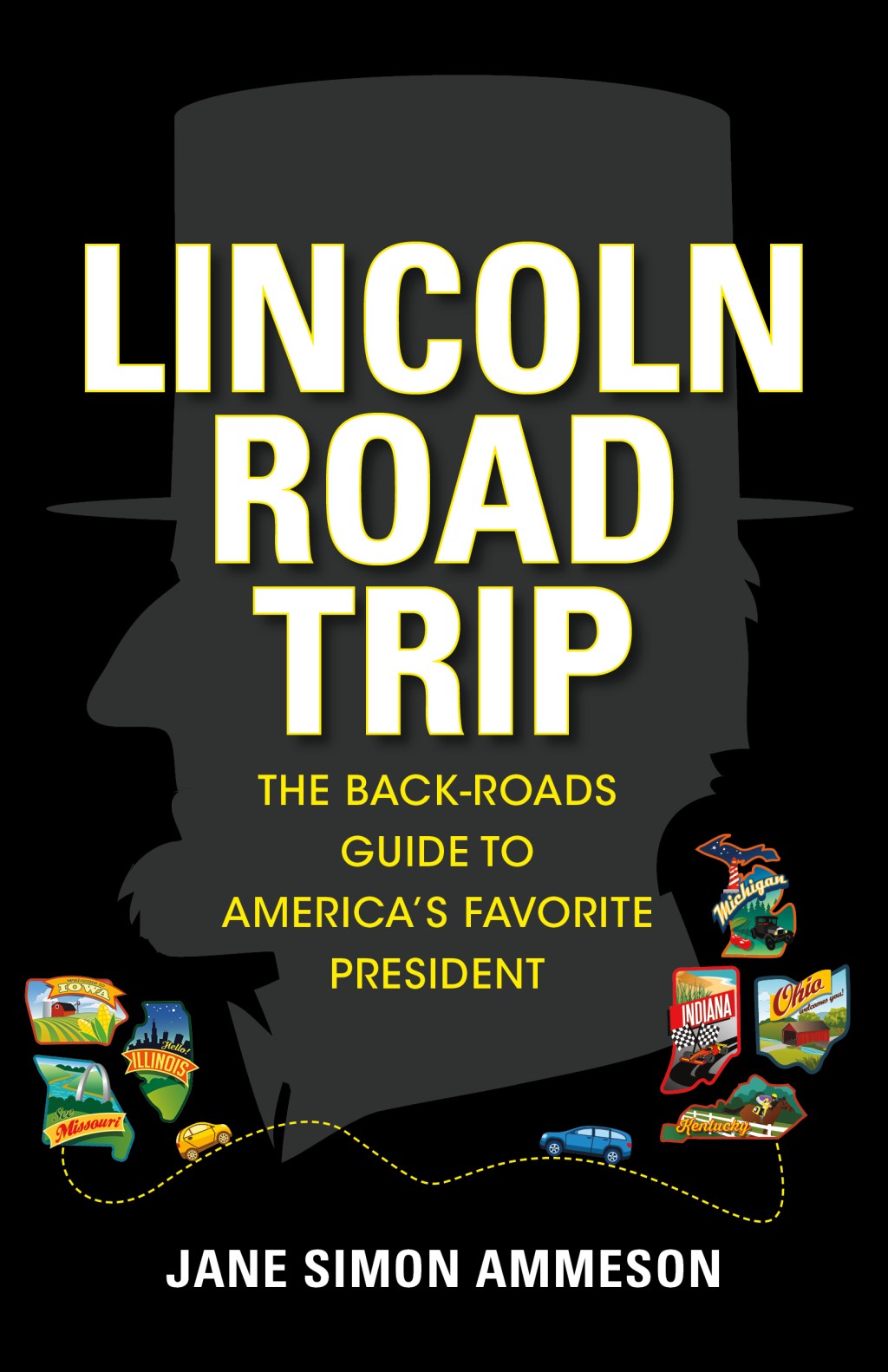
I am proud to announce that my book, Lincoln Roadtrip: The Backroads Guide to America’s Favorite President, published by Indiana University Press, is a winner in the 2019-20 Lowell Thomas Travel Journalism Competition, taking the bronze in the Travel Book category. The annual competition is sponsored by the Society of American Travel Writers Foundation.
The Old Talbott Inn in Bardstown, Kentucky looks much like it did in Lincoln’s day.
Winners of the awards, the most prestigious in the field of travel journalism, were announced October 16, 2020, at the annual conference of SATW, the premier professional organization of travel journalists and communicators. This year’s gathering was a virtual event.
Buxton Inn in Granville, Ohio
The competition drew 1,299 entries and was judged by faculty at the University of Missouri School of Journalism. This year, the SATW Foundation presented 99 awards in 26 categories and more than $21,000 in prize money to journalists. The awards are named for Lowell Thomas, acclaimed broadcast journalist, prolific author and world explorer during five decades in journalism.
Lincoln Boyhood National Memorial replica of the Lincoln Homestead when the Lincoln family lived here in the early 1800s.
In honoring my work, the judges said: The concept of this book is straightforward, “historical travel” with a focus on perhaps the most beloved President in the history of the United States of America. But a straightforward concept does not automatically signify a simple task. Author Ammeson completed massive research about Lincoln’s life before his ascension to fame. The photographs enhance the words nicely. Another attractive enhancement: offering current-day sites unrelated to Lincoln that provide entertainment along the route of the dedicated Lincoln traveler.”
The Home of Colonel Jones who knew that young Lincoln would accomplish much in this world.
I wanted to create a fun and entertaining travel book, one that includes the stories behind the quintessential Lincoln sites, while also taking readers off the beaten path to fascinating and lesser-known historical places. Visit the Log Inn in Warrenton, Indiana (now the oldest restaurant in the state), where Lincoln dined in 1844 while waiting for a stagecoach, stop by the old mill in Jasper, Indiana where Lincoln and his father took their grain to be milled (and learn of the salacious rumor about Lincoln’s birth–one of many) and spend the night at the Golden Lamb in Lebanon, Ohio, a gorgeous inn now over 200 years old.
The Golden Lamb, Lebanon, Ohio
Connect to places in Lincoln’s life that helped define the man he became, like the home of merchant Colonel Jones, who allowed a young Abe to read all his books, or Ashland, where Mary Todd Lincoln announced at age eight that she was going to marry a president someday and later, Lincoln most likely dined. Along with both famous and overlooked places with Lincoln connections, I also suggest nearby attractions to round out the trip, like Holiday World, a family-owned amusement park that goes well with a trip to the Lincoln Boyhood National Memorial and Lincoln State Park.
The Kintner House, a bed and breakfast in charming Corydon, Indiana. Lincoln never stopped here but his brother Josiah who settled nearby did when it was a tavern and inn. Confederate General John Hunt Morgan took over the inn for a short period of time after crossing the Ohio River with his soldiers in what was the only Civil War battle fought in Indiana.
Featuring new and exciting Lincoln tales from Springfield, Illinois; the Old Talbott Tavern in Bardstown, Kentucky; the Buxton Inn, Granville, Ohio; Alton, Illinois; and many more, I wrote Lincoln Road Trip hoping that it will be a fun adventure through America’s heartland, one that will bring Lincoln’s incredible story to life.
Ashland, the home of Henry Clay in Lexington, Kentucky.
For more information about the awards, including a full list of winners and judges’ comments, and SATW, visit www.satwf.com and www.satw.org.
Graue Mill, a stop on the Underground Railroad. Lincoln stopped by here to meet with the owner on his way to nearby Chicago.
To order a copy of Lincoln Road Trips, click here.
There was a time when electric railroads, called interurbans, crisscrossed the state, connecting the small villages and large cities of Indiana.
“I was about 10 when my mother first started letting me take the interurban on my own,” recalls Lorraine Simon, who was born in East Chicago in 1911. “My mother would put me on the train and I’d go to Chicago and get off and walk to where my grandmother worked sewing linings into hats for a millinery company.”
With names like the Marion Flyer and the Muncie Meteor, the electric-powered interurban railway was the first true mass transit in Indiana in the 20th century. Coined interurban by Anderson, Ind., businessman and politician Charles Henry in the early 1900s, the name meant between towns or urban areas.
“Before the interurban, public transportation in central Indiana relied upon mules or horses to pull crudely fashioned passenger wagons,” says Robert Reed, author of “Central Indiana Interurban” (Arcadia, 2004, $19.95). The interiors of these passenger wagons were piled high with straw for warmth in the winter and candles were used after sunset to light the interior. It was, as can be imagined, less than an optimal way to travel.
“The genius at work was the idea of using electrical power, on the pavement beneath the tracks or on overhead lines, to power existing traction cars,” writes Reed in his book.
Though the book’s title would seem to indicate a focus on the interurbans in Central Indiana, Reed points out that it encompasses many of the interurban lines that ran through Northwest Indiana.
“Indianapolis may have had the busiest interurban terminal in the world early in the 20th century but Chicago laid claim to the busiest corner in the world at State and Madison streets,” he writes. “Clearly interurban and cars were jammed in with all other traffic. The Chicago and Indiana Air Line Railway was established in 1901 at a cost of $250,000. Through reorganizations and acquisitions it grew from just over three miles of coverage in the beginning to nearly 70 miles of routes as the Chicago, Lake Shore and South Bend Railway, a decade and a half later. Eventually, encircled by its transportation lines were East Chicago, Indiana Harbor, Gary, Michigan City and Hammond.”
The Gary and Interurban Railroad provided 50-minute service between Gary and Hammond, according to Reed, and 60-minute service between Gary and Indiana Harbor. “In the years before the 1920s,” writes Reed, “one of their major routes began at Hammond and continued on to Indiana Harbor, Gary, East Gary, Garyton, Woodville Junction, Chesterton, Sheridan Beach, Valparaiso, Westville and LaPorte. Variations of the Gary and Interurban Railroad routes commenced at Valparaiso, Chesterton and LaPorte. Typically more than 20 different interurban cars from that line arrived and departed from Gary each day.”
To highlight the popularity of the interurban throughout the state, Reed mentions how in 1908 the French Lick and West Baden Railroad Company connecting the West Baden Springs Hotel and the French Lick Resort & Springs, about a one mile route, carried 260,000 passengers.
The book, filled with black-and-white photos from the interurban era as well as timetables and postcards from the routes, came about after Reed, a former magazine editor, wrote a book called “Greetings from Indiana” which showed the state’s history through early postcards. As Reed collected the postcards, he noticed that many were of the towns on the interurban route. “
It made sense that people riding the interurban would send postcards of their stops and that these postcards were often of the interurban terminals,” says Reed who specializes in writing about antiques and collectibles. “I really became fascinated with interurbans because they were so much a part of Indiana.”
Laying tracks for the interurban was an expensive proposition. “It eventually got to where it was about $144,000 a mile,” Reed says. “And they reached a point where it was too expensive to expand.” Besides, by then Henry Ford had introduced his Model T and people were starting to drive more and more. “A lot of old timers say that if the interurban had survived until after World War II, they would be popular today,” Reed says. The one interurban to survive, the South Shore Railroad, did so because Samuel Insull, the utility magnate whose holdings included Commonwealth Edison and the Northern Indiana Public Service Company, also owned the South Shore.
In other words, he helped usher the South Shore into the era of public subsidies for passenger transport. That is considered to be the reason why the electric train, which still travels from Chicago to South Bend and back on a regular schedule, is the only interurban that successfully made the transition to a commuter railroad.
All the others are now just vestiges of history — abandoned track lines here and there, faded black-and-white or sepia-colored postcards, a few timetables and even fewer fragile memories.
Beverly Shores Depot. Courtesy of Steve Shook Collection.Beverly Shores, Indiana today. Jane Simon Ammeson.
Adam
Richman,TV
personality, culinary traveler, cook and author, travels so much for his shows
such as “Secret Eats with Adam Richman,” that I wondered if he ever woke up in
the morning and wasn’t sure where he was.
“Yes I
do,” Richman tells me. “In fact, one time, it was the
strangest/saddest/weirdest sensation I’ve ever had. I woke up at home and
didn’t know where I was. My first thought was, ‘This must be one of those old
boutique hotels that they renovated an apartment to make.’ I honestly did not
even recognize my own home. It’s a mixed bag of emotions, but I wouldn’t change
up the opportunities I have and have been given for anything.”
Expect him, though, to know what
he is demonstrating when he’s in front of a crowd because Richman is totally
into making cooking accessible to everyone.
A while back I caught up with Richman at the KitchenAid Fairway Club where he was doing a cooking demo when Harbor Shores, a Signature Jack Nicklaus golf course on Lake Michigan in Benton Harbor, Michigan was the venue for the KitchenAid Senior PGA Championship.
“The recipes are simple but deeply delicious, and each dish can be used for multiple purposes: the salmon can be by itself, or served a top a salad,” Richman says about what has become almost his mantra and why his cookbooks and shows such as “Secret Eats with Adam Richman” and “Man vs. Food.” He now is starring in Matchday Menus, a brand new series on Facebook where he uses football stadium food to explore some of the coolest places in the world. It started three weeks ago and already has almost 3.5 million followers.
As for
the golfing aspect of the tournament, I asked Richman if he played.
“I was
actually on my high school team,” he says “I have not played in ages, and I
cannot imagine how my game has suffered as a result of that. I still enjoy the
driving range quite a bit, but most of all, my favorite thing about
opportunities like this is to meet the people that watch my shows and enjoy the
things I do. Because this way, I can give people more of what they want, and
find out what else they are interested in that I have yet to explore.”
From real, authentic poutine and Montreal bagels in Quebec, to unbelievable home cooked Latin meals in El Paso, Matchday Food is the show for you.
Exploring—whether
it’s the backroads and city streets in the United States or internationally—is
what Richman’s shows are all about. How did
he decide where to go for shows such as “Secret Eats with Adam Richman?”
“The
locations for the international season were decided by the network–at least in
terms of the cities,” he explains. “Because my shows have had a significant and
very fortunate degree of international success, they wanted to film in cities
where my shows already had a foothold. In terms of the establishments with in
those cities, I am blessed to work alongside an amazing team of storied
producers, and I have a great director and show runner. We all do research for
a couple of months and then meet with the places we have for each city. It’s
actually quite a bit of fun. Everybody is trying to out-secret each other.
Everybody tries to find the coolest place, the coolest hidden dish and so on.
Ultimately, we look over everything that everyone has brought in, and then try
to figure out what makes the best four location episode that really represents
the city.”
Richman says he’s flattered people call him a chef but says
he thinks there’s something academic and studious to the word chef.
“I think of myself—excuse the expression—as a badass
cook,” he says. “I may not be a chef,
but I’ve worn clogs a few times and baggy checkered pants.”
The latter clothing list is a nod to
Mario Batali, the embattled restauranteur/TV food star/cookbook author who was
known for his orange Crocs, hair pulled back into a ponytail and oversized
shorts and patterned pants.
“It used to be if you had a sheath
of tattoos up and down your arm, you were a biker,” he continues. “Now it means
you can cook a great pork belly.”
His cooking demonstrations include a
lot of digressions as well as action while he’s talking. Slicing a lemon with a
mandolin, he tell us about how to avoid taking a slice out of your hand,
sharing the story of an incident where he did just that and then lamenting it
was too bad, he wasn’t making marinara sauce in order to cover up the
accident. There’s advice against cooking
with wine we wouldn’t drink and adding oil to an unheated pan.
It’s a science thing about the latter, he
says, adding it’s important to heat the pan first. That’s because the longer
fats cook, the quicker they’ll break down and start to burn impacting both the
taste and even releasing harmful toxins.
How do you know when the pan is hot
enough to add oil? Richman shows how but holding his pan close to the
surface—really closed.
“My mother hates when I do that,” he
says, noting that less perilously, splashing a drop or two of water in the pan
and seeing if it sizzles also works.
There
are so many cookbooks on the market, what do you tell me people about why they
should buy yours.? I ask.
“That it is approachable, nonthreatening, and there is something in Straight Up Tasty for everyone, regardless of their level of experience in the kitchen,” he says. “I aim to introduce people to flavors, ingredients, and maybe even techniques that they have not used in their kitchens before. I want people to use my recipes as a point of departure for them to then tweak and customize to make them their own. Above all, I want people to have fun. It’s not just recipes – there are poems, essays, even lists of great restaurants to check out that I have discovered in my travels.”
Miso-roasted veggies
Ingredients
¼ cup olive oil
½ cup miso paste (yellow or mild works well with the
vegetables here)
3 sweet potatoes, peeled and cubed
3 beets, peeled and cubed
2 12-ounce bags of broccoli florets
2 Spanish onions, cubed
1 head of garlic, separated into cloves and peeled
¼ cup garlic powder (not granulated garlic) or more to taste
Directions
1. Preheat the oven to 375°F
2. In a large bowl, combine the oil and the miso. Add the
sweet potatoes, beets, broccoli, onions, and garlic cloves and toss to coat.
3. Spray a 9 x 13-inch baking pan with nonstick cooking
spray and add about ¼ inch of water. Add the vegetables to the pan. Dust
everything with the garlic powder. Cover the whole dish with aluminum foil.
4. Roast the vegetables for 50 minutes. Remove the foil,
stir the veggies, and cook uncovered for an additional 10 minutes, or until the
sweet potatoes and beets are fully covered. Serve hot or warm.
Smoked paprika onion rings
Ingredients
3 Vidalia onions (or other sweet onion), peeled
2 cups all-purpose flour
2 large eggs, beaten
2 cups panko breadcrumbs
3 TBS sweet smoked paprika
Vegetable or peanut oil, for deep frying
Kosher salt to taste
1. Using a mandolin or a very sharp knife, slice the onions
into ¼-inch-thick rounds. Separate the rounds into rings.
2. Place the flour, beaten eggs, and panko in three separate
shallow bowls. Mix a tablespoon of paprika in each bowl.
3. Dredge the onion rings first in the flour, then in the
eggs, and finally in the panko. Place the dredged rings on a baking sheet and
allow the coating to set for 10 minutes.
4. In a large pot set over medium-high heat, bring about 4
inches of oil to 365 degrees (use a deep-frying or candy thermometer to check
the temperature).
5. Line a separate baking sheet with paper towels. Working
in batches, fry the onion rings until golden brown, 2 to 3 minutes per side.
When done, the rings should float to the surface of the oil. Transfer each
batch of fried rings to the prepared baking sheet and season with salt.
6. Keep the finished onion rings warm under layers of paper
towels as you cook the remaining batches. Serve hot.
1. Preheat the oven to 350 degrees Fahrenheit. Grease two
9-inch round cake pans with cooking spray.
2. In a large bowl, whisk together the cake mix, eggs, 1 cup
of cold water, and the mayonnaise.
3. Pour the mixture into the greased cake pans and spread
with a spatula to smooth. Bake according to package instructions. When done,
remove the pans from the oven and place them on wire racks to cool
completely.
4. Invert one of the cake layers onto a plate. Using a
rubber spatula, spread a thick layer of frosting over the top. Carefully invert
the other cake layer on top and spread the top and sides with the remaining
frosting.
Patricia Schultz and I had only been on the phone together for five minutes before we decided to make the trip to New Zealand—neither of us had been and both of us wanted to go. And no, I haven’t bought my ticket yet but that’s how mesmerizing Schultz, who introduced the concept of bucket list travel when she wrote the first edition of her #1 New York Times bestseller 1000 Places to See Before You Die in 2003. It was so popular that over the years more than 3.5 million copies have been sold.
Now Schultz has updated her book with
a new twist, her words accompanied by mesmerizing and amazing handpicked photos
of some of the most beautiful places in world. The book itself, weighing six pounds with 544
pages, is oversized eye candy—compelling us to pack our bags and head out to
explore.
1,000 Places to See Before You Die
(Deluxe Edition): The World as You’ve Never Seen It Before was years in the
making—after all Schultz had to travel to all those places.
Calling her new book, a veritable
scrapbook of her life, she says she became teary eyed when choosing the photos.
In its pages she takes us to destinations so exotic many might have remained
unknown to most of us if not for her writing. One such is Masai Mara, the
world’s greatest animal migration that takes place each May when hundreds of
thousands of wildebeests travel north from the Serengeti in Tanzania to the
grasslands of Kenya’s Masai Mara. It’s a two to three month journey and the wildebeests
are joining by other migrating herds including antelope, zebras and gazelles
swelling the animal population to a million or so. There’s also ballooning over
Cappadocia, a Byzantine wonderland encompassing a natural and seemingly endless
landscape of caves and peaks of shaped by eons of weather with wonderfully
colored striations of stone. Even better, Schultz points out, you can take a
side trip to Kaymakli, an ancient underground city just 12 miles away.
For those less inclined for such
travels or whose pocketbooks don’t open that large, Schultz features closer to
home destinations that are still special such as Mackinac Island where cars
were banned in the mid-1890s, New York City (where Schultz resides when not on
the road) and one of my favorites, Stowe, Vermont. And, of course, the majestic
Grand Canyon.
While Schultz’s parents weren’t world
travelers, they encouraged her to find her way to what she loved. But for her,
it’s not just the road, it’s the people she meets as well. When the first
editor of her book proved so successful, she treated herself to a trip to Machu
Picchu in the Urubamba Valley of the Cuzco Region of Peru often known as the
Lost City of the Incas. Located 7800-feet above sea level, it’s isolated at the
top of a mountain surrounded by jungles and other peaks. There she met a
90-year-old woman who had been inspired by her book to travel there.
“She asked me if I had heard of the
book,” says Schultz. “Peru was the first stamp in her first passport.”
This venturesome woman who had
traveled outside the U.S. for the first time in her ninth decade, offered the
seasoned travel writer a pearl of wisdom that has remained with her for the
last16 years.
“She told me to make sure to see the difficult
places first,” recalls Schultz. “You can see the easy ones when you’re not as
active or energetic.”
Is Schultz burned
out by travel? Has she reached the point of been-there-done-that?
Schultz answers
with an emphatic no.
“There are still so many places I
want to visit,” she says, noting that her list remains long. “I doubt if I’ll
get to do them all, but I will try to do as many as I can.”
Ifyougo:
What: Authors Group Presents Patricia Schultz, 1000 Places to
See Before You Die; Luncheon
When: Tue, Oct 29, 2019 from 11:30 a.m.-1:30 p.m.
Where: Union League Club of Chicago, 65 W. Jackson Blvd.,
Chicago, IL
Where: Anderson’s Bookshop La Grange, 26 S La Grange Rd, La
Grange, IL
Cost: This event is free and open to the public. To
join the signing line, please purchase the author’s latest book, 1,000 Places to See Before You Die Deluxe
Edition, from Anderson’s Bookshop. To purchase please
stop into or call Anderson’s Bookshop La Grange (708) 582-6353 or order
online andersonsbookshop.com
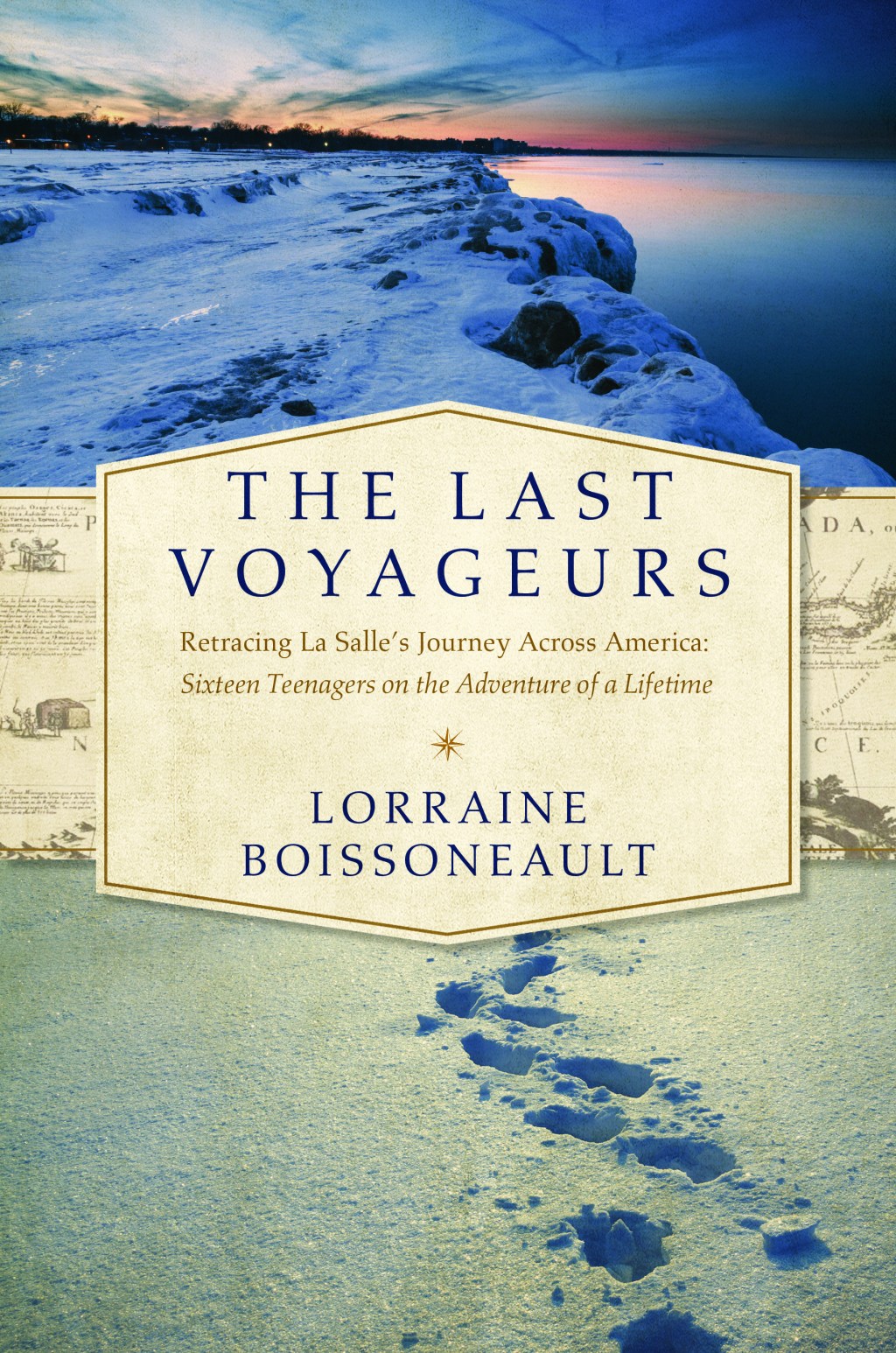
In her last year of college, Lorraine Boissoneault, an avowed Francophile and writer who lives in Chicago, became interested in the French history of North America and the journey undertaken by René Robert Cavelier, Sieur de La Salle, the first European to travel from Montreal to the mouth of the Mississippi River.
Her fascination with the great explorer led to a conversation with an underwater diver and thus to the story of La Salle’s Le Griffon (The Griffin), the first full-sized sailing ship on the upper Great Lakes which disappeared in 1679 with six crew members and a load of furs—also making it the first shipwreck in the Great Lakes. Luckily La Salle had disembarked before the ship made its final voyage. She also learned about a Reid Lewis, a French teacher who decided to re-enact La Salle’s trip, an eight-month, 3,300-mile expedition he undertook with 16 students and six teachers dressed in the period clothing from that time to celebrate the country’s Bicentennial.
“It’s
amazing when you think of how much they could withstand,” she says, meaning
both La Salle and Lewis’ crews.
Indeed,
Lewis and his group of students and educators had to trudge over 500 miles of
Midwestern landscape during one of the coldest winters on record in the 20th
century, paddle in Voyageur canoes across the storm tossed and freezing Great
Lakes and, in keeping with their pledge to emulate La Salle, start their campfires
with flint and wood.
Of all
the thousands of miles they retraced, Lewis’ voyageurs felt that Canada’s
Georgian Bay on Lake Huron was most unchanged and therefore the closest they
came to what La Salle would have experienced in terms of the water and
landscape.
“We’re
fascinated by history but you can’t go back no matter how hard you want to,”
says Boissoneault noting she can’t imagine seeing Chicago without civilization
as La Salle would have done. “The past is unobtainable. Most poignant for me is
their walk across the Midwest. They were doing the same thing La Salle did and
wearing the same clothes but nothing was like how it would have been in La Salle’s day.”