Category: Romantasy

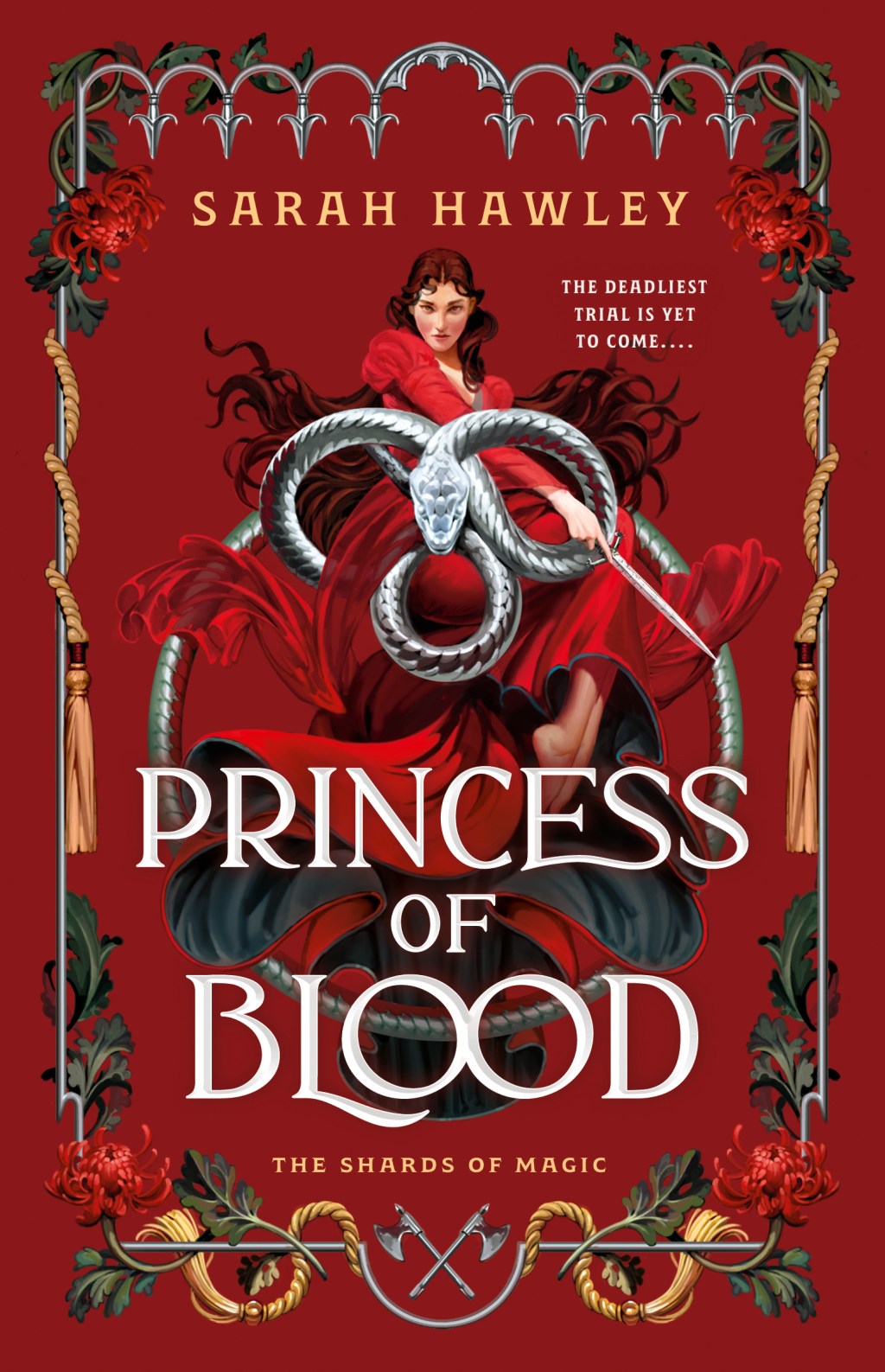
  • Princess of Blood

    Princess of Blood

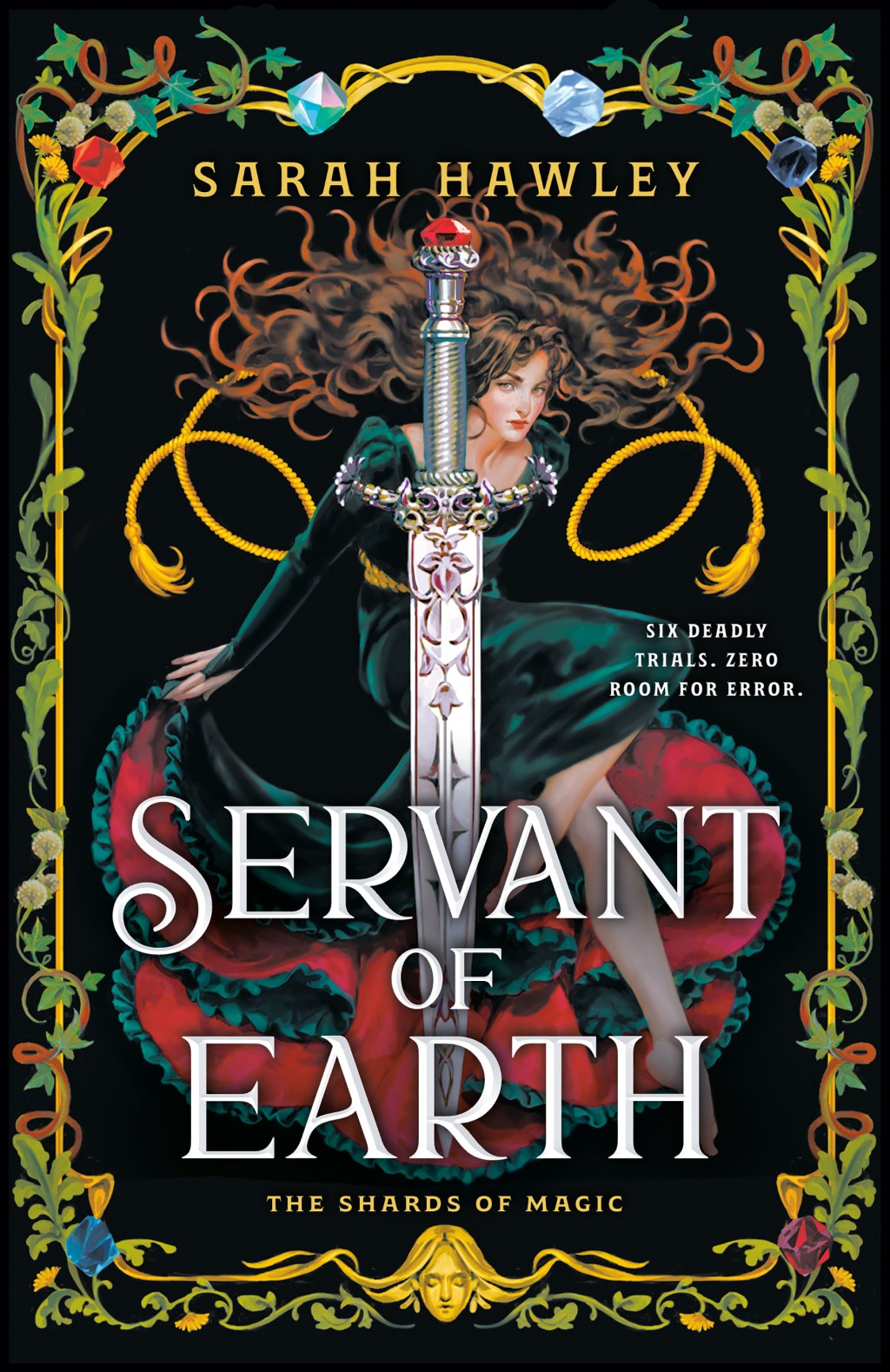
    I devoured Sarah Hawley’s Servant of Earth, the first in her Shards of Magic triology, a romantasy that centers around Kenna, a young woodland girl, held in contempt in her village, who, trying to save her only friend, finds herself a slave in the opulent world of the Fae. These beautiful and magical creatures over-indulge in the pleasures and sins of life–sumptuous food and drink, complicated love affairs, glamorous surroundings, and evil machinations.

    The world of the Fae is one of danger, false friendships, and death. To survive, Kenna must outwit and out manuever the most powerful of the Fae. You can read my review here.

    I eagerly awaited Hawley’s second book, Princess of Blood, and was not disappointed when it came out earlier this fall. It’s darker as Kenna becomes enmeshed in a power struggle over who will rule the Fae, a battle that imperils her life and those of her friends and followers. Now, I’m hoping that Hawley is working hard on the third and final book in the trilogy as I’m eager to see how it all turns out.

    I again had the chance to interview Hawley and thought I’d include the Q & A here.

    Were there specific myths, legends, your previous work as an archaeologist or personal experiences that influenced the book’s political intrigue, power struggles, or Fae society?

    I’ve always loved reading about the Fae in folklore and fantasy novels! They’re a fascinating combination of whimsical, deadly, beautiful, mercurial, and mysterious, and there are so many ways a writer can pay homage to that lore and take it in new directions.

    Many Fae stories include underground elements because the folklore is tied to burial mounds and the remains of ancient structures. Those archaeological sites developed a reputation for being gateways to a mysterious Fae underworld, which served as the inspiration for the subterranean kingdom of Mistei. Combining that dramatic setting and the tricky nature of the Fae in fairy tales led to the complicated politics and power struggles explored in SERVANT OF EARTH and PRINCESS OF BLOOD.

    Princess of the Blood explores such heavy themes as trauma, healing, betrayal, murder, and forging new alliances. How did you approach exploring such difficult and emotionally compelling but difficult subjects in your writing? And how did you react emotionally when writing about such things?

    Fantasy novels are a great way to explore dark themes that are relevant to our lives. The fantastical setting adds an element of distance while also allowing for very high stakes. It can be difficult to write such heavy content (I feel bad for my characters sometimes!) and I definitely cried while writing certain passages, but I also think it’s a wonderful way to explore themes of healing and growth. I spend a lot of time thinking about how my characters’ emotions and traumas would impact their actions and how they might change over the course of the story.

    How did your background in archaeology shape the historical textures and power dynamics in your fantasy world? After all there were a lot of complex, traumatic and emotional plot lines in ancient times as well as diverse architecture.

    My background in archaeology definitely impacts my worldbuilding. I’m always thinking about how a society is laid out, from its geography to its social hierarchy, as well as how the characters move through that space. How do they dress and act to signify their status as an insider or outsider? What are the rituals of everyday life? I also like to consider how my characters relate to their own world’s past—their history and myths and the combination of fact, fiction, and propaganda that impacts their beliefs. Their politics and actions are shaped by the stories they tell themselves, just as ours are. I always want the reader to have a sense of an expansive world where countless stories are happening just off the page.

    Is there a particular scene or line in “Princess of the Blood” that holds special meaning for you either personally or as an author?

    There are a lot of scenes and lines that hold meaning for me, but one passage sums up the central theme of this book and series, which is the cyclical nature of history and the importance of trying to break destructive cycles even if the fight seems hopeless:

    History ate itself like a snake swallowing its own tail as the Fae continued their unending battle for power . . . but that didn’t mean we should give up. Even if our victories had a steep price. Even if we lost.

    Is there anything else you’d like readers to know?

    I’m so excited that readers are discovering SERVANT OF EARTH and PRINCESS OF BLOOD! It’s been thrilling and fulfilling to see Kenna’s story resonating with so many people. Thank you to everyone who has picked these books up.

    When can we expect the third and final book?

    I don’t have an exact publication date yet, but it will be coming in 2026!

    My article about Princess of the Blood appeared in the Northwest Indiana Times.

  • Archaeologist creates fantasy world filled with intrigue, romance and adventure
    Archaeologist creates fantasy world filled with intrigue, romance and adventure

    An archaeologist who has excavated a Bronze Age palace in Turkey, a medieval Abbey in England, and an Inca site in Chile, Sarah Hawley has created an extensive underground world where fairies abide.

    But if you’re thinking Tinkerbell, who sweetly waves her magic wand, think again. The fairies in Hawley’s novel “Servant of Earth,” the first in a trilogy titled “The Shards of Magic,” are amazingly beautiful and as decadent as any French court in the 17th or 18th centuries. Given numerous love affairs, intrigues and pettiness, they’re ruled by a tyrant king who has a penchant for mayhem and murder.

    Into this world stumbles Kenna, a human from a nearby village who lives with her single mother, keeps mostly to herself to avoid the jeers of others with one exception– Anya, a pretty villager who has befriended her. When Anya is chosen as one of the women who will travel to the land of the Fae, a perilous trip through bogs and deep dark woods, she accompanies her. But Anya disappears as they make their way, and it is Kenna who arrives at the fairy court, helped by the mysterious dagger she discovered in one of her forays in the forest.

    The King orders her dead, but one of his underlings suggests a different fate. Why not make her a handmaiden to Lara, the daughter of Princess Oriana, head of the Earth House in the fairy kingdom?

    It is clearly an insult to Princess and her daughter. A human as a handmaiden. But it is impossible to say no. And Kenna, who is very curious and kind, soon learns her way among the many houses and those that rule them. In doing so, she is able to help Lara, who, to become an immortal fairy, must undergo six rigorous and often deadly tasks along with others who are vying for the honor.

    Hawley, who also taught archaeology, takes us into a fascinating subterranean world, one where the fairies live in luxurious surroundings, dine on the best food, and busy themselves with endless affairs, alliances and games as their lives unwind in front of them for eternity.

    Kenna embarks upon a romantic liaison with one of the fairy princes, but she also befriends the serving women who have been cast out of the brothel where the king likes to spend much of his time. Each of the worlds she connects with pulls her deeper into the dangers of being discovered as a spy, someone who is siding with a brewing rebellion.

    But she has a moral compass compelling her to go forward in aiding the revolt against the current regime. At the same time, she is helping Lara accomplish her tasks, though it’s forbidden to do so.

    There is danger on all sides and Kenna becomes more and more unsure of who she can trust, including her fairy prince. Spoiler alert: He is no Prince Charming.

    “Working as an archaeologist made me think about the details of this world and of the past, and that extends into fantasy worlds where you think about how people are dressing and what it looks like and the political structure and all of that,” said Hawley, explaining how she created the fairy kingdom and all the factions and their interactions. “But it’s also thinking about these characters, their identities, and the stories they tell themselves about their past, because as much as I’m telling the mythology of this world, the characters see the mythology of their own world in a slightly different way.”

    Hawley, who is the author of several other books, including “A Witch’s Guide to Fake Dating a Demon” and “A Demon’s Guide to Wooing a Witch,” brings a historic perspective to her tales of a fairy kingdom as well.

    “There’s actually very dark stuff about how fairies behave,” she said, recounting a Celtic story about people who play fiddle music for the fairies for a single night, are rewarded with gold, and sent home. “Upon returning to their villages, they find that the gold has turned into leaves. And they realize that hundreds of years have passed since they’d been gone and everyone they love is dead, and then they immediately die.”

    Luckily, if you like happy endings, “Servant of Earth” ends on a positive note, though one where we realize that Kenna has many more challenges ahead.

    But she’s a tough, wily hero. And so, it’s just a matter of waiting for the next book in the trilogy to come out next year.

    This article originally appeared in the Northwest Indiana Times.