https://crimereads.com/the-best-psychological-thrillers-of-june-2023/
Category: Psychology
-

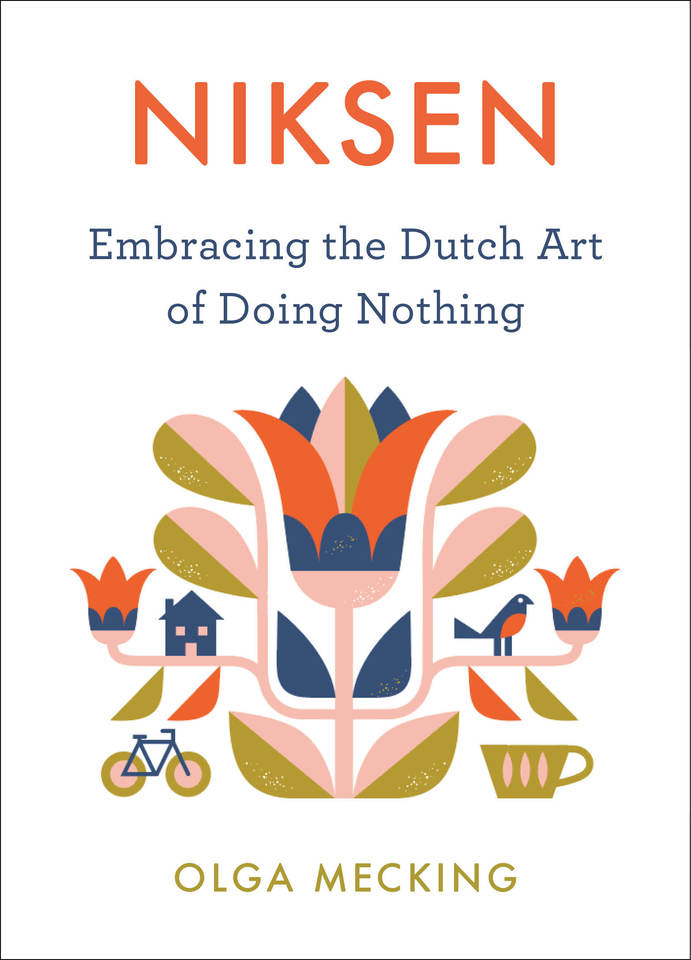
Niksen: The Dutch Art of Doing Nothing
“This isn’t getting the work of the world done,” my mother would announce to no one in particular whenever she had sat for more than a few minutes. Whatever the work of the world was—and I never quite figured it out– since my mom had a full-time job, grew roses, looked after my grandmother who lived next door, took Judo classes, cooked Julia Child-style dinners, and co-led my Girl Scout Troop, it certainly meant she couldn’t sit around

If only mom had met Olga Mecking, author of Niksen: The Dutch Art of Doing Nothing (Houghton Mifflin Harcourt 2021; $11.58 Amazon price).
Niksen isn’t about getting the work of the world done. Indeed, it’s not about any work at all. Instead, niksen is doing nothing, according to Mecking. And no that doesn’t mean vegging out on the couch watching the entire last season of “Homecoming” or reading posts on Facebook.
“It is doing nothing without a purpose,” she says. “I believe we’ve forgotten how to do things just because, not without any larger purpose like becoming healthier. We run or walk because we want to reach a certain number of steps and not because it feels good. The same way, we can do nothing because it feels nice and not because it will offer us certain benefits–even if it might.”
Mecking, the mother of three children, who lives in the Netherlands and works as a translator and freelance writer, says doing nothing comes naturally to her.
“As a child, I loved sitting around in my father’s favorite armchair and just daydreaming,” says Mecking. whose article on niksen in the New York Times garnered 150,000 shares in just a few days after it was published indicating an embrace of the concept. “But since I became a mom, it became really hard to do nothing. But I also realized that I niks around quite a lot even if these are in-between moments like when I’m waiting for my kids to come home or taking the tram on the way to run some errands. So maybe I don’t have many long stretches of time. but I do have many short moments – enough to do nothing.”
Not me. I often find myself repeating my mother’s phrase. Though I continue to wonder what the work of the word really entails, I know that it won’t get done if I’m sitting. I ask Mecking, if I’ll ever be able to shed my past and be able to niks?
“It can be very hard, and I think especially for women, it can be even harder,” says Mecking about the struggle to just do nothing. “Simply because we do more work that’s unpaid and unsatisfying. Men protect their own free time and women protect men’s free time and kids’ free time, but no one protects the free time of women.”
But there’s hope.
“I think it would help us to re-frame doing nothing and to think of it as something valuable,” she says. “For example, if you can tell yourself that if you do nothing now then you can do better work later on, that’s already a big step. If we can learn to value niksen and downtime and taking time off the same way as we value work that would be great. We can try reframing doing nothing and describe it as something that we need, like food or water. Think about it. Our bodies can’t work all day long without a break, no? The same way, our brains can’t either. It is impossible to expect people to be working with their brains all day long, be it at work or at home.”
But whether you can niks or not niks, it’s okay says Mecking.
“Sometimes it just doesn’t work,” she says. “Maybe it won’t work for you. It doesn’t mean that you’re a loser. You have to find a way to relax that works for you, and if that’s doing nothing then awesome, but if that’s going for a run that is great too! But if you want to try niksen, start slow, and take a look at how you spend your time. You might find that you do more nothing that you realize.”
-
THE 17TH ANNUAL BEST BOOK AWARDS ANNOUNCE 2020 AWARD RECIPIENTS
Mainstream & Independent Titles Score Top Honors in the 17th Annual Best Book Awards
HarperCollins, Penguin/Random House, John Wiley and Sons, Routledge/Taylor and Francis, Forge, Sterling Publishing, Hay House, Sounds True, Llewellyn Worldwide, NYU Press, Oxford University Press, John Hopkins University Press, The White House Historical Association and hundreds of Independent Houses contribute to this year’s Outstanding Competition!
Highlights Include the Following Winning Titles: (Full Results are Available Here.)
Click on category headings to be taken directly to full book descriptions! Winners and Finalists are featured at the top of each page!

Animals/Pets: General
The Balanced Pet Sitter: What You Wish you Knew Before Starting Your Pet Care Business by Renée Stilson
Equilibre Press, LLCAnimals/Pets: Narrative Non-Fiction
The Chimpanzee Chronicles: Stories of Heartbreak and Hope from Behind the Bars by Debra Rosenman
Wild Soul PressAnthologies: Non-Fiction
This Moment Bold Voices from WriteGirl by Keren Taylor
WriteGirl Publications
Art
C. Curry Bohm: Brown County and Beyond edited by Daniel Kraft & Jim Ross
Indiana University PressAutobiography/Memoir
Through My Eyes: CSI Memoirs That Haunt the Soul by Tamara Mickelson
Self-PublishedBest Cover Design: Fiction
The Last Lumenian by S.G. Blaise
The Last LumenianBest Cover Design: Non-Fiction
When God Says NO – Revealing the YES When Adversity and Pain Are Present by Judith Briles
Mile High Press
Best Interior Design
Beautiful Living: Cooking the Cal-a-Vie Health Spa Way by Terri Havens
Cal-a-Vie Health SpaBest New Fiction
In An Instant by Suzanne Redfearn
Lake Union
Best New Non-Fiction
The Book of Help: A Memoir of Remedies by Megan Griswold
Rodale Books/Penguin Random House
Biography
T.R.M. Howard: Doctor, Entrepreneur, Civil Rights Pioneer by David T. Beito and Linda Royster Beito
Independent InstituteBusiness: Careers
TIP: A Simple Strategy to Inspire High Performance and Lasting Success by Dave Gordon
John Wiley and SonsBusiness: Communications/Public Relations
The Apology Impulse: How the Business World Ruined Sorry and Why We Can’t Stop Saying It by Cary Cooper & Sean O’Meara
Kogan PageBusiness: Entrepreneurship & Small Business
Burdens of a Dream: 33 Actionable Nuggets of Wisdom for the Creative Entrepreneur by Craig M. Chavis Jr.
Author Academy Elite
Business: General
The Simplicity Principle: Six Steps Towards Clarity in a Complex World by Julia Hobsbawm
Kogan PageBusiness: Management & Leadership
The Future Leader: 9 Skills and Mindsets to Succeed in the Next Decade by Jacob Morgan
WileyBusiness: Marketing & Advertising
The End of Marketing: Humanizing Your Brand in the Age of Social Media and AI by Carlos Gil
Kogan PageBusiness: Motivational
Unlock!: 7 Steps to Transform Your Career and Realize Your Leadership Potential by Abhijeet Khadikar
Vicara BooksBusiness: Personal Finance/Investing
Enhancing Retirement Success Rates in the United States: Leveraging Reverse Mortgages, Delaying Social Security, and Exploring Continuous Work by Chia-Li Chien, PhD, CFP®, PMP®
Palgrave PivotBusiness: Real Estate
Market Forces: Strategic Trends Impacting Senior Living Providers by Jill J. Johnson
Johnson Consulting ServicesBusiness: Reference
The Non-Obvious Guide to Virtual Meetings and Remote Work (Non-Obvious Guides) by Rohit Bhargava
IdeaPress PublishingBusiness: Sales
The Visual Sale: How to Use Video to Explode Sales, Drive Marketing, and Grow Your Business in a Virtual World by Marcus Sheridan
IdeaPress PublishingBusiness: Technology
Amazon Management System: The Ultimate Digital Business Engine That Creates Extraordinary Value for Both Customers and Shareholders by Ram Charan and Julia Yang
IdeaPress PublishingBusiness: Writing/Publishing
Great Stories Don’t Write Themselves: Criteria-Driven Strategies for More Effective Fiction by Larry Brooks
Writer’s Digest Books (a division of Penguin Random House)Children’s Educational
Galileo! Galileo! by Holly Trechter and Jane Donovan
Sky Candle Press
Children’s Fiction
Nutmeg Street: Egyptian Secrets by Sherrill Joseph
Acorn PublishingChildren’s Mind/Body/Spirit
The Tooth Fairy’s Tummy Ache by Lori Orlinsky
Mascot BooksChildren’s Non-Fiction
President’s Play! illustrated by John Hutton, text by Jonathan Pliska
The White House Historical AssociationChildren’s Novelty & Gift Book
Bubble Kisses by Vanessa Williams, illustrated by Tara Nicole Whitaker
Sterling PublishingChildren’s Picture Book: Hardcover Fiction
Bubble Kisses by Vanessa Williams, illustrated by Tara Nicole Whitaker
Sterling PublishingChildren’s Picture Book: Hardcover Non-Fiction
A-B-Skis: An Alphabet Book About the Magical World of Skiing by Libby Ludlow, illustrated by Nathan Y. Jarvis
Libby Ludlow LLCChildren’s Picture Book: Softcover Fiction
Frankie the Ferret by Kimberley Paterson
FriesenPressChildren’s Picture Book: Softcover Non-Fiction
Fridays With Ms. Mélange: Haiti by Jenny Delacruz
Cobbs Creek PublishingChildren’s Religious
That Grand Christmas Day! by Jill Roman Lord, illustrated by Alessia Trunfio
Worthy KidsCollege Guides
Diversity At College: Real Stories of Students Conquering Bias and Making Higher Education More Inclusive by James Stellar, Chrisel Martinez, Branden Eggan, Chloe Skye Weiser, Benny Poy, Rachel Eagar, Marc Cohen, and Agata Buras
IdeaPress Publishing
Cookbooks: General
Recipes from the President’s Ranch: Food People Like to Eat by Matthew Wendel
The White House Historical Association
Cookbooks: International
Cooking with Marika: Clean Cuisine from an Estonian Farm by Marika Blossfeldt
Delicious Nutrition
Cookbooks: Regional
The Perfect Persimmon: History, Recipes, and More by Michelle Medlock Adams
Red Lightning BooksCurrent Events
In All Fairness: Equality, Liberty, and the Quest for Human Dignity, edited by Robert M. Whaples, Michael C. Munger and Christopher J. Coyne
Independent InstituteEducation/Academic
The EQ Intervention: Shaping a Self-Aware Generation Through Social and Emotional Learning by Adam L. Saenz, PhD
Greenleaf Book Group
Fiction: African-American
Once in a Blood Moon by Dorothea Hubble Bonneau
Acorn PublishingFiction: Anthologies
Terror at 5280′ edited by Josh Schlossberg
Denver Horror CollectiveFiction: Cross-Genre
Mourning Dove by Claire Fullerton
Firefly Southern FictionFiction: Fantasy
The Hollow Gods (The Chaos Cycle Series, #1) by A.J. Vrana
The Parliament House PressFiction: General
Bread Bags & Bullies: Surviving the ’80’s by Steven Manchester
Luna Bella PressFiction: Historical
The Takeaway Men by Meryl Ain
SparkPress
Fiction: Horror
The Vanishing by Arjay Lewis
Mindbender PressFiction: Inspirational
The Menu by Steven Manchester
Luna Bella Press
Fiction: LGBTQ
Even Weirder Than Before by Susie Taylor
Breakwater BooksFiction: Literary
How Fires End by Marco Rafalà
Little AFiction: Multicultural
Subduction by Kristen Millares Young
Red Hen Press
Fiction: Mystery/Suspense
Strong From The Heart by Jon Land
ForgeFiction: New Age
Catalyst by Tracy Richardson
Brown Books PublishingFiction: Novelette
When Angels Paint: A Milford-Haven Holiday Novelette by Mara Purl
Bellekeep Books
Fiction: Novella
When the Heart Listens: A Milford-Haven Novella by Mara Purl
Bellekeep BooksFiction: Religious
The Longest Day by Terry Toler
BeHoldings PublishingFiction: Romance
What the Heart Wants by Audrey Carlan
HQN
Fiction: Science Fiction
Killing Adam by Earik Beann
Profoundly One PublishingFiction: Short Story
Oranges by Gary Eldon Peter
New Rivers Press
Fiction: Thriller/Adventure
The President’s Dossier by James A. Scott
Oceanview PublishingFiction: Visionary
Journey of a JuBu by Blaine Langberg
Critical EyeFiction: Western
Moccasin Track by Reid Lance Rosenthal
Rockin’ SR PublishingFiction: Women’s Fiction
Appearances by Sondra Helene
She Writes PressFiction: Young Adult
The Return of the Dragon Queen by Farah Oomerbhoy
Wise Ink Creative Publishing
Health: Addiction & Recovery
Stepping Stones: A Memoir of Addiction, Loss, and Transformation by Marilea C. Rabasa
She Writes PressHealth: Aging/50+
EIGHTSOMETHINGS: A Practical Guide to Letting Go, Aging Well, and Finding Unexpected Happiness by Katharine Esty, PhD
Skyhorse PublishingHealth: Alternative Medicine
Have a Peak at This: Synergize Your Body’s Clock Towards a Highly Productive You by Said Hasyim
Self-PublishedHealth: Cancer
All Of Us Warriors: Cancer Stories of Survival and Loss by Rebecca Whitehead Munn
She Writes Press
Health: Death & Dying
Aftermath: Picking Up the Pieces After a Suicide by Gary Roe
Healing Resources Publishing
Health: Diet & Exercise
Whole Person Integrative Eating: A Breakthrough Dietary Lifestyle to Treat Root Causes of Overeating, Overweight and Obesity by Deborah Kesten, MPH and Larry Scherwitz, PhD
White River PressHealth: General
True Wellness for Your Gut: Combine the best of Western and Eastern medicine for optimal digestive and metabolic health by Catherine Kurosu, MD, L.Ac. and Aihan Kuhn, CMD, OBT
YMAA Publication CenterHealth: Medical Reference
The Ultimate College Student Health Handbook: Your Guide for Everything from Hangovers to Homesickness by Jill Grimes, MD
Skyhorse PublishingHealth: Psychology/Mental Health
The Big Bliss Blueprint: 100 Little Thoughts to Build Positive Life Changes by Shell Phelps
Positive Streak Publishing, LLCHealth: Women’s Health
The Book of Help: A Memoir of Remedies by Megan Griswold
Rodale Books/Penguin Random HouseHistory: General
Gun Control in Nazi-Occupied France: Tyranny and Resistance by Stephen P. Halbrook
Independent InstituteHistory: Military
40 Thieves on Saipan The Elite Marine Scout-Snipers in One of WWII’s Bloodiest Battles by Joseph Tachovsky with Cynthia Kraack
Regnery HistoryHistory: United States
Liberty in Peril: Democracy and Power in American History by Randall G. Holcombe
Independent Institute
Home & Garden
My Creative Space: How to Design Your Home to Stimulate Ideas and Spark Innovation by Donald M. Rattner
Skyhorse PublishingHumor
Struggle Bus: The Van. The Myth. The Legend. by Josh Wood
Lucid BooksLaw
Banned: Immigration Enforcement in the Time of Trump by Shoba Sivaprasad Wadhia
NYU PressLGBTQ: Non-Fiction
Our Gay History in 50 States by Zaylore Stout
Wise Ink Creative PublishingMulticultural Non-Fiction
Overcoming Ordinary Obstacles: Boldly Claiming the Facets of an Extraordinary Life by Nesha Pai
SPARK PublicationsNarrative: Non-Fiction
Sola: One Woman’s Journey Alone Across South America by Amy Field
WanderWomyn Publishing
New Age: Non-Fiction
Embodying Soul: A Return to Wholeness by Keri Mangis
Curiosa Publishing, LLCNovelty & Gift Book
The Official White House Christmas Ornament: Collected Stories of a Holiday Tradition by Marcia Anderson and Kristen Hunter Mason
The White House Historical AssociationParenting & Family
Why Will No One Play with Me? The Play Better Plan to Help Children of All Ages Make Friends and Thrive by Caroline Maguire, PCC, M.Ed. with Teresa Barker
Grand Central PublishingPerforming Arts: Film, Theater, Dance, Music
THAT GUY: a stage play by Peter Anthony Fields
Amazon
Photography
Beautiful Living: Cooking the Cal-a-Vie Health Spa Way by Terri Havens
Cal-a-Vie Health SpaPoetry
Five Oceans in a Teaspoon, poems by Dennis J. Bernstein, visuals by Warren Lehrer
Paper Crown Press
Religion: Christian Inspirational
Extraordinary Hospitality for Ordinary Christians: A Radical Approach to Preparing Your Heart & Home for Gospel-Centered Community by Victoria Duerstock
Good BooksReligion: Christianity
Come Fill This Place: A Journey of Prayer by Stacy Dietz
KP Publishing CompanyReligion: Eastern
Secrets of Divine Love: A Spiritual Journey into the Heart of Islam by A. Helwa
Naulit Publishing HouseReligion: General
Esoterism as Principle and as Way: A New Translation with Selected Letters by Frithjof Schuon
World Wisdom
Science
Bliss Brain: The Neuroscience of Rewiring Your Brain for Resilience, Creativity and Joy by Dawson Church
Hay House
Self-Help: General
Start Finishing: How to Go from Idea to Done by Charlie Gilkey
Sounds TrueSelf-Help: Motivational
Edge: Turning Adversity into Advantage by Laura Huang
PortfolioSelf-Help: Relationships
The Remarriage Manual: How to Make Everything Work Better the Second Time Around by Terry Gaspard
Sounds TrueSocial Change
I Am Not Your Enemy: Stories to Transform a Divided World by Michael T. McRay
Herald PressSpirituality: General
The Universe Is Talking to You: Tap Into Signs and Synchronicity to Reveal Magical Moments Every Day by Tammy Mastroberte
Llewellyn WorldwideSpirituality: Inspirational
Spark Change: 108 Provocative Questions for Spiritual Evolution by Jennie Lee
Sounds TrueSports
The Martial Arts of Vietnam: An Overview of History and Styles by Augustus John Roe
YMAA Publication Center
Travel: Guides & Essays
Exploring Wine Regions — Bordeaux France: Discover Wine, Food, Castles, and The French Way of Life by Michael C. Higgins, PhD
International Exploration Society
True Crime: Non-Fiction
Beast of New Castle by Larry Sells & Margie Porter
WildBlue PressWomen’s Issues
Muslim Women Are Everything: Stereotype-Shattering Stories of Courage, Inspiration, and Adventure by Seema Yasmin, illustrated by Fahmida Azim
Harper Design, an Imprint of HarperCollins PublishersYoung Adult: Non-Fiction
My Life, My Way: How To Make Exceptional Decisions About College, Career, and Life by Elyse Hudacsko
Self-Published -
A Perfect Mess: The Hidden Benefits of Disorder
Neatniks: Stand down — there is meaning in messiness
Some scientists think that in life, as in nature, a little disorder signifies flexibility, improvisation

My mother was so neat that we never even had a junk drawer — that catchall most families use for things they don’t know what to do with.
Her sister, my Aunt Janice, completely was different. She lived in a big rambling house on the Deep River in Hobart and bred cocker spaniels who had the full run of the house. It was sometimes difficult to find a clean dish, and dog hairs seemed to float in the air before descending to cover everything.
“Aunt Janice wants you to spend a week with her in July,” my mother would say. “Is that OK?”
Of course it was, as order and neatness were never my strong suit. And even, today, decades later, though I don’t have 12 dogs bounding through the house and my dishes always are clean or at least in the dishwasher, I am more akin to my aunt than my mother when it comes to order.
And I always feel guilty about it. Neatness is a virtue, disorder a sin.
Though my mother never said anything when she would come to visit, she sometimes would ask if she could organize my canned goods.

But I’ve taken a new view of my life after talking to David Freedman, co-author of “A Perfect Mess: The Hidden Benefits of Disorder — How crammed closets, cluttered offices and on-the-fly planning make the world a better place” (Little, Brown).
So after shoving aside a pile of papers so I could find a place to take notes, I listened avidly to what Freedman had to say.
“The idea came from left field, a little more than 10 years ago,” said Freedman, who co-authored the book with Eric Abrahamson, a professor of management at Columbia Business School.
“I came upon a physicist who had discovered that adding randomness makes a system work better.”
The physicist told Freedman scientists usually try to take randomness out when developing systems.
“But it turns out with everywhere in nature, particularly in the human brain, there is a lot of randomness,” Freedman said.
“If you reduce the randomness, the brain doesn’t work as well.”
In other words, messiness is random, or a lack of order. But it’s even better.
Smart and important people are messy, or should we say organizationally challenged.
“Einstein was a total mess,” Freedman said.

“Arnold Schwarzenegger lived his life in a very messy way. Even in body building he was one of the people who pioneered the mixing up in the way you lifted weights. He always advocated that way. Until then, body builders did the same repetitions over and over. He’s also random in his life. Is he a body builder, an actor or a politician? Is he a Democrat or a Republican?”
Being neat is about doing things a certain way, and messiness is about improvising, being flexible, Freedman told me. We both agreed that people with absolutely empty desks made us nervous.
“It turns out that when you take a look at the problems the messiness causes, except for the guilt, there are really no problems associated with it,” he said.

“People spend an average of nine minutes a day looking for things, while people who are really neat often spend more time trying to figure where they put things.
“Our clutter on our desk and around us have a personality, and it’s almost as if there’s a system to it that is very well suited to the way we think. That’s why the messy are pretty good at finding things. There’s a bit of a method to our messiness. There is meaning.”
Freedman, who lives in Needham, Mass., and has authored several other books including “Brainmakers: How Scientists Are Moving Beyond Computers to Create a Rival to the Human Brain,” emphasizes though it was initially science that lead him to write this book, it’s not a scientific book. But he did do extensive research.

“There is one scientist at Boston University who discovered that old people keep their balance better if they wear vibrating shoes,” he said. “The reason is that it is sending random signals to the brain through the feet.”
His research also revealed that many people feel guilt and shame about their messiness in America.
“We really do envy those neat people,” he said.
“Neat people have become heroes in our society. Messy people are seen as weak people, people who fall short. It gets reinforced by our parents, our teachers and our colleagues.”

Though there’s vindication — and relief — for paper stackers, there is a reason for order, too.
“Even we messy people need to straighten up, and there is an appeal to order,” Freedman said.
“Messiness is comfortable and natural and works well, and neatness also has its appeals. The message is to find the right balance for you.
“When you hear it, it sounds rather obvious, but up until now you have heard that neatness is better.”
Tips for Dealing with Clutter
Since “A Perfect Mess” isn’t a license to never pick anything up again, author David Freedman offers advice on managing clutter without stifling creativity.

* Take it slow and in small steps: If people see too much clutter, they think of picking everything up. But you don’t have to do it that way — that’s paralyzing to people. Do it a pile at a time over days or weeks.
* Don’t throw it out: Instead of thinking you have to get rid of all this mess, maybe you can just put it in neat piles or in a closet or in a drawer. And it’s OK to have messy closets.
* Understand it’s not permanent: People think you have to remain neat after picking up. But you don’t. You can save your periods of neatness for when you’re not under deadline or a certain time of month.
* Your whole abode doesn’t have to be a clutter-free zone: Don’t feel you have to be well organized everywhere. You can be messy one place.
* Living with a neat freak: Freedman advocates that families compromise on messy issues instead of constantly arguing. People constantly argue with their family members. Neat people have to ease up a little bit and messy people have to clean up a little.
Debunking the neat freaks
In a chapter from their book “A Perfect Mess,” authors Eric Abrahamson and David Freedman look at three suggestions commonly presented to help people get organized — and then debunk them.
The suggestions:
1. Use colored labels on your files, and cut filing time in half.
2. Given that there are 37 hours of unfinished work on the average desk at any one time, buy “filing solution” products and get the work off your desk.
3. Buy a quality label maker to print your file labels, because 72 percent of people who print file labels end up wasting time wrestling with jammed or stuck labels in printers.
Their comeback:
1. Because whatever information a colored label might convey also could be conveyed with a word, the most time that a colored label could save you is whatever time you save by glancing at a color rather than reading a word, perhaps a half second for very slow readers.
If you spend three hours a day filing, then saving a half second per label examined will save you one and a half hours, or half your time, only if you examine the labels of 10,800 files in those three hours — in other words, if you spend just about all your time examining file labels. One could imagine unusual situations where a color scheme might save several minutes at a shot, as, for example, if there were a need to find the only green-coded file in a vast sea of red-coded files, or if the entire population of yellow-coded files had to be pulled.
But since most filing work involves not just looking at file labels but also examining files’ contents, doing things with the contents of files, walking to and from filing cabinets, and creating new files, the time saved with colored labels will be just a tiny portion of the total filing work. This will come as a relief to the roughly 8 percent of people who are color-blind.
2. This advice seems meant to imply you have saved yourself 37 hours of work by clearing your desk. But if you have 37 hours of unfinished work, and the work then gets filed, don’t you end up with 37 hours of unfinished work now hidden away in files instead of at hand on your desk? Plus, you’ve spent a chunk of time filing it — not to mention the time spent buying filing-solution products.
3. Other research indicates that 0 percent of people who don’t bother printing labels for their files spend a single minute wrestling with jammed or stuck file labels.
-

Darling Rose Gold
Poor Patty Watts. She did everything she could for her daughter Rose Gold who was confined to a wheelchair, allergic to everything and struggled with an unbelievable number of health issues beginning at birth. Patty couldn’t work because she devoted herself to her daughter’s care. Luckily neighbors were kind, holding fundraisers and helping Patty anyway they could. She was described as a supermom.

Only she wasn’t. Instead, she was constantly feeding Rose Gold ipecac, making her vomit and manipulating doctors like getting one to put the two-year-old girl on a feeding tube and then not giving her the amount of food she needed. All this was to ensure that Rose Gold would remain gravely ill. When she was discovered, Patty went from a hero to prison, where she spent five years for aggravated child abuse. Rose Gold, in the meantime, had a child and learned to live on her own. Then Patty was released from prison and needed a place to live. Would Rose take her in? And what would happen when she did?
That’s the question Chicago native Stephanie Wrobel asks in her recently released book, “Darling Rose Gold,” a tense thriller that opens with Rose Gold picking her mother up from prison.
Wrobel was intrigued by stories told by her best friend, a school psychologist, about Munchausen Syndrome by Proxy (MSBP).
“The mother-daughter bond is supposed to be sacred,” says Wrobel, in a phone call from England where she has lived for the last few years. “But that’s not the case in MSBP, a mental health disorder where a caregiver fakes or induces illness in the person they’re taking care of. The more research I did on the subject, the more fascinated and appalled I became. In most cases, the perpetrators are mothers acting out of a need for attention or love from authority figures within the medical community.”
Wanting to get into the head of both the victim and the perpetrator, Wrobel tells the story of mother and daughter from both points of view. Patty, it seems, has developed such an impenetrable armor, she’s unable to see the evil she’s done. Rose Gold, tougher now, wants to pay back those who have done her harm. But, as they say, it’s complicated.
-

Maybe You Should Talk to Someone: A Therapist, Her Therapist, and Our Lives Revealed
Totally unexpectedly, Lori Gottlieb’s long term boyfriend, the man she thought she’d marry, made a succinct and ultimately devastating statement, saying he didn’t “want to live with a kid in the house for the next ten years” and then he was gone.

Lori Gottlieb Suddenly, Gottlieb, a psychotherapist who writes the weekly “Dear Therapist” advice column for The Atlantic, had to deal with her own issues as well as those of her clients, a process she chronicles in her very engaging Maybe You Should Talk to Someone: A Therapist, Her Therapist, and Our Lives Revealed (Houghton Mifflin Harcourt 2019; $28).
The clients include John, a married man with two children and a very successful career as a television producer who pays Gottlieb in cash because he doesn’t want his wife to know he’s in therapy.
“You’ll be like my mistress,” he tells her at the end of their first therapy session. “Or, actually, more like my hooker. No offense, but you’re not the kind of woman I’d choose as a mistress . . . if you know what I mean.”
Another patient, newly married, had achieved tenure at her university and after years of hard work, was eager to become a parent.
“She was accomplished, generous, and adored by colleagues, friends, and family. She was the kind of person who enjoyed running marathons and climbing mountains and baking silly cakes for her nephew,” writes Gottlieb.
The client, Julie, overcomes cancer once and then six years later receives the news it has reoccurred, and she has a year or so to live.
“One of the themes of the book is that our stories form the core of our lives and give them deeper meaning,” says Gottlieb, whose book was recently optioned for television by Eva Longoria for 20th TV. “Sharing these stories is essentially about one person saying to another: This is who I am? Can you understand me?”
But even for therapists, it’s scary to reveal ourselves to others and that’s what Gottlieb, who speaks about relationships, parenting, and hot-button mental health topics on such shows as The Today Show, Good Morning America, CBS This Morning, Dr. Phil, CNN, and NPR, discovered when she found a professional to talk to about her fractured relationship. Despite her understanding that’s it’s important to be truthful, she, like all of us, edit the truth.
“Clients make a choice about what to leave in, what to leave out as well as how to frame the situation in the way they want me to hear it,” says Gottlieb who found herself doing just the same. “One of the things with my therapist that I did that my clients do to me, is I wanted him to like me, I want him to like me better than others in the waiting room. That’s why we don’t always tell our therapists our secrets. We don’t realize the ways we get in out way in the therapy room is the way we get in the way in our own lives.”
Gottlieb describes people as emotionally hiding out.
“People carry out their pain, they think they can compartmentalize,” she says. “I see so much loneliness in the people who come to see me, people are really stressed out.”
Texting and social media sometimes stop us from being together and communicating. That’s why therapy can help people change largely because as they grow in connection with others in a way often lost in our fast-paced, technology-driven culture.
But change is scary, both for Gottlieb in her personal therapy sessions that she chronicles and for her clients who we follow as they come to grips with their issues in her office.
“I thought it was important to put myself out there with this book,” says Gottlieb, noting that the book was very difficult to write. “Therapists are real people and we have our own struggles. We’re all members of the human race.”
Ifyougo:
What: Author Lori Gottlieb and Amy Dickinson, who writes the syndicated advice column, Ask Amy, discuss Maybe You Should Talk to Someone
When: Monday, April 8 from 6-7:15pm
Where: Harold Washington Library Center, 400 S. State St., Chicago IL
Cost: Free
FYI: (312) 747-4300; chipublib.bibliocommons.com
Gottlieb will also be interviewed by Dr. Alexandra Solomon of Northwestern University and author of Loving Bravely on Tuesday, April 9 at 7pm at New Trier High School, Cornog, 7 Happ Road, Winnetka, IL. Cost: Free. Sponsored by The Book Stall. 847-446-8880; thebookstall.com