Category: Politics

  • Pete Buttigieg: Shortest Way Home

    Pete Buttigieg: Shortest Way Home

                  In January 2011, Newsweek magazine published an article titled “America’s Dying Cities” focusing on 10 cities with the steepest drop in overall population as well as the largest decline in the number of residents under the age of 18. Among those listed such as Detroit and Flint, was South Bend, Indiana which over the years had lost or seen diminished several large manufacturing companies including Studebaker and an exodus of young talent.

                  “What is particularly troubling for this small city is that the number of young people declined by 2.5% during the previous decade,” the article posited, “casting further doubt on whether this city will ever be able to recover.”

                  Around that same time, Pete Buttigieg, who graduated magna cum laude from Harvard, studied politics, philosophy and economics at Oxford as a Rhodes Scholar and had worked for the management strategy consulting firm McKinsey and Company—the type of resume that screams New York, Los Angeles or London, but certainly not his native South Bend—moved back to the city where he grew up and threw his hat into the ring as a Democratic mayoral candidate. He was 29 years old.

    Buttigieg won his election. During his first term, as an officer in U.S. Navy Reserve from 2009-2017, he took a leave of absence to serve for a seven-month deployment in Afghanistan in 2014, receiving the Joint Service Commendation Medal for his counter terrorism work. Back home, he won re-election with 80% of the vote despite having come out as gay just four months earlier. Let me repeat that—a gay man was re-elected in Indiana with 80% of the vote.

                  “I’ve found people are really accepting,” Buttigieg tells me when we finally connect on the phone—since we set up a time to talk it’s been changed numerous times because he’s been very busy since announcing he was going to run for president. He’s appeared on “The View,” “CBS This Morning,” and “CNN” and has been interviewed by Rolling Stone, the New Yorker and the New York Times to name just a few. Plus, his father, a Notre Dame professor, had passed away.

                  The citizens of South Bend also like results and this city, which Newsweek had doubted could come back just eight years ago, is doing just that.

                  Buttigieg, who is only 37, shares both his story and the story of South Bend as well as his views for creating a bright future for our country in his new book, Shortest Way Home: One Mayor’s Challenge and a Model for America’s Future (Liveright 2019; $27.95).

                  I live near South Bend, my brother taught at Notre Dame University for 30 years, my son went to Holy Cross College and I’m a big football fan so I’m there a lot. Over the years I’ve watched the city’s downtown empty out, morphing into a place of empty storefronts as retail and restaurants left either for good or for the area around University Mall, a large sprawling indoor shopping center surrounded by smaller strip malls, car dealerships and both chain and independent restaurants.

                  Then came such Buttigieg initiatives as “1000 Homes in 1000 Days initiative,” which demolished or rehabilitated abandoned homes in the city. His “Smart Streets” redefined the downtown, making it both safer and more appealing. Two years ago, the city made the largest investment ever—over $50 million– in its parks and trails, creating the green spaces so valued by urban dwellers. 

                  “There’s been an evolution in economic redevelopment,” Buttigieg tells me. “It’s not about smoke-stack chasing anymore. The coin of the realm is the work force—the people. A city is made of people and it needs to be fun and a place you want to live. We didn’t have those expectations before.”

                  Buttigieg talks of “urban patriots,” a term he uses to describe groups of people who savor the challenge of turning a rust belt city around and making it a “cool” city.

                  “It’s a type of militancy in how people are approaching it which is quite different than when people were leaving cities,” he says. “I grew up believing success had to do with leaving home, but once I got out, I missed that sense of place and I realized I could be part of my city’s economic re-development. So, I moved home. At a moment when we’re being told that the Rust Belt is full of resentment, I think South Bend is a reply, we’ve found a way of coming together, getting funding to make our city better. There’s a sense of optimism. I think people are beginning to look at politics and politicians and asking do they make life better or not and what do they bring to the table to help everyone.”

                  Here’s what South Bend is like now. You can go white water rafting through the center of town. Vibrant neighborhoods consisting of coffee shops, eclectic boutiques, trendy restaurants and outdoor gathering places thrive in the downtown. Last fall, Garth Brooks performed outdoors in Notre Dame’s football stadium (its $400 million expansion which added several thousand premium seats as well as new academic buildings was completed just two years ago) in front of a sold-out crowd of 84,000 on a very cold and rainy October night. SF Motors started manufacturing at the old Hummer plant, producing electric cars. Walking trails, including one along the St. Joseph River, abound.  Eddy Street Commons located across from the Notre Dame campus continues to expand, a destination of bars, shops and eateries as well as condos and apartment buildings. Old neighborhoods with homes that once had sagging porches and peeling paint, are now pristinely restored.

                  “We’re calling out to another generation,” says Buttigieg. “There’s an energy here, people are proud of their city and are working together to make it even better.”

                  Indeed. The other day, I was flipping through a magazine article about the best places in Indiana and paused at a magnificent photo of a downtown scene lit with colored lights reflecting on the sparkling waters of a river. Where is this? I wondered. Looking down, I saw the answer: South Bend.

  • Pete Buttigieg’s Shortest Way Home: One Mayor’s Challenge and a Model for America’s Future

    Pete Buttigieg’s Shortest Way Home: One Mayor’s Challenge and a Model for America’s Future

                  In January 2011, Newsweek magazine published an article titled “America’s Dying Cities” focusing on 10 cities with the steepest drop in overall population as well as the largest decline in the number of residents under the age of 18. Among those listed such as Detroit and Flint, was South Bend, Indiana which over the years had lost or seen diminished several large manufacturing companies including Studebaker and an exodus of young talent.

                  “What is particularly troubling for this small city is that the number of young people declined by 2.5% during the previous decade,” the article posited, “casting further doubt on whether this city will ever be able to recover.”

                  Around that same time, Pete Buttigieg, who graduated magna cum laude from Harvard, studied politics, philosophy and economics at Oxford as a Rhodes Scholar and had worked for the management strategy consulting firm McKinsey and Company—the type of resume that screams New York, Los Angeles or London, but certainly not his native South Bend—moved back to the city where he grew up and threw his hat into the ring as a Democratic mayoral candidate. He was 29 years old.

     Buttigieg won his election. During his first term, as an officer in U.S. Navy Reserve from 2009-2017, he took a leave of absence to serve for a seven-month deployment in Afghanistan in 2014, receiving the Joint Service Commendation Medal for his counterterrorism work. Back home, he won re-election with 80% of the vote despite having come out as gay just four months earlier. Let me repeat that—a gay man was re-elected in Indiana with 80% of the vote.

                  “I’ve found people are really accepting,” Buttigieg tells me when we finally connect on the phone—since we set up a time to talk it’s been changed numerous times because he’s been very busy since announcing he was going to run for president. He’s appeared on “The View,” “CBS This Morning,” and “CNN” and has been interviewed by Rolling Stone, the New Yorker and the New York Times to name just a few. Plus, his father, a Notre Dame professor, had passed away.

                  The citizens of South Bend also like results and this city, which Newsweek had doubted could come back just eight years ago, is doing just that.

                  Buttigieg, who is only 37, shares both his story and the story of South Bend as well as his views for creating a bright future for our country in his new book, Shortest Way Home: One Mayor’s Challenge and a Model for America’s Future (Liveright 2019; $27.95).

                  I live near South Bend, my brother taught at Notre Dame University for 30 years, my son went to Holy Cross College and I’m a big football fan so I’m there a lot. Over the years I’ve watched the city’s downtown empty out, morphing into a place of empty storefronts as retail and restaurants left either for good or for the area around University Mall, a large sprawling indoor shopping center surrounded by smaller strip malls, car dealerships and both chain and independent restaurants.

                  Then came such Buttigieg initiatives as “1000 Homes in 1000 Days initiative,” which demolished or rehabilitated abandoned homes in the city. His “Smart Streets” redefined the downtown, making it both safer and more appealing. Two years ago, the city made the largest investment ever—over $50 million– in its parks and trails, creating the green spaces so valued by urban dwellers.  

                  “There’s been an evolution in economic redevelopment,” Buttigieg tells me. “It’s not about smoke-stack chasing anymore. The coin of the realm is the work force—the people. A city is made of people and it needs to be fun and a place you want to live. We didn’t have those expectations before.”

                  Buttigieg talks of “urban patriots,” a term he uses to describe groups of people who savor the challenge of turning a rust belt city around and making it a “cool” city.

                  “It’s a type of militancy in how people are approaching it which is quite different than when people were leaving cities,” he says. “I grew up believing success had to do with leaving home, but once I got out, I missed that sense of place and I realized I could be part of my city’s economic re-development. So, I moved home. At a moment when we’re being told that the Rust Belt is full of resentment, I think South Bend is a reply, we’ve found a way of coming together, getting funding to make our city better. There’s a sense of optimism. I think people are beginning to look at politics and politicians and asking do they make life better or not and what do they bring to the table to help everyone.”

                  Here’s what South Bend is like now. You can go white water rafting through the center of town. Vibrant neighborhoods consisting of coffee shops, eclectic boutiques, trendy restaurants and outdoor gathering places thrive in the downtown. Last fall, Garth Brooks performed outdoors in Notre Dame’s football stadium (its $400 million expansion which added several thousand premium seats as well as new academic buildings was completed just two years ago) in front of a sold-out crowd of 84,000 on a very cold and rainy October night. SF Motors started manufacturing at the old Hummer plant, producing electric cars. Walking trails, including one along the St. Joseph River, abound.  Eddy Street Commons located across from the Notre Dame campus continues to expand, a destination of bars, shops and eateries as well as condos and apartment buildings. Old neighborhoods with homes that once had sagging porches and peeling paint, are now pristinely restored.

                  “We’re calling out to another generation,” says Buttigieg. “There’s an energy here, people are proud of their city and are working together to make it even better.”

                  Indeed. The other day, I was flipping through a magazine article about the best places in Indiana and paused at a magnificent photo of a downtown scene lit with colored lights reflecting on the sparkling waters of a river. Where is this? I wondered. Looking down, I saw the answer: South Bend.

  • The Poisoned City by Anna Clark

    The Poisoned City by Anna Clark

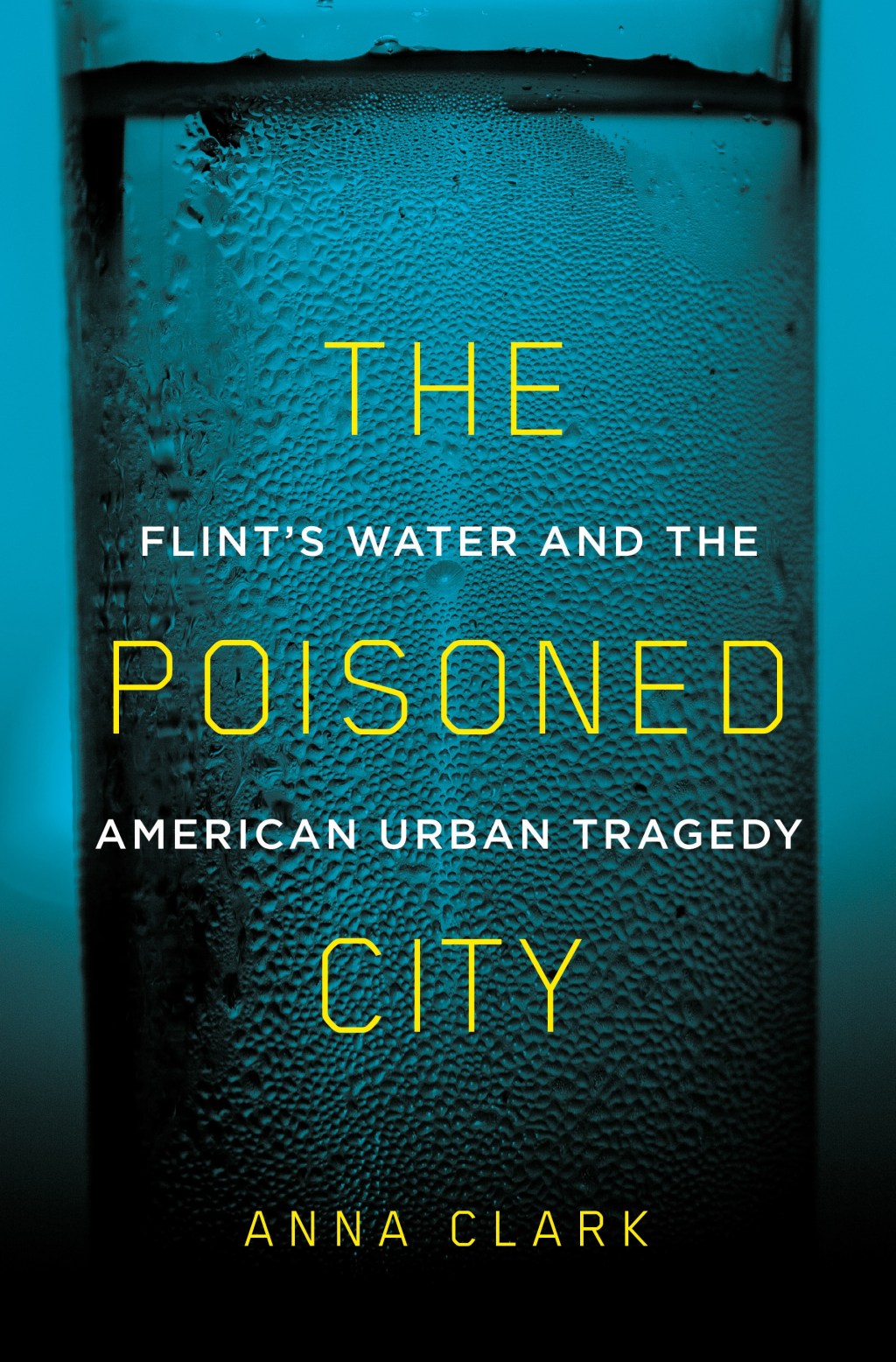
    Like an accident in slow motion, Anna Clark, a Detroit-based journalist followed the crisis of toxic drinking water in Flint, Michigan.
    “I had my head in it for years and it’s still there, I talk about it and I can’t get my head about how it happened,” says Clark, who has written for The New York Times, the Washington Post and Politico.
    This obsession with the government’s failure to provide clean water in a once thriving manufacturing city whose population of about 99,000 is largely African American compelled Clark, who was a Fulbright fellow in Nairobi, Kenya and edited A Detroit Anthology, a Michigan Notable Book, compelled her to research and write The Poisoned City: Flint’s Water and the American Urban Tragedy (Metropolitan Books 2018; $30) which was an Amazon Best Book of 2018 . But she didn’t do so as a faraway observer. Clark, who graduated from the University of Michigan’s Residential College with highest honors, double majoring in History of Art and Creative Writing & Literature, and minoring in Crime and Justice and received an MFA from Warren Wilson College, has always been a doer.
    For almost two years, citizens of Flint complained about the water, showing up at meetings with jars of the putrid looking liquid that came out of the faucets and talked about how people were getting ill from drinking it. The GM plant in Flint actually changed their water system because the city water was corroding the auto parts they manufactured.
    “It wasn’t good enough for the machines, but it was good enough for the people?” Clark asks rhetorically. “I wanted to really dig deep. I loved the research and the long conversations with a lot of people. I traveled to Flint a lot, to attend events, meet people and just hang out. I audited classes at the University of Michigan on metropolitan structures, legal issues and water rights. There was so much information to connect. I really couldn’t stop until my publisher said I had to turn in my manuscript.”
    Clark says most of the credit for the crisis being covered by major media sources is due to the city’s residents.
    “They would go to Lansing to meet with legislators and attend meetings, the mapped where the symptoms were occurring,” she says, noting their work propelled the story to a national level which is when the state finally started took action. “I really think many people in positions of power didn’t think the people in the city mattered very much. The clear message is we don’t actually care to do anything sizable about it.”
    But what happened in Flint could happen anywhere. Clark also sees this as an urgent public health care issue and one that is even more important as the national conversation is about dismantling safety regulations.
    “Even people in less disadvantaged cities have lead in their popes,” she says. “At the base level of what a city should do for its citizens, I think safe drinking water is pretty basic.”


    Ifyougo:
    What: Anna Clark discusses The Poisoned City and then will be joined in conversation with Rick Perlstein, the author of several books. A Q&A will follow the discussion.
    When: Thursday, January 24 at 6 pm
    Where: The Seminary Co-op Bookstore, 5751 S. Woodlawn Ave., Chicago, IL
    Cost: Free
    FYI: 773-752-4381; 57th.semcoop.com

  • Good and Mad: The Revolutionary Power of Women’s Anger
    Good and Mad: The Revolutionary Power of Women’s Anger

    Women’s anger is complicated, dating back to the days before they were allowed to vote and when all but a few careers were available to them. Even in the last generation or so, women have fought against discrimination in pay, employment—consider that former Supreme Court Justice Sandra Day O’Connor could at first only get a job as a deputy county attorney even though she graduated from the prestigious Stanford University and what they wore (up until the 1970s even pantsuits were considered inappropriate in the workplace) among many other things. On a personal level, when my father returned from serving overseas during World War II, at least one of the men on the East Chicago Public Library board demanded that my mother resign because she was taking a job away from a man. Fortunately, other board members disagreed and she worked there until she was in her 70s, retiring after 50 years. Other women weren’t as lucky—many were asked to leave or fired so that men could be re-employed.Rebecca Traister_credit_Victoria Stevens

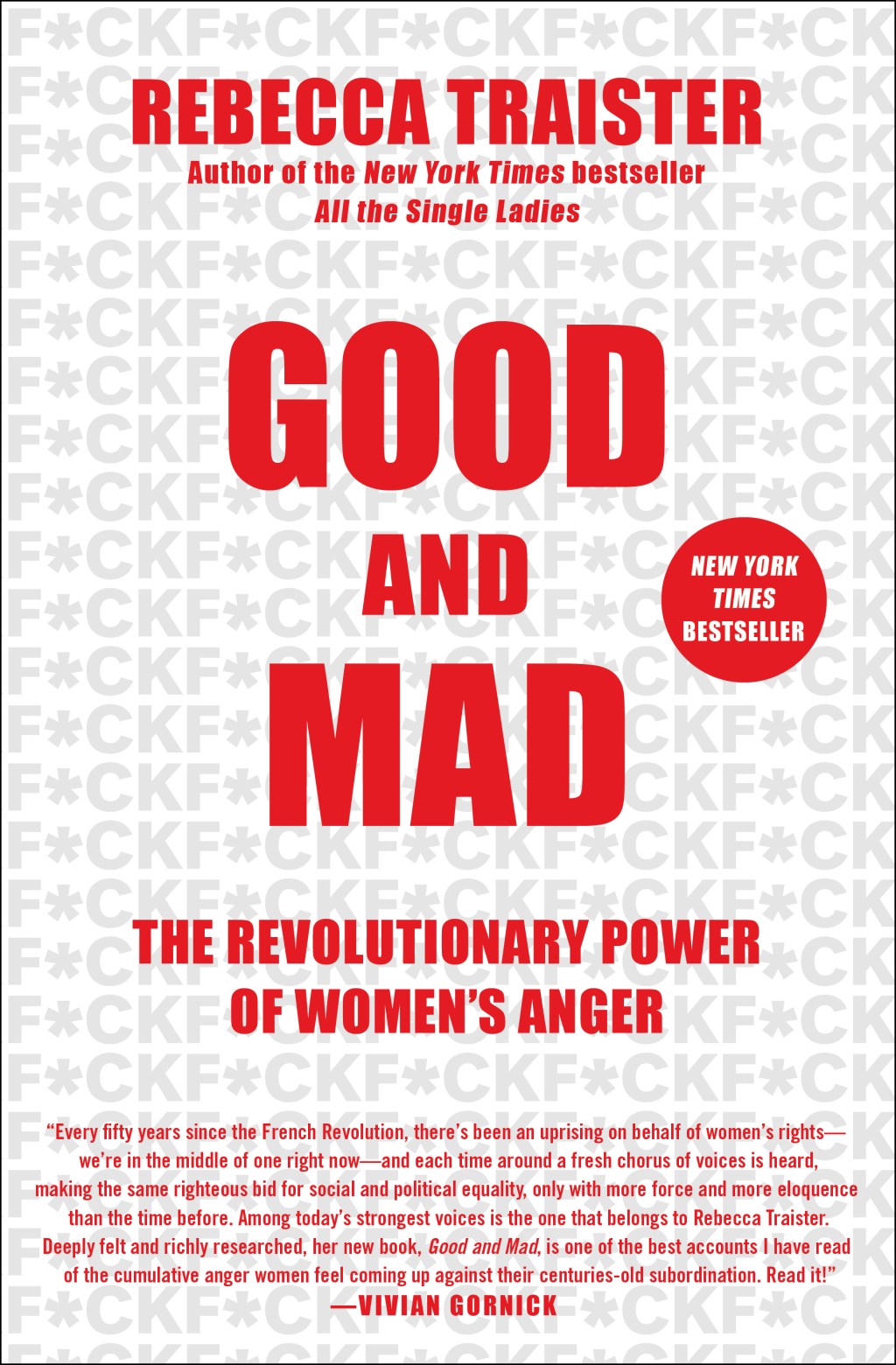
    For New York Times bestselling author Rebecca Traister, a National Magazine Award winner for her coverage of the Harvey Weinstein scandals, writer at large for New York Magazine and contributing writer for Elle, the long-simmering anger women have felt is now brimming over. This is shown by the ever growing #MeToo movement and also what she sees as women’s reaction to Donald Trump and his policies that hurt women. In her newest book, Good and Mad: The Revolutionary Power of Women’s Anger (Simon & Schuster 2018; $27) Traister wants to let women know their anger is potent.

    “It’s consequential, it’s meaningful, valid and rational,” says Traister who discusses how women’s anger is often held against them and used to invalidate their feelings. “I think those are things that women are told are not true about their anger all the time. This book sort of serves as a guide and a reminder–to let women know that their anger is powerful, that it has historical precedence.”

    Indeed, Traister argues that anger, when used to make changes, is a potent force.

    “It’s the bottling up of anger, rather than the anger itself, that raises our blood pressure and makes us grind our teeth,” she says.

    Though her book was written before the recent confirmation of Supreme Court Justice Brett Kavanaugh, Traister says the  reaction to how the women who came forward were treated will also reverberate into the future—just as they did 26 years ago after the Anita Hill and Clarence Thomas confirmation hearings.

    “#MeToo was an examination of how often sexualized harm was actually a tool of inequality within workplaces and within power structures where women faced all kinds of economic, professional, public forms of discrimination,” she says noting the harm being done wasn’t just sexual—it was also economic and professional. “What was being exposed were fundamental inequalities.

    Ifyougo:

    What: Chicago Humanities Festival, in conversation with Dr. Brittney Cooper

    When: Sunday, October 28 at 3:30 p.m.

    Where: Pick-Staiger Concert Hall, Northwestern University, 50 Arts Circle Dr., Evanston, IL

    FYI: (847) 467-4000; chicagohumanities.org/events/207-rebecca-traister-good-and-mad


  • Believe Me: The Evangelical Road to Donald Trump

    Believe Me: The Evangelical Road to Donald Trump

    As a Christian evangelical and an American historian, John Fea, chair of the History Department at Messiah College in Pennsylvania, sought to understand why 80 percent of evangelicals voted for Donald Trump and have deeply aligned themselves to one political party.

    “I wanted to explore what that means and how we’ve arrived at this time in our history,” says Fea, author of Believe Me: The Evangelical Road to Donald Trump (Eerdmans 2018; $24.99).Fea2 (1)

    Besides race, much of it has to do with age. The average American trump voter was 57 years old in 2016 and Fea believes that the average white evangelical voter might have even been older, forming their views during the time of Jerry Falwell and the Moral Majority.

    “Trump is delivering to a certain type of evangelicals—the Christian right and their vision of reclaiming/restoring Christian values,” he says, noting that this is portrayed as a return to an almost mythical golden age—a nostalgia for what never really existed. “If that’s your playbook, then Trump is the trade-off. And the power of that playbook is so strong they would turn their back on all the other things that are happening now.”

    Trading on fears changing demographics and encouraging anti-intellectualism, anti-immigration, anti-gay and anti-abortion, Donald Trump is seen as the person to do something about all this,” says Fea, who previously taught at Valparaiso University in the early 2000s.

    Noting that many far right politicians, who are very well educated themselves as well as wealthy or at least very financially secure, disdain colleges and higher education and the “liberal elite,” Fea believes that by encouraging people to be less educated, it helps perpetuate the sense of being overtaken and displaced.

    “Four-years of college teach you to think,” he says. “If you understand history and political science, you can see what’s happening. But when you have evangelicals with a faulty view of history, they’re going to be fearful and anxious. They think of themselves as the guardians of American culture but that culture seems to them to be changing so there’s the sense that they need to fight against what’s happening. When people feel this way, they turn to someone they see as strong who will protect them. Too many are trading their Christian ministry for a few federal judges. I conceive of it as being like horse manure ice cream—you think you have ice cream but it tastes and smells like horse manure because that’s really what it is.”

    Fea, who teaches young evangelical students, sees changes in the upcoming generations.

    “They’re pro-life but their views on immigration, the death penalty, the environment and so forth are broader,” he says.

    As the old guard feels surrounded, their world too rapidly changing, there’s a last gasp, says Fea.

    “I live near Gettysburg and have walked the battlegrounds many times,” he says. “In history, when there’s change and now as older evangelicals see this generation shift, there’s this last rush.”

    Fea compares the adherence to Trump to Pickett’s Charge  at the Battle of Gettysburg when 15,000 Confederate troops fought against 6500 Union soldiers on what was the third and last day of the battle. Their loss led to the  end of the Civil War.

    “It was the final push of the Confederacy and they almost made it,” he says. “In some ways, this is the last rush of the Christian right.”