Category: Murder

  • The Hunter’s Daughter: Is She As Evil As Her Father?
    The Hunter’s Daughter: Is She As Evil As Her Father?

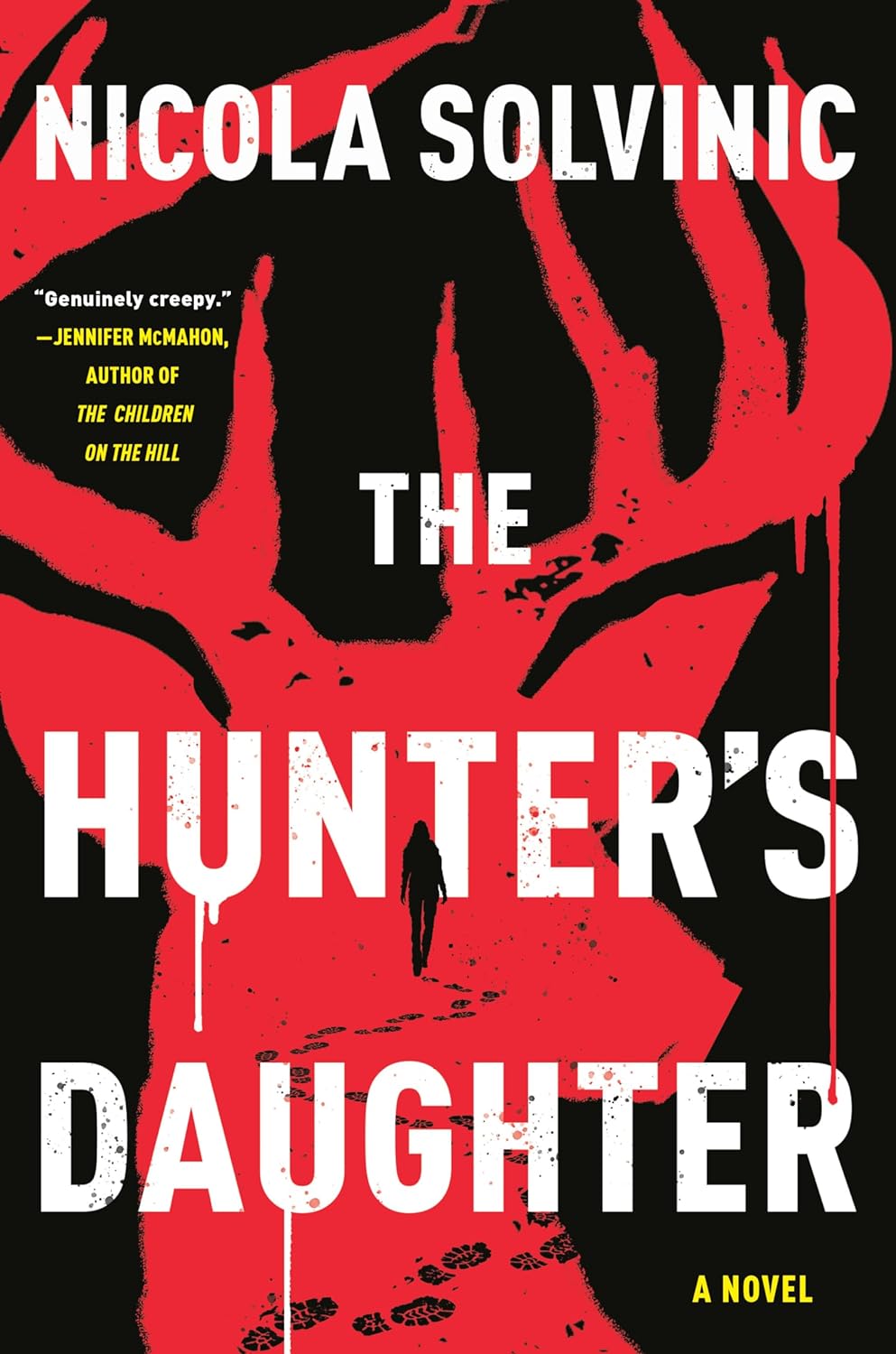
    “And I didn’t ask any questions,” the narrator of Nicola Solvinic’s debut mystery-thriller The Hunter’s Daughter (Berkley ), says in her first-person account of what it’s like having been raised by a serial killer. “I truly didn’t want to know the answers. When the rifle went off, did I kill my dad? Or Agent Parkes? Did I miss them both, and did they fight it out? Did Dad get arrested, or did he kill Agent Parkes and run.”

    These obviously are not the typical questions most children have regarding interactions with their fathers. But police officer Anna Koray is the daughter of a notorious serial killer, a fact she keeps hidden with the use of a different name, a move far from home, and estrangement from her mother who did little to protect her.  

    It works for a while until a traumatic incident triggers long-repressed memories and Anna’s past, sealed off by her therapist in a controversial and experimental hypnosis treatment, begins to emerge. Her father, known as the Forest Strangler, murdered more than a dozen women, their bodies decorated and left as sacrifices to the god of the forest. But he also taught Anna to love the woods, to be one with the forest and nature. The dark dense woods with rustling trees that line the perimeter of her yard call out to her, beckoning her forward. In many ways, it’s where she feels most at home—the feel of dirt between her toes, the smell of the rotting leaves. But as much as it entices her, that forest also harbors secrets and possibly malignant forces that may harm or even destroy her.

    There are many questions confronting Anna as she deals with her surfacing memories. Can she trust her lover who may be hiding his own addictions? Is her father, who is supposedly dead, really alive? And is Anna herself a killer—someone who has her father’s propensity as well as his genetics to do evil? She has killed, supposedly in self-defense. But is that true? Or does she enjoy killing just as he did? And will she do it again?

    When her psychiatrist, the woman who hypnotized her into forgetting her past, is found murdered, Anna has to wonder if she played a part in the death. After all, she had broken into her office to steal her file folder before the police, who are closing in, can locate it and discover her true identity. Did she do more than take the file? Did she destroy the woman who can reveal her past?

    Desperate to keep people from realizing that she is the daughter of the Forest Strangler, Anna also has to try to determine that even though she became a police officer to help others, she may be as evil as her dad.

    A tense psychological thriller, terse plotting, and Anna’s own uncertainty about who she is, what acts she’s committed, and whether she can trust her own thoughts, feelings, and actions, keeps this book a page-turner.

    About the Author

    Nicola Solvinic has a master’s degree in criminology and has worked in and around criminal justice for more than a decade at local, state, and federal levels. She lives in the Midwest with her husband and cats, where she is surrounded by a secret garden full of beehives.

    This review originally appeared in the New York Journal of Books.

  • Women Who Murder by Mitzi Szereto

    Women Who Murder by Mitzi Szereto

    “For the female of the species is more deadly than the male.”

    —Rudyard Kipling, from the poem “The Female of the Species.”

    “Why is that we’re always so shocked when women commit violent crimes, in particular, the crime of murder? Perhaps we’re more accustomed to seeing men as the aggressors when it comes to murder, not women. Yet some of history’s most notorious killers have been women. From Countess Erzsebet Bathory, Delphine LaLaurie, Amelia Dyer, Lizzie Borden, and Belle Gunness . . . it often seems impossible to keep up.”

    True crime writer Mitzi Szereto is the editor of Women Who Murder: An International Collection of Deadly True Tales (Mango Publishing), a compendium of murderous women written by internationally famous writers such as horror writer Anthony Ferguson, who lives in Australia; Tom Larson, an American mystery writer; and Cathy Pickens, an attorney who writes both true crime and the Blue Ridge Mountain Cozy Mysteries.

    The tales they tell, some well-known such as “Ruth Snyder: The Original Femme Fatale” by Claran Conliffe and “On the Courtroom Steps: The Trial of Susan Smith” by Picken and others much more obscure but no less fascinating like “Mona Fandey: The Malaysian Murderer” by Chang Shih Yen and “Anno Biesto, Anno Funesto” by Alish Holland about the brutal slaying of John Charles on Leap Year Day in 2000 in New South Wales, give lie to the saying that women are the gentler sex. Indeed, these women can kill just as violently and wantonly as any man.

    In her introduction, Szereto points out that men and women do kill differently and often for different reasons. Poison, at least in the past, often was the murder weapon of choice of women—easier to administer than creeping up and stabbing someone and so much tidier—no blood to clean up. They also kill less frequently and are typically not in it for the thrill of the kill like many male serial killers. Szereto says that many women, particularly those labeled as Black Widows, do so for the money, though that’s not the only reason. Sometimes it’s the only way to get rid of a threatening boyfriend or spouse or because of jealousy, love, and hate.

    But kill they do. And in this fascinating read, we learn about 14 women who did.

    This review originally appeared in the New York Journal of Books.

    .

  • The Busy Body by Kemper Donovan

    The Busy Body by Kemper Donovan

    “I tell other people’s stories for a living.

    “You can call me a ghostwriter, though usually I just say I ‘freelance’ which is vague and boring enough to put an end to strangers’ polite inquiries . . . That’s a lie . . . About my supposed friends. I have lots of acquaintances, colleagues, and associates—an assortment of people pepper my existence so that if you saw me from the outside you think my life was perfectly full. There are times it seems full even to me. But the truth is I don’t have any friends.”

    Thus opens Kemper Donovan’s The Busy Body where we meet the ghostwriter who has just received the most plum assignment of her career, collaborating with Dorothy Gibson, who just lost the presidential election and has retreated to her lovely abode outside a small town in Maine. Readers might be forgiven for thinking of Hilary Clinton when meeting Dorothy and that’s because Donovan based her character on the former first lady. But she’s also an amalgam of other female politicians including Sarah Palin, Amy Klobuchar, and Susan Collins—according to the author.

    Told in first person, the ghostwriter alludes to a distant tragedy in her past as the reason for her walling herself off from emotional entanglements though we never learn the entire story—possibly Kemper is saving that for future books as it appears our protagonist will become involved in future mysteries.

    The ghostwriting project quickly gets put aside when a murder occurs at the Crystal Palace, a three-story glass maze of cavernous spaces and no stairs that serves as both an event center and hotel overlooking the Crystal River next door to Dorothy’s estate. The first murder victim is a not-so-successful actress, Vivian Davis who has improved her financial and social status in the world by marrying Walter, her plastic surgeon with cold blue eyes, and a hot young assistant with whom he is having an affair. Walter has rented the Crystal Palace and invited one of his medical school classmates, a successful West Coast entrepreneur, to get him to invest in a revolutionary new plastic surgery product he’s invented. The week doesn’t begin well and only gets worse when Vivian is found dead, after apparently downing too many sleeping pills and drowning in her bathtub.

    Shortly before her death, Dorothy and Vivian had a chance meeting, and the obligatory celebrity photo was taken by Vivian of the two of them. The shot goes viral after a toxicology report showed there were no drugs in her system. Vivian’s death is now labeled as a homicide and Dorothy, with her ghostwriter in tow, decides to do some sleuthing much to the ire of the local police.

    Kemper uses his acerbic sense of humor coupled with a fast-moving plot and an interesting assortment of characters, each with a reason to kill, to make The Busy Body, with its twists and turns, a witty and fun whodunit.

    This review originally appeared in the New York Journal of Books.

  • A Sinister Revenge: A Victorian Mystery by Deanna Raybourn
    A Sinister Revenge: A Victorian Mystery by Deanna Raybourn

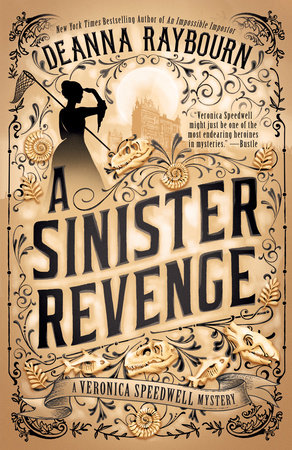
    Deanna Raybourn takes us back to Victorian times in “A Sinister Revenge” (Penguin Random House), the latest novel in her Veronica Speedwell series. Speedwell, a scientist, lepidopterist or butterfly collector, and lady adventurer, has traveled to Bavaria in search of Revelstoke “Stoker” Templeton-Vane (called Stoker for short), her lover and scientific partner, who understandably is upset to learn that her husband who she presumed dead, is still very much alive. Upon finding out the news, he leaves the country and now seems to have completely disappeared. Traveling with Speedwell is Stoker’s brother, Viscount Tiberius Templeton-Vane, and the two, while dining at a Bavarian inn and hearing the landlord talk about a disagreeable encounter he had with a wolf-like man believe they may have found Stoker.

    But there’s more going on than just a missing lover and brother. Tiberius has received death threats tied to an incident that occurred years ago and he needs his brother’s help in unraveling the mystery in order to save his life.

    Raybourn, a New York Times bestselling author and sixth generation Texan, knew from an early age that she wanted to be a writer. Influenced by such women writers as Mary Stewart, Victoria Holt, Agatha Christie, and even Jane Austen, she describes her books as mysteries with enough romance to keep readers who like both genres happy.

    “There was never a time when I didn’t make up stories,” she says, adding that she remembers being thrilled when she finally learned how to print so she could get them out of her head. There was also the time where she missed out on entire school lesson because she was busy writing a story about Maria Antoinette.

    That might explain why she is a prolific author, having written not only eight Speedwell novels but also the Lady Julia Grey series, which are also historical fiction. Besides that she has stand alone novels including last year’s “Killers of a Certain Age” about a band of female assassins who are over 60.

    Her Speedwell character is like many of the resolute women found in the pages of history and is inspired in part by Margaret Fountaine, a Victorian era lepidopterist who Raybourn says traveled the world collecting both butterflies and lovers. Both Fountaine and Speedwell are nothing like what people expect Victorian to be like says Raybourn.

    “Fountaine was dynamic and intriguing,” she says.  “She was my inspiration for Veronica.”

    This article originally appeared in the Northwest Indiana Times.