“I’ve long and often said that the ‘Mexican Drug Problem’ is really the American drug problem,” says Don Winslow who recently completed The Border, the third book in his Cartel Trilogy.
While Winslow is writing fiction, his
New York Times bestselling books are all too real.
“We’re the consumers and the ones
funding the cartels and fueling this violence because of our demand for drugs,”
says Winslow. “And then we have the nerve to point to Mexico and talk about
Mexico corruption. What about our corruption? If there’s anyone who should be building a
wall, it’s Mexico to protect themselves from our demand.”
Winslow’s fast action paced books, written
in a style he describes as “close third person,” are good reads on several
levels, including the enjoyment of a well-researched thriller about Drug
Enforcement Agency undercover operative Art Keller and his long struggle in a
harrowing world amidst Mexican cartel power struggles, traffickers, drug mules,
teenage hitmen, families seeking asylum to escape the drug wars, narcos, cops and
political corruption on both sides of the border as well as attorneys and
journalists.
The other level is the indictment of what
he views as a failed policy by the U.S. to stem the tide of drugs.
“We’ve had a War on Drugs for almost 50 years and last year more people
died of drug overdoses than ever before,” says Winslow. “We’ve already had this
lab experiment and it was called Prohibition. As long as you have people
wanting drugs, you’ll have people selling drugs. The way to end the violence
and crime that goes along with drug use is to legalize drugs and treat them as
the social health problem they are.”
Whether you agree with Winslow, whose books have been acquired by FX
Networks for television, his writing is compelling as he takes us into a world
he has inhabited since his first book, The
Power of the Dog, was published. He intended to end the series with The Cartel, his second book about Keller,
which he sold to Fox for a seven-figure amount.
“I swore that was my last book—I was done,” he says. “But the difficulty
was that the story wasn’t. The violence in Mexico is increasing, the heroin
epidemic in the U.S. is killing more people and the immigration issue—there was
more to discuss. Like in my first two books, I had more to say through the
medium of crime fiction.”
Winslow says the escalating violence in Mexico is amazing. In 1998, the
big news was the murder of 19 people in a Mexican village that was drug
related.
“By the time I was working on The
Cartel, that kind of incident wouldn’t even be in the papers, it’s such a
low body count,” says Winslow, noting that the difficulties in writing his
earlier books was finding people involved in the drug trade who were willing to
talk. “By the time I got done writing The
Cartel, people who had been hiding their crimes were celebrating them.”
But Winslow says he’s seeing a definite groundswell of change.
“Cities are doing some really interesting and forward thinking about it,”
he says. “We have a 2.2 million prison population behind bars and 20% of that
is drugs; we have 181,000 in Federal prison and around 90,000 of those are drug
related. We are the market for drugs. We’re 5% of the world’s population and we
use 80% of the opioids. We need to be doing something different.”
Though he says he’s done with the Cartel Trilogy, Winslow acknowledges it
was weird when he sent off his final manuscript.
“That was 20 years of my life, a total of one-third of my life,” he says.
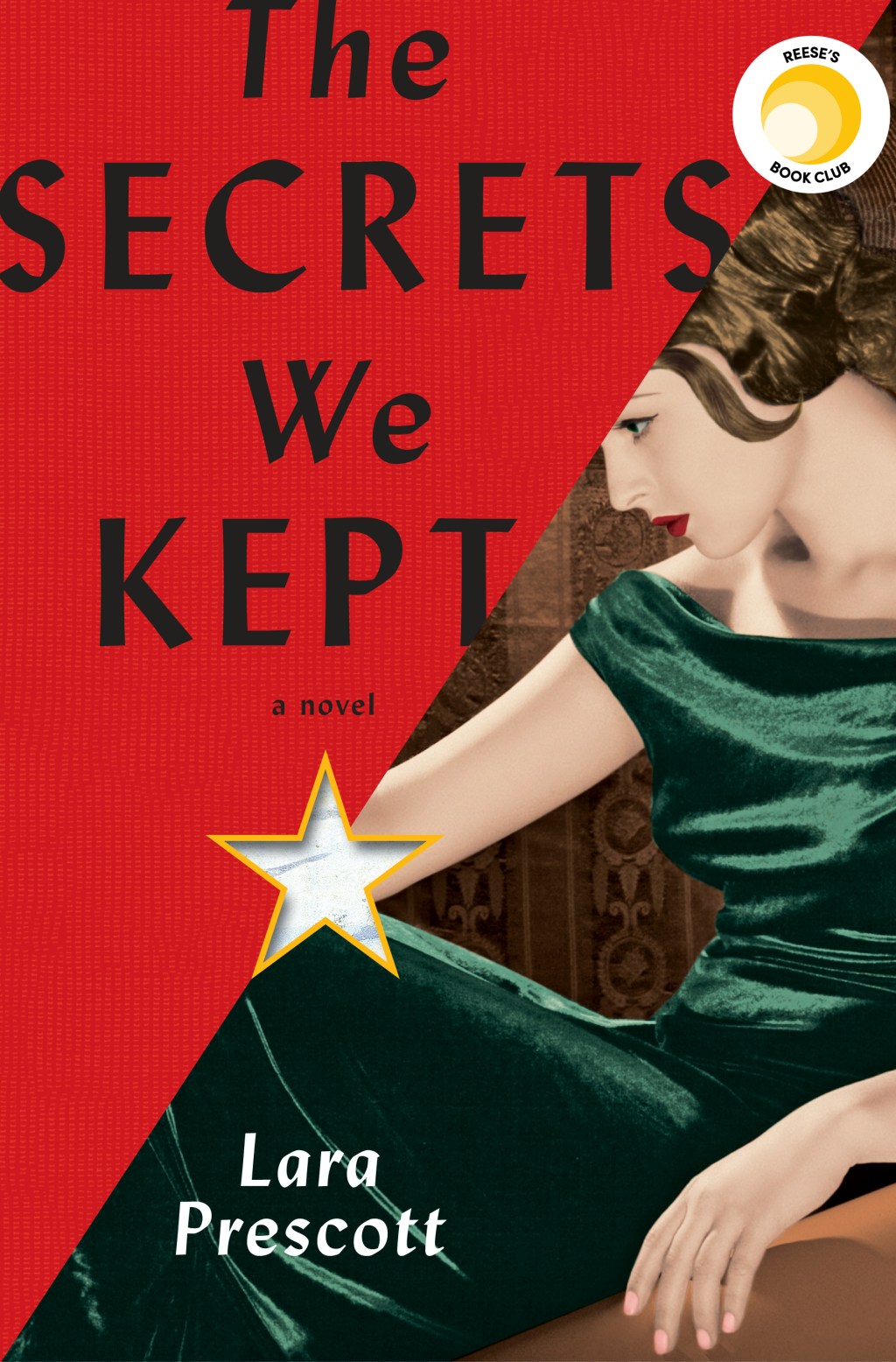
The Secrets We Kept by Lara Prescott weaves the threads of fact and fiction as she tells the story of Boris Pasternak, Nobel Prize winning author of Dr. Zhivago and the real life intrigues and machinations first to get the book published against the will of a repressive Soviet regime and then its use by the CIA as a propaganda tool during the Cold War. The novel, about two lovers Yuri Zhivago and Lara Antipova and their ultimately doomed romance set against the chaotic backdrop of the decades spanning the Russian Revolution and World War II, would never have been published if Pasternack hadn’t been able to smuggle it out of Russia and into the hands of an Italian publisher.
The
Soviets, who didn’t want the book to be read, demanded the publisher return
it. He refused, the book was published
and became an international bestseller which was turned into a mega-hit movie
of the same name.
Prescott’s
mother so loved the movie, she named her daughter after the heroine, Lara
Antipova.
“As
a child, I’d wind up her musical jewelry box again and again just to hear it
play ‘Lara’s Theme,’” says Prescott about the haunting melody that also became
a hit. “I, too, loved the movie, but it wasn’t until I actually read the novel
that I felt such a strong connection with the material. It was as if the old
master was reaching out to me across time and space—a candle in a window on a
winter night.”
But it was Prescott’s father who added another twist to the real life story of the Nobel Prize winning book by sending her an article from the Washington Post about how the CIA spy operation to distribute the book throughout the Soviet Union.
Fascinated by the article, Prescott delved deep into research reading once classified CIA documents, biographies of Pasternack and his muse and inspiration Olga Ivinskaya and visiting his dacha in Peredelkino, now a museum, where he wrote the novel and his gravesite. She tells the story of Pasternack’s persecution (the Soviets made him turn down the Nobel Prize award) through Olga’s eyes as well as those of a woman involved with the CIA.
“Also at the forefront was telling the story of all those women—many lost to history—who served the United States during WWII and the CIA’s early days,” says Prescott who at first wondered how a book could be the center of a CIA plot before realizing that made a lot of sense. “Of course books could be used in this way because they can change the hearts and minds of people.”
I was going to write a column about New Year’s Eve celebration foods but got distracted by Ten Restaurants That Changed America by Paul Freedman (Liveright 2018; $23.95), a look at how food evolved in this country. I’m going to be interviewing the author after I finish the book but instead of reading it from front to cover as soon as I read the introduction I turned to the chapter on Howard Johnson’s because those orange roofed restaurants and lodges are part of my youth. I worked at HoJo’s when I was a teen and as a young girl, when we traveled to New York, Connecticut and along the eastern seaboard, we typically stayed at their lodges.
I remember the sparkling pool, so inviting after a long day in the car, trying to read a book or do crossword puzzles while whizzing along—we only had an AM radio in the car and my mother didn’t like the noise of it when she was driving. Dinner was typically fried clams, hamburgers or clam chowder and always one of their many flavors of ice cream. Probably most famous for their clam dishes, the chapter about Ho Jo’s in Freedman’s book is titled Howard Johnson’s: As American As Fried Clams. If you’re wondering about all the clam dishes, Johnson was from Massachusetts and the chain started off in New England. And maybe people ate more clams back then.
At one time, according to the book,
during the 1970s, Howard Johnson had 929 restaurants and 526 motor lodges
stretching across the U.S. In the 1960s, the restaurants served more meals
outside the home than any company or organization except for the U.S. Army.
There actually was a Howard Johnson (his middle name was Deering) and he was
born in 1897 and though he liked to present himself, even at the height of his
company’s success, as a simple man, he married four times, owned a yacht, three
houses and a substantial art collection. Oh, and he didn’t really eat at Howard
Johnson’s much. Instead he liked high-end French dining like Le Pavillon and
the Stork Club, both fancy and ultra-expensive New York restaurants.
I’m not quite sure if there are any
HoJo’s left. There were a handful less than a decade ago including on in Times
Square and another in Bangor, Maine but those are gone. A Google search
indicates that the last one, in Lake George, New York, was, as of earlier this
year, was up for sale as a possible site for redevelopment. It had just
re-opened the year before after being closed for four years. Unfortunately the
person who had re-opened it had some legal issues. For more information, check
out hojoland.com, a Website for all things Howard Johnson’s.
Occasionally I see a building that
looks like it was once a HoJo but has been converted to another use and the
orange roof has usually been replaced. Because there are websites for almost
anything, there are a few identifying converted HoJo’s as well.
Though the restaurants are gone, many of the recipes remain and I looked up a few that I remember enjoying way back when and was fascinated to find out that the legendary French chef Jacque Pepin once worked at HoJo’s, a time he talks about in his memoir, The Apprentice: My Life in the Kitchen. Pepin, who would make their clam chowder in 3,000-gallon amounts, recreated the recipe for home cooks, saying he makes it “when a bit of Howard Johnson’s nostalgia creeps in.” His contains pancetta which I’m guessing is a substitute for the bacon in the original recipe and he also uses Yukon Gold potatoes and I don’t think that variety was common back in 1929 when Johnson opened his first restaurant.
Jacques Pepin Howard Johnson’s Clam Chowder
5 quahog clams or 10 to 12 large cherrystone clams
4 cups water
4 ounces pancetta or lean, cured pork, cut into 1-inch pieces
(about ¾ cup)
1 tablespoon good olive oil
1 large onion (about 8 ounces), peeled and cut into 1-inch
pieces (1-1/2 cups)
2 teaspoons chopped garlic
1 tablespoon all-purpose flour
2 sprigs fresh thyme
1 pound Yukon Gold potatoes, peeled and cut into ½-inch dice
(2-1/4 cups)
1 cup light cream
1 cup milk
¼ teaspoon freshly ground black pepper
Wash the clams well under cold water, and put them in a saucepan
with 2 cups of the water. Bring to a boil (this will take about 5 minutes), and
boil gently for 10 minutes. Drain off and reserve the cooking liquid, remove
the clams from their shells, and cut the clams into 1/2 –inch pieces (1-1/2
cups). Put the clam pieces in a bowl, then carefully pour the cooking liquid
into another bowl, leaving behind any sediment or dirt. (You should have about
2-1/2 cups of stock.) Set aside the stock and the clams.
Put the pancetta or pork pieces in a large saucepan, and cover
with the remaining 2 cups water. Bring to a boil, and boil for 30 seconds.
Drain the pancetta, and wash it in a sieve under cold water. Rinse the
saucepan, and return the pancetta to the pan with the oil. Place over medium
heat, and cook gently, stirring occasionally, for 7 to 8 minutes. Add the onion
and garlic, and continue cooking, stirring, for 1 minute. Add the flour,
mix it in well, and cook for 10 seconds. Add the reserved stock and the thyme,
and bring to a boil. Then add the potatoes and clams, bring to a boil, cover,
reduce the heat to very low, and cook gently for 2 hours.
At serving time, add the cream, milk, and pepper, bring to a
boil, and serve. (Note: No salt should be needed because of the clam juice and
pancetta, but taste and season to your liking.)
Howard
Johnson’s Fried Clams
1 cup
evaporated milk
1 cup milk
1 egg
1/4 teaspoon
vanilla
Dash salt
and pepper
4 dozen
freshly shucked clams
1 cup cake
flour
1 cup yellow
cornmeal
Oil for
frying
Combine
evaporated milk and whole milk, egg, vanilla, salt, and pepper. Soak clams in
liquid and then dredge in combination of cake flour and cornmeal, fluffing them
in the flour mixture for light but thorough coverage. Shake off excess flour
and fry in oil. Serve with French-fried potatoes, tartar sauce, homemade rolls,
and butter.
Howard
Johnson’s Chicken Croquettes
6 tablespoons
chicken fat (can use butter instead)
1 ¼ cups
flour
2 1/4 quarts
chicken stock. hot
6
tablespoons chopped onions
2 tablespoons
chopped parsley
3 cups bread
crumbs
3 eggs
1 tablespoon
salt
1 teaspoon
black pepper
2 pounds
boneless chicken, finely minced
Sauté onions
in chicken fat but do not brown.
Make a roux
(recipe below). Add hot chicken stock, and add seasonings. Stir constantly
until mixture thickens and is well blended.
Add minced
chicken and chopped parsley. Cook 5 minutes more, then remove from fire and
chill. Scoop and shape into croquettes. Dip in flour, egg wash and bread crumbs
and fry in deep fat until lightly browned on all sides.
These were
served a cream sauce (see recipe below).
Roux
1/4 pound
butter
1 stalk
celery, minced
1 cup
all-purpose flour
Cream Sauce
2
tablespoons butter
3
tablespoons flour
1/4 teaspoon
salt
Dash of
cayenne pepper
1 cup
chicken broth
1/2 cup milk
Melt butter
in pan; stir in flour and seasonings. Cook on low until smooth; stirring
constantly, add broth and milk slowly; to maintain thickness, stir on medium
heat until all milk and broth is added and sauce is thick.
In a heavy
pot, melt butter and then add the minced celery. Stir in the flour and cook for
3 minutes., stirring constantly. Fold in the chicken meat and allow to cool.
Howard
Johnson’s Boston Brown Bread
1 cup unsifted
whole wheat flour
1 cup
unsifted rye flour
1 cup yellow
corn meal
11/2
teaspoon baking soda
11/2
teaspoon salt
3/4 cup
molasses
2 cups
buttermilk
Grease and
flour a 2 quart mold. Combine flours, corn meal, soda ,salt. Stir in molasses,
buttermilk.
Turn into
mold, cover tightly. Place on trivet in deep kettle. Add enough boiling water
to kettle
to come half
way up sides of mold; cover. Steam 3 1/2 hr., or until done. Remove from mold
to cake
Patricia Schultz and I had only been on the phone together for five minutes before we decided to make the trip to New Zealand—neither of us had been and both of us wanted to go. And no, I haven’t bought my ticket yet but that’s how mesmerizing Schultz, who introduced the concept of bucket list travel when she wrote the first edition of her #1 New York Times bestseller 1000 Places to See Before You Die in 2003. It was so popular that over the years more than 3.5 million copies have been sold.
Now Schultz has updated her book with
a new twist, her words accompanied by mesmerizing and amazing handpicked photos
of some of the most beautiful places in world. The book itself, weighing six pounds with 544
pages, is oversized eye candy—compelling us to pack our bags and head out to
explore.
1,000 Places to See Before You Die
(Deluxe Edition): The World as You’ve Never Seen It Before was years in the
making—after all Schultz had to travel to all those places.
Calling her new book, a veritable
scrapbook of her life, she says she became teary eyed when choosing the photos.
In its pages she takes us to destinations so exotic many might have remained
unknown to most of us if not for her writing. One such is Masai Mara, the
world’s greatest animal migration that takes place each May when hundreds of
thousands of wildebeests travel north from the Serengeti in Tanzania to the
grasslands of Kenya’s Masai Mara. It’s a two to three month journey and the wildebeests
are joining by other migrating herds including antelope, zebras and gazelles
swelling the animal population to a million or so. There’s also ballooning over
Cappadocia, a Byzantine wonderland encompassing a natural and seemingly endless
landscape of caves and peaks of shaped by eons of weather with wonderfully
colored striations of stone. Even better, Schultz points out, you can take a
side trip to Kaymakli, an ancient underground city just 12 miles away.
For those less inclined for such
travels or whose pocketbooks don’t open that large, Schultz features closer to
home destinations that are still special such as Mackinac Island where cars
were banned in the mid-1890s, New York City (where Schultz resides when not on
the road) and one of my favorites, Stowe, Vermont. And, of course, the majestic
Grand Canyon.
While Schultz’s parents weren’t world
travelers, they encouraged her to find her way to what she loved. But for her,
it’s not just the road, it’s the people she meets as well. When the first
editor of her book proved so successful, she treated herself to a trip to Machu
Picchu in the Urubamba Valley of the Cuzco Region of Peru often known as the
Lost City of the Incas. Located 7800-feet above sea level, it’s isolated at the
top of a mountain surrounded by jungles and other peaks. There she met a
90-year-old woman who had been inspired by her book to travel there.
“She asked me if I had heard of the
book,” says Schultz. “Peru was the first stamp in her first passport.”
This venturesome woman who had
traveled outside the U.S. for the first time in her ninth decade, offered the
seasoned travel writer a pearl of wisdom that has remained with her for the
last16 years.
“She told me to make sure to see the difficult
places first,” recalls Schultz. “You can see the easy ones when you’re not as
active or energetic.”
Is Schultz burned
out by travel? Has she reached the point of been-there-done-that?
Schultz answers
with an emphatic no.
“There are still so many places I
want to visit,” she says, noting that her list remains long. “I doubt if I’ll
get to do them all, but I will try to do as many as I can.”
Ifyougo:
What: Authors Group Presents Patricia Schultz, 1000 Places to
See Before You Die; Luncheon
When: Tue, Oct 29, 2019 from 11:30 a.m.-1:30 p.m.
Where: Union League Club of Chicago, 65 W. Jackson Blvd.,
Chicago, IL
Where: Anderson’s Bookshop La Grange, 26 S La Grange Rd, La
Grange, IL
Cost: This event is free and open to the public. To
join the signing line, please purchase the author’s latest book, 1,000 Places to See Before You Die Deluxe
Edition, from Anderson’s Bookshop. To purchase please
stop into or call Anderson’s Bookshop La Grange (708) 582-6353 or order
online andersonsbookshop.com
For more
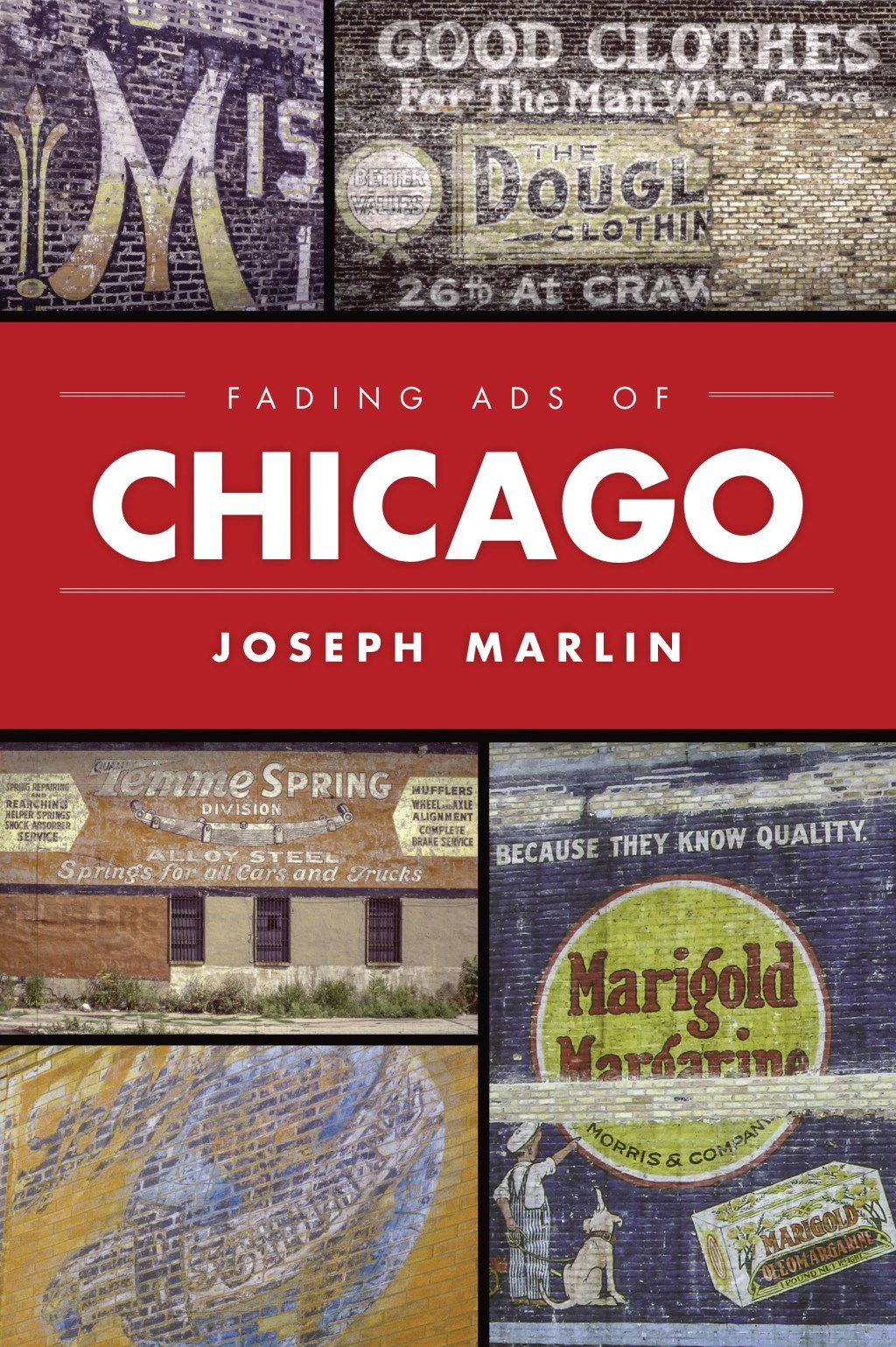
than 40 years, Joe Marlin, author of the just released Fading Ads of Chicago,
photographed ghost signs, those fading advertisements painted on the sides of
brick buildings, a onetime popular way to advertise in the U.S.
“I’d take
notes when I was driving to and from work on the west side of Chicago or when I
was going to business meetings,” says Marlin, a retired clinical social worker
and director of hospital social work services at Mt. Sinai Hospital. “Then I’d
organize the notes by neighborhood and go back and take photos.”
These
signs, some more than a century old, often advertised businesses, products,
stores and services long gone. These include the Boston Store which opened shortly
after the Chicago Fire in 1871 and was then replaced with a new building in
1906, closing for good in the late 1940s. One of Marlin’s favorites is an ad
for Marigold Margarine, which was likely painted in the 1890s.
“I like
that one because its colors were still so vivid,” says Marlin, whose book
contains more than 150 color photos of ads painted, for the most part, between
1890 to 1940s. “It wasn’t as faded because another building was built right
next to it.”
Fading advertisements
are sometimes called ghost ads because they were painted with lead based paints
that overtime begin to fade into the soft brick of the sides of buildings. When
it rains, the colors, longer lasting than non-lead paint, sometimes begin to
reappear or are easier to see. Marigold Margarine is one such ad. Concealed
over for decades it came into the light again for a brief period when the
building hiding it was demolished.
Then it vanished again with the construction
of a new building next door, concealed again for who knows how long. So many of
the ads Martin took are also gone, making them even more poignant as lost
reminders of forgotten times.
“I regret that I didn’t take more photos,”
he says. “More and more are disappearing when they tear down old buildings to
put up new one or their removed when the exteriors are renovated.
Even now,
Marlin, who also collects vintage cameras particularly those from Chicago’s
photographic industry such as still, movie, and street cameras as well as Art
Deco items, pursues these disappearing works of art.
“I just took
a photo of one recently, but it was too late to make it into the book,” he
says. “It’s an ad for Wizard Oil and claims that it ‘cures rheumatism, colds,
sores and all other pains.’ It was a patent medicine and they made all sorts of
grandiose claims back then.”
Like
Marigold Margarine and other remnants of the past, this one has a story too,
dating back to 1861 when a former Chicago magician invented it.
“These
old ads take us back to a different time,” says Marlin. “In order to find them,
just look up when you’re walking or driving through the city.”
And take
a photo because they might not be there next time you go by.
What: Joe Marlin talk and book signing
When: Tuesday, June 25; 6:00-7:00pm
Where: 57th Street Books, 1301 E 57th Street,
Chicago, IL
After reading Martin Walker’s The Body in the Castle Well, the 14th book in the series about Chief of Police Bruno Courrèges, I Googled real estate listings in the Périgord, known for its castles, caves, gastronomy and lush landscape of rolling hills, woods and vineyards. From Walker’s description, this region in southwestern France seems like an ideal place to live even if you have to deal with the type such skullduggery as truffle fraud, archaeological vandalism, arson, drugs and even terrorists Bruno encounters on a regular basis.
“There’
so much inspiration and history here,” says Walker who, with his wife, splits
his time between Washington D.C. and Le Bugue, a small village in the Périgord
where they own a home. The home came about, says Walker who talks like he
writes, with many wonderful asides, when he was waiting in the Oval Office and
received a phone call from his wife.
“She said
I don’t care what you’re doing, get on the next plane and come here, I just
found our house,” he says, noting he explained to her he was meeting with the
president so it might have to wait just a while. Besides that, he didn’t even
know they were buying a house.
Of course,
they did and now live in an old farmhouse dating back to 1698 with several
newer outbuildings, if you consider the 1700s new and in France they do.
Of course,
there are always obstacles even in paradise.
“One of
the challenges for anyone writing crime stories is finding places for bodies,”
says Walker, who speaks French, Russian, English, Arabic, German and a just enough
of other languages to get himself in trouble. “I drive around with an eagle eye
looking for the perfect spot for a body. I was in Limeuil, a lovely village,
and there it was, the castle well.”
So that’s
where the body of Claudia, a young art student ends up, in what first looks
like an accident and turns out to be much more ominous.
“She’s
studying with Pierre de Bourdeille, one of the greatest art experts in the
world, a hero of the French Resistance,” says Walker. “She told Bruno a little
of her concerns about the attributions de Bourdeille made about his paintings
which drove up prices and then she turns up dead.”
Another suspect is a falconer (so we get to learn about the ancient art of hunting with falcons) who met Claudia the day after her got out of prison. As compelling as the mystery is, so is Bruno’s life. He’s a gourmet chef, has his own blog and a cookbook, written by Walker’s wife, which is a best seller in Germany where it’s sold 100,000 copies. But unless you read the language, don’t bother as it’s not published in English though Walker encourages people to call his publisher and demand that it be.
The Bruno
books are quite a segue for the Oxford educated Walker who served as bureau
chief in Moscow and the U.S. and as European Editor for The Guardian, a British
daily newspaper and wrote lengthy tomes (ponderous and boring he says, though
noting they won awards) like The Iraq War and The Makers of the
American Century.
“The 15th is already
done,” he says. “And I’m thinking of the next. They’re fun to write.”
Asked what his favorite is, he
replies, “my favorite is always the latest or the one I’m working on right now.”
Ifyougo:
What: Martin Walker: The Body in the Castle Well
When: Tuesday, June
Where: The Book Stall, 811 Elm St., Winnetka, IL
Cost: Free and open to the public, but The Book Stall asks
that you buy your books from them if you intend on entering the book-signing
queue.
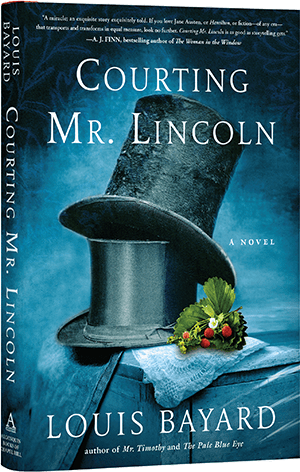
Bestselling novelist Louis Bayard, author of the literary historical novel Courting Mr. Lincoln, has written about a fascinating story about the relationships between the future President and the two people who knew him best: his handsome and charming confidant (and roommate) Joshua Speed , the rich scion of the a wealthy hemp growing family in Louisville and sassy Lexington belle Mary Todd.
Bayard, who will be appearing at the Book Stall, book is reviewed by staffer Kara Gagliardi’s in the bookstore’s May newsletter:
“Louis Bayard’s new novel transports us by wagon to the soul of our country and lays bare the man who would become our 16th president. It is, in fact, the personal history behind our country’s history. The story starts small. In 1839, Mary Todd arrives in Springfield looking for a husband. Her mother is deceased, her father is remarried. She relies on the kindness (and lodging) of her older sister to launch her into society. She is an intellectual with a sharp wit, pleasing-albeit a little too round-an excellent dancer and dinner companion, a lover of politics. She is running out of time.
“Abe Lincoln, on the other hand, is the definition of rough. Tall and gangly, he doesn’t know how to open doors for women, approach a carriage, make small talk, or accept invitations. In other words, society overwhelms him. He knows heartache from the loss of his mother and stepmother, and compares the work his father inflicted upon him to slavery. He’s also a damn good lawyer with a gift for oratory.
“Central to the book is the character of Joshua Speed, who enables the courtship between Lincoln and Mary Todd and feels betrayed by it. Speed owns the dry goods store in town and rents a room to Lincoln above it. Good-looking and a bit of a womanizer, he takes it upon himself to teach Lincoln how to dress, behave, and move in polite circles. The two become inseparable. When he learns that Lincoln has met with Mary Todd in secret, he feels an emptiness that he cannot identify. Who is he without his best friend? Where does he belong if not by Lincoln’s side? This book portrays a match of dependency and tenderness, intellect and laughter. It will also make you remember when you left your peers for a person you set your future upon. The stakes are high. Love wins.”
Bayard, the author of Roosevelt’s Beast, Lucky Strikes, The Pale Blue Eye and The Black Tower, was described by the New York Times, as an author who “reinvigorates historical fiction,” rendering the past “as if he’d witnessed it firsthand.”
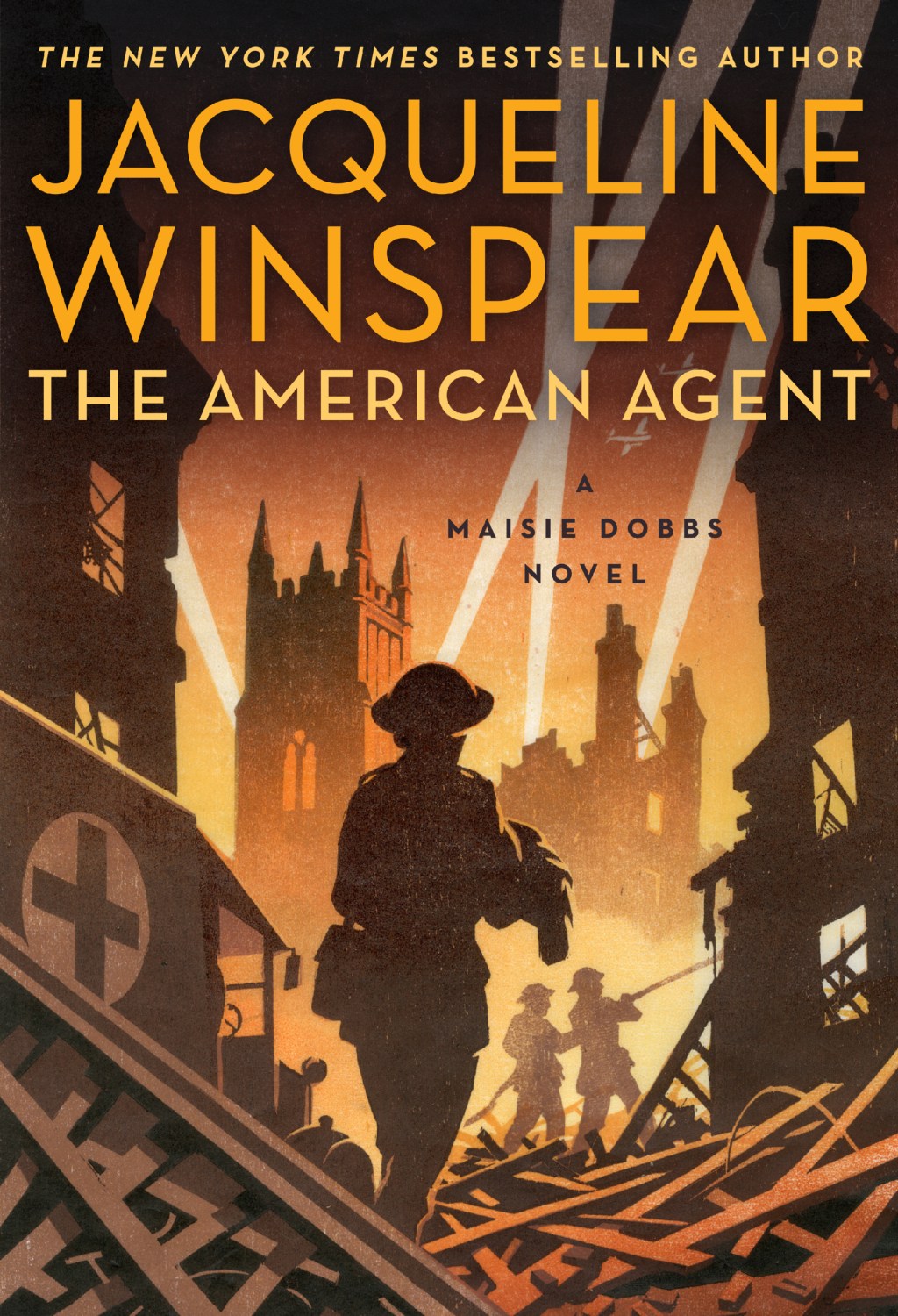
Jacqueline Winspear, author of The American Agent, the 15th book in her Maisie Dobbs’ series, transports us to early September 1940, as Adolf Hitler unleashed his Blitzkrieg or lighting attack on London and other United Kingdom cities, an intensive attack already used successfully in Spain, the Netherlands, Poland, Belgium and France to enable an invasion to take place. Day after day, night after night for months on end, hundreds of German bombers would fly across the Channel to wreak havoc. Maisie and her friend, Priscilla are volunteer ambulance drivers, and on one run they are accompanied by an American war correspondent, Catherine Saxon.
Following her late-night broadcast to the US, where she describes
her experience of seeing the death and destruction that the bombings have
wrought on the city, Saxon is found dead in her rooms. Maisie Dobbs is brought
in to conduct an undercover investigation – her presence requested by a man
from the US Department of Justice, Mark Scott, who had previously saved her life
in Munich, in 1938. The story is
peppered with excerpts from real broadcasts and reporting at the time.
On a multi-city tour, Winspear will be in Chicago for a book signing on April 4. Speaking to Jane Ammeson, she talks about An American Agent and how her own past was an impetus for her series.
For
readers who have never met Maisie, can you give us a brief summary?
Readers first met Maisie Dobbs in the first
novel in the series – entitled Maisie
Dobbs. From a working class
background, Maisie is a young woman of intellect and a keen intuitive ability,
which is recognized by a friend of her employer. Dr. Maurice Blanche – a
psychologist and Doctor of Forensic Medicine who consults with the police –oversees
her education and entry to university, which is sponsored by her employer – but
WW1 intervenes, and Maisie volunteers for nursing service, and is later wounded
at a Casualty Clearing Station in France – an experience that defines her. Later, having recovered, she becomes Blanche’s
assistant, and in the first novel in the series we see her striking out on her
own upon his retirement – she is a “psychologist and investigator.” Maisie is
very much a woman of her day – so many young women had to be incredibly
self-sufficient as the men they might have married had been lost to war. I have
written extensively on this subject as it’s always interested me.
I am
impressed by your vast knowledge and ability to bring us into this time period.
I know your grandfather was severely injured in the Battle of the Somme and
your family talked about the war. How did those experiences translate into you
writing books and immersing yourself in this time period?
Family stories always have an immediacy that
reading books and immersing oneself in research sometimes lacks. My grandfather
was very much of his generation of men who saw the most terrible death in the
trenches of WW1 France and Belgium – he never talked about it, with the
exception of a couple of stories shared with my father. But I could see the
wounds – his poor shrapnel-filled legs (he was still removing shrapnel
splinters when he died at age77), and I could hear the wheezing of his
gas-damaged lungs. And I knew he had suffered shell-shock. Added to this were my mother’s stories of the
Second World War – her experiences of being evacuated, of having to return to
London, then of being bombed out time and again. And yes, of seeing death on
the streets following a bombing. The
experience of listening to family stories – even from a very young age –
inspired my curiosity, which later became an adult inquiry, so you could say
I’ve been researching my subject since childhood.
This
is your 15th book in the series. How do you go about developing your stories?
Are they mapped out or do you take an incident and place Maisie in there and
let it all happen?
I think creating a story is like lighting fire.
First of all, you lay down the paper and kindling, then you need a match for
the flame, and you follow that with your fuel.
Often the kindling for a story is laid down years before I begin to
write – because I have been waiting for the spark to light the fire and then
the fuel to build the flame. For
example, I had known the true story that inspired “Elegy for Eddie” since I was
a teen – of a young girl not 16 years old, a cleaner in the local brewery
stables who had given birth to a baby boy while at work, and while stopping him
from crying had starved his brain of oxygen. That young boy – thereafter
considered “slow” – was born and grew up around horses and had a gift. As he grew up, he could settle the most
uppity horse, simply by laying a hand upon the animal – that’s how he earned a
living at a time when horses were vital for commerce and transportation. As a boy, my father knew this young man, and
he told me of his later “suspicious” demise.
After I began writing the series, I knew “Eddie” would form the basis of
a story – the kindling, if you will. Then
I learned more about the pre-war machinations of various powerful men close to
Churchill, and the secrecy surrounding their work, whether it was in creating
soft propaganda or developing fighter aircraft.
That’s when I asked the question – what if an innocent, a young man of
limited intellectual ability but deep empathy stumbled across crucial
classified information? Then what might happen? The flame caught and I had a
fire. But when I begin writing any
story, I only know the main landing points along the way, I do not know all the
details – they come as the story is written. I like to have the basic map, but
I also like to “dance with the moment” and be able to respond to new ideas or
information as they emerge.
Are
there times you’re back in the England between the wars versus 2019?
To some extent I have to be in the years I’m writing about – I cannot be distracted by today while I’m writing. When I’m at work, I am completely with my characters – I walk their streets, I can see what they are wearing, what they buy, what they eat, and I can hear their use of language, which is different from today.
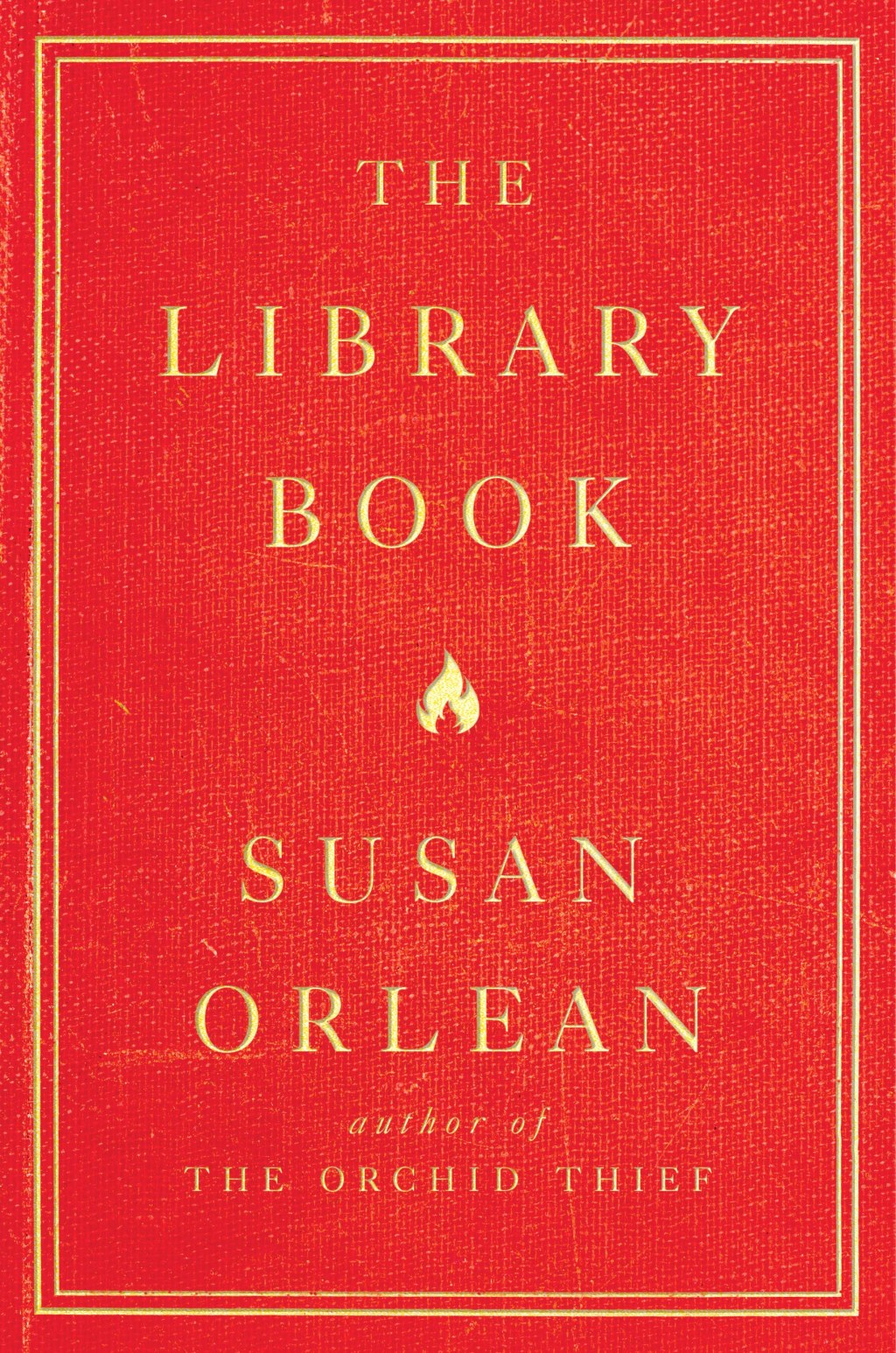
Susan Orlean’s newest book, The Library Book(Simon & Schuster, $28), is about a fire and a library but like all things this New York Times bestselling author writes (The Orchid Thief, Rin Tin Tin), it’s so much more. A lover of libraries since she was very young, Orlean had been toying with the idea of writing about the subject when her son, then six-years-old, announced that his class assignment was to write about a city employee and instead of the typical fireman or policeman interview, he wanted to write about a librarian. Then, after moving to Los Angeles, Orlean was at the Los Angeles Central Public Library when the librarian opened a book, took a sniff and announced that you could still smell the smoke. Orlean asked if that was from a time when smoking was allowed. The answer was no, instead the aroma dated back to April 29, 1986 when an inferno blazed for seven hours, reaching 2500 degrees. It took half of the Los Angeles’s firefighting resources to extinguish the blaze and by then flames and water had destroyed 400,000 books and damaged another 700,000.
“It was the combination of all of these that gave me the final push; it was as if I was being nudged, repeatedly, to look at libraries and find a narrative about them to write,” says Orlean, a staff writer at The New Yorker and author of seven books. “Learning about the fire was definitely the final nudge that made me sure this was the story I wanted to tell.”
But how to tell the story? For Orlean, who is obsessive about details and research—it took her almost as long to write the book as it did to rebuild the library—she had to figure out her focus.
“That’s exactly what the challenge was–it was a topic that was both broad and deep, with so much history and so many ways I could pursue it,” she says. “I finally decided to treat it as a browse through a library, with stops in different ‘departments’ of the story, such as the history, the fire, the present day, my own library memories. By visualizing the story that way I was able to move through the topic and engage as many aspects of it as I could.”
Her attention to details, both past and present is amazing and intriguing. We learn that Mary Foy, only 18, became the head of LAPL and also, because the fire was set by an arsonist, she delves into previous book burnings such as when in 213 B.C. Chinese emperor Qin Shi Huang ordered any history book he didn’t agree with be destroyed. The act, says Orlean, resulted in over four hundred scholars being buried alive.
In keeping with her compulsive exploration, Orlean even tried burning a book herself, just to see what happens and how it is done.
Asked to name her favorite library, Orlean mentions the Bertram Woods branch library in Shaker Heights, Ohio.
“That’s where I fell in love with libraries and became a passionate reader,” she says. “Of course, I’ll always feel a special attachment to the L.A. Public Library, because of the book, and it’s a great library to be in love with.”
Orlean also hopes people appreciate the gifts library give us.
“I want people to think about the nature of memory, both individual memory and common memory,” she says. “Our individual memories are as rich as a library, full of volumes of information and vignettes and fantasies. And our common memory is our libraries, where all the stories of our culture reside. I love reminding people of the value of both.”
Ifyougo:
What: Susan Orlean discusses her new book followed by a book signing.
When: November 13th at 6 pm
Where: Cindy Pritzker Auditorium, Harold Washington Library Center, Chicago Public Library, 400 S. State Street, Chicago IL
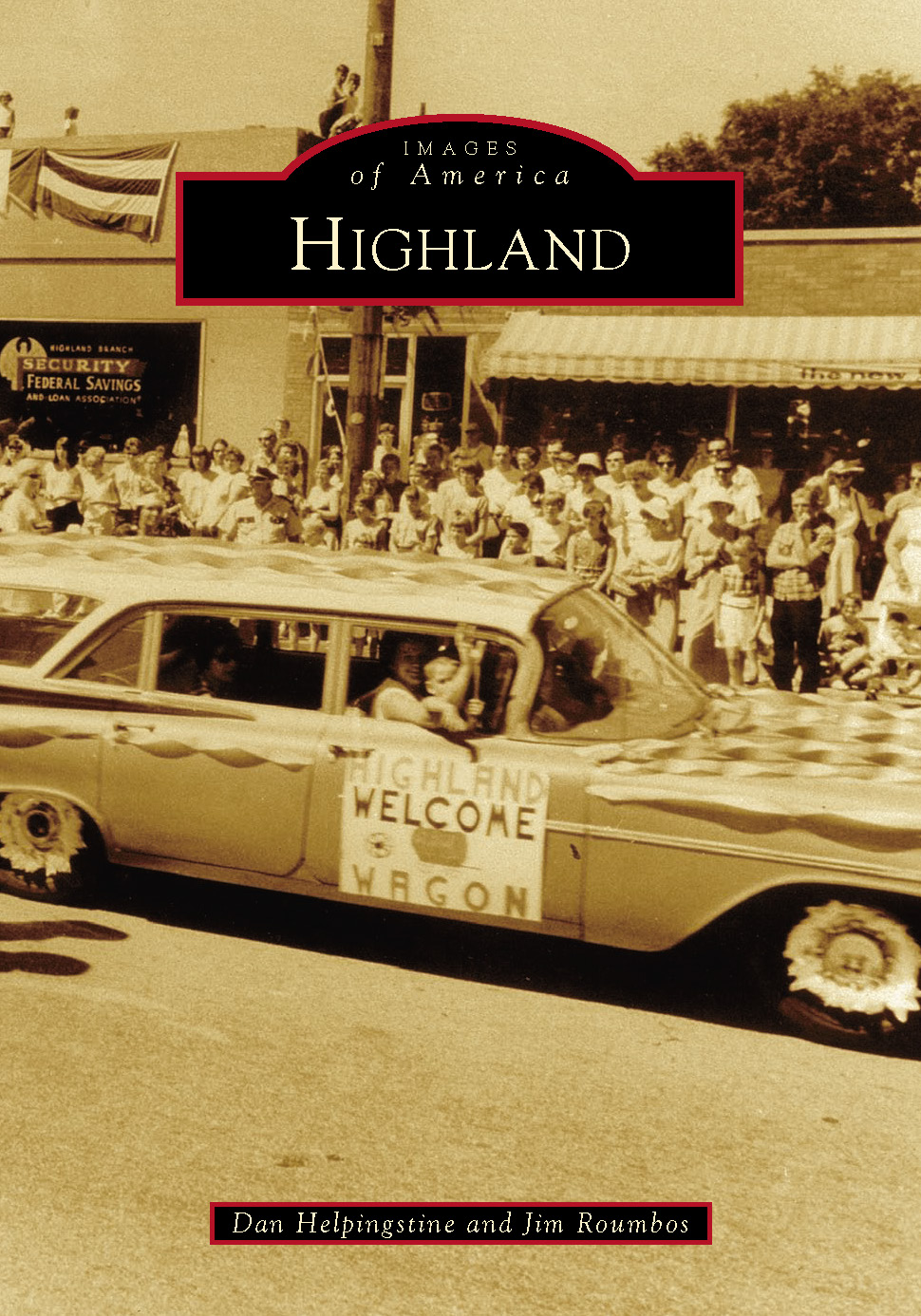
A Greek immigrant with a love of books and a degree in engineering, Jim Roumbos decided to open Miles Books in downtown Highland in 1986. Since then big chain stores like Borders went bankrupt and closed their doors, but Roumbos remains open.
“My dad, who at the time, couldn’t speak English and worked 70 hours in the mill, used to take me to the library so I could check out books,” says Roumbos who grew up in Gary but has called Highland his home for the last 40 years. “Being in the book business, I love talking to people and finding out their interests and hearing their stories.”
Over the years, he’s heard a lot of tales of Highland and so several years ago, he approached Dan Helpingstine, a frequent customer, about writing a book about the history of the town.
“Dan has written a number of books and we’ve had book signings for him here,” says Roumbos. “So I said hey, Dan, you should write about Highland. I have lots of people asking for books about the town.”
In turn, Helpingstine, author of such non-fiction books as South Side Hitmen: The Story of the 1977 Chicago White Sox, Chicago White Sox: 1959 and Beyond and The Cubs and the White Sox: A Baseball Rivalry, 1900 to the Present, suggested Roumbos write the book. Finally, they decided to co-author Highland (Arcadia Publishing $21.99) which was published last December.
Part of publisher’s Images of America series, the book chronicles Highland’s history through images and captions.
“Dan did the majority of the text and I did text and caption editing as well as the full editing and technical work for the photos,” says Roumbos.
The majority of the 181 photographs in the books were from the archives of the Highland Historical Society and the rest provided by individuals.
While many writers often fail in their attempts to find a publisher, that wasn’t the case with Highland.
“Because Dan had written other books for Arcadia and they knew his work, all we did was fill out the application and within 30 minutes had the okay to go ahead,” says Roumbos.
The process slowed considerably and it took them about four years to complete the book. But their shared background, was an immense help. Like Roumbos, Helpingstine grew up in another city—Hammond—but has lived in Highland for three decades.
“The book starts off in the late 1800s and we did a chronological pictorial, with captions, ending up with a chapter on memories throughout the years,” says Roumbos. “The last photo in the book shows the fireworks at Main Square Park for New Year’s Day at midnight. The photograph itself is from the early 1960s. The book embodies what Highland is, why people want to come to Highland and how welcoming it is. New residents come and they assimilate and Highland stays the same—a place offering a great town experience, one that is safe, friendly, charming with an emphasis on the arts. The police and fire department are wonderful and the elected officials are motivated to make Highland better but still keep it as a place that people love and want to maintain.”
When asked if he could choose a favorite photo and text, Roumbos pauses to think about it and then says it’s the photo of President Calvin Coolidge speaking in Wicker Park.
“It was a big deal,” says Roumbos. “We had another president who spoke at Wicker Park and that was Barack Obama. That says something about Highland.”
Roumbos, a story teller at heart, likes to emphasize how independent bookstores reflect the values of the town. He’s always one to share a cup of coffee and talk about whatever subject a person is interested in. And this summer, he was able to add one more tale to his repertoire.
“About two years ago a young Purdue student came into the store, she was studying to become a civil engineer and she met a guy here and they started dating and they’d often meet here on Friday nights,” he says. “Last December, he comes up to me and says he’s going to propose to her and I say that’s wonderful, when, and he said in about ten minutes when she comes to the store. Last summer they walked in, she was wearing her wedding dress they’d just gotten married in Lansing and were stopping by between the wedding and the reception to say hi.”
Ifyougo:
What: Book signing with Jim Roumbos and Dan Helpingstine authors of Highland.
When: Saturday, November 10, 11:30 a.m. to 2:30 p.m.