Category: History

  • Henry VIII’s Children: Legitimate & Illegitimate Sons & Daughters of the Tudor King

    Henry VIII’s Children: Legitimate & Illegitimate Sons & Daughters of the Tudor King

    “This book is a compelling read as Angus is a clear, concise, and talented writer who makes even small facets of long ago lives fascinating.”

    The irony of Henry VIII is acute. The once dashing heroic young man who succumbed to gluttony, cruelty, and, though it was done in a state-sanctioned manner, the murder of unwanted wives in hopes he could finally sire an heir, had at least one and most likely more illegitimate sons. But Edward, born of his third wife, Jane Seymour, who gained the throne with the beheading of his second wife, Anne Boleyn, was sickly and would die after a short stint as king.

    And thus, first Henry’s legitimate daughter Mary, to be soon known as Bloody Mary because of her religious fanaticism, and then Elizabeth would come to rule. There is more irony here as well. Mary was the daughter of Henry and his first wife, Katharine of Aragon, who was cast aside so that he could marry Anne. Elizabeth 1 was born of that short-lived union. Both Mary and Elizabeth’s early childhoods were filled with rejections and loss of status. Things grew more precarious after her mother’s death. Her father was off with his next wife—there would be six all together and Mary, after Edward’s death, saw her half-sister, a Protestant to boot, as a rival for the throne. It was as dysfunctional of a family as any on a Jerry Springer show.

    But what went on between these two siblings isn’t the only story regarding Henry’s children. And Caroline Angus, author of Henry VIII’s Children has written an immensely readable history of Henry’s other children, their mothers, and how they fit into Tudor society.

    “The tales of King Henry VIII’s illegitimate children are stories made form precious few recorded clues, plus memory, slander, gossip, and conjecture,” writes Angus. “But within the dramatic lives of the Tudor dynasty, almost anything is possible.”

    It was while Henry was married to his first wife, Katharine of Aragon, the widow of his brother Arthur, who was pregnant with his child, that he impregnated Bessie Blount. Still in her teens, Blount was in the third tier of Katharine’s ladies-in-waiting, not noble or wealthy enough to be in the first or second ranks but better than the fourth tier. Her job was to fetch and hold items for the queen and deliver messages. For that, she received her own room and servant and was granted permission to keep pets in the royal household.

    Bessie wouldn’t be the first of the Queen’s ladies that Henry bedded. He had already had an affair with at least one and would embark relations with several others. Katharine’s lost her child, much to the chagrin of the kin who was tired of his wife’s inability to give him a son. Bessie did much better and Henry was delighted with their son who was called Henry Fitzroy. The term Fitzroy is French word meaning “son of a king” and was used by the English to denote an illegitimate child. Henry bestowed upon titles and lands upon little Henry while Katherine just had to smile and bear it. That’s what women had to put up with in those days.

    Angus’ research is so extensive that readers even learn what Fitzroy ate for his afternoon meal. The first course was pottage, boiled beef, mutton, geese, capons, veal, and custard. If that sounds like a lot consider the second course consisted of lamb or kid, rabbits, pigeons, wildfowl, a tart or baked meat, fruits, and four gallons of ale and two pitchers of wine. Now, of course, some of that was probably for those who were dining with him. Fitzroy’s dinner meal was equally heavy and included 12 sweet desserts.

    In another touch of irony, after Henry divorced Katharine, he could have made Fitzroy legitimate by marrying Bessie Blount whose husband had just died. But he was so entranced by Anne Boleyn that he married her instead, believing she would give him a son. She didn’t and lost her head.

    There were other illegitimate children scattered around, probably more than history reveals. Anne’s sister Mary oldest son and daughter, Catherine and Henry Carey, were said to be Henry’s children. So was Ethelreda Malte, whose mother was a laundress. John Perrot claimed he was the son of Henry. And there were rumors Henry was the father of Thomas Stuckley, Richard Edwardes, and Henry Lee.

    This book is a compelling read as Angus is a clear, concise, and talented writer who makes even small facets of long ago lives fascinating.

    This article orignally appeared in the New York Journal of Books.

  • Driving the Green Book: A Road Trip Through the Living History of Black Resistance 

    Driving the Green Book: A Road Trip Through the Living History of Black Resistance 

    Buy on Amazon

    “The Green Book was more than just a road trip guide but a way of survival. Hall hopes that its history will live on.”

    The road, a symbol of freedom, was fraught with dangers for Black travelers in the time when Jim Crow laws still existed. Not much is known about Victor Hugo Green, the author of the “Green Book,” a series of tomes released annually listing places in cities and states that willingly accommodated Black travelers.

    What we do know is that Green at one point had worked as a postal worker and had an entrepreneurial spirit according to Alvin Hall, the author of Driving the Green Book: A Road Trip Through the Living History of Black Resistance who hypothesizes that Green authored the book in response to his own travels with his wife, Alma.

    “Back at the time the Green Book first appeared in the late 1930s, the automobile had seemed a likely safe haven for Black travelers—or at least safer,” writes Alvin Hall. “In a bus or on a train, a Black person ran the risks and humiliations of the laws and strictures around the use of public transportation due to segregation. That’s why a car road trip was particularly important: travelers needed more protection en route to their destinations—whether that was going home to Birmingham, Alabama; to visit Uncle Jerome in New York; or to gather with Alma Greens relatives in Richmond, Virginia.”

    Hall determined that he would revisit the places mentioned in Green’s books, accompanied by his friend Janée Woods Weber. Their journey took them from New York to New Orleans by way of Detroit. As they drove, they gathered in as much of the past as they could by visiting the clubs, restaurants, shops, and motels still in existence that Green said were safe. When possible, at each stop they tried to trace who were alive back then and capture their reminiscences.

    In Memphis, they visit the Lorraine Motel where Dr. Martin Luther King was assassinated. Besides the horrors of the murder of the Civil Rights leader, the monetary impact on the family that owned the hotel was profound as well as travelers shied away from staying there. But this is a story that has a sense of triumph as well. It is now a state-owned museum and on the National Register of Historic Places.

    The Green Book was more than just a road trip guide but a way of survival. Hall hopes that it’s history will live on.

    Jane Simon Ammeson’s most recent book is Lincoln Road Trip: The Back-Roads Guide to America’s Favorite President, a Bronze winner in the Travel Book category for the 2019–20 Lowell Thomas Travel Journalism Competition. Lincoln Roadtrip was also a finalist for a 2019 Foreword Indie Award for Travel. Her travel writing appears in various newspapers and magazines.

    Follow Jane Simon Ammeson at Travel/Food.

    This review previously was published by New York Journal of Books.

  • Tasting History: Explore the Past Through 4,000 Years of Recipes

    Tasting History: Explore the Past Through 4,000 Years of Recipes

    “even if we never make these dishes of ancient times, Miller’s book is a fascinating read.”

    “They say ‘history is written by the victors,’ but in my experience, history is written by those who write stuff down, and food is no exception,” writes Max Miller in the introduction to Tasting History, his new cookbook that delves into the foods we’ve eaten throughout millennia.

    Four years ago, Miller had little interest in cooking. But when a friend became sick while they were vacationing and they watched seasons of a cooking shows while overindulging on nachos, that all changed. Developing a passion for baking, he soon was taking his cakes and pastries to Walt Disney Studios where he worked. Besides sharing his creations, Miller also explained the origins of the recipes. Suggestions from friends influenced him to start a YouTube show titled “Tasting History with Matt Miller.” Shortly after, the pandemic hit, Miller was furloughed from his job, as were many others, and his show became a hit to all those stuck at home.

    Now Miller has taken it to the next level with this deep dive into food history that includes original recipes and Miller’s adaptations for home chefs as well as photos, original drawings, anecdotes, and cook’s notes.

    The recipe for this stew is easy, but even if a person could, though it’s unlikely, find the fatty sheep tails, another ingredient—risnatu—has no definite translation, though Miller says it’s commonly agreed upon that it’s a type of dried barley cake. He solves both those problems in his adaptation of the recipe by providing appropriate substitutions that honor the dish’s origins but make it available to modern kitchens.

    But even if we never make these dishes of ancient times, Miller’s book is a fascinating read. As we get closer to our own times—the book is arranged chronologically—we find dishes that are more recognizable such as precedella, a German recipe originating in 1581 that instructed cooks to “Take fair flour, a good amount of egg yolk, and a little wine, sugar and anise seed and make a dough with it.”

    Of course, modern pretzels don’t typically have wine and anise seeds in them, but Miller provides a recipe using all those ingredients so we can get the same flavor profile as the precedellas that were baked almost 500 years ago. It is indeed tasting history.

    Miller has culled recipes from around the world. The book also includes the foodways of medieval Europe, Ming China, and even the present with a 1914 recipe for Texas Pecan Pie that Miller describes as “a time before corn syrup came to dominate the dessert.” His adaptation of the original recipe uses sugar since corn syrup didn’t begin to dominate until the 1930s. The 1914 recipe also calls for a meringue topping, an addition not found in modern pecan pies. So even within a short time span of just over 100 years, Miller shows us how a recipe has evolved though he assures us, we’ll like the 1914 version best.

    This article previously appeared in the New York Journal of Books.

  • “Ladies of the Lights” Showcases Female Lighthouse Keepers

    “Ladies of the Lights” Showcases Female Lighthouse Keepers

    “Ladies of the Lights” Presentation by Michigan Maritime Expert Dianna Stampfler Showcases Female Keepers of Michigan’s Historic Beacons

    “Ladies of the Lights” Presentation Showcases Female Keepers of Michigan’s Historic Beacons

    Michigan lighthouse historian and author Dianna Stampfler has announced a series of presentations of her popular “Ladies of the Lights” in honor of Women’s History Month. This program, which includes readings from newspapers and autobiographies, as well as countless historic photos, sheds light on the dedicated women who served at lights around the state dating back as early as the 1830s.

    These were women before their time, taking on the romantic yet dangerous and physically demanding job of tending to the lighthouses that protected the Great Lakes shoreline. Given this was also a government job, their involvement was even more unique. In all, nearly 50 women have been identified who excelled in this profession over the years.

    One of the most notable was Elizabeth (Whitney) VanRiper Williams who took over the St. James Harbor Light on Beaver Island after her husband, Clement, died while attempting to rescue the crew of a ship sinking in the harbor. She later became the first keeper of the Little Traverse Lighthouse in Harbor Springs, retiring after a combined 44 years of service.

    There is also Julia (Tobey) Braun Way who outlived two husband keepers at the Saginaw River Rear Range Lighthouse in Bay City, and some say who still haunts the place today. Anastasia Truckey served as the interim keeper at the Marquette Harbor Lighthouse in the 1860s while her husband, Nelson, was off serving in the Civil War. Mary Terry served 18 years before she died in a fire at the Sand Point Lighthouse in Escanaba in 1886 – her death still shrouded in mystery 137 years later.

    Stampfler has been researching Great Lakes lighthouses for more than 25 years and is the author of Michigan’s Haunted Lighthouses (2019) and Death and Lighthouses on the Great Lakes (2022) both from The History Press. She has penned countless articles and been interviewed extensively about the lighthouses and their keepers. She is also the president of Promote Michigan.

    The March 2023 program schedule includes:

    • Tuesday, March 14 (6-7:30pm)

    Chesterfield Township Library

    www.chelibrary.org

    • Wednesday, March 15 (10am-Noon)

    Saginaw Valley State University, University Center

    OLLI Class (Registration required: $20 members/$40 non-members)

    www.enrole.com/svsu/jsp/session.jsp?sessionId=275W23&courseId=275LADIES&categoryId=D488D638

    • Wednesday, March 15 (5-6:30pm)

    Harbor Beach District Library

    www.hbadl.org

    • Tuesday, March 21 (6-7:30pm)

    Livonia Public Library ZOOM

    https://us02web.zoom.us/j/88565136420

    • Wednesday, March 22 (6-7:30pm)

    St. Clair County Library, Port Huron

    • Thursday, March 23 (7-8:30pm)

    Novi Public Library Zoom

    www.novilibrary.org 

    Stampfler will be selling/signing copies of her books following each presentation.

  • If Walls Could Talk: Lake Chapala’s historic buildings and their former occupants

    If Walls Could Talk: Lake Chapala’s historic buildings and their former occupants

    Now one of the most popular retirement area for Americans and Canadians, the Lake Chapala Region, nestled in a valley almost a mile high in Mexico’s Volcanic Axis,  has long been a draw for ex-pats and vacationers, lured by its almost perfect climate and beauty.

    In his book If Walls Could Talk: Chapala’s historic buildings and their former occupants about Mexico‘s earliest international tourist destination (also available in Spanish), award-winning author Tony Burton shares his knowledge and interest in a region where he has spent more than two decades. Burton, a Fellow of the Royal Geographical Society who was born and educated in the United Kingdom, first visited Mexico in 1977. That visit was obviously a big success as he returned and for almost 18 years lived and worked full-time in Mexico as a writer, educator and ecotourism specialist.

    He met his wife, Gwen Chan Burton who was a teacher of the deaf and then director at the Lakeside School for the Deaf in Jocotepec, one of the three main towns lining the shores of Lake Chapala. Though they now reside on Vancouver Island, British Columbia, the Burtons continue to revisit Mexico regularly and he is currently editor-in-chief of MexConnect, Mexico’s top English-language online magazine.

    The other two towns, each with its own distinctive vibe, are Ajijic and Chapala, native villages resettled by the Spanish Conquistadors in the 1500s. “This book looks at how Chapala, a small nondescript fishing village in Jalisco, suddenly shot to international prominence at the end of the nineteenth century as one of North America’s earliest tourist resorts,” writes Burton. “Within twenty years, Chapala, tucked up against the hills embracing the northern shore of Mexico’s largest natural lake, was attracting the cream of Mexican and foreign society. Thus began Lake Chapala’s astonishing transformation into the vibrant international community it is now, so beloved of authors, artists and retirees.”

    The book, organized as a walking tour, covers not only existing buildings but also pinpoints the spots where significant early buildings no longer stand but their histories still weave a story of the town. It’s only a partial guide, explains Burton, noting that an inventory prepared by the National Institute of Anthropology and History identified more than eighty such buildings in Chapala including many not easily visible from the road but hidden behind high walls and better viewed from the lake.

    Among the famous people who lived in Chapala at some point in their careers was author D.H. Lawrence, probably best remembered for his risqué (at the time) novel, Lady Chatterley’s Lover.

    In 1923, Lawrence and his wife, Frieda, rented Casa de las Cuentas (House of Rosary Beads), a house that dates back to the 1800s. At the time, a one-story abode with a half-moon entrance and heavy wooden gates, it was located at 307 Calle Zaragoza, a street formerly known as Calle de la Pesquería (“Fishing street”) so named as it was where the local fishermen repaired their nets and hung them out to dry. It was while living on Calle Zaragoza that Lawrence wrote the first draft of The Plumed Serpent, published in 1926. The novel is described asthe story of a European woman’s self-annihilating plunge into the intrigues, passions, and pagan rituals of Mexico.”

    Over the decades, after the Lawrences moved out, subsequent changes were made to Casa de las Cuentas including  the addition of a swimming pool in the mid-1950s when artist Roy MacNicol and his wife, Mary, owned the home.

    While Lawrence’s writings were considered by some as scandalous, MacNicol’s life had its scandals as well. Burton describes him as “colorful” in that he was married multiple times and was involved in many escapades as well as lawsuits.

    Mary, embracing the local culinary traditions including the use of flowers in cooking, authored Flower Cookery: The Art of Cooking With Flowers.

    It wasn’t the work of a dilettante as reviews of her book such as this one on Amazon shows.

    “Flower Cookery is recipes, but far more than recipes,” writes one reviewer. “The book is organized by the popular name of the flower in question. Each section is introduced with quotations from literature, philosophy, and poetry that feature the blossom. This is followed by the recipes, interwoven with mythology, stories, and aphorisms about the flower, the plant from which it grows, its symbolism, and the culture or society in which humans discovered the value of the plant or blossom. The recipes include original favorites as well as recipes collected from historical sources and contemporary sources around the world. Here is just the tiniest sampling of the riches in the book.”

    Burton shares her Christmas Cheer recipe from when she lived at Casa de las Cuentas.

    Christmas Cheer

    10-12 squash blossoms with stems removed

    2 eggs, beaten

    2 to 3 tablespoons water

    Flour, enough to thicken mixture about one tablespoon

    Salt and pepper

    1 cup neutral oil such as grapeseed, canola, or safflower

    Wash and dry squash blossoms on paper towels, making sure to remove all the water. Mix remaining ingredients except oil to make a smooth batter. Place oil in a large, heavy skillet to 350-375°F. Dip blossoms in batter and fry in oil until golden brown. Drain on paper towels. Serve hot.

    As for the house, it was renovated again in the early 1980s and is now Quinta Quetzalcoatl, a lovely boutique hotel.

    If Walls Could Talk is one of four books that Burton has written on the Lake Chapala region. The other three are Foreign Footprints in Ajijic: decades of change in a Mexican Village; Lake Chapala Through the Ages: an anthology of travelers’ tales  (2008), and the recent Lake Chapala: A Postcard history. All are available as print and ebooks on Amazon.

    The above maps, both copyrighted, show Chapala 1915 [lower map] and 1951 [upper map].

    In all, he’s planning on adding several more to what he currently calls the Lake Chapala Quartet, these focusing on the writers and artists associated with the area.  I asked him  to describe the region so readers who have never been there can get an idea of what it is like, but it turns out the Burton is NOT a traveler who meticulously plots every moment of a trip before he arrives. Instead, he tells me that part of the fun when traveling is to not know in advance what places are like and instead to see and experience them for yourself.

    “That said,” he continues, “the various villages and towns on the shores of Lake Chapala are all quite different in character. The town of Chapala, specifically, is a pretty large and bustling town. It is growing quite rapidly and has added several small high end boutique hotels in recent years, as well as some fine dining options to complement the more traditional shoreline ‘fish’ restaurants. The many old–100 years plus–buildings in Chapala give the town a historic ‘air’ where it is relatively easy to conjure up images of what it was like decades ago. By comparison, Ajijic, now the center of the foreign community on Lake Chapala, has virtually no old buildings and more of a village and artsy feel to it, though it also has very high quality accommodations and more fine restaurants than you can count.”

    Other structures still standing include the Villa Tlalocan, completed in 1896 and described by a contemporary journalist as “the largest, costliest and most complete in Chapala… a happy minglement of the Swiss chalet, the Southern verandahed house of a prosperous planter and withal having an Italian suggestion. It is tastefully planned and is set amid grounds cultivated and adorned with flowers so easily grown in this paradisiacal climate where Frost touches not with his withering finger…”

    Also still part of the landscape is Villa Niza. One of many buildings designed by Guillermo de Alba, the house, according to Burton, was built in 1919 and looks more American than European in style. Located at Hidalgo 250, it takes advantage of its setting on Lake Chapala and has a mirador (look out) atop the central tower of the structure, which affords sweeping panoramic views over the gardens and lake. De Alba’s strong geometric design boasts only minimal exterior ornamentation.

    Burton, who specializes in non-fiction about Mexico, related to geography, history, travel, economics, ecology and natural history, has written several fascinating books about the history of the Lake Chapala region.

    In If Walls Could Talk, Burton invites you to walk with him through time as you explore the city.

  • Haunted Lighthouses: Scary Tales of the Great Lakes
    Haunted Lighthouses: Scary Tales of the Great Lakes

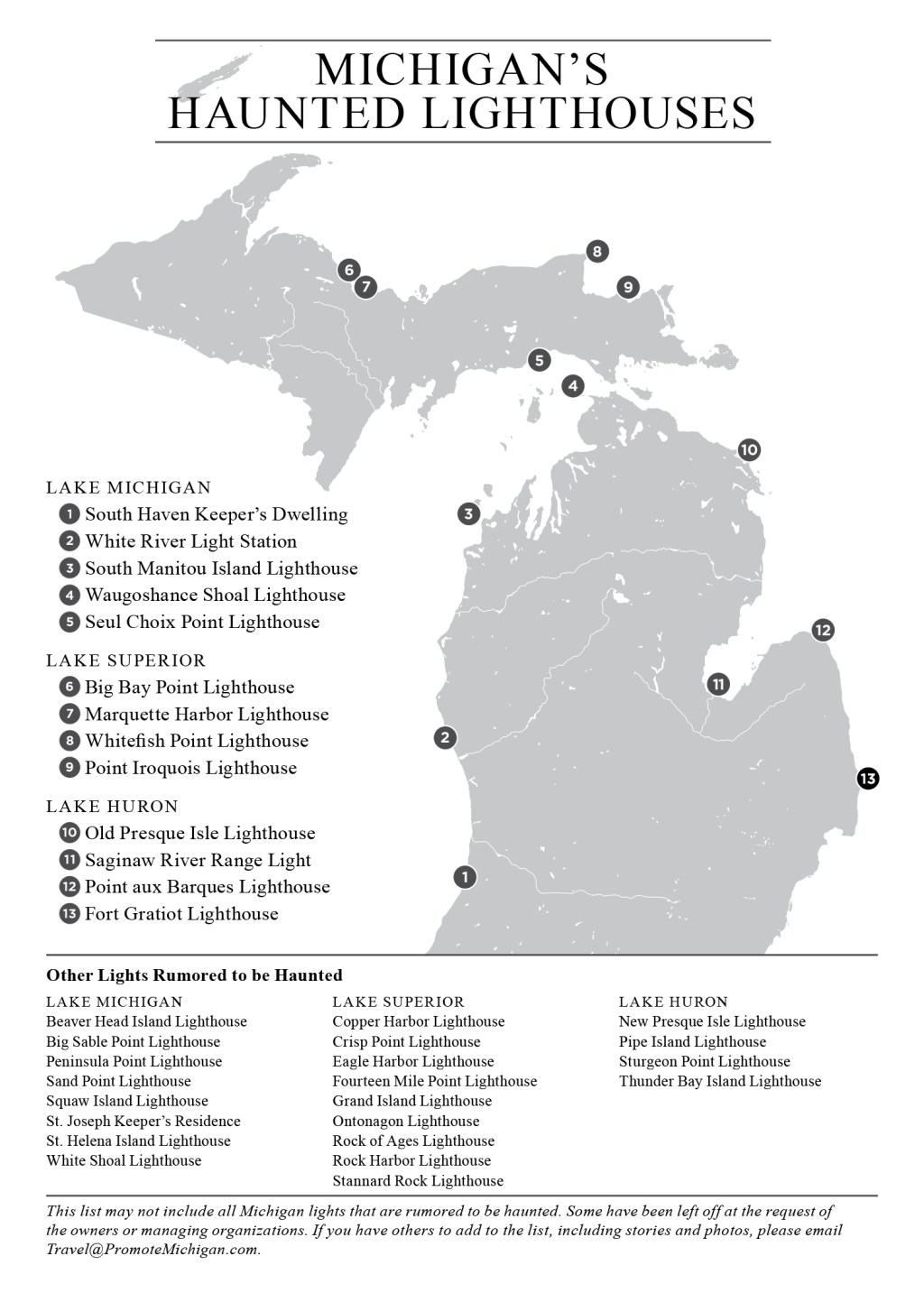
    Michigan is home to more lighthouses than any other state and about 40 of those are rumored to be haunted by the spirits of former keepers, mariners and others with ties to these historic beacons.

    Inside the pages of Michigan’s Haunted Lighthouses, long-time researcher, writer and promoter of all things Michigan, Dianna Stampfler, shares stories of those who dedicated their lives — and afterlives — to protecting the Great Lakes’ shoreline. Her second book, Death & Lighthouse on the Great Lakes, Stampfler delves into the historic true crime cold case files that have baffled lighthouse lovers for as many as two centuries.

    Throughout the fall season, Stampfler will be speaking at libraries around the state, sharing her lively and upbeat presentation about these lights. Copies of her books will be available for purchase and signing at every program.

    Sun, Oct 9, 2022
    2:00 PM – 3:30 PM
    Michigan’s Haunted Lighthouses
    Elk Rapids District Library, Elk Rapids, MI
    Tue, Oct 11, 2022
    6:30 PM – 8:00 PM
    Michigan’s Haunted Lighthouses
    Rauchholz Memorial Library, Hemlock, MI
    Wed, Oct 12, 2022
    7:00 PM – 8:30 PM
    Michigan’s Haunted Lighthouses
    Northville District Library, Northville, MI
    Wed, Oct 19, 2022
    6:00 PM – 7:30 PM
    Michigan’s Haunted Lighthouses
    Reese Unity District Library, Reese, MI
    Thu, Oct 20, 2022
    7:00 PM – 8:30 PM
    Michigan’s Haunted Lighthouses
    Otsego District Library, Otsego, MI
    Sun, Oct 23, 2022
    3:00 PM – 4:30 PM
    Michigan’s Haunted Lighthouses
    Sanilac County Historic Village & Museum, Port Sanilac, MI
    Wed, Nov 2, 2022
    6:00 PM – 7:30 PM
    Death & Lighthouses on the Great Lakes
    St. Clair County Library – Main Branch, Port Huron, MI

    For the complete schedule of upcoming events (including other topics beyond lighthouses), visit the Promote Michigan Speaker’s Bureau online.

    About Michigan’s Haunted Lighthouses

    Michigan has more lighthouses than any other state, with more than 120 dotting its expansive Great Lakes shoreline. Many of these lighthouses lay claim to haunted happenings. Former keepers like the cigar-smoking Captain Townshend at Seul Choix Point and prankster John Herman at Waugoshance Shoal near Mackinaw City maintain their watch long after death ended their duties. At White River Light Station in Whitehall, Sarah Robinson still keeps a clean and tidy house, and a mysterious young girl at the Marquette Harbor Lighthouse seeks out other children and female companions. Countless spirits remain between Whitefish Point and Point Iroquois in an area well known for its many tragic shipwrecks.

    About Death & Lighthouses on the Great Lakes

    Losing one’s life while tending to a Great Lakes lighthouse — or any navigational beacon anywhere in the world for that matter — sadly wasn’t such an unusual occurrence. The likelihood of drowning while at sea or becoming injured while on the job ultimately leading to death were somewhat common back in the late nineteenth and early twentieth century.

    Death by murder, suicide or other unnatural and tragic causes, while rare, are not unheard of. In fact, more than dozen lighthouse keepers around the Great Lakes met their maker at the hands of others – by fire, poisoning, bludgeoning and other unknown means. A handful of these keepers, either because of depression or sheer loneliness, took their own lives. A few we may never know the true story, as the deaths now 100 or more years ago, weren’t subjected to the forensic scrutiny that such crimes are given today.

    In the pages of Death & Lighthouses of the Great Lakes: A History of Misfortune & Murder, you’ll find an amalgamation of true crime details, media coverage and historical research which brings the stories to life…despite the deaths of those featured.

    Stampfler has been professionally writing and broadcasting since high school. She holds a bachelor’s degree in English with emphasis in Community Journalism and Communications with emphasis in radio broadcasting from Western Michigan University. She is a member of the Midwest Travel Journalists Association, Historical Society of Michigan, Great Lakes Lighthouse Keepers Association, Great Lakes Maritime Museum, Association for Great Lake Maritime History, Great Lakes Shipwreck Historical Society, Michigan Maritime Museum, Friends of Pilot & Plum Island Lighthouse, National Museum of the Great Lakes and West Michigan Tourist Association.

  • Traveling Through Time and Around the Globe
    Traveling Through Time and Around the Globe

    In 1914, Marian Graves and her twin brother, James, are among the last to be saved when the Josephina Eterna sinks in the North Atlantic. With their father in prison and their mother gone, the two babies are bundled off to live with their Uncle Wallace, an artist in Missoula, Montana. Wallace, preoccupied with his painting, lets the kids run wild, and while James is a sweet-natured child, Marian is a daredevil who revels in the freedom to do what she wants.

    That helps explain her attraction to the lifestyle of barnstorming aviators and her decision at 14 to drop out of school to learn to fly.

    Fast forward a century. Actress Hadley Baxter, whose Hollywood stardom is somewhat diminished, is starring in a movie about the disappearance of Marian Graves in Antarctica.

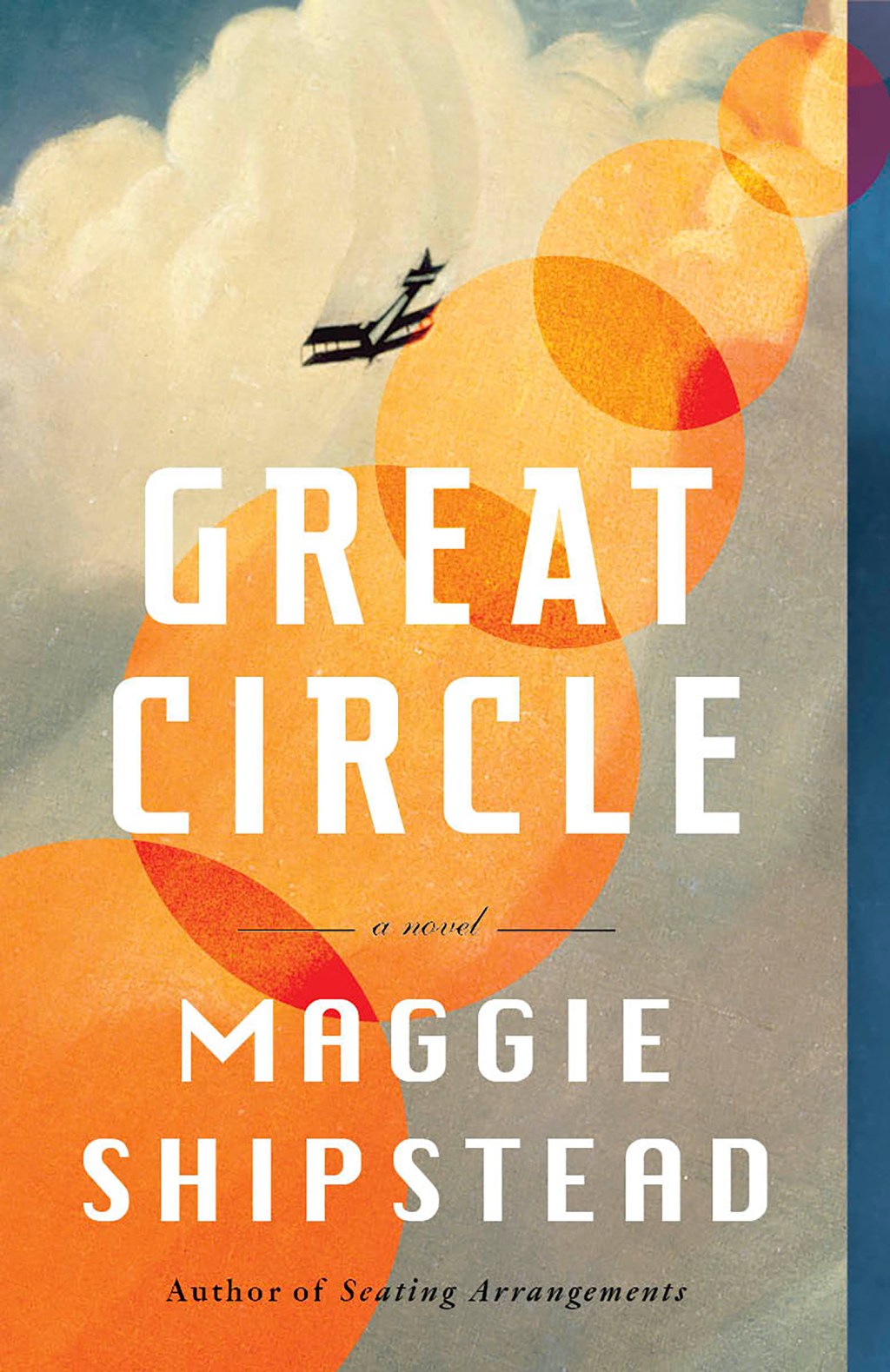
    The story of these two women takes us back and forth from past to present and around the globe in Maggie Shipstead’s “Great Circle” (Vintage Books 2021; $24).

    The disappearance of a woman aviator is familiar. After all, movies and articles are still being written about Amelia Earhart, whose plane vanished in the Pacific Ocean in 1937. But there are many other female pilots from the early and mid-1900s, though they’re exploits are mostly forgotten now. Writing “Great Circle” required Shipstead to research and travel to give the book its authenticity. She visited the Arctic five times and Antarctica twice.

    Why so many times, I asked Shipstead.

    “I’m drawn to those regions by some weird instinct,” she said. “I think a lot of people are. But I’ve also been lucky to keep getting opportunities to go. Polar travel has become a bit of my specialty, so I’ve been sent on assignment to Alaska, the New Zealand subantarctic, Antarctica, the Canadian high Arctic twice, Greenland twice. I did an artist residency on a ship in Svalbard. In a way, one thing kept leading to another, and I have no complaints.”

    The inspiration for “Great Circle” came to her in New Zealand. She was between books and a story line for her next novel that she had thought looked promising, wasn’t. In the airport, she saw the statue of early aviator Jean Batton, its base inscribed with her quote “I was destined to be a wanderer.”

    She knew she had her book.

    Given how much she has traveled, I wondered if Shipstead was destined to be a wanderer.

    “Destined is probably strong,” she said. “I’ve always been interested in travel, but my life could have taken lots of twists and turns that would have precluded traveling as much as I have. Really, this book turbocharged my traveling because, A, I was motivated to get to more and farther flung places in the name of research, and B, it took so long to write the book that I had the chance to start writing for travel magazines.”

    I next asked if she ever considered becoming a pilot given her interest in the subject.

    “Never,” was her response. “My brother used to fly C-130s in the Air Force and wanted to be a pilot from childhood, so that was always his territory.”

    This article originally appeared in the Northwest Indiana Times.

  • Corruptible: Who Gets Power and How It Changes Us

    Corruptible: Who Gets Power and How It Changes Us

                  Does the current state of the world seem overwhelming? Do our leaders often seem to be all about themselves and not about us? Is it easier to turn on a sitcom rerun than to sit through the news because we feel so helpless to change what’s going on?

                You’re not alone. Brian Klaas, a columnist for the Washington Post Assistant Professor of Global Politics at University College London, and author of the new book “Corruptible: Who Gets Power and How It Changes Us” (Scribner 2021; $28), has taken on the task of interviewing more than 500 world leaders from the best to the worst– to answer questions like the following. Does power corrupt or is it that corrupt people are drawn to power? What personality types are drawn to power? Why are so many dictators sociopaths and narcissists? And why do even good people, once in a position of power, become authoritarian?

                Here is a brutal fact that will make you reach for remote and flip to an episode of “Green Acres” where the biggest problem of the day is whether Arnold the Talking Pig can take that trip to Hawaii he won.

                Democracies are dying with more and more countries sliding towards authoritarian rule says Klaas who writes that there are no countervailing forces.

                Indeed, Klaas who created and hosts the award-winning Power Corrupts podcast, says “There’s nothing that rewards being a sober moderate who believes in democracy and tries to govern by consensus.”

                Describing democracy as being like a sandcastle, one that can be easily wiped out by a big wave or successive small hits, Klaas gives Turkey as an example.

                “Initial coverage of Erdogan’s 2002 election was positive, showing him to be someone was a populist who would shake things up, go up against the elite and status quo, and bring democracy to Turkey,” says Klaas who looked back through New York Times archives to highlight how that country has changed for the worse. “For 19 years now, he’s chipped away at democracy instead.”

                Though the book’s subject matter might seem dull, it’s not. Klaas is a strong writer with a sense of humor and he is very capable of delivering telling anecdotes that reflect the changes a democracy can encounter and how quickly that can happen in a compelling way.

                “If you lose the battle for democracy, you don’t get to battle for taxes, infrastructure, healthcare, or any of the policies that change lives,” says Klaas, who earned a MPhil in Politics from the University of Oxford (New College) and an MPhil in Comparative Government from the University of Oxford (St. Anthony’s). “In the places that I’ve studied where democracy has died, it’s still dead pretty much everywhere.”

                How to fix it?

                Klaas suggests becoming active. Call your congressperson or senator, run for local office, become politically active, and in general, participate in making changes to bring about change.

                “That’s the type of activity that ultimately can transform the political system at the national level,” he says.

                But there’s no time to delay.     

                “If we don’t fix it in the next two to four years,” he says, “it probably won’t get fixed.”

    Follow Brian Klaas’s podcast Power Corrupts.