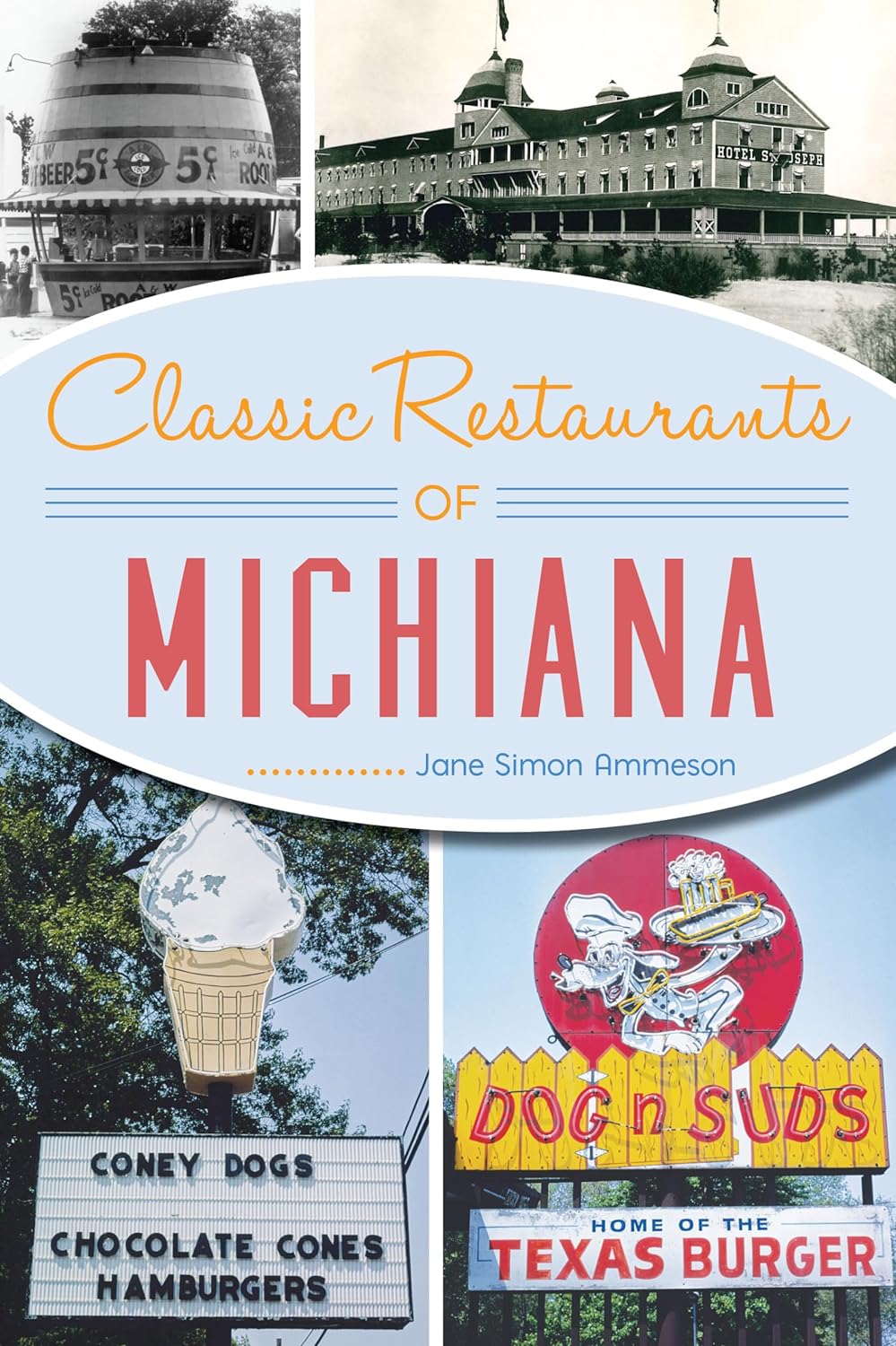
The members of the Sacred Heart of Mary Catholic ChurchBook/Movie Discussion Group have invited me to speak this Wednesday, June 11th at 6:30 p.m. If you have the time and are interested in the history of restaurants in Michiana, please come. The church is lovely, located in a beautiful country setting at 51841 Leach Rd, Dowagiac, Michigan. The event itself is next door in the Parish Hall.
Mary’s City of David Vegetarian Cafe in Benton Harbor, which opened in 1931 and closed in 1975, specialized in farm-to-table meals.
Here is the flyer that Terri Moore sent out:
Over the centuries, residents of Michiana have never wanted for superb dining choices. Award-winning author Jane Simon Ammeson will lead us on a culinary road trip through Northern Indiana and Southwestern Michigan.
A cigarette girl at the posh House of David motor lodge and restaurant/nightclub called the Vista Grande
Once a stagecoach stop, The Old Tavern Inn has been open since the time of President Andrew Jackson. Tosi’s is known for its gorgeous starlit garden and gastronomic traditions stretching back almost a century, and The Volcano was amongst the first pizzerias in the country.
One of the earliest hotels in St. Joseph, the Perkins house, built in 1840, stood on the corner of State and Ship Streets. Note the side entrance for the saloon which was, of course, given the times, for men only.
These restaurants and other classic eateries remain part of the thriving local food scene. But the doors of others have long been closed. Some like Mead’s Chicken Nook and Robertson’s Tea Room linger in memories while The Owl Saloon, O. A. Clark’s Lunch Rooms, and Lobster Lounge are long lost to time.
The restaurant is still open at the Barbee, it was a fav of Al Capone. However, when he arrived, all the other guests had to leave.
Jane Simon Ammeson is a food and travel columnist who has authored seventeen books, including Classic Restaurants of Northwest Indiana. Always willing to travel for food, she blogs about her experiences at janeammeson.com.
At one time, the lakeside towns of southwesterern Berrien County had a large Swedish population. The Swedish Coffee Pot was just one of several. Only the Swedish Bakery remains.
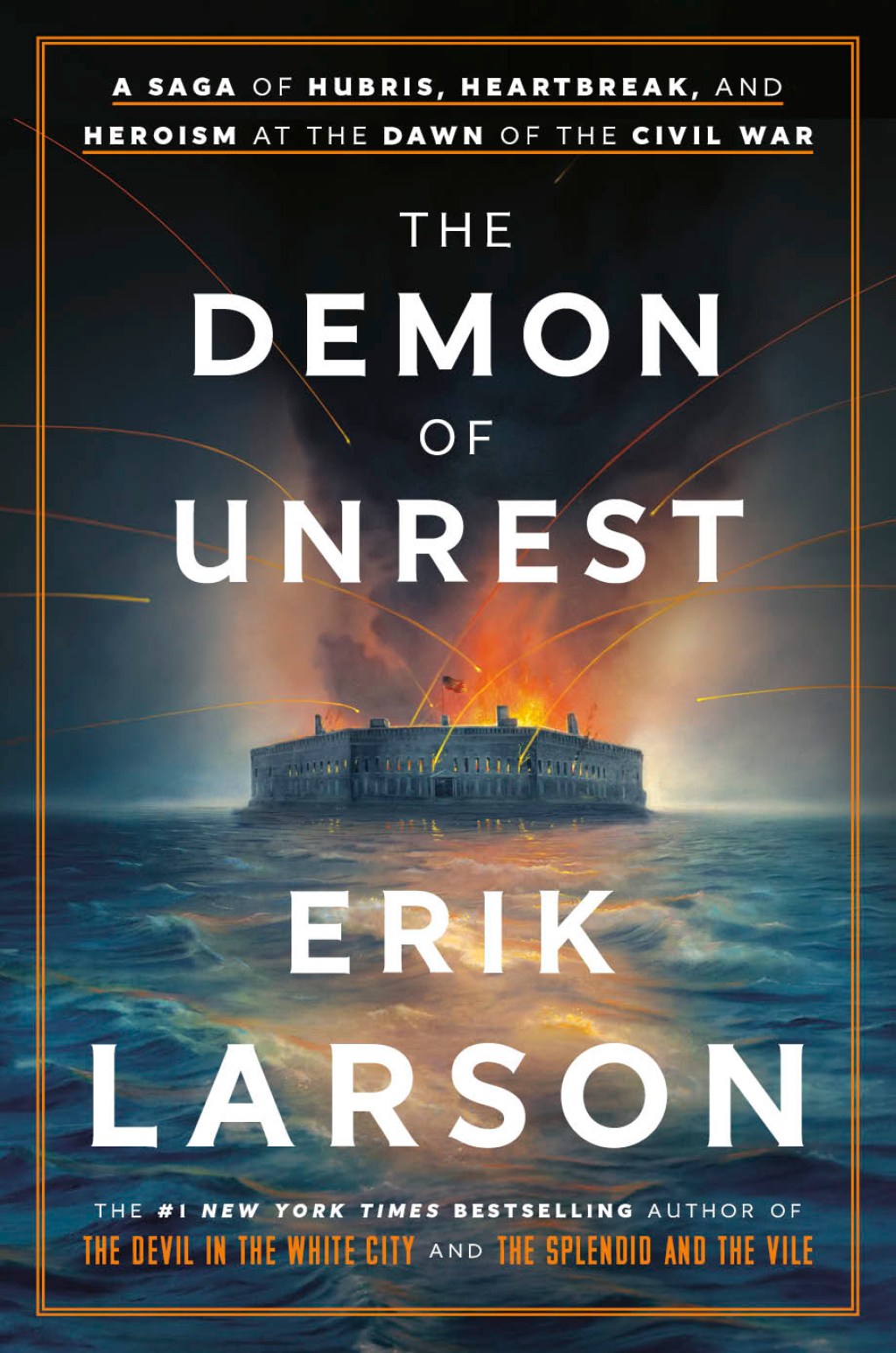
Only a master storyteller like Erik Larson could turn the five tumultuous months leading up to the Civil War into “The Demon of Unrest: A Saga of Hubris, Heartbreak, and Heroes at the Dawn of the Civil War” (Crown), a compelling, page-turning read, chock full of anecdotes, psychological profiles and obscure but compelling tidbits of history all set against a relentless march towards a conflict that would kill over 620,000 soldiers and devastate a nation.
Larson, the author of six New York Times bestsellers whose previous works include “The Devil in the White City: Murder, Magic, and Madness at the Fair That Changed America,” about a mass murderer and the 1893 Chicago’s World Fair, writes in a novelistic style that makes history come alive. He does so through his ability to weave together the familiar facts of history with information that can only be gleaned through relentless and extensive research.
Yes, most of us know that the Civil War began with the firing on Fort Sumter, which was located in Charleston Harbor and under the command of U.S. Army Major Robert Anderson. But did you know that Anderson had owned enslaved people and was a defender of slavery? That Lincoln often misspelled Sumter as Sumpter? Or, more importantly, South Carolina did not have to succeed because of Lincoln’s election, as he had no intention of outlawing slavery in the Southern states?
“When I started out doing this, one concern I had was that the Civil War has not exactly been underwritten,” Larson told me during a phone conversation earlier this week, noting that a quick Google indicated around 65,000. “I had vowed over the years never ever to write about the Civil War.”
That changed when, as he was looking for the topic of his next book and watching the events of the Jan. 6, 2021 assault on the U.S. Capitol, he began to consider the deep divide and unrest of our own times.
Faced with what he describes as an intimidating world of previous scholarship, Larson says “What I really wanted to do was to provide a rich sense, on an intimate level, of what the forces were and the motivations for the start of the Civil War.”
The magic of his writing is that he accomplishes this by immersing the reader in details, descriptions, and personalities mostly unknown to many of us, including “eight typical characters” such as Charleston society doyenne Mary Boykin Chestnut, who kept a detailed diary, and James Henry Hammond, a Charleston planter who was a leader of the secessionist movement and who later became a U.S. senator despite public knowledge of his sexual relationships with four nieces ages 13 to 19.
The Southern mindset among the owners of enslaved people of the time is best summed up in a letter written to President James Buchanan, president before Lincoln, by Arthur Peronneau Hayne, a U.S. senator from Charleston. In it, he writes that without slavery “our every comfort would be taken from us. Our wives, our children, made unhappy — education, the light of knowledge — all lost and our people ruined forever. “
“White southerners had persuaded themselves that slavery was a good thing for all concerned, especially for the enslaved blacks,” said Larson. He also notes that many of these same men were devoted readers of writers like Sir Walter Scott, author of “Ivanhoe,” and believed fervently in honor and the code of chivalry.
As outrageous and hypocritical as that seems today, Larson says when writing about a different era it’s important to consider the point of view of those times to accurately reflect how events unfolded.
“It gives a better sense of what the forces were that did lead to states like South Carolina succeeding from the Union and the Civil War,” he said, noting that understanding is not condoning, but historic context provides a lesson for the present and future as we struggle with political division today.
Award-winning author and journalist Joseph S. Pete will appear at a Northwest Indiana bookstore to sign copies of his new history book, “Lost East Chicago and Indiana Harbor.”
Pete, a Lisagor Award-winning reporter and columnist, will do a book signing from 11:30 a.m. to 3 p.m. Saturday, July 20 at Miles Books at 2819 Jewett Avenue in Highland.
He will sign copies of his latest history book about East Chicago and copies of his other books “Lost Hammond, Indiana,” “Secret Northwest Indiana” and “100 Things to Do in Gary and Northwest Indiana Before You Die.” Pete also will sign copies of University of Arizona Professor and East Chicago native Gloria McMillan’s “Children of Steel” anthology about life in steel mill towns, which he contributed a short story to.
“Lost East Chicago and Indiana Harbor” chronicles the Indiana steel town on the shore of Lake Michigan in north Lake County just outside of Chicago that was a melting pot, drawing immigrants from all over the world to work at its bustling steel mills. As the population boomed in the early 20th century, East Chicago was home to more than 100 nationalities who came for the opportunities in a highly industrialized city that earned nicknames like “The Workshop of America,” the “Arsenal of America” and the “Industrial Capital of the World” while forging the steel that built up 20th-century America.
Home to one of the most storied basketball rivalries in the state, East Chicago was also known as “The City of Champions” as it produced several high school football and basketball championship teams, including the only two back-to-back undefeated basketball teams in state history and the only two athletes to compete in both the Final Four and World Series. East Chicago gave the world many greats like the NBA’s all-time winningest coach Gregg Popovich, the Milwaukee Bucks star and later corporate magnate Junior Bridgeman, the baseball speedster Kenny Lofton, the actress Betsy Palmer, the boxing legend Angel “El Diablo” Manfredy and the Academy Award-winning screenwriter Steve Tesich, who penned the classic sports film “Breaking Away.”
Pete’s new book is based in large part on interviews, including with Bridgeman, the state champion who went on to lead the Louisville Cardinals to the Final Four, get his number retired by and Bucks, and build a business empire that made him one of the wealthiest former athletes of all time.
“Lost East Chicago and Indiana Harbor” takes a fond look back at bygone landmarks like Washington and Roosevelt High Schools, Inland Steel Christmas parties, the Washington Park Zoo, Taco Joe’s, the Mademoiselle Shoppe, movie palaces like the Voge and the gym where Michael Jordan played his first Bulls game. It recounts planned worker communities like Sunnyside and Marktown, the English village designed by noted architect Howard Van Doren Shaw where people park on the sidewalks and walk in the street and that’s featured in Ripley’s Believe It or Not and enshrined on the National Register of Historic Places.
Pete, who has covered East Chicago for a decade for The Times of Northwest Indiana, relates stories about the Katherine Home, St. Joseph’s Carmelite Home, Big House, bolita, the Wickey Mansion, the Tod Opera House, the Patrick machine and the Crazy Indiana Style Artists graffiti crew, which hung out with the acclaimed artist Keith Haring, appeared on network television, and went on to exhibit their artwork internationally. His book also explores industrial pollution, political corruption, and unsolved mysteries like the deaths of Jay Given and Henry Lopez and the disappearance of the soccer great William “Wee Willie” McLean.
“Lost East Chicago and Indiana Harbor” looks back at fondly remembered East Chicago intuitions like Albert’s, Dominic’s, Puntillo’s, Shrimp Harbor, Los Burritos, and El Patio Restaurant, as well as curiosities like the East Chicago Hermit and a mummy a local funeral home used to let kids see for a nickel. It also examines the city’s impact, such as producing Indiana’s first Latino elected official, the Hoosier State’s first and longest-running Mexican Independence parade, and the Midwest’s longest-running Mexican American–owned business, as well as the steel that helped shape America and countless other products.
Pete is an Indiana University graduate, a combat veteran and a board member of the Indiana Society of Professional Journalists and the Chicago Headline Club. He is a playwright and literary writer whose work has appeared in more than 100 literary journals, earning Pushcart Prize and Best of the Net nominations. He’s received many journalism awards, including from the Inland Press Association, the Hoosier State Press Association, the Chicago Journalists Association, Columbia University and the National Association of Real Estate Editors as well as local honors from the Indiana Small Business Development Center and the Duneland Chamber of Commerce.
For more information or an interview, contact Joseph S. Pete at 219.841.1030 or jpete@alumni.iu.edu.
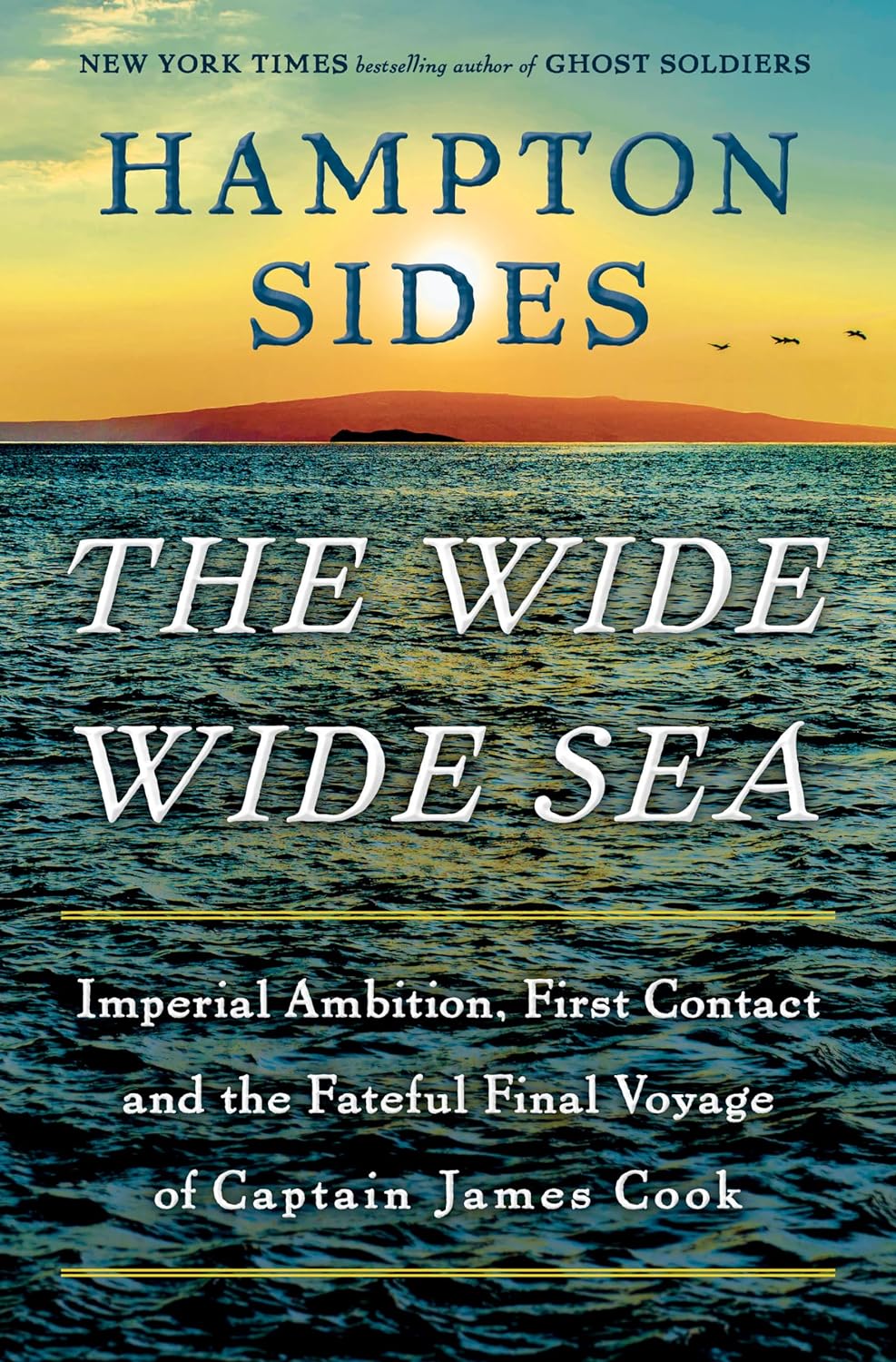
The Book Stall(811 Elm Street in Winnetka) is thrilled to host historian Hampton Sides on Monday, April 15 at 6:30 pm for a discussion featuring his new book, The Wide Wide Sea: Imperial Ambition, First Contact and the Fateful Final Voyage of Captain James Cook. (Doubleday). From the New York Times bestselling author, an epic account of the most momentous voyage of the Age of Exploration, which culminated in Captain James Cook’s death in Hawaii, and left a complex and controversial legacy still debated to this day.
At once a ferociously-paced story of adventure on the high seas and a searching examination of the complexities and consequences of the Age of Exploration, The Wide Wide Sea is a major work from one of our finest narrative nonfiction writers.
This event is free with registration. To register, please visit The Book Stall’s website or CLICK HERE.
More About the Book: Hampton Sides’ bravura account of Cook’s last journey wrestles with Cook’s legacy and provides a thrilling narrative of the titanic efforts and continual danger that characterized exploration in the 1700s. Cook was renowned for his peerless seamanship, his humane leadership, and his dedication to science. He was also deeply interested in the native people he encountered. On previous expeditions, Cook mapped huge swaths of the Pacific, including the east coast of Australia, and initiated first European contact with numerous peoples. He treated his crew well and endeavored to learn about the societies he encountered with curiosity and without judgment.
Yet something was different on this last voyage. Cook became mercurial, resorting to the lash to enforce discipline, and led his two vessels into danger time and again. Uncharacteristically, he ordered violent retaliation for perceived theft on the part of native peoples. This may have had something to do with his secret orders, which were to chart and claim lands before Britain’s imperial rivals could, and to discover the fabled Northwest Passage. Whatever Cook’s intentions, his scientific efforts were the sharp edge of the colonial sword, and the ultimate effects of first contact were catastrophic for Indigenous people around the world.
The tensions between Cook’s overt and covert missions came to a head on the shores of Hawaii. His first landing there was harmonious, but when Cook returned after mapping the coast of the Pacific Northwest and Alaska, his exploitative treatment of the Hawaiians led to the fatal encounter.
Kirkus Reviews,in a starred review, says,“An acclaimed historian takes to the sea in this rousing tale of exploration … Sides draws on numerous contemporaneous sources to create a fascinating, immersive adventure story featuring just the right amount of historical context … Lusciously detailed and insightful history, masterfully told.”
More About the Author: Hampton Sides is an award-winning editor of Outside and the author of the bestselling historiesHellhound on his Trial, Blood and Thunder,andGhost Soldiers. He lives in New Mexico with his wife, Anne, and their three sons.
“most importantly, Twitty reminds us that you don’t have to be Black or Jewish to love koshersoul.”
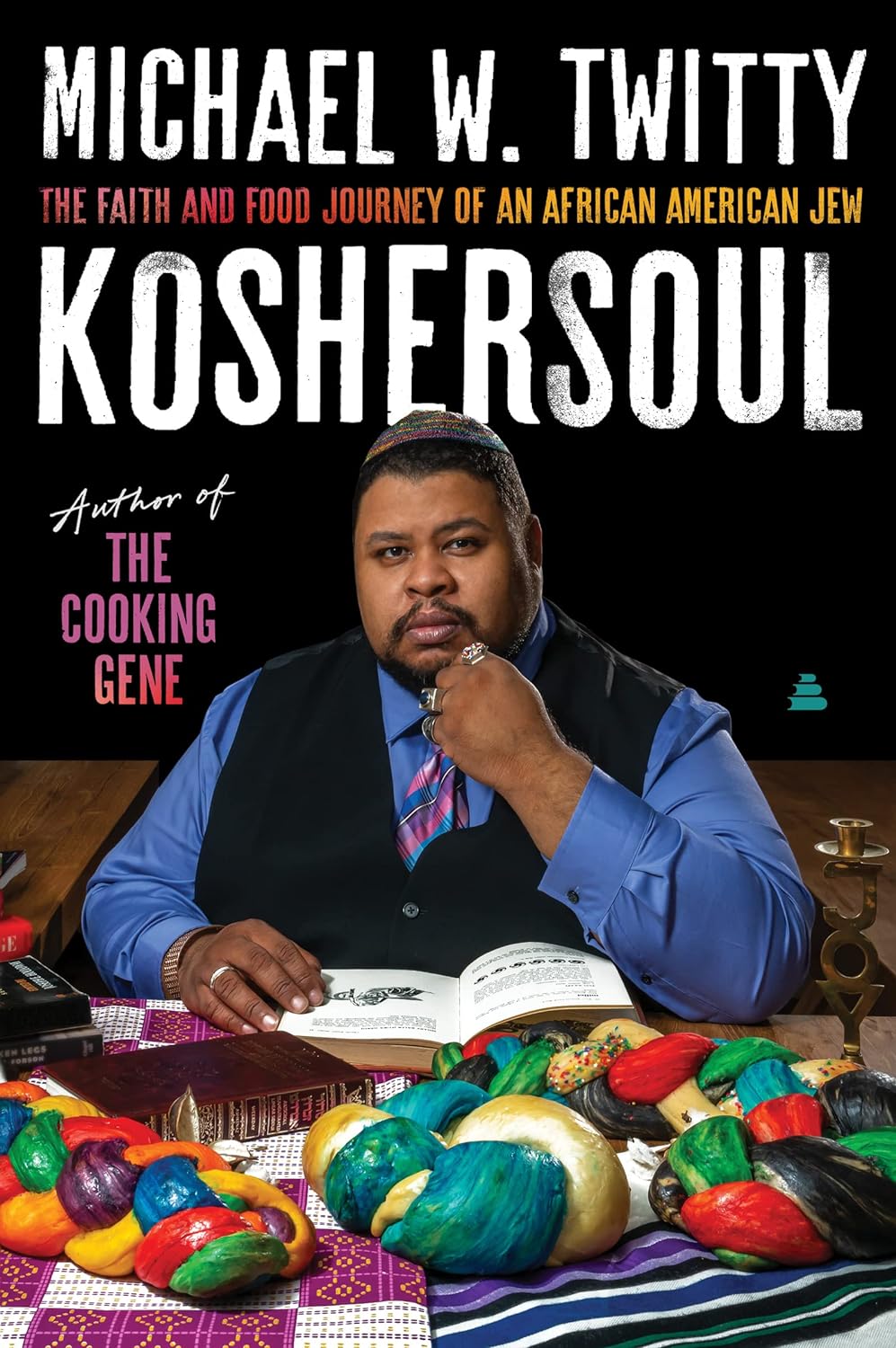
Both a cookbook and a memoir, Koshersoul(Amistad) explores the food traditions of both Black and Jewish cultures and how for Black Jewish people, the two combine, becoming a distinctive foodway of its own.
“When I first started talking about developing this book, a fellow African American food writer asked what it was about, saying ‘So you’re not writing about Black [food]; you’re writing about Jewish [food)],” writes Michael W. Twitty, a culinary historian, living history interpreter, and Judiacs teacher in the introduction to his book. “My response was reflective: no this is a book about a part of Black food that’s also Jewish food; This is a book about Jewish food that’s also Black food because it’s a book about Black people who are Jewish and Jewish people who are Black.”
Twitty, creator of Afroculinaria, the first blog devoted to African American history, foodways, and their legacy, won both the 2018 James Beard Foundation Book of the Year Award and Best Writing Award for The Cooking Gene. His writing is thoughtful, deep, and involved, taking a deep dive into his personal history and combining it with his conversations with other Black Jews. He seeks to put this in a historical and cultural perspective, showing us how food and identity converge.
“Black and Jews in their Venn diagram have seen considerable turmoil and pain,” he writes “and this too is a fundamental ingredient.”
But no matter what is going on in the world or what has happened in the past, we all have an urge and need to eat, writes Twitty, plus an enjoyment of what we consume. This is reflected not only in his writing but also in the recipes he shares at the back of the book.
Twitty describes this section as a koshersoul community cookbook of sorts. He encourages readers when in the kitchen to feel free to adapt them to meet their own dietary practices and preferences.
The recipes presented here are categorized under holidays and religious observations: Juneteenth, Pesach/Passover, Rosh Hashanah-Yom Kippur-Sukkot, and Shabbat, among others.
The names of some of the recipes represent the different lands and regions where people came from such as Ghanian Pepper Sauce, Senegalese-Inspired Chicken Soup, Jamaican Jerk Chicken Spaghetti, West Africa Wet Seasoning, and Gullah-Geechee-Inspired Stew.
Others like Yam Latkes, Kosher Spring Rolls, Collard Green Kreplach Filling, Black Eyed-Peas with Tomatoes, Sephardic Style, and Matzoh Meal Fried Chicken define the merging of two different cultures that meld into a distinct foodway.
But most importantly, Twitty reminds us that you don’t have to be Black or Jewish to love koshersoul.
Black-Eyed Pea Hummus
Serves 4 to 6
Black-eyed peas are a strong link between the two Diaspora cuisines, probably meeting in the Nile River Valley and the Fertile Crescent. Originally from ancient West Africa, black-eyed peas are a significant part of the cuisine of the Levant to this day, moving with African people throughout the region. Hummus, emblematic and beloved by many cultures in the Levant—is a dish that relies on the staple legume of the Arab farmer and ancient biblical standby, the chickpea. Here the black-eyed pea, loaded with mystical symbolism and its own honored place in West and Central Africa, replaces the chickpea. — Michael Twitty
1 15-ounce can black-eyed peas, rinsed and drained
1⁄4 cup extra virgin olive oil
1⁄3 cup tahini
1⁄2 cup fresh lemon juice
1 ½ teaspoons kosher salt
4 garlic cloves, chopped
1 teaspoon sweet or smoked paprika
1⁄2 teaspoon ground cumin
1⁄2 teaspoon ground coriander
1⁄2 teaspoon chili powder
1 teaspoon brown or turbinado sugar
1 teaspoon hot sauce
2 teaspoons minced parsley, for garnish
Throw everything but the parsley into a food processor and blend until smooth. Taste and add more spice, hot sauce, or whatever you think it needs. To serve, sprinkle parsley and drizzle olive oil on the top.
Oenophiles might be surprised to learn that the oldest winery anywhere in the Americas is Casa Madero, formally established as long ago as 1597, located in Parras de la Fuente, a small town in the northern state of Coahuila.
“In 1549 the Spanish priests and soldiers who explored this region discovered native vines growing wild in a valley and chose the spot to found the Mission of Santa María de Las Parras (“Holy Mary of the Vines”),”writes Tony Burton, the editor of MexConnect, Mexico’s top English-language online magazine, in his book Mexico Kaleidoscope: Myths, Mysteries and Mystique.“The early Mission of Santa María soon began to make wine from the local grapes, and a few years later the wines and brandies of the Valley of Parras were being shipped to the rest of the Americas.”
But Mexico’s sophisticated approach to agriculture goes even further back than that.
“The Mexica/Aztecs solved the dilemma of how to supply food to their island capital by developing a sophisticated wetland farming system involving raised beds, or chinampas, built in the lake,” writes Burton about when the city of Tenochtitlan was built, fortress-like, on an island. Though good for defense, it made providing a food source more difficult but there was a solution to that. “Originally these chinampas were free-floating, but over time they became rooted to the lake floor. The chinampas were separated by narrow canals, barely wide enough for small boats or canoes. From an ecological perspective, chinampas represented an extraordinary achievement: a food production system which proved to be one of the most environmentally sustainable and high-yielding farming systems anywhere on the planet! Constructing and maintaining chinampas required a significant input of labor, but the yields per unit area could be very high indeed, especially since up to four harvests a year were possible.”
Burton covers 10,000 years of Mexican culture and history. It’s a compilation of “Did You Know?” columns for MexConnect, which ranks in the top 3% of all Internet sites in the world, registering over half a million sessions a year.
It was his way of presenting and preserving relatively little-known but fascinating information about Mexico to a large number of readers.
“One of my main motivations was that—to the best of my knowledge—no similar book for the general reader had been published in the past forty years,” says Burton. “An incredible amount of interesting academic research had been done on Mexico over that time, leading to reevaluations and reinterpretations of many former ideas and beliefs. I wanted to make readers aware of some of these extraordinary developments, which continually refuel my passionate interest in Mexico.”
This very readable and fascinating book can be read cover to cover, says Burton, noting that it is also designed to allow readers to ‘dip into’ and read in whatever order appeals to them.
“When writing the book, I was trying to engage readers by expanding on, or challenging, some commonly held or overly simplistic ideas, in the hope of offering some ‘food for thought’ about many things Mexican,” he says.“Each chapter has a list of sources and suggestions for those readers who want to explore more.”
The title Mexican Kaleidoscope is a nod to Norman Pelham Wright, a British writer whose own collection of essays, with the same title, was published in 1948.
“That book was an eye-opener for me when I first began to get intimately acquainted with Mexico more than forty years ago,” says Burton. “The subtitle Myths, Mysteries and Mystique came from a suggestion by one of my regular golfing partners—who had read an early draft of the book—as we played the 11th hole at Cottonwood Golf Course on Vancouver Island.”
The book is illustrated by Mexican artist Enrique Velázquez, a long-time friend of Burton’s.
“Enrique has a keen interest in the subject matter and an uncanny ability to portray ideas in just a few lines,” says Burton. “I originally envisioned using small, inline drawings to break up the text, much in the manner of old-time illustrators, but his final drawings were far too good for that, so we changed track and gave them the prominence and space they merit.”
“Every chapter has come to mean far more to me than is expressed by mere words on a page,” says Burton about the 30 chapters. “I really hope some of my enthusiasm comes through to readers. At the very least I’d like the book to cause readers to stop and think, to be occasionally surprised, and perhaps question things that they may have previously thought or heard about Mexico. As I’ve written elsewhere, Mexico is not always an easy country to understand but any effort to do so always seems to bring rich reward!”
About the Author
Burton, a Fellow of the Royal Geographical Society who was born and educated in the United Kingdom, first visited Mexico in 1977. Returning, he lived for almost two decades in the country where he worked as a writer, educator, and ecotourism specialist. An award-winning author, his other books include If Walls Could Talk:Chapala’s Historic Buildings and Their Former Occupants; Foreign Footprints in Ajijic: Decades of Change in a Mexican Village; Western Mexico: A Traveler’s Treasury; and Lake Chapala Through The Ages: An Anthology of Travelers’ Tales.
Mexico Kaleidoscope can be found in print and on Kindle through Amazon.
Born in the United Kingdom, Tony Burton, a Cambridge University-educated geographer with a teaching certificate from University of London, first traveled to Mexico after spending three years as a VSO [Voluntary Service Overseas] volunteer teaching geography, and writing a local geography text, on the Caribbean island of St. Kitts. From there his travels took him to Mérida in summer 1977, where he spent several weeks backpacking around southern and central Mexico, returning two years later to teach at Greengates School in Mexico City.
Over the next seven years, Tony traveled extensively throughout Mexico, visiting every state at least once, and organizing numerous four-day earth science fieldwork courses for his students. He co-led the school’s extensive aid efforts following the massive 1985 earthquake.
From Mexico City, he moved to Guadalajara, where he continued to organize short, residential fieldwork courses for a number of different schools and colleges and began organizing and leading specialist eco-tours for adult groups to destinations such as Paricutín Volcano, the monarch butterfly sanctuaries, and Copper Canyon.
An award winning author, he’s written numerous books about Mexico including his latest Lake Chapala: A Postcard History(Sombrero Publishing). It’s part of a series he’s written on this region which is located about an hour south of Guadalajara. The 417-square-mile lake, Mexico’s largest, located in the states of Jalisco and Michoacán is situated at an elevation of 5,000ft in the middle of the Volcanic Axis of Mexico and is known for its wonderful climate, laid-back ambience, and is a popular destination for both travelers and ex-pats looking for a charming, low-key place to relocate. The three main towns along the lake are Chapala,Ajijic and Jocotepec. In an intriguing aside, Tony met his wife Gwen Chan Burton when she was working as at the director of the pioneering Lakeside School for the Deaf in Jocotepec. Gwen writes about the school and all that it has accomplished in her book, New Worlds for the Deaf, also published by Sombrero Books.
Because I’m always interested in foodways, Tony was kind enough to share a copy of an undated Spanish language project put together by students from the Instituto Politécnico Nacional School of Tourism titled “Gastronomy of Jalisco.” It includes numerous recipes from the region including one for the famous Caldo Michi of Chapala (the recipe is below).
I had the chance to ask Tony, who currently is the editor of MexConnect, Mexico’s leading independent on-line magazine, aboutLake Chapala: A Postcard History as well as the time he spent in this beautiful region of Mexico.
How did you first become familiar with Lake Chapala?
I first visited Lake Chapala in early 1980, on my way back to Mexico City from the Copper Canyon and Baja California Sur. Little did I imagine then that it would be where I would later fall in love, get married, and have two children!
What inspired you to write Lake Chapala: A Postcard History?
There is no single overwhelming inspiration. I realized, while living at Lake Chapala and writing my first books about Mexico, that a lot of what had been previously written was superficial and left many unanswered questions. In the hopes of finding answers, I decided to trawl through all the published works (any language) I could find, which resulted in Lake Chapala Through the Ages (2008), my attempt to document and provide context to the accounts of the area written between 1530 and 1910.
My next two books about Lake Chapala—If Walls Could Talk: Chapala’s Historic Buildings and Their Former Occupants, and Foreign Footprints in Ajijic: Decades of a Change in a Mexican Village—focused on the twentieth century history of the two main centers for the very numerous foreign community now living on ‘Lakeside.’ Part of my motivation was to dispel some of the myths that endlessly recirculate about the local history, as well as to bring back to life some of the many extraordinary pioneering individuals indirectly responsible for the area becoming such an important destination for visitors.
Lake Chapala: APostcard History is my attempt to widen the discussion and summarize the twentieth century history of the entire lake area. Its reliance on vintage postcards makes this a very visual story, one which I hope will appeal to a wide readership, including armchair travelers.
What were some of the challenges you encountered in writing this book? Was it difficulty finding the numerous postcards you included? And doing the extensive research that went into the book? Are there any intriguing stories about hunting down certain postcards and any “aha” moments of discovery when writing your book?
The main challenge was in deciding how best to structure the material. Because of the originality of what I’m doing, it is impractical to follow the advice that writers should start with a detailed plan and then write to that plan! In my case, after collecting the information and ideas that exist, the challenge is to select what can be teased and massaged into a coherent and interesting narrative.
Because the postcard book is the product of decades of research, I had ample time to build my personal collection of vintage postcards, through gifts, auctions and online purchases.
There were many significant “aha” moments in the process: some concerned the photographers and publishers responsible for the postcards and some the precise buildings or events depicted. While I’m saving some of these “aha” moments–because they are central to a future book–one was when it suddenly dawned on me that wealthy businessman Dwight Furness was the photographer of an entire series of cards (Figs 6.3, 6.4, 6.5, etc.) that relate to my next response.
If you could go back in time to visit one of the resorts that is no longer there that you featured in your book, is there one that stands out and why is that?
Ooohhh; I’d love to go back to about 1908 and stay at the Ribera Castellanos resort (Chapter 6) during its heyday. While staying there, perhaps I could interview owner Dwight Furness, his wife and a few guests? Apart from a few ruined walls, Furness’ postcards of the resort are pretty much the only remaining evidence of the hotel. And perhaps one night I could invite local resident and prolific professional photographer Winfield Scott and his wife to dinner to hear their stories?
How long did it take to write Lake Chapala?
The writing took less than a year; but only because of the many prior years of research.
Since I often talk about food and travel, are there any culinary specialties in the Lake Chapala region?
Long standing culinary specialties of the area include (a) Lake Chapala whitefish (b) charales (c) caldo michi. And, when it comes to drinks, there is a very specific link to postcards. The wife of photographer José Edmundo Sánchez, who sold postcards ( Figs 7.5, 7.6 and 7.7) in the 1920s from his lakefront bar in Chapala, is credited with inventing sangrita, still marketed today as a very popular chaser or co-sip for tequila. (Chapter 7, page 74).
Is there anything else you’d like readers to know about your book?
I hope readers find the book as fun and interesting to read as it was to write!
MICHI BROTH
Ingredients:
2 tablespoons corn oil
¾ kg of tomato seeded and in pieces
¼ onion in pieces
½ kg carrot, peeled and cut into diagonal slices
½ kg of sliced zucchini
4 or 6 chiles güeros
100 gr. chopped coriander
2 sprigs of fresh oregano
Salt to taste
2 ½ liters of water
1kg well washed catfish, yellow carp or red snapper
PREPARATION: Heat the oil and stew the vegetables in it, add water and salt to taste, let it simmer over low heat until the vegetables are well cooked, then add the fish and leave it for a few minutes more until it is soft.
Sangrita
I had the opportunity to stay at Tres Rios Nature Park, a 326-acre eco-resort north of Playa del Carmen and was first introduced to sangrita during my stay. I took several cooking lessons and learned to make a dish with crickets, but that is a different story. Chef Oscar also talked to us about the history of sangrita. The Spanish name is the less-than-appetizing “little blood” but hey, when you’re learning to grill crickets, you can deal with a name like that. The drink, as Tony writes in his postcards book, originated in Chapala in the 1920s.
Here is the excerpt:
”In the same year the Railroad Station opened, Guillermo de Alba had become a partner in Pavilion Monterrey, a lakefront bar in a prime location, only meters from the beach, between the Hotel Arzapalo and Casa Braniff,” he writes. “The co-owner of the bar was José Edmundo Sánchez. Regulars at the bar included American poet Witter Bynner, who first visited Chapala in 1923 in the company of D H Lawrence and his wife, Frieda. Bynner subsequently bought a house near the church. When de Alba left Chapala for Mexico City in 1926, Sánchez and his wife—María Guadalupe Nuño, credited with inventing sangrita as a chaser for tequila—ran the bar on their own. After her husband died in 1933, María continued to manage the bar, which then became known as the Cantina de la Viuda Sánchez (Widow Sánchez’s bar).”
Sangrita is typically used as accompaniment to tequila, highlighting its crisp acidity and helping to cleanse the palate between each peppery sip. According to Chef Oscar, the red-colored drink serves to compliment the flavor of 100% agave tequila. The two drinks, each poured into separate shot glasses, are alternately sipped, never chased and never mixed together.
Here is Chef Oscar’s recipe and below is one from Cholula hot sauce which originated in Chapala. Tony has a great story about that as well. More in my next post on his books.
For one liter of Sangrita:
400 ml. orange juice
400 ml. tomato juice
50 ml. lemon juice
30 ml. Grenadine syrup
20 ml. Worcestershire sauce
Maggi and Tabasco hot sauce (mixed up) to taste
Salt and pepper to taste
Mix together all the ingredients and serve cold. Suggested duration of chilling : 3 to 4 days.
Cholula’s Sangrita
1/4 cup (2 ounces) fresh orange juice
1/4 cup (2 ounces) fresh grapefruit juice
2 tablespoons fresh lime juice
20 pomegranate seeds
3 fresh sprigs of cilantro or to taste
1/2 stalk celery
3 teaspoons smoked coarse sea salt or sal de gusano, divided
1 tablespoon Cholula® Original Hot Sauce
Place all ingredients except salt in blender container, with about 1 cup ice cubes. Puree until smooth.Strain twice though a fine mesh sieve, discarding any solids.
Rim shot glasses with sea salt. Serve sangrita cold in rimmed shot glasses alongside your favorite tequila.
• live coverage of author interviews and panel discussions. • lengthy live call-in interviews with nonfiction authors on location from the grand lobby. • 20,000 totes promoting both the Library of Congress and C-SPAN’s Book TV available to Festivalgoers. • public access to its video coverage via C-SPAN’s online archives at C-SPAN.org.
C-SPAN’s Book TV has been providing live, in-depth, uninterrupted coverage of the National Book Festival – and partnering with the Library of Coverage on promotion – since the event began on September 8, 2001.
Book TV’s LIVE coverage has taken C-SPAN’s audience to the Festival’s various venues – U.S. Capitol grounds (2001), a vast tent city on the National Mall (2002-2013), an expo-style event in the Washington Convention Center (2014-2019), a virtual event during the pandemic (2020-2021), and back to the Walter E. Washington Convention Center (2022).
Book TV’s extensive coverage of nonfiction authors appearing at the National Book Festival kicks off the network’s coverage of book fairs held throughout the country in the fall. And the celebration of C-SPAN’s 25 years of Book TV will launch from this year’s festival.
About Book TV: Book TV – Sundays on C-SPAN2 – is the only television service dedicated to nonfiction books. Book TV features programming on a rich variety of topics, such as history, biography, politics, current events, the media and more. Watch author interviews, book readings and coverage of the nation’s largest book fairs. Every Sunday on C-SPAN2 starting 8 am ET or online anytime at booktv.org. Use that website as well to connect with Book TV via social media and the email newsletter.
About C-SPAN: C-SPAN, the public affairs network providing Americans with unfiltered access to congressional proceedings, was created in 1979 as a public service by the cable television industry and is now funded through fees paid by cable and satellite companies that provide C-SPAN programming. C-SPAN connects with millions of Americans through its three commercial-free TV networks, C-SPAN Radio, C-SPAN Podcasts, the C-SPAN Now app, C-SPAN.org and various social media platforms.
The network’s video-rich website contains over 270,000 hours of searchable and shareable content. Engage with C-SPAN on Twitter, Facebook, Instagram and YouTube, and stay connected through weekly and daily newsletters.
Full 2023 National Book Festival Book TV Coverage Schedule, Saturday Aug. 12
9amET Interview Librarian of Congress Carla Hayden
9:30am Authors Panel: Accidental Spies Authors: John Lisle “The Dirty Tricks Department”; Janet Wallach “Flirting with Danger” Moderator: CBS’s Jeff Pegues
10:30am Interview Author R.K. Russell, “The Yards Between Us”
10:45am Authors Panel: Environmental Awakening vs. Climate Change Authors: Douglas Brinkley “Silent Spring Revolution”; David Lipsky “The Parrot and the Igloo” Moderator: Jenn White of NPR
11:45 Interview: Charles “Cully” Stimson, senior legal fellow at The Heritage Foundation “Rogue Prosecutors: How Radical Soros Lawyers Are Destroying America’s Communities.”
12pm Author Talk: Sports and Culture Author: R.K. Russell, “Yards Between Us” Moderator: LZ Granderson of the LA Times
12:45pm Interview, David Rubenstein
1pm Author Panel: Escaping Genocide and Human Trafficking Authors: Tahir Hamut Izgil, “Waiting to Be Arrested at Night”; Saket Soni, “The Great Escape” Moderator: Washington Post’s Jason Rezaian
2:20pm Interview Librarian of Congress Carla Hayden
3:15pm Interview with Chasten Buttigieg, “I Have Something to Tell You”
3:30pm Author Panel – Behind the Scenes with Black Writers Authors Camille Dungy and Tiphanie Yanique Moderator: Author Jericho Brown
4:30pm Joan Biskupic, “Nine Black Robes”
4:45pm Author Panel – Dig In: What Food Says About Us Authors Cheuk Kwan and Anya von Bremzen Moderator: Wash. Post Food Writer Daniela Galarza