Category: Historic Architecture

  • “Central Indiana Interurban” chronicles the state’s electric trains

    There was a time when electric railroads, called interurbans, crisscrossed the state, connecting the small villages and large cities of Indiana.

    “I was about 10 when my mother first started letting me take the interurban on my own,” recalls Lorraine Simon, who was born in East Chicago in 1911. “My mother would put me on the train and I’d go to Chicago and get off and walk to where my grandmother worked sewing linings into hats for a millinery company.”
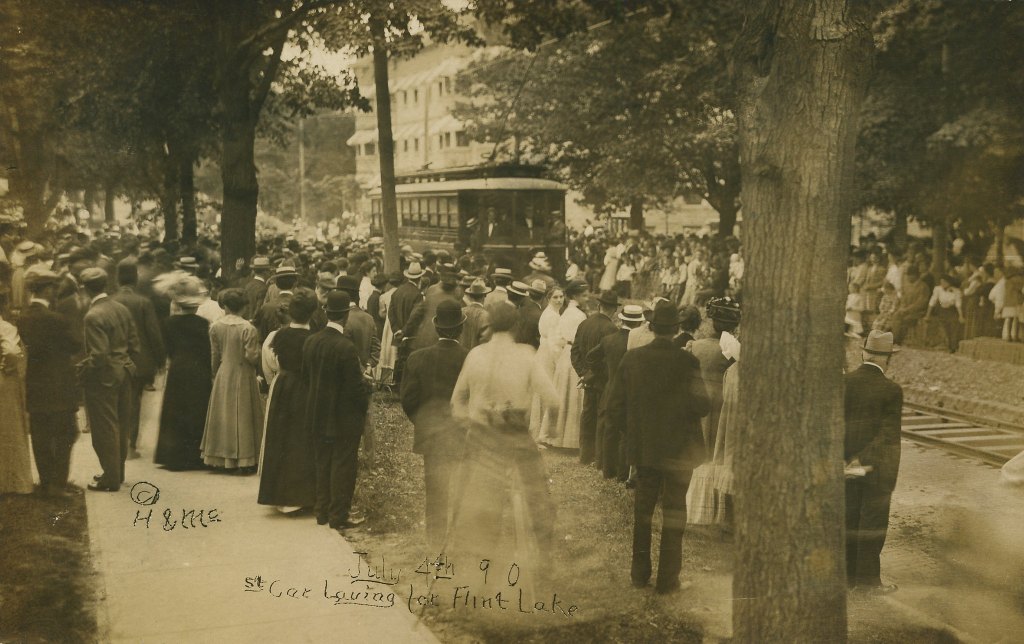
    Interurban in Valparaiso. Photo from the Steve Shook Collection

    Also, according to Simon, the interurban she rode, known as the South Shore, also served food — for awhile. “But that didn’t last long,” she says.
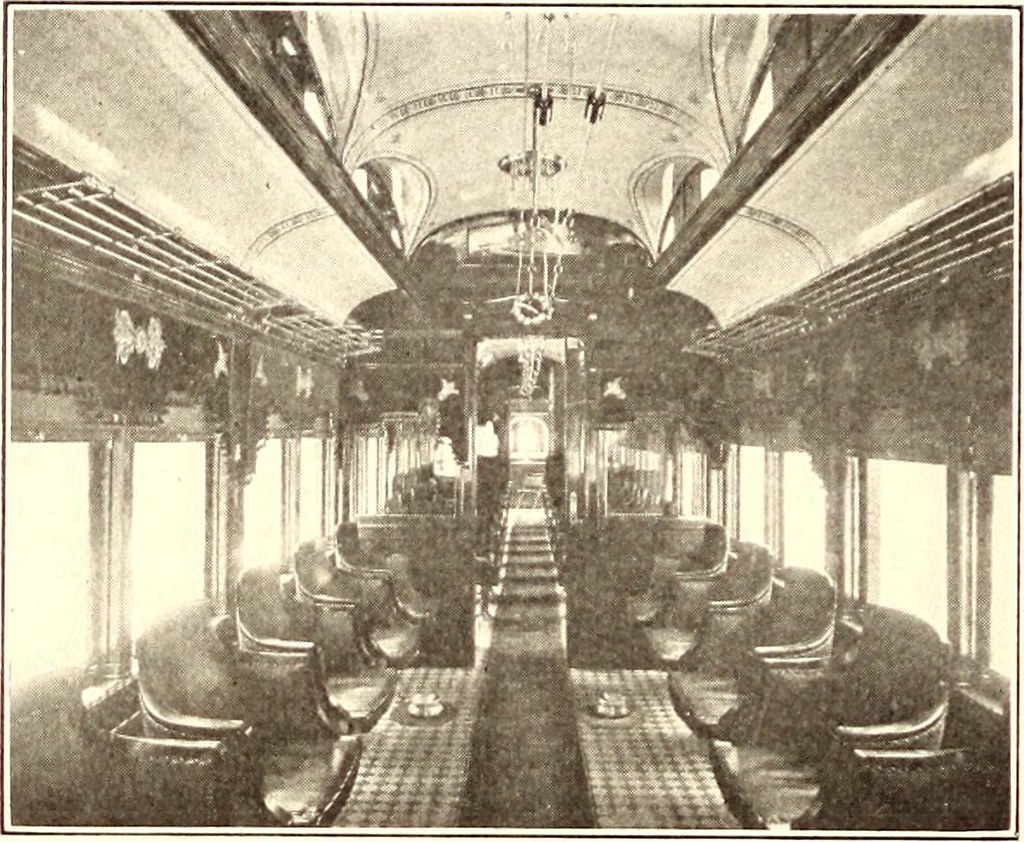
    Interior of the Muncie Meteor, Courtesy of Internet Archive Book Images.

    With names like the Marion Flyer and the Muncie Meteor, the electric-powered interurban railway was the first true mass transit in Indiana in the 20th century. Coined interurban by Anderson, Ind., businessman and politician Charles Henry in the early 1900s, the name meant between towns or urban areas.

    Photo courtesy of the Shore Line Interurban Historical Society.

    “Before the interurban, public transportation in central Indiana relied upon mules or horses to pull crudely fashioned passenger wagons,” says Robert Reed, author of “Central Indiana Interurban” (Arcadia, 2004, $19.95). The interiors of these passenger wagons were piled high with straw for warmth in the winter and candles were used after sunset to light the interior. It was, as can be imagined, less than an optimal way to travel.

    “The genius at work was the idea of using electrical power, on the pavement beneath the tracks or on overhead lines, to power existing traction cars,” writes Reed in his book.

    Muncie Meteor. Courtesy of the Internet Archive Book Images.

    Though the book’s title would seem to indicate a focus on the interurbans in Central Indiana, Reed points out that it encompasses many of the interurban lines that ran through Northwest Indiana.

    “Indianapolis may have had the busiest interurban terminal in the world early in the 20th century but Chicago laid claim to the busiest corner in the world at State and Madison streets,” he writes. “Clearly interurban and cars were jammed in with all other traffic. The Chicago and Indiana Air Line Railway was established in 1901 at a cost of $250,000. Through reorganizations and acquisitions it grew from just over three miles of coverage in the beginning to nearly 70 miles of routes as the Chicago, Lake Shore and South Bend Railway, a decade and a half later. Eventually, encircled by its transportation lines were East Chicago, Indiana Harbor, Gary, Michigan City and Hammond.”

    Photo courtesy of the Steve Shook Collection.

    The Gary and Interurban Railroad provided 50-minute service between Gary and Hammond, according to Reed, and 60-minute service between Gary and Indiana Harbor. “In the years before the 1920s,” writes Reed, “one of their major routes began at Hammond and continued on to Indiana Harbor, Gary, East Gary, Garyton, Woodville Junction, Chesterton, Sheridan Beach, Valparaiso, Westville and LaPorte. Variations of the Gary and Interurban Railroad routes commenced at Valparaiso, Chesterton and LaPorte. Typically more than 20 different interurban cars from that line arrived and departed from Gary each day.”
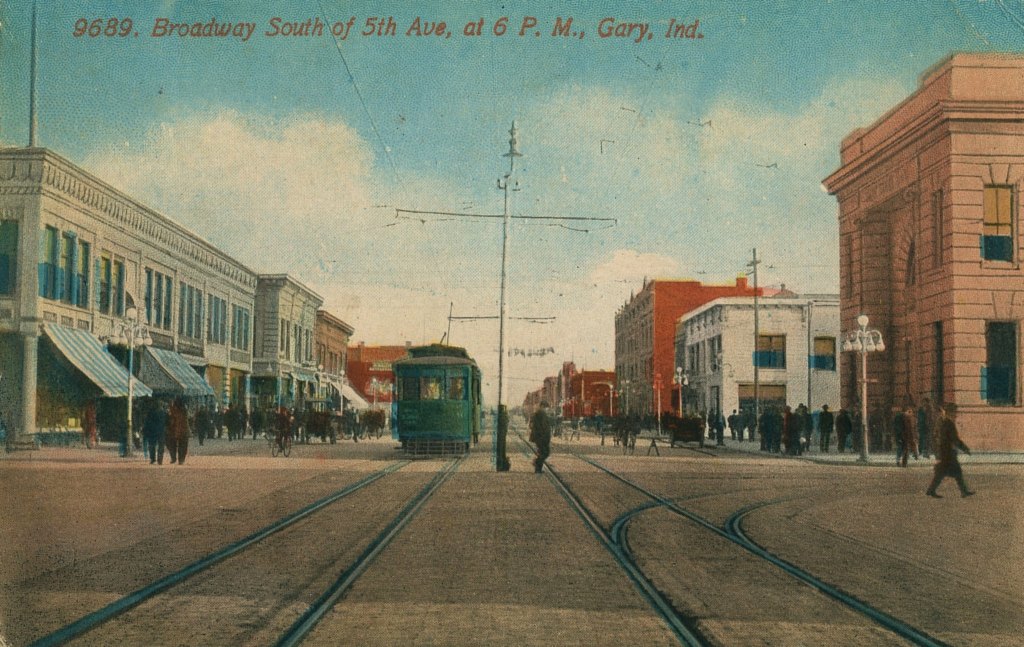
    From the Steve Shook Collection.

    To highlight the popularity of the interurban throughout the state, Reed mentions how in 1908 the French Lick and West Baden Railroad Company connecting the West Baden Springs Hotel and the French Lick Resort & Springs, about a one mile route, carried 260,000 passengers.

    From the Steve Shook Collection.

    The book, filled with black-and-white photos from the interurban era as well as timetables and postcards from the routes, came about after Reed, a former magazine editor, wrote a book called “Greetings from Indiana” which showed the state’s history through early postcards. As Reed collected the postcards, he noticed that many were of the towns on the interurban route. “
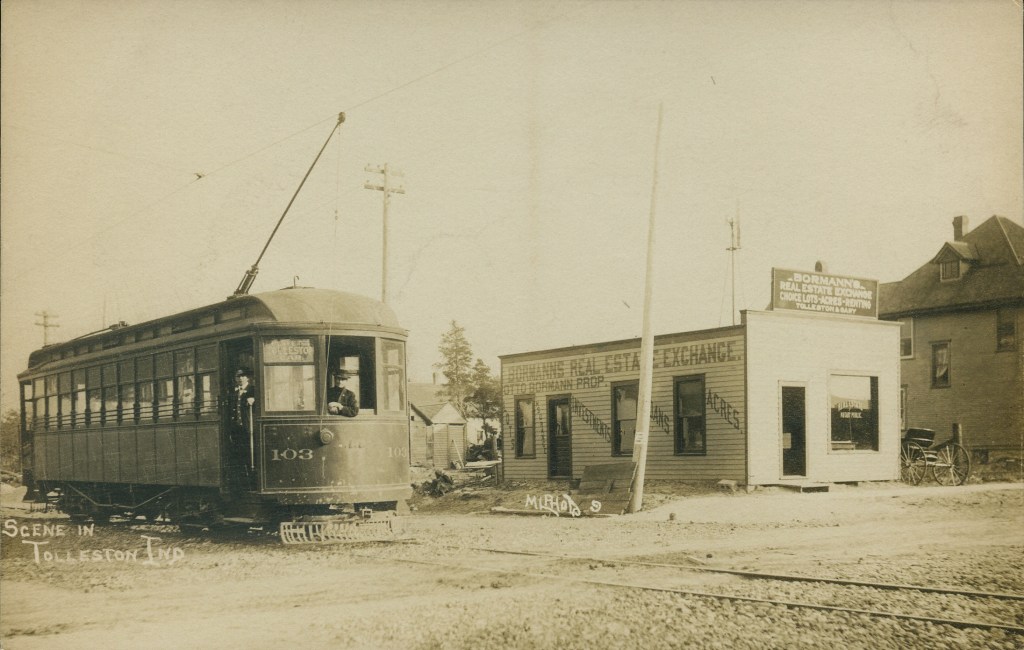
    From the Steve Shook Collection.

    It made sense that people riding the interurban would send postcards of their stops and that these postcards were often of the interurban terminals,” says Reed who specializes in writing about antiques and collectibles. “I really became fascinated with interurbans because they were so much a part of Indiana.”

    Laying tracks for the interurban was an expensive proposition. “It eventually got to where it was about $144,000 a mile,” Reed says. “And they reached a point where it was too expensive to expand.” Besides, by then Henry Ford had introduced his Model T and people were starting to drive more and more. “A lot of old timers say that if the interurban had survived until after World War II, they would be popular today,” Reed says. The one interurban to survive, the South Shore Railroad, did so because Samuel Insull, the utility magnate whose holdings included Commonwealth Edison and the Northern Indiana Public Service Company, also owned the South Shore.

    Tracks in downtown Gary, Indiana. Photo courtesy of the Steve Shook Collection.

    In other words, he helped usher the South Shore into the era of public subsidies for passenger transport. That is considered to be the reason why the electric train, which still travels from Chicago to South Bend and back on a regular schedule, is the only interurban that successfully made the transition to a commuter railroad.
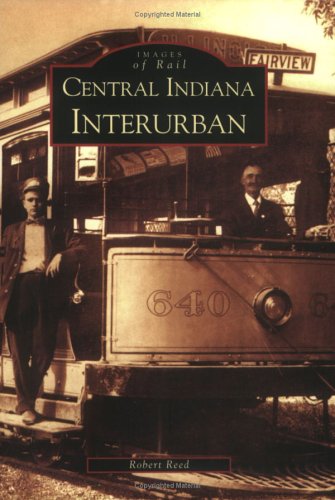
    Central Indiana Interurbans by Robert Reed.

    All the others are now just vestiges of history — abandoned track lines here and there, faded black-and-white or sepia-colored postcards, a few timetables and even fewer fragile memories.

    Beverly Shores Depot. Courtesy of Steve Shook Collection.
    Beverly Shores, Indiana today. Jane Simon Ammeson.
  • New mystery explores New York in the 1910s and 1990s

    New mystery explores New York in the 1910s and 1990s

    Deborah Feingold Photography

    Patience and Fortitude, the marble lions gallantly standing at the steps of the New York Public Library on Fifth Avenue and 42nd Street in Manhattan, were only 2 years old when Jack Lyons, along with his wife and two children, moves into a large apartment hidden away on the library’s mezzanine floor. It’s all part of Jack’s job as superintendent, an intriguing fact that Fiona Davis uses in her latest historical mystery, “The Lions of Fifth Avenue,” which was selected as “Good Morning America’s” August Book Pick.

    “While researching, I discovered that when the library was built, the architects included a seven-room apartment deep inside, where the superintendent and his family lived for 30 years. I thought it would be the perfect setting for my book and I invented a fictional family — the Lyons — and decided to tell the story from the wife’s point of view in 1913, as well as from her granddaughter’s in 1993,” said Davis, who chose 1913 because that decade was when women made great strides, socially and economically. “What surprised me about the 1910s was just how actively women were involved in feminist causes, including the right to vote, the right to birth control, and the right to exert agency over their own lives. There was a huge movement forward in terms of the ‘New Woman,’ one who considered herself equal to men.”

    Living in the library creates an opportunity for Jack’s wife Laura, who yearns to be more than a housewife, and is mentored by Jack’s boss, who encourages her to find her own writing voice and helps her win entry to the Columbia School of Journalism. But Laura soon learns that she doesn’t want to be relegated to writing housewife-like features for the women’s section as expected, and instead becomes a noted essayist and crusader for women’s rights.

    “It was wonderful to step back in time and imagine what it all was like then,” said Davis, noting that both she and Laura attended Columbia. “I earned my master’s degree there, so it was fun to draw on that experience.”

    Fast forward 80 years in time to when Laura’s granddaughter, Sadie Donovan, a curator at the New York Public Library, is chosen to step in at the last moment to curate the Berg Collection of rare books. Among the rare papers are those of Laura Lyons, who had been forgotten over time, but whose writings are now being celebrated again.

    At first proud of her connection to her grandmother and excited that Laura once lived at the library where she now works, Sadie hides their connection after discovering her grandmother and grandfather were caught up in a scandal about a rare book of Edgar Allan Poe’s poetry, typically stored under lock and key, that’s gone missing.

    Before long, history is repeating itself when Sadie finds that vital materials about her grandmother are also missing, and only a few people had the opportunity to take them, including Sadie herself. Soon Sadie, already shattered by her husband’s infidelity and the couple’s ultimate divorce, is the prime suspect of the theft. Her reputation is on the line as is her grandmother’s and solving the mystery is the only way to redeem them.

  • Indiana Landmarks Rescued and Restored

    Indiana Landmarks Rescued and Restored

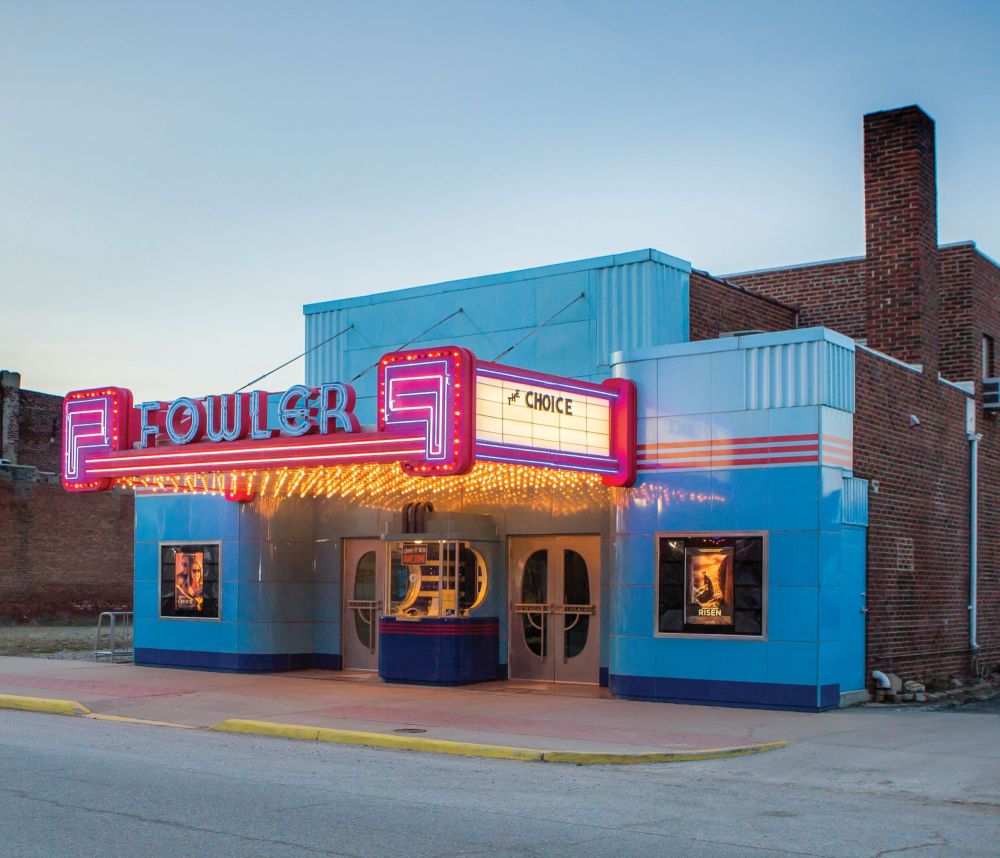
    The Restored Fowler Theatre


    Once a glorious example of Streamline-Moderne architecture and one of only five theaters in the U.S. to premiere “Gone with the Wind,” in 2001 the future of the 81-year-old Fowler Theatre was bleak. No longer open, its owner planned to sell anything architecturally significant including the original marquee.  To prevent this, the non-profit Preservation Guild was formed to save the theater, purchasing the theater for $30,000 and obtained a $2000 grant and a $60,000 line of credit from Indiana Historic Landmarks Foundation.

    The Fowler Theatre before restoration.

    Today, the Fowler Theatre is a marvel, one of many buildings throughout the state that dedicated citizens and the Foundation have worked together in order to preserve Indiana’s heritage and also benefit communities. In the case of the Fowler Theatre, it was a way to keep low cost entertainment available and to help revitalize the downtown.

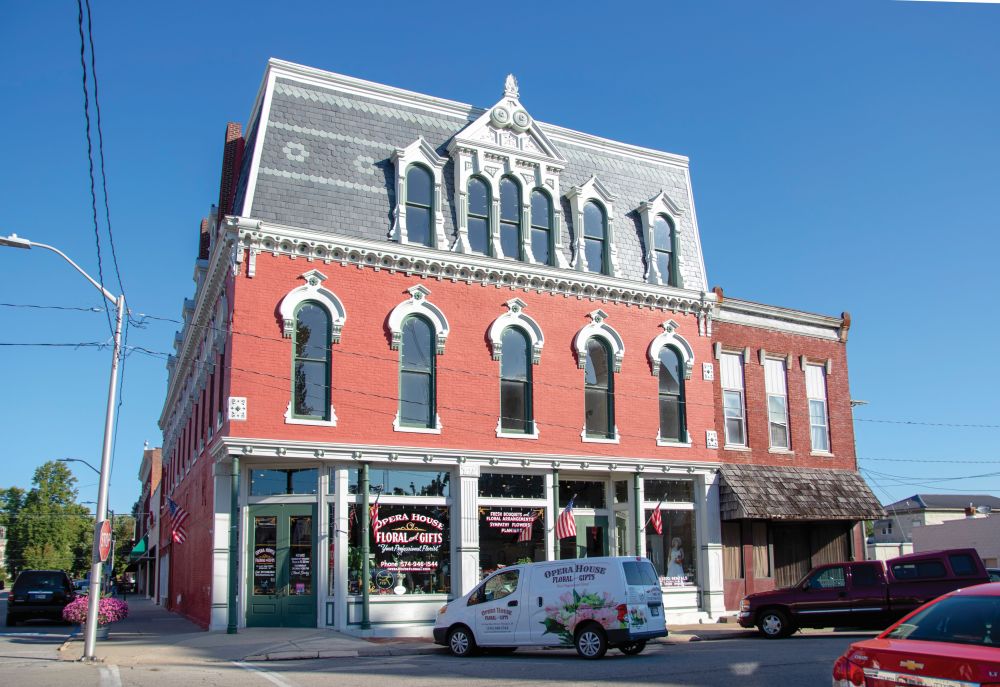
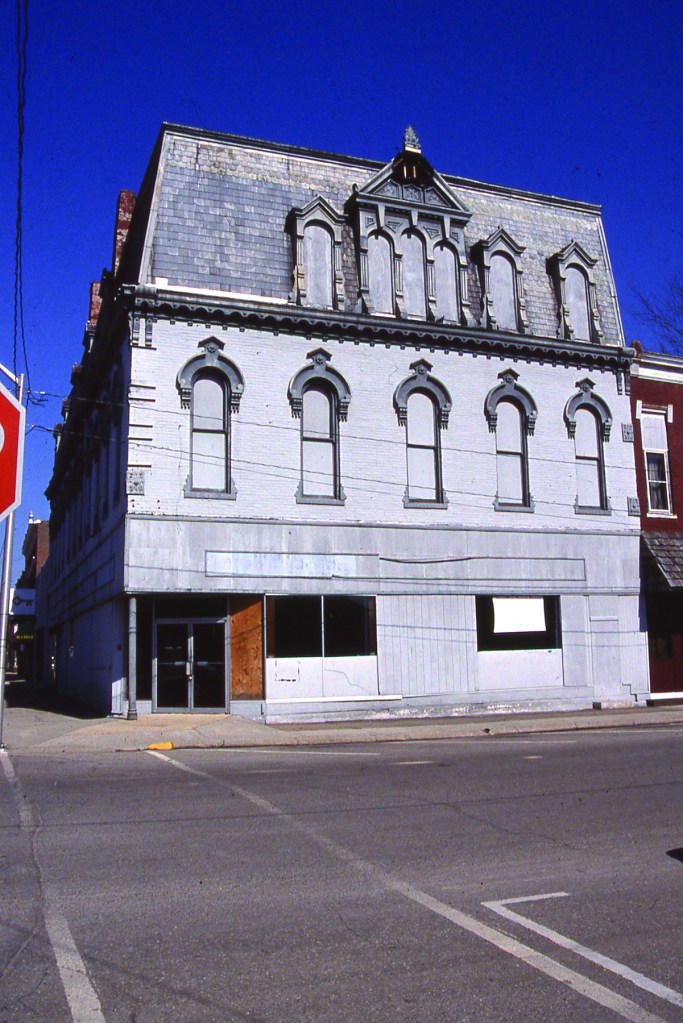
    Vurpillatt’s Opera House in Winamac Restored

    The theatre is one of 50 success stories highlighted in the recently released Indiana “Landmarks Rescued & Restored,” a lovely coffee table book with before and after photos showcasing what historic preservation can accomplish.

    Vurpillatt’s Opera House in Winamac

    “I want the book to be an acknowledgement of the wonderful people and partnerships that have made Landmarks as effective as it is,” says Indiana Landmarks’ President, Marsh Davis who wrote the forward to the book. “When we take the approach of working together, then we become part of the solution.”

    DeRhodes House West Washington Historic District South Bend Restored

    One of Landmarks most well-known projects was the restoration of two grand early 20th century resorts, French Lick Springs and West Baden Springs in Orange County. Returning them to their glory has made the entire area boom economically by bringing in an influx of tourism, creating local jobs and improving property values and instilling a sense of pride and vitality.

    DeRhodes House West Washington Historic District South Bend

    Landmarks, largest statewide preservation group in the country, saves, restores, and protects places of architectural and historical significance, including barns, historic neighborhoods such as Lockerbie Square in Indianapolis, churches and other sacred places, schools, bridges and even the Michigan City Lighthouse Catwalk.

    Old Republic in New Carlisle Restored

    Rescued and Restored also highlights other successes in Northern Indiana including partnership with the National Trust for Historic Preservation and the National Park Service in the restoration of the House of Tomorrow in the Indiana Dunes National Park, considered one of the most innovative and influential houses in modern architectural design.

    Old Republic Before Restoration

    The book, edited by Tina Connor, who worked at Landmarks for 42 years, retiring from her position as the non-profit’s executive vice president in 2018, 144 pages with more than 200 color photos. Hon. Randall T. Shepard, honorary chairman and long-time director of Indiana Landmarks, wrote the book’s foreward.

    Statewide, Marsh says that he feels privileged knowing that Landmarks worked with the Lyles Station Historic Preservation Corporation to save Lyles Station Community School. Now a museum and the last surviving building of what was a successful African-American farming community founded by former slaves in 1849.

    “These places are all about the people who made them,” says Davis, “and the people who worked at saving them.”

    For more information, visit indianalandmarks.org

    As published in The Times of Northwest Indiana

  • Ten Restaurants That Changed America: Howard Johnson’s A Roadside Gem

    Ten Restaurants That Changed America: Howard Johnson’s A Roadside Gem

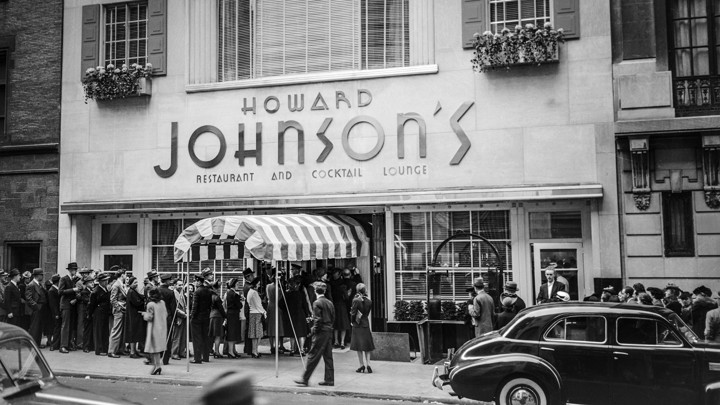
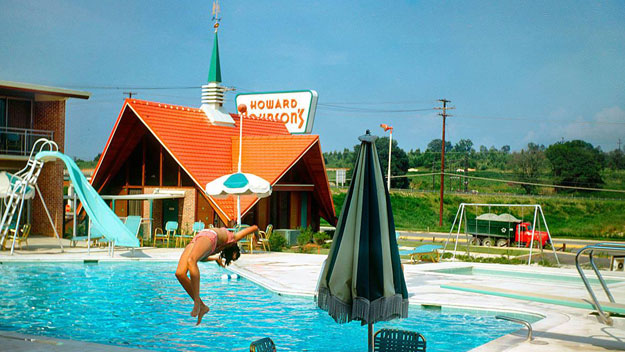
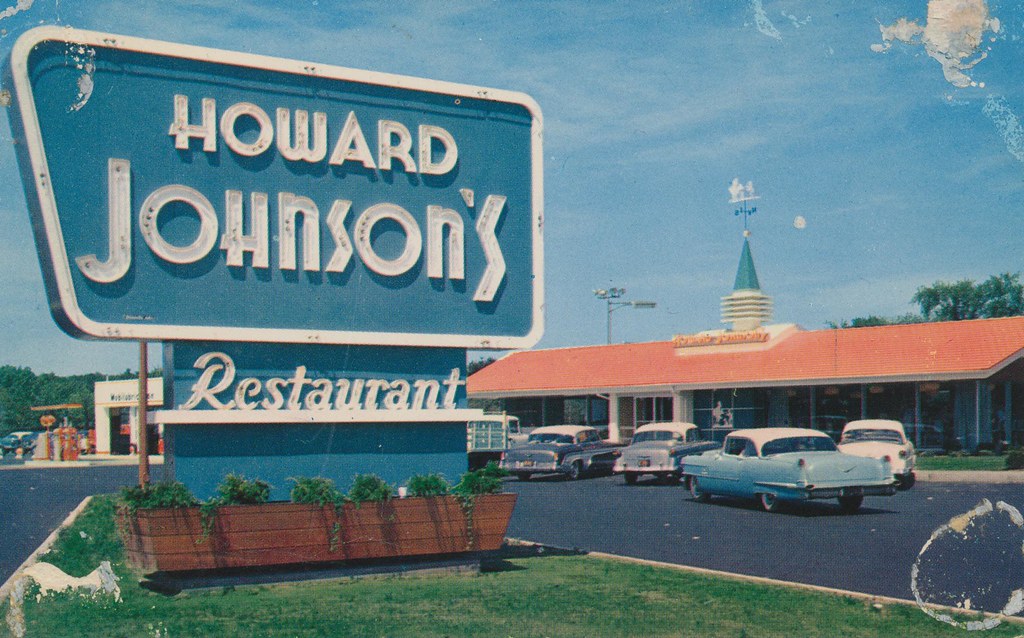
                I was going to write a column about New Year’s Eve celebration foods but got distracted by Ten Restaurants That Changed America by Paul Freedman (Liveright 2018; $23.95), a look at how food evolved in this country. I’m going to be interviewing the author after I finish the book but instead of reading it from front to cover as soon as I read the introduction I turned to the chapter on Howard Johnson’s because those orange roofed restaurants and lodges are part of my youth. I worked at HoJo’s when I was a teen and as a young girl, when we traveled to New York, Connecticut and along the eastern seaboard, we typically stayed at their lodges.

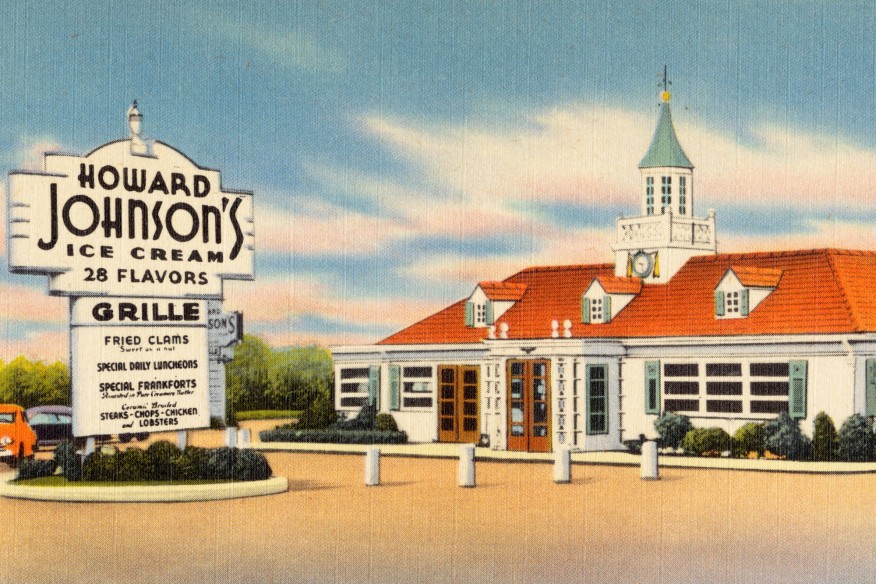
    I remember the sparkling pool, so inviting after a long day in the car, trying to read a book or do crossword puzzles while whizzing along—we only had an AM radio in the car and my mother didn’t like the noise of it when she was driving.  Dinner was typically fried clams, hamburgers or clam chowder and always one of their many flavors of ice cream. Probably most famous for their clam dishes, the chapter about Ho Jo’s in Freedman’s book is titled Howard Johnson’s: As American As Fried Clams. If you’re wondering about all the clam dishes, Johnson was from Massachusetts and the chain started off in New England. And maybe people ate more clams back then.

                At one time, according to the book, during the 1970s, Howard Johnson had 929 restaurants and 526 motor lodges stretching across the U.S. In the 1960s, the restaurants served more meals outside the home than any company or organization except for the U.S. Army. There actually was a Howard Johnson (his middle name was Deering) and he was born in 1897 and though he liked to present himself, even at the height of his company’s success, as a simple man, he married four times, owned a yacht, three houses and a substantial art collection. Oh, and he didn’t really eat at Howard Johnson’s much. Instead he liked high-end French dining like Le Pavillon and the Stork Club, both fancy and ultra-expensive New York restaurants.

                I’m not quite sure if there are any HoJo’s left. There were a handful less than a decade ago including on in Times Square and another in Bangor, Maine but those are gone. A Google search indicates that the last one, in Lake George, New York, was, as of earlier this year, was up for sale as a possible site for redevelopment. It had just re-opened the year before after being closed for four years. Unfortunately the person who had re-opened it had some legal issues. For more information, check out hojoland.com, a Website for all things Howard Johnson’s.

              Occasionally I see a building that looks like it was once a HoJo but has been converted to another use and the orange roof has usually been replaced. Because there are websites for almost anything, there are a few identifying converted HoJo’s as well.

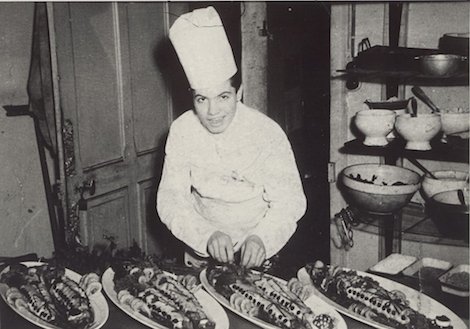
              Though the restaurants are gone, many of the recipes remain and I looked up a few that I remember enjoying way back when and was fascinated to find out that the legendary French chef Jacque Pepin once worked at HoJo’s, a time he talks about in his memoir, The Apprentice: My Life in the Kitchen. Pepin, who would make their clam chowder in 3,000-gallon amounts, recreated the recipe for home cooks, saying he makes it  “when a bit of Howard Johnson’s nostalgia creeps in.” His contains pancetta which I’m guessing is a substitute for the bacon in the original recipe and he also uses Yukon Gold potatoes and I don’t think that variety was common back in 1929 when Johnson opened his first restaurant.

    Jacques Pepin Howard Johnson’s Clam Chowder

    5 quahog clams or 10 to 12 large cherrystone clams

    4 cups water

    4 ounces pancetta or lean, cured pork, cut into 1-inch pieces (about ¾ cup)

    1 tablespoon good olive oil

    1 large onion (about 8 ounces), peeled and cut into 1-inch pieces (1-1/2 cups)

     2 teaspoons chopped garlic

    1 tablespoon all-purpose flour

    2 sprigs fresh thyme

    1 pound Yukon Gold potatoes, peeled and cut into ½-inch dice (2-1/4 cups)

    1 cup light cream

    1 cup milk

    ¼ teaspoon freshly ground black pepper

    Wash the clams well under cold water, and put them in a saucepan with 2 cups of the water. Bring to a boil (this will take about 5 minutes), and boil gently for 10 minutes. Drain off and reserve the cooking liquid, remove the clams from their shells, and cut the clams into 1/2 –inch pieces (1-1/2 cups). Put the clam pieces in a bowl, then carefully pour the cooking liquid into another bowl, leaving behind any sediment or dirt. (You should have about 2-1/2 cups of stock.) Set aside the stock and the clams.

    Put the pancetta or pork pieces in a large saucepan, and cover with the remaining 2 cups water. Bring to a boil, and boil for 30 seconds. Drain the pancetta, and wash it in a sieve under cold water. Rinse the saucepan, and return the pancetta to the pan with the oil. Place over medium heat, and cook gently, stirring occasionally, for 7 to 8 minutes. Add the onion and garlic, and continue cooking, stirring, for 1 minute.  Add the flour, mix it in well, and cook for 10 seconds. Add the reserved stock and the thyme, and bring to a boil. Then add the potatoes and clams, bring to a boil, cover, reduce the heat to very low, and cook gently for 2 hours.

    At serving time, add the cream, milk, and pepper, bring to a boil, and serve. (Note: No salt should be needed because of the clam juice and pancetta, but taste and season to your liking.)

    Howard Johnson’s Fried Clams

    1 cup evaporated milk

    1 cup milk

    1 egg

    1/4 teaspoon vanilla

    Dash salt and pepper

    4 dozen freshly shucked clams

    1 cup cake flour

    1 cup yellow cornmeal

    Oil for frying

    Combine evaporated milk and whole milk, egg, vanilla, salt, and pepper. Soak clams in liquid and then dredge in combination of cake flour and cornmeal, fluffing them in the flour mixture for light but thorough coverage. Shake off excess flour and fry in oil. Serve with French-fried potatoes, tartar sauce, homemade rolls, and butter.

    Howard Johnson’s Chicken Croquettes

    6 tablespoons chicken fat (can use butter instead)

    1 ¼ cups flour

    2 1/4 quarts chicken stock. hot

    6 tablespoons chopped onions

    2 tablespoons chopped parsley

    3 cups bread crumbs

    3 eggs

    1 tablespoon salt

    1 teaspoon black pepper

    2 pounds boneless chicken, finely minced

    Sauté onions in chicken fat but do not brown.

    Make a roux (recipe below). Add hot chicken stock, and add seasonings. Stir constantly until mixture thickens and is well blended.

    Add minced chicken and chopped parsley. Cook 5 minutes more, then remove from fire and chill. Scoop and shape into croquettes. Dip in flour, egg wash and bread crumbs and fry in deep fat until lightly browned on all sides.

    These were served a cream sauce (see recipe below).

    Roux

    1/4 pound butter

    1 stalk celery, minced

    1 cup all-purpose flour

    Cream Sauce

    2 tablespoons butter

    3 tablespoons flour

    1/4 teaspoon salt

    Dash of cayenne pepper

    1 cup chicken broth

    1/2 cup milk

    Melt butter in pan; stir in flour and seasonings. Cook on low until smooth; stirring constantly, add broth and milk slowly; to maintain thickness, stir on medium heat until all milk and broth is added and sauce is thick.

    In a heavy pot, melt butter and then add the minced celery. Stir in the flour and cook for 3 minutes., stirring constantly. Fold in the chicken meat and allow to cool.

    Howard Johnson’s Boston Brown Bread

    1 cup unsifted whole wheat flour

    1 cup unsifted rye flour

    1 cup yellow corn meal

    11/2 teaspoon baking soda

    11/2 teaspoon salt

    3/4 cup molasses

    2 cups buttermilk

    Grease and flour a 2 quart mold. Combine flours, corn meal, soda ,salt. Stir in molasses, buttermilk.

    Turn into mold, cover tightly. Place on trivet in deep kettle. Add enough boiling water to kettle

    to come half way up sides of mold; cover. Steam 3 1/2 hr., or until done. Remove from mold to cake

    rack. Serve hot with baked beans.

    Makes 1 loaf

  • 1000 Places to See Before You Die: The World As You’ve Never Seen It Before

    1000 Places to See Before You Die: The World As You’ve Never Seen It Before

    Patricia Schultz and I had only been on the phone together for five minutes before we decided to make the trip to New Zealand—neither of us had been and both of us wanted to go. And no, I haven’t bought my ticket yet but that’s how mesmerizing Schultz, who introduced the concept of bucket list travel when she wrote the first edition of her New York Times bestseller 1000 Places to See Before You Die in 2003. It was so popular that over the years more than 3.5 million copies have been sold.

    Now Schultz has updated her book with a new twist, her words accompanied by mesmerizing and amazing handpicked photos of some of the most beautiful places in world.  The book itself, weighing six pounds with 544 pages, is oversized eye candy—compelling us to pack our bags and head out to explore.

    1,000 Places to See Before You Die (Deluxe Edition): The World as You’ve Never Seen It Before was years in the making—after all Schultz had to travel to all those places.

    Calling her new book, a veritable scrapbook of her life, she says she became teary eyed when choosing the photos. In its pages she takes us to destinations so exotic many might have remained unknown to most of us if not for her writing. One such is Masai Mara, the world’s greatest animal migration that takes place each May when hundreds of thousands of wildebeests travel north from the Serengeti in Tanzania to the grasslands of Kenya’s Masai Mara. It’s a two to three month journey and the wildebeests are joining by other migrating herds including antelope, zebras and gazelles swelling the animal population to a million or so. There’s also ballooning over Cappadocia, a Byzantine wonderland encompassing a natural and seemingly endless landscape of caves and peaks of shaped by eons of weather with wonderfully colored striations of stone. Even better, Schultz points out, you can take a side trip to Kaymakli, an ancient underground city just 12 miles away.

    For those less inclined for such travels or whose pocketbooks don’t open that large, Schultz features closer to home destinations that are still special such as Mackinac Island where cars were banned in the mid-1890s, New York City (where Schultz resides when not on the road) and one of my favorites, Stowe, Vermont. And, of course, the majestic Grand Canyon.

    While Schultz’s parents weren’t world travelers, they encouraged her to find her way to what she loved. But for her, it’s not just the road, it’s the people she meets as well. When the first editor of her book proved so successful, she treated herself to a trip to Machu Picchu in the Urubamba Valley of the Cuzco Region of Peru often known as the Lost City of the Incas. Located 7800-feet above sea level, it’s isolated at the top of a mountain surrounded by jungles and other peaks. There she met a 90-year-old woman who had been inspired by her book to travel there.

    “She asked me if I had heard of the book,” says Schultz. “Peru was the first stamp in her first passport.”

    This venturesome woman who had traveled outside the U.S. for the first time in her ninth decade, offered the seasoned travel writer a pearl of wisdom that has remained with her for the last16 years.

     “She told me to make sure to see the difficult places first,” recalls Schultz. “You can see the easy ones when you’re not as active or energetic.”

              Is Schultz burned out by travel? Has she reached the point of been-there-done-that?

              Schultz answers with an emphatic no.

    “There are still so many places I want to visit,” she says, noting that her list remains long. “I doubt if I’ll get to do them all, but I will try to do as many as I can.”

    Ifyougo:

    What: Authors Group Presents Patricia Schultz, 1000 Places to See Before You Die; Luncheon

    When: Tue, Oct 29, 2019 from 11:30 a.m.-1:30 p.m.

    Where: Union League Club of Chicago, 65 W. Jackson Blvd., Chicago, IL

    Cost: $35 per ticket

    FYI: 312-427-7800; ulcc.org

    What: Cocktails with Patricia Schultz & Lake Forest Bookstore

    When:  Tue., Oct. 29. 6 p.m.

    Where: North Shore Distillery, 13990 Rockland Rd, Libertyville, IL

    Cost: $65 for individual or $75 per couple (includes 1 book, 1 drink and appetizers)

    FYI: RSVP required. Call 847-234-4420; lakeforestbookstore.com

    What:

    When’ Wed. Oct 30 at 7 p.m.

    Where: Anderson’s Bookshop La Grange, 26 S La Grange Rd, La Grange, IL

    Cost: This event is free and open to the public. To join the signing line, please purchase the author’s latest book, 1,000 Places to See Before You Die Deluxe Edition, from Anderson’s Bookshop. To purchase please stop into or call Anderson’s Bookshop La Grange (708) 582-6353 or order online andersonsbookshop.com

    FYI: 708-582-6353

  • Fading Ads of Chicago

    Fading Ads of Chicago

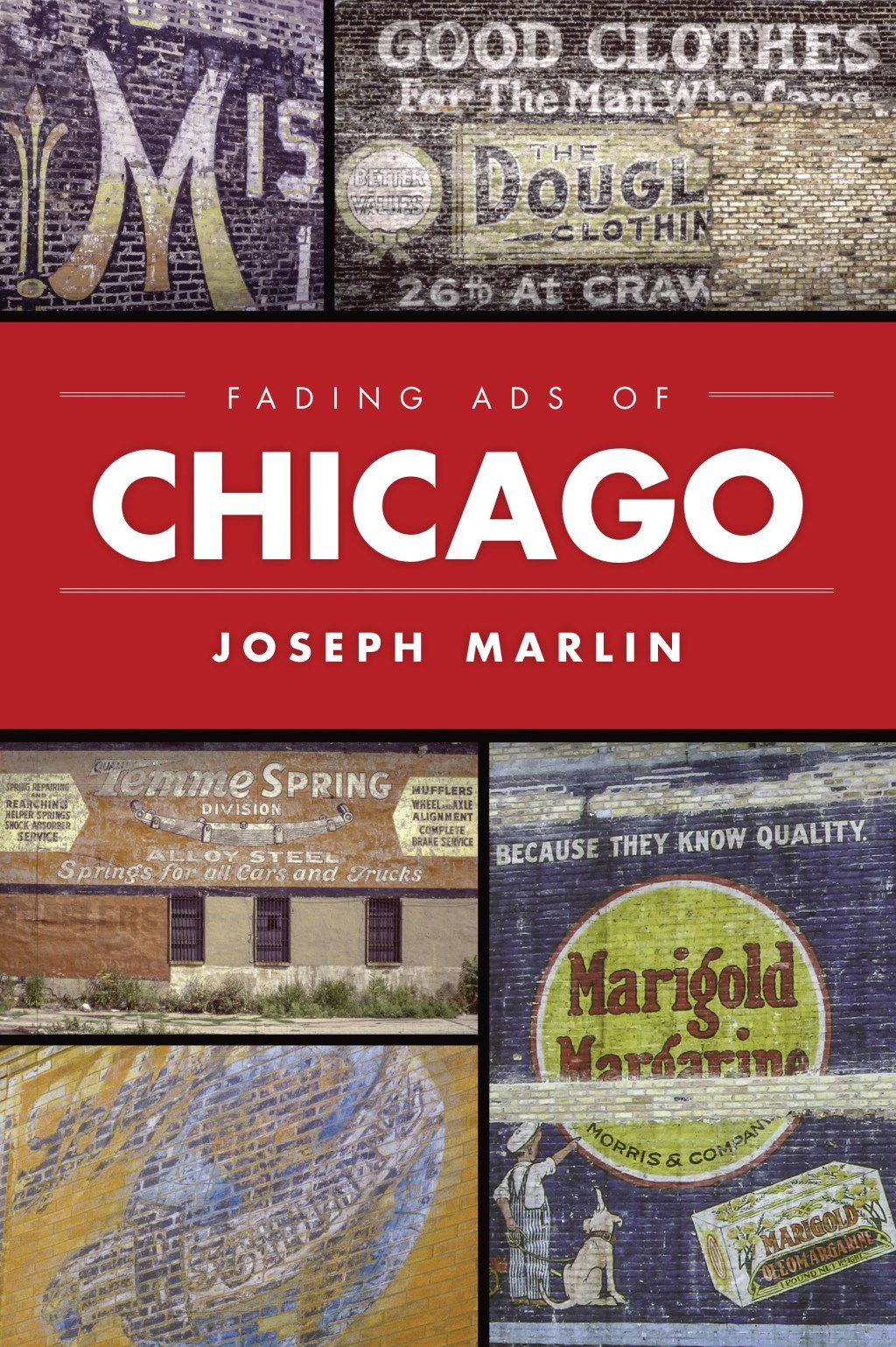
                  For more than 40 years, Joe Marlin, author of the just released Fading Ads of Chicago, photographed ghost signs, those fading advertisements painted on the sides of brick buildings, a onetime popular way to advertise in the U.S.

                  “I’d take notes when I was driving to and from work on the west side of Chicago or when I was going to business meetings,” says Marlin, a retired clinical social worker and director of hospital social work services at Mt. Sinai Hospital. “Then I’d organize the notes by neighborhood and go back and take photos.”

                  These signs, some more than a century old, often advertised businesses, products, stores and services long gone. These include the Boston Store which opened shortly after the Chicago Fire in 1871 and was then replaced with a new building in 1906, closing for good in the late 1940s. One of Marlin’s favorites is an ad for Marigold Margarine, which was likely painted in the 1890s.

                  “I like that one because its colors were still so vivid,” says Marlin, whose book contains more than 150 color photos of ads painted, for the most part, between 1890 to 1940s. “It wasn’t as faded because another building was built right next to it.”

                  Fading advertisements are sometimes called ghost ads because they were painted with lead based paints that overtime begin to fade into the soft brick of the sides of buildings. When it rains, the colors, longer lasting than non-lead paint, sometimes begin to reappear or are easier to see. Marigold Margarine is one such ad. Concealed over for decades it came into the light again for a brief period when the building hiding it was demolished.  

    Then it vanished again with the construction of a new building next door, concealed again for who knows how long. So many of the ads Martin took are also gone, making them even more poignant as lost reminders of forgotten times.

    “I regret that I didn’t take more photos,” he says. “More and more are disappearing when they tear down old buildings to put up new one or their removed when the exteriors are renovated.

                  Even now, Marlin, who also collects vintage cameras particularly those from Chicago’s photographic industry such as still, movie, and street cameras as well as Art Deco items, pursues these disappearing works of art.

                  “I just took a photo of one recently, but it was too late to make it into the book,” he says. “It’s an ad for Wizard Oil and claims that it ‘cures rheumatism, colds, sores and all other pains.’ It was a patent medicine and they made all sorts of grandiose claims back then.”

                  Like Marigold Margarine and other remnants of the past, this one has a story too, dating back to 1861 when a former Chicago magician invented it.

                  “These old ads take us back to a different time,” says Marlin. “In order to find them, just look up when you’re walking or driving through the city.”

                  And take a photo because they might not be there next time you go by.

    What: Joe Marlin talk and book signing

    When: Tuesday, June 25; 6:00-7:00pm

    Where: 57th Street Books, 1301 E 57th Street, Chicago, IL

    FYI: 773-752-4381; semcoop.com

  • The Body in the Castle Well

    The Body in the Castle Well

                  After reading Martin Walker’s The Body in the Castle Well, the 14th book in the series about Chief of Police Bruno Courrèges, I Googled real estate listings in the Périgord, known for its castles, caves, gastronomy and lush landscape of rolling hills, woods and vineyards. From Walker’s description, this region in southwestern France seems like an ideal place to live even if you have to deal with the type such skullduggery as truffle fraud, archaeological vandalism, arson, drugs and even terrorists Bruno encounters on a regular basis.

                  “There’ so much inspiration and history here,” says Walker who, with his wife, splits his time between Washington D.C. and Le Bugue, a small village in the Périgord where they own a home. The home came about, says Walker who talks like he writes, with many wonderful asides, when he was waiting in the Oval Office and received a phone call from his wife.

                  “She said I don’t care what you’re doing, get on the next plane and come here, I just found our house,” he says, noting he explained to her he was meeting with the president so it might have to wait just a while. Besides that, he didn’t even know they were buying a house.

                  Of course, they did and now live in an old farmhouse dating back to 1698 with several newer outbuildings, if you consider the 1700s new and in France they do.

                  Of course, there are always obstacles even in paradise.

                  “One of the challenges for anyone writing crime stories is finding places for bodies,” says Walker, who speaks French, Russian, English, Arabic, German and a just enough of other languages to get himself in trouble. “I drive around with an eagle eye looking for the perfect spot for a body. I was in Limeuil, a lovely village, and there it was, the castle well.”

                  So that’s where the body of Claudia, a young art student ends up, in what first looks like an accident and turns out to be much more ominous.

                  “She’s studying with Pierre de Bourdeille, one of the greatest art experts in the world, a hero of the French Resistance,” says Walker. “She told Bruno a little of her concerns about the attributions de Bourdeille made about his paintings which drove up prices and then she turns up dead.”

                  Another suspect is a falconer (so we get to learn about the ancient art of hunting with falcons) who met Claudia the day after her got out of prison. As compelling as the mystery is, so is Bruno’s life. He’s a gourmet chef, has his own blog and a cookbook, written by Walker’s wife, which is a best seller in Germany where it’s sold 100,000 copies. But unless you read the language, don’t bother as it’s not published in English though Walker encourages people to call his publisher and demand that it be.

                  The Bruno books are quite a segue for the Oxford educated Walker who served as bureau chief in Moscow and the U.S. and as European Editor for The Guardian, a British daily newspaper and wrote lengthy tomes (ponderous and boring he says, though noting they won awards) like The Iraq War and The Makers of the American Century

    “The 15th is already done,” he says. “And I’m thinking of the next. They’re fun to write.”

    Asked what his favorite is, he replies, “my favorite is always the latest or the one I’m working on right now.”

    Ifyougo:

    What: Martin Walker: The Body in the Castle Well

    When: Tuesday, June

    Where: The Book Stall, 811 Elm St., Winnetka, IL

    Cost: Free and open to the public, but The Book Stall asks that you buy your books from them if you intend on entering the book-signing queue.

    FYI: 847-446-8880; thebookstall.com

  • Art Deco Chicago: Designing Modern America

    Art Deco Chicago: Designing Modern America


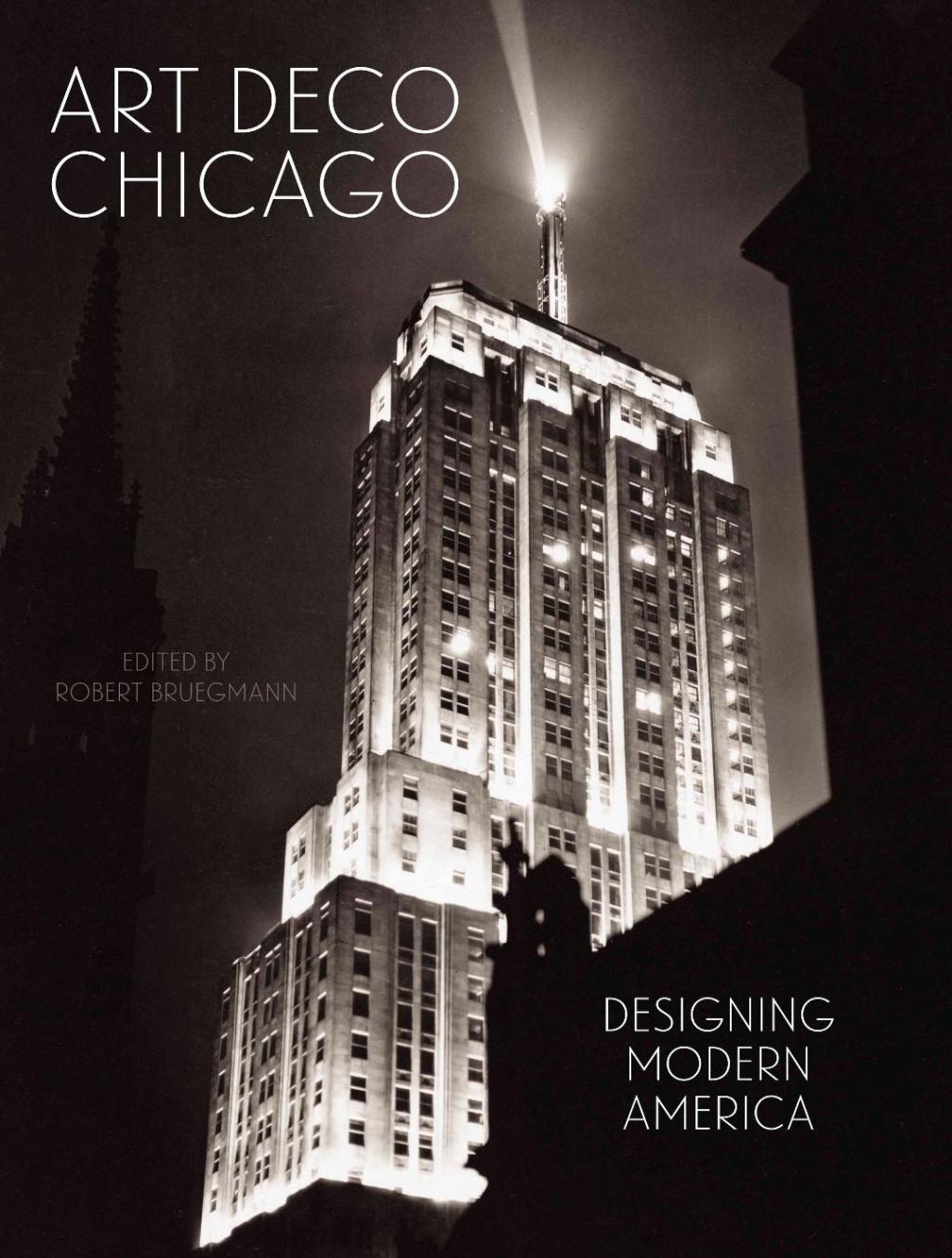
    sleek and glorious as any Art Deco masterpiece whether it be the grand Palmolive Building built in 1922 or the much lowlier but still spectacular Bell telephone Model 302 designed not by a noted artist or architect but instead by George Lum, a Bell Labs engineer in 1937,  Art Deco Chicago: Designing Modern America (Yale Press 2018; $47.75 on Amazon) showcases 101 key works coupled with more than 300 photos as well as critical essays and extensive research. Altogether, they comprise a wonderful, extensively curated and chronologically organized tome about the many facets–architecture, advertising, household objects, clothing, and food design–of a style that has fascinated so many of us for more than a century.

    Robert Bruegmann, a distinguished professor emeritus of architecture, art history, and urban planning at the University of Illinois at Chicago, was first asked to write the introduction to the book

    thought I’d knock it out in a week,” says Bruegmann, a historian of architecture, landscape and the built environment.

    That was back in 2011 and Bruegmann, author of several other books including The Architects and the City: Holabird & Roche of Chicago, 1880-1918 (Chicago Architecture and Urbanism), quickly realized that it would take much more than that. He ended up editing and shaping this complex book, a task which included overseeing 40 writers and researchers, helping to find and collect photos and defining Art Deco and its impact on the city through design. He would spend the next five years, working 50 to 60 hours a week to do so.

    One of the first questions we asked is how do we define Art Deco recalls Bruegmann.

    “Should it be narrowly like the French-inspired luxury goods, which is the narrowest to the big tent which we ended up doing,” he says noting that many products (think as blasé as refrigerators, bicycles, radios and mixmasters) created in Chicago by companies like Motorola, Sunbeam and Schwinn, changed the world in a way that other forms of Art Deco didn’t.

    It many come as a surprise that the term Art Deco wasn’t invented until the 1960s and came about because of its association with the Decorative Arts Fair Exposition of 1925 in Paris. But in Chicago, Art Deco, even before it was so named, was often about both beauty and usefulness.

    “If I had to pick a single object to suggest what we tried to do in Art Deco Chicago, I would probably choose the Craftsman brand portable air compressor sold by Sears starting in 1939,” says Bruegmann about the cast iron aluminum machine which used, as described in the book, “a series of cooling fins that functioned as a heat sink while adding a streamlined visual flair to the product…This product alluded to themes of speed, transportation, and movement while remaining stationary.”

    “It was related to the avant garde work of the Bauhaus who thought they were going to save the world through their designs,” says Bruegmann. “But they were too expensive. But Sears on the other hand made things affordable.”

    Indeed, Bruegmann says that companies like Sears and Montgomery Ward did change the world.

    “Up until the Sears catalogue, a lot of clothes outside of big cities, were handmade,” says Bruegmann. “Because Sears sold so many outfits through their catalogue, they could afford to send their designers to Paris to study the latest design and then come back and change them so they were less expensive, creating one of the most important social and political movements by making  designs for the masses. For a $1.99 a woman working in a packing plant or a farmer’s wife could wear a knockoff of a Paris dress.

    Art Deco Chicago serves as the companion publication to the exhibition “Modern by Design: Chicago Streamlines America” organized by the Chicago History Museum, which runs October 27, 2018–December 2, 2019. Proceeds from sales of and donations to Art Deco Chicago, which explores and celebrates Chicago’s pivotal role in the development of modern American design, will be used to support ongoing public education, research, and preservation advocacy of this critical period of modern American design.

    Ifyougo:

    What: Newberry Library presents Meet the Author: Robert Bruegmann, Art Deco Chicago

    When: Thursday, November 29 from  to 7:30 p.m.

    Where: Newberry Library, 60 West Walton Street, Chicago, IL

    Cost: Free and open to the public

    FYI: 312-943-9090; newberry.org

    8/18/06 University Scholar- Robert Bruegmann
  • Paris in Stride: An Insider’s Walking Guide

    Paris in Stride: An Insider’s Walking Guide


    ParisInStride_p67
    All illustrations © Jessie Kanelos Weiner

    Imagine strolling through Paris with a friend, one who knows the greatest little patisseries, cafes, outdoor markets and shops tucked along winding cobbled streets. Together the two of us try on amazingly chic designer dresses at La boutique Didier Ludot and amble through the courtyard gardens and gaze at the Swedish art work at Institut Suedois located in the Hôtel de Marle, a 16th century mansion in the heart of the central Marais district. We order small plates of fantastic food amidst 19th century murals of clowns at the appropriately named Clown Bar, considered one of the city’s finest restaurants. After stopping to admire the Eiffel Tower, we trek even more before stopping to reward ourselves with ice cream at Berthillon Glacier. We are, definitely, Parisian insiders.

    17. Clown bar

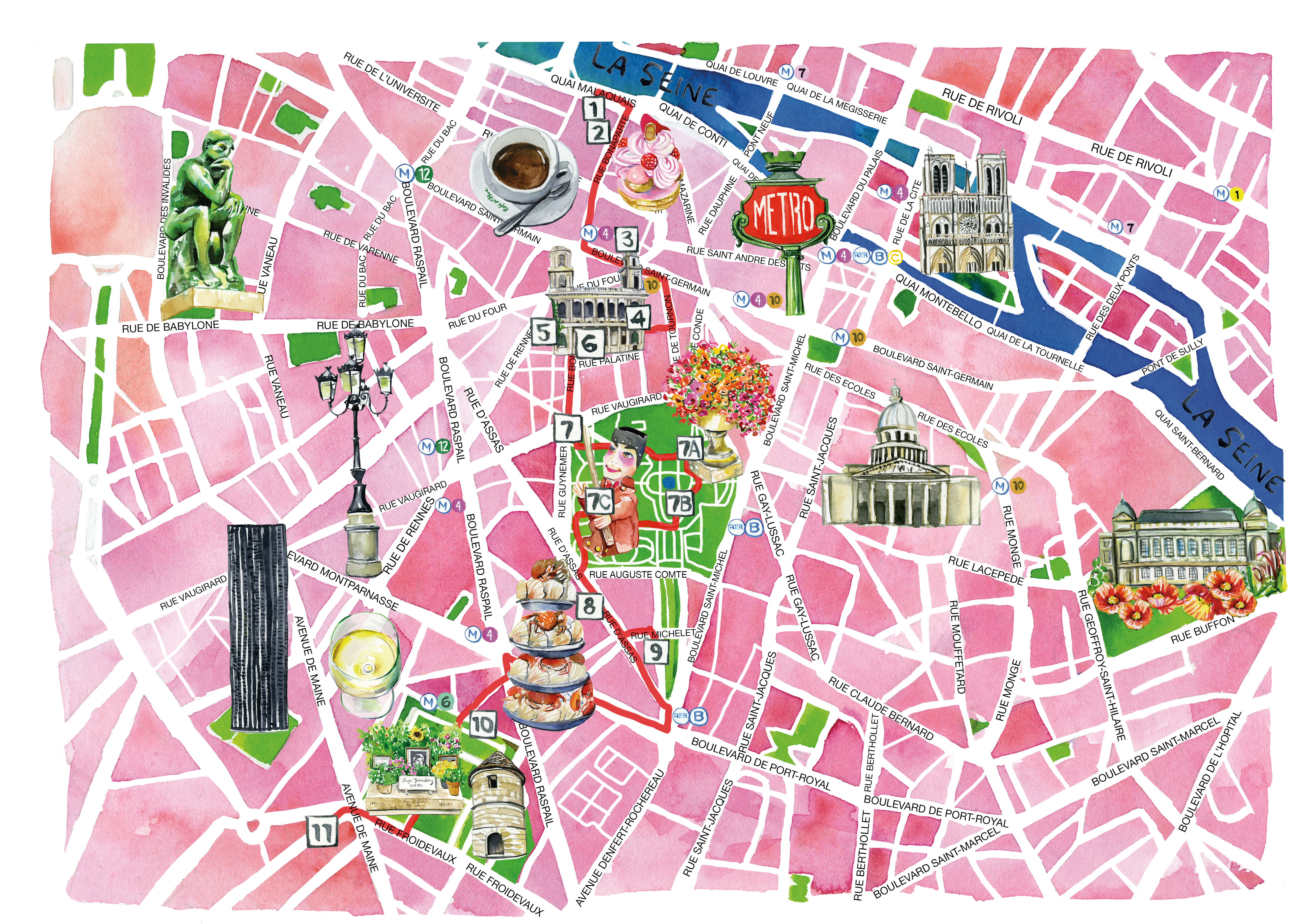
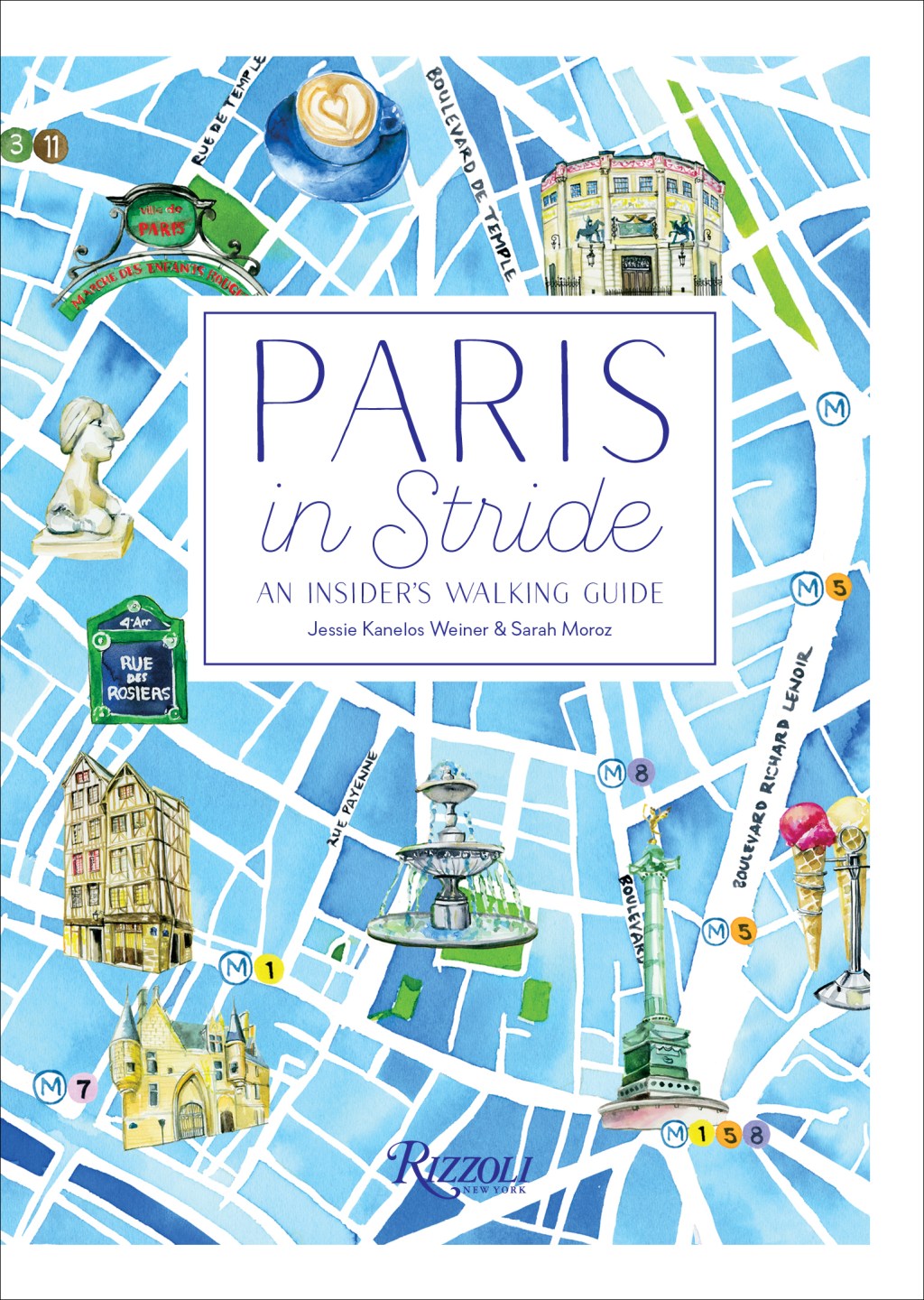
    Wait—don’t have a friend in Paris? Don’t even have tickets or plans to go sometime soon? Well, Rick of Casablanca told Else they’d always have Paris and for the rest of us, before we get there, we’ll have the recently released Paris in Stride: An Insider’s Walking Guide (Rizzoli 2018; $27.50), co-authored by Jessie Kanelos Weiner, a Chicago gal who grew up on the Northside and Sarah Moroz both of whom have lived in Paris for the last decade. Charmingly illustrated with over 150 of Weiner’s delicate watercolors, the book curates walking itineraries the authors put together to go beyond the typical guidebooks.

    “We wanted to put together walking tours of a timeless Paris, the type of Paris that will always be the same,” says Weiner who will be back in Chicago on April 6 & 7 for book events. “We wanted something that wasn’t too text heavy, a book that was a jumping off point to see what you want to see, one that wasn’t prescriptive but takes you down the side streets.”

    Paris is Weiner’s passion and wandering its streets is what she loves to do. ParisinStride_p134-135

    “It’s a city based on pleasure,” she says, “and one with many beguiling things along the way.”

    Ifyougo:

    What: Jessie Kanelos Weiner will talk about her book and teach a water color class during the conversation at Read It & Eat, 2142 North Halsted Street, Chicago, IL, Friday April 6 @ 6:30. Wine and a cheese will be available during the event, as well. (773) 661-6158; readitandeatstore.com

    On Saturday, April 7 from 3:00pm – 4:30pm, Weiner will be in conversation with photographer Rebecca Plotnick talking about Paris and her book at 57th Street Books, 1301 E 57th St., Chicago, IL.  (773) 684-1300; 57th.semcoop.com

    ParisInStride_p132-133