Category: Food

  • Southern Lights: Easier, Lighter, and Better-for-Recipes From the South

    Southern Lights: Easier, Lighter, and Better-for-Recipes From the South

    “Throughout these pages, I’m going to (politely) refute the claim that Southern food is all bad for you and hopefully breathe new life into some tired, worn-out notions,” writes Lauren McDuffie in the first pages of her latest cookbook, Southern Lights: Easier, Lighter, and Better-for-You Recipes From the South (Gibbs Smith). McDuffie, an advocate of Southern cuisine, wants us all to know the entire truth of this regional way of cookery that many of us dismissively think of as fried and fat.

    Once you make your way through the stereotypes, past the overwrought, done-to-death, attention-seeking heavy hitters, the archives of Southern cookery shine with a special sort of brilliance,” continues McDuffie, noting that she is a home cook who has done the majority of her culinary learning in the South ranging from the foothills of central Appalachia to the sandy, abundant low country coastline.

    McDuffie, who lives in Portland, Oregon now, created the award winning food blog: My KItchen Little: Recipes, Ideas, and Inspiration for Busy Home Cooks but her love of Southern cuisine and her ability to bring it to the fore was also apparent in her first cookbook, Smoke, Roots, Mountain, Harvest: Recipes and Stories Inspired by My Appalachian Home. The same passion is conveyed” in this magnificent cookbook with its luscious photos–McDuffie is also a photographer and her luscious color photos are a perfect accompaniment to the recipes that show us how to enjoy the rich heritage of Southern cuisine without the guilt and calories.

    Southern Lights takes us into the world that McDuffie says she loves most– the people, places, things, and flavors that evoke feelings of home.

    To accomplish this, McDuffie, an advocate for fresh and healthy, took a hard look at her kitchen pantry and asked herself a series of questions such as why she was using a particular oil or cut of meat in her cooking and what substitutions would work just as well when using her favorite recipes. From there she re-created favorite dishes incorporating different ingredients but yielding the same delicious results.

    Her recipe for Frico Chicken in a Buttermilk Bath is a great example. Its origins are that perennial Southern classic—fried chicken brined in buttermilk and then deep fried in lard. A definite winner when it comes to taste. Not so in other respects. So what does McDuffie? She produces a healthier and low caloric alternative that really works.

    Calling it a remix and noting that frico translates to fried in Italian, she describes this dish as similar to a simple baked cheese crisp that tops a boneless, skinless, and flattened chicken thighs browned in a minimum of oil. A surprising easy-to-make but sophisticated dish, it offers the crunch and flavor of buttermilk heavily battered chicken with no grease or guilt.

    Like pulled pork sandwiches. McDuffie gives us a very creative take by substituting spaghetti squash (yes, you read that correctly) for the pork in her recipe for “Pulled” BBQ Spaghetti Squash Sandwiches.

    “This has got to be one of the most unusual sandwiches I’ve ever made, but man is it a hit in my house,” writes McDuffie in the introduction to this dish. “Tangled strands of roasted spaghetti squash mimic the fatty pork in a classic meaty version, making for a lighter, more nutritious way to get your fix.”

    The squash mixture is then topped with Halloumi cheese (smoked Gouda or cheddar can be used instead) along with coleslaw and barbecue sauce.

    Voila! A low cal, high flavor profile meal and just one of many in McDuffie’s latest cookbook.

    Honey-Caramelized Tomato Upside-Down Cornbread

    “People get very territorial about their cornbread in the South, a fact that I have always found completely charming,” says McDuffie. “Home cooks are devoted to their recipes and food traditions in a way that serves to sustain them, carrying them across generations. There is so much heart on the table, always. Cooks hold on tight to them, their family recipes, and it’s really the most beautiful thing. This recipe happens to be a favorite version of cornbread in my house. The jammy, juicy-sweet tomatoes suspended on top really do steal this show, and the olive oil makes it pretty special. Feel free to sub a different cooking oil, though, as olive oil ain’t cheap. I highly recommend serving this in thick slices, slathered with lots of Salty Butter–Whipped Honey.”

    Makes 6 to 8 servings

    • Natural nonstick cooking spray
    • 12 ounces cherry or
    • grape tomatoes
    • 6 tablespoons honey, divided
    • 1 1⁄2 teaspoons salt, plus
    • more as needed
    • 1 cup yellow cornmeal
    • 1 cup cake flour
    • 1 1⁄2 teaspoons baking powder
    • 1 teaspoon baking soda
    • 2⁄3 cup olive oil or canola
    • or vegetable oil
    • 2 large eggs, beaten
    • 1 1⁄4 cups buttermilk

    Preheat the oven to 350°F. Adjust the rack to the middle position. Spray an 8- or 9-inch round cake pan with cooking spray and line with parchment paper, allowing some overhang for easy removal (think of them as handles).

    Put the tomatoes, 3 tablespoons of the honey, and a good pinch of salt in a nonstick skillet set over medium heat and cook, stirring occasionally, until the tomatoes just burst and are tender, about 5 minutes. Transfer to the cake pan, juices included, and spread in an even layer.

    In a mixing bowl, whisk together the cornmeal, remaining 1 1⁄2 teaspoons salt, cake flour, baking powder, and baking soda.

    In the bowl of a stand mixer or in a mixing bowl with ahandheld m ixer, combine the oil, the remaining 3 tablespoons of honey, and the eggs. Add half of the dry mixture and mix until combined. Add half of the buttermilk and mix until just combined. Repeat with the remaining halves of each and gently pour the batter into the prepared pan over the tomatoes (it shouldn’t be more than three-fourths full).

    Bake until lightly golden and set, 35 to 45 minutes (use a knife or toothpick to test the doneness—it should come out clean). Cool in the pan for at least 15 minutes before inverting the cornbread onto a serving plate, tomatoes facing up now.

    Salty Butter-Whipped Honey

    Sounds sinful, right? I can assure you that this isn’t nearly as rich as it sounds. This drippy, sticky-sweet thing is my lighter take on a simple honey butter where, instead of infusing a lot of butter with a little honey, we’re going to infuse a lot of honey with a little butter. Just be sure to use a good-quality raw honey.

    Makes about 1 cup

    • 8 ounces honey
    • 2 tablespoons salted butter, at room temperature
    • Salt to taste

    In a blender, combine the honey, butter, and salt and blend until creamy and smooth. Transfer to a lidded storage jar or container. This buttery honey will keep in the refrigerator for up to 1 month.

    Frico Chicken in a Garlicky Buttermilk Bath

    “I’ve taken the things I love most about classic Southern fried chicken and remixed them into something that is just as satisfying, but much lighter—a true win-win,” writes McDuffie about this recipe. “A frico (which means “fried” in Italian) is simply a baked cheese crisp, and here we’ll use them to almost mimic the salty crunch of fried chicken skin. Rather than rich bone-in, skin-on cuts, we’ll use leaner boneless and skinless thighs—my favorite protein of them all. The garlicky buttermilk-fortified bath in which they cook mimics my go-to fried chicken brine, helping the chicken stay tender and juicy. It also happens to be an easy, one-pan, 30-minute meal. So there’s that.”

    Makes 4 to 6 servings

    • 1 1⁄2 cups grated Parmesan cheese
    • 4 teaspoons olive oil, divided
    • 6 boneless, skinless chicken thighs
    • Salt
    • Freshly ground black pepper
    • 1 heaping cup diced sweet onion
    • 10 ounces fresh baby spinach
    • 3 garlic cloves, minced or grated
    • 1⁄2 cup dry white wine (optional)
    • 1 (14.5-ounce) can crushed or diced tomatoes
    • 1⁄2 cup buttermilk

    Preheat the oven to 350°F. Adjust the oven rack to the middle position. Line a large baking sheet with parchment paper or a silicone baking mat.

    Equally space the Parmesan into 6 (1⁄4-cup) mounds on the baking sheet. Use your measuring cup to gently press down on the mounds and work them into round, circular disks (they don’t have to be perfect). Bake until flattened and just beginning to brown lightly around the edges, 3 to 4 minutes. Remove and set aside. They will firm up as they cool.

    Pour 2 teaspoons of the oil into a large pan over medium heat. Season the chicken with salt and pepper to taste. When the oil is hot, add the chicken and brown really well on the first side; this takes 5 to 6 minutes. Flip and cook for another 1 to 2 minutes (they will finish in the sauce). Transfer to a plate and set aside.

    Pour the remaining 2 teaspoons of oil into the pan. When it’s hot, add the onion and spinach and sauté for 3 to 5 minutes, until the spinach is fully wilted and the onion is soft. During the last minute, add the garlic.

    Stir in the wine (if using) and cook for about 1 minute to reduce it. Add the tomatoes and buttermilk and slide the chicken back into the pan. Simmer for about 10 minutes to reduce the sauce and to finish the chicken.

    Lay the Parmesan fricos over the chicken just before serving. They will melt and sort of adhere to the chicken, mimicking salty chicken skin in the best way.

    Recipes excerpted from Southern Lights: Easier, Lighter, and Better-for-You Recipes from the South by Lauren McDuffie. Photographs by Lauren McDuffie. Reprinted by permission of Gibbs Smith Books.

  • Peas Love & Carrots

    Peas Love & Carrots

    Savory Stovetop Turkey. Photo by Moshe Wulliger.

    So, before we start talking about Danielle Renov’s wonderful new cookbook, Peas Love and Carrots (Me’sorah Publications, Ltd. 2020; $28.93 Amazon price) I want to take a few moments to whine. I write a lot about food, I have a food blog, Twitter, Facebook and Instagram accounts where I post about food and travel. I often think it’s lucky I have a large family including cousins who I am able to cajole into following me so I have at least some followers.

    Some don’t seem to need large families to get followers. At least four or five times a year, I interview a cookbook author who started with an Instagram or Facebook or Twitter account and ended up with tens and sometimes hundreds of thousands of followers. I’m not saying I’m anywhere near their level of ability and creativity. Far from it, but still—comparatively my numbers aren’t even close. I’m not writing this to make people feel so sorry for me that they follow me—but hey, if you want to it’s okay. it’s just that with Renov I ran into it again. Four years ago, with her husband out of town and her kids tucked away in bed, she decided to start Instagramming.

    Tuna Salad A` La Moi. Photo by Moshe Wulliger.

    She soon had around 43,000 followers. This year,  the number is over 130,000. She now is considered a kosher and food influencer—someone who has the audience and credibility to persuade others. To give an example of what that means, Kim Kardashian may be the ultimate influencer with 354 million followers across social media channels. Yes, 354 million. That’s about close to the number of people who live in the United States.

    Burnt Cauliflower and Herb Salad. Photo by by Moshe Wulliger.

    Renov, who grew up on Long Island, New York and moved to Israel about 13 years ago, deserves her followers. The 254 plus recipes she created for Peas, Love & Carrots reflect her many life experiences, her family’s heritage, her Sephardic and Ashkenazi roots and her own interest in food in her new homeland including her weekly shopping expeditions to the Machane Yehuda Shuk, a sprawling 19th century
    market in Jerusalem selling among many other items, a variety of foods. In writing the introduction to her recipes, Renov tells a story about it, often displaying a sense of humor.

    “Dinner again?” she writes in the introduction to Crispy Baked Chicken fingers. “I know. it’s crazy. No matter how many times you go through it, it comes back again and again. It’s almost like laundry. Only you can’t eat your laundry, so at least there’s that. This (recipe) is for those days. And since those days happen more than we’d like to admit, I gave you three versions so that you can change things up. You’re welcome.”
    But food is also serious for Renov, who returns frequently to New York where she records cooking videos for kosher.com. She wants her recipes to work, to be easily accessible for both kosher and non-kosher cooks and to offer tastes beyond the everyday.

    Describing her Savory Stovetop Turkey recipe as an ode to her father who doesn’t eat a lot of read met, Renov says she’s always on the hunt for tasty turkey recipes.

    Crispy Baked Chicken Fingers. Photo by Moshe Wulliger.

    “What I never saw was a turkey roast recipe where I felt like the turkey was treated like a proper beef roast,” she says, and I have to agree which is another reason why this recipe looks so intriguing. From the photo, and I’ll soon have my own photos too as I’m making it for company tomorrow, it looks like a richly braised beef roast.

    “That’s what was aiming for here,” she says, “Turkey that was deeply savory, moist, and extremely satisfying.”

    Photo courtesy of Peas Love & Carrots Facebook.

    Go ahead and follow Renov, I won’t mind. Really. She posts her recipes, cooking tutorials, lifestyle tips and inspirational ideas for the kitchen, home, and family on both her blog peaslovencarrots.com and Instagram feed @peaslovencarrots.

    The following were excerpted from Peas Love & Carrots by Danielle Renov. Copyright 2020 by ArtScroll Mesorah Publications, photos by Moshe Wulliger. Reproduced with permission of the copyright holder. All rights reserved.

    Burnt Cauliflower and Herb Salad
    Yield: 2+ quarts
    Cauliflower
    2 (24 oz) bags frozen cauliflower florets
    3 tablespoons olive oil, divided
    4 cloves garlic, minced (about 1 1⁄2 Tablespoons)
    1 1⁄2 teaspoons kosher salt
    1⁄2 teaspoon freshly ground black pepper
    2 teaspoons turmeric
    1 1⁄2 teaspoons sumac
    1⁄2 teaspoons paprika
    1 lemon, halved

    Herb Salad
    1⁄2 cup chopped parsley
    1⁄2 cup chopped cilantro
    1⁄2 cup chopped scallions (from about 4 scallions)
    2 tablespoons chopped mint, optional
    1 small purple onion, finely diced (about 1 cup)
    1-11⁄2 Tablespoons white vinegar kosher salt, to taste
    Freshly ground black pepper, to taste

    Cauliflower
    Preheat oven to 350°F / 180°C. Line a baking sheet with heavy duty foil; coat with 1 tablespoon olive oil.
    Toss frozen cauliflower with 2 tablespoons oil, garlic, salt, pepper, turmeric, sumac, and paprika.
    Spread out on baking sheet in a single layer.

    Roast undisturbed for about 45 minutes (DO NOT OPEN OVEN DOOR DURING THAT TIME!).
    After 45 minutes, cauliflower should begin to get crispy and charred.

    Open oven door remove baking sheet, and squeeze both halves of the lemon over the cauliflower. DO NOT MIX OR STIR. Just squeeze over the top, return to oven and cook for 5-6 minutes.
    Serve and enjoy.

    Herb Salad
    While cauliflower is roasting, combine parsley, cilantro, scallions, mint, and onion in a large bowl.
    When cauliflower is done, add to the herb mixture, tossing to combine. Add vinegar; toss to combine.
    Season to taste with salt and pepper.
    Serve warm or cold.
    Note: If not serving the same day, combine herbs with cauliflower before serving time.

    Tuna Salad A` La Moi
    “This is my favorite lunch salad,” says Renov. “I could eat it, on repeat, every day. I know, mercy. Ok, fine. every other day. It’s filling, the
    flavors are punchy, and it’s my absolute favorite way to eat tuna. Make it today, double the recipe, and store it in an airtight container for tomorrow. it is actually better the second day.”

    2 cups shredded purple cabbage
    1 cup shredded radicchio
    1 cup chopped scallions
    1 cup chopped cucumber
    1 cup finely chopped celery
    1⁄2 cup diced purple onion
    1 cup parsley, chopped
    1 cup chopped preserved lemons
    1⁄2 cup chopped capers 15 ounce canned tuna in water, drained,

    Roughly chopped juice of 1 lemon, 2 teaspoons paprika, 1 teaspoon, cayenne pepper, 1 teaspoon kosher salt and 1⁄2 teaspoon coarsely ground black pepper.

    Place all ingredients into a large bowl. Toss well to combine.

    Let sit for 5 minutes. Toss again.

    Savory Stovetop Turkey
    1 large whole deboned turkey breast
    1 Tablespoon kosher salt
    1 teaspoon coarsely ground black pepper
    1 1⁄2 teaspoons granulated garlic
    1 1⁄2 teaspoons paprika
    1 tablespoon neutral oil
    1 onion, thinly sliced
    4 cloves garlic, minced
    2 Tablespoons tomato paste
    1 1⁄2 cups dry white wine
    2 bay leaves
    1 tablespoon white vinegar
    2 cups chicken broth
    1⁄4 cup duck sauce

    In a small bowl, combine salt, pepper, garlic, and paprika. Season turkey breast with mixture on all sides.
    Heat a pot over medium heat. Add oil; place turkey top side down and sear for 4 minutes on each side.
    Remove turkey from pot; set aside.

    Add onion; cook for 12 minutes.

    Add garlic and tomato paste to the pot. Cook for 2 minutes until fragrant.

    Add wine, bay leaves, and vinegar, stirring to scrape up any bits on the bottom of the pan.

    Cook for 2 minutes; add chicken broth and duck sauce.

    Return turkey to the pot, spooning some of the mixture over the top.

    Bring mixture to a boil, cover pot, and reduce heat to low. Cook for 1 1⁄2 hours, basting every 20 minutes or so. Serve hot and enjoy.
    Tips + Tricks
    If making in advance, slice turkey when it’s cold, return to sauce, and reheat gently.

    Crispy Baked Chicken Fingers:

    Crispy Asian Baked Shnitsel
    1 package chicken tenders (about 18 pieces) OR 12 thin cutlets
    1 cup mayo
    2 tablespoons minced garlic
    2 tablespoons honey
    1-2 teaspoons sriracha (depending how spicy you like it!)
    1 Tablespoon white miso
    1⁄4 cup soy sauce
    3 cups panko breadcrumbs
    Barbecue Crispy Chicken
    1 package chicken tenders (about 18 pieces) OR 12 thin cutlets
    1⁄4 cup mayo
    3⁄4 cup favorite barbecue sauce
    1 teaspoon granulated garlic
    1 teaspoon granulated onion
    3 cups panko breadcrumbs

    Honey Mustard Crispy Chicken
    1 package chicken tenders (about 18 pieces) or 12 thin cutlets
    1⁄4 cup mayo
    1⁄4 cup Dijon mustard
    3 tablespoons honey
    3 cups panko breadcrumbs
    Preheat oven to 350°F

    Coat a baking sheet liberally with nonstick cooking spray.
    In a large bowl, combine flavoring ingredients (aside from chicken and breadcrumbs) in selected recipe.
    Add chicken to wet mixture; mix to coat.
    Dip coated chicken into breadcrumbs, then place flat on prepared baking sheet. Spray the top of the chicken pieces with a little more nonstick spray.
    Bake for 30-40 minutes, until chicken is cooked through.

  • Join me at the Classic Restaurants of Michiana Book Signing Wednesday, June 11th
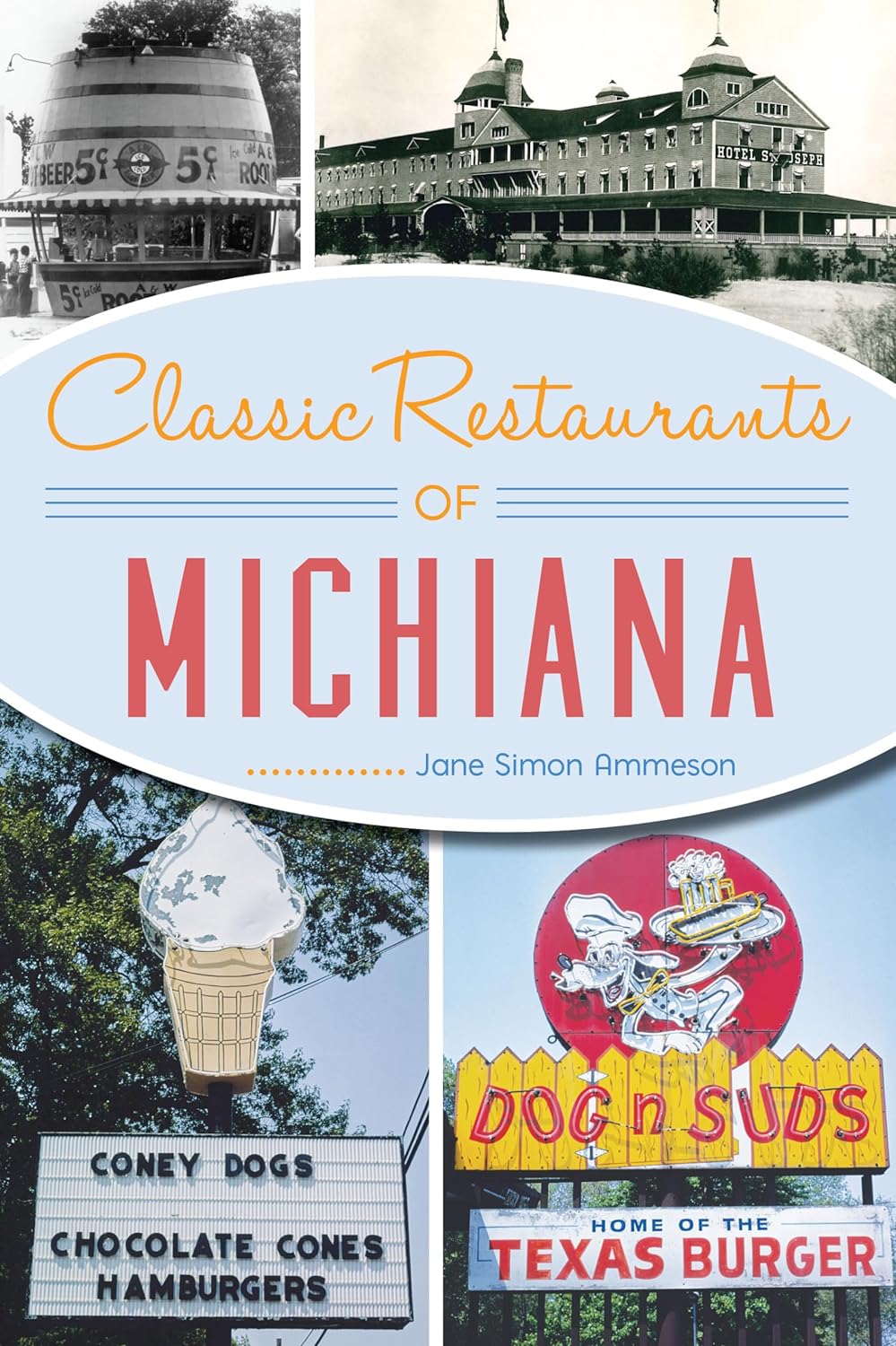
    Join me at the Classic Restaurants of Michiana Book Signing Wednesday, June 11th

    The members of the Sacred Heart of Mary Catholic Church Book/Movie Discussion Group have invited me to speak this Wednesday, June 11th at 6:30 p.m. If you have the time and are interested in the history of restaurants in Michiana, please come. The church is lovely, located in a beautiful country setting at  51841 Leach Rd, Dowagiac, Michigan. The event itself is next door in the Parish Hall.

    Mary’s City of David Vegetarian Cafe in Benton Harbor, which opened in 1931 and closed in 1975, specialized in farm-to-table meals.

    Here is the flyer that Terri Moore sent out:

    Over the centuries, residents of Michiana have never wanted for superb dining choices. Award-winning author Jane Simon Ammeson will lead us on a culinary road trip through Northern Indiana and Southwestern Michigan.

    A cigarette girl at the posh House of David motor lodge and restaurant/nightclub called the Vista Grande

    Once a stagecoach stop, The Old Tavern Inn has been open since the time of President Andrew Jackson. Tosi’s is known for its gorgeous starlit garden and gastronomic traditions stretching back almost a century, and The Volcano was amongst the first pizzerias in the country.

    One of the earliest hotels in St. Joseph, the Perkins house, built in 1840, stood on the corner of State and Ship Streets. Note the side entrance for the saloon which was, of course, given the times, for men only.

    These restaurants and other classic eateries remain part of the thriving local food scene. But the doors of others have long been closed. Some like Mead’s Chicken Nook and Robertson’s Tea Room linger in memories while The Owl Saloon, O. A. Clark’s Lunch Rooms, and Lobster Lounge are long lost to time.

    The restaurant is still open at the Barbee, it was a fav of Al Capone. However, when he arrived, all the other guests had to leave.

    Jane Simon Ammeson is a food and travel columnist who has authored seventeen books, including Classic Restaurants of Northwest Indiana. Always willing to travel for food, she blogs about her experiences at janeammeson.com.

    At one time, the lakeside towns of southwesterern Berrien County had a large Swedish population. The Swedish Coffee Pot was just one of several. Only the Swedish Bakery remains.

    Light refreshments will be served

    For more information contact:

    Terri Moore, 269-782-6925, t2sewmoore@outlook.com

  • Islas: A Celebration of Tropical Cooking
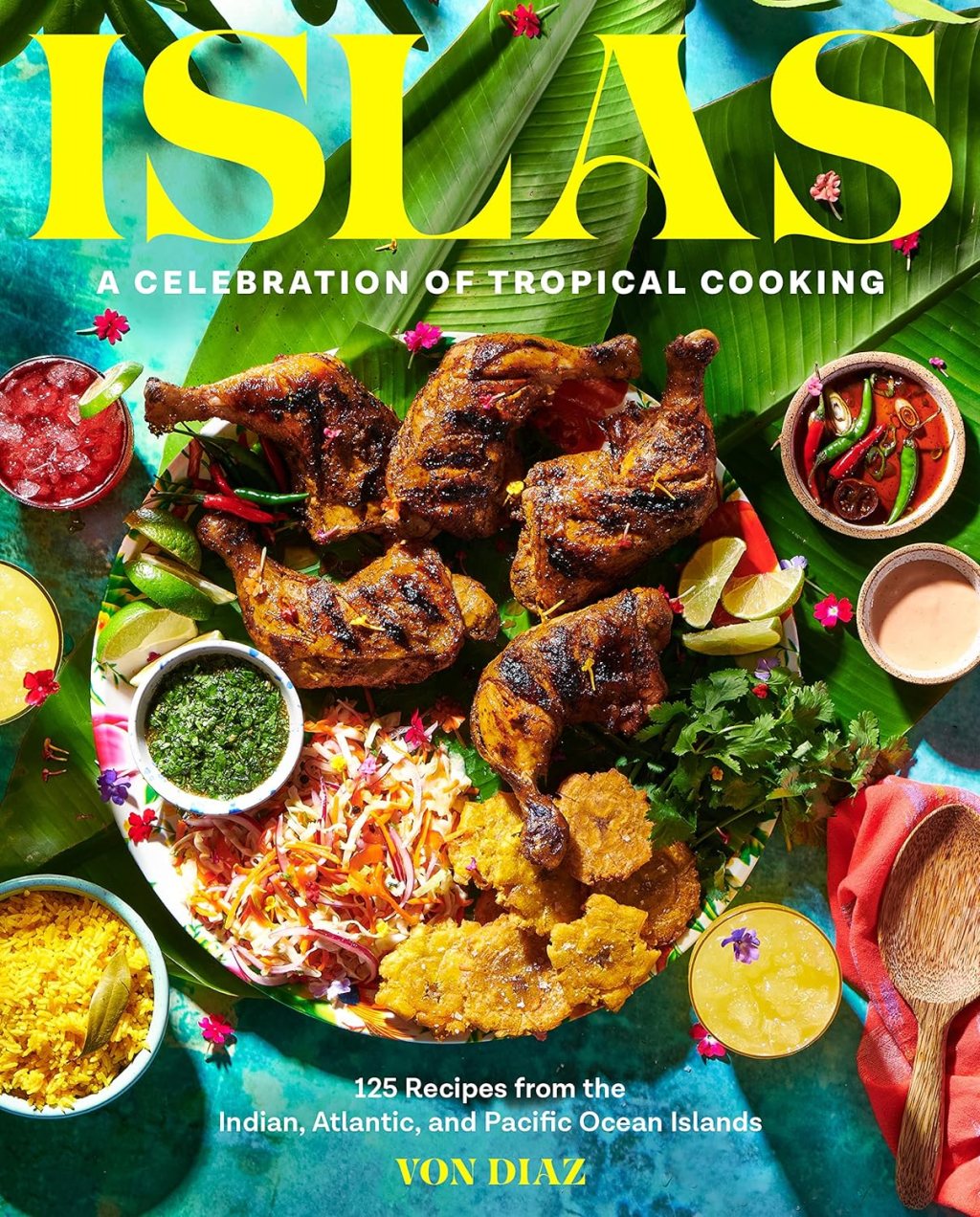
    Islas: A Celebration of Tropical Cooking

    “Whatever you cook or don’t cook, this book is a trip to the islands or islas of the world.”

    A beauty of a book, all lively colors, and wonderful photos, Islas: A Celebration of Tropical Cooking (Chronicle Books) takes us from island to island through the Indian, Atlantic, and Pacific Oceans.

    “The people who live on tropical islands are among the toughest, scrappiest, most resilient people of the planet,” writes author Von Diaz, an Emmy Award-winning documentarian, food historian, and author of Coconuts to Collards: Recipes and Stories from Puerto Rico to the Deep South (University Press of Florida) . “Storms have always been unpredictable, and generations of islanders have cultivated ancestral knowledge around how to survive and, importantly, how to feed themselves despite it all. With limited ingredients, they cook in ways that are soul-nourishing and emphasize flavor. Making magic out of what’s available.”

    Her cookbook is about preserving the wisdom and values of island people who live in what Diaz describes as the most volatile and vulnerable places on the planet. She follows their histories and how the grapple with their new realities, combining legacy, adaptability, culture, and fortitude.

    She tells and shows us cooking techniques and recipes from faraway places such as Santo, Vanuatu’s largest island. Here we meet Primrose Siri who shares such recipes as Laplap, the national dish with its alternative layers of starch such as cassava or yam, seafood or chicken, herbs, spices, and fresh coconut milk cooked oven an earth oven heated with hot rock. Closer to home, there’s Pasteles de Masa, a Puerto Rican Christmas traditional dessert.

    Even those who may never cook Arroz Negro Con Pulpo y Calamares (Black Rice with Octopus and Squid) with its rice blackened with squid ink, will be intrigued by this Puerto Rican dish that is definitely eye-catching.

    Keshi Yena’s history dates back to the first Dutch colonial period in Curaçao, a bustling island some 30 miles off the coast of Venezuela. It is the food of enslaved people, as Curaçao was a slave port, who out of necessity took the rinds of cheeses such as Gouda that were discarded by their masters and stuffing it with meat scraps and other scavenged ingredients.

    Some recipes are simple and easy to make at home without a lot of extra ingredients such as Ensalada Talong (Grilled Eggplant and Vegetable Salad) from the Philippines. Others, such as Monfongo Con Guiso, a common dish of green plantains and chicharron or fried pork skins in Puerto Rico are more time consuming but within reach of any cook who wants to give it a try.

    The book is arranged by the chapters including the island’s cooking techniques: Marinating, Pickling + Fermentation, Braising + Stewing, Steaming + In-Ground Cooking, Frying, Grilling, Roasting + Smoking, as well as pantry staples, and sauces, spice blends, and condiments that can easily be made.

    Whatever you cook or don’t cook, this book is a trip to the islands or islas of the world.

    This review originally appeared in the New York Journal of Books.

  • Persian Feasts: Recipes & Stories from a Family Table

    Persian Feasts: Recipes & Stories from a Family Table

    The cuisine of Iran, with origins dating back centuries, is arguably one of the most sophisticated in the world, offering an incredible array of dishes. This cuisine hails from the lands of ancient Persia and has evolved through the ages to what comprises the myriad and distinct regional cuisines in present-day Iran. Also shaping this cuisine is the variety of climates in Iran, the country’s terrain, and geography, with rich soil and plentiful sunshine, as well as the ethnocultural diversity of the country. From Persian Feasts (Phaidon 2024 by Leila Heller).

    A beauty of a cookbook with its lush food photos set on backgrounds of Middle Eastern designs, Persian Feasts celebrates centuries of culinary and cultural history of a land that during the first Persian Empire stretched from the Balkans in Eastern Europe in the west to the Indus valley in the east. Now known as Iran, the cuisine is complex with each region having a distinct imprint upon the ingredients and how it is prepared.

    Drilling down even further, according to author Leila Heller, each Iranian household holds itself to a high standard and has strong beliefs when it comes to Persian food. That said, anyone first attempting to cook these dishes at home should be assured by Heller’s statement that there is no wrong way or right way of making Persian food,

    “The personal preferences do impact Persian recipes,” she writes. “For instance, some prefer sweetness over tartness, buttery over dry, and many will adjust seasoning spices and herbs accordingly.”

    Making it even more accessible, most of the recipes in her book can be recreated at home from ingredients readily available in both neighborhood supermarkets and gourmet food stores. The more unique items—sumac, dried barberries dried, Persian limes, and prunes—are available at Middle Eastern or Indian food stores as well as online.

    Heller, president of the Leila Heller Gallery, a contemporary art gallery in New York and Dubai. She holds a bachelor of art degree from Brown University, a master’s degree in art from Sotheby’s Institute in London, and a second master’s degree in art history and museum management from George Washington University. She lives in both New York and Dubai, bridging the gap between East and West through art, culture, and food. This book is another way for her to share her knowledge in these areas. Besides recipes, we learn about celebrations, festivities, and events and the foods involved in each.

    For those just beginning to experiment with Persian cuisine, several recipes stand out as a straightforward way to get acquainted with techniques and ingredients. For example, all the ingredients needed to make Chicken Saffron Frittata are familiar and the dish can be completed in seven steps. In her description of the dish, Heller helps acquaint us with the background of the frittata locally known as chegehertmeh and hails from the lush province of Gilan in northern Iran that borders on the Caspian Sea.

    Smoked Eggplant with Tomato is another dish originating from the Caspian Sea region. Again, the ingredients are readily available, and many are already probably in a home chef’s pantry. The dish has seven short steps but is slightly different in that the eggplant is smoked over an open flame to give it the distinct flavor that makes this dish a winner. A refreshing summer dessert that’s both easy to make and gluten-free, Cardamom & Rose Water Pudding takes only four steps to create a pretty presentation. Yogurt Drink with Mint is even easier—five ingredients mixed in a blender.

    Once a home chef has mastered these simple recipes, more complex dishes like Herb & Noodle Potage, Shirazi Rice with Cabbage and Meatballs, and Persian Noodle Rice will seem less daunting, making Persian cooking an easy undertaking.

    Lentil & Quinoa Salad with Herbs

    By Leila Heller, “Persian Feasts: Recipes & Stories from a Family Table

    2 tablespoons butter
    2 cups (8 oz/225 g) dried barberries, rinsed
    1 tablespoon sugar
    2 cups (1 lb/450 g) dried Puy lentils
    1 cup (8 fl oz/250 ml) and 2 tablespoons extra-virgin olive oil
    1 cup (6 1/2 oz/185 g) quinoa
    1 cup (3 1/2 oz/300 g) finely chopped scallions (spring onions)
    1/2 cup (1 oz/30 g) finely chopped cilantro (coriander), plus extra for garnish
    1/2 cup (2 oz/55 g) finely chopped chives
    1/2 cup (1 oz/30 g) finely chopped parsley
    4 tablespoons finely chopped dill
    3/4 cup (6 fl oz/175 ml) red wine vinegar or pomegranate molasses
    2 tablespoons cumin seeds
    1 tablespoon salt
    2 teaspoons black pepper
    1/2 teaspoon cayenne pepper
    1 1/2 cups (9 3/4 oz/275 g) pomegranate seeds, for garnish (optional)

    Melt the butter in a large skillet over medium heat. Reduce the heat to low, then add the barberries and sugar. Mix for 2-3 minutes, until the sugar has melted.Pick over the Puy lentils to remove any debris.

    Rinse the lentils under cold running water. In a medium saucepan, combine the lentils, 4 cups (32 fl oz/950 ml) of water, and 2 tablespoons of oil. Bring the water to a boil, then reduce the heat to a simmer and cook for 20-35 minutes, until the lentils are cooked through. Drain, then set aside.

    Rinse the quinoa under cold running water, then drain. In a medium saucepan, combine the quinoa and 1 1/2 cups (12 fl oz/350 ml) of water. Bring to a boil, then reduce the heat to medium-low. Cover and simmer for 15-20 minutes, until tender. Set aside to cool.

    In a large bowl, combine the quinoa, lentils, scallions (spring onions), herbs, and barberries.

    In a medium bowl, whisk 1 cup (8 fl oz/250 ml) of oil, vinegar, cumin, salt, pepper, and cayenne pepper. Pour over the salad and toss well. Season to taste, then garnish with pomegranate seeds, if using.

    This article originally appeared in the New York Journal of Books.

  • Western Mexico, A Traveler’s Treasury: Notes from the Road from the 16th Century On

    Western Mexico, A Traveler’s Treasury: Notes from the Road from the 16th Century On

    Once called Coatlan after the earthenware vessels that were coiled like a serpent and used for storing pulque, a white wine made from the Mexcal tree and used as an offering to a stone idol, Cuiseon was a small village on The Nine Rivers which flowed into Lake Chapala. 

    This and other food traditions, according to The Geographic Account of Poncitlán and Cuiseo del Río dated March 9, 1586, showed their typical fare as venison, fish, and rabbit, a thin kind of porridge to drink hot with powdered chile that was broken up and sprinkled on top, and Izquitl—corn toasted on a comal and seasoned with salt. The villagers harvested chia, huauhtli, and cocotl, the latter a mustard-like seed that is ground up and mixed with corn and water to drink both before and after eating.

    As it relates to the foods we eat today, we still consume corn and fish and season with salt and powdered chiles. We’re less likely to dine on venison or rabbit while cocotl is so obscure that even a Google search doesn’t come up with a hit. But both chia and huauhtli, a species of amaranth, an ancient grain, are recognized as beneficial to our health. And so, the foods of this village still play a part in our lives.

    This is an obscure slice of everyday life, a glimpse into the past that would be lost to time, confined to dusty archives, and/or shelved away to be forgotten in libraries or museums, if not for the work of Tony Burton, an award-winning writer whose books include “Lake Chapala: A Postcard History” (2022), “Foreign Footprints in Ajijic: Decades of Change in Mexican Village” (2022), “If Walls Could Talk: Chapala’s historic buildings and their former occupants” (2020), “Mexican Kaleidoscope: myths, mysteries and mystique” (2016), and “Western Mexico, A Traveler’s Treasury” (4th edition, 2013).

    Reading through a unique collection of extracts from more than fifty original sources, many never previously available in English, Burton’s book, “Lake Chapala Through the Ages; an anthology of travelers’ tales,” is a fascinating look at the region's formative years from the arrival of conquistadors in the early 1500s to the start of the Mexican Revolution in 1910, as told through the eyes of an assortment of travelers-- poets, friars, exiles, government officials, geographers, historians, explorers, and scientists.

    What they saw in their journeys is fascinating, as are the people who traveled and then shared their observations.

    "My inspiration was really curiosity about the documentary basis for things I’d heard about the history of the area, some of which struck me as highly imaginative," says Burton. "I began working on the book way before the development of online search engines or digitized books, so it took me almost a decade to track down originals of the 50+ published works, excerpts from which appear in the final book. It would have been impossible without the support of an excellent inter-library loan system, personal visits to libraries in the USA and England, and the generous contributions of a small army of people I thank in the book’s acknowledgments.

    "I still remember the shivers that ran down my spine when I first handled the leather-bound Belgian journal from the 1830s containing an article about Lake Chapala by Henri Galeotti. I knew that article existed because some parts had been translated into Spanish and published in Mexico. The challenge of finding the original proved to be well worth the effort—in my opinion, Galeotti’s masterful, illustrated, systematic, scientific coverage of the area's geology and natural history has no equal."

    Barrister and seasoned traveler William Henry Bullock Hall (1837–1904), who was born in Essex, England, and educated at Balliol College, Oxford visited Mexico taking a route that began in Veracruz and took in Mexico City, Tepic, San Blas, Guadalajara, Querétaro and Tampico."

    Looking for boiling water while staying at the hacienda of Buena Vista, he made the following observation:

    “In one of the recesses of the building, I discovered, over her earthenware pots, the old woman, upon whom you are sure to stumble, sooner or later, in Mexican houses, if you only persevere. As good luck would have it, this old crone was in the act of trying to blow into a sufficient glow to boil a jug of water, the bits of charcoal which, laid in a square receptacle sunk in the face of a solid brick counter, do the duty of a fire all over Mexico. From this old lady I obtained not only boiling water, but a couple of poached eggs, so that I fared sumptuously.”

    English women often were intrepid travelers, journeying to places remote and probably most uncomfortable. How joyous to meet Rose Georgina Kingsley (1845–1925), the oldest child of the Rev. Charles Kingsley, a celebrated English clergyman and novelist, who contributed the prologue to her book” South by west or winter in the Rocky Mountains and spring in Mexico,” published in 1874 and digitized by Harvard University in 2006.

    Rose crossed the Atlantic to Colorado Springs in November 1871 to join her brother, Maurice, who was assistant treasurer of the company developing Colorado Springs writes Burton, noting that, even by 1872, there were fewer than 800 residents, so both Kingsleys were pioneer settlers. Her writings and sketches were published by General William Jackson Palmer, the founder of Colorado Springs, a railway entrepreneur and owner of the newspaper Out West.

    When Palmer decided that same year to examine possible routes for a railway linking Texas to Manzanillo, Rose accepted the invitation to join him along with his wife, Queen, and General William Rosencrans on a trip that took them first to Manzanillo and then inland to Colima, Guadalajara, Guanajuato, Querétaro, and Mexico City. Her descriptions of the sights and interactions along the way are fascinating.

    “At San Pedro [Tlaquepaque] we stopped and got three men as escort, and at 9.30 came to San Antonio, a hacienda where we changed mules, and had breakfast in a hut by the roadside,” she writes. “The women in the hut, which was only made of sticks and thatch, gave us eggs, frijoles, tortillas, and carne seca, in chilli Colorado sauce, which for hotness almost beat the mole de guajalote at Atenquique. But besides these native viands we got capital chocolate, made from some cakes we had brought with us. So, on the whole, we fared well.”

    They arrived at La Barca, on the Rio Lerma, on market day and ate a very good meal in a dirty fonda (restaurant) where the walls were covered with broken bits of pottery in decorative patterns. There they learned they had barely missed being robbed the night before—all of which Rose, in her writings at least, takes in stride.

    Burton, the editor-in-chief of MexConnect, Mexico’s top English-language online magazine, spans time and place to take us into one of his favorite regions of Mexico where he lived for over a decade, bringing the past alive and introducing us to an interesting cast of characters.


  • The French Ingredient: Making a Life in Paris One Lesson at a Time

    The French Ingredient: Making a Life in Paris One Lesson at a Time

    The Book Stall (811 Elm Street in Winnetka) is delighted to host author Jane Bertch on Thursday, April 11 at 6:30 pm for a discussion featuring her new book, The French Ingredient: Making a Life in Paris One Lesson at a Time, the inspiring and delicious memoir of an American woman who had the gall to open a cooking school in Paris. A true story of triumphing over French naysayers and falling in love with a city along the wayThe French Ingredient is the story of a young female entrepreneur building a life in Paris. As she established her school, Jane learned how to charm, how to project confidence, and how to give it right back to rude waiters. Having finally made peace with the city she swore to never revisit, she now offers a love letter to France, and a master class in Parisian cooking and living.

    To register for this free event, please visit their website or CLICK HERE. Space is going fast!

    More About the Book: When Jane Bertch was eighteen, her mother took her on a graduation trip to Paris. Thrilled to use her high school French, Jane found her halting attempts greeted with withering condescension by every waiter and shopkeeper she encountered. At the end of the trip, she vowed she would never return. Yet a decade later she found herself back in Paris, transferred there by the American bank she worked for. She became fluent in the language and excelled in her new position. But she had a different dream: to start a cooking school for foreigners like her, who wanted to take French cuisine classes in a friendly setting, then bring their new skills to their kitchens back home.

    Predictably, Jane faced the skeptical French, as well as real-estate nightmares, and a long struggle to find and attract clients. Thanks to Jane’s perseverance, La Cuisine Paris opened in 2009. Now the school is thriving, welcoming international visitors to come in and knead dough, whisk bechamel, whip meringue, and learn the care, precision, patience, and beauty involved in French cooking.

    More About the Author: Jane Bertch has spent more than two decades living and working in Europe. In 2009, she started La Cuisine Paris, which has become the largest nonprofessional culinary school in France. She holds a BA in English, an MA in labor and industrial relations from the University of Illinois, and an executive MA from the French business school INSEAD. The French Ingredient is her first book. Follow her on her blog.

  • Koshersoul: The Faith and Food Journey of an African American Jew by Michael W. Twitty
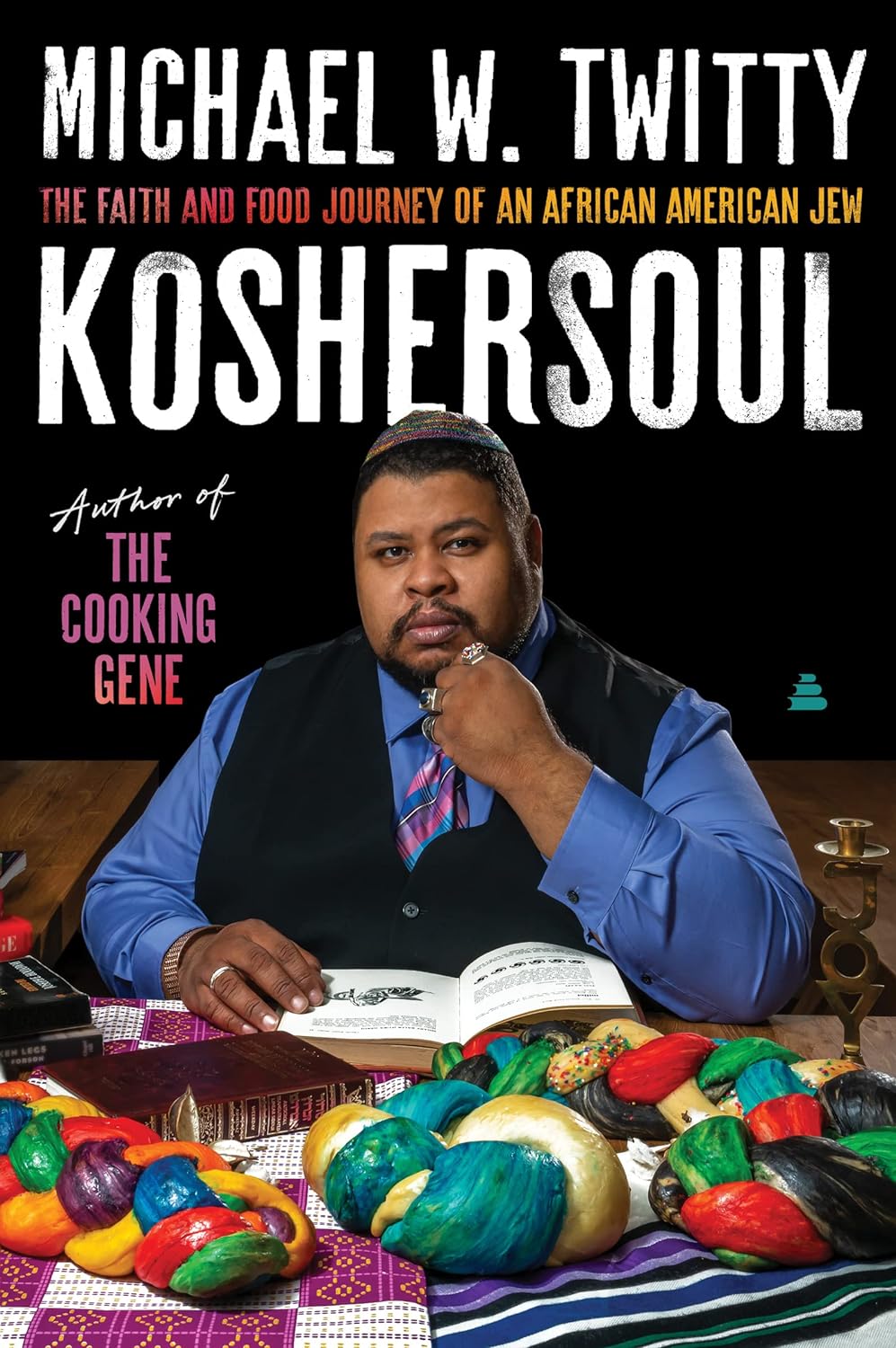
    Koshersoul: The Faith and Food Journey of an African American Jew by Michael W. Twitty

    “most importantly, Twitty reminds us that you don’t have to be Black or Jewish to love koshersoul.”

    Both a cookbook and a memoir, Koshersoul (Amistad) explores the food traditions of both Black and Jewish cultures and how for Black Jewish people, the two combine, becoming a distinctive foodway of its own.

    “When I first started talking about developing this book, a fellow African American food writer asked what it was about, saying ‘So you’re not writing about Black [food]; you’re writing about Jewish [food)],” writes Michael W. Twitty, a culinary historian, living history interpreter, and Judiacs teacher in the introduction to his book.  “My response was reflective: no this is a book about a part of Black food that’s also Jewish food; This is a book about Jewish food that’s also Black food because it’s a book about Black people who are Jewish and Jewish people who are Black.”

    Twitty, creator of Afroculinaria, the first blog devoted to African American history, foodways, and their legacy, won both the 2018 James Beard Foundation Book of the Year Award and Best Writing Award for The Cooking Gene. His writing is thoughtful, deep, and involved, taking a deep dive into his personal history and combining it with his conversations with other Black Jews. He seeks to put this in a historical and cultural perspective, showing us how food and identity converge.

    “Black and Jews in their Venn diagram have seen considerable turmoil and pain,” he writes “and this too is a fundamental ingredient.”

    But no matter what is going on in the world or what has happened in the past, we all have an urge and need to eat, writes Twitty, plus an enjoyment of what we consume. This is reflected not only in his writing but also in the recipes he shares at the back of the book.

    Twitty describes this section as a koshersoul community cookbook of sorts. He encourages readers when in the kitchen to feel free to adapt them to meet their own dietary practices and preferences.

    The recipes presented here are categorized under holidays and religious observations: Juneteenth, Pesach/Passover, Rosh Hashanah-Yom Kippur-Sukkot, and Shabbat, among others.

    The names of some of the recipes represent the different lands and regions where people came from such as Ghanian Pepper Sauce, Senegalese-Inspired Chicken Soup, Jamaican Jerk Chicken Spaghetti, West Africa Wet Seasoning, and Gullah-Geechee-Inspired Stew.

    Others like Yam Latkes, Kosher Spring Rolls, Collard Green Kreplach Filling, Black Eyed-Peas with Tomatoes, Sephardic Style, and Matzoh Meal Fried Chicken define the merging of two different cultures that meld into a distinct foodway.

    But most importantly, Twitty reminds us that you don’t have to be Black or Jewish to love koshersoul.

    Black-Eyed Pea Hummus

    Serves 4 to 6

    Black-eyed peas are a strong link between the two Diaspora cuisines, probably meeting in the Nile River Valley and the Fertile Crescent. Originally from ancient West Africa, black-eyed peas are a significant part of the cuisine of the Levant to this day, moving with African people throughout the region. Hummus, emblematic and beloved by many cultures in the Levant—is a dish that relies on the staple legume of the Arab farmer and ancient biblical standby, the chickpea. Here the black-eyed pea, loaded with mystical symbolism and its own honored place in West and Central Africa, replaces the chickpea. — Michael Twitty

    • 1 15-ounce can black-eyed peas, rinsed and drained
    • 1⁄4 cup extra virgin olive oil
    • 1⁄3 cup tahini
    • 1⁄2 cup fresh lemon juice
    • 1 ½ teaspoons kosher salt
    • 4 garlic cloves, chopped
    • 1 teaspoon sweet or smoked paprika
    • 1⁄2 teaspoon ground cumin
    • 1⁄2 teaspoon ground coriander
    • 1⁄2 teaspoon chili powder
    • 1 teaspoon brown or turbinado sugar
    • 1 teaspoon hot sauce
    • 2 teaspoons minced parsley, for garnish

    Throw everything but the parsley into a food processor and blend until smooth. Taste and add more spice, hot sauce, or whatever you think it needs. To serve, sprinkle parsley and drizzle olive oil on the top.

    This article originally appeared in the New York Journal of Books.

  • The Great American Recipe Cookbook: 100 Memorable Recipes to Celebrate the Diversity and Flavors of American Food Foreword by Pati Jinich

    opens the door to what American cookery is—the coming together of cultures, identities, flavors, and tastes that celebrate what is probably one of the most diverse cuisines in the world.”

    This is the second edition of The Great American Recipe Cookbook, based on the popular eight-part PBS cooking show contest in which home cooks compete using their personal recipes. It’s a diversity culled from international cultures and traditions from around the world brought to America but also native fare. Think Sausage Pierogies with Barbecue Crema, Jerk Alfredo Pasta and Pan-Seared Scallops with a Side Salad, Chicken Hekka with Wontons, and Malasadas Two Ways.

    The cookbook, a collection of treasured recipes and the stories behind them are provided by an interesting lineup of cooks that includes a recipe writer, real estate developer, Midwestern soccer mom, and a semi-retired architect, homebuilder, and consultant. The diversity of their backgrounds—a first generation American born to two Guyanese immigrants, a mom who was raised in Maui, Hawai’i, a special education teacher from Cleveland whose culinary background is rooted in Southern cuisine, and a general counsel for a financial tech firm whose parents hail from Barbados—is reflected in their recipes.

    Designed in a large format with glossy pages, plenty of color photos, and easy to follow instructions, this is a book for all levels of tastes and cooking skills. Ingredients for the most part are easy to find and don’t involve an outlay of cash for something that will be used only once or twice. As an example, though Bahrat Chicken Thighs with Hummus and Flatbread may sound exotic and complicated, it is a very easy dish to make with the only unique ingredient being Libyan Baharat spice.

    But since that typically consists of black pepper, cardamom, cloves, cumin, nutmeg, coriander, and paprika, it can be used in other recipes as well. There are no unique ingredients in Mini Spinach B’jibin Pies, a recipe that harkens back to the home cook’s Syrian Jewish community. Basically, these are mini pies that can be made in four easy steps—the first one being to preheat the oven. All this makes it easy for home chefs to try new cuisines without a lot of complicated ingredients and equipment.

    With a foreword by cookbook author Pati Jinich, whose three-time James Beard award-winning and Emmy nominated TV series “Pati’s Mexican Table” is now in its 12th season, the book goes beyond the typical concept of American cookery and delves into what we all bring to the table.

    “The phrase “American food’ often brings to mind certain classic dishes: a fried chicken recipe served up at a summer picnic or a honey-glazed ham gracing the table at the holidays,” reads the book’s introduction. “And those meals are delicious ones to celebrate, especially when we can share them with the people we love. But those quintessentially ‘American’ foods represent only a narrow sliver of what our country’s cuisine really is. We are one nation with more than one million kitchens, each with its own heritage, culture, and community—making American food an amazing mix of different culinary traditions that bring together flavors from around the country and beyond.”

    In all, The Great American Recipe Cookbook (published by Ben Bella Books) opens the door to what American cookery is—the coming together of cultures, identities, flavors, and tastes that celebrate what is probably one of the most diverse cuisines in the world.

    Croque Madame Mini Quiches and Dijon Béchamel

    • Croque madame mini quiches
    • All-purpose flour, for dusting
    • 1 sheet frozen puff pastry, thawed
    • 1 tablespoon olive oil or unsalted butter
    • ½ small sweet onion, diced
    • 1 garlic clove, grated
    • 6 large eggs
    • ¾ cup heavy cream, divided
    • ¼ teaspoon freshly grated nutmeg
    • Salt and ground black pepper to taste
    • 4 ounces ham, diced
    • 1½ cups shredded Gruyère cheese
    • 1 tablespoon fresh thyme
    • 2 tablespoons chopped fresh chives
    • Dijon béchamel
    • 1 tablespoon unsalted butter
    • 1 small garlic clove, grated
    • 1 tablespoon all-purpose flour
    • ¾ cup whole milk
    • ¼ teaspoon freshly grated nutmeg
    • 1½ teaspoons Dijon mustard
    • Salt and pepper to taste
    1. Preheat the oven to 400 degrees F. Spray a 12-cup muffin tin with nonstick cooking spray.
    2. On a lightly floured surface, roll out the puff pastry sheet to about ¼ inch thick. Cut it into 9 squares. Press the pastry squares into the prepared muffin cups. Bake for 5 minutes.
    3. Meanwhile, heat the oil in a large skillet over medium heat. Add the onion and sauté until soft, about 5 minutes. Add the garlic and sauté until the garlic is soft, about 2 minutes. Remove the pan from the heat.
    4. In a small bowl, make an egg wash by whisking together 2 of the eggs and 2 tablespoons of the cream.
    5. In a large bowl, whisk together the remaining 4 eggs and remaining cream until well blended. Add the nutmeg and season with salt and pepper.
    6. Fill each of the pastry-lined muffin cups with equal amounts of the ham, cheese, cooked onion and garlic, thyme, and chives, then pour over the egg and cream mixture. Brush the edges of the dough with the egg wash. Bake for 15–18 minutes, until the pastry is golden brown and the egg mixture is set. Let cool slightly before serving.
    7. While the mini quiches bake, make the Dijon béchamel. In a small skillet, melt the butter over medium heat. Add the garlic and cook for 1 minute. Whisk in the flour to make a roux. Cook the roux for several minutes, stirring constantly, until it takes on a light brown color. Slowly add the milk, whisking constantly, until you have a thickened and smooth sauce. Add the nutmeg and Dijon mustard and stir to fully incorporate. Taste the sauce and season with salt and pepper as needed.
    8. Pour the béchamel over the mini quiches and serve with a fruit salad.
    9. Recipe courtesy of The Great American Recipe

    Cassava Pone

    • 3 medium to large cassavas (about 4 pounds), peeled and cut into thirds
    • 2 cups finely shredded grated coconut
    • 1 (14-ounce) can sweetened condensed milk
    • 1 (14-ounce) can coconut milk
    • 3 tablespoons ground cinnamon
    • 1 tablespoon freshly grated nutmeg
    • 2 teaspoons freshly cracked black pepper
    • 1 teaspoon salt
    • 3 large eggs
    • 1 (12-ounce) can evaporated milk
    • ½ cup white sugar
    • ½ cup packed light brown sugar

    Directions

    1. Preheat the oven to 350 degrees F. Grease 2 (9 × 9) baking pans or 1 (13 × 9) baking pan.
    2. Finely grate the cassavas, either by hand with a box grater or in a food processor with a grating disk. (If you’re using a food processor, you may need to cut the cassavas into pieces to fit the food processor tube.)
    3. With a clean tea towel, squeeze the excess liquid from the grated cassava and transfer it to a bowl. Add the shredded coconut, condensed milk, coconut milk, cinnamon, nutmeg, pepper, and salt, and stir to combine.
    4. In a separate medium bowl, whisk together the eggs, evaporated milk, and sugars until well blended.
    5. Slowly stream the egg mixture into the cassava mixture and stir to combine.
    6. Pour the batter into the prepared baking dish(es) and spread it out evenly with a rubber spatula.
    7. Bake until the edges are set and golden and a toothpick inserted in the center comes out clean, 25–30 minutes. Let the pone cool and set for 10 minutes before slicing.

    Mini Spinach B’jíbín Pies

    Recipe courtesy of The Great American Recipe

    • 2 cups all-purpose flour
    • 2 teaspoons kosher salt, divided
    • 1 teaspoon sugar
    • 1 teaspoon baking powder
    • ½ cup plus 1 tablespoon vegetable oil
    • ¼ cup cold water
    • 1 onion, chopped
    • 4 large eggs
    • 2 pounds frozen chopped spinach, thawed and squeezed dry
    • ½ cup shredded mozzarella cheese
    • ½ cup ricotta cheese
    • ½ cup crumbled feta cheese
    • ½ cup shredded Muenster cheese
    • ¼ cup grated Parmesan cheese
    • 1 teaspoon chicken consommé powder
    • 1 teaspoon garlic powder
    • ½ teaspoon ground black pepper
    • Pinch cayenne pepper

    Directions

    1. Preheat the oven to 400 degrees F. Grease a 12-cup muffin tin.
    2. In a large bowl, mix together the flour, 1 teaspoon of the salt, the sugar, and baking powder. Mix in ½ cup of the oil and the cold water until uniform in texture. Divide the dough into 12 equal balls. Place a dough ball in each prepared muffin cup. Press the dough into the bottom and up the sides to form a mini crust.
    3. In a small skillet, heat the remaining 1 tablespoon oil over medium heat. Add the onion and sauté until soft, about 5 minutes.
    4. In a large bowl, whisk the eggs together. Add the spinach, cooked onion, all the cheeses, consommé powder, garlic powder, remaining 1 teaspoon salt, the black pepper, and cayenne and mix thoroughly. Divide the spinach mixture equally into the mini crusts. Bake for 30–40 minutes, until cooked through. Serve warm or at room temperature.

    This article originally appeared in the New York Journal of Books.