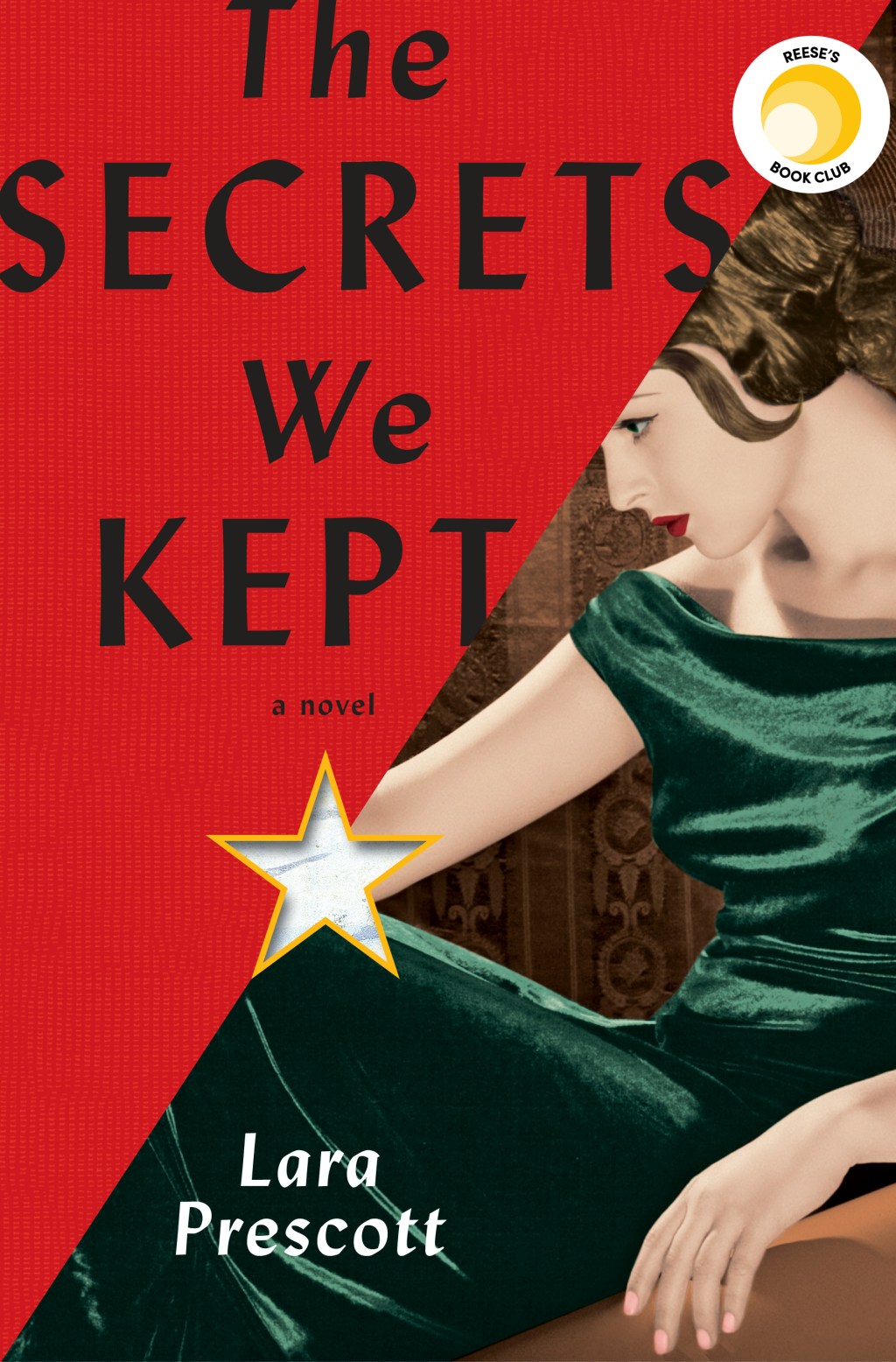
The Secrets We Kept by Lara Prescott weaves the threads of fact and fiction as she tells the story of Boris Pasternak, Nobel Prize winning author of Dr. Zhivago and the real life intrigues and machinations first to get the book published against the will of a repressive Soviet regime and then its use by the CIA as a propaganda tool during the Cold War. The novel, about two lovers Yuri Zhivago and Lara Antipova and their ultimately doomed romance set against the chaotic backdrop of the decades spanning the Russian Revolution and World War II, would never have been published if Pasternack hadn’t been able to smuggle it out of Russia and into the hands of an Italian publisher.
The
Soviets, who didn’t want the book to be read, demanded the publisher return
it. He refused, the book was published
and became an international bestseller which was turned into a mega-hit movie
of the same name.
Prescott’s
mother so loved the movie, she named her daughter after the heroine, Lara
Antipova.
“As
a child, I’d wind up her musical jewelry box again and again just to hear it
play ‘Lara’s Theme,’” says Prescott about the haunting melody that also became
a hit. “I, too, loved the movie, but it wasn’t until I actually read the novel
that I felt such a strong connection with the material. It was as if the old
master was reaching out to me across time and space—a candle in a window on a
winter night.”
But it was Prescott’s father who added another twist to the real life story of the Nobel Prize winning book by sending her an article from the Washington Post about how the CIA spy operation to distribute the book throughout the Soviet Union.
Fascinated by the article, Prescott delved deep into research reading once classified CIA documents, biographies of Pasternack and his muse and inspiration Olga Ivinskaya and visiting his dacha in Peredelkino, now a museum, where he wrote the novel and his gravesite. She tells the story of Pasternack’s persecution (the Soviets made him turn down the Nobel Prize award) through Olga’s eyes as well as those of a woman involved with the CIA.
“Also at the forefront was telling the story of all those women—many lost to history—who served the United States during WWII and the CIA’s early days,” says Prescott who at first wondered how a book could be the center of a CIA plot before realizing that made a lot of sense. “Of course books could be used in this way because they can change the hearts and minds of people.”
A dream of a tsunami sweeping across the plains of Nebraska helped form the plot of Kassandra Montag’s After the Flood, her novel about a time in the future when rising waters engulf the earth, leaving only small chunks of land suitable for living.
Montag, who is from
Nebraska, had just moved back from Amsterdam when she had not only a dream as
well as a vision.
“I was
pregnant with my first child and I saw the image of a mother with her daughter
sailing on a boat in a future flooded world but separated from her other
daughter,” she says. “Then I re-discovered a line from a journal I had kept— ‘a
group of people huddle around a campfire, struggling to survive and looking for
a safe haven.’ Group dynamics has always been an interest of mine and these
story lines—a mother separated from her daughter and people trying to survive
in a post-apocalyptic world all came together and were part of the inspiration
for writing the book.”
After the Flood tells the story of Myra and her seven-year-old daughter Pearl who live on their small fishing boat and visit what’s left of dry land to trade for goods and gather information. When Myra learns her long missing daughter, Row, who was kidnapped by her father, has been seen near the Arctic Circle, she and Pearl make their way through the north treacherous and frozen waters. Their hope is that Row will still be there when they arrive. During their voyage the two join up with others who are also struggling to survive.
To
create this alternate universe, Montag studied a variety of subjects including stories
of the Bajau, a group of nomads in Southeast Asia who are sea dwellers, so used
to spending time in the water they can hold their breath for up to 13 minutes.
“I
also researched ancient seafarers like the Vikings, read guidebooks on how to
build fires, fish and other survival skills,” says Montag. “And I watched
sailing videos while eating my lunch.”
Montag,
who is a published poet, says that she was surprised at the reaction to her
book, which is scheduled to become a television series.
“As
a poet, you don’t get this type of interest,” she says.
Ultimately, she says,
the book is about what parts selfishness and selflessness play in the fight for
survival.
“It interested me how
the survival instinct can be inherently selfish in a dangerous world without
enough resources and others transcended those feelings,” she says. “I was also interested
in the way that survival can be seen as selfless as well, as an act of love
carrying on.”
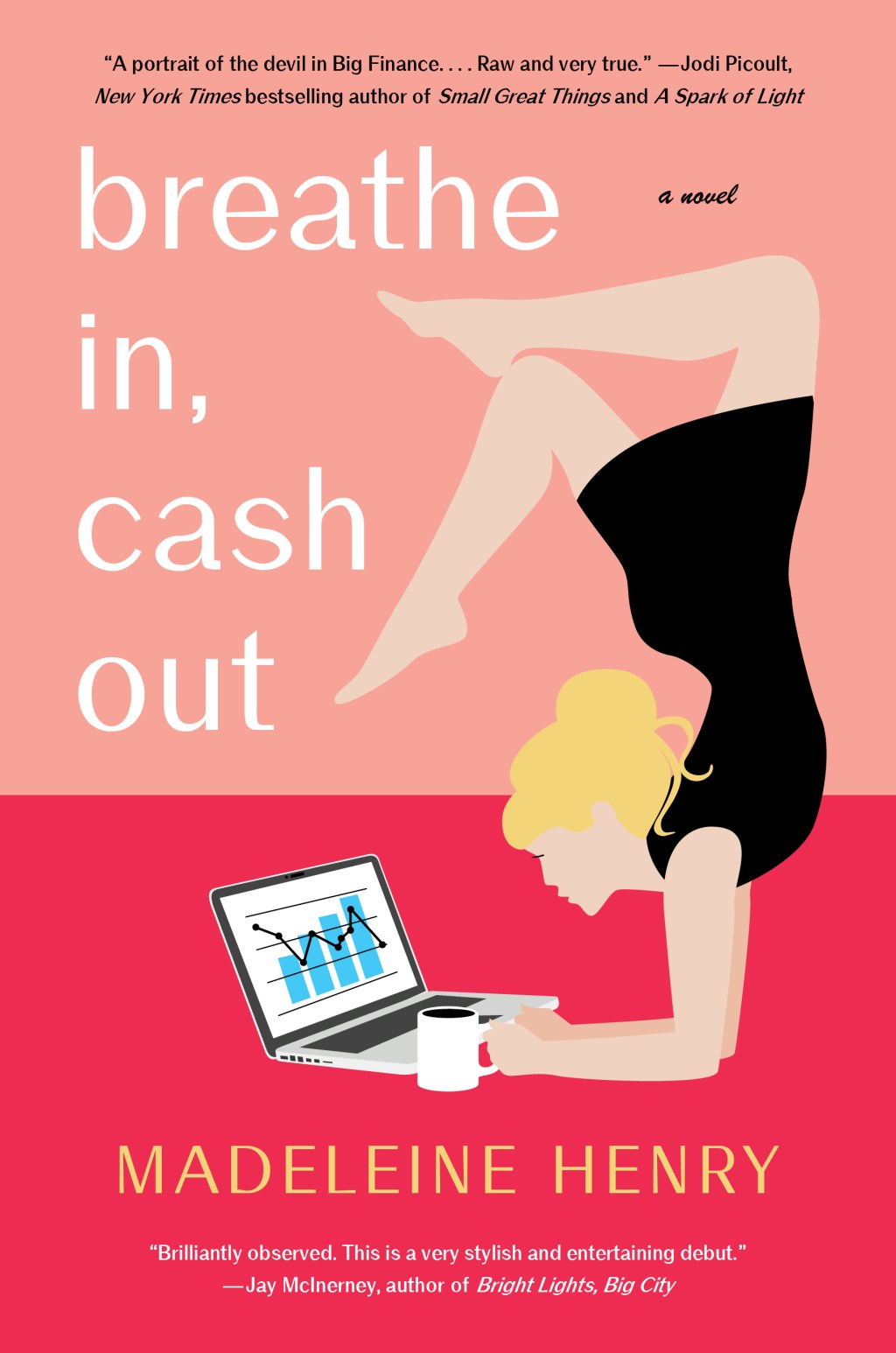
“It’s The Devil Wears Prada of Wall Street, in that you get a glimpse into finance—if you’ve ever worked in investment banking you’ll find anecdotes that really resonate and for those that haven’t, it lets you know what the business is really like,” says Madeleine Henry, about her new book Breathe In, Cash Out, a humorous novel about a yoga-addicted investment banker just waiting for her super big yearly bonus so she can quit and open a yoga practice.
Henry herself is very much like her
heroine, Allegra Cobb. She’s a Yale graduate and a former Goldman Sachs banker who
is totally into yoga.
“The book shows the two worlds
Allegra inhabits and how different they are, yoga versus fiancé, humility
versus power and internal rewards versus external rewards,” says Henry, who
recalls her own crazy schedule where days started at day 9 a.m. and ended at 10
p.m. when she was finally able to leave the office. Then it was drinks and
complaints about how awful their jobs are with her colleague. Then to bed and repeat
the entire scenario the next day.
As a bottom rung investment banker,
Allegra spends up to 24 hours a day changing the colors on stacked bar charts,
“making my bosses feel better about themselves.”
One of the reasons Allegra feel
stuck in her job—besides the great pay, prestige and waiting for her bonus—is
because he widowed father is so proud of her success and since he’s sacrificed
so much for her since her mother died, she finds it hard to tell him she’s chucking
it all to teach yoga.
When Skylar Smith, a yogi guru with
over two hundred thousand Instagram followers (making her one of the top InstaYogis,)
offers to help her break into the business, Allegra sees herself getting close
to her dream. Skylar, a beautiful blonde who models for expensive and trendy
yoga clothing lines has the life Allegra wants. At least that’s what she thinks at first.
Henry, who always loved to write
and was a comedy writer for the Yale Recorder, has had so much success with
this her first novel that she was able to quit her job at Goldman and now
teaches yoga and has written next novel.
Asked if some of the anecdotes she
uses in her book about her time at Goldman might upset people she worked with,
she laughs, saying “they’ll think it’s funny because it’s so true.”
Chicago-based author Renee Rosen
typically writes novels about historic periods and people in Chicago, such as Windy
City Blues; White Collar Girl and Dollface.
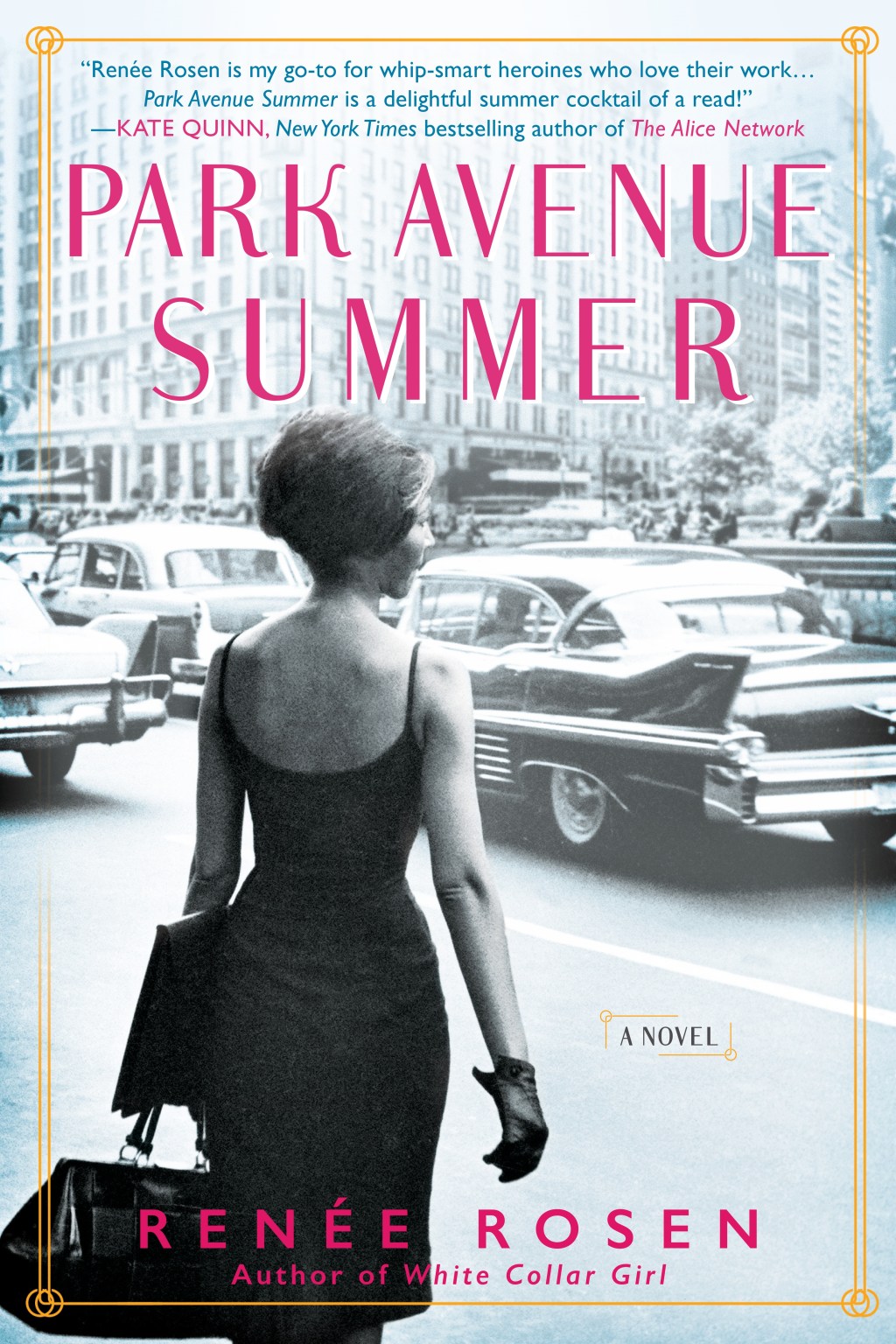
But in Park Avenue Summer, her latest novel, which she describes as “Mad Men Meets The Devil Wears Prada,” she takes us to New York City during the era of Helen Gurley Brown, first female editor-in-chief of Cosmopolitan magazine and the author of the scandalous ’60s best-seller, Sex and the Single Girl.
Like many of us, Rosen read Cosmo when she was young. Rosen remembers quickly flipping to the “Bedside Astrologer” column.
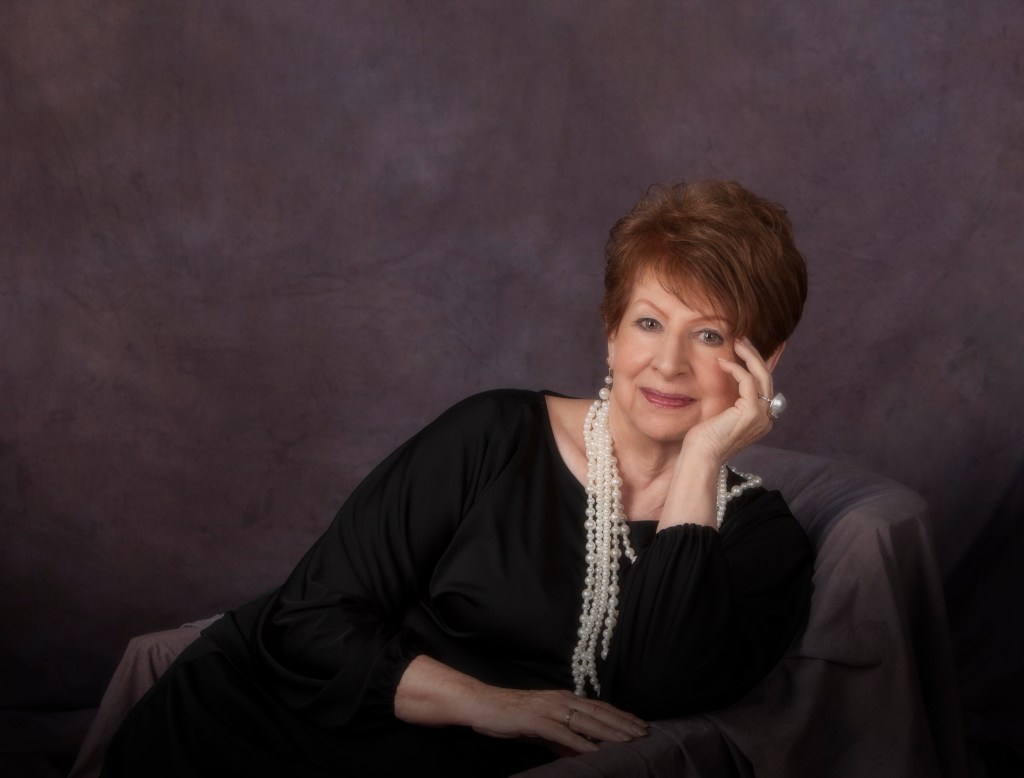
Author Renee Rosen
“I was looking for guidance on my
16-year-old love life,” she says, noting that all the time she spent poring
over the glossy pages of Cosmo essentially shaped her view of female sexuality
and female empowerment. “She changed the face of women’s magazines,” she said
of Brown.
“Park Avenue Summer”
tells the story of Alice (Ali), who moves to New York City after breaking up
with her boyfriend and ends up getting her dream job, working for Cosmo.
Like she does for all her books,
Rosen threw herself into full research mode, wanting to convey the story
through Alice’s eyes.
“I even went down to the Port
Authority to get the feel of what Alice would have seen and felt when she
arrived,” Rosen says.
Because Rosen had lived on the
Upper West side in New York for a year, she knew where Ali, as a single working
girl, would live — an area in the East 60s called “the girl’s ghetto.” She
walked the streets until she found the exact apartment she had envisioned for
Ali.
All in the name of research, she
visited Tavern on the Green, 21 Club, St. Regis and the Russian Tearoom, all
swank places still in business that were popular back then. But best of all, a
friend introduced her to Lois Cahall who had worked for Brown.
“Helen Gurley Brown was like a
second mother to Lois,” Rosen says.
“She and I became good friends, and
she vetted the book for me. It was like a gift from the gods, because she knew
so much about Brown and Cosmo and that time.”
Rosen is very much an admirer of
Brown and what she accomplished.
“She really wanted to help women be
their best,” she says. “She wanted them to know that they could get what they
want even in what was then a man’s world.”
When Rosemary Gard was growing up in Gary, Indiana, she asked for and was given a typewriter for her 12th birthday—a Remington portable in a gray hard cover carrying case (in case you’re wondering).
“I’ve been writing ever since,” says Gard who graduated from Lew Wallace
High School in 1956 and credits the patience of one of her high school English
teachers with helping her hone her natural enthusiasm for story telling into a
long lasting ability to convey the unique tales of growing up in Northwest
Indiana, a richly diverse region of the ethnicities and race.
Gard has recently completed Stefan’s Destiny, the tenth and final book in her “Destiny” series. Growing up Croatian in an ethnic enclave, Gard’s books explore the lure of our roots and her own unique childhood.
“I was born in the mid-town
section of Gary at 2625 Van Buren Street in an area known as The Patch back
then,” says Gard. “It was a poor neighborhood and some people even had pigs and
chickens. I spent my school years in the Glen Park
But there was a close knit
solidarity one in which, in Gard’s case, people from the country of origin stuck
together in order not to lose their heritage, sometimes to the point where
intermarriage was frowned upon.
“My parents didn’t want me to
marry anyone who wasn’t Croatian,” she recalls, noting that her boyfriend Robert
Gard was English, German, French and Irish and to avoid the romance from
getting more serious, sent her to live with relatives in a small village near
Zagreb in Croatia.
“I had lots of marriage proposals there, but as my cousin told me, it
wasn’t because I was beautiful but because marrying me guaranteed U.S.
citizenship,” laughs Gard.
She lived the peasant life while there—a straw mattress for sleeping,
dirt floors in living quarters and cooking done on a clay stone—and developed a
deep respect for the devotion people had for their family, land and traditions,
but she remained steadfast in her love for her boyfriend back in Gary.
Of course, there’s a story behind their young romance too. She was only
13 when a friend of a friend introduced them.
“But I lied and said I was 16,” she recalls. “When he found out how old I
was, he was ticked. But I was so darn cute, he came back, and we saw each other
from then on.”
After three months in Croatia, she returned home, her parents relented
and the two married in 1957 and have two children.
“He’s still my boyfriend,” she says. “After we married, he got drafted
and went to Italy and I followed him. We lived at the very top of a hill, the
most expensive gown I owned was an Anne Fogarty dress—you’re too young to know
what that is—and we went away for a few days and when I came back, I noticed
the hem of my gown was ripped. I went across the street to my neighbor and said
to her, now the only one who had a key to our place was your housekeeper so she
must be the one who tore my dress. I found out later that the housekeeper was a
prostitute so when people ask, I tell themI didn’t work in Italy, but my dress
did.”
Ironically, the garrulous Gard says she didn’t speak that much to adults
when growing up.
“The community in which I was raised, the young were not encouraged in
conversation,” she says. “I played
puzzles while the adults talked, but I listened. I knew who was having an
affair with whom. Also, when I was young you could take a child into a tavern,
so I grew up in a tavern and you hear a lot there as well.”
“Rosemary is a natural storyteller,” says Carrie Napoleon, managing
director of the Lake Court House Foundation Inc. which was founded in the 1970s
to save the historic Lake County Courthouse, which is on the Register for
National Historic Places, from being demolished and preserve the 141-year-old
building for future generations to enjoy.
“She keeps me spellbound with all
her stories and she has the ability to carry that over to her books. It’s no
wonder people love them so much.”
Napoleon notes that those attending the book launch/fund raiser will also
have the opportunity to view a display of turn-of-the-century Slovak and Region
history by the Lake County Historical Museum, including one-of-a-kind pieces
from Gard herself. During the event, Gard will share some of her personal
experiences of life as a youngster in both Croatia and Gary that helped form
the characters for her series.
Gard tells me she’s taking a break from writing but then in the next
breath, says she’s planning on calling her next book, I Shop in Dead People’s Closets because of her propensity for
sales.
When I tell her, I need to go as I have an appointment, she says she has one
more story to tell. Who can resist?
It turns out there are two stories, one about how she was the Queen on
the Croatia float in the 1956 Gary’s Golden Jubilee Parade and actor Mark
Harmon’s father, Tom, who grew up in Gary and went on to win the Heisman Trophy
when he played for the University of Michigan, was the grand marshal.
The next has to do with running into a GI at a party.
“The guy starts showing me his scars by pulling up his sleeves and shirt,”
she says. “After he left my husband came up to me and said I’m surprised you
didn’t pull down your pants and show him your new hips.”
In The Mykonos Mob, the tenth book of the Greece-based
mystery-thriller series written by New York Times bestselling author Jeffrey Siger,
Chief Inspector Andreas Kaldis finds himself face-to-face with the nation’s top
crime bosses, all of whom are as perplexed as he is about who’s responsible for
the murder of a corrupt former police colonel who ran the island’s protection
rackets. In the meantime, Kaldis’ s wife, Lila, is trying to find an identity
for herself beyond wife and mother and teams up with an ex-pat with a shady
side. The two decide to mentor exploited young island girls, a charitable act
that unknowingly negatively intersects with her husband’s investigation.
Siger,
who left a lucrative career as a partner in a Wall Street law firm to write mysteries,
says that Greece provides an inexhaustible source of material for the two
central elements of his series–the serious, modern-day issues his characters need
to confront and overcome, and a perspective on those issues found in the
ancient past.
“There is no place on earth more
closely linked to the ancient world than Greece,” he says. “It is the
birthplace of the gods, the cradle of European civilization, the bridge between
East and West. Spartan courage, Athenian democracy, Olympic achievement, Trojan
intrigue—all sprung from this wondrous land.”
It’s also a place he knows very
well.
“Each year I live on Mykonos longer
than any other place on earth, and have for about a dozen years,” says Siger,
noting that he first visited the island 35 years ago at a friend’s suggestion who
thought he’d love Greece. “She was right. From the moment I stepped onto the
tarmac at the Mykonos airport, I felt as if I were home. That very first day I
happened to pass by a jewelry shop on my way into town from my hotel, though I
forget how the proprietor lured me inside. Unbeknownst to me, I’d stumbled upon
the most loved man on Mykonos. A
consummate gentleman and fervent booster of the island, he had an extraordinary
circle of local, national and international friends, all of whom made a point
of regularly stopping by to say hello to him.”
Becoming an insider almost
immediately has helped him craft stories about the workings of the islands both
from a political and social viewpoint.
“My ideas come from the strangest
sources, often unexpected,” says Siger. “More bizarre than where they come from
is how often my fictional plots have an unnerving tendency to come true. For
example, my second novel in the series, Assassins
of Athens featured a character in the mold of Greece’s current Prime
Minister Alexis Tsipras years before his rise to power; my third book, Prey on Patmos, anticipated by seven
years the current turmoil involving Mt. Athos, the Russian government, and the
Patriarch in Constantinople, and many of the details surrounding the fictional
assassination serving as the backstory latest book, were just reported by the
Greek press as key details of an actual assassination that occurred long after The Mykonos Mob was written.”
For more about Jeff Siger and his books, visit jeffreysiger.com/
It’s a dark world at times and New York Times bestselling author Elizabeth Berg feels compelled to make it just a little nicer through her novels. In her latest, Night of Miracles(Random House 2018; $26) she takes us back toMason, Missouri, an imaginary town where kindness reigns and there are happy endings.
Author Elizabeth Berg
“I just needed to create a perfect place in my books since I couldn’t find one on planet Earth or at least a place where,though people have issues, they are nice to each other and treat each other with kindness,” says Berg whose voice on the phone when I call sounds as cheery as her popular books. Night of Miracles is both a stand-alone novel as well as a sequel to her previous novel The Story of Arthur Truluv.
“When I finished that book, I liked being in Mason so much that I felt the need to go back there,” says Berg, who is driven by her imagination to write stories and whose plots often derive from just one brief vision or illusory thought. The character of Arthur developed because of an image she had of an old man sitting on a lawn chair in a cemetery eating lunch by the grave of his wife.
“I wanted to know who this man was
and what his life was like,” says Berg. “I felt he had something to teach me and
I was right.”
Then it was Lucille’s turn to inspire. A cantankerous character who played a prominent role in The Story of Arthur Truluv, she returns again in Night of Miracles following a glimpse Berg had showing Lucille washing dishes while looking out her kitchen window and seeing stars.Interestingly, Lucille is a stellar baker and while Berg says she doesn’t live up to that standard she does make a mean pie using a crust recipe she garnered a long time ago listening to “The Phil Donahue Show.” As for Mason, she’s returned to it once more, she’s just finishing her third book in the series, The Confession Club. Berg thinks of her writing as inspirational.
“One of the things that I hope formy reader is that if your definition of what a miracle is can expand into ordinary life, you’ll see miracles everywhere,” she says. “When I see a cardinal, I gasp in wonder. It’s not that I want people to turn away from the problems of the world as we have a lot of work to do, but I want them to see a good side of life as well.”
Pausing, she then continues with a slight laugh, saying “call me the schmaltz queen, but these times, for me, call for something like that.”
Ifyougo:
What:
Elizabeth Berg will be doing several reading and signings in the Chicago area:
Thursday, November 29th at 12:00 noon, University Club luncheon, 76 E. Monroe,Chicago, IL . Cost is $25. Call The Book Stall to make a reservation. 847-446-8880.
Thursday,
November 29th at 6:30 p.m., Book
Stall, 811 Elm Street, Winnetka, IL. 847-446-8880.
Monday,
December 3rd at 7 p.m., Frankfort
Public Library, 21119 S. Pfeiffer Rd., Frankfort, IL. 815-534-6173.
Wednesday, December
5 at 7 p.m., Women And Children First, 5233 N. Clark St., Chicago, IL. 773-769-9299
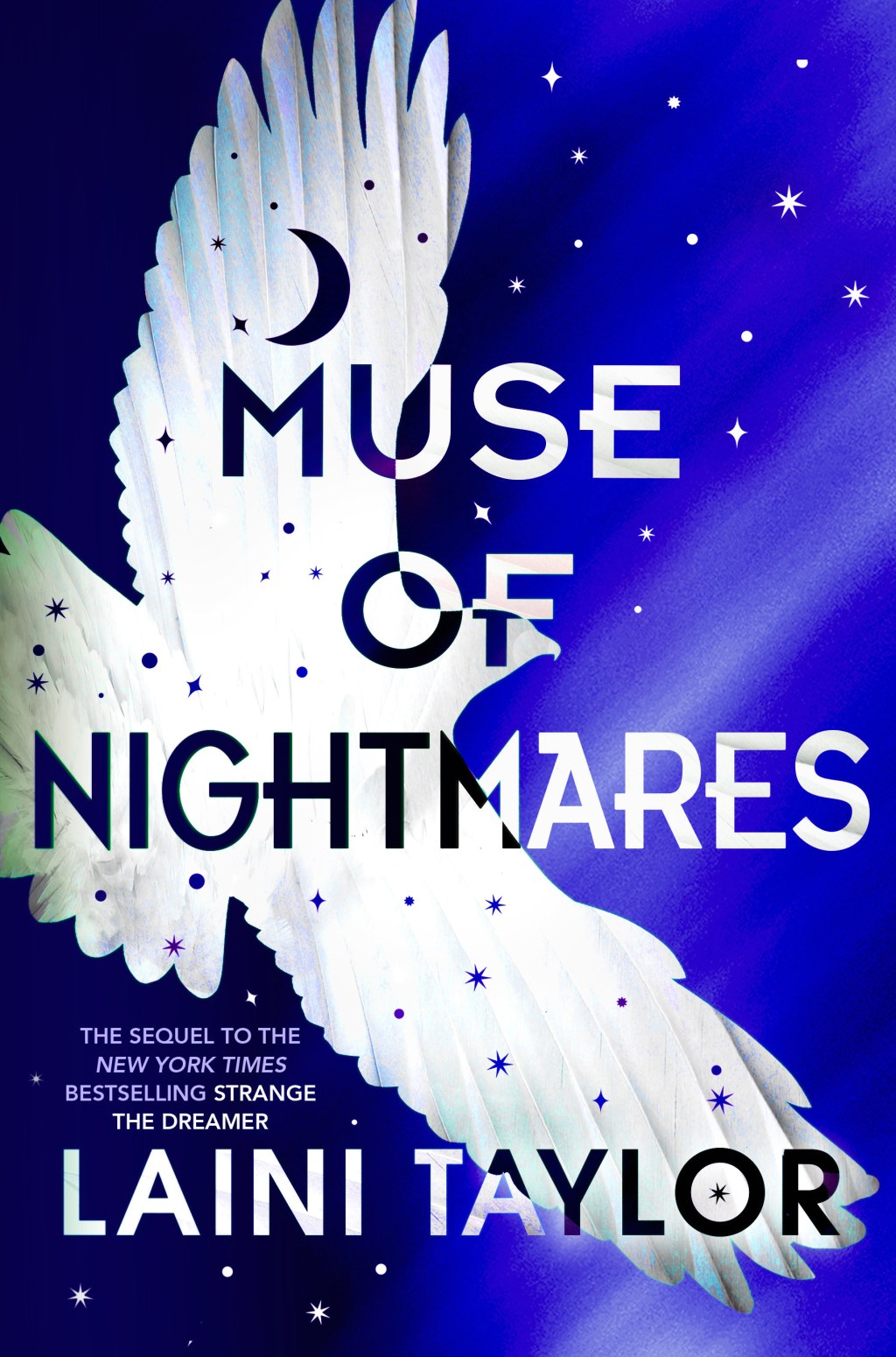
Strange the Dreamer, the epic fantasy series written by Laini Taylor, began as a dream. Now Taylor, a National Book Award finalist, has just released Muse of Nightmares (Little, Brown 2018; $19.99), the second book in the series.
“The story has been in my mind for 20 years or more,” says Taylor, whose author photo shows her with a shock of long seriously pink hair. “I think I dreamed Sairi, the character that came to me, who lived high above the city and I thought of her as the Muse of Nightmares. I started writing about her for my first book but then that became Lazio’s book. But this is about Sairi, the way trauma changes us and if it is possible for a person to overcome this. Sarai doesn’t know what she’s capable of and she feels helpless, but is she?”
The journey of Sairi and Lazio is one of intrigue and mysteries (what was done with thousands of children born in the citadel nursery? where did the gods come from, and why? and how do they defeat a new foe?) and it’s interesting to note that as we follow Taylor’s story-telling, we often are only a few steps behind her as the story plot evolves. That’s because as much as she wants to shape her story, it often, as she builds her characters and scenes in her mind, takes on a will of its own.
Taylor says she always hopes to get to the ending she has in mind.
“But it doesn’t always work that way,” she says.
Immersed and—dare we say—co-dependent–with her characters, Taylor is sad when they make a bad choice though she can understand why they did so.
“It just give me so much empathy for them,” Taylor says. “I ask what causes people to do that. When my characters don’t survive, I really wish I could save them, but I can’t.”
But though she doesn’t often know how her books will end or save a character, she did know that she wanted to eschew the typical epic ending of a massive battle between good and evil and instead resolve it by asking and answering a powerful question “must heroes always slay monsters or is it possible to save them?”
Ifyougo:
What:
When: Thursday, October 11 at 7 p.m.
Where: Anderson’s Bookshop, 123 West Jefferson Avenue Naperville, IL
Cost: Free and open to the public. To join the signing line, please purchase the author’s latest book, Muse of Nightmares, from Anderson’s Bookshop. To purchase please stop into or call Anderson’s Bookshop Naperville (630) 355-2665.
“I’ve always wanted to travel the country by Greyhound bus,” says Gary Shteyngart, the New York Times bestselling author about Lake Success, his latest book (PenguinRandom House 2018; $28) which tells the story of Barry Cohen, a hedge fund millionaire who, unable to deal with all the issues impacting his life, jumps on a bus to find his college girlfriend.
“I know, I’m nuts. But I thought it would be a very visceral way to see the country at a difficult time in its history,” continues Shteyngart. “And it sure was. As for the hedge fund part, I guess I realized there were so few people left in New York who weren’t connected to finance one way or another. Everyone else had been priced out.”
You might think that Cohen, a man worth millions who is married to a beautiful, exotic and intelligent wife, has, if not it all, at least a lot more than most of us. But beneath the surface, it’s all breaking into pieces for Cohen, a self-made man who overcame the intense insecurities he had as a boy. His only child is severely autistic, his wife is drifting away having fallen in love with a married neighbor and the Feds are opening an investigation into how his hedge fund lost a billion or so.
Chucking it all including his Black Amex card, cell phone and access to his millions, Cohen has only a couple hundred dolalrs and his expensive watch collection which emotionally means more to him at the time he starts his journey than anything else in his life.
Shteyngart was able to nail down the personalities of his characters by immersing himself in their world.
“I spent three years hanging out with hedge fund people and their spouses and sometimes children,” he says. “A strange alternate reality began to take shape in my mind. I started jotting down the little tics and conversations, but mostly the fact that the real world of the 99.9 percent was no longer available to them. They had moated themselves in to an almost feudal level. In fact, large parts of Manhattan started to seem like a series of gated communities.”
There’s a parallel to Shteyngart and Barry’s upbringing. Both grew up poor and saw Wall Street as a way to make up for the huge amounts of insecurity they felt.
“In our country, being poor is almost considered a moral failing, though often to get rich requires a true moral failing,” he says.
Unlike Barry, Shtenyngart, who immigrated with his parents from Leningrad at age seven, turned to writing dark comedic novels such as Super Sad True Love Story (winner of the Bollinger Everyman Wodehouse Prize) and The Russian Debutante’s Handbook (winner of the Stephen Crane Award for First Fiction and the National Jewish Book Award for Fiction). It’s humor, based in part upon his parents who he says have a very satirical approach to reality honed in the Soviet Union, where laughter was the only defense against a very stupid system.
“Being an immigrant is also a nice way to observe a society because you have to learn it from scratch,” he adds.
To learn how to become a hedge fund manager, watch this video by Shtenygart and Ben Stiller: http://bit.ly/2x084Iz
Ifyougo:
What: A conversation and book signing with Gary Shteyngart
When: Friday, September 21 at 6:30 p.m.
Where: KAM Isaiah Israel Congregational,1100 E Hyde Park Blvd, Chicago, IL
Cost: $30 tickets include admission for one and one copy of Lake Success













 (
( Shelf Life