Category: Culture

  • 1000 Places to See Before You Die: The World As You’ve Never Seen It Before

    1000 Places to See Before You Die: The World As You’ve Never Seen It Before

    Patricia Schultz and I had only been on the phone together for five minutes before we decided to make the trip to New Zealand—neither of us had been and both of us wanted to go. And no, I haven’t bought my ticket yet but that’s how mesmerizing Schultz, who introduced the concept of bucket list travel when she wrote the first edition of her #1 New York Times bestseller 1000 Places to See Before You Die in 2003. It was so popular that over the years more than 3.5 million copies have been sold.

    Now Schultz has updated her book with a new twist, her words accompanied by mesmerizing and amazing handpicked photos of some of the most beautiful places in world.  The book itself, weighing six pounds with 544 pages, is oversized eye candy—compelling us to pack our bags and head out to explore.

    1,000 Places to See Before You Die (Deluxe Edition): The World as You’ve Never Seen It Before was years in the making—after all Schultz had to travel to all those places.

    Calling her new book, a veritable scrapbook of her life, she says she became teary eyed when choosing the photos. In its pages she takes us to destinations so exotic many might have remained unknown to most of us if not for her writing. One such is Masai Mara, the world’s greatest animal migration that takes place each May when hundreds of thousands of wildebeests travel north from the Serengeti in Tanzania to the grasslands of Kenya’s Masai Mara. It’s a two to three month journey and the wildebeests are joining by other migrating herds including antelope, zebras and gazelles swelling the animal population to a million or so. There’s also ballooning over Cappadocia, a Byzantine wonderland encompassing a natural and seemingly endless landscape of caves and peaks of shaped by eons of weather with wonderfully colored striations of stone. Even better, Schultz points out, you can take a side trip to Kaymakli, an ancient underground city just 12 miles away.

    For those less inclined for such travels or whose pocketbooks don’t open that large, Schultz features closer to home destinations that are still special such as Mackinac Island where cars were banned in the mid-1890s, New York City (where Schultz resides when not on the road) and one of my favorites, Stowe, Vermont. And, of course, the majestic Grand Canyon.

    While Schultz’s parents weren’t world travelers, they encouraged her to find her way to what she loved. But for her, it’s not just the road, it’s the people she meets as well. When the first editor of her book proved so successful, she treated herself to a trip to Machu Picchu in the Urubamba Valley of the Cuzco Region of Peru often known as the Lost City of the Incas. Located 7800-feet above sea level, it’s isolated at the top of a mountain surrounded by jungles and other peaks. There she met a 90-year-old woman who had been inspired by her book to travel there.

    “She asked me if I had heard of the book,” says Schultz. “Peru was the first stamp in her first passport.”

    This venturesome woman who had traveled outside the U.S. for the first time in her ninth decade, offered the seasoned travel writer a pearl of wisdom that has remained with her for the last16 years.

     “She told me to make sure to see the difficult places first,” recalls Schultz. “You can see the easy ones when you’re not as active or energetic.”

              Is Schultz burned out by travel? Has she reached the point of been-there-done-that?

              Schultz answers with an emphatic no.

    “There are still so many places I want to visit,” she says, noting that her list remains long. “I doubt if I’ll get to do them all, but I will try to do as many as I can.”

    Ifyougo:

    What: Authors Group Presents Patricia Schultz, 1000 Places to See Before You Die; Luncheon

    When: Tue, Oct 29, 2019 from 11:30 a.m.-1:30 p.m.

    Where: Union League Club of Chicago, 65 W. Jackson Blvd., Chicago, IL

    Cost: $35 per ticket

    FYI: 312-427-7800; ulcc.org

    What: Cocktails with Patricia Schultz & Lake Forest Bookstore

    When:  Tue., Oct. 29. 6 p.m.

    Where: North Shore Distillery, 13990 Rockland Rd, Libertyville, IL

    Cost: $65 for individual or $75 per couple (includes 1 book, 1 drink and appetizers)

    FYI: RSVP required. Call 847-234-4420; lakeforestbookstore.com

    What:

    When’ Wed. Oct 30 at 7 p.m.

    Where: Anderson’s Bookshop La Grange, 26 S La Grange Rd, La Grange, IL

    Cost: This event is free and open to the public. To join the signing line, please purchase the author’s latest book, 1,000 Places to See Before You Die Deluxe Edition, from Anderson’s Bookshop. To purchase please stop into or call Anderson’s Bookshop La Grange (708) 582-6353 or order online andersonsbookshop.com

    FYI: 708-582-6353

  • Apocalypse Any Day Now: Deep Underground with America’s Doomsday Preppers.

    Apocalypse Any Day Now: Deep Underground with America’s Doomsday Preppers.

                  The end of the world is coming again—just as it was before Y2K and the Mayan Doomsday Calendar back to the calculations of Bishop Gregory of Tours, showing it would be all over sometimes between 799 and 806 and Christopher Columbus (yes, that Christopher Columbus) who it was ending in 1658.

                  “It’s something that people have believed all through history,” says Tea Krulos author of the just released Apocalypse Any Day Now: Deep Underground with America’s Doomsday Preppers. “There have been different takes on the end times throughout our culture. In 1844, people followed Father Miller and believed so very strongly that the world was going to end that they sold their property, gave away things in preparing for it.”

                  Curious and somewhat amused about those who believe in end times and take steps to get ready, Krulos decided to explore the subject,

                  “I have a strong interest in Utopian fiction like such classics as 1984,” says Krulos, a Milwaukee journalist. “And I’ve always wondered, if there was a huge disaster, how long I’d be able to survive. Not very long, I think.  I also wanted to get some answers about who these people were and to find out what prepping was about as well as to get out in the field, to experience some things and learn some things.”

                  But Preppers, the term used for those who are preparing for the ultimate catastrophe, were definitely not interested in talking to Krulos.

                  “I found out almost immediately it was going to be a challenge,” he says. “It’s a secretive group that distrusts media. So, I signed up for a prepper forum and attended a survival camp where I learned to build a fire, filter water and other simple things that might be helpful if something happens.”

                  Prepping, in turns out, is a billion dollar industry and it’s not only isolated rural dwellers who are buying into the need to prep. Krulos also talked to preppers in New York City and says that Chicago has a chapter of the Zombie Squad.

                  “They don’t really believe in a zombie apocalypse but think if you learn how to prepare to survive on, then you can survive hurricanes, mass rioting and other disasters,” he says.

                  What apocalyptic scenario should we fear the most? Krulos says it’s climate change.  And he also thinks we need to pay attention to why the Doomsday Clock is now just three seconds before midnight.

                  “That’s the closest it’s been since they invented the hydrogen bomb,” he says.

                  So, what sorts of items does Krulos think are important when prepping for the apocalypse?

                  “A good water filter is a very good thing to have,” he says. “Food, comfortable gear for hiking, tools, a renewable food supply like extra seeds and books. I’ve always wanted to read War and Peace, I just haven’t had time.”

    Ifyougo:

    What: Tea Krulos book signing

    When: Friday, June 21 at 7 p.m.

    Where: The Book Cellar, 4736-38 N. Lincoln Ave., Chicago, IL

    Cost: Free

    FYI: 773-293-2665; words@bookcellarinc.com

  • Believe Me: The Evangelical Road to Donald Trump

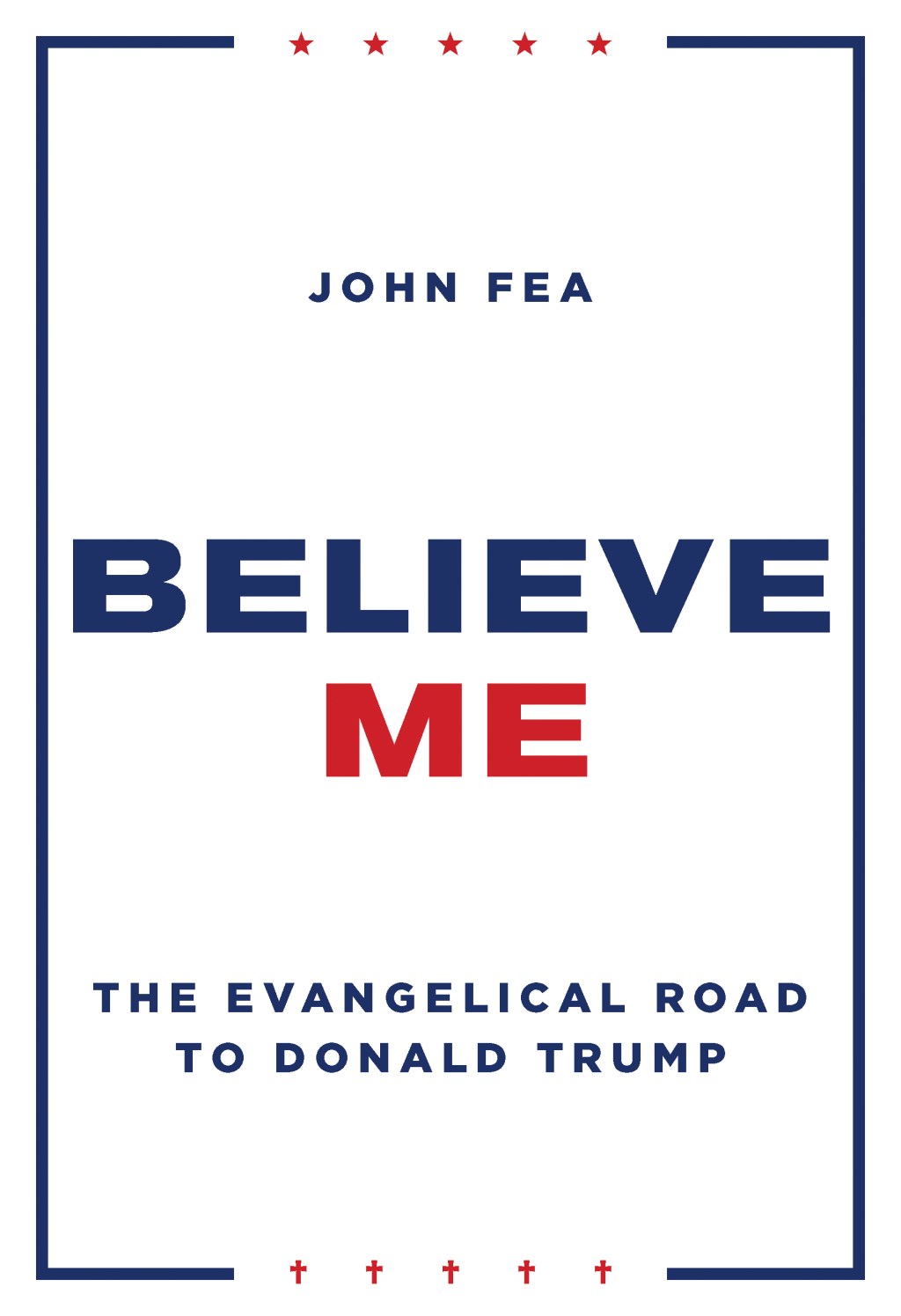
    Believe Me: The Evangelical Road to Donald Trump

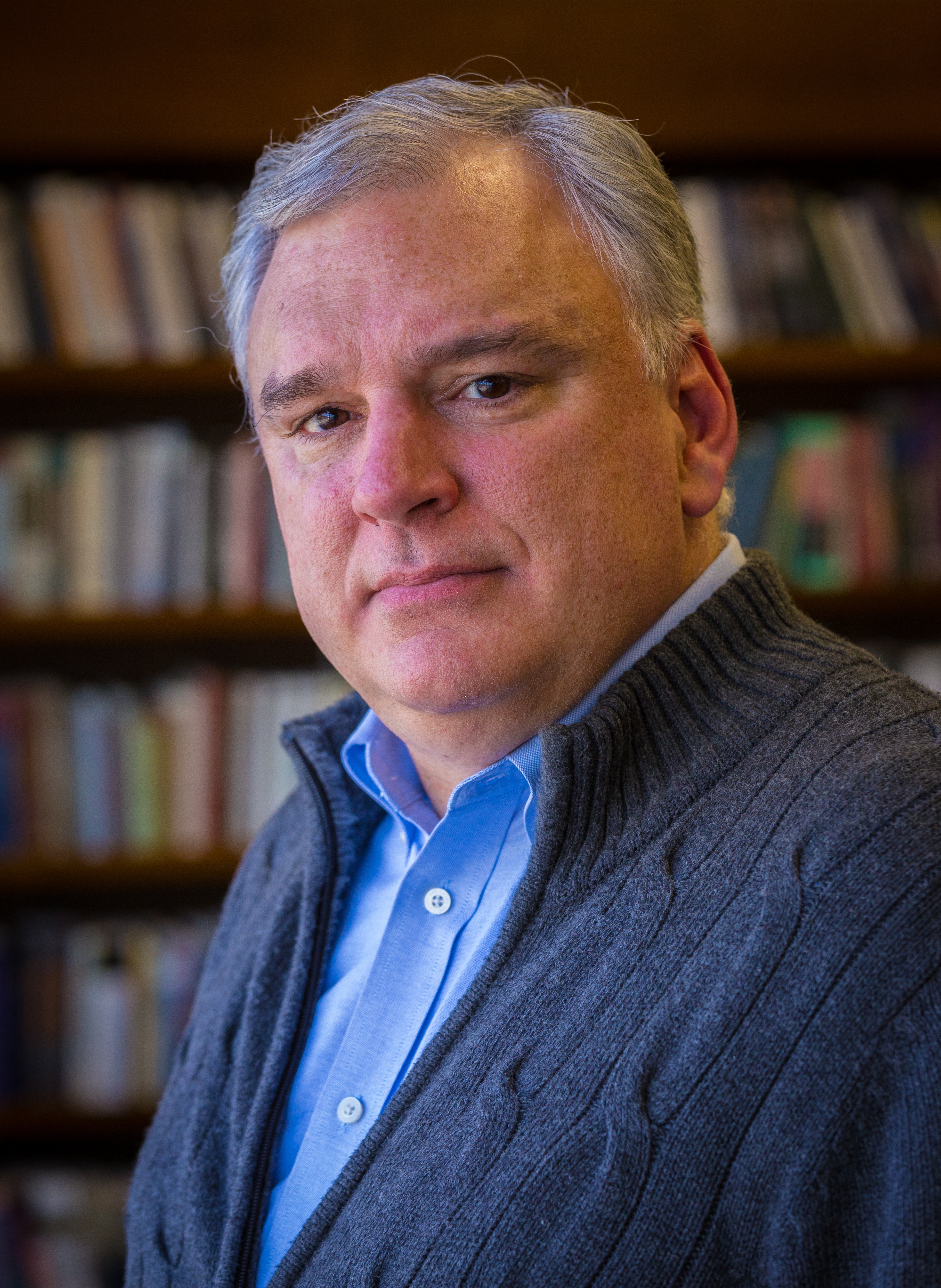
    As a Christian evangelical and an American historian, John Fea, chair of the History Department at Messiah College in Pennsylvania, sought to understand why 80 percent of evangelicals voted for Donald Trump and have deeply aligned themselves to one political party.

    “I wanted to explore what that means and how we’ve arrived at this time in our history,” says Fea, author of Believe Me: The Evangelical Road to Donald Trump (Eerdmans 2018; $24.99).Fea2 (1)

    Besides race, much of it has to do with age. The average American trump voter was 57 years old in 2016 and Fea believes that the average white evangelical voter might have even been older, forming their views during the time of Jerry Falwell and the Moral Majority.

    “Trump is delivering to a certain type of evangelicals—the Christian right and their vision of reclaiming/restoring Christian values,” he says, noting that this is portrayed as a return to an almost mythical golden age—a nostalgia for what never really existed. “If that’s your playbook, then Trump is the trade-off. And the power of that playbook is so strong they would turn their back on all the other things that are happening now.”

    Trading on fears changing demographics and encouraging anti-intellectualism, anti-immigration, anti-gay and anti-abortion, Donald Trump is seen as the person to do something about all this,” says Fea, who previously taught at Valparaiso University in the early 2000s.

    Noting that many far right politicians, who are very well educated themselves as well as wealthy or at least very financially secure, disdain colleges and higher education and the “liberal elite,” Fea believes that by encouraging people to be less educated, it helps perpetuate the sense of being overtaken and displaced.

    “Four-years of college teach you to think,” he says. “If you understand history and political science, you can see what’s happening. But when you have evangelicals with a faulty view of history, they’re going to be fearful and anxious. They think of themselves as the guardians of American culture but that culture seems to them to be changing so there’s the sense that they need to fight against what’s happening. When people feel this way, they turn to someone they see as strong who will protect them. Too many are trading their Christian ministry for a few federal judges. I conceive of it as being like horse manure ice cream—you think you have ice cream but it tastes and smells like horse manure because that’s really what it is.”

    Fea, who teaches young evangelical students, sees changes in the upcoming generations.

    “They’re pro-life but their views on immigration, the death penalty, the environment and so forth are broader,” he says.

    As the old guard feels surrounded, their world too rapidly changing, there’s a last gasp, says Fea.

    “I live near Gettysburg and have walked the battlegrounds many times,” he says. “In history, when there’s change and now as older evangelicals see this generation shift, there’s this last rush.”

    Fea compares the adherence to Trump to Pickett’s Charge  at the Battle of Gettysburg when 15,000 Confederate troops fought against 6500 Union soldiers on what was the third and last day of the battle. Their loss led to the  end of the Civil War.

    “It was the final push of the Confederacy and they almost made it,” he says. “In some ways, this is the last rush of the Christian right.”


  • Gretchen Carlson’s “Be Fierce: Stop Sexual Harassment and Take Your Power Back”

    Gretchen Carlson’s “Be Fierce: Stop Sexual Harassment and Take Your Power Back”

    Gretchen Carlson started a tsunami when she sued Roger Ailes, the all- powerful mogul CEO and Chairman of Fox News and Fox Television for sexual harassment after she lost her long-term job as a Fox anchor for refusing his advances.  Now, with the release of her latest book, Be Fierce: Stop Sexual Harassment and Take Your Power Back (Center Street 2017; $27) she is garnering the stories of women—and men—who have been sexually harassed and showing them how to fight back.

    “When one person says no to sexual harassment, they inspire others to step forward as well,” Carlson tells me when we meet at Books by the Banks, Cincinnati’s annual and very popular regional book festival. Like me, she is there to sign copies of her books. Unlike me, she has a large table right by the entrance and a huge sign overhead with her name on it. I am in the center of the barn-sized room, crowded together with other writers who are at my level in the food chain. We have no oversized banners with our names on them just little placards on our shared tables. Nor will we have, as the morning goes on, lines of up to an hour waiting to have us autograph our books.

    Hearing the Message Loud and Clear

    Those long lines show how much Carlson’s message has resonated. She’s been inundated with the stories of those who’ve also experienced sexual harassment and, to a much lesser degree, hateful comments about being a gold digger and just out for the money, advice on how women should dress to avoid being harassed and those who believe there is no such thing as sexual harassment, just lying women. Carlson blithely posts these pearls of wisdom on her Facebook page. We’re looking at you “baychevy” who posted “…most of the time women claim they were sexually harassed and make a big deal out of it simply to broadcast to other women that they are irresistible.”

    “Thank you,” I say to Carlson. Hey, I’ve been through it, who hasn’t? And, of course, I thought that’s one more thing you have to deal with.

    Not so, says Carlson, who had to withstand a barrage of negative publicity loosened on her by Ailes and his allies.

    “That’s also to be expected,” says Carlson.

    Be Fierce and Be Smart

    It’s one reason why she says we need to be fierce. And smart. The lawsuit would have been just another she-said, he-said situation but Carlson had the recordings. Ailes settled for $20 million. And in the following cascade of women coming forward to tell their horror stories about his penchant for sexual harassment, he eventually was fired from his job—albeit it with a $40 million payout.

    “You were so smart to record all those conversations,” I say. Carlson replies with a smile.

    She is indeed, very intelligent. An honors graduate of Stanford University who also studied at Oxford University, she was the first classical violinist to win the title of Miss America. Carlson is also fierce. She didn’t just take her money and go home. Angered not only by what happened to her but what happens to so many others, she determined to empower them to become fierce. It is her mission and the purpose of her book.

    “I had worked 25 years in the business–working my way up from local to national news and discovering I was going to lose all that made me determined to speak out,” she says.

    Showing the Way

    Her book doesn’t dwell on her own travails but instead is a guide for those who experience sexual harassment and what they should expect and how they can navigate confronting a system that has until recently taken a “boys will be boys attitude.”

    “Coming forward isn’t fun,” she tells me. “Women aren’t looking for fame or money when they take the step of reporting harassment because there’s nothing rewarding about being demeaned.”

    One her Facebook page, she writes, “It’s easy to be disgusted. It’s easy to be outraged. But we need more – we need a movement. It’s time to be fierce. Be Fierce:

    I’ll repeat what I said to her that day in Cincinnati, “Go, Gretchen, go.”