Oenophiles might be surprised to learn that the oldest winery anywhere in the Americas is Casa Madero, formally established as long ago as 1597, located in Parras de la Fuente, a small town in the northern state of Coahuila.
“In 1549 the Spanish priests and soldiers who explored this region discovered native vines growing wild in a valley and chose the spot to found the Mission of Santa María de Las Parras (“Holy Mary of the Vines”),”writes Tony Burton, the editor of MexConnect, Mexico’s top English-language online magazine, in his book Mexico Kaleidoscope: Myths, Mysteries and Mystique.“The early Mission of Santa María soon began to make wine from the local grapes, and a few years later the wines and brandies of the Valley of Parras were being shipped to the rest of the Americas.”
But Mexico’s sophisticated approach to agriculture goes even further back than that.
“The Mexica/Aztecs solved the dilemma of how to supply food to their island capital by developing a sophisticated wetland farming system involving raised beds, or chinampas, built in the lake,” writes Burton about when the city of Tenochtitlan was built, fortress-like, on an island. Though good for defense, it made providing a food source more difficult but there was a solution to that. “Originally these chinampas were free-floating, but over time they became rooted to the lake floor. The chinampas were separated by narrow canals, barely wide enough for small boats or canoes. From an ecological perspective, chinampas represented an extraordinary achievement: a food production system which proved to be one of the most environmentally sustainable and high-yielding farming systems anywhere on the planet! Constructing and maintaining chinampas required a significant input of labor, but the yields per unit area could be very high indeed, especially since up to four harvests a year were possible.”
Burton covers 10,000 years of Mexican culture and history. It’s a compilation of “Did You Know?” columns for MexConnect, which ranks in the top 3% of all Internet sites in the world, registering over half a million sessions a year.
It was his way of presenting and preserving relatively little-known but fascinating information about Mexico to a large number of readers.
“One of my main motivations was that—to the best of my knowledge—no similar book for the general reader had been published in the past forty years,” says Burton. “An incredible amount of interesting academic research had been done on Mexico over that time, leading to reevaluations and reinterpretations of many former ideas and beliefs. I wanted to make readers aware of some of these extraordinary developments, which continually refuel my passionate interest in Mexico.”
This very readable and fascinating book can be read cover to cover, says Burton, noting that it is also designed to allow readers to ‘dip into’ and read in whatever order appeals to them.
“When writing the book, I was trying to engage readers by expanding on, or challenging, some commonly held or overly simplistic ideas, in the hope of offering some ‘food for thought’ about many things Mexican,” he says.“Each chapter has a list of sources and suggestions for those readers who want to explore more.”
The title Mexican Kaleidoscope is a nod to Norman Pelham Wright, a British writer whose own collection of essays, with the same title, was published in 1948.
“That book was an eye-opener for me when I first began to get intimately acquainted with Mexico more than forty years ago,” says Burton. “The subtitle Myths, Mysteries and Mystique came from a suggestion by one of my regular golfing partners—who had read an early draft of the book—as we played the 11th hole at Cottonwood Golf Course on Vancouver Island.”
The book is illustrated by Mexican artist Enrique Velázquez, a long-time friend of Burton’s.
“Enrique has a keen interest in the subject matter and an uncanny ability to portray ideas in just a few lines,” says Burton. “I originally envisioned using small, inline drawings to break up the text, much in the manner of old-time illustrators, but his final drawings were far too good for that, so we changed track and gave them the prominence and space they merit.”
“Every chapter has come to mean far more to me than is expressed by mere words on a page,” says Burton about the 30 chapters. “I really hope some of my enthusiasm comes through to readers. At the very least I’d like the book to cause readers to stop and think, to be occasionally surprised, and perhaps question things that they may have previously thought or heard about Mexico. As I’ve written elsewhere, Mexico is not always an easy country to understand but any effort to do so always seems to bring rich reward!”
About the Author
Burton, a Fellow of the Royal Geographical Society who was born and educated in the United Kingdom, first visited Mexico in 1977. Returning, he lived for almost two decades in the country where he worked as a writer, educator, and ecotourism specialist. An award-winning author, his other books include If Walls Could Talk:Chapala’s Historic Buildings and Their Former Occupants; Foreign Footprints in Ajijic: Decades of Change in a Mexican Village; Western Mexico: A Traveler’s Treasury; and Lake Chapala Through The Ages: An Anthology of Travelers’ Tales.
Mexico Kaleidoscope can be found in print and on Kindle through Amazon.
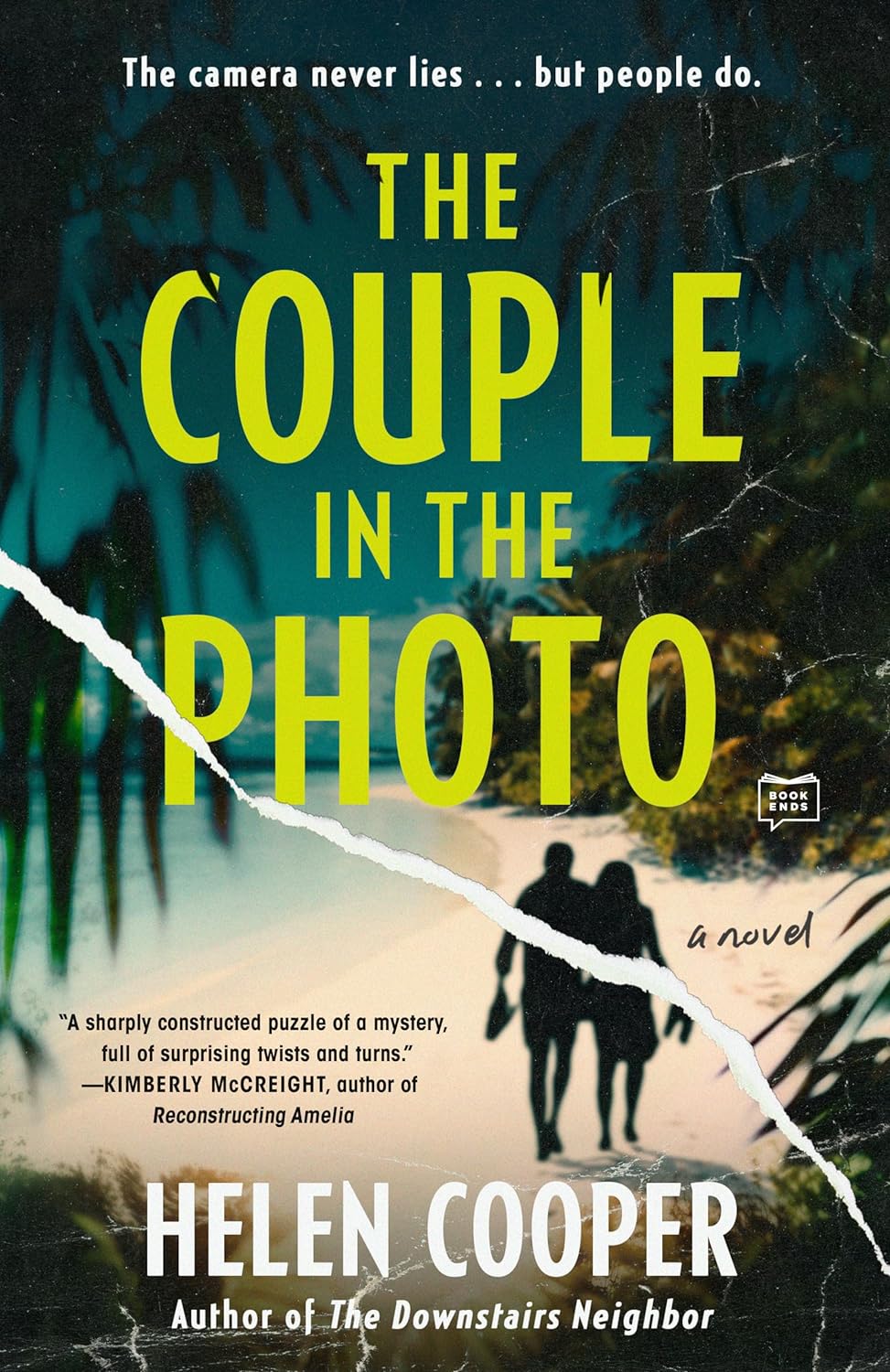
Always fascinated by photos, Lucy is eager to see her colleague’s snapshots from her honeymoon in the Maldives. But as Lucy slides through Ruth’s pictures, she pauses, surprised to see a familiar auburn-haired man. It’s Scott, her best friend’s husband but the woman with him isn’t his wife Cora nor is she someone that Lucy recognizes.
“’How…” Lucy’s head felt thick. “What were their names?”
“’Jason and Anna,” Ruth reeled off with pride writes Helen Cooper in her mystery novel The Couple in the Photo (G. P. Putnam’s Sons). “An interesting pair! Pretty drunk that night but then so were we!’ She laughed to herself as if at some remembered in-joke, then swiped onward, reeling through more palm trees and lapping waves while Lucy sat back in her chair with bile rising in her throat.”
Unwilling or unable to believe she’s misidentified the man, Lucy begins prying to the consternation of Scott as well as her own husband, Adam, who has been best friends with Scott and Cora since college. When Adam married Lucy she became part of the tightly knit group that is so intertwined that their kids are best friends, and they restoring a weekend cottage they bought together. But Lucy has always felt that there were things she didn’t know from that time, a feeling she tried to dismiss because she had attended the same university as them.
Her feelings of misapprehension darken into a much deeper concern than just whether Scott, who was supposedly in Japan on a business trip, was having an affair. She tries to get a copy of the photo from Ruth but finds she’s absent from work. Ruth is avoiding her but when finally pins her down says the photo was erased.
Watching television, Lucy learns that a woman named Juliet Noor failed to return from a trip to the Maldives. Juliet, whose bludgeoned body turns up on the island, is the woman with Scott in the photo. Scott denies knowing her, but Lucy discovers that Juliet, a journalist, interviewed Scott for an article not long before. And there’s a connection between Juliet and Cora, Scott, and Adam. They all went to university together along with a man named Guy who mysteriously died back then.
It all gets murkier when Ruth says she’s found the photo after all but when she sends it to Lucy, it’s a different couple. And when Lucy arrives at Ruth’s house to confront her, she learns that Ruth has been attacked and it’s not sure if she’ll survive.
Sick with worry and fear, Lucy realizes that her relationship with her husband and best friends is based on lies, deceit, and possibly more than one murder. The truth is she doesn’t really know them at all. What she does know is that one or more of them may be willing to harm her to prevent the truth from coming out.
ABOUT THE AUTHOR
Helen Cooper is the author of The Other Guest and The Downstairs Neighbor. She is from Derby and has a MA in Creative Writing and a background in teaching English and Academic Writing. Her creative writing has been published in Mslexia and Writers’ Forum; she was shortlisted in the Bath Short Story Prize in 2014, and came third in the Leicester Writes Short Story Prize 2018.
THE FLAVOR THESAURUS: More Flavors just received a great review from Booklist which said, “This follow-up to Segnit’s The Flavor Thesaurus will please all foodies who want to nerd out on the tiniest details of nature’s edible delights and their pairing potential. The prose hums with poetic cadence in descriptions such as caramel roasted, flower and meadow, creamy fruity, zesty woody, nutty milky, and animalic, making it a whimsical read for those who simply want to be delighted by a discussion of food … Clever, unusual, and overwhelmingly intriguing, part two of The Flavor Thesaurus adds pizzazz to cookbook collections with its offbeat, choose-your-own-adventure look at the possibility of flavor pairings today.”
Since its release in 2010, THE FLAVOR THESAURUS has become a favorite guide for culinary students, something of a “secret weapon” for chefs, including Yotam Ottelenghi, Samin Nosrat, Rukmini Iyer, Great British Bake Off finalists and winners John Waite, Frances Quinn, Ruby Tandoh, and more (see list below) and a handy tool for bartenders and serious home cooks for its hundreds of flavor combination pairings and inspired ingredients, as well as Segnit’s brilliant sense of humor and entertaining writing style.
Segnit returns with anew treasury of pairings – this time with plant-led ingredients. More Flavors explores the character and tasting notes of chickpea, fennel, pomegranate, kale, lentil, miso, mustard, rye, pine nut, pistachio, poppy seed, sesame, turmeric, and wild rice, as well as offering new takes on favorites like almond, avocado, garlic, lemon, and parsley from the original, then expertly teaches readers how to pair them with ingredients that complement. With her celebrated blend of science, history, expertise, anecdotes, pop culture, and signature humor, Niki Segnit’s More Flavors is a modern classic of food writing, and a useful, engaging reference book for every cook’s kitchen.
The book is divided into flavour themes including Meaty, Cheesy, Woodland and Floral Fruity. Within these sections it follows the form of Roget’s Thesaurus, listing 99 popular ingredients alphabetically, and for each one suggesting flavour matchings that range from the classic to the bizarre. You can expect to find traditional pairings such as pork & apple, lamb & apricot, and cucumber & dill; contemporary favourites like chocolate & chilli, and goat’s cheese & beetroot; and interesting but unlikely-sounding couples including black pudding & chocolate, lemon & beef, blueberry & mushroom, and watermelon & oyster.
There are nearly a thousand entries in all, with 200 recipes and suggestions embedded in the text. Beautifully packaged, The Flavour Thesaurus is a fascinating, highly useful, and covetable, reference book for cooking –
Segnit covers tried and true, yet creative pairings. A few sample combinations and excerpts that showcase the uniqueness of the book include:
White bean & garlic: Garlic is to the cannellini bean as Chanel No 5 was to Marilyn Monroe: it’s all it needs to wear.
Eggplant & Sesame: Eggplant bathes in sesame’s glory, whether in the form of oil, seeds or tahini. Paired with a milder tahini, cooked eggplant flesh can seem so sweet as to earn dessert status. It certainly exposes aubergine as a fruit.
Chive & Yogurt: A version of the sports-bar classic, sour cream and chive, for people who actually play sport. That said, for all its leaner, sharper taste, it still speaks loudly of the snack bowl, thanks to the mouth-filling combination of lactic tingle and sulphurous breath.
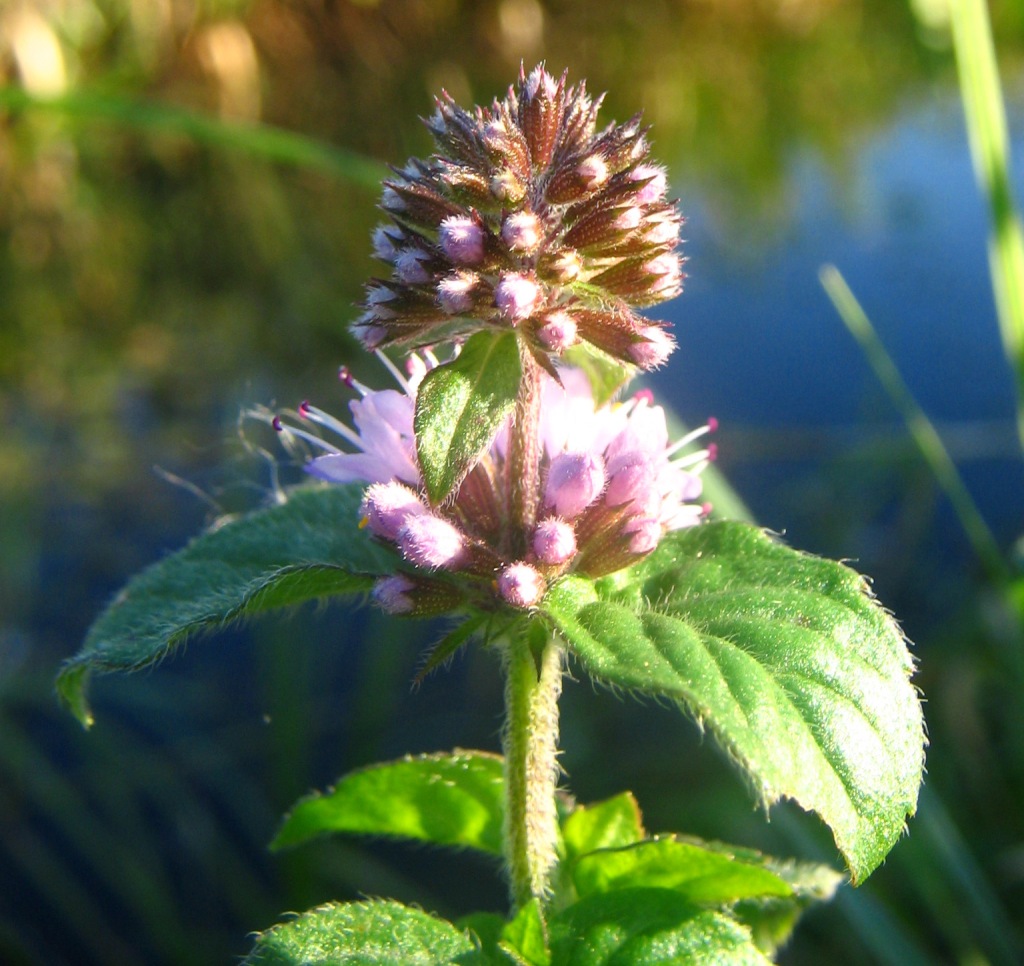
Mint & Date: Mint is never lovelier than on a date with a date.
Date & Coconut: Two palms meet in a round of applause. Mine would be for the glossy little coconut cakes, studded with date pieces, that my mother used to make. I liked them best before the batch cooled, when they were still sticky and tasted like coconut ice mashed with unset fudge.
Lemon & Fennel: As clean and uplifting as a piccolo duet.
Mustard & Turmeric: Turmeric is the wind beneath mustard’s wings. It’s responsible for the shade known as mustard yellow. How detectable the flavor of turmeric is in mustard depends on which seeds it is made with.
Lemon & Poppy seed: The flavor could have come from a newly discovered berry, the aromatic zing of citrus harmonized by the typically almond note in the poppy seed (apple, pear, apricot and cranberry all have seeds that taste almond-like). You might also consider poppy seed and lemon as a flavor combination for white chocolate, fresh pasta and pancakes.
Sweet Potato & Kidney Bean: A power couple in the world of desserts, unlikely as it sounds.
Praise for The Flavor Thesarus: More Flavors
‘The book will inspire a new generation of home cooks, chefs and writers alike’ RUKMINI IYER
‘Matching ingredients isn’t a trivial matter and Niki Segnit is definitely the reigning champion’ YOTAM OTTOLENGHI
About the Author:
Niki Segnit is the author of Lateral Cooking and The Flavor Thesaurus, which won the André Simon Award for best food book, the Guild of Food Writers Award for best first book and was shortlisted for the Galaxy National Book Awards. It has been translated into fifteen languages. Her columns, features, and reviews have appeared in the Guardian, the Observer, the Times, the Times Literary Supplement, and the Sunday Times. She lives in London with her husband and two children.
“opens the door to what American cookery is—the coming together of cultures, identities, flavors, and tastes that celebrate what is probably one of the most diverse cuisines in the world.”
This is the second edition of The Great American Recipe Cookbook, based on the popular eight-part PBS cooking show contest in which home cooks compete using their personal recipes. It’s a diversity culled from international cultures and traditions from around the world brought to America but also native fare. Think Sausage Pierogies with Barbecue Crema, Jerk Alfredo Pasta and Pan-Seared Scallops with a Side Salad, Chicken Hekka with Wontons, and Malasadas Two Ways.
The cookbook, a collection of treasured recipes and the stories behind them are provided by an interesting lineup of cooks that includes a recipe writer, real estate developer, Midwestern soccer mom, and a semi-retired architect, homebuilder, and consultant. The diversity of their backgrounds—a first generation American born to two Guyanese immigrants, a mom who was raised in Maui, Hawai’i, a special education teacher from Cleveland whose culinary background is rooted in Southern cuisine, and a general counsel for a financial tech firm whose parents hail from Barbados—is reflected in their recipes.
Designed in a large format with glossy pages, plenty of color photos, and easy to follow instructions, this is a book for all levels of tastes and cooking skills. Ingredients for the most part are easy to find and don’t involve an outlay of cash for something that will be used only once or twice. As an example, though Bahrat Chicken Thighs with Hummus and Flatbread may sound exotic and complicated, it is a very easy dish to make with the only unique ingredient being Libyan Baharat spice.
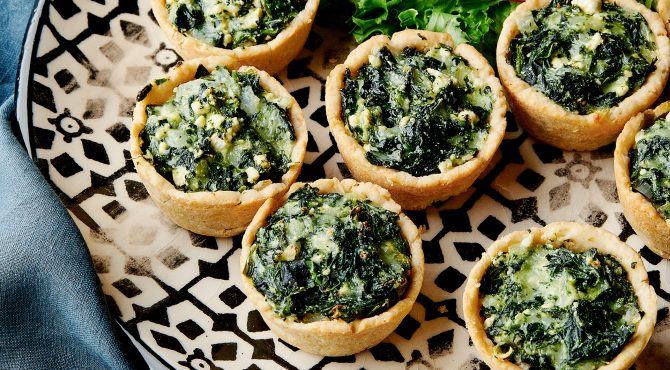
But since that typically consists of black pepper, cardamom, cloves, cumin, nutmeg, coriander, and paprika, it can be used in other recipes as well. There are no unique ingredients in Mini Spinach B’jibin Pies, a recipe that harkens back to the home cook’s Syrian Jewish community. Basically, these are mini pies that can be made in four easy steps—the first one being to preheat the oven. All this makes it easy for home chefs to try new cuisines without a lot of complicated ingredients and equipment.
With a foreword by cookbook author Pati Jinich, whose three-time James Beard award-winning and Emmy nominated TV series “Pati’s Mexican Table” is now in its 12th season, the book goes beyond the typical concept of American cookery and delves into what we all bring to the table.
“The phrase “American food’ often brings to mind certain classic dishes: a fried chicken recipe served up at a summer picnic or a honey-glazed ham gracing the table at the holidays,” reads the book’s introduction. “And those meals are delicious ones to celebrate, especially when we can share them with the people we love. But those quintessentially ‘American’ foods represent only a narrow sliver of what our country’s cuisine really is. We are one nation with more than one million kitchens, each with its own heritage, culture, and community—making American food an amazing mix of different culinary traditions that bring together flavors from around the country and beyond.”
In all, The Great American Recipe Cookbook (published by Ben Bella Books) opens the door to what American cookery is—the coming together of cultures, identities, flavors, and tastes that celebrate what is probably one of the most diverse cuisines in the world.
Croque Madame Mini Quiches and Dijon Béchamel
Croque madame mini quiches
All-purpose flour, for dusting
1 sheet frozen puff pastry, thawed
1 tablespoon olive oil or unsalted butter
½ small sweet onion, diced
1 garlic clove, grated
6 large eggs
¾ cup heavy cream, divided
¼ teaspoon freshly grated nutmeg
Salt and ground black pepper to taste
4 ounces ham, diced
1½ cups shredded Gruyère cheese
1 tablespoon fresh thyme
2 tablespoons chopped fresh chives
Dijon béchamel
1 tablespoon unsalted butter
1 small garlic clove, grated
1 tablespoon all-purpose flour
¾ cup whole milk
¼ teaspoon freshly grated nutmeg
1½ teaspoons Dijon mustard
Salt and pepper to taste
Preheat the oven to 400 degrees F. Spray a 12-cup muffin tin with nonstick cooking spray.
On a lightly floured surface, roll out the puff pastry sheet to about ¼ inch thick. Cut it into 9 squares. Press the pastry squares into the prepared muffin cups. Bake for 5 minutes.
Meanwhile, heat the oil in a large skillet over medium heat. Add the onion and sauté until soft, about 5 minutes. Add the garlic and sauté until the garlic is soft, about 2 minutes. Remove the pan from the heat.
In a small bowl, make an egg wash by whisking together 2 of the eggs and 2 tablespoons of the cream.
In a large bowl, whisk together the remaining 4 eggs and remaining cream until well blended. Add the nutmeg and season with salt and pepper.
Fill each of the pastry-lined muffin cups with equal amounts of the ham, cheese, cooked onion and garlic, thyme, and chives, then pour over the egg and cream mixture. Brush the edges of the dough with the egg wash. Bake for 15–18 minutes, until the pastry is golden brown and the egg mixture is set. Let cool slightly before serving.
While the mini quiches bake, make the Dijon béchamel. In a small skillet, melt the butter over medium heat. Add the garlic and cook for 1 minute. Whisk in the flour to make a roux. Cook the roux for several minutes, stirring constantly, until it takes on a light brown color. Slowly add the milk, whisking constantly, until you have a thickened and smooth sauce. Add the nutmeg and Dijon mustard and stir to fully incorporate. Taste the sauce and season with salt and pepper as needed.
Pour the béchamel over the mini quiches and serve with a fruit salad.
Recipe courtesy of The Great American Recipe
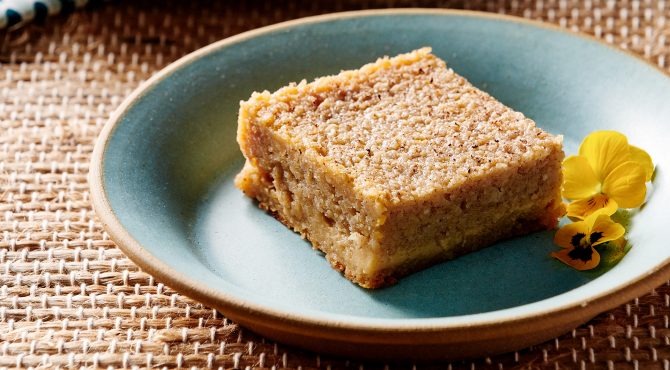
Cassava Pone
3 medium to large cassavas (about 4 pounds), peeled and cut into thirds
2 cups finely shredded grated coconut
1 (14-ounce) can sweetened condensed milk
1 (14-ounce) can coconut milk
3 tablespoons ground cinnamon
1 tablespoon freshly grated nutmeg
2 teaspoons freshly cracked black pepper
1 teaspoon salt
3 large eggs
1 (12-ounce) can evaporated milk
½ cup white sugar
½ cup packed light brown sugar
Directions
Preheat the oven to 350 degrees F. Grease 2 (9 × 9) baking pans or 1 (13 × 9) baking pan.
Finely grate the cassavas, either by hand with a box grater or in a food processor with a grating disk. (If you’re using a food processor, you may need to cut the cassavas into pieces to fit the food processor tube.)
With a clean tea towel, squeeze the excess liquid from the grated cassava and transfer it to a bowl. Add the shredded coconut, condensed milk, coconut milk, cinnamon, nutmeg, pepper, and salt, and stir to combine.
In a separate medium bowl, whisk together the eggs, evaporated milk, and sugars until well blended.
Slowly stream the egg mixture into the cassava mixture and stir to combine.
Pour the batter into the prepared baking dish(es) and spread it out evenly with a rubber spatula.
Bake until the edges are set and golden and a toothpick inserted in the center comes out clean, 25–30 minutes. Let the pone cool and set for 10 minutes before slicing.
2 pounds frozen chopped spinach, thawed and squeezed dry
½ cup shredded mozzarella cheese
½ cup ricotta cheese
½ cup crumbled feta cheese
½ cup shredded Muenster cheese
¼ cup grated Parmesan cheese
1 teaspoon chicken consommé powder
1 teaspoon garlic powder
½ teaspoon ground black pepper
Pinch cayenne pepper
Directions
Preheat the oven to 400 degrees F. Grease a 12-cup muffin tin.
In a large bowl, mix together the flour, 1 teaspoon of the salt, the sugar, and baking powder. Mix in ½ cup of the oil and the cold water until uniform in texture. Divide the dough into 12 equal balls. Place a dough ball in each prepared muffin cup. Press the dough into the bottom and up the sides to form a mini crust.
In a small skillet, heat the remaining 1 tablespoon oil over medium heat. Add the onion and sauté until soft, about 5 minutes.
In a large bowl, whisk the eggs together. Add the spinach, cooked onion, all the cheeses, consommé powder, garlic powder, remaining 1 teaspoon salt, the black pepper, and cayenne and mix thoroughly. Divide the spinach mixture equally into the mini crusts. Bake for 30–40 minutes, until cooked through. Serve warm or at room temperature.
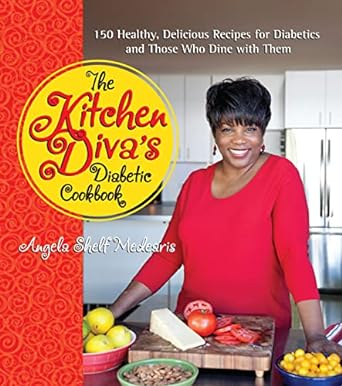
Photograph by Penny De Los Santos-Diabetic cookbook, Author Amgela Medearis
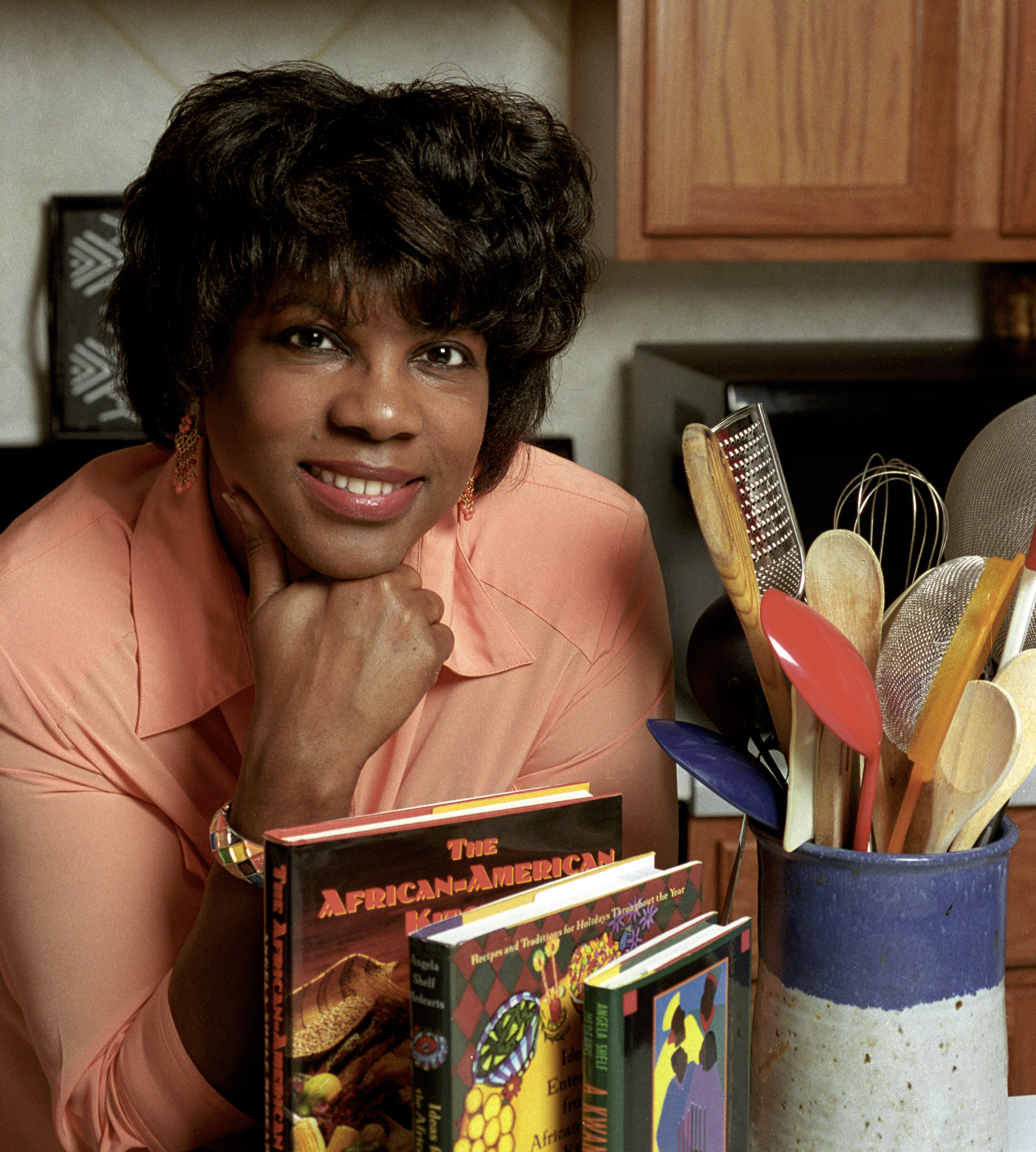
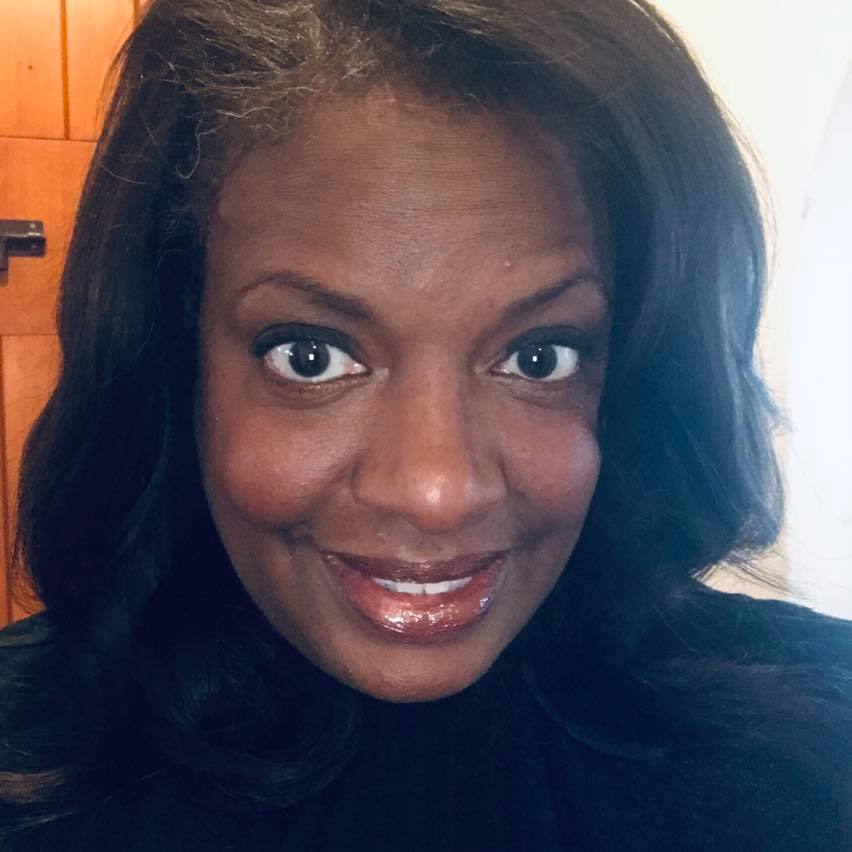
“People are eating African American food every day, but they don’t know it,” Angela Shelf Medearis says to me when we chat on the phone. In part, she’s talking about James Hemings who, in the complicated way of slavery, trained in the culinary arts in Paris and became a noted chef de cuisine and yet lived most of his life enslaved. Hemings either created or introduced a variety of the foods we eat now such as macaroni and cheese, ice cream, French fries, meringues, crème brulée, and French-style whipped cream. Another dish he created that we don’t eat regularly if at all is his handwritten recipe for snow eggs–soft, poached meringue, set in puddles of crème anglaise.
Hemings was the son of Sally Hemings, an enslaved woman and John Wayles, the man who “owned” her. The two had six children together. Wayles also had a more traditional family and his daughter Martha married a plantation owner named Thomas Jefferson. Thus, James was the half-brother of Martha Jefferson who “inherited” James (that’s so creepy I even hate writing it) when Wayles died. James was eight when they all came to live at Monticello. His youngest sister, Sally was just an infant. To make matters even more complex, after Martha died and Sally reached some type of maturity—she was probably in her mid-teens, she became Jefferson’s mistress and had six children by him, four of whom lived to adulthood.
So, Sally Hemmings was Martha Jefferson’s half-sister, and her children were half-siblings to Martha and Thomas’s children. I only mention all this to show how intertwined Black and White families were and also how the foodways of both merged.
But while Hemings introduced the Frenchified cookery to America,
Medearis, the founder of Diva Productions, Inc., the organization that produces her multicultural children’s books, cookbooks, videos, and audiocassettes, points out that people weren’t eating black-eyed peas before Africans arrive in this country.
“Back then they even thought tomatoes were poisonous,” she says. “But when they shipped slaves, they also shipped the foods they ate with them because that was a cheap way to feed them,” she says. “The recipes for those foods traveled from one place to the other. If they stopped in the Caribbean or South America before coming here, then the recipes changed with the foods and spices available and the types of cooking techniques.”
“I only cooked enough that social services wouldn’t come and take away my children,” she says with a laugh. But her mother, after she retired, decided she wanted to market her raisin pie for some extra income.
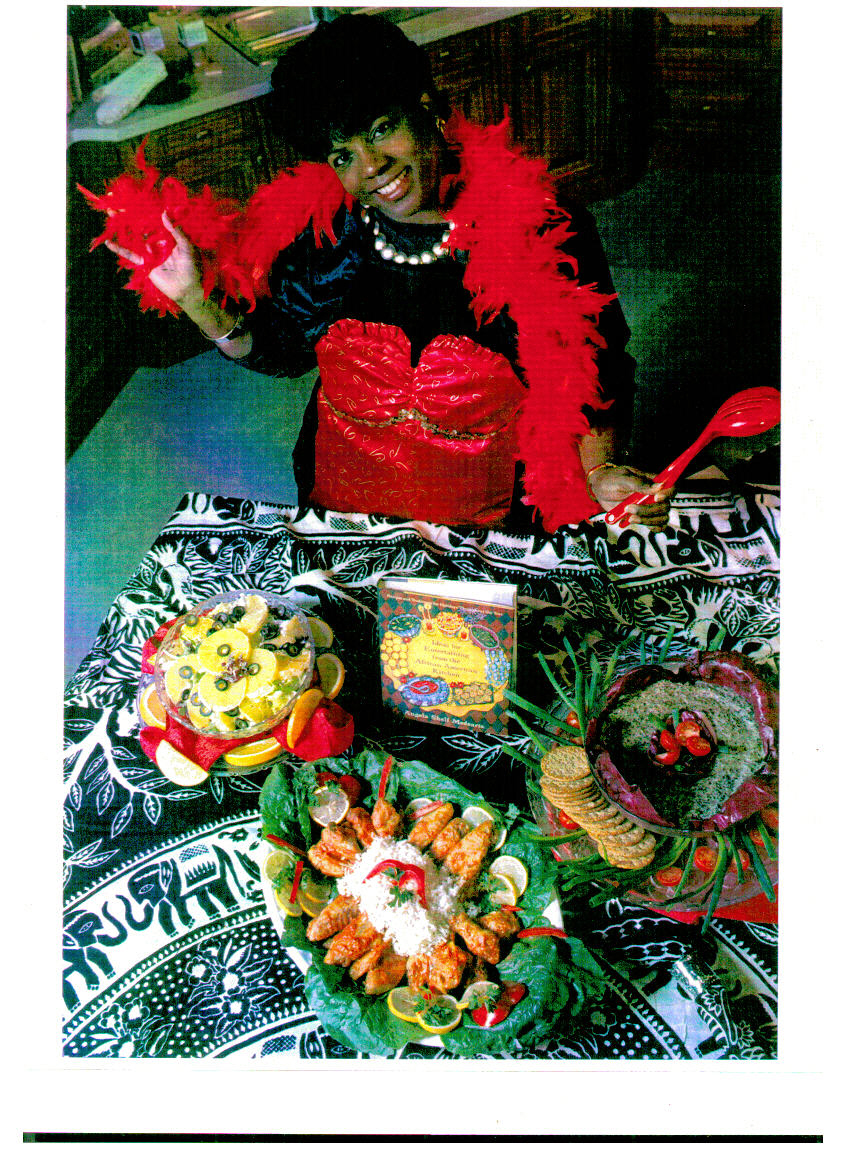
While her mother and sister did the cooking, Medearis who often wears feather boas during her TV appearances and on her PBS cooking show and isn’t shy about being in the limelight, did the marketing.
But when her mother and sister decided to quit, Medearis knew she had to learn to cook if she wanted to keep her food business going.
Now she’s so full force that celebrity chef and restauranteur Bobby Flay arrived for a Jerk Chicken Throwdown while she was marinating jerk chicken for a family get. It was for his Food Network show Throwdown with Bobby Flay.
Who won I ask?
Medearis’s Jerk Chicken
“My chicken had been marinating for hours,” Medearis replies. “He just arrived from Manhattan and threw some spices on his chicken. It burned. I beat Bobby.”
Though she originally didn’t cook Medearis had written several loved historic research. Did I know that George Washington Carver drove a food wagon around to introduce people to healthy foods?
No. I knew that Carver, who famously said, “There is probably no subject more important than the study of food,” was born a slave and became a botanist, author, educator and agriculturalist. He also collaborated with auto magnate Henry Ford on growing peanuts and soybeans.
And don’t even get her started on Carver and black-eyed peas.
“Black-eyed peas, okra, peanuts and sesame seeds, and the oil they produce, are documented contributions from Africa via the slave trade to our American cuisine,” she writes in her syndicated column. “I prepared black-eyed peas any number of ways while doing research for my first cookbook.”
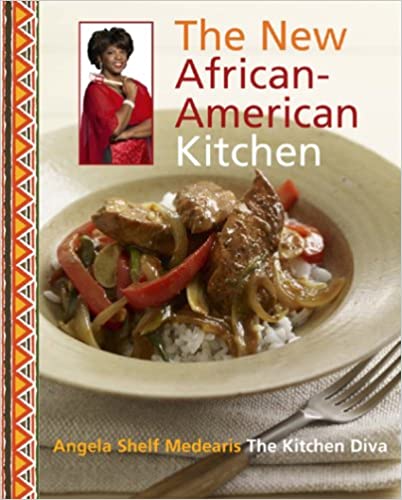
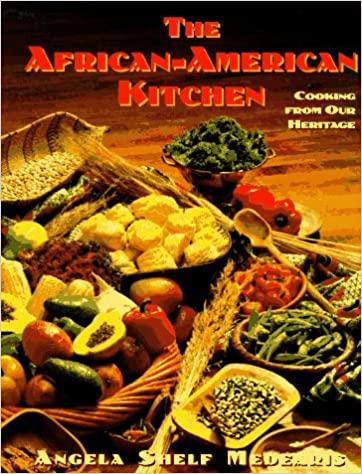
That would be The African-American Kitchen: Cooking from Our Heritage, a best seller that even now 30 years later is considered a standard on the foodways African Americans bought to this country. The problem though was getting it published. Her award winning children’s books were published by Dutton and when she brought the idea for her cookbook, she found an editor there who loved the book. But the editor at the next level turned it down, saying he’d published an African American cookbook almost 30 years earlier and no one bought it. He didn’t think the country was ready for another.
What’s a Kitchen Diva to do? Make a peach pie, of course, as it’s representative of both Black and Southern food history.
“You could hardly get a peach pie anywhere back then in Manhattan,” says Medearis. Wrapping up both the peach pie and the manuscript, separately we presume, she sent both off to the publishing company.
She got the contract.
“That book sold so many copies it was crazy,”
Overall, she’s written 107 books seven of which seven are cookbooks. Published in seven languages, she’s sold a total of 14 million books. But despite that, she’s not ready to stop.
“People ask me when I’m going to retire,” says Medearis who lives in Austin, Texas. “Why should I? I’m having a lot of fun with it. I’m doing what I want to do.”
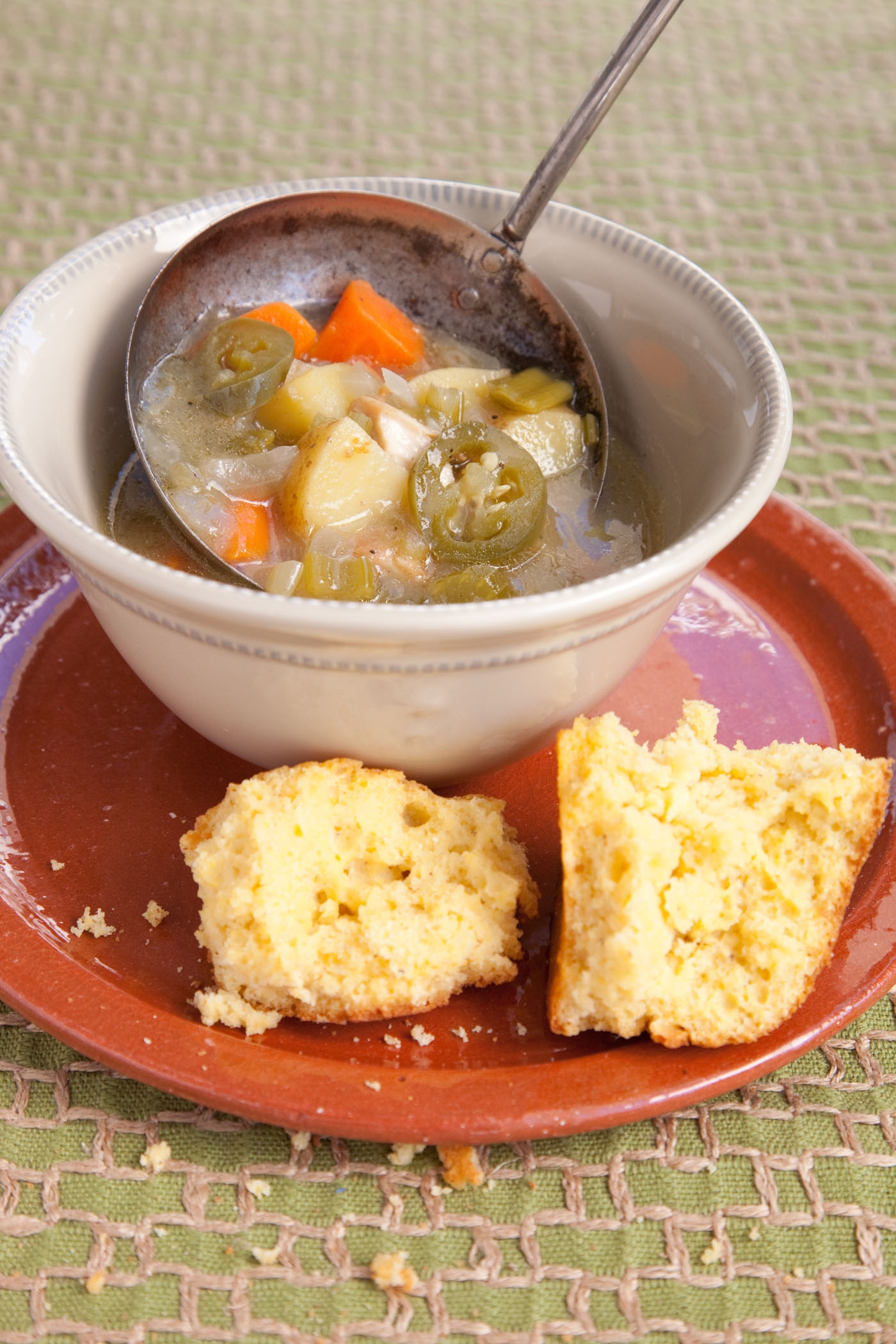
Creole Chicken Stew
Makes 8 Servings
1½ tablespoons olive oil
1 cup chopped yellow onions
1 cup coarsely chopped carrots
¼ cup chopped celery
4 cloves garlic, minced
1 bay leaf
2 teaspoons diced seeded jalapeño chile
¼ teaspoon salt
1 teaspoon freshly ground black pepper
½ teaspoon dried thyme
2 tablespoons whole-wheat flour
3 cups reduced-sodium chicken broth
1½ pounds boneless, skinless chicken breasts, cut into 1-inch-wide strips
1 cup peeled cubed Yukon Gold potatoes or kohlrabi, or a combination
1 cup diced zucchini
1 cup halved okra or frozen cut okra
4 cups cooked brown rice
2 green onions, chopped, including green parts
In a large pot, heat 1 tablespoon of the oil over medium-high heat. Add the yellow onions, carrots, celery, garlic, bay leaf, jalapeño, salt, pepper, and thyme and sauté until the onion is translucent, about 3 minutes.
Using a slotted spoon, transfer the vegetables to a plate, leaving as much oil in the pot as possible. Add the remaining ½ tablespoon of oil. Stir in the flour. Cook, stirring constantly, until the flour begins to turn golden brown, about 3 minutes.
Gradually whisk in the broth and cook for another 5 minutes, whisking until smooth. Bring the mixture to a boil, then reduce the heat to a simmer. Add the chicken, potatoes or kohlrabi, and zucchini. Return the sautéed vegetables to the pan. Partially cover and simmer, stirring occasionally, for 20 to 30 minutes.
Add the okra and cook for 15 to 20 minutes. Remove the bay leaf. Serve over ½ cup of rice per person and sprinkle with the green onions.
Kitchen Diva: Tap Your Inner Chef With DIY Recipes
Angea Medearis, the Kitchen Diva, wrote one of her syndicated columns on creating Do-It-Yourself recipes.
“Basically, a DIY dinner recipe is about finding a way to retain the flavors of the recipes you love while using the ingredients that you have on hand,” Medearis writes. “If you have always wanted to free yourself from the restraints of a recipe, now is the time to do it! Think of the current lack of ingredients as permission to tap into your inner chef.”
To ease into creating your own DIY dinner recipes, Medearis suggests starting by making a pot of chowder.
“No one really knows the origin of the term chowder,” she writes, “but whether it came from French, Caribbean, Portuguese or Brazilian cooks, the basic meaning is connected to the large pot that the meal is cooked in.”
Medearis is a history buff paritcularly when it comes to food.
“Chowders were introduced to North America by immigrants from France and England more than 250 years ago. Native Americans called the dish ‘chawder’.” she says noting the word interpreted as “chowder” by early settlers and fishermen in New England.
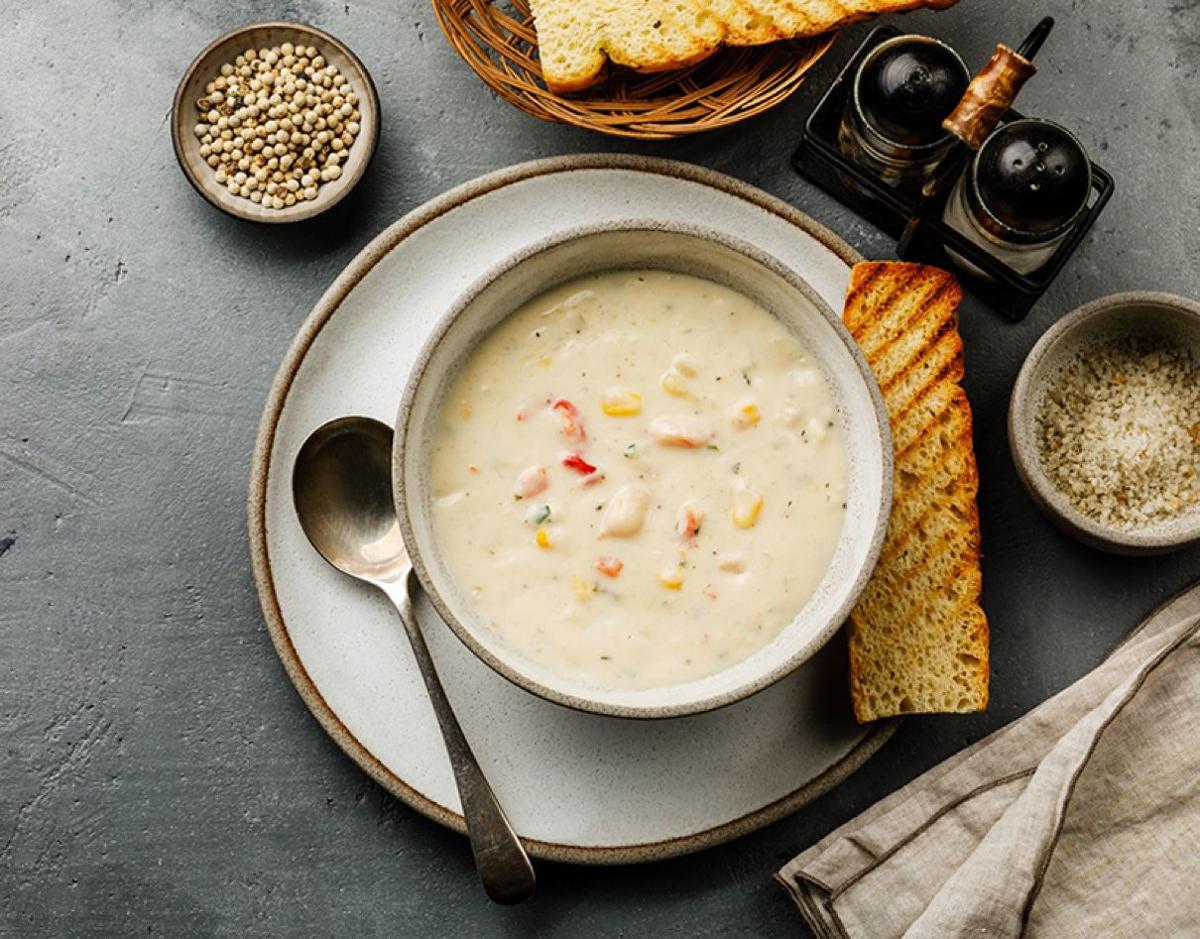
“The original versions of the dish consisted of a pot filled with a mixture of fresh fish, salt pork, leftover hardened biscuits (which were used as a thickener), onions, water and whatever spices were available, writes Medearis. “A chowder is a delicious way to use the ingredients you have on hand to create a meal that does not require extensive prep or simmering for hours. My recipe for Seafood and Sweet Corn Chowder uses the basic techniques.”
My recipe for Seafood and Sweet Corn Chowder uses the basic techniques for making a chowder, but is designed to accommodate the need to vary ingredients based upon what you have on hand or what you can purchase at the store.
Whether you decide to make a seafood or vegetarian chowder, feel free to create your own version of this DIY dinner.
SEAFOOD AND SWEET CORN CHOWDER
If you don’t have all the vegetables, seafood or spices on hand, omit or substitute the ingredient with what you do have. This chowder will still be delicious without it!
3 tablespoons butter or vegetable oil
1/2 cup (about l large stalk) chopped celery
1/2 medium onion, chopped
1/2 green bell pepper, seeded and chopped
2 garlic cloves, minced or 1/2 tablespoon granulated garlic powder
1 1/2 teaspoons salt
1 1/2 teaspoon ground black pepper
3/4 teaspoon dried dill or tarragon, or 1 tablespoon dill pickle juice
1/8 teaspoon cayenne pepper or red pepper flakes
2 cups chicken broth, seafood stock, clam juice, bouillon fish base or water
1 to 2 large Russet potatoes, or 3 red skin or Yukon Gold potatoes cut into 2-inch cubes, about 2 to 3 cups
2 large carrots, chopped
2 cups frozen corn, thawed, or 1 (15-ounce) can whole kernel or cream-style corn, or 6 ears sweet corn, husk and silk removed, or frozen corn on the cob, thawed with kernels cut from the cobb
2 cups heavy cream, half and half
Whole milk or 2 (14-ounce) cans evaporated milk
1 3/4 to 2 cups fully cooked, skinless salmon chunks, or 1 can (14 3/4 ounces) salmon, drained, flaked, bones and skin removed, or 1 to 2 cups fresh or frozen peeled and deveined shrimp, cooked peeled and deveined shrimp, or cooked crab meat (checked for pieces of shell) or a combination of the seafood equaling 1 3/4 to 2 cups.
1. Place the butter or oil into a large saucepan or Dutch oven placed over medium heat. Add in the celery, onion, green bell pepper, garlic or garlic powder, and 1/2 teaspoon of the salt and pepper, dill, tarragon or dill pickle juice, and the cayenne pepper or red pepper flakes. Saute, stirring occasionally until the vegetables are tender, about 4 to 5 minutes.
2. Stir in the broth, stock, juice or water, potatoes, carrots and the remaining teaspoon of he salt and pepper. Cover and bring the chowder to a boil.
3. Reduce heat to low; stir the mixture, cover and simmer for 40 minutes or until the vegetables are nearly tender. Stir in the corn, cream or milk, and the salmon, shrimp or cooked crab meat (or a combination of seafood). Simmer on low heat for 10 to 15 minutes or until heated through.
4. Garnish with lemon wedges, chopped parsley or green onions. Serve with toasted French bread or crackers. Serves 6
Here’s the Jerk Chicken recipe that won the Throwdown with Bobby Flay.
Combine the oil and vinegar in a medium glass bowl. Stir in the orange and lime juice, molasses, soy sauce, cilantro, green onions, garlic, chili, bay leaves, peppercorns, cinnamon stick, sage,thyme, allspice, pepper, and nutmeg.
Place the chicken pieces in a large baking pan and pour the spice mixture over them, coating each piece well. Cover with plastic wrap and place the chicken in the refrigerator to marinate 12 hours or overnight, turning once.
Allow the chicken pieces to come to room temperature before grilling. Heat the grill until the coals are somewhat white with ash; the flame should be low. Place the chicken on the grill and cover with the lid. Grill for 30 to 35 minutes, turning pieces to cook evenly. Baste pieces with remaining marinade.
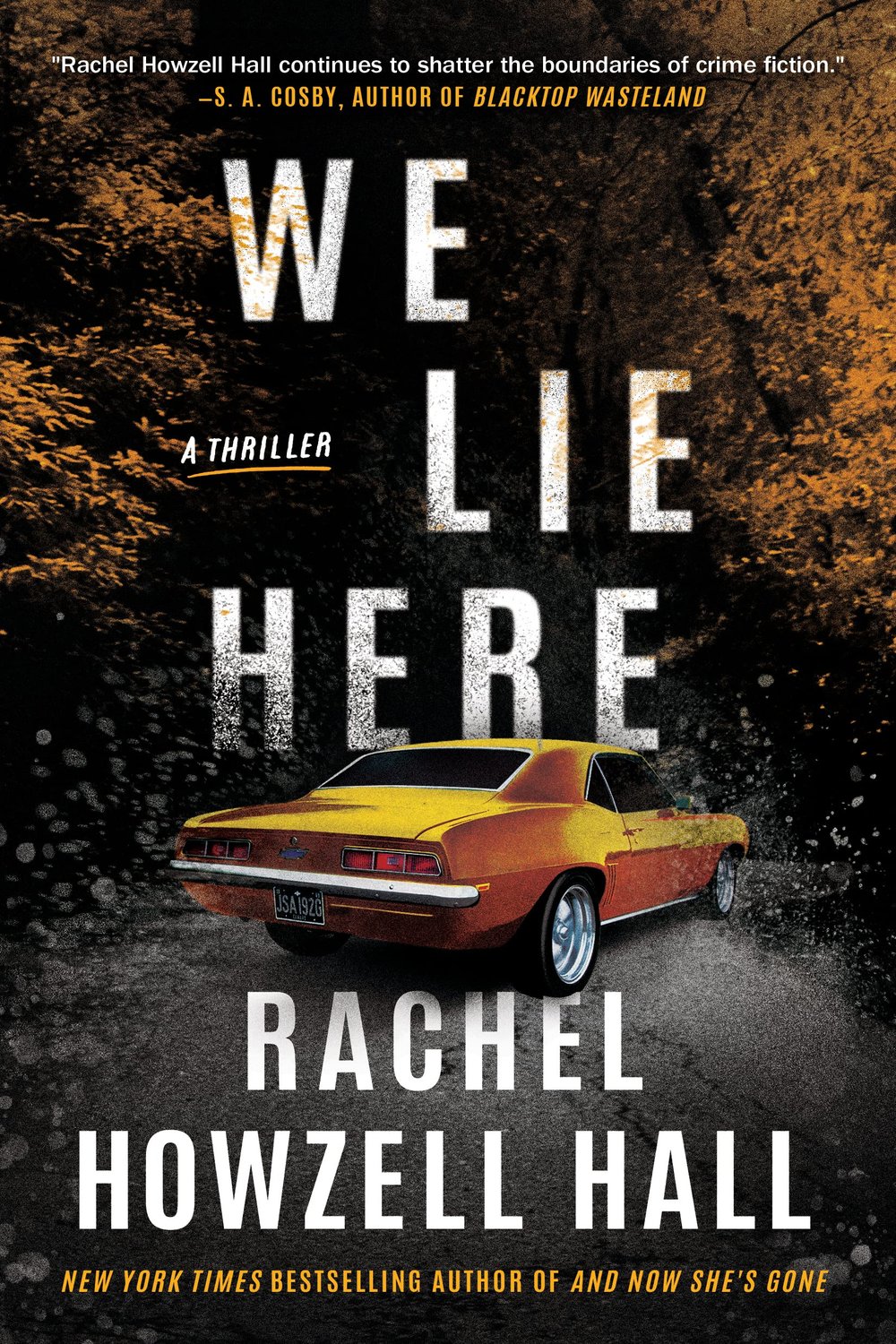
Nominated for the 2023 Los Angeles Times Book Prize in Mystery/Thriller, Rachel Howzell Hall’s We Lie Here (Thomas & Mercer) is the ultimate in twisty family secrets, murders, long standing grudges, and buried–both literally and figuratively–truths.
In this book, Hall, the New York Times bestselling author of And Now She’s Gone and These Toxic Things, tells the story of Yara Gibson, a L.A. screenwriter who returns to the small desert town of La Paz to help plan a family event. Yara has a lot of reservations about the trip and as her time at home progresses she becomes even more wary of what’s going on below the surface of what seems like a typical middle class family. She’s contacted by a woman claiming to be her cousin Felicia who leaves Yara a key to a remote lakeside cabin. Felicia has secrets to reveal about the family and the two agree to meet but then Fellicia’s body is discovered, setting Yara off on a quest to uncover what the family has spent years to hide.
But there’s more going on as well. Files in the basement of the cabin refer back to a tragedy that happened years ago. And as she investigates her family’s past and how it impacts her, Yara becomes concerned she’s losing her focus when things go missing including the medicine necessary to keep her from having an asthma attack. Or is there something more insidious going on?
Hall has again written a tightly woven mystery, one that keeps a reader in their seat, turning the pages to find out how it ends. Also available on CD and Audible.
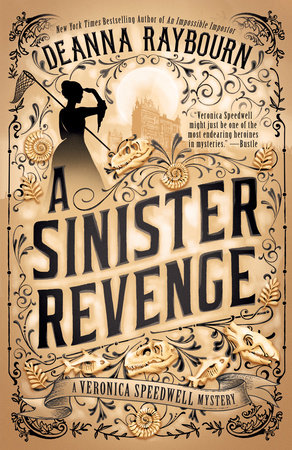
Deanna Raybourn takes us back to Victorian times in “A Sinister Revenge” (Penguin Random House), the latest novel in her Veronica Speedwell series. Speedwell, a scientist, lepidopterist or butterfly collector, and lady adventurer, has traveled to Bavaria in search of Revelstoke “Stoker” Templeton-Vane (called Stoker for short), her lover and scientific partner, who understandably is upset to learn that her husband who she presumed dead, is still very much alive. Upon finding out the news, he leaves the country and now seems to have completely disappeared. Traveling with Speedwell is Stoker’s brother, Viscount Tiberius Templeton-Vane, and the two, while dining at a Bavarian inn and hearing the landlord talk about a disagreeable encounter he had with a wolf-like man believe they may have found Stoker.
But there’s more going on than just a missing lover and brother. Tiberius has received death threats tied to an incident that occurred years ago and he needs his brother’s help in unraveling the mystery in order to save his life.
Raybourn, a New York Times bestselling author and sixth generation Texan, knew from an early age that she wanted to be a writer. Influenced by such women writers as Mary Stewart, Victoria Holt, Agatha Christie, and even Jane Austen, she describes her books as mysteries with enough romance to keep readers who like both genres happy.
“There was never a time when I didn’t make up stories,” she says, adding that she remembers being thrilled when she finally learned how to print so she could get them out of her head. There was also the time where she missed out on entire school lesson because she was busy writing a story about Maria Antoinette.
That might explain why she is a prolific author, having written not only eight Speedwell novels but also the Lady Julia Grey series, which are also historical fiction. Besides that she has stand alone novels including last year’s “Killers of a Certain Age” about a band of female assassins who are over 60.
Her Speedwell character is like many of the resolute women found in the pages of history and is inspired in part by Margaret Fountaine, a Victorian era lepidopterist who Raybourn says traveled the world collecting both butterflies and lovers. Both Fountaine and Speedwell are nothing like what people expect Victorian to be like says Raybourn.
“Fountaine was dynamic and intriguing,” she says. “She was my inspiration for Veronica.”
For the last 12 years, Skyler Moore has struggled with a crippling sense of guilt and an inability to be around large groups. An artist who specializes in collages, her work is about to be displayed in a prestigious art gallery and, hopefully, it will help her shaky finances as she wants to become pregnant through in vitro before her biological clock runs out.
But hearing she may have to speak to the large crowd expected at the gallery greatly increases her social anxiety. Add to that, she still is dealing with her mother who blames Skyler for what happened to Chloe, her younger half-sister 12 years ago after they became separated at a party.
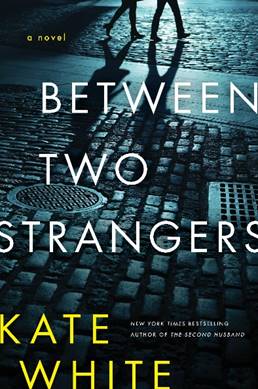
Told Chloe had left, Skyler returned to the hotel where she was staying and, unusual for her, indulged in a one night stand with Christopher Whaley, an older, handsome—and married–man she just met. And so sets the stage for Kate White’s newest mystery, “Between Two Strangers.”
Her half-sister never left the party, her body was found days later at the bottom of a hill on the property. As for Whaley, he and Skyler never meet again but his lawyer contacts her a few nights before her gallery show. Whaley has recently died and left her several million dollars much to the anger of his family. Soon she is being harassed and threatened, her apartment broken into, and her career as an artist stymied when her collages, on display at the gallery are defaced. Skyler, unsure of herself as it is, must face the threats and accusations made against her by his family.
White, the author of 17 novels, was formerly the editor-in-chief of Cosmopolitan magazine and uses her knowledge of New York and the New York art scene to create a fast paced novel that takes us into that world when Skyler works on a collage that she hopes will help unlock the secret of her half-sister’s death.
I ask White, during a long phone conversation, how she was able to write best selling novels and work as editor-in-chief of an extremely popular woman’s magazine, That, in itself, must surely have been a full-time job.
“I was definitely burning the candle at both ends,” she says, adding that when she first got the call to take over the job she had completed four chapters of her first foray into mystery writing. “I put those aside.”
Uber-successful at editing—she took Cosmo to the number one best seller of single issue copies (the magazine was famous for its covers and inspired advice to women), selling two million copies a month.
“I loved the job, my team, the magazine,” says White.
But she also loved mysteries, having become addicted to the Nancy Drew mystery series at age 12. And so despite being married with two children and working as editor-in-chief, she returned to the mystery novel she was writing.
When I ask where she gets her ideas, White says from many places. She keeps a file of news clippings and notes. A plot, which she is meticulously outlined, can come from overhearing a conversation on an elevator. Yes, she says. She eavesdrops.
After 14 years at the helm of Cosmo (how many other magazines have a nickname?), White decided to focus on writing full-time. Now she spends part of the year in Uruguay where she and her husband have a place in a small beach town where she enjoys the lavender sunsets, the food and being warm in the winter.
It is also the perfect place for White to write and she is already at work on her next mystery.
For more information on White including upcoming author events, visit her website katewhite.com
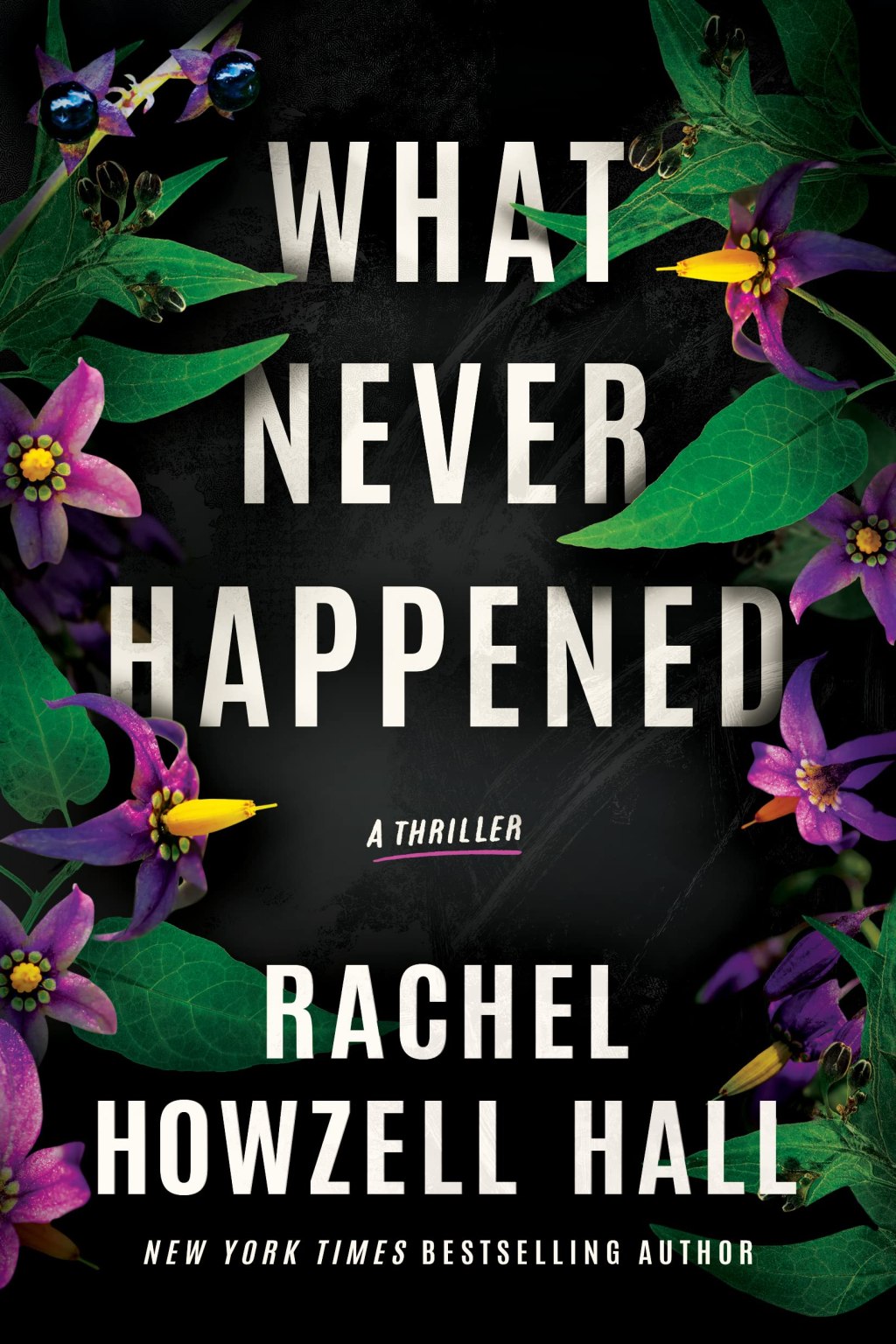
Twenty years ago, Colette “Coco” Weber survived the mass murder of her father, mother, and brother on idyllic Catalina Island off the coast of California. The man accused of the murder is now in prison and Coco, who moved away, married, and is now separated from her husband, has returned to the island hoping to jumpstart her life again.
But Catalina, so pretty with its colorful homes and eclectic boutiques and restaurants, has undercurrents as well. Sure some things haven’t changed. Her Aunt Gwen, who became the caretaker of Coco after the murders, still resents her and is hiding secrets possibly about the ownership of the house where she lives. At first it seems lucky that Coco is still best friends with the owners of the family run island newspapers who hire her to write obituaries—a special skill that Coco excels in. But rampant Realtors are buying up the quaint cottages that line the hilly streets of the island, turning out owners and repricing them at astronomical fees. Catalina, it turns out, may not be the place soon for anyone but the very wealthy.
That certainly includes Gwen, a former house and hotel cleaner with a penchant for stealing both baubles and expensive items from the places she cleans. It’s in a small part, a payback for all the scorn people in her position endure particularly those of color. But it’s also part of Gwen’s sneaky nature and her disdain for most people including her niece.
Before long Coco is involved with a handsome rich guy who works at the paper as a lark. His parents make enough money that he really can just dabble in whatever interests him. Soon, though, Coco suspects him of lying to her about his whereabouts at certain times when he goes radio silence so to speak and doesn’t answer his cell phone. And why has he chosen Coco when there are all these luscious beauty queen types in his past.
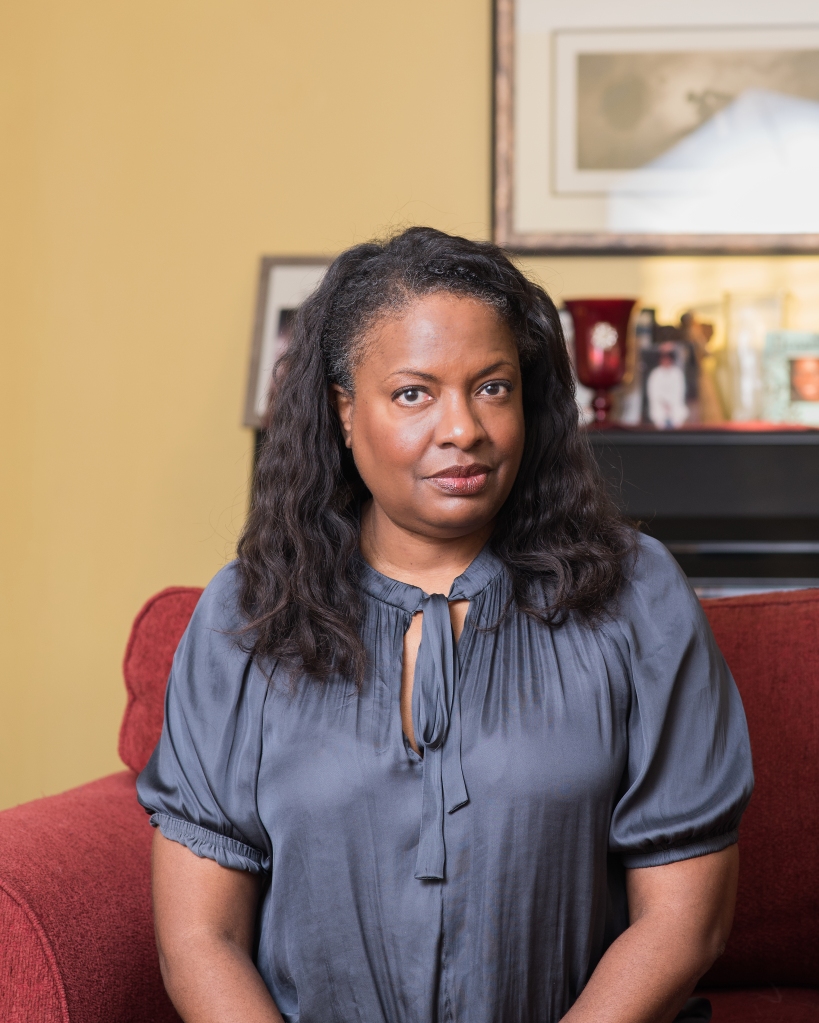
“As for her choice of jobs, her family’s obituaries were not special and didn’t capture who she knew they were. And now she has a chance to do for others what she wished had happened for her,” says Rachel Howzell Hall, an award-winning mystery writer about her latest standalone novel, “What Never Happened.” “This is also a story about a woman who’s trying to figure out where she belongs.”
Determining where she belongs also means figuring out who to trust and as she becomes immersed into island life during the isolated time of Covid, she soon learns that’s not easy to do. One big question is who is sending her threatening obituaries—her own—outlining the day of her death. It turns out there are many secrets and as she writes obituaries, Coco notices a stunning similarity in the deaths of many elderly women. They have refused to sell their homes which now are worth small fortunes. But unfortunately, it’s hard to get someone to believe her.
“Coco has been stunted in her growth and her ability to figure people out—she lost her parents during the time when they should have been guiding her and her aunt begrudges having to take care of her,” says Hall, who lives in Los Angeles and has visited the island on field trips with her daughter and also conducted extensive research that goes beyond the tourist brochures. “The way her family was taken away from her left her not knowing who she can trust and that becomes even more so with all that is happening on the island. And then she learns that this person she thought—and the law thought—killed her family, did not do it.”
Determined to find answers, Coco takes chances in trying to solve the mysteries swirling around her. She knows that is the only way she can remain on the island and survive.







 Shelf Life