Category: #BookTok

  • The Wide Wide Sea: Imperial Ambition, First Contact and the Fateful Final Voyage of Captain James Cook: Discussion and Book Signing

    The Wide Wide Sea: Imperial Ambition, First Contact and the Fateful Final Voyage of Captain James Cook: Discussion and Book Signing

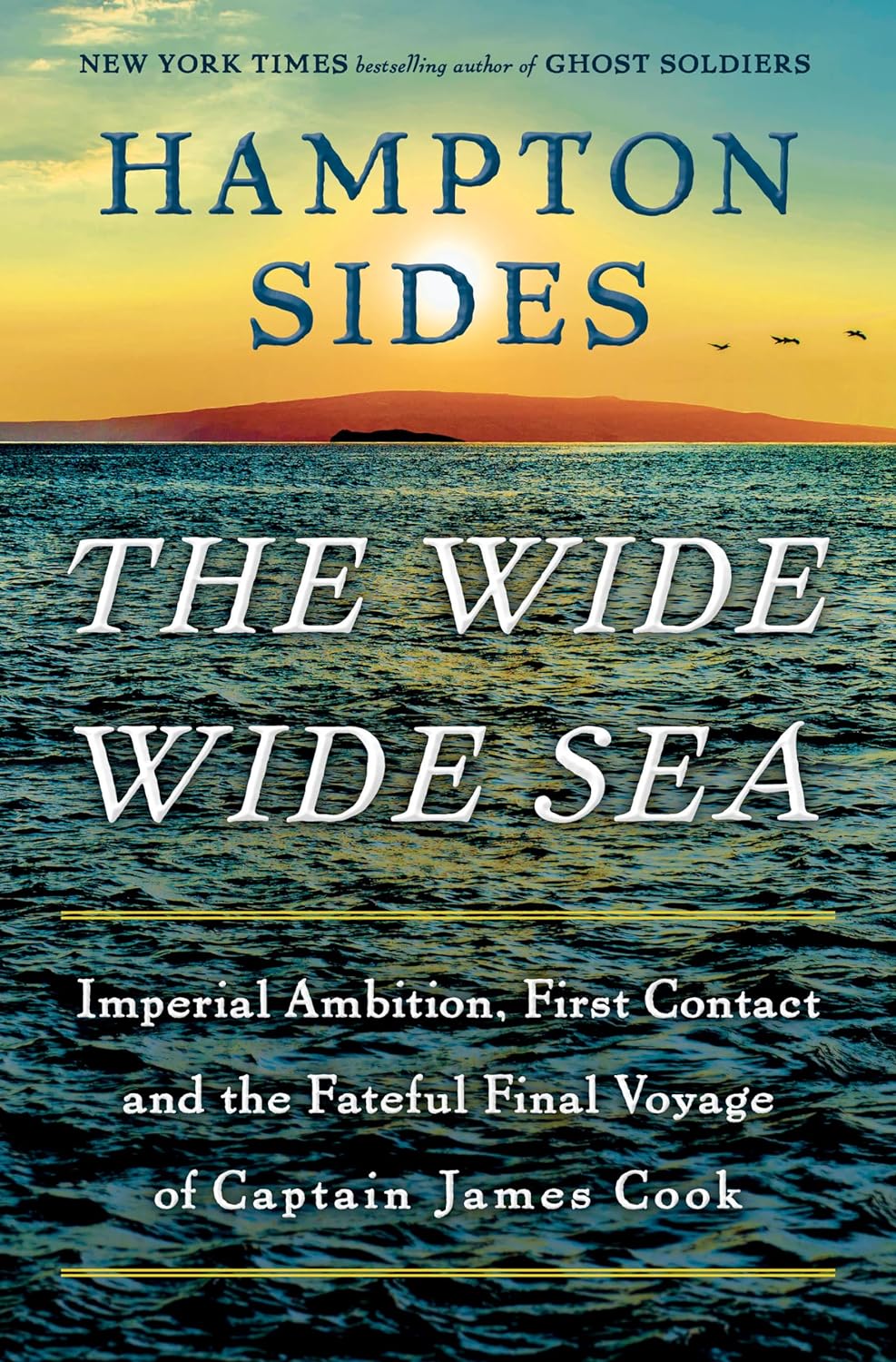
    The Book Stall (811 Elm Street in Winnetka) is thrilled to host historian Hampton Sides on Monday, April 15 at 6:30 pm for a discussion featuring his new book, The Wide Wide Sea: Imperial Ambition, First Contact and the Fateful Final Voyage of Captain James Cook. (Doubleday). From the New York Times bestselling author, an epic account of the most momentous voyage of the Age of Exploration, which culminated in Captain James Cook’s death in Hawaii, and left a complex and controversial legacy still debated to this day. 

    At once a ferociously-paced story of adventure on the high seas and a searching examination of the complexities and consequences of the Age of Exploration, The Wide Wide Sea is a major work from one of our finest narrative nonfiction writers. 

    This event is free with registration. To register, please visit The Book Stall’s website or CLICK HERE

    More About the Book: Hampton Sides’ bravura account of Cook’s last journey wrestles with Cook’s legacy and provides a thrilling narrative of the titanic efforts and continual danger that characterized exploration in the 1700s. Cook was renowned for his peerless seamanship, his humane leadership, and his dedication to science. He was also deeply interested in the native people he encountered. On previous expeditions, Cook mapped huge swaths of the Pacific, including the east coast of Australia, and initiated first European contact with numerous peoples. He treated his crew well and endeavored to learn about the societies he encountered with curiosity and without judgment.

    Yet something was different on this last voyage. Cook became mercurial, resorting to the lash to enforce discipline, and led his two vessels into danger time and again. Uncharacteristically, he ordered violent retaliation for perceived theft on the part of native peoples. This may have had something to do with his secret orders, which were to chart and claim lands before Britain’s imperial rivals could, and to discover the fabled Northwest Passage. Whatever Cook’s intentions, his scientific efforts were the sharp edge of the colonial sword, and the ultimate effects of first contact were catastrophic for Indigenous people around the world.

    The tensions between Cook’s overt and covert missions came to a head on the shores of Hawaii. His first landing there was harmonious, but when Cook returned after mapping the coast of the Pacific Northwest and Alaska, his exploitative treatment of the Hawaiians led to the fatal encounter.

    Kirkus Reviews,in a starred review, says,“An acclaimed historian takes to the sea in this rousing tale of exploration … Sides draws on numerous contemporaneous sources to create a fascinating, immersive adventure story featuring just the right amount of historical context … Lusciously detailed and insightful history, masterfully told.” 

    More About the Author:  Hampton Sides is an award-winning editor of Outside and the author of the bestselling histories Hellhound on his Trial, Blood and Thunder, and Ghost Soldiers. He lives in New Mexico with his wife, Anne, and their three sons.

  • John Schu: Author Discussion & Book Signing in Conversation with Heidi Stevens 

    John Schu: Author Discussion & Book Signing in Conversation with Heidi Stevens 

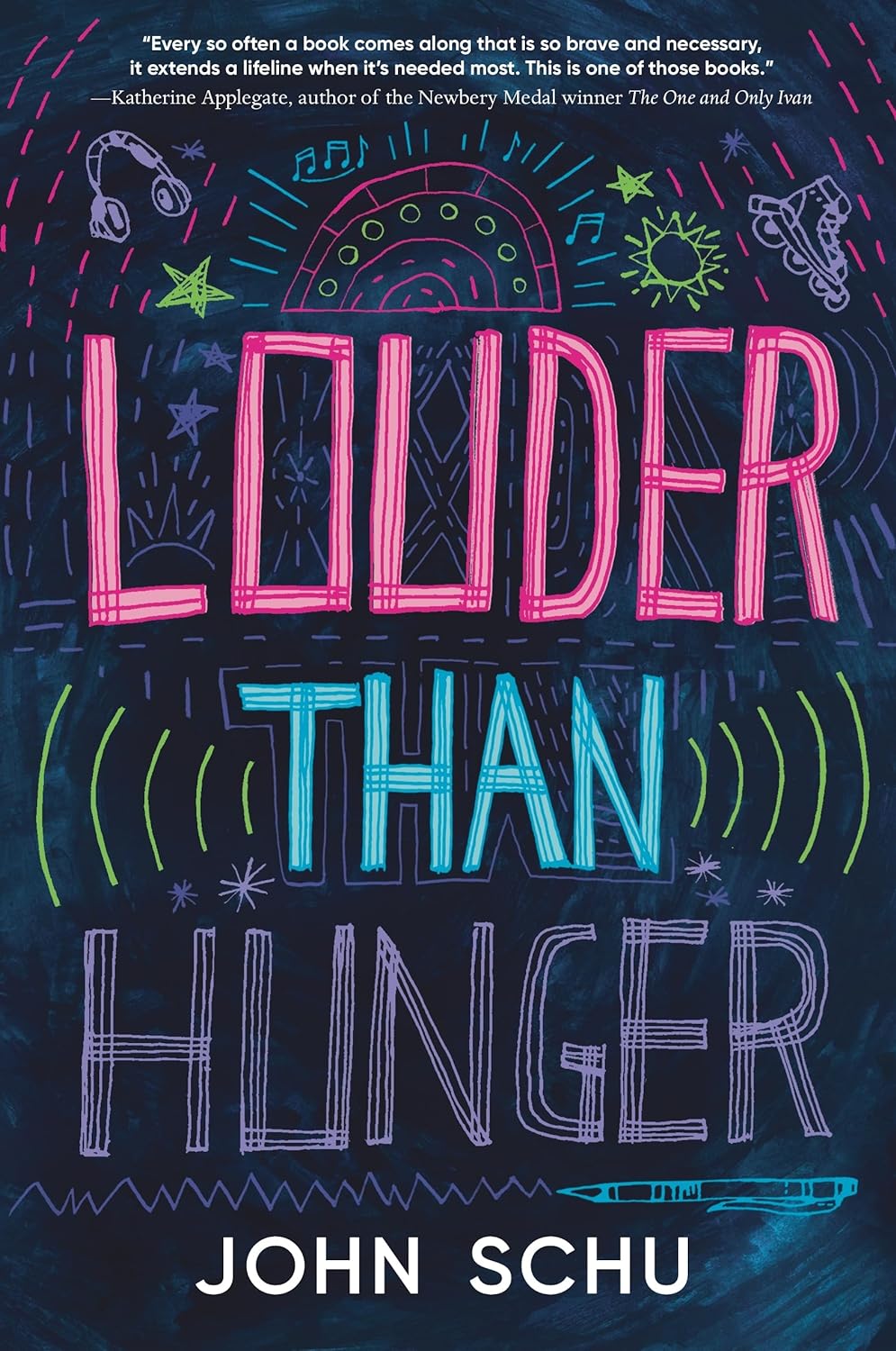
    The Book Stall (811 Elm Street in Winnetka) proudly welcomes to the store author John Schu on Thursday, April 4 at 6:30 pm for a powerful discussion of his new book, Louder Than Hunger. (Candlewick Press). Based on his own experience of these conditions, Mr. Schu presents a vivid and immersive look at a teenage boy’s experience of anorexia, OCD, and depression. As a revered teacher, librarian, and story ambassador, Schu has created a wrenching, transformative, and unforgettable novel in verse with a moving introduction by two-time Newbery Medalist Kate DiCamillo. Mr. Schu will be in conversation with Heidi Stevens. This book is appropriate for readers ages 12 to adult. 

    This event is free with registration, to register, please visit The Book Stall’s website or CLICK HERE. 

    More About the Book: Jake volunteers at a nursing home because he likes helping people. He

    likes reading mysteries and comics aloud to the senior residents. He likes skating and singing, playing Bingo and Name That Tune. He also likes avoiding people his own age . . . and the cruelty of mirrors . . . and food. Jake has read about kids like him in books, the weird one, the outsider, and would do anything not to be that kid, including shrink himself down to nothing. But the less he eats, the bigger he feels. How long can Jake punish himself before he truly disappears?

    A fictionalized account of the author’s experiences and emotions living in residential treatment facilities as a young teen with an eating disorder, Louder Than Hunger is a triumph of raw honesty. With a deeply personal afterword for context, this much-anticipated verse novel is a powerful model for muffling the destructive voices inside, managing and articulating pain, and embracing self-acceptance, support, and love. 

    Katherine Applegate, author of The One and Only Ivan says“Every so often a book comes along that is so brave and necessary, it extends a lifeline when it’s needed most. This is one of those books.”

    More About the Author: John Schu is the author of the acclaimed picture books This Is a School and This Is a Story. He also wrote the adult study The Gift of Story: Exploring the Affective Side of the Reading Life and was named a Library Journal Mover and Shaker for his dynamic interactions with students and his passionate adoption of new technologies as a means of connecting authors, illustrators, books, and readers. As a children’s librarian for Bookelicious, part-time lecturer at Rutgers University, and former Ambassador of School Libraries for Scholastic Book Fairs, Mr. Schu continues to travel the world to share his love of books. He lives in Naperville, Illinois. You can find him at www.JohnSchu.com and on social media @MrSchuReads.

    More About Our Conversation Partner: Heidi Stevens is a Chicago-based writer and the Director of External Affairs for the University of Chicago’s TMW Center for Early Learning + Public Health, which works to provide parents, caregivers, and communities the knowledge and tools to optimize foundational brain development in all children. Prior to joining University of Chicago, Stevens worked at the Chicago Tribune for 23 years, where she wrote a daily column called “Balancing Act.” She was awarded the Anne Keegan Award for Distinguished Journalism in 2018. Stevens maintains a nationally syndicated weekly column and serves on the Family Action Network board of directors.

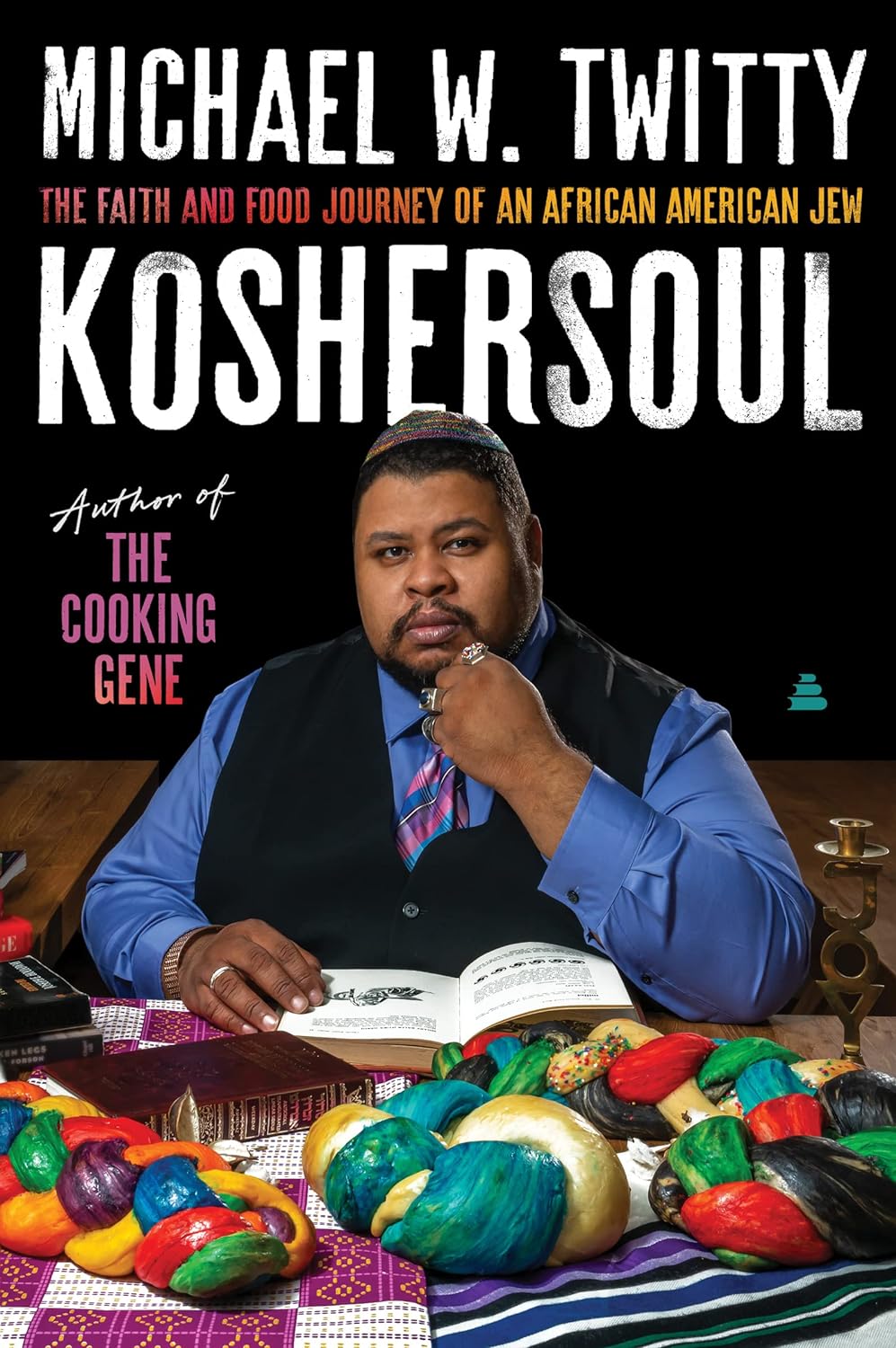
  • Koshersoul: The Faith and Food Journey of an African American Jew by Michael W. Twitty

    Koshersoul: The Faith and Food Journey of an African American Jew by Michael W. Twitty

    “most importantly, Twitty reminds us that you don’t have to be Black or Jewish to love koshersoul.”

    Both a cookbook and a memoir, Koshersoul (Amistad) explores the food traditions of both Black and Jewish cultures and how for Black Jewish people, the two combine, becoming a distinctive foodway of its own.

    “When I first started talking about developing this book, a fellow African American food writer asked what it was about, saying ‘So you’re not writing about Black [food]; you’re writing about Jewish [food)],” writes Michael W. Twitty, a culinary historian, living history interpreter, and Judiacs teacher in the introduction to his book.  “My response was reflective: no this is a book about a part of Black food that’s also Jewish food; This is a book about Jewish food that’s also Black food because it’s a book about Black people who are Jewish and Jewish people who are Black.”

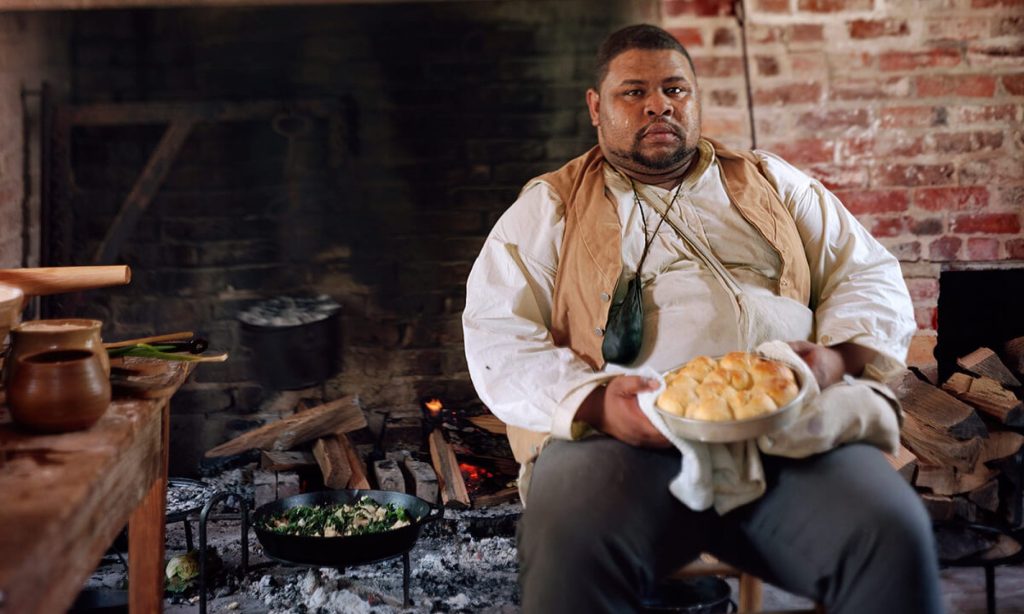
    Twitty, creator of Afroculinaria, the first blog devoted to African American history, foodways, and their legacy, won both the 2018 James Beard Foundation Book of the Year Award and Best Writing Award for The Cooking Gene. His writing is thoughtful, deep, and involved, taking a deep dive into his personal history and combining it with his conversations with other Black Jews. He seeks to put this in a historical and cultural perspective, showing us how food and identity converge.

    “Black and Jews in their Venn diagram have seen considerable turmoil and pain,” he writes “and this too is a fundamental ingredient.”

    But no matter what is going on in the world or what has happened in the past, we all have an urge and need to eat, writes Twitty, plus an enjoyment of what we consume. This is reflected not only in his writing but also in the recipes he shares at the back of the book.

    Twitty describes this section as a koshersoul community cookbook of sorts. He encourages readers when in the kitchen to feel free to adapt them to meet their own dietary practices and preferences.

    The recipes presented here are categorized under holidays and religious observations: Juneteenth, Pesach/Passover, Rosh Hashanah-Yom Kippur-Sukkot, and Shabbat, among others.

    The names of some of the recipes represent the different lands and regions where people came from such as Ghanian Pepper Sauce, Senegalese-Inspired Chicken Soup, Jamaican Jerk Chicken Spaghetti, West Africa Wet Seasoning, and Gullah-Geechee-Inspired Stew.

    Others like Yam Latkes, Kosher Spring Rolls, Collard Green Kreplach Filling, Black Eyed-Peas with Tomatoes, Sephardic Style, and Matzoh Meal Fried Chicken define the merging of two different cultures that meld into a distinct foodway.

    But most importantly, Twitty reminds us that you don’t have to be Black or Jewish to love koshersoul.

    Black-Eyed Pea Hummus

    Serves 4 to 6

    Black-eyed peas are a strong link between the two Diaspora cuisines, probably meeting in the Nile River Valley and the Fertile Crescent. Originally from ancient West Africa, black-eyed peas are a significant part of the cuisine of the Levant to this day, moving with African people throughout the region. Hummus, emblematic and beloved by many cultures in the Levant—is a dish that relies on the staple legume of the Arab farmer and ancient biblical standby, the chickpea. Here the black-eyed pea, loaded with mystical symbolism and its own honored place in West and Central Africa, replaces the chickpea. — Michael Twitty

    • 1 15-ounce can black-eyed peas, rinsed and drained
    • 1⁄4 cup extra virgin olive oil
    • 1⁄3 cup tahini
    • 1⁄2 cup fresh lemon juice
    • 1 ½ teaspoons kosher salt
    • 4 garlic cloves, chopped
    • 1 teaspoon sweet or smoked paprika
    • 1⁄2 teaspoon ground cumin
    • 1⁄2 teaspoon ground coriander
    • 1⁄2 teaspoon chili powder
    • 1 teaspoon brown or turbinado sugar
    • 1 teaspoon hot sauce
    • 2 teaspoons minced parsley, for garnish

    Throw everything but the parsley into a food processor and blend until smooth. Taste and add more spice, hot sauce, or whatever you think it needs. To serve, sprinkle parsley and drizzle olive oil on the top.

    This article originally appeared in the New York Journal of Books.

  • Women Who Murder by Mitzi Szereto

    Women Who Murder by Mitzi Szereto

    “For the female of the species is more deadly than the male.”

    —Rudyard Kipling, from the poem “The Female of the Species.”

    “Why is that we’re always so shocked when women commit violent crimes, in particular, the crime of murder? Perhaps we’re more accustomed to seeing men as the aggressors when it comes to murder, not women. Yet some of history’s most notorious killers have been women. From Countess Erzsebet Bathory, Delphine LaLaurie, Amelia Dyer, Lizzie Borden, and Belle Gunness . . . it often seems impossible to keep up.”

    True crime writer Mitzi Szereto is the editor of Women Who Murder: An International Collection of Deadly True Tales (Mango Publishing), a compendium of murderous women written by internationally famous writers such as horror writer Anthony Ferguson, who lives in Australia; Tom Larson, an American mystery writer; and Cathy Pickens, an attorney who writes both true crime and the Blue Ridge Mountain Cozy Mysteries.

    The tales they tell, some well-known such as “Ruth Snyder: The Original Femme Fatale” by Claran Conliffe and “On the Courtroom Steps: The Trial of Susan Smith” by Picken and others much more obscure but no less fascinating like “Mona Fandey: The Malaysian Murderer” by Chang Shih Yen and “Anno Biesto, Anno Funesto” by Alish Holland about the brutal slaying of John Charles on Leap Year Day in 2000 in New South Wales, give lie to the saying that women are the gentler sex. Indeed, these women can kill just as violently and wantonly as any man.

    In her introduction, Szereto points out that men and women do kill differently and often for different reasons. Poison, at least in the past, often was the murder weapon of choice of women—easier to administer than creeping up and stabbing someone and so much tidier—no blood to clean up. They also kill less frequently and are typically not in it for the thrill of the kill like many male serial killers. Szereto says that many women, particularly those labeled as Black Widows, do so for the money, though that’s not the only reason. Sometimes it’s the only way to get rid of a threatening boyfriend or spouse or because of jealousy, love, and hate.

    But kill they do. And in this fascinating read, we learn about 14 women who did.

    This review originally appeared in the New York Journal of Books.

    .

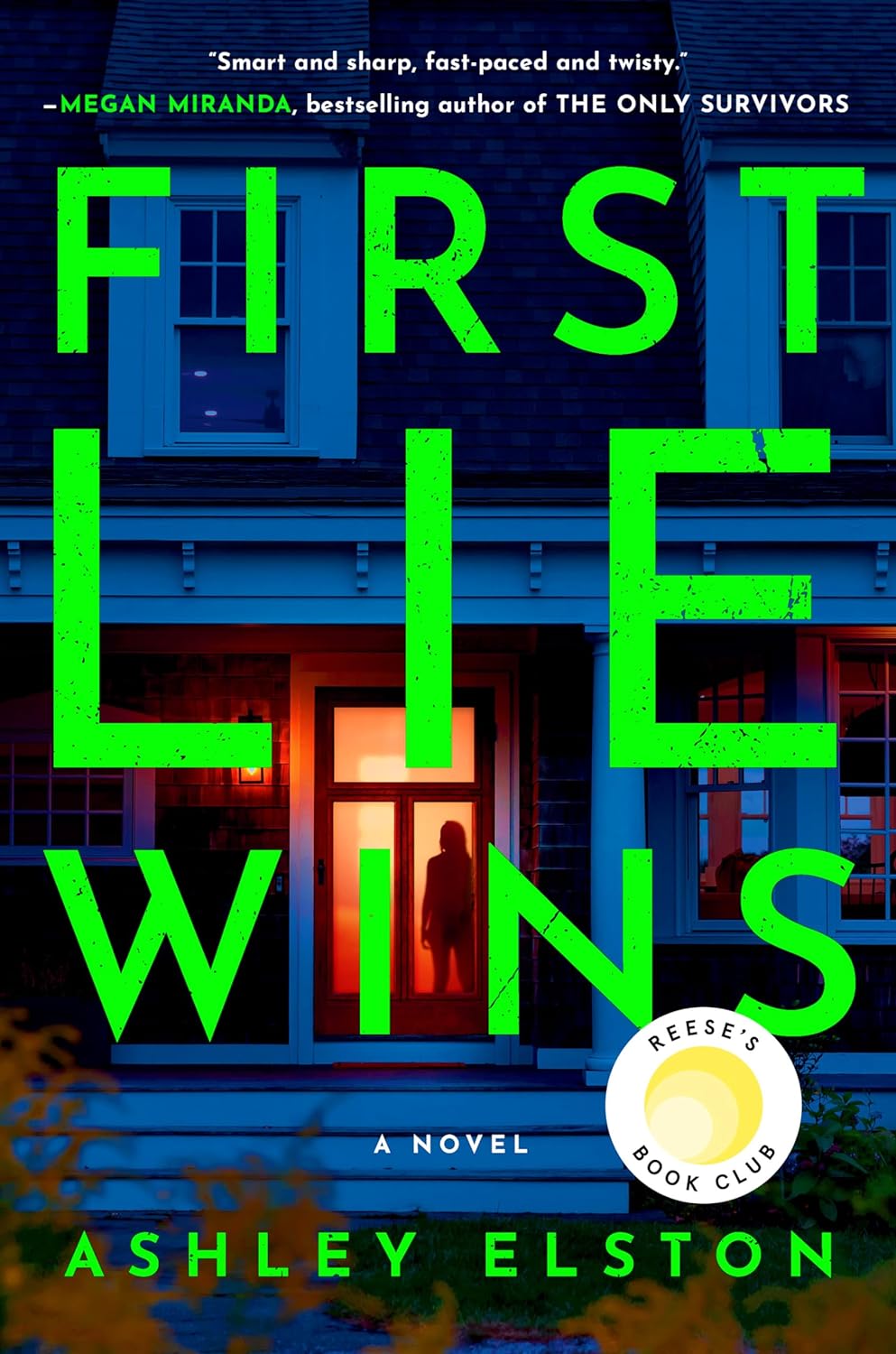
  • Reese’s Book Club Pick: “First Lie Wins”

    Reese’s Book Club Pick: “First Lie Wins”

    “This is Ashley Elston’s debut adult novel and it’s a real page turner, so good you hate to turn the last page.”

    “My mind splits, showing two different paths; This is definitely a crossroads moment,” recalls Lucca Marino alias Wendy Wallace alias Mia Blanchard and a whole long list of other names. “Taking the job Matt offers moved me deeper into the world but comes with the support that would make the feel of these cuffs biting into my wrist a distant memory. The other path requires me to go straight. To get out before I’m in any real trouble because as Saturday night proved, it will only be a matter of time before something else goes wrong.”

    And, of course it does, in this complicated and entrancing novel, “First Lie Wins” (Pamela Dorman Books 2024).

    Lucca, known by the people in her life as Evie Porter when we meet her, chooses the darker path. She’s agreed to work with Matt and his boss, Mr. Smith. The latter is just a mechanically altered voice over the phone, a devious man who likes to play his operatives against each other, but the pay is very good, and Evie is an expert at her work. Her job? To take on another identity and infiltrate the mark’s life, securing the necessary information that Mr. Smith wants. Sometimes it’s so he can blackmail them, sometimes to take over their business, or steal some vital data.

    As Evie, she starts a romance with Ryan, her latest victim. She isn’t sure what Mr. Smith wants from him; her instructions are parceled out over time. But she soon learns that Ryan, who invites her to live with him and meet his family and friends, is more than just a successful small town businessman who has taken over the family business. He’s somewhat shady, just as she is, helping move stolen goods.

    But Evie has a heart, as she has proven in her other jobs, and now, she’s falling for Ryan and the nice life he has to offer. Unfortunately, no one easily leaves Mr. Smith’s business. It’s not exactly the kind of job you retire from as she finds out when several other operatives meet untimely deaths.

    Whom do you trust? Evie is discovering that she doesn’t really know. Even Ryan may be more than a unwitting dupe, he may be in the plot to destroy her that Mr. Smith has put in place, framing her for a murder she didn’t commit.

    First Lie Wins is the ultimate cat-and-mouse caper, leaving you guessing until all the loose ends are neatly tied up. This is Ashley Elston’s debut adult novel and it’s a real page turner, so good you hate to turn the last page.

    This article originally appeared in the New York Journal of Books.

  • The Busy Body by Kemper Donovan

    The Busy Body by Kemper Donovan

    “I tell other people’s stories for a living.

    “You can call me a ghostwriter, though usually I just say I ‘freelance’ which is vague and boring enough to put an end to strangers’ polite inquiries . . . That’s a lie . . . About my supposed friends. I have lots of acquaintances, colleagues, and associates—an assortment of people pepper my existence so that if you saw me from the outside you think my life was perfectly full. There are times it seems full even to me. But the truth is I don’t have any friends.”

    Thus opens Kemper Donovan’s The Busy Body where we meet the ghostwriter who has just received the most plum assignment of her career, collaborating with Dorothy Gibson, who just lost the presidential election and has retreated to her lovely abode outside a small town in Maine. Readers might be forgiven for thinking of Hilary Clinton when meeting Dorothy and that’s because Donovan based her character on the former first lady. But she’s also an amalgam of other female politicians including Sarah Palin, Amy Klobuchar, and Susan Collins—according to the author.

    Told in first person, the ghostwriter alludes to a distant tragedy in her past as the reason for her walling herself off from emotional entanglements though we never learn the entire story—possibly Kemper is saving that for future books as it appears our protagonist will become involved in future mysteries.

    The ghostwriting project quickly gets put aside when a murder occurs at the Crystal Palace, a three-story glass maze of cavernous spaces and no stairs that serves as both an event center and hotel overlooking the Crystal River next door to Dorothy’s estate. The first murder victim is a not-so-successful actress, Vivian Davis who has improved her financial and social status in the world by marrying Walter, her plastic surgeon with cold blue eyes, and a hot young assistant with whom he is having an affair. Walter has rented the Crystal Palace and invited one of his medical school classmates, a successful West Coast entrepreneur, to get him to invest in a revolutionary new plastic surgery product he’s invented. The week doesn’t begin well and only gets worse when Vivian is found dead, after apparently downing too many sleeping pills and drowning in her bathtub.

    Shortly before her death, Dorothy and Vivian had a chance meeting, and the obligatory celebrity photo was taken by Vivian of the two of them. The shot goes viral after a toxicology report showed there were no drugs in her system. Vivian’s death is now labeled as a homicide and Dorothy, with her ghostwriter in tow, decides to do some sleuthing much to the ire of the local police.

    Kemper uses his acerbic sense of humor coupled with a fast-moving plot and an interesting assortment of characters, each with a reason to kill, to make The Busy Body, with its twists and turns, a witty and fun whodunit.

    This review originally appeared in the New York Journal of Books.

  • Mexico Kaleidoscope: Myths, Mysteries and Mystique

    Oenophiles might be surprised to learn that the oldest winery anywhere in the Americas is Casa Madero, formally established as long ago as 1597, located in Parras de la Fuente, a small town in the northern state of Coahuila.

    “In 1549 the Spanish priests and soldiers who explored this region discovered native vines growing wild in a valley and chose the spot to found the Mission of Santa María de Las Parras (“Holy Mary of the Vines”),”writes Tony Burton, the editor of MexConnect, Mexico’s top English-language online magazine, in his book Mexico Kaleidoscope: Myths, Mysteries and Mystique. “The early Mission of Santa María soon began to make wine from the local grapes, and a few years later the wines and brandies of the Valley of Parras were being shipped to the rest of the Americas.”

    But Mexico’s sophisticated approach to agriculture goes even further back than that.

    “The Mexica/Aztecs solved the dilemma of how to supply food to their island capital by developing a sophisticated wetland farming system involving raised beds, or chinampas, built in the lake,” writes Burton about when the city of Tenochtitlan was built, fortress-like, on an island. Though good for defense, it made providing a food source more difficult but there was a solution to that. “Originally these chinampas were free-floating, but over time they became rooted to the lake floor. The chinampas were separated by narrow canals, barely wide enough for small boats or canoes. From an ecological perspective, chinampas represented an extraordinary achievement: a food production system which proved to be one of the most environmentally sustainable and high-yielding farming systems anywhere on the planet! Constructing and maintaining chinampas required a significant input of labor, but the yields per unit area could be very high indeed, especially since up to four harvests a year were possible.”

    Burton covers 10,000 years of Mexican culture and history. It’s a compilation of “Did You Know?” columns for MexConnect, which ranks in the top 3% of all Internet sites in the world, registering over half a million sessions a year.

    It was his way of presenting and preserving relatively little-known but fascinating information about Mexico to a large number of readers.

    “One of my main motivations was that—to the best of my knowledge—no similar book for the general reader had been published in the past forty years,” says Burton. “An incredible amount of interesting academic research had been done on Mexico over that time, leading to reevaluations and reinterpretations of many former ideas and beliefs. I wanted to make readers aware of some of these extraordinary developments, which continually refuel my passionate interest in Mexico.”

    This very readable and fascinating book can be read cover to cover, says Burton, noting that it is also designed to allow readers to ‘dip into’ and read in whatever order appeals to them. 

    “When writing the book, I was trying to engage readers by expanding on, or challenging, some commonly held or overly simplistic ideas, in the hope of offering some ‘food for thought’ about many things Mexican,” he says.“Each chapter has a list of sources and suggestions for those readers who want to explore more.”

    The title Mexican Kaleidoscope is a nod to Norman Pelham Wright, a British writer whose own collection of essays, with the same title, was published in 1948.

    “That book was an eye-opener for me when I first began to get intimately acquainted with Mexico more than forty years ago,” says Burton. “The subtitle Myths, Mysteries and Mystique came from a suggestion by one of my regular golfing partners—who had read an early draft of the book—as we played the 11th hole at Cottonwood Golf Course on Vancouver Island.”

    The book is illustrated by Mexican artist Enrique Velázquez, a long-time friend of Burton’s.

    “Enrique has a keen interest in the subject matter and an uncanny ability to portray ideas in just a few lines,” says Burton. “I originally envisioned using small, inline drawings to break up the text, much in the manner of old-time illustrators, but his final drawings were far too good for that, so we changed track and gave them the prominence and space they merit.”

    “Every chapter has come to mean far more to me than is expressed by mere words on a page,” says Burton about the 30 chapters. “I really hope some of my enthusiasm comes through to readers. At the very least I’d like the book to cause readers to stop and think, to be occasionally surprised, and perhaps question things that they may have previously thought or heard about Mexico. As I’ve written elsewhere, Mexico is not always an easy country to understand but any effort to do so always seems to bring rich reward!”

    About the Author

    Burton, a Fellow of the Royal Geographical Society who was born and educated in the United Kingdom, first visited Mexico in 1977. Returning, he lived for almost two decades in the country where he worked as a writer, educator, and ecotourism specialist. An award-winning author, his other books include If Walls Could Talk: Chapala’s Historic Buildings and Their Former Occupants; Foreign Footprints in Ajijic: Decades of Change in a Mexican Village; Western Mexico: A Traveler’s Treasury; and Lake Chapala Through The Ages: An Anthology of Travelers’ Tales.

     Mexico Kaleidoscope can be found in print and on Kindle through Amazon.


  • The Couple in the Photo by Helen Cooper

    The Couple in the Photo by Helen Cooper

    Always fascinated by photos, Lucy is eager to see her colleague’s snapshots from her honeymoon in the Maldives. But as Lucy slides through Ruth’s pictures, she pauses, surprised to see a familiar auburn-haired man. It’s Scott, her best friend’s husband but the woman with him isn’t his wife Cora nor is she someone that Lucy recognizes.

    “’How…” Lucy’s head felt thick. “What were their names?”

    “’Jason and Anna,” Ruth reeled off with pride writes Helen Cooper in her mystery novel The Couple in the Photo (G. P. Putnam’s Sons). “An interesting pair! Pretty drunk that night but then so were we!’ She laughed to herself as if at some remembered in-joke, then swiped onward, reeling through more palm trees and lapping waves while Lucy sat back in her chair with bile rising in her throat.”

    Unwilling or unable to believe she’s misidentified the man, Lucy begins prying to the consternation of Scott as well as her own husband, Adam, who has been best friends with Scott and Cora since college. When Adam married Lucy she became part of the tightly knit group that is so intertwined that their kids are best friends, and they restoring a weekend cottage they bought together. But Lucy has always felt that there were things she didn’t know from that time, a feeling she tried to dismiss because she had attended the same university as them.

    Her feelings of misapprehension darken into a much deeper concern than just whether Scott, who was supposedly in Japan on a business trip, was having an affair. She tries to get a copy of the photo from Ruth but finds she’s absent from work. Ruth is avoiding her but when finally pins her down says the photo was erased.

    Watching television, Lucy learns that a woman named Juliet Noor failed to return from a trip to the Maldives. Juliet, whose bludgeoned body turns up on the island, is the woman with Scott in the photo. Scott denies knowing her, but Lucy discovers that Juliet, a journalist, interviewed Scott for an article not long before. And there’s a connection between Juliet and Cora, Scott, and Adam. They all went to university together along with a man named Guy who mysteriously died back then.

    It all gets murkier when Ruth says she’s found the photo after all but when she sends it to Lucy, it’s a different couple. And when Lucy arrives at Ruth’s house to confront her, she learns that Ruth has been attacked and it’s not sure if she’ll survive.

    Sick with worry and fear, Lucy realizes that her relationship with her husband and best friends is based on lies, deceit, and possibly more than one murder. The truth is she doesn’t really know them at all. What she does know is that one or more of them may be willing to harm her to prevent the truth from coming out.

    ABOUT THE AUTHOR

    Helen Cooper is the author of The Other Guest and The Downstairs Neighbor. She is from Derby and has a MA in Creative Writing and a background in teaching English and Academic Writing. Her creative writing has been published in Mslexia and Writers’ Forum; she was shortlisted in the Bath Short Story Prize in 2014, and came third in the Leicester Writes Short Story Prize 2018.

    This review originally appeared in the New York Journal of Books.

  • THE FLAVOR THESAURUS: MORE FLAVORS

    THE FLAVOR THESAURUS: More Flavors: Plant-Led Pairings, Recipes, and Ideas for Cooks by Niki Segnit, the plant-focused follow-up to the global 2010 bestseller and beloved cookbook/ cooking guide THE FLAVOR THESAURUS: A Compendium of Pairings, Recipes, and Ideas for Creative Cooks.

    THE FLAVOR THESAURUS: More Flavors just received a great review from Booklist which said, “This follow-up to Segnit’s The Flavor Thesaurus will please all foodies who want to nerd out on the tiniest details of nature’s edible delights and their pairing potential. The prose hums with poetic cadence in descriptions such as caramel roasted, flower and meadow, creamy fruity, zesty woody, nutty milky, and animalic, making it a whimsical read for those who simply want to be delighted by a discussion of food … Clever, unusual, and overwhelmingly intriguing, part two of The Flavor Thesaurus adds pizzazz to cookbook collections with its offbeat, choose-your-own-adventure look at the possibility of flavor pairings today.”

    Since its release in 2010, THE FLAVOR THESAURUS has become a favorite guide for culinary students, something of a “secret weapon” for chefs, including Yotam Ottelenghi, Samin Nosrat, Rukmini Iyer, Great British Bake Off finalists and winners John Waite, Frances Quinn, Ruby Tandoh, and more (see list below) and a handy tool for bartenders and serious home cooks for its hundreds of flavor combination pairings and inspired ingredients, as well as Segnit’s brilliant sense of humor and entertaining writing style.

    Segnit returns with anew treasury of pairings – this time with plant-led ingredients. More Flavors explores the character and tasting notes of chickpea, fennel, pomegranate, kale, lentil, miso, mustard, rye, pine nut, pistachio, poppy seed, sesame, turmeric, and wild rice, as well as offering new takes on favorites like almond, avocado, garlic, lemon, and parsley from the original, then expertly teaches readers how to pair them with ingredients that complement. With her celebrated blend of science, history, expertise, anecdotes, pop culture, and signature humor, Niki Segnit’s More Flavors is a modern classic of food writing, and a useful, engaging reference book for every cook’s kitchen.

    The book is divided into flavour themes including Meaty, Cheesy, Woodland and Floral Fruity. Within these sections it follows the form of Roget’s Thesaurus, listing 99 popular ingredients alphabetically, and for each one suggesting flavour matchings that range from the classic to the bizarre. You can expect to find traditional pairings such as pork & apple, lamb & apricot, and cucumber & dill; contemporary favourites like chocolate & chilli, and goat’s cheese & beetroot; and interesting but unlikely-sounding couples including black pudding & chocolate, lemon & beef, blueberry & mushroom, and watermelon & oyster.

    There are nearly a thousand entries in all, with 200 recipes and suggestions embedded in the text. Beautifully packaged, The Flavour Thesaurus is a fascinating, highly useful, and covetable, reference book for cooking –

    Segnit covers tried and true, yet creative pairings. A few sample combinations and excerpts that showcase the uniqueness of the book include:

    • White bean & garlic: Garlic is to the cannellini bean as Chanel No 5 was to Marilyn Monroe: it’s all it needs to wear.
    • Eggplant & Sesame: Eggplant bathes in sesame’s glory, whether in the form of oil, seeds or tahini. Paired with a milder tahini, cooked eggplant flesh can seem so sweet as to earn dessert status. It certainly exposes aubergine as a fruit.
    • Chive & Yogurt: A version of the sports-bar classic, sour cream and chive, for people who actually play sport. That said, for all its leaner, sharper taste, it still speaks loudly of the snack bowl, thanks to the mouth-filling combination of lactic tingle and sulphurous breath.
    • Mint & Date: Mint is never lovelier than on a date with a date.
    • Date & Coconut: Two palms meet in a round of applause. Mine would be for the glossy little coconut cakes, studded with date pieces, that my mother used to make. I liked them best before the batch cooled, when they were still sticky and tasted like coconut ice mashed with unset fudge.
    • Lemon & Fennel: As clean and uplifting as a piccolo duet.
    • Mustard & Turmeric: Turmeric is the wind beneath mustard’s wings. It’s responsible for the shade known as mustard yellow. How detectable the flavor of turmeric is in mustard depends on which seeds it is made with.
    • Lemon & Poppy seed: The flavor could have come from a newly discovered berry, the aromatic zing of citrus harmonized by the typically almond note in the poppy seed (apple, pear, apricot and cranberry all have seeds that taste almond-like). You might also consider poppy seed and lemon as a flavor combination for white chocolate, fresh pasta and pancakes.
    • Sweet Potato & Kidney Bean: A power couple in the world of desserts, unlikely as it sounds.

    Praise for The Flavor Thesarus: More Flavors

    ‘The book will inspire a new generation of home cooks, chefs and writers alike’ RUKMINI IYER

    ‘Matching ingredients isn’t a trivial matter and Niki Segnit is definitely the reigning champion’ YOTAM OTTOLENGHI

    About the Author:

    Niki Segnit is the author of Lateral Cooking and The Flavor Thesaurus, which won the André Simon Award for best food book, the Guild of Food Writers Award for best first book and was shortlisted for the Galaxy National Book Awards. It has been translated into fifteen languages. Her columns, features, and reviews have appeared in the Guardian, the Observer, the Times, the Times Literary Supplement, and the Sunday Times. She lives in London with her husband and two children.