The Most Popular Book Genre In Each State https://flip.it/wuMdQt
Category: Biography
-

Henry VIII’s Children: Legitimate & Illegitimate Sons & Daughters of the Tudor King
“This book is a compelling read as Angus is a clear, concise, and talented writer who makes even small facets of long ago lives fascinating.”
The irony of Henry VIII is acute. The once dashing heroic young man who succumbed to gluttony, cruelty, and, though it was done in a state-sanctioned manner, the murder of unwanted wives in hopes he could finally sire an heir, had at least one and most likely more illegitimate sons. But Edward, born of his third wife, Jane Seymour, who gained the throne with the beheading of his second wife, Anne Boleyn, was sickly and would die after a short stint as king.
And thus, first Henry’s legitimate daughter Mary, to be soon known as Bloody Mary because of her religious fanaticism, and then Elizabeth would come to rule. There is more irony here as well. Mary was the daughter of Henry and his first wife, Katharine of Aragon, who was cast aside so that he could marry Anne. Elizabeth 1 was born of that short-lived union. Both Mary and Elizabeth’s early childhoods were filled with rejections and loss of status. Things grew more precarious after her mother’s death. Her father was off with his next wife—there would be six all together and Mary, after Edward’s death, saw her half-sister, a Protestant to boot, as a rival for the throne. It was as dysfunctional of a family as any on a Jerry Springer show.

But what went on between these two siblings isn’t the only story regarding Henry’s children. And Caroline Angus, author of Henry VIII’s Children has written an immensely readable history of Henry’s other children, their mothers, and how they fit into Tudor society.
“The tales of King Henry VIII’s illegitimate children are stories made form precious few recorded clues, plus memory, slander, gossip, and conjecture,” writes Angus. “But within the dramatic lives of the Tudor dynasty, almost anything is possible.”
It was while Henry was married to his first wife, Katharine of Aragon, the widow of his brother Arthur, who was pregnant with his child, that he impregnated Bessie Blount. Still in her teens, Blount was in the third tier of Katharine’s ladies-in-waiting, not noble or wealthy enough to be in the first or second ranks but better than the fourth tier. Her job was to fetch and hold items for the queen and deliver messages. For that, she received her own room and servant and was granted permission to keep pets in the royal household.
Bessie wouldn’t be the first of the Queen’s ladies that Henry bedded. He had already had an affair with at least one and would embark relations with several others. Katharine’s lost her child, much to the chagrin of the kin who was tired of his wife’s inability to give him a son. Bessie did much better and Henry was delighted with their son who was called Henry Fitzroy. The term Fitzroy is French word meaning “son of a king” and was used by the English to denote an illegitimate child. Henry bestowed upon titles and lands upon little Henry while Katherine just had to smile and bear it. That’s what women had to put up with in those days.
Angus’ research is so extensive that readers even learn what Fitzroy ate for his afternoon meal. The first course was pottage, boiled beef, mutton, geese, capons, veal, and custard. If that sounds like a lot consider the second course consisted of lamb or kid, rabbits, pigeons, wildfowl, a tart or baked meat, fruits, and four gallons of ale and two pitchers of wine. Now, of course, some of that was probably for those who were dining with him. Fitzroy’s dinner meal was equally heavy and included 12 sweet desserts.
In another touch of irony, after Henry divorced Katharine, he could have made Fitzroy legitimate by marrying Bessie Blount whose husband had just died. But he was so entranced by Anne Boleyn that he married her instead, believing she would give him a son. She didn’t and lost her head.
There were other illegitimate children scattered around, probably more than history reveals. Anne’s sister Mary oldest son and daughter, Catherine and Henry Carey, were said to be Henry’s children. So was Ethelreda Malte, whose mother was a laundress. John Perrot claimed he was the son of Henry. And there were rumors Henry was the father of Thomas Stuckley, Richard Edwardes, and Henry Lee.
This book is a compelling read as Angus is a clear, concise, and talented writer who makes even small facets of long ago lives fascinating.
This article orignally appeared in the New York Journal of Books.
-

Dreaming in French: The Paris Years of Jacqueline Bouvier Kennedy, Susan Sontag, and Angela Davis
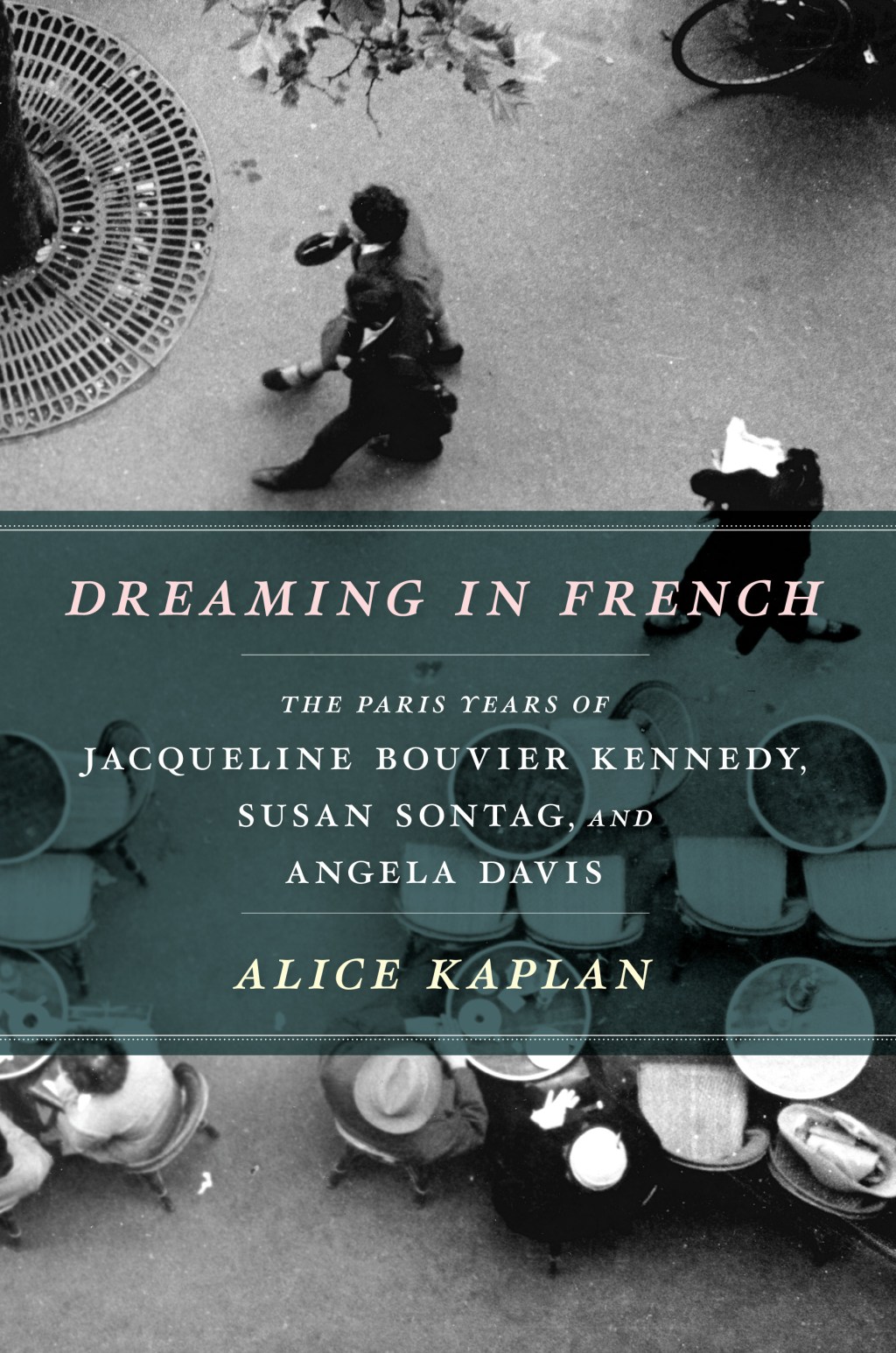
It reads like the plot of a novel – three women from different backgrounds spend time in the early 20s in Paris, returning to the U.S. transformed. One, raised in an upper crust East Coast society family and named “Deb of the Year,” would become the very polished and popular wife of a handsome president doomed to be assassinated. The middle class girl from a North Hollywood family became, after her Paris sojourn, a well-respected writer. The third, though she was raised as an African American in the segregated south, came from an upper middle class family and spent time in Manhattan studying at a private school. She eventually would be acquitted of murder as a member of a radical fringe group.
“If you reduce them to identity labels, they are the soul of diversity: a Catholic debutante, a Jewish intellectual, an African-American revolutionary, from the East Coast, the West Coast, and the South,” writes Alice Kaplan, a Sterling Professor of French and Director of the Whitney Humanities Center at Yale University in her book, “Dreaming in French: The Paris Years of Jacqueline Bouvier Kennedy, Susan Sontag, and Angela Davis” (University of Chicago Press 2013; $26). “They have often been reduced to their images: a sheath dress and a double strand of pearls, a mane of black hair with a white streak, an afro and a raised fist.”
Kaplan explores the time each spent in Paris and how those experiences shaped them, making all three cultural icons and bringing all both fame – for Kennedy and Sontag and controversy – for Davis.
Kaplan, the author of such books as French Lessons, and Looking for “The Stranger,” earned a Ph.D. from Yale University with a major in French and a minor in philosophy and is a recipient of the French Légion d’Honneur as well the Los Angeles Times Book Prize in History (for The Collaborator) and the Henry Adams Prize (for The Interpreter).
“I wanted to find that existential threshold where you start to see what you can do with what you’ve been given,” Kaplan of this examination of a period in each woman’s life. And, Kaplan points out, while the men who spent time in France and came back in some ways different – think Ernest Hemingway and Norman Mailer, women like Kennedy, Sontag and Davis “have not had a place in the great American tradition of expatriate literature.”
Until now.
-

Griffin’s Heart: Working Through Loss
It’s been ten years since actress Reagan Pasternak’s beloved cat, Griffin, died and since then, though life has been very busy with her career, marrying, and becoming a mother, she has missed the pet she calls a “soul mate.”

To help with her grieving, Pasternak who starred in Netflix/HULU/HBO’s “Being Erica”, HBO’s “Sharp Objects”, Syfy’s “Wynonna Earp,” and BET’s “Ms. Pat,” began journaling her feelings, incorporating not only the pain she was feeling but also tools and techniques for processing her grief. It took a decade but now Pasternak’s book, “Griffin’s Heart: Mourning Your Pet With No Apologies” (Creatures Align Press $27.99) is available through Amazon.
Pasternak, in a phone call from her home in California, describes the book as an interactive memoir, keepsake, and healing journal that she hopes will provide guidance for others who have lost a pet.

“I feel that animals get so forgotten after giving us so much love,” she says. “I wanted to honor them.”
Pasternak doesn’t consider herself a writer but says she felt compelled to write about all that she has learned while going through her own stages of grief. That includes reading about the brain and how it processes emotions and information, exploring different ways to heal such as music therapy, and taking up meditation to help with anxiety. Doing so helped with the loss of her other pets as well including another dog who just recently passed away.
“Everything began accumulating in my psyche, and one morning my husband said that I needed to finish the book,” she says. “I had started it, put it aside, had a baby, was acting—so I was busy. Every morning when I started writing the book, I’d ask myself to whom am I writing. I wanted readers to have something, so they knew they weren’t alone and to know they could get through. Then it just all came together in a cosmic way. I met an editor who thought it was a great idea and we started working together.”
The book contains exercises, chances to journal, and is a repository for readers to enter their own memories, melding their losses into what Pasternak sees as a keepsake.

Since the book was published, Pasternak has been receiving notes from readers who share their own stories of losing a pet.
“My husband and I read them and cry,” she says. “It’s so touching that these strangers are reaching out. I keep getting photos from people showing how they have placed the book next to the urn containing their pet’s ashes.”
This outreach has inspired Pasternak to stay focused on the book and the stories people share. “I just believe I’m helping change the culture of grief,” she says.
For more information, visit www.griffinsheart.com/