The Most Popular Book Genre In Each State https://flip.it/wuMdQt
Category: Autobiography
-

Santa Museum Hosting Story Teller and “Santa’s Daughter” by Mrs. Pat Koch Book Signing
On Saturday, December 3, 2022, at 1:00 pm Central time, guests are invited to gather in the historic Santa Claus Church where the spell-binding Susan Fowler will return to the site to give us her entertaining and interactive rendition of the classic tale Twas the Night Before Christmas. A Merry Memory Sketch souvenir illustration of the afternoon’s story will be available for each family. There is no charge to attend, however donations to help restore the historic church are happily accepted.

Immediately following the storytelling, Mrs. Patricia Koch, w will hold a book signing for her recently published book entitled Santa’s Daughter. Mrs. Koch’s nostalgic book shares stories about her hometown of Mariah Hill, her experiences at Santa Claus Land and memories of her dad, Santa Jim Yellig. Her goal, at age 91, is to preserve the history of the town of Santa Claus and the surrounding area. Mrs. Koch will be in the historic church to sign books, answer questions and chat with visitors. Mrs. Koch is being honored this year by Indiana Governor Eric Holcomb with the 2022 Sachem Award, the state’s highest honor. She also has been inducted into the International Santa Claus Hall of Fame.

Also at no charge, families are invited to visit the museum, check in with Santa in his Museum Office, browse the gift shop, write letters to Santa in the historic Post Office, view the 12-foot Santa Claus Mural and the 22 foot Santa Claus Statue.

The Santa Claus Museum & Village is a not-for-profit organization which not only seeks to preserve the history of the town of Santa Claus but also to perpetuate the tradition of answering thousands of children’s letters to Santa. The Museum & Village are open daily Monday through Thursday from 10 am – 2 pm and Friday through Sunday 9 am to 4 pm, closed Christmas Day. The Santa Claus Museum & Village is located just south of Holiday World at 69 State Road 245 in Santa Claus, Indiana. For questions or further information, please call the Santa Claus Museum at 812-544-2434. And for more holiday ideas in the town of Santa Claus, click here.
-

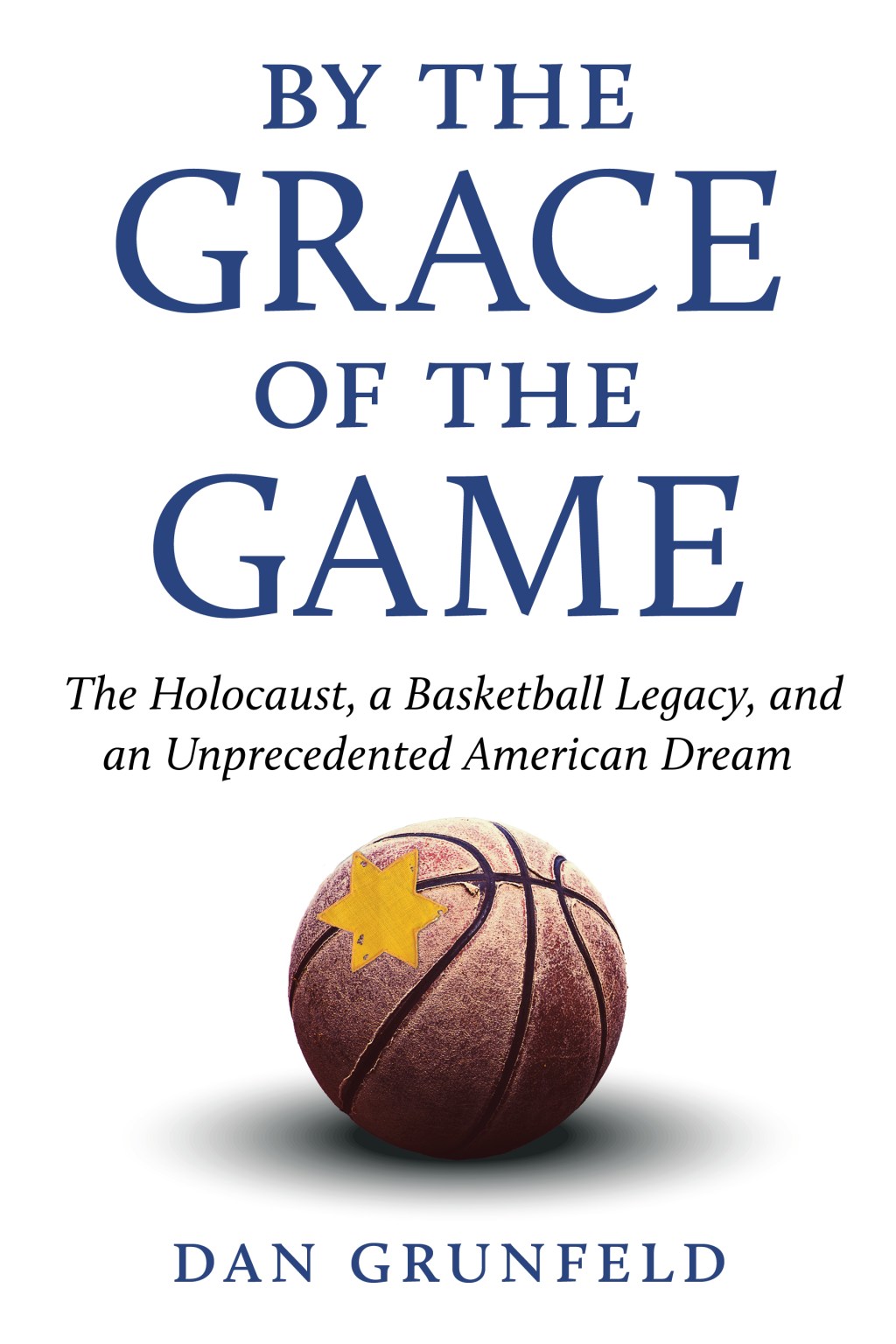
By the Grace of the Game: The Holocaust, a Basketball Legacy, and an Unprecedented American Dream
17-year-old Lily Grunfeld survived the Holocaust by hiding in a crowded attic room in a burned-out building in Budapest. She was twice saved by Swedish diplomat Raoul Wallenberg. Once when he issued false citizenship documents to Hungarian Jews in Hungary and, then again at the end of the war, when he convinced Nazi guards not to gun down the remaining 80,000 Jews still alive in the Budapest Ghetto.

After the war when Anyu returned to the home she had shared with her parents and siblings in a small Transylvanian village in Romania near the Hungarian border, it had been looted and almost everything was gone. Her parents and five siblings had died at Auschwitz. She had also lost aunts and cousins.
All that was left, tucked away out of sight in a drawer, was a spoon.
Grunfeld is turning 98 later this year. She doesn’t harbor bitterness and hatred—though who could blame her if she did? Even though after moving to the U.S. with her husband, she lost her oldest son who died of leukemia.
“My grandmother certainly has an incredible attitude and approach to life,” says Dan Grunfeld, author of “By the Grace of the Game: The Holocaust, a Basketball Legacy, and an Unprecedented American Dream” (Triumph Books 2022; $28) about the woman he calls Anyu (Hungarian for mother). “She believes it’s not what happens to you in life, it’s how you respond. She believes it’s important to be true to your values and who you are and to stay positive.”
Arriving in New York in 1964, the family including their surviving son Ernie and daughter Rebecca, didn’t know the language or customs of their new country. Eight-year-old Ernie also didn’t know anything about the game of basketball but he gravitated to the playgrounds of New York City where kids were shooting baskets. It was an opportunity, he thought, to learn English and to make friends.
It turned out to be more than that. Ernie Grunfeld was really, really good at this American game. So good in fact that within ten years of moving to the U.S. he had won two gold medals—one for playing basketball with Team USA at the 1975 Pan American Games and the other in the 1976 in the Summer Olympics in Montreal. Drafted into the NBA to play for Milwaukee Bucks, he went on to play for the Kansas City Kings and then the New York Knicks. Once his playing days were done, he worked in administration rising through the ranks to become president and general manager of the Knicks and then the general manager of the Bucks. He followed that up with 16 years as president of basketball operations for the Washington Wizards.
It was indeed a basketball family.
“My birth was planned around Judaism and basketball,” writes Dan Grunfeld in the opening paragraph of his book. “It’s an appropriate testament to what I was inheriting. When I was born in 1984, my dad was an NBA player for the New York Knicks. My parents scheduled my C-section delivery to take place between two long road trips so he could be present for both my birth and my bris, the Jewish ritual of circumcision on the eighth day of life. I’m sure thousands of Jews in New York City during the 1980s planned their sons’ bris ceremonies around Knicks games. My dad was almost certainly the only Jew actually playing in the Knicks game.”
Indeed, Ernie Grunfeld was the only child of Holocaust survivors to ever play in the NBA.
It’s Dan Grunfeld’s ability to move between the dark and light of life, a reflection surely of his grandmother’s philosophy, that makes this book so immensely readable. Dan Grunfeld also played basketball, both at Stanford University and then for nine years overseas professionally in Germany, Israel, and Spain. He even became a Romanian citizen to play in his grandmother’s native country.
“My first professional game was in Germany, I was probably the only player who called his grandmother and asked her if it was okay to play there,” says Grunfeld. Anyu, being Anyu, of course said yes, telling him that you can’t blame the sons for what the fathers did.
Growing up, Grunfeld was fascinated not only with his grandmother’s Eastern European cooking (“I eat so much sometimes that I get sick,” he says), but also, when he was old enough, her tales of those early days. Stanford was just 25 minutes from where she lived and he would take notes when they talked or at least when he wasn’t eating.
In that respect, he is unlike most of us who when young who don’t write things down and so lose the important stories of our elders. Indeed, I had a Romanian grandmother who loved to cook but I just ate and never recorded her times in her homeland and her journey to East Chicago and so all that is lost. Bravo to Grunfeld who felt that these stories were important enough to turn into a book. He did it for Anyu who doesn’t want people to forget the Holocaust and what happened to her family and so many families like hers. He did it to enshrine her story into written words. And he did it so that her courage could help all of us when things seem very dark.
“My grandmother certainly has an incredible attitude and approach to life,” he says. “She’s such a remarkable person. I say if my grandmother can survive and be like this than there is hope for all of us.”
When I ask Grunfeld if he misses basketball, he tells me that he misses what it was like playing the game when you’re playing at a high level and having success.
“I also understand that part of my life is over,” says Grunfeld who is married and is expecting the birth of his second son in a matter of weeks. “I’m at a point in my life where I realize I’m not coming back. But there are so many other ways you can integrate it into your life. You can watch it, read about it, and write about it.”
Which, of course, is what he did.
As for that spoon Anyu found. 75 years later she gave it to Dan who keeps it in the drawer next to his bed. Sometime in the future, it most likely will be passed on to Dan’s son Solomon, named after his grandfather who died at Auschwitz.
For Dan Grunfeld’s events, click here.
-

Comedy Comedy Comedy Drama
“Bob Odenkirk’s career is inexplicable,” writes Danielle Dresser of Anderson’s Bookshop where Oldenkirk will be signing copies of his new book. “And yet he will try like hell to explicate it for you. Charting a “Homeric” decades-long “odyssey” from his origins in the seedy comedy clubs of Chicago to a dramatic career full of award nominations—with a side-trip into the action-man world that is baffling to all who know him—it’s almost like there are many Bob Odenkirks. But there is just one and one is plenty.
Dresser goes on to say that Bob embraced a life in comedy after a chance meeting with Second City’s legendary Del Close. He somehow made his way to a job as a writer at Saturday Night Live. While surviving that legendary gauntlet by the skin of his gnashing teeth, he stashed away the secrets of comedy writing—eventually employing them in the immortal “Motivational Speaker” sketch for Chris Farley, honing them on The Ben Stiller Show, and perfecting them on Mr. Show with Bob and David.
In Hollywood, Bob demonstrated a bullheadedness that would shame Sisyphus himself, and when all hope was lost for the umpteenth time, the phone rang with an offer to appear on Breaking Bad—a show about how boring it is to be a high school chemistry teacher. His embrace of this strange new world of dramatic acting led him to working with Steven Spielberg, Alexander Payne, and Greta Gerwig, and then, in a twist that will confound you, he re-re-invented himself as a bona fide action star. Why? Read this and do your own psychoanalysis—it’s fun!
Featuring humorous tangents, never-before-seen photos, wild characters, and Bob’s trademark unflinching drive, Comedy Comedy Comedy Drama is a classic showbiz tale told by a determined idiot.From Comedy to Drama with Bob Odenkirk
Actor, comedian, writer, director, producer and Naperville native, Bob Odenkirk will be at the Yellow Box Theater at the Community Christian Church (1635 Emerson Lane, Naperville, IL) on Thursday, March 3rd at 7pm CT, in conversation with Kim “Howard” Johnson, to discuss his new memoir, Comedy Comedy Comedy Drama. In this “essential” (Entertainment Weekly), “hilarious” (AV Club) memoir, the star of Mr. Show, Breaking Bad, and Better Call Saul opens up about the highs and lows of showbiz, his cult status as a comedy writer, and what it’s like to reinvent himself as an action film ass-kicker at fifty.
Tickets are now available, with limited quantities available! For more information, please visit https://OdenkirkAndersons.eventcombo.com. Book details are listed below.
-

A Little Closer to Home: How I Found the Calm After the Storm by Ginger Zee
As a meteorologist, Ginger Zee has covered almost every major weather disaster in her career—the California wildfires, Hurricanes Katrina, Sandy, Matthew and a ton of others. But the storms she’s chased were nothing compared to the internal tempests wrecking her psyche.

Inspired by a waterspout she saw over Lake Michigan and running towards it instead of away as everyone else on the beach did, the eight year old became fascinated by weather, earning a science meteorology degree at Valparaiso University. The EMMY-winning Zee worked as a meteorologist (and please don’t call her a weather girl) at TV stations in Grand Rapids and Chicago, is now the chief meteorologist for ABC News,
But despite this success, Zee couldn’t escape the demons of her childhood and her emotional fragility. She first recounted her struggles in her 2017 book, Natural Disaster: I Cover Them. I Am One, which she described as “Ginger Lite.” Now, in her recently released A Little Closer to Home: How I Found the Calm After the Storm, she goes gale force in talking about her psychological issues.
Married with two children, fit, intelligent, and successful, many might think she has it all. But there have been times when Zee avoided looking in mirrors.
And no, that’s not a typo. Zee’s self-esteem was so low that she couldn’t stand to see her reflection. At times in her life, Zee also struggled with anorexia around the time of her parents’ divorce, attempted suicide, was deeply depressed, and was sexually abused.
Now, she can laugh while showing a touch of class when responding to people who write to her idisparaging her looks. Really, people do that kind of stuff. I’m assuming that’s because they’re the most beautiful people in the world.
Suffering from Low Self-Esteem
It was the latter that convinced her she needed to share her story, that indeed she owed it to people to tell about all she’d been through, that got her to write another book. It came after watching a replay of Christine Blasey Ford’s testimony on “Good Morning America.” Ford had alleged that she had been sexually assaulted when a teen by two young men during a party. One of them was a nominee for the Supreme Court and Ford was suddenly thrust into the spotlight.
From there, Zee and I discuss how in the not so distant past, women were often to blame for sexually harassment or abuse as in, “if you hadn’t worn that short skirt” or “you shouldn’t have agreed to go to his apartment.”
“The realization was the impetus and I start diving really deep with my therapist no matter how difficult it is,” she says. “Trauma doesn’t leave your body. The shame and the feelings have to go somewhere. What I wasn’t doing is going past my trauma. Once you get past it, life is so much better. There’s so much relief in letting go of the responsibility for something we had no control over.”
Zee hopes the book will help others talk more freely and avoid being judgemental.
“I think of my therapist as my personal trainer for the brain,” she says.
These realizations helped Zee who sees herself in a much healthier place now that she is able to work through her feelings.
“The shame isn’t on me, that’s how therapy helped,” she says. “So did the Me Too Movement. I don’t have to take responsibility for things that I didn’t do and that weren’t my fault. That’s why I knew I had to write this book to help others who are going through what I did.”
-

Florence LaRue: Grace in Your Second Act
“People ask me when I’m going to retire,” says Florence LaRue, “and I say retire? I know I can’t do what I did when I was 70 but I do have the energy to keep moving and that’s what I’m going to keep doing.”

LaRue, now 80-years-old, is certainly on the move. In the month or so between when her publicist contacted me about doing a story about her new book, “Grace in Your Second Act: A Guide to Aging Gracefully,” and the day LaRue called to chat, she’d been touring with the 5th Dimension, a music vocal group that LaRue has been performing with as the lead singer since 1966. Now more than half-a-century later, LaRue, a six-time GRAMMY-Award winner, she is the only remaining original member.
LaRue never planned or even wanted to be a singer.
“There were two things I always wanted to do,” says LaRue who was born in a small town in Pennsylvania. “One was to teach—I had a wonderful 5th grade teacher, and the other was to act.”
Indeed, LaRue, a graduate of California State was just starting to teach when she fulfilled her duty as the 1962 winner of the Miss Bronze California by crowning her successor. When Jet Magazine photographer Lamonte McLemore had a different plan. His cousin, gospel singer Billy Davis Jr., and Ron Towson were putting together a group called the Versailles.

“He came up and said he wanted me to be in their group,” says LaRue who agreed to do it for fun just for a while.
The Versailles isn’t a group many people remember. But they do know The 5th Dimension which between 1967 and 1973 charted 20 Top 40 hits on Billboard’s Hot 100 with songs such as “Go Where You Wanna Go,” “One Less Bell to Answer,” “Wedding Bell Blues,” “Never My Love,” and “(Last Night) I didn’t Get to Sleep at All.” Their 1967 song “Up – Up and Away” and 1969’s “Medley: Aquarius/Let the Sunshine In,” both won the Grammy Award for Record of the Year. Aquarius achieved tremendous success, shooting up to number one where it stayed for six weeks, selling over a million copies in less than a month.

“I owe my career to winning that contest,” says LaRue. “Years later a man came up to me and said I know you don’t remember me, but I was one of the judges. All the other young ladies came out wearing their gowns and sang. But when you came out in a white suit with a white hat, holding the hatbox, singing “April in Paris” in French, Eartha Kitt turned and said to us, ‘There’s your winner.”
LaRue does some acting but never had the time to pursue it as a fulltime career. When I suggest that singing on stage is a form of acting, she quickly but sweetly corrects me.

“I have to feel what I’m singing,” she says. “There’s no acting to it. If I don’t feel it, I can’t do my best.”
Feeling it is also part of LaRue wrote “Grace in Your Second Act.” She wants older women to embrace their lives as they grow older.

“Don’t regret growing older,” she says. “It’s a privilege denied to many.”
But her book is not only for those who are in their second act. The best way to prepare for the second act, she says, is by taking care of yourself during your first act.

It worries her that people don’t eat well, consume to much sugar, and don’t exercise. Before she called at 10 a.m., LaRue had already done her exercises and walked a mile to get ready for her day.
We end out phone call with LaRue taking down my address. She’s going to send me her recipe for chicken curry.
“It’s one of my favorites, I’m sure you’ll like it,” she tells me.
I’m sure I will.