Category: Audiobooks

  • All the Other Mothers Hate Me

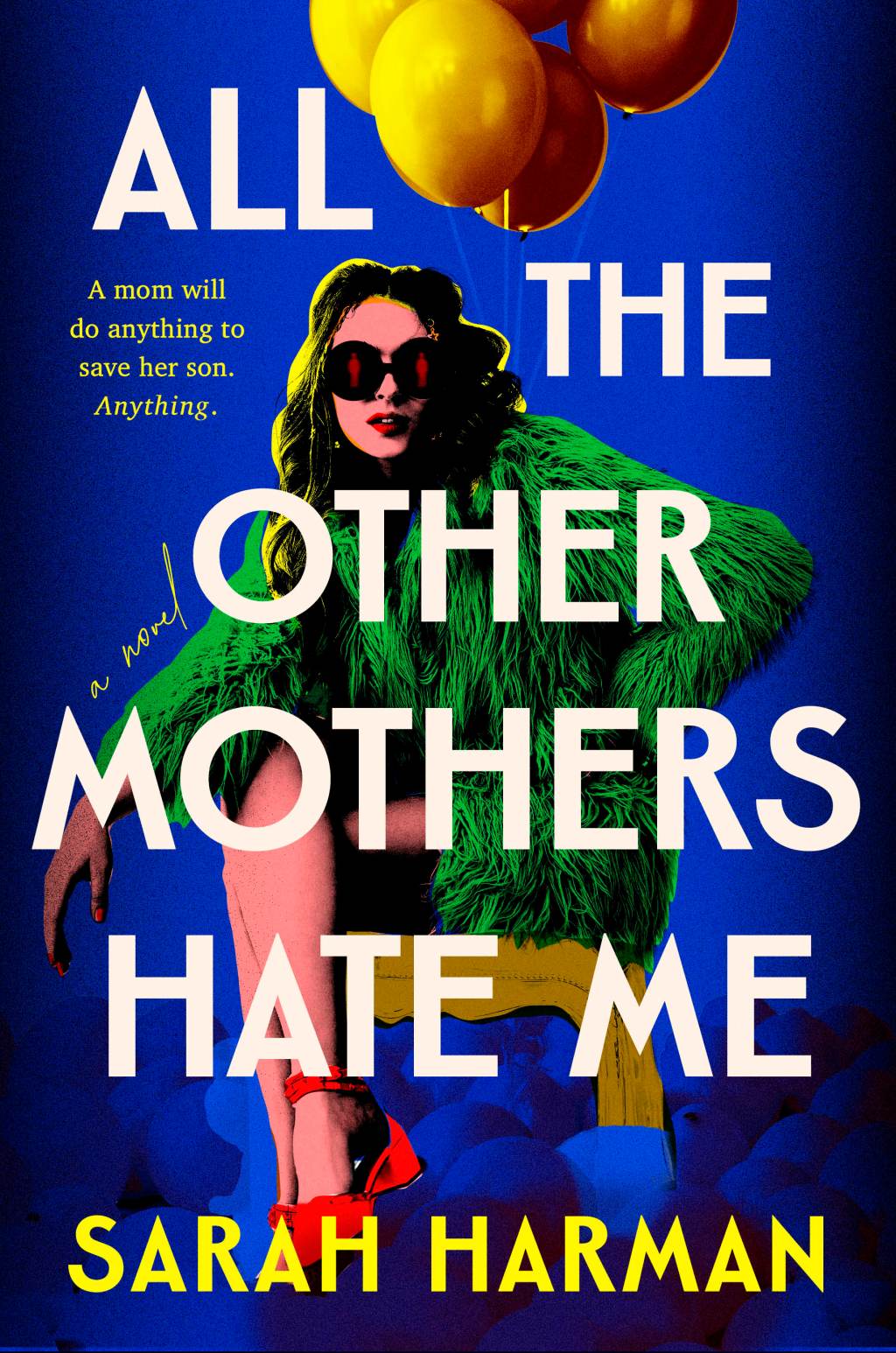
    All the Other Mothers Hate Me

    Florence Grimes is a mess. Once part of a popular girl rock band, after a brief interlude with the manager who is really in love with another of the women in the group, she’s cast out and left with a baby to raise courtesy of the man who fired her. Sure, he pays for their son to go to a posh private school, and she adores her child, but her royalty checks are dwindling and let’s face it—she shouldn’t be spending what little money she has left on fancy nail art and other unnecessary items.

    But then Flo isn’t someone who knows how to manage her life, She just doesn’t fit in with the other mothers, but then she doesn’t try that hard—her clothing and attitude impairing her ability to be accepted.

    Finally, there’s hope. She gets a call about meeting an old colleague and she dreams of returning to the stage, but, as always with Flo, bad stuff happens and this time it’s really bad. Her son’s class bully mysteriously vanishes on a field trip, and Florence’s quirky, misunderstood 10-year-old son becomes a suspect.

    “To save her son, Florence has to figure out what actually happened to the missing boy,” says Sarah Harman, author of All the Other Mother’s Hate Me (G. P. Putnam’ & Sons 2025). “But the more she uncovers, the more she realizes her son might not be as innocent as she’d like to believe,”

    Books about missing children and women on the rocks aren’t typically funny but Harman, who describes the subject as a “fine line to walk” uses humor in recounting Flo and her attempts not only to resuscitate her career—and her life—but find out what really happened. And Flo, despite all her faults and mishaps, is someone to root for.

    “Personally, as a parent, I have zero interest in fiction about bad things happening to children,” says Harman. “There’s enough of that in the real world; I do not want to consume that darkness in my limited free time. So, it was important to me to telegraph to the reader from the outset, that while this is a twisty mystery about a missing boy, this is not a book where children are going to suffer.”

    Harman was never in a girl band (that’s what they called them back then) but she was inspired to write the novel by thinking back to the early aughts and the way that female celebrities were treated by the media and society in general. She references Britney Spears as one example.

    “Or remember how the paparazzi took a horrible upskirt photo of Anne Hathaway and then Matt Lauer asked her on national television ‘what lesson she learned from the experience?’” she says. “That was in 2012. It really wasn’t very long ago. When I was writing Florence, I was thinking about how coming of age creatively in that sort of environment might shape a person’s worldview —and the rest of her life.”

    The book, which came out in March of this year, is so compelling that even before publication, foreign rights to it were sold at auction in 14 markets  and the TV rights bought by FX and The Bear creator Chris Storer, Not bad at all for any novel, but this is Harman’s first which makes it even more impressive.

    Like Flo, Harman is an American living in the West End of London, and she notes that navigating the class system is much different than here. But there are some things that are common worldwide and one of them, she says, the redemptive power of female friendship.

    “When we meet Florence, all the other mothers hate her—and for a good reason,” she says. “She’s kind of awful. Over the course of the novel, as Florence forges an unlikely alliance with another mom, Jenny, she discovers that she actually is capable of caring about something other than herself. It’s only by learning to be a friend that Florence is able to move on from her past and forgive herself for her failures. Ultimately, my hope is that this book makes readers feel it’s never too late for a comeback.”

    This article originally appeared in the Northwest Indiana Times.

  • “City Under One Roof” by Iris Yamashita

    “City Under One Roof” by Iris Yamashita

    Point Mettier, Alaska is no one’s idea of paradise. Its inhabitants—all 205 of them—live in the same high-rise apartment building and the only access to town is by a tunnel or the sea.

    But Point Mettier is perfect for many of those who live there. It’s a chance to invent new names, identities, and lives. For some, it’s a safe harbor such as an escape from an abusive spouse. For others, the reasons for disappearing into the void of a place like Point Mettier are darker. And so when a severed hand and foot wash up on shore and Cara Kennedy, a police detective arrives from Anchorage, she finds the inhabitants to be aloof and evasive. Everyone, it seems, has something to hide.

    “City Under One Roof” (Berkley) is the first novel written by Iris Yamashita, a screenwriter nominated for an Academy Award for the movie “Letters from Iwo Jima.” The inspiration, she says, comes from a documentary about Whittier, Alaska she watched more than 20 years ago. At the time, Whittier only was accessible by boat or through a 2.5-mile long tunnel.

    “Jumping off point for me was the tunnel,” says Yamashita, who has been working in Hollywood for 15 years developing material for both film and streaming, “I had the feeling I was going down into the rabbit hole like Alice in Wonderland. Cara is like Alice, she too fell down the rabbit hole.”

    Listen now and subscribe: Apple Podcasts | Google Podcasts | Spotify | YouTube | RSS Feed | Omny Studio

    And there Cara meets a wide range of quirky characters including Lonnie, who has a moose she has rescued as a pet, and Amy, a teenager who delivers the Asian food her mother makes to the building’s residents.

    Cara has her own burdens, her family died in a tragic, terrifying way. And working with local policeman, Joe Barkowski, stirs feelings she has thought were gone forever.

    But even as their feelings for each other grow, the two have to contend with another crisis. A storm closes the tunnel and the residents of Point Mettier—and Cara—are trapped. But though help from the mainland is days away, mayhem is close by when a gang from further north arrives to terrorize the community and that’s when everyone’s secrets start to come out.

    Yamashita has always loved writing and for a while, it was a hobby. She has a degree in mechanical engineering and says her “Asian parents always told her ‘you can’t make a living as a writer.’”

    “And so I worked at my day job until I had a contract in my hand and then I quit,” she says. “Now I’m working on my next book.”

    This story originally appeared in the Northwest Indiana Times.

  • Disturbing the Bones

    Disturbing the Bones

    It’s an archaeological dig so finding human remains shouldn’t be a surprise, but Dr. Molly Moore immediately recognizes that the skeleton they’ve unearthed is much more recent than what you’d find on a site dating back 12,000 years. Indeed, the body is that of a young Black reporter who disappeared just decades ago when covering the racial unrest in Cairo, Illinois.

    The loss of his mother has left a large void in the life of Chicago Police Detective Randal Jenkins, and he travels back to Cairo, where he lived as a young boy, to learn more about the case. But it soon becomes clear that this is more than just the murder of an investigative reporter during a tumultuous time. Moore finds herself pressured by her long-time mentor and supporter, retired military general and contractor William Alexander to complete the dig and minimize her discovery. As Moore and Jenkins, each with their own family issues to deal with, work at discovering answers they realize that the General is trying to disrupt the process of a disarmament agreement being developed at a global peace summit taking place in Chicago. The stakes are so high that not only are their lives in jeopardy, but the world may be hurling towards a nuclear disaster.

    Disturbing the Bones (Melville House 2024) is the first joint effort by director and screenwriter Andrew Davis, a native of Chicago’s southside and Jeff Biggers, an American Book Award-winning historian, journalist, playwright, and monologist.

    In writing the book, Biggers, whose work has appeared in American and foreign newspapers and magazines as well as numerous anthologies, relied upon his knowledge of archaeology, the environment, culture, and history as well as his abilities as a researcher. He is the author of such books as Reckoning at Eagle Creek: The Secret Legacy of Coal in the Heartland and The United States of Appalachia: How Southern Mountaineers Brought Independence, Culture, and Enlightenment to America.

    “I’ve been around a lot of archaeological digs,” he said in a joint conversation with Davis and this writer.

    It’s also a timely story in that there’s a presidential election going on as Jenkins and Moore race to solve the mystery.

    “It’s the only novel with a woman running for the presidency but in the book she’s from Chicago,” says Davis, noting that, as in the book, he sees this election as a turning point in our history. “The story is a blending of art and action, and it asks provocative questions which I think any good book should do.”

    Any enjoyable book should, as it tells a story, also open another world for us. The authors do that here as we learn about archaeology, what happens on a dig, and the social upheaval the country went through during the Civil Rights movement. It also explores the psychology of Jenkins and Moore whose personal lives affect their profession and the decisions they make.

    This was the first collaboration between Biggers and Davis, but it won’t be their last. The two are also working on a screenplay for the book. Davis has an extensive background in this area, having worked on a myriad of films such as “Holes”, “Under Siege”, “Code of Silence”, “A Perfect Murder”, and “The Guardian.” Known for directing intellectual thrillers, his film “The Fugitive,” was nominated for seven Academy Awards including Best Picture.

    Biggers, who served as the Climate Narrative Playwright-in-Residence at Indiana University Northwest several times and lived in Miller Beach during his time there, enjoyed the collaborative process.

    “I’ve written a lot of books on my own,” he says, “but this was, in ways, the best of both worlds as we went back and forth and exchanged ideas and shared thoughts.”

  • Where Are You, Echo Blue?

    Where Are You, Echo Blue?

    “In those years, the hardest of my childhood, Echo felt like a kindred spirit. I memorized her lines in Slugger 8. I practiced her stance on the field in the mirror. I cut out snapshots from Teen Beat magazine. I bought four copies of her cover issue of Sassy, the one where she wore a red cropped T-shirt with big lips smacked across her flat chest. I made a collage, carefully glued images of her together, draped it with a heart garland, and hung it over my bed. My favorite was a photo of Echo and her also-actor dad, Jamie Blue, leaving a restaurant, his arm slung over her shoulders, protecting her, the way I wished my father did.”

    From Where Are You, Echo Blue? by Haley Krischer (Penguin Random House).

    Goldie Klein, a writer for Manhattan Eye, has it bad when it comes to Echo Blue, the famous child actress. The obsession that worried her parents when she was growing up still has a hold on her even now. And when she learns that Echo, who was scheduled to appear on MTV’s New Year’s Eve Y2K special, one that will help her regain her foothold on stardom, hasn’t shown, Goldie knows it has to be more than just a relapse and stint in rehab. Echo has really disappeared.

    Currently, Goldie is writing the kind of stories she hates and that her father, an overly critical professor loves, including her most recent article on boxing. But Goldie’s aspirations are to cover subjects much hipper and more compelling. And she sees Echo’s vanishing as just the ticket. She manages to talk her editor into sending her to Los Angeles to track down the missing star. But it’s going to be difficult. Even those close to Echo have no idea where she is, and they’re upset that Goldie is looking for her.

    But in her adoration of the Echo, Goldie has spun a mythology in her own mind. She saw Echo as the only friend she had during her early teens. The boy-crazy girls in her class intimidated her with their talk about sex while Goldie was still playing with dolls. She tried to connect but it just didn’t happen despite the best efforts of her mother who planned slumber parties to help her make friends. And so, Goldie further immersed herself into Echo’s world—or the world she thought Echo inhabited.

    But Echo’s life was also difficult. Her mother, a washed-up television actress, is a depressive who has locked herself away in their house. To escape that environment, Echo opted to live with her movie star father who was always away on location hoping to become an Academy-award winning actor and never had time to talk on the phone, changed girlfriends monthly and really wasn’t that concerned with his daughter’s well-being. Echo had handlers that raised her and like Goldie she was terribly lonely with just one friend. Stardom couldn’t make up for not having the type of normal life most teenagers have.

    Goldie manipulates herself into the lives of people who know Goldie, including Jamie Blue. Accompanying an actor to his house, she eats a marijuana-laced cookie at the door and becomes completely stoned.

    “Don’t you know not to eat cookies at a stranger’s house without asking what’s in them?” her editor asks incredulously when Goldie calls to tell her as if that’s a basic fact everyone should know. And though Goldie wants to leave, her editor tells her that she’d better get in the hot tub with Jamie, even though he’s likely to be naked.

    Welcome to Hollywood.

    Goldie begins to get the idea of what Echo’s life was like as she continues to hunt for the missing star. The story cuts back and forth between 2000 and the 1990s, capturing the era precisely and what life was like for Echo as she became an Oscar-winning child star. In her pursuit of her story, Goldie realizes that it’s time to chart a new course in her own life.

    This article originally appeared in the New York Journal of Books.

    Book Club Kit.

  •  Local author to appear at bookstore for book signing of new “Lost East Chicago and Indiana Harbor” history book

     Local author to appear at bookstore for book signing of new “Lost East Chicago and Indiana Harbor” history book

    Award-winning author and journalist Joseph S. Pete will appear at a Northwest Indiana bookstore to sign copies of his new history book, “Lost East Chicago and Indiana Harbor.”

    Pete, a Lisagor Award-winning reporter and columnist, will do a book signing from 11:30 a.m. to 3 p.m. Saturday, July 20 at Miles Books at 2819 Jewett Avenue in Highland.

    He will sign copies of his latest history book about East Chicago and copies of his other books “Lost Hammond, Indiana,” “Secret Northwest Indiana” and “100 Things to Do in Gary and Northwest Indiana Before You Die.” Pete also will sign copies of University of Arizona Professor and East Chicago native Gloria McMillan’s “Children of Steel” anthology about life in steel mill towns, which he contributed a short story to.

    “Lost East Chicago and Indiana Harbor” chronicles the Indiana steel town on the shore of Lake Michigan in north Lake County just outside of Chicago that was a melting pot, drawing immigrants from all over the world to work at its bustling steel mills. As the population boomed in the early 20th century, East Chicago was home to more than 100 nationalities who came for the opportunities in a highly industrialized city that earned nicknames like “The Workshop of America,” the “Arsenal of America” and the “Industrial Capital of the World” while forging the steel that built up 20th-century America.

    Home to one of the most storied basketball rivalries in the state, East Chicago was also known as “The City of Champions” as it produced several high school football and basketball championship teams, including the only two back-to-back undefeated basketball teams in state history and the only two athletes to compete in both the Final Four and World Series. East Chicago gave the world many greats like the NBA’s all-time winningest coach Gregg Popovich, the Milwaukee Bucks star and later corporate magnate Junior Bridgeman, the baseball speedster Kenny Lofton, the actress Betsy Palmer, the boxing legend Angel “El Diablo” Manfredy and the Academy Award-winning screenwriter Steve Tesich, who penned the classic sports film “Breaking Away.”

    Pete’s new book is based in large part on interviews, including with Bridgeman, the state champion who went on to lead the Louisville Cardinals to the Final Four, get his number retired by and Bucks, and build a business empire that made him one of the wealthiest former athletes of all time.

    “Lost East Chicago and Indiana Harbor” takes a fond look back at bygone landmarks like Washington and Roosevelt High Schools, Inland Steel Christmas parties, the Washington Park Zoo, Taco Joe’s, the Mademoiselle Shoppe, movie palaces like the Voge and the gym where Michael Jordan played his first Bulls game. It recounts planned worker communities like Sunnyside and Marktown, the English village designed by noted architect Howard Van Doren Shaw where people park on the sidewalks and walk in the street and that’s featured in Ripley’s Believe It or Not and enshrined on the National Register of Historic Places.

    Pete, who has covered East Chicago for a decade for The Times of Northwest Indiana, relates stories about the Katherine Home, St. Joseph’s Carmelite Home, Big House, bolita, the Wickey Mansion, the Tod Opera House, the Patrick machine and the Crazy Indiana Style Artists graffiti crew, which hung out with the acclaimed artist Keith Haring, appeared on network television, and went on to exhibit their artwork internationally. His book also explores industrial pollution, political corruption, and unsolved mysteries like the deaths of Jay Given and Henry Lopez and the disappearance of the soccer great William “Wee Willie” McLean.

    “Lost East Chicago and Indiana Harbor” looks back at fondly remembered East Chicago intuitions like Albert’s, Dominic’s, Puntillo’s, Shrimp Harbor, Los Burritos, and El Patio Restaurant, as well as curiosities like the East Chicago Hermit and a mummy a local funeral home used to let kids see for a nickel. It also examines the city’s impact, such as producing Indiana’s first Latino elected official, the Hoosier State’s first and longest-running Mexican Independence parade, and the Midwest’s longest-running Mexican American–owned business, as well as the steel that helped shape America and countless other products.

    Pete is an Indiana University graduate, a combat veteran and a board member of the Indiana Society of Professional Journalists and the Chicago Headline Club. He is a playwright and literary writer whose work has appeared in more than 100 literary journals, earning Pushcart Prize and Best of the Net nominations. He’s received many journalism awards, including from the Inland Press Association, the Hoosier State Press Association, the Chicago Journalists Association, Columbia University and the National Association of Real Estate Editors as well as local honors from the Indiana Small Business Development Center and the Duneland Chamber of Commerce.

    For more information or an interview, contact Joseph S. Pete at 219.841.1030 or jpete@alumni.iu.edu.

  • Fiendishly Noir: Friend Indeed by Elka Ray
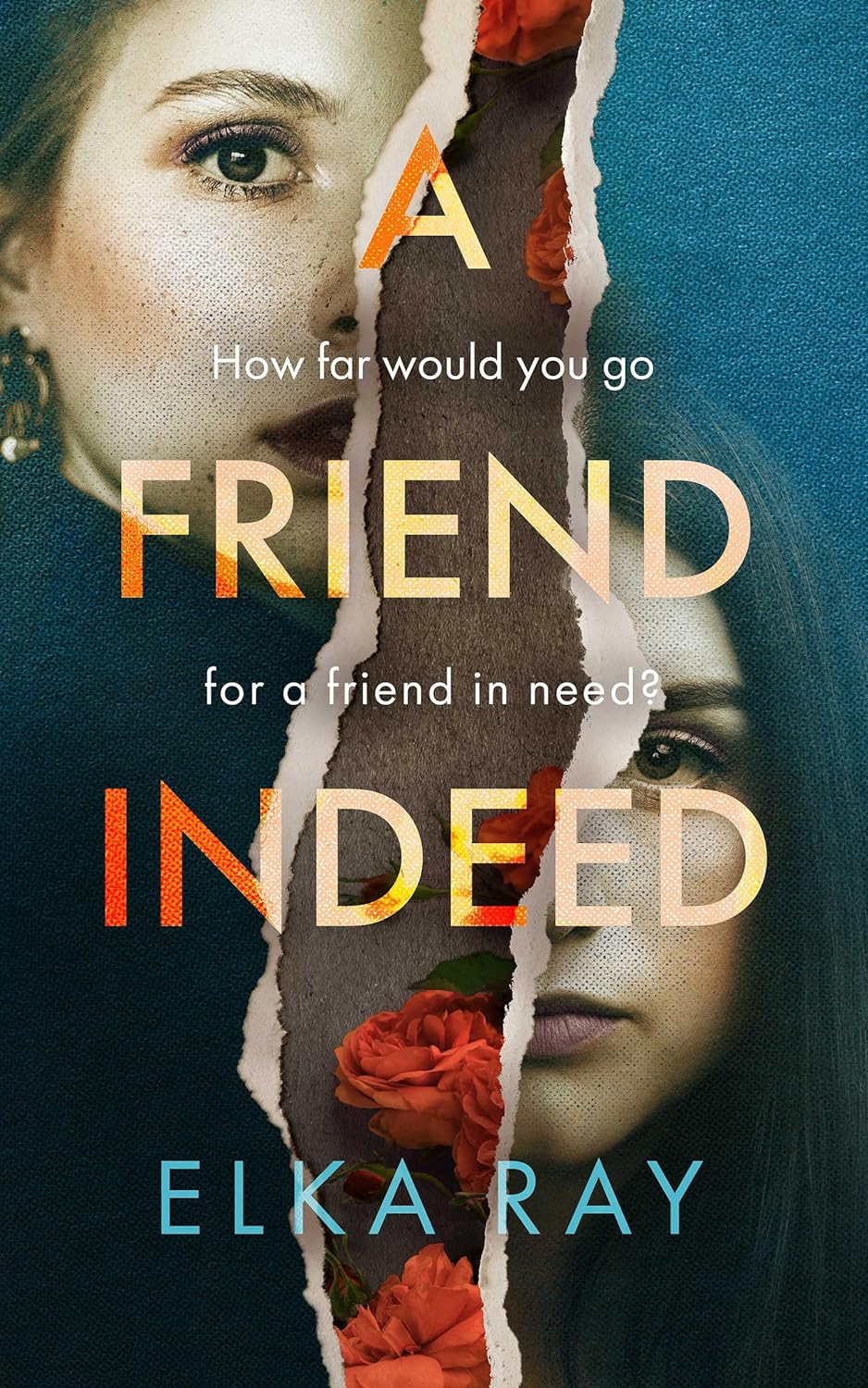
    Fiendishly Noir: Friend Indeed by Elka Ray

    “How far would you go for a friend in need if it meant your life and liberty might come crashing down upon you?”

    “Jo crawls over the bench and squats beside me. One sharp yank get the motor going. ‘I’ll drive,” she says tightly. ‘Move to the middle. And keep an eye out for debris.’

    “I crawl to the central bench and sink down. Jo turns us toward shore. Distant lights twinkle. Wind catches my hair.

    “It’s a relief to be moving, to flush my lungs with cold air.

    “I pull my hands into my sleeves. I’m wet through and chllled. My teeth chatter. For some minutes, we ride in silence.

    “’Dana?’ Although she’s driving slowly we’ve started to bounce again. Jo sounds ill.

    “’Did you love him?

    “I look back over my shoulder, toward my huddled friend and the black knuckles of islands. I find the spot we left Stan. I bite my lip, hard and spin the way we’re headed.

    “’Yes. I still love him.’”

    Two best friends, always there for each other. When Jo is fired from her job and her husband files for divorce, empties their bank account, and leaves her and their daughter homeless, she turns to Dana, married to Stan and living the life of an affluent wife in a ritzy subdivision in Texas. Dana is there for her, encouraging Jo to move back to Texas and gets her a job at the posh private school her children attend, even though Jo is without references.

    So, of course, when Dana calls in the middle of the night needing help, Dana gets into her dilapidated car with her daughter and speeds over. But while Jo’s situation had been dire, the trouble Dana is in takes it to a whole other level. She killed her husband during a domestic assault. Stan, she tells Jo, has been abusive throughout their marriage and she was defending herself. Is that true? It’s difficult to know at first.

    Dana has lived a life many women dream of—a handsome, filthy rich husband, a beautiful house, three children, and all the accoutrements that go with such a set-up. But Jo owes Dana big time and though she wants to call the police, Dana begs her to help dispose of the body.  So the two trundle Stan down stairs and into a boat, weigh the body down, and drop him in the water and then return to the house to scrub, hopefully, everything clean. Exhausted, Jo gets her sleeping daughter into the car to head home and accidentally blows a stop sign causing a speeding motorist to swerve and hit a pedestrian walking her dog. He speeds on but Jo stops and calls 911 though she knows it will tie her to a location near Dana’s home.

    It is not a good evening any way you look at it, but what will happen next will  only get worse as Jo and Dana seem to be surrounded by vultures including malicious gossiping neighbors, zealous cops wanting to crack the case, and a blackmailer. Will the two women, who have known each other for 30 years, withstand all these external forces coupled with their own horror at what happened and what they’ve done?

    Friendship is one thing but author Elka Ray, who was born in Canada, raised in the United Kingdom, and now lives in Central Vietnam, writes suspense novels, often with a touch of noir and poses intricate questions and situations. Her previous books include Divorce is Murder and Killer Coin. In her latest, A Friend Indeed (Blackstone Publishing), she asks, How far would you go for a friend in need if it meant your life and liberty might come crashing down upon you?

    This article originally appeared in the New York Journal of Books.

  • Nancy Chadwick-Burke, Michelle Cox, and Patti Eddington: Three Authors Discuss Their New Work at The Book Stall

    Nancy Chadwick-Burke, Michelle Cox, and Patti Eddington: Three Authors Discuss Their New Work at The Book Stall

    The Book Stall (811 Elm Street in Winnetka) will be welcoming authors Nancy Chadwick, Michelle Cox and Patti Eddington on Thursday, July 11th at 6:30 PM. In a discussion moderated by Michelle Cox, each author will talk about her writing process, and the origins of her book. Our guest authors work with similar themes, and they will be exploring these connections in their new works of historical fiction, connections with the natural world, and memoir. Whether you are a fan of writing by and about women or a writer looking for guidance on completing and publishing a book, this is the program for you!  We’ll leave plenty of time for audience Q&A. 

    This event is free with registration! Visit their website or CLICK HERE.

    Nancy Chadwick is the author of Under the Birch Tree: A Memoir of Discovering Connections and Finding Home. Her essays have appeared in The Magic of Memoir: Inspiration for the Writing JourneyAdelaide Literary Magazine, and Turning Points – The Art of Friction, as well as in blogs by Off Campus Writers’ Workshop, the Chicago Writers Association Write City, and Brevity. Her debut novel, The Wisdom of The Willow, has been included in the “Most Anticipated Books of 2024” by the Chicago Review of Books. She finds writing inspiration from her many meanderings through any forest.

    Michelle Cox is the award-winning author of the Henrietta and Inspector Howard series, a mystery/romance saga set in 1930s Chicago. She also pens the wildly popular, “Novel Notes of Local Lore,” a weekly blog chronicling the lives of Chicago’s forgotten residents. Her debut novel, The Fallen Woman’s Daughter, is her first foray into women’s historical fiction and is based on a story she heard working in a nursing home. She has spent years crafting it into a novel and is delighted to finally share it with the world.  

    Patti Eddington is a newspaper and magazine journalist whose favorite job ever was interviewing the famous authors who came through town on book tours. She never dreamed of writing about her life because she was too busy helping build her husband’s veterinary practice, caring for her animal obsessed daughter—whose favorite childhood toy was an inflatable tick—and learning to tap dance. Then fate, (and a DNA test) led her to a story she felt compelled to tell. Today, the mid-century modern design enthusiast and former dance teacher enjoys being dragged on walks by her ridiculous three-legged dog, David, and watching egrets and bald eagles from her deck on a beautiful bayou in Spring Lake, Michigan.

    The Book Stall is an independent bookstore and cultural institution on Chicago’s North Shore. We are known for our great selection of books, cards, and gifts, as well as our long-running author event series. Learn more at www.thebookstall.com.