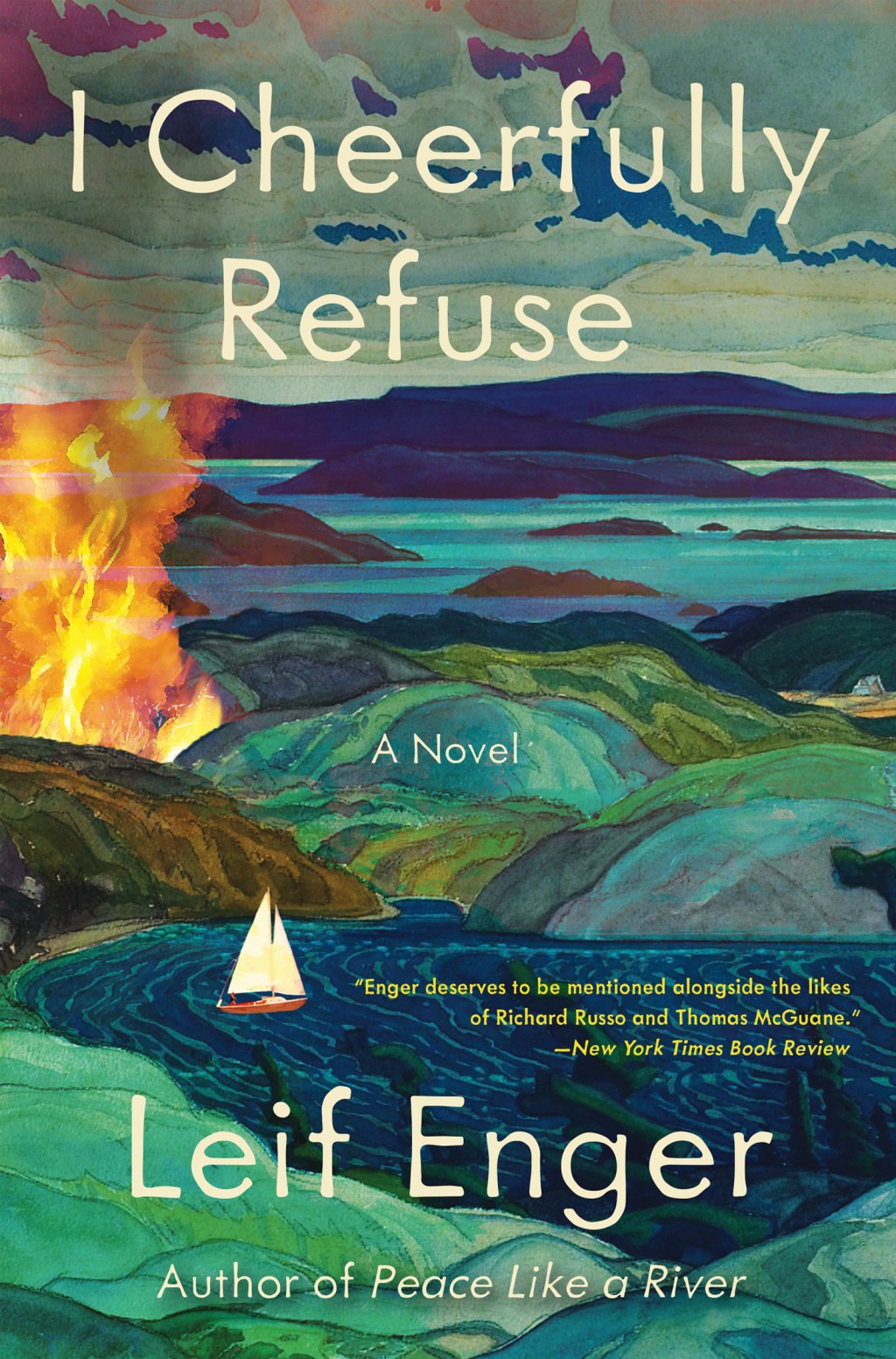
The Book Stall(811 Elm Street in Winnetka) is thrilled to welcome award-winning authorLeif Engerto the store on Sunday, April 7 at 2:00 pm for a discussion featuring his new book,I Cheerfully Refuse (Grove Atlantic). A career defining tour-de-force from the New York Times bestselling author of Peace Like a River, Enger’s latest novel is set in a not-too-distant America and epitomizes the “musical, sometimes magical and deeply satisfying kind of storytelling” (Los Angeles Times) for which Leif Enger is cherished. A rollicking narrative in the most evocative of settings, I Cheerfully Refuse is a symphony against despair and a rallying cry for the future.
This event is free with registration. To register, please visit The Book Stall’s website or CLICK HERE.
More About the Book: I Cheerfully Refuse is the tale of Rainy, a bereaved and pursued musician, embarking under sail on a sentient Lake Superior in search of his departed, deeply beloved, bookselling wife. An endearing bear of an Orphean narrator, Rainy seeks refuge in the harbors, fogs, and remote islands of the inland sea. Encountering lunatic storms and rising corpses from the warming depths, he finds on land an increasingly desperate and illiterate people, a malignant billionaire ruling class, crumbled infrastructure, and a lawless society.
Amidst the Gulliver-like challenges of life at sea and no safe landings, Rainy is lifted by physical beauty, surprising humor, generous strangers, and an unexpected companion in a young girl who comes aboard. And as his innate guileless nature begins to make an inadvertent rebel of him, Rainy’s private quest for the love of his life grows into something wider and wilder, sweeping up friends and foes alike in his strengthening wake.
More About the Author: Leif Enger grew up in Osakis, Minnesota, and worked as a reporter for Minnesota Public Radio before writing his bestselling debut novel Peace Like a River, which won the Booksense Award for Fiction and was named one of the Year’s Best Books by Time Magazine and the Los Angeles Times. His second novel, So Brave, Young, and Handsome, was also a national bestseller. It was a Midwest Booksellers Honor Book, and won the High Plains Book Award for Fiction. His third novel, Virgil Wander, was longlisted for the Carnegie Medal for Excellence in Fiction and was named a best book of the year by Library Journal, Bookpage, and Chicago Public Library. He lives with his wife in Duluth, MN.
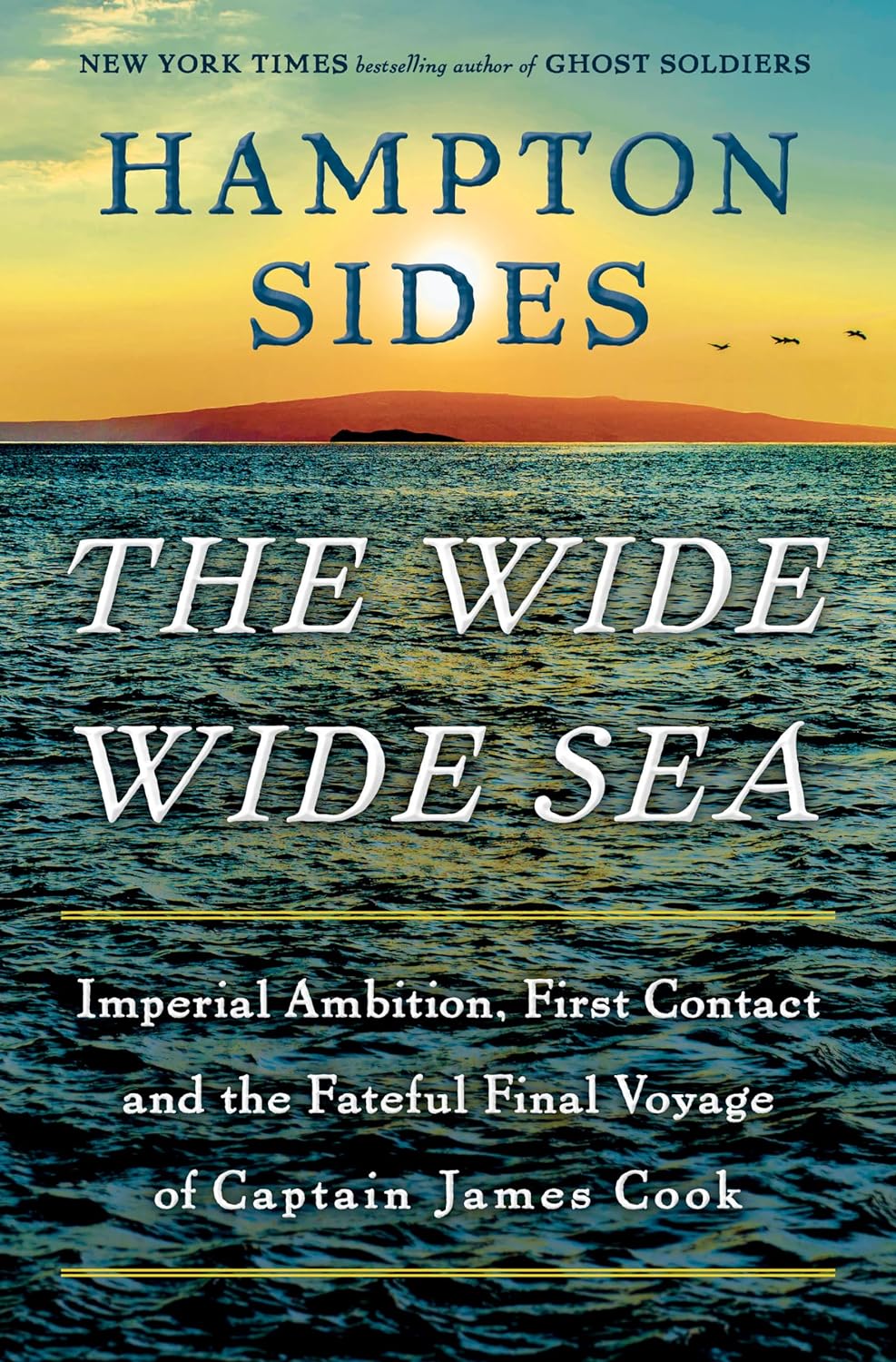
The Book Stall(811 Elm Street in Winnetka) is thrilled to host historian Hampton Sides on Monday, April 15 at 6:30 pm for a discussion featuring his new book, The Wide Wide Sea: Imperial Ambition, First Contact and the Fateful Final Voyage of Captain James Cook. (Doubleday). From the New York Times bestselling author, an epic account of the most momentous voyage of the Age of Exploration, which culminated in Captain James Cook’s death in Hawaii, and left a complex and controversial legacy still debated to this day.
At once a ferociously-paced story of adventure on the high seas and a searching examination of the complexities and consequences of the Age of Exploration, The Wide Wide Sea is a major work from one of our finest narrative nonfiction writers.
This event is free with registration. To register, please visit The Book Stall’s website or CLICK HERE.
More About the Book: Hampton Sides’ bravura account of Cook’s last journey wrestles with Cook’s legacy and provides a thrilling narrative of the titanic efforts and continual danger that characterized exploration in the 1700s. Cook was renowned for his peerless seamanship, his humane leadership, and his dedication to science. He was also deeply interested in the native people he encountered. On previous expeditions, Cook mapped huge swaths of the Pacific, including the east coast of Australia, and initiated first European contact with numerous peoples. He treated his crew well and endeavored to learn about the societies he encountered with curiosity and without judgment.
Yet something was different on this last voyage. Cook became mercurial, resorting to the lash to enforce discipline, and led his two vessels into danger time and again. Uncharacteristically, he ordered violent retaliation for perceived theft on the part of native peoples. This may have had something to do with his secret orders, which were to chart and claim lands before Britain’s imperial rivals could, and to discover the fabled Northwest Passage. Whatever Cook’s intentions, his scientific efforts were the sharp edge of the colonial sword, and the ultimate effects of first contact were catastrophic for Indigenous people around the world.
The tensions between Cook’s overt and covert missions came to a head on the shores of Hawaii. His first landing there was harmonious, but when Cook returned after mapping the coast of the Pacific Northwest and Alaska, his exploitative treatment of the Hawaiians led to the fatal encounter.
Kirkus Reviews,in a starred review, says,“An acclaimed historian takes to the sea in this rousing tale of exploration … Sides draws on numerous contemporaneous sources to create a fascinating, immersive adventure story featuring just the right amount of historical context … Lusciously detailed and insightful history, masterfully told.”
More About the Author: Hampton Sides is an award-winning editor of Outside and the author of the bestselling historiesHellhound on his Trial, Blood and Thunder,andGhost Soldiers. He lives in New Mexico with his wife, Anne, and their three sons.
“Horses are healing,” says Eliza Jane Brazier, author of “Girls and Their Horses”(Penguin-Random House), as she walks her horse around the arena while we talk on the phone. Brazier, who first started riding when she was five and has worked as a horse trainer, riding instructor and a head wrangler at a dude ranch, reconnected with her sport and those feelings helped her cope with the death of her husband.
“I have a horse in my backyard,” she says with a laugh about Tennessee, the draft horse she owns.
But the love of horses and the pursuit of championships along with the status of the horse owners in the rarefied air of Rancho Santa Fe Equestrian in exclusive Rancho Santa Fe, California can be much more toxic than healthy. This isn’t a jeans and cowboy boots sort of group hanging out in a drafty old barn with straw-covered dirt floors. The equestrian center is all stone and wood beams and the “barn moms” who gather there like it’s a social club can sum the cost of clothes that a new arrival like Heather Parker is wearing just by one quick glance (lucky for Heather she’s wearing an $800 blouse) and how much she’s worth by learning her address.
And Heather is worth a lot. Her husband stopped telling her how much he was making when it topped $150 million. But money doesn’t make Heather secure, it frightens her. She has other reasons to worry as well. She’s unable to stop her marriage from slipping away, her younger daughter Maple was brutally bullied when they lived in Texas and her older daughter Piper hates the move.
Their new home is so large that it’s easy to get lost and Heather also carries the scars of her impoverished upbringing and the abandonment by her father.
She’s determined to make life perfect for her children and she believes that joining the Rancho Santa Fe Equestrian will do just that, creating a bonding experience and also helping her relive and recreate her past. She still feels the pain of losing her barn family when her father left and they no longer had money. She lost friends and overnights and all the things that had made her happy. Now she has the money to give her kids what she missed and is still pining for after all these years.
Oh, if only it were that easy.
Her first day at the barn, Heather meets Pamela who takes her in hand. But Pamela has a hidden agenda. Her bank account is filled with nothing but fumes and she sees the rich Parkers as a way to help keep her in good graces with the barn’s owner so she can remain a member. And like Heather, she has a complicated back story as well.
Add to that, Maple doesn’t like horses. And Piper is jealous because Maple gets a horse the costs seven figures. It’s all so complicated.
And it becomes even more so when a mysterious death occurs in the barn.
Brazier’s opening chapter sums up the atmosphere of the rich barn culture perfectly.
“Oh, I can tell you exactly what happened,” replied the tiny young girl in an expensive riding habit told the police who had been waiting for her to finish her competition at an international horse show when asked if she knew of the murder and what had occurred in the first chapter of the book. “Do you have a mother?” Indeed, this is a wickedly fun murder mystery where the mothers are often more driven for their daughters to succeed than the girls are themselves. “Horses are like mirrors.
They reflect all the good parts and the bad parts of ourselves back at us,” is a quote from the book.
“It’s a mean girl kind of place,” says Brazier who is training in show jumping when she’s not writing mystery novels. “And things go deeper and deeper as time goes on.”
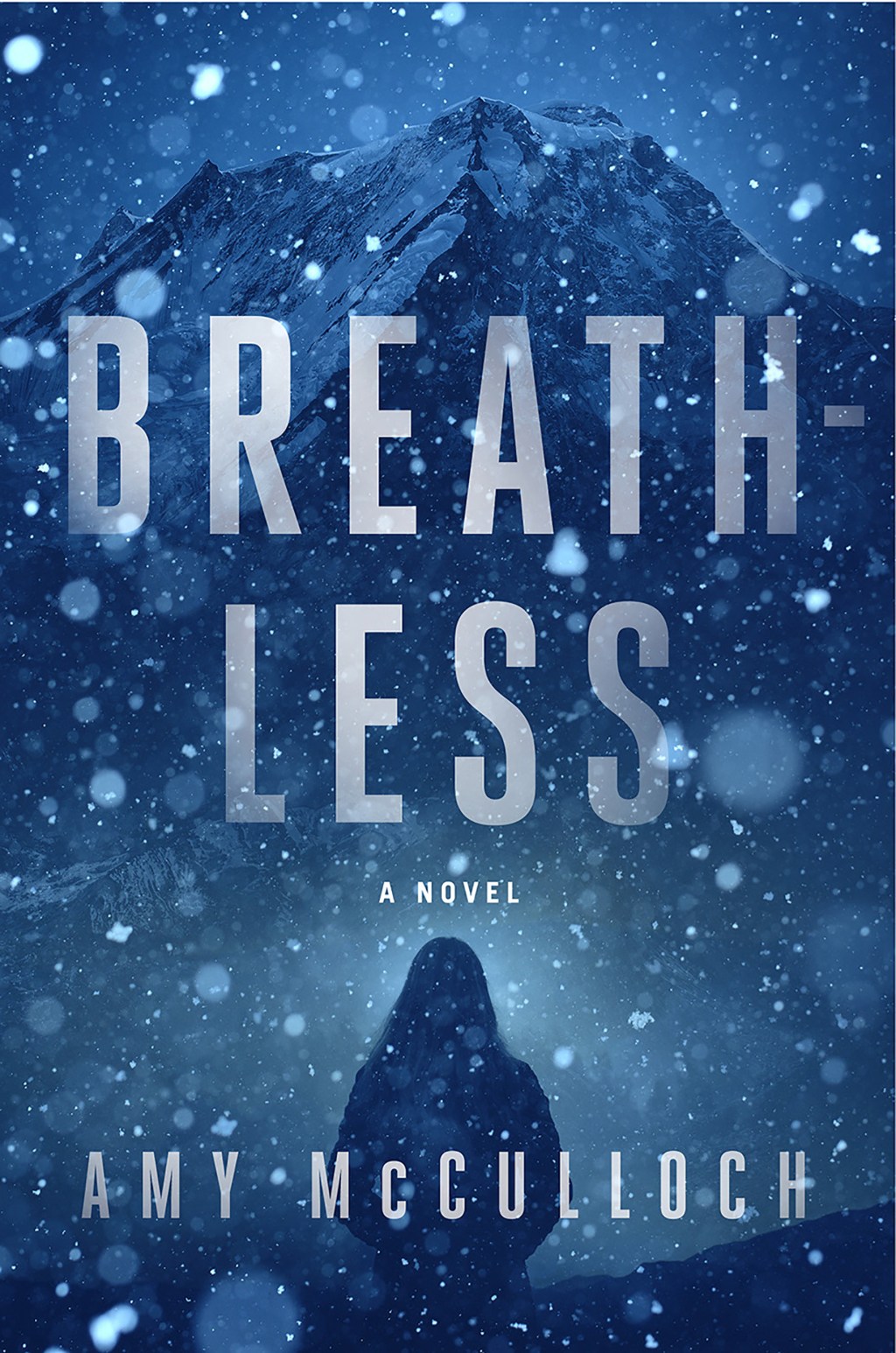
Breathless, Amy McCulloch’s debut adult thriller, is set on the world’s eighth highest mountain in Nepal. Cecily Wong, is a struggling journalist given the opportunity to interview legendary mountaineer Charles McVeigh but with one catch: she has to summit the mountain as part of his team first.
I had a chance to ask McCulloch, a Chinese-White author, born in the UK, raised in Ottawa, Canada, now based in London, UK. questions about her book including how much she and Cecily are similar. But first a little more about McCulloch, the youngest Canadian woman to climb Mt Manaslu in Nepal – the world’s eighth highest mountain at 26,781ft, is the co-author of the #1 YA bestselling novel THE MAGPIE SOCIETY: One for Sorrow, and has written seven solo novels for children and young adults. She’s made bestseller lists in several countries around globe and her books have been published in fifteen different languages.
Now the interview.
JA: Tell us how much the character Cecily is like and unlike you?
AM: While Cecily and I share some similarities (we are both mixed race, Chinese and White, and both writers), I wanted Cecily to be more of a novice to the world of mountaineering than I was when I went to Manaslu, so she could be a window into the high altitude world for readers who might be unfamiliar with the sport. Yet I also drew on many of the challenges I faced to create her character: imposter syndrome – in the mountains and in my career, and a struggle to belong.
You mention being, like Cecily, at a nadir in your career and life when you first embarked first on walking and then on climbing. Can you tell us about that? Has physical exertion always been restorative for you?
Actually, turning to physical exertion as a means of healing was a surprise to me! Before my divorce, I was not a particularly active person, although I always loved travel and adventure. However, when my husband left, for the first time I felt truly lost – like my entire future was crumbling in front of me. I didn’t know what to do with myself, so while I processed these big emotions I decided to do something good for my body. I flew out to the Kerry Way – Ireland’s longest way-marked trail – and walked over 250km. I was amazed by what my body was capable of, so I ventured next to Nepal to trek the Annapurna Circuit. It was there that I fell in love with the big mountains, sparking a curiosity in me to see where my feet could take me.
How did you go about preparing to climb an 8,000 high peak?
When I said “yes” to climbing Manaslu with Nims Dai (as part of his 14 Peaks, Project Possible mission – later a Netflix series), I knew I was about to embark on the most difficult challenge of my life. I already knew I could handle high altitudes and difficult weather conditions, having successfully summited Aconcagua (the highest mountain the Americas) a few months before. But this was next level. I embarked on an intense training regime at home in London, tackling multiple ascents of the only hill in the area (London is a remarkably flat place!) and I headed up to North Wales several times to take 1:1 mountaineering lessons with British mountaineering guide Jon Gupta. It also took a while to get all the necessary gear together. I was particularly surprised how difficult it was to find extreme high altitude mountaineering gear designed for women.
How did you come up with the concept of your book and the characters? You mention that you always intended to write a book about your climb but what inspired you to make it a mystery/thriller? And did that occur when you were actually climbing?
I had been a full time author for a few years before I started on my mountaineering journey, writing science fiction and fantasy for young adults. The mountains are such an inspirational place that I knew that there would be a story in there somewhere, but I had no idea what shape that story would take. At first, I toyed with a scifi idea – maybe the first expedition to Olympus Mons, the highest mountain on Mars. It wasn’t until I was actually living at base camp in Manaslu that I realized the novel should be a thriller. It struck me that the mountain was the perfect setting: the isolation, the lack of authority figures, the risks of the environment like avalanches, crevasses and serac falls, but you’re also living amongst total strangers – people whose backstories and motivations are a mystery, and yet you need to trust them with your life. Fatal accidents are considered part of the accepted risk of climbing in these high places – what better place to get away with murder than somewhere already known as the death zone? I knew then that I could use my own personal experience as research, hoping create a unique, compelling, page-turning and yet authentic thriller in Breathless.
Tell us about Manaslu. I know it is the eighth-highest peak but had never heard of it before. Yet it sounds both beautiful and daunting.
Manaslu was the first eight thousand metre peak I’d ever laid eyes on, long before I ever believed I’d be able to climb it. It stands apart from a lot of the other 8,000m peaks, so it dominates the skyline – with a distinctive fishtail peak. It is stunningly beautiful and it is also considered one of the most ‘achievable’ of the 8000m peaks. Many people use it as a training ground for Everest, so it seemed like the right level of challenge as a next step for me in my mountaineering journey. Although ‘achievable’ is a funny word – it was also known as the ‘killer mountain’ for a long time as it had one of the highest death rates of any mountain in the world. There is no safe place to camp on the mountain – everywhere is prone to avalanche danger. It is definitely not to be underestimated.
Cecily is one of just a few women mountaineers in the book. Was that similar to your real life climb? Do you think that it’s harder for women to be accepted into the climbing world?
When I climbed Manaslu in September 2019, I held the record for the youngest Canadian woman, but even more surprising to me was that I was one of only eight Canadian women to have ever reached the summit in history, according to the Himalayan Database. That really showed me just how few women partake in this sport. For so long, I think there have been a lot of barriers to women being fully accepted into the climbing world – there’s the issue of equipment (as I mentioned above) not being designed with women’s bodies and needs in mind, and also the stigma that women in particular face when they participate in high risk sports while leaving their families at home. I think though the tide is changing – with more women than ever breaking ground in this sport, including my good friend and tentmate Stefi Trouget, who became the youngest woman to climb K2 without O2. I found the camaraderie I felt with other women on the mountain to be truly inspirational, and helped me find confidence on the mountain itself.
I loved your description of the teas and the foods you ate both in the town and in the camps. Do you miss that? Or did you take recipes home with you? To me, it seems like a real immersion into the culture of the people who live on the mountain. I’d never run into that in other books about climbing.
Thank you so much! I miss Nepal (and Nepali food) every day! It was important to me when I chose to climb in Nepal, that I used local operators and guides to support their economy as much as possible. What I didn’t realize is how those guides – Nims Dai, Mingma David and my Sherpa Tensing Kasang – would become more like family to me over the years. I have been invited back to their homes and even had the honour of being blessed by Nims’ mother during their Dashain festival. For me, it’s the people who make these climbing trips so memorable and impactful – and getting to immerse myself and learn more about Nepali culture is always the highlight.
What are you working on now?
I’m working on my next adventure thriller, set in Antarctica – a place I was lucky enough to visit back in 2016. I was intrigued to write about the “white night” – because when the sun never sets, there are very few places to hide. My hope is to continue to write books that transport readers to incredible places – with some page-turning thrills along the way.
Is there anything we didn’t cover you’d like readers to know?
Minimizing your time in the kitchen and maximizing your time with friends and family is what Jamie Oliver’s newest cookbook, Together, is all about. There are recipes for entire meals such as his Taco Party–Slow Cooked Pork Belly, Black Beans and Cheese, Homemade Tortillas, Roasted Pineapple and Hot Red Pepper Sauce, Green Salsa, Chocolate Semifreddo, and Tequila Michelada or you can select one or more of the 130 recipes in this fascinating book with its lush photos. Oliver, being British, offers some unique recipes such as Wimbledon Summer Pudding, Bloody Mary Crumpets, and My Maple Old Fashioned.
My Sumptuous Beef Bourguignon
Burgundy, Bacon, Button Mushrooms & Shallots
Serves 10
3 pounds beef cheeks, trimmed
4 large carrots
4 stalks of celery
4 cloves of garlic
1 onion
2 teaspoons Dijon mustard
4 fresh bay leaves
1 small pinch of ground cloves
3 cups Burgundy or Pinot Noir
1/3 cup all-purpose flour
1 ½ tablespoons unsalted butter
6 slices of smoked bacon
7 ounces shallots
14 ounces button mushrooms
½ a bunch of Italian parsley (½ ounce)
GET AHEAD Chop the beef cheeks into 2-inch chunks. Wash, trim and chop the carrots and celery into 11/4-inch chunks. Peel the garlic and onion, then roughly chop. Place it all in a large bowl with the mustard, bay, cloves, a generous pinch of black pepper and the wine. Mix well, then cover and refrigerate overnight.
ON THE DAY Preheat the oven to 325ºF. Pour the contents of the beef bowl into a colander set over another bowl. Pick out just the beef and pat dry with paper towel, then toss with the flour. Put a large casserole pan on a medium heat and melt the butter with 2 tablespoons of olive oil. In batches, brown the floured beef all over, turning with tongs and removing to a plate with any crispy bits once browned. Tip the veg into the pan, and cook for 10 minutes, or until starting to caramelize, stirring occasionally and scraping up any sticky bits. Return the beef to the pan, pour over the reserved wine and 3 cups of boiling water, then bring to a simmer. Cover with a scrunched-up sheet of damp parchment paper and transfer to the oven for around 4 hours, or until the beef is beautifully tender, topping up with splashes of water, if needed.
TO SERVE When the beef is perfect, turn the oven off. Slice the bacon, then place in a large non-stick pan on a medium-high heat. Peel, chop and add the shallots, tossing regularly, then trim and halve or quarter the mushrooms, adding to the pan as you go. Cook for 15 to 20 minutes, or until golden, stirring regularly. Finely chop and toss through the parsley leaves, then pour the contents of the pan over the bourguignon and season to perfection, tasting and tweaking.
CHICKEN, SAUSAGE & BACON PUFF PIE with ENGLISH MUSTARD, LEEKS & WATERCRESS SAUCE
SERVES 4
2 slices of smoked bacon
2 chicken thighs (3 ½ oz each), skin off, bone out
2 pork sausages
2 leeks
2 small potatoes (3 ½ oz each)
2 heaping teaspoons English mustard
2 heaping tablespoons all-purpose flour
2 cups chicken broth
2 cups reduced-fat (2%) milk
3 ¼ oz watercress
11 oz pre-rolled puff pastry
1 large egg
GET AHEAD You can do this on the day, if you prefer. Slice the bacon and place in a large shallow casserole pan on a medium heat. Chop the chicken and sausages into 11/4-inch chunks, and add to the pan. Cook until lightly golden, stirring regularly, while you trim and wash the leeks, peel the potatoes, chop it all into 11/4-inch chunks, then stir in with a good splash of water. Cook for 10 minutes, or until the leeks have softened, stirring occasionally, scraping up any sticky bits, and adding an extra splash of water, if needed. Stir in the mustard and flour, followed by the broth, then the milk. Bring to a boil, simmer for 15 minutes on a low heat, stirring regularly, then season to perfection, tasting and tweaking. Carefully pour everything through a colander to separate the filling from the sauce. Pour the sauce into a blender, add the watercress and blitz until smooth. Spoon the filling into an 8-inch pie dish with 7 tablespoons of sauce. Let everything cool, then cover and refrigerate overnight.
TO SERVE Preheat the oven to 350ºF. Brush the rim of the pie dish with olive oil. Cut the pastry into 3/4-inch strips, using a crinkly pasta cutter if you’ve got one, then arrange over the dish – I like a messy lattice. Eggwash all the pastry, then bake the pie for 45 minutes, or until the pastry is golden and the filling is piping hot. Gently heat up the watercress sauce to serve on the side.
VEGGIE LOVE
Peel 1 lb of root veg of your choice, chop into ¾ –1 ¼ -inch chunks and cook for 20 minutes with the leeks, potatoes, 3 tablespoons of olive oil and the leaves from ½ a bunch of thyme (1/3 oz). Use veg broth with the milk, top up with ½ cup of sauce on assembly, then finish in the same way.
TANGERINE DREAM CAKE
A pleasure to make, this cake is joyous served with a cup of tea – make sure you pack your flask. Any leftovers crumbled over ice cream will also be a treat. I like to make the whole thing on the day, but you can absolutely make the sponge ahead and simply store it in an airtight container overnight.
SERVES 16
1 cup soft unsalted butter, plus extra for greasing
8 oz liquid honey
2 cups self-rising flour
1 ¾ cups ground almonds
1 tablespoon vanilla bean paste
6 large eggs
4 tangerines
¾ cup confectioner’s sugar
Optional: plain yogurt, to serve
ON THE DAY Preheat the oven to 350ºF and generously grease an 8-cup non-stick bundt pan with butter. Place the remaining butter in a food processor with the honey, flour, almonds and vanilla paste. Crack in the eggs, finely grate in the tangerine zest (reserving some for garnish) and blitz until smooth. Pour the mixture into the bundt pan, scraping it out of the processor with a spatula, then jiggle the pan to level it out. Bake for 30 to 35 minutes, or until golden and an inserted skewer comes out clean. Leave for a few minutes, then turn out onto a wire rack and leave to cool completely.
Sift the confectioner’s sugar into a bowl, then squeeze and stir in enough tangerine juice to make a thick drizzle. Pour or spoon over the cool cake, easing some drips down the sides in an arty way, then sprinkle over the reserved zest. Peel the remaining tangerines and slice into rounds, to serve on the side. A spoonful of yogurt also pairs with it very nicely, if you like.
CLASSIC CAKE: Don’t worry if you don’t have a bundt pan, a 10-inch cake pan lined with parchment paper will work just as well.
When she was nine, Shea Collins managed to outwit and escape a child predator, hiding as he searched for her before moving on to his next victim. Still traumatized two decades later, Shea keeps to herself, working as a medical receptionist during the day and at night holing up in her apartment, heating up single serve frozen lasagna in her microwave while researching unsolved true crimes for her blog, “The Book of Cold Cases.”
This self-imposed isolation is about to change when Shea recognizes Beth Greer in the doctor’s office one day. Decades ago, the beautiful, beguiling and rich Greer went to trial, accused of killing two men. She was found innocent, but like Shea, she has locked herself away from the world, albeit in a mansion in the wealthiest section of Lake Clare where she lived with her parents before their deaths.
Surprisingly, Greer agrees to let Shea interview her and invites her to the house. Located on a cliff overlooking the water, it should be a pleasant place, but instead, almost from the beginning, Shea can feel the odd vibes and happenings that are part of the home’s atmosphere. Looking out the window, she catches a glimpse of a young girl staring at the house. Who is she? And what about Greer? Is she a murderer? Or is she a woman somehow trapped in a supernatural nightmare?
Author Simone St. James went from scheduling and spreadsheets — mostly for live sports, making sure that camera crews showed up on time and that everyone got paid — to writing supernatural thrillers, including her latest, “The Book of Cold Cases.”
“I loved what I was doing, but as time went on I loved writing even more,” said St. James, who has written five novels, including bestseller “The Sun Down Motel.”
St. James says the cases in her book are entirely imaginary.
“But the germ of the idea came from the Zodiac case, in which a man killed random people in the San Francisco area in the late 60s and early 70s,” said St. James, noting that Stephen King was the first writer to influence her and that she read and re-read her copy of “Firestarter” so much that it fell apart.
“The killer in the Zodiac case was never caught,” St. James said. “And I wondered, what if you had a Zodiac-type case, but the suspect was a woman? It changes everything about the story — who the suspect is, why they do what they do, how it’s investigated, how it’s written about in the media. Literally everything about it is different. So I made up a fictional case and went down that rabbit hole because I thought it was interesting.”
Though her books have an eerie ambiance, St. James said she’s never encountered the supernatural herself.
“But I believe it’s possible. I think most things are possible,” she said. “In my books I’m more interested in the human side of the supernatural, if that makes sense. Why one person would refuse to leave, and how the remaining people react. Haunting stories are all about grief and fear and trauma and letting go or refusing to. Those themes are fascinating to me and I always go back to them.”