Category: Architecture

  • Western Mexico: A Traveler’s Treasury

    Western Mexico: A Traveler’s Treasury

    A travel guide for the intellectually curious, Tony Burton’s Western Mexico: A Traveler’s Treasury provides an insider’s entry to this extraordinary region of Mexico. The book, published by Sombrero Press and now in its fourth edition is less about logistics and instead focuses on the myriad of reasons–historical, ecological, cultural, and/or scenic–that make each place featured in this well-written and well-researched book both special and worth visiting.

    Burton, an award-winning travel writer, educator, and ecotourism specialist, who was born in the United Kingdom and has an M.A. in geography from the University of Cambridge and a teaching qualification from the University of London, moved to Mexico in 1979 and subsequently was granted Mexican citizenship, looks for the road less traveled.

    And in this book, he encourages us to explore the smaller, lesser known community with their many local customs, seasonal celebrations, sites, and events, places that, in his words, “offer a glimpse of the Mexico behind the mask; they are places where Mexico has retained her ancient culture and her ancient traditions.”

    Providing a mix of interests, Burton opens the doors, so to speak, to such historical sites as Zacatecas, Lagos de Moreno and San Blas; artistic colonies like Ajijic; and lakeside communities including Chapala and Pátzcuaro.

    Besides that there are ecological wonders, such as Manantlán, the monarch butterflies, the old mining towns of Angangueo and Bolaños, coastal communities like Barra de Navidad and Puerto Vallarta, Angahuan and other Indian villages, and a host of others. He delves into Pueblos Mágicos, designated as Magic Towns by the federal government in recognition of their cultural, historical, and/or ecological significance, their nearness to major cities, and the facilities they offer visitors.

    This is a travel guide but of the most intimate kind. We drive with Burton along the lovely road to Tamazula, settled from pre-Columbian times, conquered by the Spanish in 1524, and a vital silver mining town and hacienda center until the mines were worked out by the end of the 18th century. As for its name, well, interestingly enough, it translates to “place of frogs.”

    Where to stay when there? Burton recommends Hotel Real de la Loma with its spacious and comfortable rooms and pool and two person tubs in the room filled from a hot-water spring at the foot of a hill. The views from the hotel are of the Tamazula River and its valley made green with sugar-cane. A good time to go for many is during the two-week Our Lady of Sagrario festival.

    We learn that Mazamitla is “one of the prettiest towns in all Jalisco. It is a graceful, charming town of cobblestone streets, adobe walls, wooden balconies, old doorways and red-tile roofs, one of Mexico’s Magic Towns. Among its many attractions are the fresh air and scenic beauty of the surrounding countryside, some fine restaurants specializing in Mexican food, and the chance to shop for fresh cream, cheese, and home-made preserves. As befits a mountain town, its inhabitants also make lovely woolen sweaters and ponchos, for sale in the local shops.”

    Burton, who has lived in Mexico City, Guadalajara, and Jocotepec, has traveled widely, leading educational excursions and specialist ecological tourism groups to both well-known areas such as the Yucatán and Copper Canyon as well as little-known ones like Manantlán and Tingambato. At the former, at the Manantlán Biosphere Reserve visitors can experience the astonishing diversity of plant and animal life found in a cloud forest, one of the rarest types of vegetation anywhere in the world. In the latter, located near the major archaeological site of Tinganio, is one of the few sites in Western Mexico where there are genuine pyramids.

    Larger than the previous editions there are dozens of new destinations and each chapter contains new material, updated travel directions, and redrawn maps.

    Divided into parts, one and two are within three hours of driving time from either Guadalajara (Mexico’s second city) or nearby Lake Chapala, a popular retirement center for Americans and Canadians making them perfect for day trippers.

    Parts 4 to 9 are longer journeys such as the trip to Jungapeo, where director John Huston filmed scenes from The Treasure of the Sierra Madre starring Humphrey Bogart. Here, in this small village, you can stay at Agua Blanca Canyon Resort which dates back to the 1940s. According to Burton, it is a charming spa-hotel with just 20 rooms arranged in the Purépecha Indian style around three sides of the greenest lawn in Mexico. Its pools and lawns overlook the deeply carved valley of the River Tuxpan.

    “Many butterfly visitors, after the cool and dusty atmosphere in the fir forests want nothing more than a long soak in a warm tub and this is the ideal place,” he writes.

    And, of course, there are the Monarch butterflies. Every winter, some one hundred million monarch butterflies fly into Mexico from the U.S. and Canada. On arrival they congregate in a dozen localities high in the temperate pine and fir forests of the state of Michoacán.

    For me, a definite-not-to-be-missed is Zitácuaro, where my culinary hero Diana Kennedy lived. Famous for her cookbooks on Mexican cuisine, she made her home outside of Zitácuaro. And here again, is how deep Burton drills down into his destinations. Kennedy lived near the Rancho San Cayetano, a small, exclusive hotel on the road towards Huetamo and the Del Bosque reservoir.

    “The San Cayetano’s charm lies not only in its comfortable rooms but also in its first rate cuisine,” he writes, asking if there could be a better recommendation for the food served there than the fact that Diana Kennedy regularly brought friends to dine in the hotel?

    For aficionados of Mexican food, there are several outstanding restaurants to put on the list of where to go.

    “Neither of my two favorites is well known to tourists, hence their inclusion here,” writes Burton. “Next to the gas station in Pátzcuaro, where the highway from Morelia and Quiroga enters the town, is the Camino Real restaurant where the Tarascan soup, a local specialty which is a bean-based version of tortilla soup, has to be tasted to be believed. Whatever you choose in this unpretentious restaurant, you will not be disappointed,” he writes. “The Camino Real has a sister restaurant, the Real del Cobre, in Santa Clara del Cobre.

    My other favorite is an hour’s drive away, in the unpretentious town of Tacámbaro. Near the entrance to the town is the Hotel-Restaurant El Molino (The Mill), housed in a museum-piece nineteenth century flour mill, complete with grinding wheels. Simply and artistically decorated and furnished, this hotel-restaurant’s fixed-price comida features slightly finer cuisine than that of the Camino Real, with more subtle sauces and a more varied menu.”

    Whether your interests are in art, architecture and/or archaeology; fiestas and folklore; unusual sights and natural wonders, or in Indian villages and indigenous handicrafts, Burton’s book is your guide to Western Mexico’s many hidden treasures.

    Burton, author of many books about Mexico including If Walls Could Talk: Chapala’s historic buildings and their former occupants; Lake Chapala: A Postcard History; and Mexican Kaleidoscope: Myths, mysteries and mystique, is currently editor-in-chief of MexConnect, Mexico’s top English-language online magazine. He says the inspiration for writing this book came about with the “realization that it was impossible for me to personally introduce readers to many of the places and things I consider most rewarding to find and appreciate. Of the truly spectacular, I have yet to find anyone who ever forgets the magic of visiting the Monarch Butterflies in one of their overwintering sites. By sheer good fortune, I happened upon them the first time in 1980, several years before their locations became widely known or any organized tourist excursions to them had begun.”

    Burton encourages opening up to new places and experiences.

    “With an open mind ‘gems’ can be found everywhere in Western Mexico,” says Burton. “My greatest hope is that my book encourages readers to explore and find their own hidden gems.”

  • “Ladies of the Lights” Showcases Female Lighthouse Keepers

    “Ladies of the Lights” Showcases Female Lighthouse Keepers

    “Ladies of the Lights” Presentation by Michigan Maritime Expert Dianna Stampfler Showcases Female Keepers of Michigan’s Historic Beacons

    “Ladies of the Lights” Presentation Showcases Female Keepers of Michigan’s Historic Beacons

    Michigan lighthouse historian and author Dianna Stampfler has announced a series of presentations of her popular “Ladies of the Lights” in honor of Women’s History Month. This program, which includes readings from newspapers and autobiographies, as well as countless historic photos, sheds light on the dedicated women who served at lights around the state dating back as early as the 1830s.

    These were women before their time, taking on the romantic yet dangerous and physically demanding job of tending to the lighthouses that protected the Great Lakes shoreline. Given this was also a government job, their involvement was even more unique. In all, nearly 50 women have been identified who excelled in this profession over the years.

    One of the most notable was Elizabeth (Whitney) VanRiper Williams who took over the St. James Harbor Light on Beaver Island after her husband, Clement, died while attempting to rescue the crew of a ship sinking in the harbor. She later became the first keeper of the Little Traverse Lighthouse in Harbor Springs, retiring after a combined 44 years of service.

    There is also Julia (Tobey) Braun Way who outlived two husband keepers at the Saginaw River Rear Range Lighthouse in Bay City, and some say who still haunts the place today. Anastasia Truckey served as the interim keeper at the Marquette Harbor Lighthouse in the 1860s while her husband, Nelson, was off serving in the Civil War. Mary Terry served 18 years before she died in a fire at the Sand Point Lighthouse in Escanaba in 1886 – her death still shrouded in mystery 137 years later.

    Stampfler has been researching Great Lakes lighthouses for more than 25 years and is the author of Michigan’s Haunted Lighthouses (2019) and Death and Lighthouses on the Great Lakes (2022) both from The History Press. She has penned countless articles and been interviewed extensively about the lighthouses and their keepers. She is also the president of Promote Michigan.

    The March 2023 program schedule includes:

    • Tuesday, March 14 (6-7:30pm)

    Chesterfield Township Library

    www.chelibrary.org

    • Wednesday, March 15 (10am-Noon)

    Saginaw Valley State University, University Center

    OLLI Class (Registration required: $20 members/$40 non-members)

    www.enrole.com/svsu/jsp/session.jsp?sessionId=275W23&courseId=275LADIES&categoryId=D488D638

    • Wednesday, March 15 (5-6:30pm)

    Harbor Beach District Library

    www.hbadl.org

    • Tuesday, March 21 (6-7:30pm)

    Livonia Public Library ZOOM

    https://us02web.zoom.us/j/88565136420

    • Wednesday, March 22 (6-7:30pm)

    St. Clair County Library, Port Huron

    • Thursday, March 23 (7-8:30pm)

    Novi Public Library Zoom

    www.novilibrary.org 

    Stampfler will be selling/signing copies of her books following each presentation.

  • AIA Guide to Chicago, Fourth Edition

    AIA Guide to Chicago, Fourth Edition

     AIA Chicago, the second largest chapter of the American Institute of Architects and the collective voice of 4,000 licensed architects, emerging professionals, architecture students, and allied professionals, today announced the publication of the new, updated definitive guide to  the city’s architecture, the AIA Guide to Chicago, Fourth Edition.

    AIA Guide to Chicago 4th Edition High-res cover image.jpg

    Chicago’s architecture attracts visitors from around the globe. The fourth edition of the AIA Guide to Chicago is the best portable resource for exploring this most breathtaking and dynamic of cityscapes and neighborhoods. The editors offer entries on new destinations like the Riverwalk and The 606, chronicling the city’s construction boom since the previous guide was published in 2014, as well as updated descriptions of refreshed landmarks. Thirty-four maps and more than 500 photos make it easy to find each of the almost 2,000 featured sites.

    A special insert, new to this edition, showcases the variety of Chicago architecture with over 80 full-color images. A comprehensive index organizes entries by name and architect.

    Sumptuously detailed and user friendly, the AIA Guide to Chicago encourages travelers and residents alike to explore the many diverse neighborhoods of one of the world’s great architectural cities.

    “AIA Chicago has refreshed the ultimate handbook of Chicago architecture with new buildings and old buildings redesigned for new uses,” said AIA Chicago’s Executive Director Jen Masengarb. “We’ve added overlooked iconic designs from Chicago’s architecturally and culturally distinct neighborhoods—many designed by female architects and architects of color.”

    In addition to prominent buildings known to millions because of their perches in the downtown skyline or their places along the river—Studio Gang’s St. Regis Chicago, SOM’s Willis Tower, Edward Durell Stone’s Aon Center, Adler & Sullivan’s Auditorium Building, Goettsch Partners’ 150 North Riverside, Graham, Anderson, Probst & White’s The Old Post Office converted to offices by Gensler—this new edition includes striking architectural designs from the past and present waiting to be discovered.

    Imaginative Rehabs for Reuse:

    The heroic rehab of historic Beaux-Arts hospital that once served Chicago immigrants and was scheduled for demolition but now reinvented with offices, a food hall and two hotels (Old Cook County Hospital, 1835 W. Harrison St., Paul Gerhardt, 1914; SOM and KOO conversion, 2020)

    ·An exuberant Roaring Twenties firehouse (image© Eric Allix Rogers) stacked with terra-cotta ornament now converted into an arts center fostering appreciation of Chicago filmmaking (Chicago Filmmakers—Ridge Firehouse; Engine Co. 59, Truck 47—5720 N. Ridge Avenue; Argyle E. Robinson, 1928; Bureau of Architecture & Design, 2017 conversion)

    An extraordinary arts center in a former bank designed by urban planner, artist and activist Theaster Gates who created performance spaces and galleries—including a stunning double-height room lined with bookshelves that house the Johnson Publishing Company archives-—in a deliberate state of semi-restoration, revealing layers of the building’s history (Stony Island Arts Bank—Stony Island Trust & Savings Bank—6760 S. Stony Island Ave., William Gibbons Uffendell, 1923; Fitzgerald Assocs. Architects, conversion, 2015)

    Rediscovered Designs and Architects:

    Eleven condos developed, built and designed by Chicago legend Gertrude Lempp Kerbis who designed the Rotunda Building at O’Hare which housed her Seven Continents restaurant (Greenhouse Condominiums, 2131 N. Clark St.; Gertrude Lempp Kerbis, 1976)

    An international style flat roof, light brick home designed by John Moutoussamy (image © Eric Allix Rogers) a student of Mies and the first Black architect to become partner in a large Chicago firm, who also designed 820 S. Michigan Ave., the offices of the publisher of Ebony and Jet Magazine (John Moutoussamy House, 361 E. 89th Pl., John Moutoussamy, 1954)

    A sleek rectilinear church of light brick and stone designed by Nelson Harris, a founding member of the National Organization of Minority Architects, featuring a three-story bell tower clad in smooth stone panels and topped with stained glass and crenellations (Berean Baptist Church, 5147 S. Dearborn St., Harris & Isensee, 1962)

    Civic Spaces and Public Art:

    A yellow brick sidewalk and mosaic tile mural by Hector Duarte commemorates L. Frank Baum’s writing of The Wonderful Wizard of Oz when he lived here in 1900 (There’s No Place Like Home, Southeast corner of Humboldt Blvd. and Wabansia St., Hector Duarte, Artists, 2020)

    A striking, new pedestrian bridge over Lake Shore Drive at 35th Street joined others in moving toward rectifying the disinvestment and scarcity of access to the lake on Chicago’s South Side (35th St. Pedestrian Bridge, 35th Str. Over S. Lake Shore Dr., EXP, 2016)

    Carson Pirie Scott (Sullivan, 1898)

    The reimagined Garfield Blvd. CTA Stations including a restoration and creative reuse of the 1892 building originally built to bring passengers to the World’s Columbian Exposition, and a renovation of its 2001 replacement station to include vibrant artwork by Nick Cave and Bob Faust in a variety of media and surfaces. (CTA—Garfield Blvd. Station, 320 E. Garfield Blvd., 2019 renovation, exp; Original station house, restoration, Antunovich Assocs.)

    1635 W Washington Bv (1891), one of very few survivors in this area of a stately past.

    Art Deco outside the Loop:

    An exuberant Art Deco factory in the West Loop that produced sausages, smoked and boiled meats (Richter’s Food Products, 1034 W. Randolph St., H. Peter Henschien, 1933)

    An Art Deco apartment hotel on the Near West Side (image© Eric Allix Rogers) designed by Benjamin Albert Comm in 1930 was gut rehabbed into affordable, sustainable units (Harvest Commons Apartments, 1519 W. Warren Blvd., Benjamin Albert Comm, 1930; Rehab, Landon Bone Baker Architects, 2013)

    The Art Deco exterior dating from a 1928 remodeling of an Austin bank building is slated to have its celery, mustard and off-white terra cotta facades restored as part of a redevelopment project included in Chicago’s Invest South/West initiative (Laramie State Bank Building, 4200 West Chicago Ave., Meyer & Cook, 1928 remodeling of 1909 building).

    “Working on the fourth edition of this indispensable handbook has been a special delight as we continue to deepen the book’s tradition of including an expansive canon of work,” said editor of the AIA Guide to Chicago, Laurie Petersen. “The opportunity to have a section of color photos allowed us to increase the book’s educational value even further by grouping them to illustrate building styles and types.”

    A new 32-page section of color photos directs readers to entries across the city that have capsule descriptions of particular styles, materials or building types. Styles are organized chronologically, from 1870s Italianate through 1990s Postmodernism. Interspersed are two double-page spreads: Unexpected Delights, including a water pumping station and a storage facility, and Quintessential Chicago Housing Types, including the Chicago bungalow.

    Even at 648 pages, the AIA Guide to Chicago is illustrative rather than encyclopedic, presenting a representative selection of buildings in addition to the essential landmarks. The neighborhoods chosen display a range of types, styles and eras. The criteria for selecting buildings, landscape and park features, bridges, public art and cemetery monuments included not only the quality of their design but also the degree to which they either exemplified a style, trend or functional type or stood out as unusual. Other important factors included visibility, historical significance, and the “what the heck is that” curiosity factor. A team of advisers helped evaluate the various buildings selected for inclusion in this edition: Geoffrey Baer; Lee Bey; Lisa DiChiera; T. Gunny Harboe, FAIA; Blair Kamin; and Mary Woolever.

    Praise for the Third Edition

    “A many-voiced celebration of the rich flavors of Chicago architecture, the delights on the side streets as well as the landmarks that make the history books.”–Chicago Sun-Times

    “If you’ve ever needed a good excuse to take a walk around a Chicago neighborhood or study a particularly noteworthy building, this should provide the perfect push out the door.”–Chicago Tribune

    About the AIA Guide to Chicago 4th Edition

    Author:American Institute of Architects Chicago, Edited by Laurie McGovern Petersen. Paper – $42.95; 978-0-252-08673-1; eBook – $14.95. 648 pages. Illustrations: 82 color photographs, 498 black & white photographs, 1 chart, 1 table.

    About AIA Chicago

    The American Institute of Architects Chicago (AIA Chicago) serves nearly 4,000 licensed architects, emerging professionals, architecture students, and allied professional members in Chicago and is the second largest AIA chapter in the country. AIA Chicago’s mission builds on the city’s architectural legacy by advocating for the profession, sharing knowledge among members, and partnering with communities. It fosters a culture of design excellence for equitable, sustainable places and spaces.

    AIA Chicago offers lectures and continuing education courses; specialized, issue-specific Knowledge Communities; advocacy for architects; and help for consumers looking for an architect.

    AIA Chicago is the local Chicago chapter of The American Institute of Architects. Based in Washington, D.C., the AIA has been the leading professional membership association for licensed architects, emerging professionals, and allied partners since 1857. Learn more by visiting www.aiachicago.org.

  • Haunted Lighthouses: Scary Tales of the Great Lakes
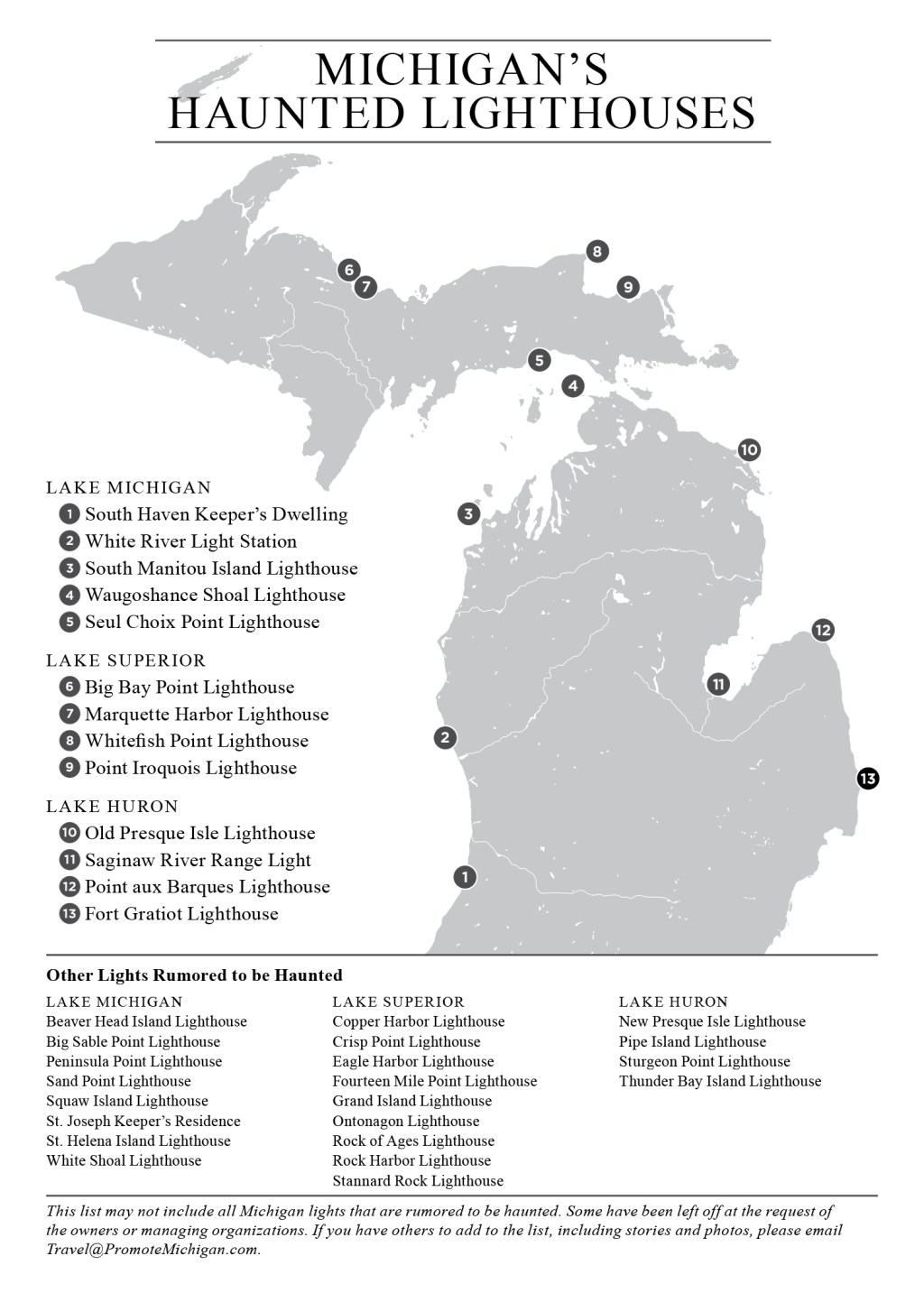
    Haunted Lighthouses: Scary Tales of the Great Lakes

    Michigan is home to more lighthouses than any other state and about 40 of those are rumored to be haunted by the spirits of former keepers, mariners and others with ties to these historic beacons.

    Inside the pages of Michigan’s Haunted Lighthouses, long-time researcher, writer and promoter of all things Michigan, Dianna Stampfler, shares stories of those who dedicated their lives — and afterlives — to protecting the Great Lakes’ shoreline. Her second book, Death & Lighthouse on the Great Lakes, Stampfler delves into the historic true crime cold case files that have baffled lighthouse lovers for as many as two centuries.

    Throughout the fall season, Stampfler will be speaking at libraries around the state, sharing her lively and upbeat presentation about these lights. Copies of her books will be available for purchase and signing at every program.

    Sun, Oct 9, 2022
    2:00 PM – 3:30 PM
    Michigan’s Haunted Lighthouses
    Elk Rapids District Library, Elk Rapids, MI
    Tue, Oct 11, 2022
    6:30 PM – 8:00 PM
    Michigan’s Haunted Lighthouses
    Rauchholz Memorial Library, Hemlock, MI
    Wed, Oct 12, 2022
    7:00 PM – 8:30 PM
    Michigan’s Haunted Lighthouses
    Northville District Library, Northville, MI
    Wed, Oct 19, 2022
    6:00 PM – 7:30 PM
    Michigan’s Haunted Lighthouses
    Reese Unity District Library, Reese, MI
    Thu, Oct 20, 2022
    7:00 PM – 8:30 PM
    Michigan’s Haunted Lighthouses
    Otsego District Library, Otsego, MI
    Sun, Oct 23, 2022
    3:00 PM – 4:30 PM
    Michigan’s Haunted Lighthouses
    Sanilac County Historic Village & Museum, Port Sanilac, MI
    Wed, Nov 2, 2022
    6:00 PM – 7:30 PM
    Death & Lighthouses on the Great Lakes
    St. Clair County Library – Main Branch, Port Huron, MI

    For the complete schedule of upcoming events (including other topics beyond lighthouses), visit the Promote Michigan Speaker’s Bureau online.

    About Michigan’s Haunted Lighthouses

    Michigan has more lighthouses than any other state, with more than 120 dotting its expansive Great Lakes shoreline. Many of these lighthouses lay claim to haunted happenings. Former keepers like the cigar-smoking Captain Townshend at Seul Choix Point and prankster John Herman at Waugoshance Shoal near Mackinaw City maintain their watch long after death ended their duties. At White River Light Station in Whitehall, Sarah Robinson still keeps a clean and tidy house, and a mysterious young girl at the Marquette Harbor Lighthouse seeks out other children and female companions. Countless spirits remain between Whitefish Point and Point Iroquois in an area well known for its many tragic shipwrecks.

    About Death & Lighthouses on the Great Lakes

    Losing one’s life while tending to a Great Lakes lighthouse — or any navigational beacon anywhere in the world for that matter — sadly wasn’t such an unusual occurrence. The likelihood of drowning while at sea or becoming injured while on the job ultimately leading to death were somewhat common back in the late nineteenth and early twentieth century.

    Death by murder, suicide or other unnatural and tragic causes, while rare, are not unheard of. In fact, more than dozen lighthouse keepers around the Great Lakes met their maker at the hands of others – by fire, poisoning, bludgeoning and other unknown means. A handful of these keepers, either because of depression or sheer loneliness, took their own lives. A few we may never know the true story, as the deaths now 100 or more years ago, weren’t subjected to the forensic scrutiny that such crimes are given today.

    In the pages of Death & Lighthouses of the Great Lakes: A History of Misfortune & Murder, you’ll find an amalgamation of true crime details, media coverage and historical research which brings the stories to life…despite the deaths of those featured.

    Stampfler has been professionally writing and broadcasting since high school. She holds a bachelor’s degree in English with emphasis in Community Journalism and Communications with emphasis in radio broadcasting from Western Michigan University. She is a member of the Midwest Travel Journalists Association, Historical Society of Michigan, Great Lakes Lighthouse Keepers Association, Great Lakes Maritime Museum, Association for Great Lake Maritime History, Great Lakes Shipwreck Historical Society, Michigan Maritime Museum, Friends of Pilot & Plum Island Lighthouse, National Museum of the Great Lakes and West Michigan Tourist Association.

  • Windy City Blues

    In her fun very readable Windy City Blues (Berkley 2017; $16), Chicago author Renee Rosen again takes another slice of the city’s history and turns it into a compelling read.

    Rosen, who plumbs Chicago’s history to write such books as Dollface, her novel about flappers and gangers like Al Capone, and What the Lady Wants which recounts the affair between department store magnate Marshall Field and his socialite neighbor, says she and her publisher were racking their brains for her next book which encompassed Chicago history.

    “She suggested the blues,” says Rosen, who didn’t have much interest in the subject.

    But Rosen was game and started her typical uber-intensive research.

    “When I discovered the Chess brothers, who founded Chess Records, I fell in love,” she says, noting that when researching she was surprised about how much she didn’t know about the subject despite her immersion in Chicago history for her previous books. “I thought this is a story.”

    “As part of my research, I drove the Blues Highway from New Orleans to Chicago,” she says. “I also met with Willie Dixon’s grandson and with Chess family members.”

    Combining fact and fiction, Rosen’s story follows heroine Leeba Groski, who struggling to fit in, has always found consolation in music. When her neighbor Leonard Chess offers her a job at his new Chicago Blues label, she sees this as an opportunity to finally fit in. Leeba starts by answering phones and filing but it soon becomes much more than that as she discovers her own talents as a song writer and also begins not only to fall in love with the music industry but also with Red Dupree, a black blues guitarist.

    Windy City Blues was recently selected for Chicago’s One Book project, a program designed to engage diverse groups of Chicagoans around common themes. Rosen says she is very honored to be a recipient.

    “I put my heart and soul into this book,” she says. “I think it’s a story with an important message. In it are lessons of the Civil Rights movement, what it was like for Jews and people of color along with the history of the blues and the role of Jews in bringing the blues to the world. After all, as the saying goes: Blacks + Jews = Blues.”

  • The Attic on Queen Street by Karen White

    The Attic on Queen Street by Karen White

    Karen White and I are talking about ghosts, particularly the ghosts haunting Melanie Middleton Trenholm in White’s latest novel, The Attic on Queen Street, the last in the series set in haunted Charleston, South Carolina.

    “Do you believe in ghosts?” she asks.

    Not really, I reply, but I also don’t like staying in places that are supposedly haunted when I’m by myself.

    White feels the same way because, as we both agree, you just never know.

    It’s then that her phone goes dead.

    “I don’t what happened,” says White when she calls back. “My phone was charged and everything.”

    Coincidence? Most likely. But still, it makes you wonder.

    But phones going dead are the least of the problems for Melanie, a Charleston real estate agent with young twins, a husband who is deciding whether he wants to stay in the marriage, and a teenaged stepdaughter whose room is haunted. Indeed, the entire house on Tradd Street is haunted. Some of the ghosts are helpful, some are evil, and one is the ghost of a dog—which is fine as it gives Melanie’s dog a companion to play with. And to make matters worse, Melanie’s young daughter is already showing signs of being able to see ghosts.

    Ghosts are such a problem that Melanie learned early on to sing ABBA songs loudly to drown out the sounds of the dead people trying to talk to her. But that only works sometimes and in this novel there’s plenty of evil for Melanie to deal with both living and dead. For starters there’s Marc Longo, who stole her husband’s manuscript and turned himself into a bestselling author. Longo is now heading a film crew in Melanie’s house while underhandedly trying to discover the diamonds he believes are hidden there. Melanie is also trying to aid a good friend in discovering who murdered her sister years ago—with the help of the cryptic messages the deceased sister keeps sending her way. And then there’s Jack, her handsome husband. They’re still in love but Jack is darned tired of Melanie always getting herself into deadly situations.

    White first introduced us to Melanie in The House on Tradd Street in what was to be a two book series.

    “But when it came out and was so popular, my publisher said let’s make it four,” says White. “This is the seventh and I’m really going to miss them.”

    Well, kind of, as White is continuing the theme of a haunted city and the Trenholm family, only with Melanie’s stepdaughter in the key role who has to deal with her only supernatural beings when she move  to New Orleans in a book due out this coming March called The Shop on Royal Street.

    Interestingly, the Tradd Street series was originally going to be set in New Orleans. White went to Tulane University and in 2005 she was all set to go with her family back to New Orleans to do research for the first book when Hurricane Katrina hit.

    “I knew that there was no way with all the catastrophic flooding, and deaths that I could write this story without having Katrina in it and this wasn’t that kind of book,” says White, who has authored 23 books,

    Choosing Charleston made sense as White had ancestors who lived in Charleston in the late 1700s and family who had lived on Tradd Street. In ways, she says that when she visited, she felt the pull of genetic memory—a sensation of a past shared life.

    “I smelled what they call pluff—which is rotted vegetation,” recalls White, “and I said oh doesn’t that smell so wonderful.”

    Coincidence? Doubtful.

    The Attic on Tradd Street is also available as an audiobook and electronically.

  • Pullman: The Man, the Company, the Historic Park by Kenneth Schoon
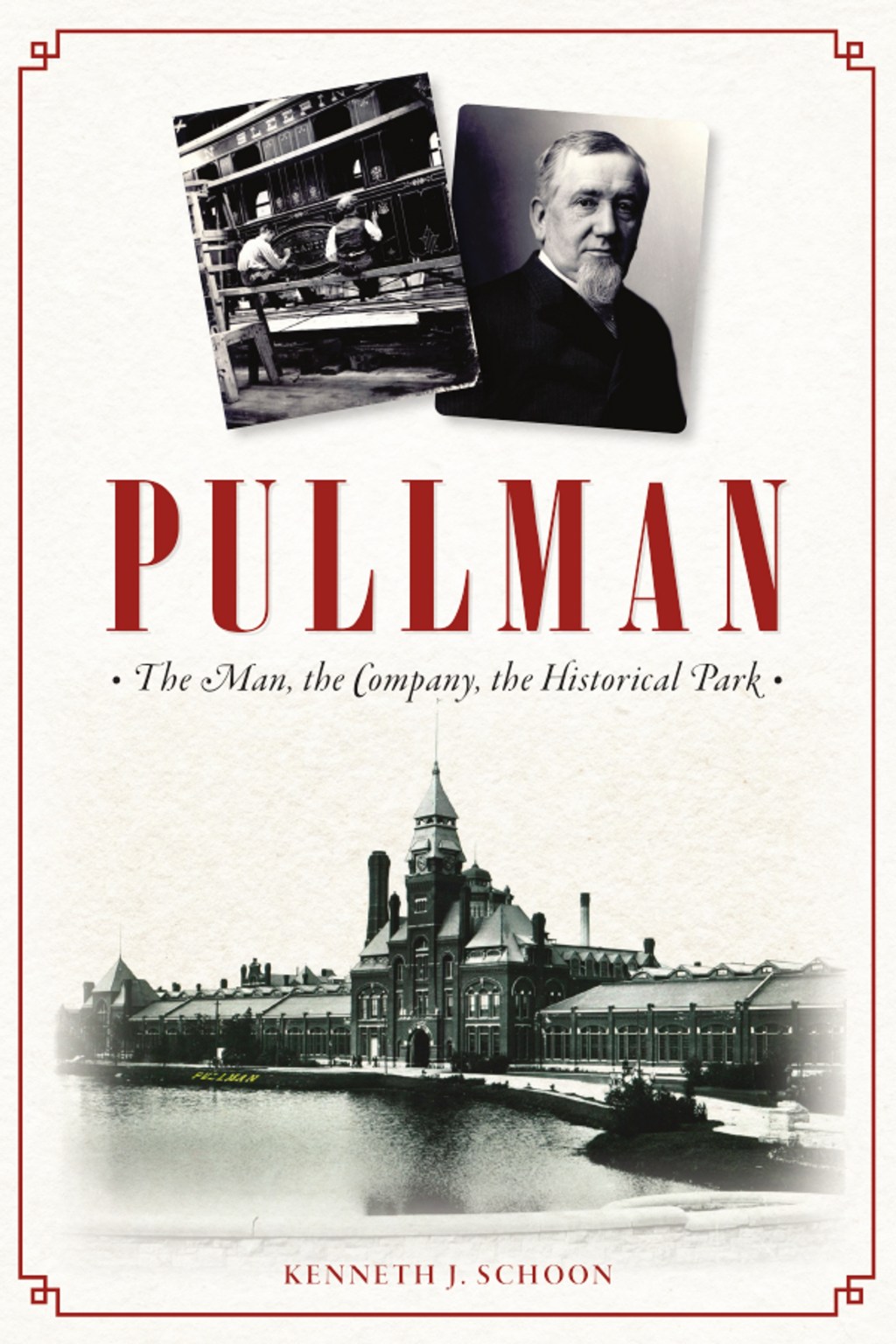
    Pullman: The Man, the Company, the Historic Park by Kenneth Schoon

                   Kenneth Schoon, professor emeritus at Indiana University Northwest, has immersed himself in the history of the Greater Chicago/Northwest Indiana area for decades, writing books starting from the area’s earliest beginnings such as “Calumet Beginnings: Ancient Shorelines and Settlements at the South End of Lake Michigan” and “Swedish Settlements on the South Shore of Lake Michigan.”

                   In his latest book, “Pullman: The Man, the Company, the Historical Park” (History Press 2021; $21.99), he showcases what once was among  the ultimate company town and is now a Chicago neighborhood. George Pullman, whose last name became synonymous with plush railroad sleeper cars, believed that happy workers were productive workers and so developed his town along the western shore of Lake Calumet in the late 1800s.

                   I thought I knew company towns having grown up in East Chicago, Indiana my friends whose parents worked at Inland Steel lived in Sunnyside in Indiana  Harbor. On the East Chicago side there was Marktown built in 1917 by Clayton Mark, for those employed at the company he owned, Mark Manufacturing.

                   But they’re different Schoon tells me. Both Marktown and Sunnyside were residential neighborhoods. But Pullman was an actual town with its own schools, library, churches, Masonic Hall, businesses, and even a band. Garbage and maintenance was paid for by the company.

    In 2015, then President Barack Obama proclaimed Chicago’s Pullman District as a National Monument, encompassing many of its surviving buildings such as the former Pullman Palace Car Works, the Greenstone Church, formerly the Greenstone United Methodist Church, the A. Philip Randolph Pullman Porter Museum, workers’ homes, the Pullman Administration Clock Tower Building, Arcade Park, and the Florence Hotel, named after Pullman’s oldest daughter.

                   Though I vaguely knew about the town of Pullman, it had never been on my radar as a place to visit even though it was less than eleven miles from where I lived.

                   “The same with me,” says Schoon who remembered going to the Florence Hotel, one of the fanciest structures in town, to eat when young never to return until hired by the Historic Pullman Foundation to write about the history of the town for their brochure.

                   Today we talk about experiences, but that’s what Pullman was all about back then. His sleeper cars were luxurious, but the brand also meant great service. After the Civil War, he hired recently emancipated African American men, to work as porters becoming the largest employer of Blacks in the U.S. Their jobs were to attend to passengers needs by serving food and drink, shining shoes, tidying up the train, making sure the temperature was just right and that lighting fixtures worked.  Black women were hired as maids to take care of women guests on the most expensive cars—babysitting children, helping with their baths, giving manicures, and fixing their hair.

                   Pullman was no dinky little town. The Arcade Theatre could accommodate 1000 people and Schoon says it was, for a time, the finest theater west of the Hudson River.

                   With the advent of automobiles and highways, the need for sleeper cars lessened. But luckily many of Pullman’s historic buildings remain including the Florence Hotel which is currently closed for renovations but expected to open within a few years.

                   “The old stable is now a store,” says Schoon. “The old fire station is still there and of the 600 residential buildings all but three are still standing.”

                   In an interesting tidbit, Schoon notes that Pullman was originally dry because George Pullman was a Prohibitionist. Luckily for those who  wanted to imbibe, Kensington, the town next door had 23 taverns at the time.

                   Kenneth Schoon will be signing copies of his book during the Labor Day Weekend at the Grand Opening of Pullman National Monument Visitor Center and Pullman State Historic Site Factory. For more information about times and other events, visit www.pullmanil.org

  • THE 17TH ANNUAL BEST BOOK AWARDS ANNOUNCE 2020 AWARD RECIPIENTS

    THE 17TH ANNUAL BEST BOOK AWARDS ANNOUNCE 2020 AWARD RECIPIENTS

    American Book Fest has announced the winners and finalists of The 2020 Best Book Awards.
    Awards were presented for titles published in 2018-2020.

    Jeffrey Keen, President and CEO of American Book Fest said this year’s contest yielded over 2,000 entries from mainstream and independent publishers. These were then narrowed down to over 400 winners and finalists in 90 categories.

    “The 2020 results represent a phenomenal mix of books from a wide array of publishers throughout the United States,” says Keen about the awards, now in their 18th year.
    Winners and finalists traversed the publishing landscape: HarperCollins, Penguin/Random House, John Wiley and Sons, Routledge/Taylor and Francis, Forge, Hay House, Sounds True, Llewellyn Worldwide, NYU Press, Oxford University Press, John Hopkins University Press, The White House Historical Association and hundreds of Independent Houses contribute to this year’s outstanding competition.

    “Our success begins with the enthusiastic participation of authors and publishers and continues with our distinguished panel of industry judges who bring to the table their extensive editorial, PR, marketing, and design expertise,” says Keen.

    American Book Fest is an online publication providing coverage for books from mainstream and independent publishers to the world online community.

    American Book Fest has an active social media presence with over 135,000 current Facebook fans.


    Highlights Include the Following Winning Titles:
    (Full Results are Available Here.)

    Click on category headings to be taken directly to full book descriptions! Winners and Finalists are featured at the top of each page.

    Animals/Pets: General

    The Balanced Pet Sitter: What You Wish you Knew Before Starting Your Pet Care Business by Renée Stilson
    Equilibre Press, LLC

    Animals/Pets: Narrative Non-Fiction
    The Chimpanzee Chronicles: Stories of Heartbreak and Hope from Behind the Bars by Debra Rosenman
    Wild Soul Press

    Anthologies: Non-Fiction
    This Moment Bold Voices from WriteGirl by Keren Taylor
    WriteGirl PublicationsArt

    C. Curry Bohm: Brown County and Beyond edited by Daniel Kraft & Jim Ross
    Indiana University Press

    Autobiography/Memoir
    Through My Eyes: CSI Memoirs That Haunt the Soul by Tamara Mickelson
    Self-Published

    Best Cover Design: Fiction
    The Last Lumenian by S.G. Blaise
    The Last Lumenian

    Best Cover Design: Non-Fiction
    When God Says NO – Revealing the YES When Adversity and Pain Are Present by Judith Briles
    Mile High Press

    Best Interior Design
    Beautiful Living: Cooking the Cal-a-Vie Health Spa Way by Terri Havens
    Cal-a-Vie Health Spa

    Best New Fiction
    In An Instant by Suzanne Redfearn
    Lake Union

    Best New Non-Fiction
    The Book of Help: A Memoir of Remedies by Megan Griswold
    Rodale Books/Penguin Random House

    Biography
    T.R.M. Howard: Doctor, Entrepreneur, Civil Rights Pioneer by David T. Beito and Linda Royster Beito
    Independent Institute

    Business: Careers
    TIP: A Simple Strategy to Inspire High Performance and Lasting Success by Dave Gordon
    John Wiley and Sons

    Business: Communications/Public Relations
    The Apology Impulse: How the Business World Ruined Sorry and Why We Can’t Stop Saying It by Cary Cooper & Sean O’Meara
    Kogan Page

    Business: Entrepreneurship & Small Business
    Burdens of a Dream: 33 Actionable Nuggets of Wisdom for the Creative Entrepreneur by Craig M. Chavis Jr.
    Author Academy Elite

    Business: General
    The Simplicity Principle: Six Steps Towards Clarity in a Complex World by Julia Hobsbawm
    Kogan Page

    Business: Management & Leadership
    The Future Leader: 9 Skills and Mindsets to Succeed in the Next Decade by Jacob Morgan
    Wiley

    Business: Marketing & Advertising
    The End of Marketing: Humanizing Your Brand in the Age of Social Media and AI by Carlos Gil
    Kogan Page

    Business: Motivational
    Unlock!: 7 Steps to Transform Your Career and Realize Your Leadership Potential by Abhijeet Khadikar
    Vicara Books

    Business: Personal Finance/Investing
    Enhancing Retirement Success Rates in the United States: Leveraging Reverse Mortgages, Delaying Social Security, and Exploring Continuous Work by Chia-Li Chien, PhD, CFP®, PMP®
    Palgrave Pivot

    Business: Real Estate
    Market Forces: Strategic Trends Impacting Senior Living Providers by Jill J. Johnson
    Johnson Consulting Services

    Business: Reference
    The Non-Obvious Guide to Virtual Meetings and Remote Work (Non-Obvious Guides) by Rohit Bhargava
    IdeaPress Publishing

    Business: Sales
    The Visual Sale: How to Use Video to Explode Sales, Drive Marketing, and Grow Your Business in a Virtual World by Marcus Sheridan
    IdeaPress Publishing

    Business: Technology
    Amazon Management System: The Ultimate Digital Business Engine That Creates Extraordinary Value for Both Customers and Shareholders by Ram Charan and Julia Yang
    IdeaPress Publishing

    Business: Writing/Publishing
    Great Stories Don’t Write Themselves: Criteria-Driven Strategies for More Effective Fiction by Larry Brooks
    Writer’s Digest Books (a division of Penguin Random House)

    Children’s Educational
    Galileo! Galileo! by Holly Trechter and Jane Donovan
    Sky Candle Press

    Children’s Fiction
    Nutmeg Street: Egyptian Secrets by Sherrill Joseph
    Acorn Publishing

    Children’s Mind/Body/Spirit
    The Tooth Fairy’s Tummy Ache by Lori Orlinsky
    Mascot Books

    Children’s Non-Fiction
    President’s Play! illustrated by John Hutton, text by Jonathan Pliska
    The White House Historical Association

    Children’s Novelty & Gift Book
    Bubble Kisses by Vanessa Williams, illustrated by Tara Nicole Whitaker
    Sterling Publishing

    Children’s Picture Book: Hardcover Fiction
    Bubble Kisses by Vanessa Williams, illustrated by Tara Nicole Whitaker
    Sterling Publishing

    Children’s Picture Book: Hardcover Non-Fiction
    A-B-Skis: An Alphabet Book About the Magical World of Skiing by Libby Ludlow, illustrated by Nathan Y. Jarvis
    Libby Ludlow

    LLCChildren’s Picture Book: Softcover Fiction
    Frankie the Ferret by Kimberley Paterson
    FriesenPress

    Children’s Picture Book: Softcover Non-Fiction
    Fridays With Ms. Mélange: Haiti by Jenny Delacruz
    Cobbs Creek Publishing

    Children’s Religious
    That Grand Christmas Day! by Jill Roman Lord, illustrated by Alessia Trunfio
    Worthy Kids

    College Guides
    Diversity At College: Real Stories of Students Conquering Bias and Making Higher Education More Inclusive by James Stellar, Chrisel Martinez, Branden Eggan, Chloe Skye Weiser, Benny Poy, Rachel Eagar, Marc Cohen, and Agata Buras
    IdeaPress Publishing

    Cookbooks: General
    Recipes from the President’s Ranch: Food People Like to Eat by Matthew Wendel
    The White House Historical Association

    Cookbooks: International
    Cooking with Marika: Clean Cuisine from an Estonian Farm by Marika Blossfeldt
    Delicious Nutrition

    Cookbooks: Regional
    The Perfect Persimmon: History, Recipes, and More by Michelle Medlock Adams
    Red Lightning

    BooksCurrent Events
    In All Fairness: Equality, Liberty, and the Quest for Human Dignity, edited by Robert M. Whaples, Michael C. Munger and Christopher J. Coyne
    Independent Institute

    Education/Academic
    The EQ Intervention: Shaping a Self-Aware Generation Through Social and Emotional Learning by Adam L. Saenz, PhD
    Greenleaf Book Group

    Fiction: African-American
    Once in a Blood Moon by Dorothea Hubble Bonneau
    Acorn Publishing

    Fiction: Anthologies
    Terror at 5280′ edited by Josh Schlossberg
    Denver Horror Collective

    Fiction: Cross-Genre
    Mourning Dove by Claire Fullerton
    Firefly Southern Fiction

    Fiction: Fantasy
    The Hollow Gods (The Chaos Cycle Series, ) by A.J. Vrana
    The Parliament House Press

    Fiction: General
    Bread Bags & Bullies: Surviving the ’80’s by Steven Manchester
    Luna Bella Press

    Fiction: Historical
    The Takeaway Men by Meryl Ain
    SparkPress

    Fiction: Horror
    The Vanishing by Arjay Lewis
    Mindbender Press

    Fiction: Inspirational
    The Menu by Steven Manchester
    Luna Bella Press

    Fiction: LGBTQ
    Even Weirder Than Before by Susie Taylor
    Breakwater Books

    Fiction: Literary
    How Fires End by Marco Rafalà
    Little A

    Fiction: Multicultural
    Subduction by Kristen Millares Young
    Red Hen Press

    Fiction: Mystery/Suspense
    Strong From The Heart by Jon Land
    Forge

    Fiction: New Age
    Catalyst by Tracy Richardson
    Brown Books Publishing

    Fiction: Novelette
    When Angels Paint: A Milford-Haven Holiday Novelette by Mara Purl
    Bellekeep Books

    Fiction: Novella
    When the Heart Listens: A Milford-Haven Novella by Mara Purl
    Bellekeep Books

    Fiction: Religious
    The Longest Day by Terry Toler
    BeHoldings Publishing

    Fiction: Romance
    What the Heart Wants by Audrey Carlan
    HQN

    Fiction: Science Fiction
    Killing Adam by Earik Beann
    Profoundly One Publishing

    Fiction: Short Story
    Oranges by Gary Eldon Peter
    New Rivers Press

    Fiction: Thriller/Adventure
    The President’s Dossier by James A. Scott
    Oceanview Publishing

    Fiction: Visionary
    Journey of a JuBu by Blaine Langberg
    Critical Eye

    Fiction: Western
    Moccasin Track by Reid Lance Rosenthal
    Rockin’ SR Publishing

    Fiction: Women’s Fiction
    Appearances by Sondra Helene
    She Writes Press

    Fiction: Young Adult
    The Return of the Dragon Queen by Farah Oomerbhoy
    Wise Ink Creative Publishing

    Health: Addiction & Recovery
    Stepping Stones: A Memoir of Addiction, Loss, and Transformation by Marilea C. Rabasa
    She Writes Press

    Health: Aging/50+
    EIGHTSOMETHINGS: A Practical Guide to Letting Go, Aging Well, and Finding Unexpected Happiness by Katharine Esty, PhD
    Skyhorse Publishing

    Health: Alternative Medicine
    Have a Peak at This: Synergize Your Body’s Clock Towards a Highly Productive You by Said Hasyim
    Self-Published

    Health: Cancer
    All Of Us Warriors: Cancer Stories of Survival and Loss by Rebecca Whitehead Munn
    She Writes
    Press

    Health: Death & Dying
    Aftermath: Picking Up the Pieces After a Suicide by Gary Roe
    Healing Resources Publishing

    Health: Diet & Exercise
    Whole Person Integrative Eating: A Breakthrough Dietary Lifestyle to Treat Root Causes of Overeating, Overweight and Obesity by Deborah Kesten, MPH and Larry Scherwitz, PhD
    White River Press

    Health: General
    True Wellness for Your Gut: Combine the best of Western and Eastern medicine for optimal digestive and metabolic health by Catherine Kurosu, MD, L.Ac. and Aihan Kuhn, CMD, OBT
    YMAA Publication Center

    Health: Medical Reference
    The Ultimate College Student Health Handbook: Your Guide for Everything from Hangovers to Homesickness by Jill Grimes, MD
    Skyhorse Publishing

    Health: Psychology/Mental Health
    The Big Bliss Blueprint: 100 Little Thoughts to Build Positive Life Changes by Shell Phelps
    Positive Streak Publishing,

    LLCHealth: Women’s Health
    The Book of Help: A Memoir of Remedies by Megan Griswold
    Rodale Books/Penguin Random House

    History: General
    Gun Control in Nazi-Occupied France: Tyranny and Resistance by Stephen P. Halbrook
    Independent Institute

    History: Military
    40 Thieves on Saipan The Elite Marine Scout-Snipers in One of WWII’s Bloodiest Battles by Joseph Tachovsky with Cynthia Kraack
    Regnery History

    History: United States
    Liberty in Peril: Democracy and Power in American History by Randall G. Holcombe
    Independent Institute

    Home & Garden
    My Creative Space: How to Design Your Home to Stimulate Ideas and Spark Innovation by Donald M. Rattner
    Skyhorse Publishing

    Humor
    Struggle Bus: The Van. The Myth. The Legend. by Josh Wood
    Lucid Books

    Law
    Banned: Immigration Enforcement in the Time of Trump by Shoba Sivaprasad Wadhia
    NYU Press

    LGBTQ: Non-Fiction
    Our Gay History in 50 States by Zaylore Stout
    Wise Ink Creative Publishing

    Multicultural Non-Fiction
    Overcoming Ordinary Obstacles: Boldly Claiming the Facets of an Extraordinary Life by Nesha Pai
    SPARK

    PublicationsNarrative: Non-Fiction
    Sola: One Woman’s Journey Alone Across South America by Amy Field
    WanderWomyn Publishing

    New Age: Non-Fiction
    Embodying Soul: A Return to Wholeness by Keri Mangis
    Curiosa Publishing, LLC

    Novelty & Gift Book
    The Official White House Christmas Ornament: Collected Stories of a Holiday Tradition by Marcia Anderson and Kristen Hunter Mason
    The White House Historical Association

    Parenting & Family
    Why Will No One Play with Me? The Play Better Plan to Help Children of All Ages Make Friends and Thrive by Caroline Maguire, PCC, M.Ed. with Teresa Barker
    Grand Central

    PublishingPerforming Arts: Film, Theater, Dance, Music
    THAT GUY: a stage play by Peter Anthony Fields
    Amazon

    Photography
    Beautiful Living: Cooking the Cal-a-Vie Health Spa Way by Terri Havens
    Cal-a-Vie Health Spa

    Poetry
    Five Oceans in a Teaspoon, poems by Dennis J. Bernstein, visuals by Warren Lehrer
    Paper Crown Press

    Religion: Christian Inspirational
    Extraordinary Hospitality for Ordinary Christians: A Radical Approach to Preparing Your Heart & Home for Gospel-Centered Community by Victoria Duerstock
    Good Books

    Religion: Christianity
    Come Fill This Place: A Journey of Prayer by Stacy Dietz
    KP Publishing Company

    Religion: Eastern
    Secrets of Divine Love: A Spiritual Journey into the Heart of Islam by A. Helwa
    Naulit Publishing House

    Religion: General
    Esoterism as Principle and as Way: A New Translation with Selected Letters by Frithjof Schuon
    World Wisdom

    Science
    Bliss Brain: The Neuroscience of Rewiring Your Brain for Resilience, Creativity and Joy by Dawson Church
    Hay House

    Self-Help: General
    Start Finishing: How to Go from Idea to Done by Charlie Gilkey
    Sounds True

    Self-Help: Motivational
    Edge: Turning Adversity into Advantage by Laura Huang
    Portfolio

    Self-Help: Relationships
    The Remarriage Manual: How to Make Everything Work Better the Second Time Around by Terry Gaspard
    Sounds True

    Social Change
    I Am Not Your Enemy: Stories to Transform a Divided World by Michael T. McRay
    Herald Press

    Spirituality: General
    The Universe Is Talking to You: Tap Into Signs and Synchronicity to Reveal Magical Moments Every Day by Tammy Mastroberte
    Llewellyn Worldwide

    Spirituality: Inspirational
    Spark Change: 108 Provocative Questions for Spiritual Evolution by Jennie Lee
    Sounds

    TrueSports
    The Martial Arts of Vietnam: An Overview of History and Styles by Augustus John Roe
    YMAA Publication Center

    Travel: Guides & Essays
    Exploring Wine Regions — Bordeaux France: Discover Wine, Food, Castles, and The French Way of Life by Michael C. Higgins, PhD
    International Exploration Society

    True Crime: Non-Fiction
    Beast of New Castle by Larry Sells & Margie Porter
    WildBlue Press

    Women’s Issues
    Muslim Women Are Everything: Stereotype-Shattering Stories of Courage, Inspiration, and Adventure by Seema Yasmin, illustrated by Fahmida Azim
    Harper Design, an Imprint of HarperCollins Publishers

    Young Adult: Non-Fiction
    My Life, My Way: How To Make Exceptional Decisions About College, Career, and Life by Elyse Hudacsko
    Self-Published
  • Disposing of Modernity: The Archaeology of Garbage and Consumerism during Chicago’s 1893 World’s Fair

    Disposing of Modernity: The Archaeology of Garbage and Consumerism during Chicago’s 1893 World’s Fair

                When Rebecca Graff, a PhD student at the University of Chicago in need of a dissertation, was told by a professor that the view before them from the school’s Ida Noyes Hall was “a hundred years ago the center of the world,” she didn’t see the bucolic splendor of Jackson Park hugging the Lake Michigan shoreline. Instead her sights went to what lay beneath and that was the 1893 World’s Columbian Exposition, an unexcavated but huge part of Chicago’s history. Held in celebration of the 400th anniversary of Christopher Columbus arrival in the New World, the exposition attracted 27 million people who paid 21.5 million for admission in a six-month period. Designed by noted landscape architect Frederick Olmsted, the 630-acre park had more than 65,000 exhibits from 46 countries and introduced to the public such new inventions as a 250-foot Ferris Wheel, Aunt Jemima’s Pancake syrup and Wrigley’s Juicy Fruit Gum. Electricity, still rare back then, was used to light up the expo at night.

    Rebecca Graff

                Graff managed to turn that casual remark into her dissertation, “The Vanishing City: Time, Tourism, and the Archaeology of Garbage and Consumerism at Chicago’s 1893 World’s Columbian Exposition” and then into a book,  “Disposing of Modernity: The Archaeology of Garbage and Consumerism during Chicago’s 1893 World’s Fair” (University Press of Florida co-published with The Society for Historical Archaeology).  Both were about the archaeological dig she undertook of a site in Jackson Park near the Museum of Science and Industry that seemed most promising for archaeological fair finds.

    Surprisingly what seemed an almost guaranteed bureaucratic nightmare in terms of permits and permissions all fell into place but then Graff was told she couldn’t start without a million dollars in liability insurance. Not likely for a graduate student.

                “I needed to turn the excavation into a job,” she says. And so she did, teaching a field class at the University of Chicago where she and her students excavated the site.


    View from the 1893 World’s Columbian Exposition’s South Canal looking northeast. The Machinery Building, the Columbian Fountain, and the Electricity Building are on the left, with the Agriculture and the Manufactures and Liberal Arts Buildings on the right. The Illinois State Building’s dome is in the center, and the flatter dome of the California State Building is to its left. Image is by an anonymous photographer, 1893. From the Smithsonian Institution Archives

                Expecting to find those things that archaeologists love—pottery shards, a coin here and a twisted spoon there—Graff and her team were stunned to unearth a section of the Ohio Building, a stately Beaux Arts-style edifice with an elaborate portico entranceway that served as a meeting place for Ohioans. It was among the best of all the other findings they uncovered such as a collar stud, religious medal, cruet tops indicating that food was made on site, and lots of pipes. Though to hear Graff describe them, they’re all treasures and keys to the past.

                As for the building, contemporary sources said it no longer existed.

                “Even the New York Times wrote it had been thrown into the lake,” says Graff, who instead found segments in a ditch where it might have been used as landfill.

                Coincidentally, Graff later discovered she wasn’t the only family member to dig at the site, so had her great grandfather, Morris Graff, a Russia immigrant who dug ditches at the fair.

                Graff would like to return to Jackson Park for further exploration but was denied a permit the second time around. She says it’s surprising that Chicago doesn’t have a city archaeologist as other big cities do. But she’s certainly doing her fair share of uncovering urban remains. She is currently excavating the Charnley-Persky House Museum, a National Historic Landmark located on Astor Street in the Gold Coast  designed Chicago  architect, Louis Sullivan and his young draftsman Frank Lloyd Wright.

    Cover image from Disposing of Modernity: The Archaeology of Garbage and Consumerism during Chicago’s 1893 World’s Fair by Rebecca S. Graff. Gainesville: University Press of Florida, 2020.