Category: American History

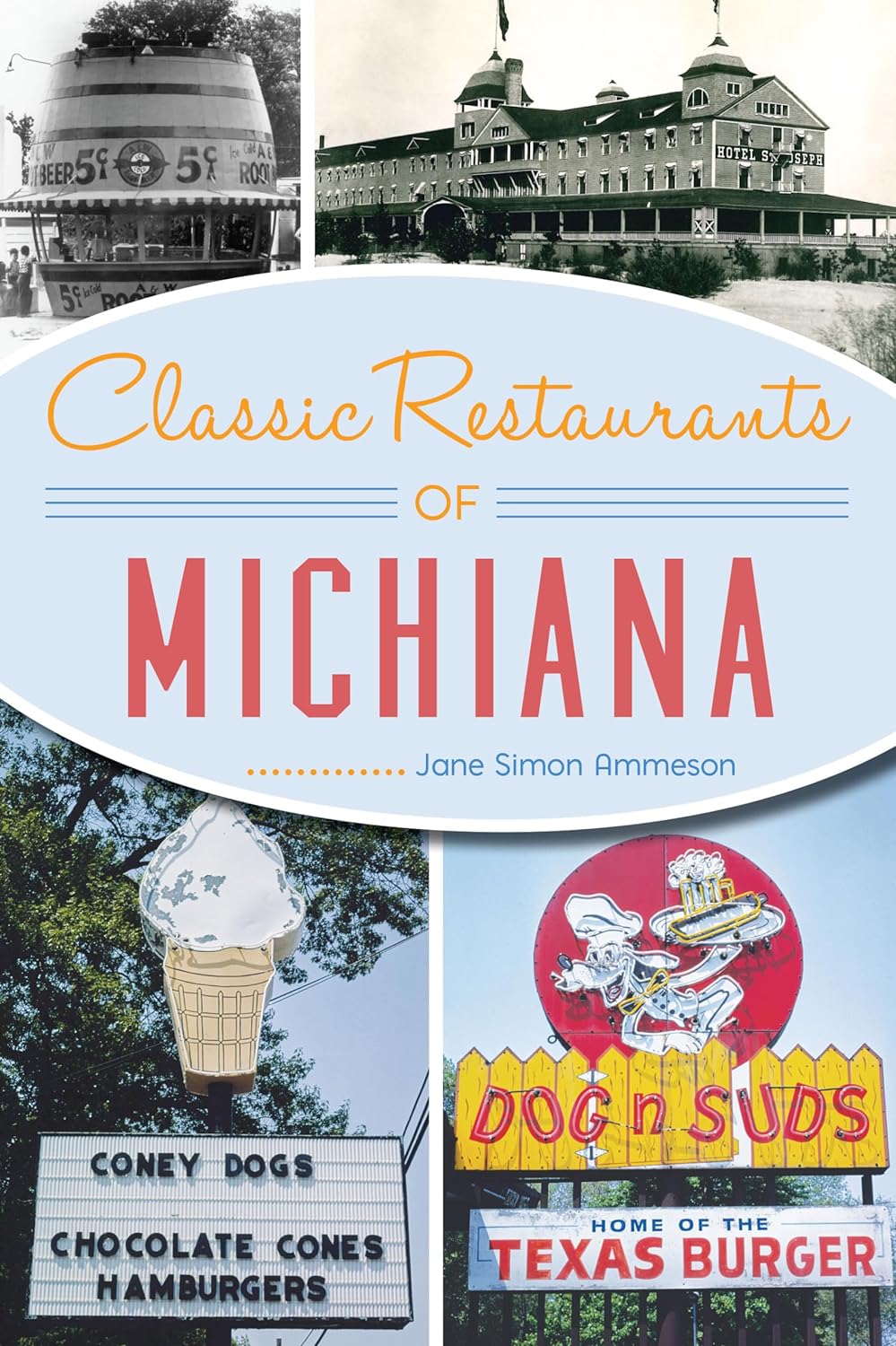
  • Join me at the Classic Restaurants of Michiana Book Signing Wednesday, June 11th
    Join me at the Classic Restaurants of Michiana Book Signing Wednesday, June 11th

    The members of the Sacred Heart of Mary Catholic Church Book/Movie Discussion Group have invited me to speak this Wednesday, June 11th at 6:30 p.m. If you have the time and are interested in the history of restaurants in Michiana, please come. The church is lovely, located in a beautiful country setting at  51841 Leach Rd, Dowagiac, Michigan. The event itself is next door in the Parish Hall.

    Mary’s City of David Vegetarian Cafe in Benton Harbor, which opened in 1931 and closed in 1975, specialized in farm-to-table meals.

    Here is the flyer that Terri Moore sent out:

    Over the centuries, residents of Michiana have never wanted for superb dining choices. Award-winning author Jane Simon Ammeson will lead us on a culinary road trip through Northern Indiana and Southwestern Michigan.

    A cigarette girl at the posh House of David motor lodge and restaurant/nightclub called the Vista Grande

    Once a stagecoach stop, The Old Tavern Inn has been open since the time of President Andrew Jackson. Tosi’s is known for its gorgeous starlit garden and gastronomic traditions stretching back almost a century, and The Volcano was amongst the first pizzerias in the country.

    One of the earliest hotels in St. Joseph, the Perkins house, built in 1840, stood on the corner of State and Ship Streets. Note the side entrance for the saloon which was, of course, given the times, for men only.

    These restaurants and other classic eateries remain part of the thriving local food scene. But the doors of others have long been closed. Some like Mead’s Chicken Nook and Robertson’s Tea Room linger in memories while The Owl Saloon, O. A. Clark’s Lunch Rooms, and Lobster Lounge are long lost to time.

    The restaurant is still open at the Barbee, it was a fav of Al Capone. However, when he arrived, all the other guests had to leave.

    Jane Simon Ammeson is a food and travel columnist who has authored seventeen books, including Classic Restaurants of Northwest Indiana. Always willing to travel for food, she blogs about her experiences at janeammeson.com.

    At one time, the lakeside towns of southwesterern Berrien County had a large Swedish population. The Swedish Coffee Pot was just one of several. Only the Swedish Bakery remains.

    Light refreshments will be served

    For more information contact:

    Terri Moore, 269-782-6925, t2sewmoore@outlook.com

  • Author Erik Larson offers compelling acount of the start of the Civil War
    Author Erik Larson offers compelling acount of the start of the Civil War

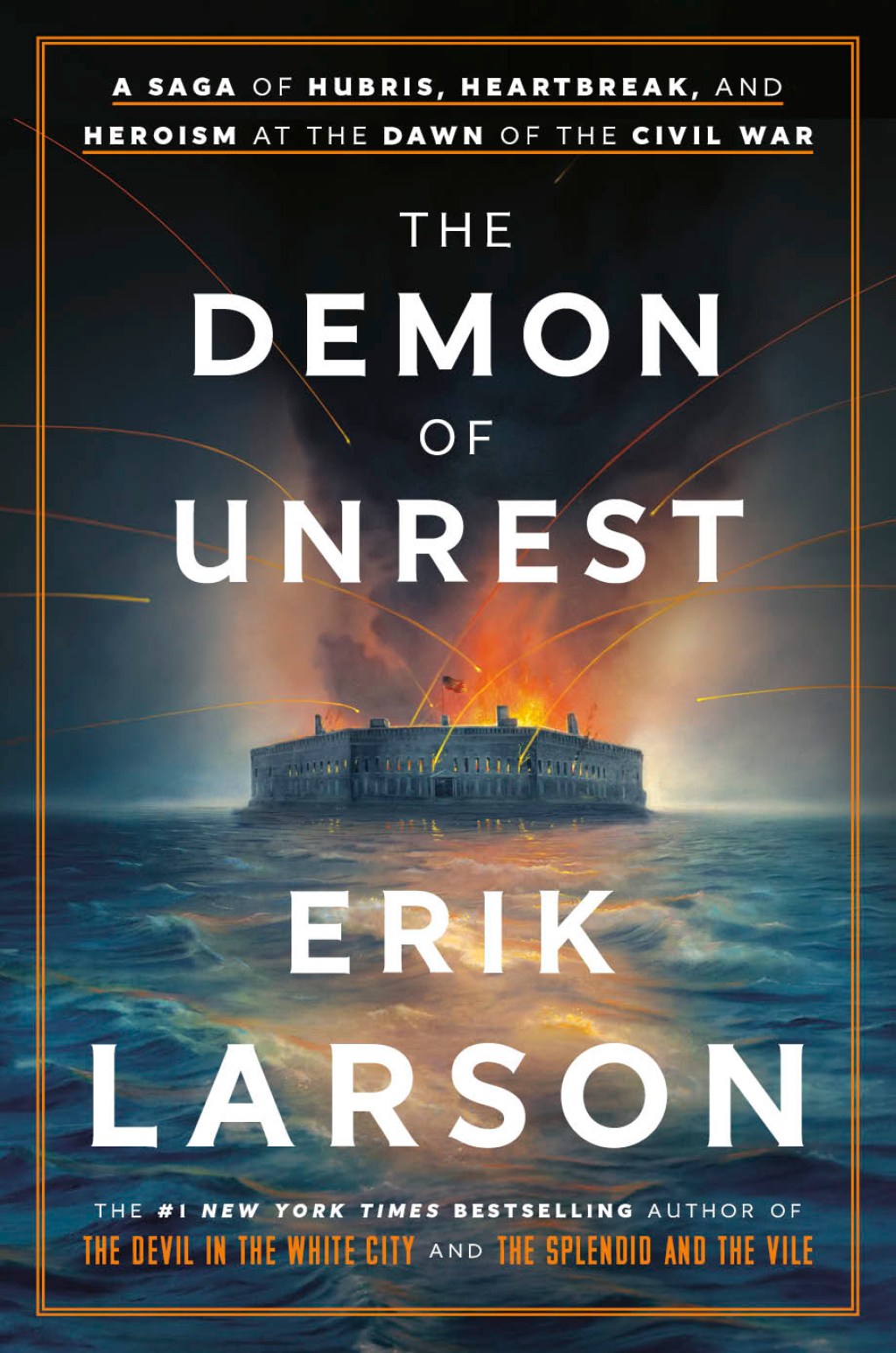
    Only a master storyteller like Erik Larson could turn the five tumultuous months leading up to the Civil War into “The Demon of Unrest: A Saga of Hubris, Heartbreak, and Heroes at the Dawn of the Civil War” (Crown), a compelling, page-turning read, chock full of anecdotes, psychological profiles and obscure but compelling tidbits of history all set against a relentless march towards a conflict that would kill over 620,000 soldiers and devastate a nation.

    Larson, the author of six New York Times bestsellers whose previous works include “The Devil in the White City: Murder, Magic, and Madness at the Fair That Changed America,” about a mass murderer and the 1893 Chicago’s World Fair, writes in a novelistic style that makes history come alive. He does so through his ability to weave together the familiar facts of history with information that can only be gleaned through relentless and extensive research.

    Yes, most of us know that the Civil War began with the firing on Fort Sumter, which was located in Charleston Harbor and under the command of U.S. Army Major Robert Anderson. But did you know that Anderson had owned enslaved people and was a defender of slavery? That Lincoln often misspelled Sumter as Sumpter? Or, more importantly, South Carolina did not have to succeed because of Lincoln’s election, as he had no intention of outlawing slavery in the Southern states?

    “When I started out doing this, one concern I had was that the Civil War has not exactly been underwritten,” Larson told me during a phone conversation earlier this week, noting that a quick Google indicated around 65,000. “I had vowed over the years never ever to write about the Civil War.”

    That changed when, as he was looking for the topic of his next book and watching the events of the Jan. 6, 2021 assault on the U.S. Capitol, he began to consider the deep divide and unrest of our own times.

    Faced with what he describes as an intimidating world of previous scholarship, Larson says “What I really wanted to do was to provide a rich sense, on an intimate level, of what the forces were and the motivations for the start of the Civil War.”

    The magic of his writing is that he accomplishes this by immersing the reader in details, descriptions, and personalities mostly unknown to many of us, including “eight typical characters” such as Charleston society doyenne Mary Boykin Chestnut, who kept a detailed diary, and James Henry Hammond, a Charleston planter who was a leader of the secessionist movement and who later became a U.S. senator despite public knowledge of his sexual relationships with four nieces ages 13 to 19.

    He also includes information about resolving issues regarding dueling, from “The Code of Honor or Rules for the Government Principals and Seconds in Dueling” and instructions for the “proper” way of whipping slaves as well as the going prices for selling human beings.

    The Southern mindset among the owners of enslaved people of the time is best summed up in a letter written to President James Buchanan, president before Lincoln, by Arthur Peronneau Hayne, a U.S. senator from Charleston. In it, he writes that without slavery “our every comfort would be taken from us. Our wives, our children, made unhappy — education, the light of knowledge — all lost and our people ruined forever. “

    “White southerners had persuaded themselves that slavery was a good thing for all concerned, especially for the enslaved blacks,” said Larson. He also notes that many of these same men were devoted readers of writers like Sir Walter Scott, author of “Ivanhoe,” and believed fervently in honor and the code of chivalry.

    As outrageous and hypocritical as that seems today, Larson says when writing about a different era it’s important to consider the point of view of those times to accurately reflect how events unfolded.

    “It gives a better sense of what the forces were that did lead to states like South Carolina succeeding from the Union and the Civil War,” he said, noting that understanding is not condoning, but historic context provides a lesson for the present and future as we struggle with political division today.

    This article previously appeared in the Northwest Indiana Times.

  •  Local author to appear at bookstore for book signing of new “Lost East Chicago and Indiana Harbor” history book

     Local author to appear at bookstore for book signing of new “Lost East Chicago and Indiana Harbor” history book

    Award-winning author and journalist Joseph S. Pete will appear at a Northwest Indiana bookstore to sign copies of his new history book, “Lost East Chicago and Indiana Harbor.”

    Pete, a Lisagor Award-winning reporter and columnist, will do a book signing from 11:30 a.m. to 3 p.m. Saturday, July 20 at Miles Books at 2819 Jewett Avenue in Highland.

    He will sign copies of his latest history book about East Chicago and copies of his other books “Lost Hammond, Indiana,” “Secret Northwest Indiana” and “100 Things to Do in Gary and Northwest Indiana Before You Die.” Pete also will sign copies of University of Arizona Professor and East Chicago native Gloria McMillan’s “Children of Steel” anthology about life in steel mill towns, which he contributed a short story to.

    “Lost East Chicago and Indiana Harbor” chronicles the Indiana steel town on the shore of Lake Michigan in north Lake County just outside of Chicago that was a melting pot, drawing immigrants from all over the world to work at its bustling steel mills. As the population boomed in the early 20th century, East Chicago was home to more than 100 nationalities who came for the opportunities in a highly industrialized city that earned nicknames like “The Workshop of America,” the “Arsenal of America” and the “Industrial Capital of the World” while forging the steel that built up 20th-century America.

    Home to one of the most storied basketball rivalries in the state, East Chicago was also known as “The City of Champions” as it produced several high school football and basketball championship teams, including the only two back-to-back undefeated basketball teams in state history and the only two athletes to compete in both the Final Four and World Series. East Chicago gave the world many greats like the NBA’s all-time winningest coach Gregg Popovich, the Milwaukee Bucks star and later corporate magnate Junior Bridgeman, the baseball speedster Kenny Lofton, the actress Betsy Palmer, the boxing legend Angel “El Diablo” Manfredy and the Academy Award-winning screenwriter Steve Tesich, who penned the classic sports film “Breaking Away.”

    Pete’s new book is based in large part on interviews, including with Bridgeman, the state champion who went on to lead the Louisville Cardinals to the Final Four, get his number retired by and Bucks, and build a business empire that made him one of the wealthiest former athletes of all time.

    “Lost East Chicago and Indiana Harbor” takes a fond look back at bygone landmarks like Washington and Roosevelt High Schools, Inland Steel Christmas parties, the Washington Park Zoo, Taco Joe’s, the Mademoiselle Shoppe, movie palaces like the Voge and the gym where Michael Jordan played his first Bulls game. It recounts planned worker communities like Sunnyside and Marktown, the English village designed by noted architect Howard Van Doren Shaw where people park on the sidewalks and walk in the street and that’s featured in Ripley’s Believe It or Not and enshrined on the National Register of Historic Places.

    Pete, who has covered East Chicago for a decade for The Times of Northwest Indiana, relates stories about the Katherine Home, St. Joseph’s Carmelite Home, Big House, bolita, the Wickey Mansion, the Tod Opera House, the Patrick machine and the Crazy Indiana Style Artists graffiti crew, which hung out with the acclaimed artist Keith Haring, appeared on network television, and went on to exhibit their artwork internationally. His book also explores industrial pollution, political corruption, and unsolved mysteries like the deaths of Jay Given and Henry Lopez and the disappearance of the soccer great William “Wee Willie” McLean.

    “Lost East Chicago and Indiana Harbor” looks back at fondly remembered East Chicago intuitions like Albert’s, Dominic’s, Puntillo’s, Shrimp Harbor, Los Burritos, and El Patio Restaurant, as well as curiosities like the East Chicago Hermit and a mummy a local funeral home used to let kids see for a nickel. It also examines the city’s impact, such as producing Indiana’s first Latino elected official, the Hoosier State’s first and longest-running Mexican Independence parade, and the Midwest’s longest-running Mexican American–owned business, as well as the steel that helped shape America and countless other products.

    Pete is an Indiana University graduate, a combat veteran and a board member of the Indiana Society of Professional Journalists and the Chicago Headline Club. He is a playwright and literary writer whose work has appeared in more than 100 literary journals, earning Pushcart Prize and Best of the Net nominations. He’s received many journalism awards, including from the Inland Press Association, the Hoosier State Press Association, the Chicago Journalists Association, Columbia University and the National Association of Real Estate Editors as well as local honors from the Indiana Small Business Development Center and the Duneland Chamber of Commerce.

    For more information or an interview, contact Joseph S. Pete at 219.841.1030 or jpete@alumni.iu.edu.

  • C-SPAN’s Book TV is again partnering with the Library of Congress to bring the 2023 National Book Festival to a national television audience, live and on-site.

    C-SPAN’s Book TV is again partnering with the Library of Congress to bring the 2023 National Book Festival to a national television audience, live and on-site.


    As an original supporter of the National Book Festival, C-SPAN’s Book TV is contributing the following for this year’s event – held on Saturday, August 12, at the Walter E. Washington Convention Center:

    • live coverage of author interviews and panel discussions.
    • lengthy live call-in interviews with nonfiction authors on location from the grand lobby.
    • 20,000 totes promoting both the Library of Congress and C-SPAN’s Book TV available to Festivalgoers.
    • public access to its video coverage via C-SPAN’s online archives at C-SPAN.org.


    C-SPAN’s Book TV has been providing live, in-depth, uninterrupted coverage of the National Book Festival – and partnering with the Library of Coverage on promotion – since the event began on September 8, 2001.

    Book TV’s LIVE coverage has taken C-SPAN’s audience to the Festival’s various venues – U.S. Capitol grounds (2001), a vast tent city on the National Mall (2002-2013), an expo-style event in the Washington Convention Center (2014-2019), a virtual event during the pandemic (2020-2021), and back to the Walter E. Washington Convention Center (2022).

    Book TV’s extensive coverage of nonfiction authors appearing at the National Book Festival kicks off the network’s coverage of book fairs held throughout the country in the fall. And the celebration of C-SPAN’s 25 years of Book TV will launch from this year’s festival.


    About Book TV:
    Book TV – Sundays on C-SPAN2 – is the only television service dedicated to nonfiction books. Book TV features programming on a rich variety of topics, such as history, biography, politics, current events, the media and more. Watch author interviews, book readings and coverage of the nation’s largest book fairs. Every Sunday on C-SPAN2 starting 8 am ET or online anytime at booktv.org. Use that website as well to connect with Book TV via social media and the email newsletter.

    About C-SPAN:
    C-SPAN, the public affairs network providing Americans with unfiltered access to congressional proceedings, was created in 1979 as a public service by the cable television industry and is now funded through fees paid by cable and satellite companies that provide C-SPAN programming. C-SPAN connects with millions of Americans through its three commercial-free TV networks, C-SPAN Radio, C-SPAN Podcasts, the C-SPAN Now app, C-SPAN.org and various social media platforms.

    The network’s video-rich website contains over 270,000 hours of searchable and shareable content. Engage with C-SPAN on Twitter, Facebook, Instagram and YouTube, and stay connected through weekly and daily newsletters. 


    Full 2023 National Book Festival Book TV
    Coverage Schedule, Saturday Aug. 12

    9amET Interview Librarian of Congress Carla Hayden

    9:30am Authors Panel: Accidental Spies
    Authors: John Lisle “The Dirty Tricks Department”;
    Janet Wallach “Flirting with Danger”
    Moderator: CBS’s Jeff Pegues

    10:30am Interview Author R.K. Russell, “The Yards Between Us”

    10:45am Authors Panel: Environmental Awakening vs. Climate Change
    Authors: Douglas Brinkley “Silent Spring Revolution”;
    David Lipsky “The Parrot and the Igloo”
    Moderator: Jenn White of NPR

    11:45 Interview: Charles “Cully” Stimson, senior legal fellow at The Heritage Foundation
    “Rogue Prosecutors: How Radical Soros Lawyers Are Destroying America’s Communities.”

    12pm Author Talk: Sports and Culture
    Author: R.K. Russell, “Yards Between Us”
    Moderator: LZ Granderson of the LA Times

    12:45pm Interview, David Rubenstein

    1pm Author Panel: Escaping Genocide and Human Trafficking
    Authors: Tahir Hamut Izgil, “Waiting to Be Arrested at Night”;
    Saket Soni, “The Great Escape”
    Moderator: Washington Post’s Jason Rezaian

    2:20pm Interview Librarian of Congress Carla Hayden

    3:15pm Interview with Chasten Buttigieg, “I Have Something to Tell You”

    3:30pm Author Panel – Behind the Scenes with Black Writers
    Authors Camille Dungy and Tiphanie Yanique
    Moderator: Author Jericho Brown

    4:30pm Joan Biskupic, “Nine Black Robes”

    4:45pm Author Panel – Dig In: What Food Says About Us
    Authors Cheuk Kwan and Anya von Bremzen
    Moderator: Wash. Post Food Writer Daniela Galarza

    For more information c-span.org/booktv

  • Driving the Green Book: A Road Trip Through the Living History of Black Resistance 

    Driving the Green Book: A Road Trip Through the Living History of Black Resistance 

    Buy on Amazon

    “The Green Book was more than just a road trip guide but a way of survival. Hall hopes that its history will live on.”

    The road, a symbol of freedom, was fraught with dangers for Black travelers in the time when Jim Crow laws still existed. Not much is known about Victor Hugo Green, the author of the “Green Book,” a series of tomes released annually listing places in cities and states that willingly accommodated Black travelers.

    What we do know is that Green at one point had worked as a postal worker and had an entrepreneurial spirit according to Alvin Hall, the author of Driving the Green Book: A Road Trip Through the Living History of Black Resistance who hypothesizes that Green authored the book in response to his own travels with his wife, Alma.

    “Back at the time the Green Book first appeared in the late 1930s, the automobile had seemed a likely safe haven for Black travelers—or at least safer,” writes Alvin Hall. “In a bus or on a train, a Black person ran the risks and humiliations of the laws and strictures around the use of public transportation due to segregation. That’s why a car road trip was particularly important: travelers needed more protection en route to their destinations—whether that was going home to Birmingham, Alabama; to visit Uncle Jerome in New York; or to gather with Alma Greens relatives in Richmond, Virginia.”

    Hall determined that he would revisit the places mentioned in Green’s books, accompanied by his friend Janée Woods Weber. Their journey took them from New York to New Orleans by way of Detroit. As they drove, they gathered in as much of the past as they could by visiting the clubs, restaurants, shops, and motels still in existence that Green said were safe. When possible, at each stop they tried to trace who were alive back then and capture their reminiscences.

    In Memphis, they visit the Lorraine Motel where Dr. Martin Luther King was assassinated. Besides the horrors of the murder of the Civil Rights leader, the monetary impact on the family that owned the hotel was profound as well as travelers shied away from staying there. But this is a story that has a sense of triumph as well. It is now a state-owned museum and on the National Register of Historic Places.

    The Green Book was more than just a road trip guide but a way of survival. Hall hopes that it’s history will live on.

    Jane Simon Ammeson’s most recent book is Lincoln Road Trip: The Back-Roads Guide to America’s Favorite President, a Bronze winner in the Travel Book category for the 2019–20 Lowell Thomas Travel Journalism Competition. Lincoln Roadtrip was also a finalist for a 2019 Foreword Indie Award for Travel. Her travel writing appears in various newspapers and magazines.

    Follow Jane Simon Ammeson at Travel/Food.

    This review previously was published by New York Journal of Books.

  • Haunted Lighthouses: Scary Tales of the Great Lakes
    Haunted Lighthouses: Scary Tales of the Great Lakes

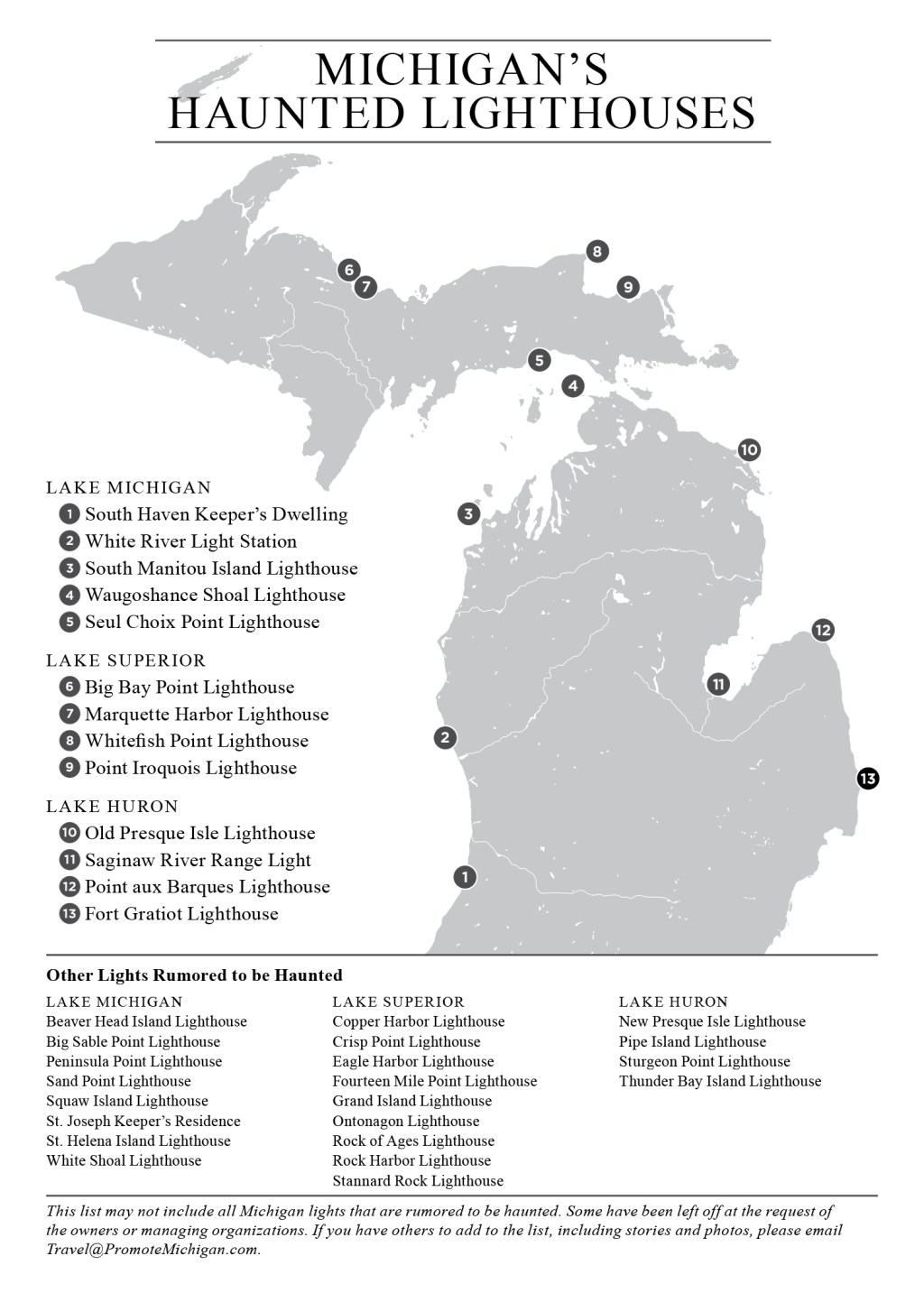
    Michigan is home to more lighthouses than any other state and about 40 of those are rumored to be haunted by the spirits of former keepers, mariners and others with ties to these historic beacons.

    Inside the pages of Michigan’s Haunted Lighthouses, long-time researcher, writer and promoter of all things Michigan, Dianna Stampfler, shares stories of those who dedicated their lives — and afterlives — to protecting the Great Lakes’ shoreline. Her second book, Death & Lighthouse on the Great Lakes, Stampfler delves into the historic true crime cold case files that have baffled lighthouse lovers for as many as two centuries.

    Throughout the fall season, Stampfler will be speaking at libraries around the state, sharing her lively and upbeat presentation about these lights. Copies of her books will be available for purchase and signing at every program.

    Sun, Oct 9, 2022
    2:00 PM – 3:30 PM
    Michigan’s Haunted Lighthouses
    Elk Rapids District Library, Elk Rapids, MI
    Tue, Oct 11, 2022
    6:30 PM – 8:00 PM
    Michigan’s Haunted Lighthouses
    Rauchholz Memorial Library, Hemlock, MI
    Wed, Oct 12, 2022
    7:00 PM – 8:30 PM
    Michigan’s Haunted Lighthouses
    Northville District Library, Northville, MI
    Wed, Oct 19, 2022
    6:00 PM – 7:30 PM
    Michigan’s Haunted Lighthouses
    Reese Unity District Library, Reese, MI
    Thu, Oct 20, 2022
    7:00 PM – 8:30 PM
    Michigan’s Haunted Lighthouses
    Otsego District Library, Otsego, MI
    Sun, Oct 23, 2022
    3:00 PM – 4:30 PM
    Michigan’s Haunted Lighthouses
    Sanilac County Historic Village & Museum, Port Sanilac, MI
    Wed, Nov 2, 2022
    6:00 PM – 7:30 PM
    Death & Lighthouses on the Great Lakes
    St. Clair County Library – Main Branch, Port Huron, MI

    For the complete schedule of upcoming events (including other topics beyond lighthouses), visit the Promote Michigan Speaker’s Bureau online.

    About Michigan’s Haunted Lighthouses

    Michigan has more lighthouses than any other state, with more than 120 dotting its expansive Great Lakes shoreline. Many of these lighthouses lay claim to haunted happenings. Former keepers like the cigar-smoking Captain Townshend at Seul Choix Point and prankster John Herman at Waugoshance Shoal near Mackinaw City maintain their watch long after death ended their duties. At White River Light Station in Whitehall, Sarah Robinson still keeps a clean and tidy house, and a mysterious young girl at the Marquette Harbor Lighthouse seeks out other children and female companions. Countless spirits remain between Whitefish Point and Point Iroquois in an area well known for its many tragic shipwrecks.

    About Death & Lighthouses on the Great Lakes

    Losing one’s life while tending to a Great Lakes lighthouse — or any navigational beacon anywhere in the world for that matter — sadly wasn’t such an unusual occurrence. The likelihood of drowning while at sea or becoming injured while on the job ultimately leading to death were somewhat common back in the late nineteenth and early twentieth century.

    Death by murder, suicide or other unnatural and tragic causes, while rare, are not unheard of. In fact, more than dozen lighthouse keepers around the Great Lakes met their maker at the hands of others – by fire, poisoning, bludgeoning and other unknown means. A handful of these keepers, either because of depression or sheer loneliness, took their own lives. A few we may never know the true story, as the deaths now 100 or more years ago, weren’t subjected to the forensic scrutiny that such crimes are given today.

    In the pages of Death & Lighthouses of the Great Lakes: A History of Misfortune & Murder, you’ll find an amalgamation of true crime details, media coverage and historical research which brings the stories to life…despite the deaths of those featured.

    Stampfler has been professionally writing and broadcasting since high school. She holds a bachelor’s degree in English with emphasis in Community Journalism and Communications with emphasis in radio broadcasting from Western Michigan University. She is a member of the Midwest Travel Journalists Association, Historical Society of Michigan, Great Lakes Lighthouse Keepers Association, Great Lakes Maritime Museum, Association for Great Lake Maritime History, Great Lakes Shipwreck Historical Society, Michigan Maritime Museum, Friends of Pilot & Plum Island Lighthouse, National Museum of the Great Lakes and West Michigan Tourist Association.

  • Corruptible: Who Gets Power and How It Changes Us
    Corruptible: Who Gets Power and How It Changes Us

                  Does the current state of the world seem overwhelming? Do our leaders often seem to be all about themselves and not about us? Is it easier to turn on a sitcom rerun than to sit through the news because we feel so helpless to change what’s going on?

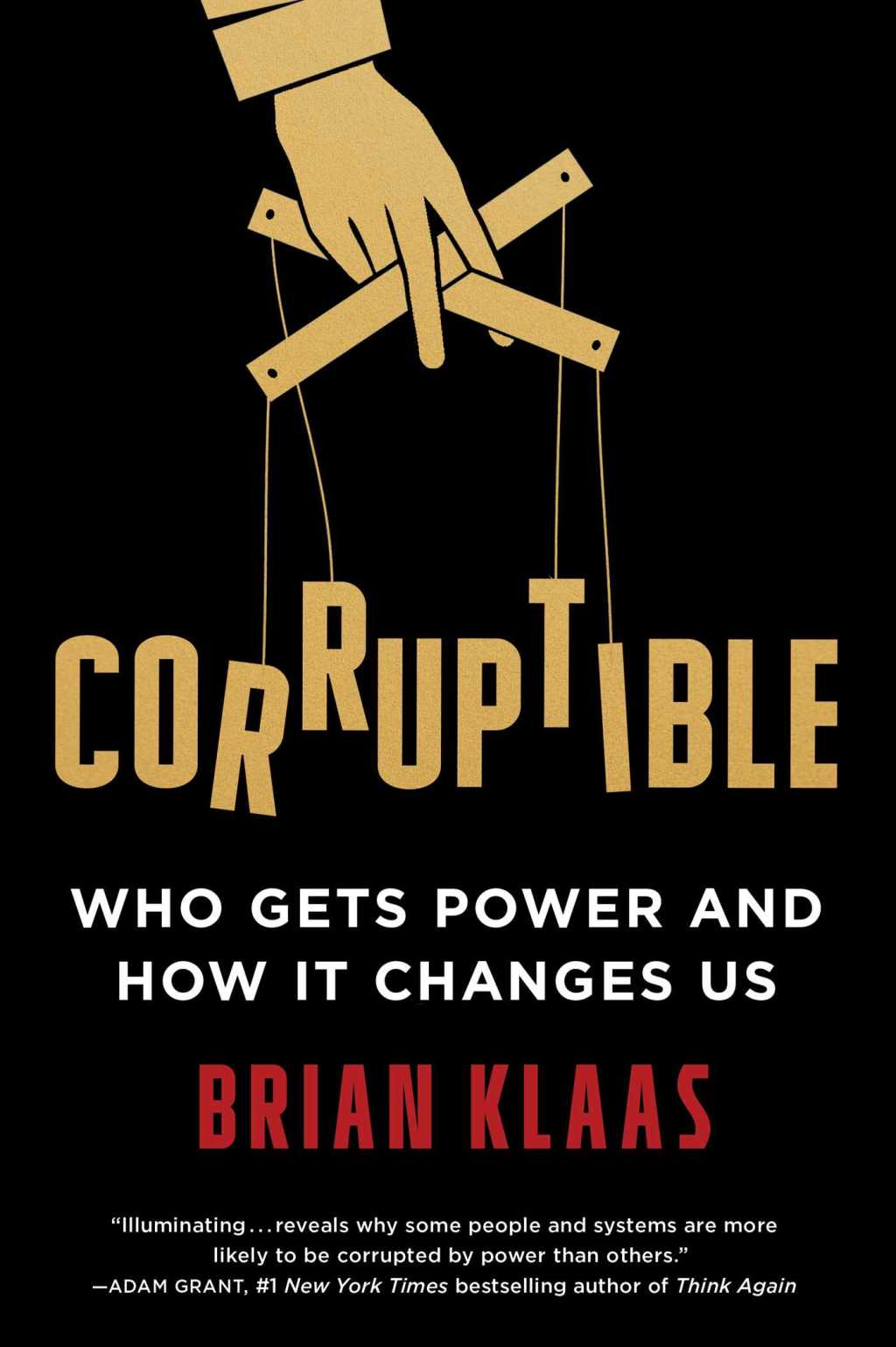
                You’re not alone. Brian Klaas, a columnist for the Washington Post Assistant Professor of Global Politics at University College London, and author of the new book “Corruptible: Who Gets Power and How It Changes Us” (Scribner 2021; $28), has taken on the task of interviewing more than 500 world leaders from the best to the worst– to answer questions like the following. Does power corrupt or is it that corrupt people are drawn to power? What personality types are drawn to power? Why are so many dictators sociopaths and narcissists? And why do even good people, once in a position of power, become authoritarian?

                Here is a brutal fact that will make you reach for remote and flip to an episode of “Green Acres” where the biggest problem of the day is whether Arnold the Talking Pig can take that trip to Hawaii he won.

                Democracies are dying with more and more countries sliding towards authoritarian rule says Klaas who writes that there are no countervailing forces.

                Indeed, Klaas who created and hosts the award-winning Power Corrupts podcast, says “There’s nothing that rewards being a sober moderate who believes in democracy and tries to govern by consensus.”

                Describing democracy as being like a sandcastle, one that can be easily wiped out by a big wave or successive small hits, Klaas gives Turkey as an example.

                “Initial coverage of Erdogan’s 2002 election was positive, showing him to be someone was a populist who would shake things up, go up against the elite and status quo, and bring democracy to Turkey,” says Klaas who looked back through New York Times archives to highlight how that country has changed for the worse. “For 19 years now, he’s chipped away at democracy instead.”

                Though the book’s subject matter might seem dull, it’s not. Klaas is a strong writer with a sense of humor and he is very capable of delivering telling anecdotes that reflect the changes a democracy can encounter and how quickly that can happen in a compelling way.

                “If you lose the battle for democracy, you don’t get to battle for taxes, infrastructure, healthcare, or any of the policies that change lives,” says Klaas, who earned a MPhil in Politics from the University of Oxford (New College) and an MPhil in Comparative Government from the University of Oxford (St. Anthony’s). “In the places that I’ve studied where democracy has died, it’s still dead pretty much everywhere.”

                How to fix it?

                Klaas suggests becoming active. Call your congressperson or senator, run for local office, become politically active, and in general, participate in making changes to bring about change.

                “That’s the type of activity that ultimately can transform the political system at the national level,” he says.

                But there’s no time to delay.     

                “If we don’t fix it in the next two to four years,” he says, “it probably won’t get fixed.”

    Follow Brian Klaas’s podcast Power Corrupts.

  • Windy City Blues

    In her fun very readable Windy City Blues (Berkley 2017; $16), Chicago author Renee Rosen again takes another slice of the city’s history and turns it into a compelling read.

    Rosen, who plumbs Chicago’s history to write such books as Dollface, her novel about flappers and gangers like Al Capone, and What the Lady Wants which recounts the affair between department store magnate Marshall Field and his socialite neighbor, says she and her publisher were racking their brains for her next book which encompassed Chicago history.

    “She suggested the blues,” says Rosen, who didn’t have much interest in the subject.

    But Rosen was game and started her typical uber-intensive research.

    “When I discovered the Chess brothers, who founded Chess Records, I fell in love,” she says, noting that when researching she was surprised about how much she didn’t know about the subject despite her immersion in Chicago history for her previous books. “I thought this is a story.”

    “As part of my research, I drove the Blues Highway from New Orleans to Chicago,” she says. “I also met with Willie Dixon’s grandson and with Chess family members.”

    Combining fact and fiction, Rosen’s story follows heroine Leeba Groski, who struggling to fit in, has always found consolation in music. When her neighbor Leonard Chess offers her a job at his new Chicago Blues label, she sees this as an opportunity to finally fit in. Leeba starts by answering phones and filing but it soon becomes much more than that as she discovers her own talents as a song writer and also begins not only to fall in love with the music industry but also with Red Dupree, a black blues guitarist.

    Windy City Blues was recently selected for Chicago’s One Book project, a program designed to engage diverse groups of Chicagoans around common themes. Rosen says she is very honored to be a recipient.

    “I put my heart and soul into this book,” she says. “I think it’s a story with an important message. In it are lessons of the Civil Rights movement, what it was like for Jews and people of color along with the history of the blues and the role of Jews in bringing the blues to the world. After all, as the saying goes: Blacks + Jews = Blues.”