Category: Abraham Lincoln

  • Author Erik Larson offers compelling acount of the start of the Civil War
    Author Erik Larson offers compelling acount of the start of the Civil War

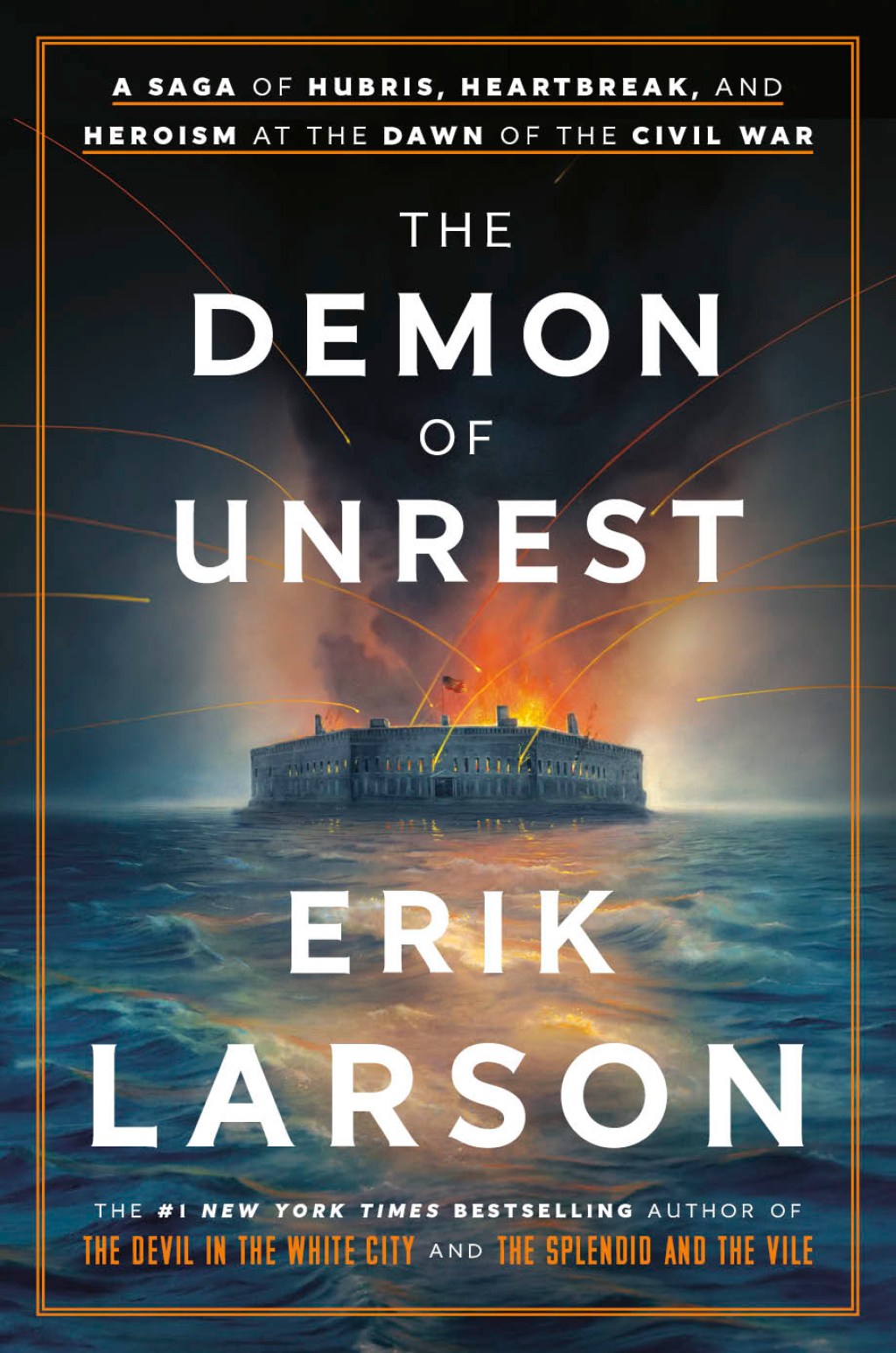
    Only a master storyteller like Erik Larson could turn the five tumultuous months leading up to the Civil War into “The Demon of Unrest: A Saga of Hubris, Heartbreak, and Heroes at the Dawn of the Civil War” (Crown), a compelling, page-turning read, chock full of anecdotes, psychological profiles and obscure but compelling tidbits of history all set against a relentless march towards a conflict that would kill over 620,000 soldiers and devastate a nation.

    Larson, the author of six New York Times bestsellers whose previous works include “The Devil in the White City: Murder, Magic, and Madness at the Fair That Changed America,” about a mass murderer and the 1893 Chicago’s World Fair, writes in a novelistic style that makes history come alive. He does so through his ability to weave together the familiar facts of history with information that can only be gleaned through relentless and extensive research.

    Yes, most of us know that the Civil War began with the firing on Fort Sumter, which was located in Charleston Harbor and under the command of U.S. Army Major Robert Anderson. But did you know that Anderson had owned enslaved people and was a defender of slavery? That Lincoln often misspelled Sumter as Sumpter? Or, more importantly, South Carolina did not have to succeed because of Lincoln’s election, as he had no intention of outlawing slavery in the Southern states?

    “When I started out doing this, one concern I had was that the Civil War has not exactly been underwritten,” Larson told me during a phone conversation earlier this week, noting that a quick Google indicated around 65,000. “I had vowed over the years never ever to write about the Civil War.”

    That changed when, as he was looking for the topic of his next book and watching the events of the Jan. 6, 2021 assault on the U.S. Capitol, he began to consider the deep divide and unrest of our own times.

    Faced with what he describes as an intimidating world of previous scholarship, Larson says “What I really wanted to do was to provide a rich sense, on an intimate level, of what the forces were and the motivations for the start of the Civil War.”

    The magic of his writing is that he accomplishes this by immersing the reader in details, descriptions, and personalities mostly unknown to many of us, including “eight typical characters” such as Charleston society doyenne Mary Boykin Chestnut, who kept a detailed diary, and James Henry Hammond, a Charleston planter who was a leader of the secessionist movement and who later became a U.S. senator despite public knowledge of his sexual relationships with four nieces ages 13 to 19.

    He also includes information about resolving issues regarding dueling, from “The Code of Honor or Rules for the Government Principals and Seconds in Dueling” and instructions for the “proper” way of whipping slaves as well as the going prices for selling human beings.

    The Southern mindset among the owners of enslaved people of the time is best summed up in a letter written to President James Buchanan, president before Lincoln, by Arthur Peronneau Hayne, a U.S. senator from Charleston. In it, he writes that without slavery “our every comfort would be taken from us. Our wives, our children, made unhappy — education, the light of knowledge — all lost and our people ruined forever. “

    “White southerners had persuaded themselves that slavery was a good thing for all concerned, especially for the enslaved blacks,” said Larson. He also notes that many of these same men were devoted readers of writers like Sir Walter Scott, author of “Ivanhoe,” and believed fervently in honor and the code of chivalry.

    As outrageous and hypocritical as that seems today, Larson says when writing about a different era it’s important to consider the point of view of those times to accurately reflect how events unfolded.

    “It gives a better sense of what the forces were that did lead to states like South Carolina succeeding from the Union and the Civil War,” he said, noting that understanding is not condoning, but historic context provides a lesson for the present and future as we struggle with political division today.

    This article previously appeared in the Northwest Indiana Times.

  • Untitled post 2419

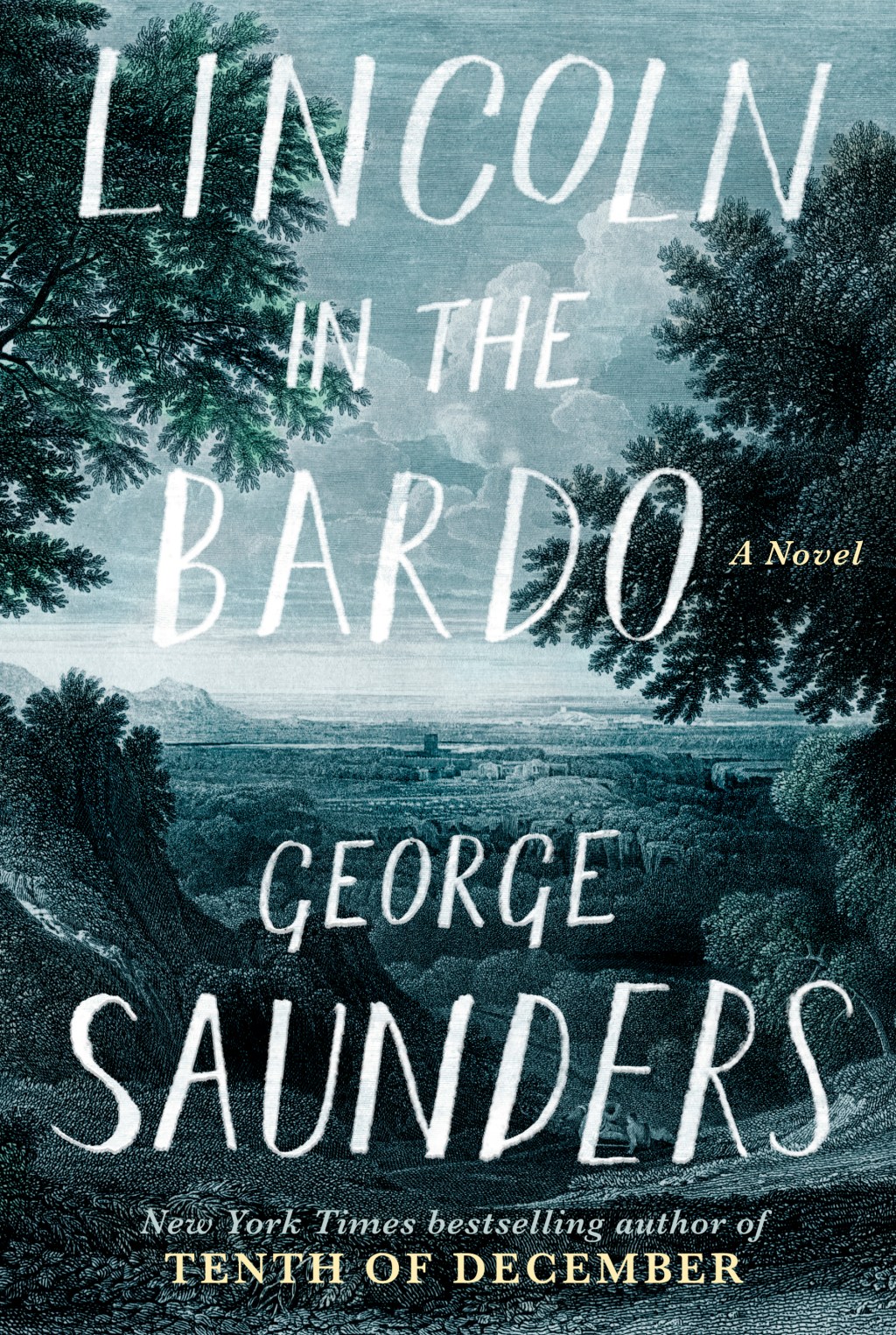
    Several decades ago, George Saunders and his wife were visiting Washington D.C. when their cousin mentioned that anecdotal evidence indicated President Abraham Lincoln had surreptitiously visited the tomb of his 11-year-old son, Willie.

    For years, the story of Lincoln, so overcome by grief, that he stole into the monument where his son was interred, nagged at the edges of Saunders’s mind. But Saunders, who teaches in the creative writing program at Syracuse University, had never written a novel and besides his writing was mostly satirical in nature.

    “But this material has been calling me all these years,” says Saunders, author of Lincoln in the Bardo (Random House 2017; $28). “It’s like their story was a stalker, it kept showing up at my window and it needed to get out.”

    Justifying his foray into a new literary form by telling himself he’d had a nice run regarding his career—Saunders is an acclaimed short story writer who is included in Time’s list of the 100 most influential people the world, he decided why not try “this Lincoln thing.”

    Saunders still had doubts about his ability to tell the story in the way the way it needed to be told. But having grown up in Chicago as part of a devout Catholic family and now having adapted some of the tenets of Buddhism in the Tibetan tradition, he has written a book that though just recently released is already garnering great reviews.

    Bardo is a Tibetan concept–a kind of transitional zone says Saunders.

    “We’re all in the bardo right now that goes from birth to death,” he says, noting that Buddhists would call these transition stages reincarnation and noting that the book takes place just after that, in the bardo that goes from death to whatever comes next. “Now is the time to live–knowing that death is coming—if we can accept ourselves as a mess.”

    With all his research, Saunders has come to see how Lincoln persevered despite the immense weight of the Civil War, the deaths of so many Americans and that of his son as well.

    “We had a president back then who bent,” he says, “when others would have broken.”

  • Lady Romeo: The Radical and Revolutionary Life of Charlotte Cushman, America’s First Celebrity

    Lady Romeo: The Radical and Revolutionary Life of Charlotte Cushman, America’s First Celebrity

    A force of nature in her time, stage actress Charlotte Cushman who played both male and
    female roles, was friends with Abraham Lincoln who admired her work. Indeed, she acted along side both Edwin and John Wilkes Booth and was said to have left a scar on the assassin’s neck that was later used to identify him as the president’s murderer.

    Tana Wojczuk by Beowulf Sheehan

    Cushman was 58-years-old when on November 7, 1874 she gave her last performance in front of
    thousands of fans in New York City. There should have been much to remember her by. She is Angel of Waters on top of Central Park’s Bethesda Fountain designed by her lover Emma Stebbins. This is no ordinary sculpture, Cushman soars above what is, at twenty-six feet high by ninety-six feet wide, one of New York’s largest fountains. But that was the kind of woman she was. She acted for more than 30 years traveling the world to appear on stage and it was publicly well-known that her lovers were female. Yet for some reason she slips from sight, almost lost to history until now, almost 160 years later, her vibrant life is captured in Tana Wojczuk’s new biography, Lady Romeo: The Radical and Revolutionary Life of Charlotte Cushman, America’s First Celebrity.

    Angel of Waters (Wikimedia Commons)

    Wojczuk, a senior nonfiction editor at Guernica who teaches writing at New York University, first
    became aware of Cushman when she was an aspiring actress, a passion she pursued starting at age
    thirteen, and continued through college.

    “Women often played men in the 18th and 19th centuries,” says Wojczuk who came across
    Cushman’s name while researching women who had played Hamlet. “Most cross-dressing onstage was for comic effect or to titillate men who liked to ogle a woman’s legs. But Charlotte was a convincing man onstage. When I found out that she had also been one of the most famous women in the world I wanted to know why, and, like in a detective novel, to account for her disappearance.”

    Charlotte Cushman. Wikimedia Commons

    Cushman aimed for realism so much so that, according to Wojczuk, she was a pioneer of
    method acting, visiting prostitutes in Five Points and exchanging clothes with them to prepare to
    play a prostitute.

    Reading fascinating books like this makes you wonder how many fascinating women—and
    men—have vanished into the mists of time. Why, I wonder? ojczuk has a surprising answer.

    “When she was at her height, American culture was remarkably diverse and experimental, still
    figuring out what it would become,” she says. “There were successful all-black theatres in New York, for example, before well-connected white theatre owners had them shut down. Charlotte’s masculinity was acceptable on-stage, when viewed as a performance, and it helped argue for all gender as performance. But by the time she died in 1876, the American centennial, the postwar culture had clamped down, strictly policing public morality. Even though Charlotte helped create American culture, her role became inconvenient. She was a dangerous influence to young women now clamoring to go to college, to work, to vote. Even on the day she died Victorian critics tried to write her out of history. For a long time, they were successful.”

  • Courting Mr. Lincoln

    Courting Mr. Lincoln

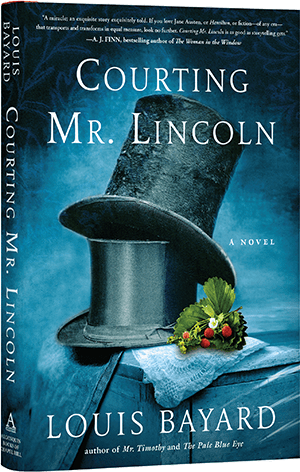
    Bestselling novelist Louis Bayard, author of the literary historical novel Courting Mr. Lincoln, has written about a fascinating story about the relationships between the future President and the two people who knew him best: his handsome and charming confidant (and roommate) Joshua Speed , the rich scion of the a wealthy hemp growing family in Louisville and sassy Lexington belle Mary Todd.

    Bayard, who will be appearing at the Book Stall, book is reviewed by staffer Kara Gagliardi’s in the bookstore’s May newsletter:

    “Louis Bayard’s new novel transports us by wagon to the soul of our country and lays bare the man who would become our 16th president. It is, in fact, the personal history behind our country’s history. The story starts small. In 1839, Mary Todd arrives in Springfield looking for a husband. Her mother is deceased, her father is remarried. She relies on the kindness (and lodging) of her older sister to launch her into society. She is an intellectual with a sharp wit, pleasing-albeit a little too round-an excellent dancer and dinner companion, a lover of politics. She is running out of time.

    “Abe Lincoln, on the other hand, is the definition of rough. Tall and gangly, he doesn’t know how to open doors for women, approach a carriage, make small talk, or accept invitations. In other words, society overwhelms him. He knows heartache from the loss of his mother and stepmother, and compares the work his father inflicted upon him to slavery. He’s also a damn good lawyer with a gift for oratory.

    “Central to the book is the character of Joshua Speed, who enables the courtship between Lincoln and Mary Todd and feels betrayed by it. Speed owns the dry goods store in town and rents a room to Lincoln above it. Good-looking and a bit of a womanizer, he takes it upon himself to teach Lincoln how to dress, behave, and move in polite circles. The two become inseparable. When he learns that Lincoln has met with Mary Todd in secret, he feels an emptiness that he cannot identify. Who is he without his best friend? Where does he belong if not by Lincoln’s side? This book portrays a match of dependency and tenderness, intellect and laughter.  It will also make you remember when you left your peers for a person you set your future upon. The stakes are high. Love wins.”

    Bayard, the author of Roosevelt’s Beast, Lucky Strikes, The Pale Blue Eye and The Black Tower, was described by the New York Times, as an author who “reinvigorates historical fiction,” rendering the past “as if he’d witnessed it firsthand.”

    Follow him at louisbayard.com

    ifyougo:

    What: Louis Bayard book signings

    When & Where:

    The Book Stall
    811 Elm St, Winnetka, IL at 1 p.m
    847-446-8880; thebookstall.com

    Unabridged Books

    3251 N. Broadway, Chicago, IL at 7 p.m.

    773-883-9119; unabridgedbookstore.com

  • Young Lincoln: Growing Up in Southern Indiana

    Young Lincoln: Growing Up in Southern Indiana

    Many people aren’t aware that Abraham Lincoln spent his formative years in Southern Indiana, moving there from Kentucky with his family at age seven, leaving with them when he was 21.Jan Jacobi head shot

    It’s these years that Jan Jacobi, an avid Lincoln enthusiast and an award-winning educator who currently is teaching at St. Michael School of Clayton in St. Louis, chronicles in Young Lincoln (Reedy Press $16.95), his recently released book for readers ages 12 to 16.

    Growing up in New York, Jacobi moved to St. Louis in 1992 to take a teaching job and says he quickly realized how close his new home was to areas where Lincoln had lived including Southern Indiana and Springfield, Illinois, inspiring him to read book after book about the president.

    “One of my students asked me if there was a book he could read about young Lincoln,” recalls Jacobi who because of his towering height is frequently asked to portray the president.  “I said there really wasn’t one for his age range. And he told me that I should write one then.”

    Jacobi’s publisher agreed but with one more stipulation. He should write it in first person, using the voice of Lincoln as a youngster.

    “I thought no one can do that,” says Jacobi. “But then gradually the voice came to me—I just had to marinate in it.”

    Spending time in Spencer County, Indiana where Lincoln grew up, Jacobi talked to some of the residents whose ancestors had been friends of the Lincoln family. They shared with him their views of the Lincolns that had been passed down generation after generation.

    Thomas Lincoln has always been somewhat of a cipher—the youngest and least successful of three brothers who all witnessed the death of their father, another Abraham Lincoln, who was shot and killed by a Native American . When the future president was a youngster, Thomas Lincoln was a harsh father but that wasn’t unusual in pioneer days. Thomas also thought his son was wasting his time reading and learning and tried to discourage it. Young Lincoln, in turn, was contemptuous of his father’s illiteracy and failures to get ahead in life and sought the mentorship of other men  in the community who were learned and successful. Southern Indiana at that time was a wilderness where cougars and bears were always a menace, food was often scarce and life was harsh and often deadly. Lincoln’s mother died after contracting milk sickness as did a friend she’d been nursing for the same disease; his sister died in childbirth.

    As an adult, when his father was on his deathbed, Lincoln, now a successful lawyer, refused to visit him despite the appeals of his step-mother with whom he was exceptionally close and his step-brother. When Thomas died, Lincoln didn’t attend his funeral.

    “People in Southern Indiana are kinder to his father,” says Jacobi. “I’m a little harder on him.”

    How did Lincoln develop the resiliency that would allow him to overcome his early adversity to lead the country during one of its most tumultuous periods is a question that Jacobi says he has longed tried to answer.

    “Lincoln is a remarkable human being,” he says. “There are so many dimensions to him. We have to be careful not to turn him into a saint; but his essential goodness speaks to me.”

    So much so, that Jacobi is planning his next book about Lincoln’s time in Springfield.

    “Lincoln is endlessly fascinating,” says Jacobi. “He is the quintessential American. The only other person I put in that category is Mark Twain.”

    Ifyougo:

    What: Jan Jacobi discusses Young Lincoln. He will be joined in conversation by syndicated columnist Steve Chapman. A Q&A and signing will follow the discussion.

    When: Saturday, September 22 at 3 p.m.

    Where: 57th Street Books, 1301 E 57th St, Chicago, IL

    Cost: Free

    FYI: 773-684-1300; semcoop.com


  • The story behind ‘Lincoln in the Bardo’

    LINCOLN IN THE BARDOSeveral decades ago, George Saunders and his wife were visiting Washington D.C. when their cousin mentioned that anecdotal evidence indicated President Abraham Lincoln had surreptitiously visited the tomb of his 11-year-old son, Willie.

    For years, the story of Lincoln, so overcome by grief, that he stole into the monument where his son was interred, nagged at the edges of Saunders’s mind. But Saunders, who teaches in the creative writing program at Syracuse University, had never written a novel and besides his writing was mostly satirical in nature.

    “But this material has been calling me all these years,” says Saunders, author of Lincoln in the Bardo (Random House 2017; $28). “It’s like their story was a stalker, it kept showing up at my window and it needed to get out.”

    Justifying his foray into a new literary form by telling himself he’d had a nice run regarding his career—Saunders is an acclaimed short story writer who is included in Time’s list of the 100 most influential people the world, he decided why not try “this Lincoln thing.”

    Saunders still had doubts about his ability to tell the story in the way the way it needed to be told. But having grown up in Chicago as part of a devout Catholic family and now having adapted some of the tenets of Buddhism in the Tibetan tradition, he has written a book that though just recently released is already garnering great reviews.

    Bardo is a Tibetan concept–a kind of transitional zone says Saunders.

    “We’re all in the bardo right now that goes from birth to death,” he says, noting that Buddhists would call these transition stages reincarnation and noting that the book takes place just after that, in the bardo that goes from death to whatever comes next. “Now is the time to live–knowing that death is coming—if we can accept ourselves as a mess.”

    With all his research, Saunders has come to see how Lincoln persevered despite the immense weight of the Civil War, the deaths of so many Americans and that of his son as well.

    “We had a president back then who bent,” he says, “when others would have broken.”

  • Hauntings of the Underground Railroad: Ghosts of the Midwest

    Before the Civil War, a network of secret routes and safe houses crisscrossed the Midwest to help African Americans travel north to escape slavery. Although many slaves were able to escape to the safety of Canada, others met untimely deaths on the treacherous journey—and some of these unfortunates still linger, unable to rest in peace.

    The author in front of an Underground Railroad stop said to be haunted.

    In Hauntings of the Underground Railroad: Ghosts of the Midwest, Jane Simon Ammeson investigates unforgettable and chilling tales of these restless ghosts that still walk the night. This unique collection includes true and gruesome stories, like the story of a lost toddler who wanders the woods near the Story Inn, eternally searching for the mother torn from him by slave hunters, or the tale of the Hannah House, where an overturned oil lamp sparked a fire that trapped slaves hiding in the basement and burned them alive. Brave visitors who visit the house, which is now a bed and breakfast, claim they can still hear voices moaning and crying from the basement.

    Ammeson also includes incredible true stories of daring escapes and close calls on the Underground Railroad. A fascinating and spine-tingling glimpse into our past, Hauntings of the Underground Railroad will keep you up all night.